wordpress, Author at Cheekwood - Page 22 of 45 | Page 22
x icon Close
test

Tots! Activity: Paper Lines Collage
Tots! Activity: Paper Lines Collage

As Cheekwood’s Tots program is temporarily suspended, we are sharing today’s activity for parents and tots to activate at home. Use our files to create your own paper lines collage, then share your work with us by tagging @cheekwood on Instagram and using #cheekwoodtots!

Here’s what you’ll need:• Paper in a variety of colors

• Scissors

• Glue


Directions:1. Cut and rip different kinds of lines to make strips of paper and shapes.

2. Have your Tot arrange their colorful lines onto a separate page and glue them down.

3. Encourage Tots to make several, maybe one is stripes and shapes overlapping while another is using their lines to create a picture.


Try pairing the activity with one of these books:
Swirl by Swirl Spirals in Nature by Joyce Sidman

The Line by Paula Bossio

Harold and the Purple Crayon by Crockett Johnson


Ask your artist: • Where can you find lines around you?

• What can you use lines to make?

• Describe your lines. Are they vertical, horizontal, squiggly, straight?

• Why did you put the lines down like that?
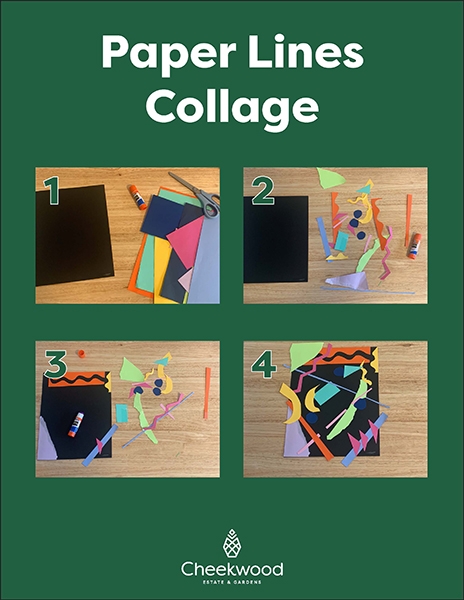
Paper-Lines
test

Tots! Activity: Buzzy Bee

Tots! Activity: Buzzy Bee

As Cheekwood’s Tots program is temporarily suspended, we are sharing today’s activity for parents and tots to activate at home. Use our files to create your own buzzy bee, then share your work with us by tagging @cheekwood on Instagram and using #cheekwoodtots!

Here’s what you’ll need:• Black, yellow and white paper

• Scissors

• Black marker, crayon or colored pencil

• Bee wing template
*See template below

• Glue stick

• Various sized round items


Bee Template  


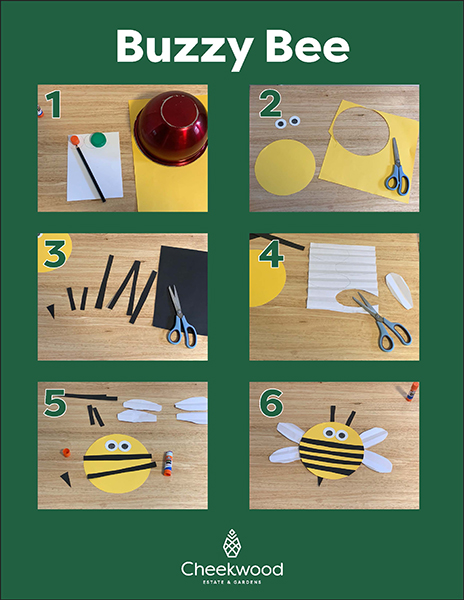
Directions:1. Trace two small circles on white paper for eyes. Draw a smaller circle on each for the pupil. For the eyes, we used a milk cap and a glue stick cap for the pupils, but anything round will do! Cut the eyes out and set it aside.

2. Trace one large circle on yellow paper for the bee body. For this, we used a bowl about 8 inches in diameter. Cut it out and set it aside.

3. From black construction paper, cut four long strips, two short ones, and a small triangle. These will be the stripes, antennae, and stinger.

4. Print out the wing template and cut out the wings. Optional: before cutting out the wings, fold the template accordion style.

5. Assemble your bee! You can trim the bee’s stripes if desired.

6. Using a pencil, roll the antennae a little, so it curves outward.


Try pairing the activity with one of these books:
The Honeybee Man by Lela Nargi and Kyrsten Brooker

Bee by Britta Teckentrup

The Very Greedy Bee by Steve Smallman


Ask your explorer: • Why do you think bees are important?

• Why do you think bees like flowers? What is pollen? What is nectar?

• What noise do bees make?

• What do bees make? What do you think they make it for? Honey for food and wax for building their comb.

Buzzy-Bee-1
test

3 Reasons We Love Elopements

Elopements at Cheekwood

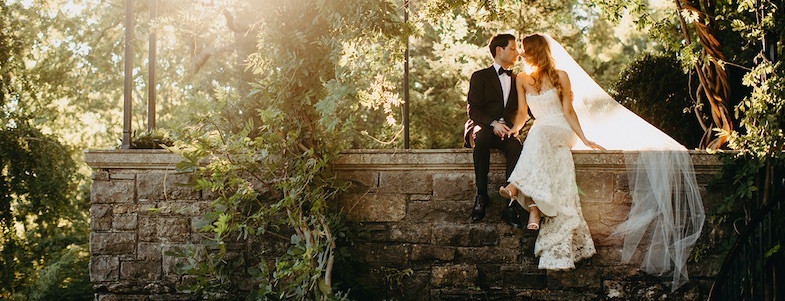
As if planning a wedding did not provoke enough anxiety, the pandemic has compounded the natural stress that already comes along with wedding planning. Brides are making really tough decisions to cancel, postpone, and reevaluate their plans to say “I Do” around a large group of family and friends. To make matters more complicated, the confusion around guidelines on gatherings, new protocols, and uncertainty of the future of the pandemic are making it harder to decided how to move forward. As an engaged couple -whatever you may be feeling – you are not alone. Many couples are turning to elopements as a solution to gain back control of their wedding and move forward. Historically elopements are thought of as a couple whisking away unknown to family and friends to hold a secret ceremony to solidify a union. These days – now more than ever – elopements are providing couples a safe and certain way to be married while including their most inner circle of guests. Cheekwood has provided a stunning backdrop for elopements way before the pandemic hit. Our team will continue to service our couples who want to keep it simple – for whatever the reason.

Here are our top 3 reasons we love elopements now and forever:

1. Keep the focus on you – Every single moment will be focused on you and your new spouse! There will be less pressure to entertain guests or to be distracted by others.

2. There’s always time to plan a bigger celebration later – The thought of planning a big gathering may make some feel uncomfortable during this time. This feeling is okay! You can still have the wedding of your dreams, even if you plan to throw a grand party at a later date. No one says it all has to be done in one day!

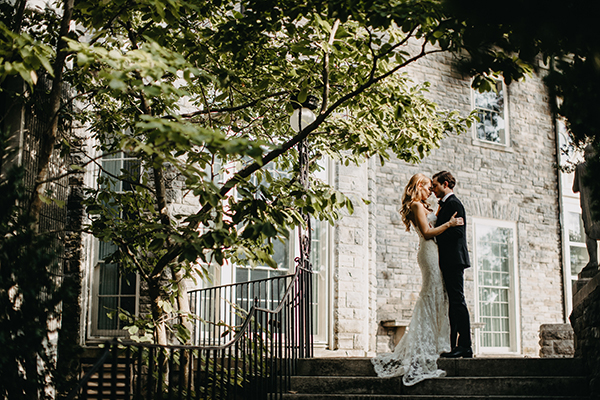
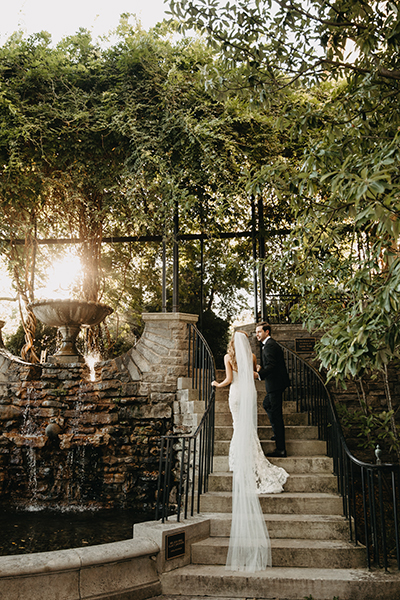
3. Pictures last a life time – Spend the day taking really great photos! You will feel like a million bucks, and no one will be waiting on you so they can eat dinner. Eliminating the stress and rush of a timeline will truly let your best side shine.

Weddings 5076
Weddings 5078

Whatever decision is best for you, the Cheekwood Special Events team is here to help you figure it out along the way. We offer a variety of services including:

• Photo sessions for those who want bridal portraits

• Small private evening ceremonies

• Daytime elopements

• Larger outdoor reception spaces with plenty of room for social distancing

Learn More

Photos courtesy of Janelle Elise Photography

test

Tots! Activity: Build a Bug

Tots! Activity: Build a Bug

As Cheekwood’s Tots program is temporarily suspended, we are sharing today’s activity for parents and tots to activate at home. Use our files to create your own build a bug, then share your work with us by tagging @cheekwood on Instagram and using #cheekwoodtots!

Here’s what you’ll need:• Construction paper in various colors

• Scissors

• Glue Stick or tape

• Markers or crayons

• Bug parts template
*See template below


Bug Template  


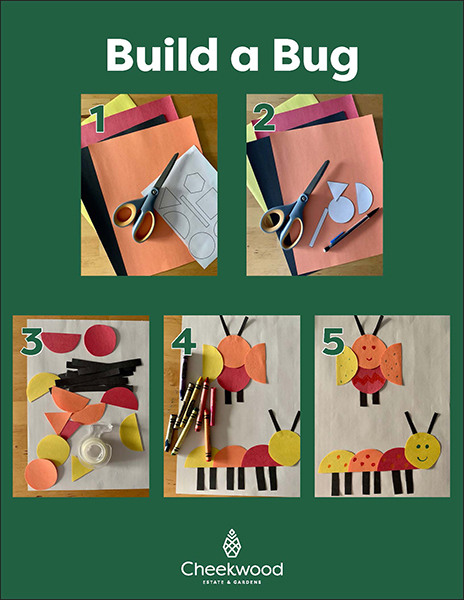
Directions:1. Print out the bug parts template. Color in the parts on the template or trace and cut pieces out of colored paper. Feel free to add as many of your own shapes.

2. Allow your Tot to use the various pieces to create their own bugs.

3. When ready, glue or tape down your bag. Use markers or crayons to decorate your bug!


Try pairing the activity with one of these books:
Some Bugs by Angela DiTerlizzi and Brendan Wenzel

Mrs. Peanuckle’s Bug Alphabet by Mrs. Peanuckle and Jessie Ford

Bugs! Bugs! Bugs! By Bob Barner


Ask your explorer: • What is an insect? What does an insect look like? They have six legs, three body sections, two antennae and a hard covering over its body.

• How are you similar to a bug? You both have heads, legs, eyes, etc.

• Why did you use those pieces to create your bug? How did you put them together?

• What is the name of the bug you made? What noise does it make? What does it do?

Build-a-Bug
test

Gardeners’ Top Picks June 2020

Gardeners’ Top Picks June 2020

Our gardens are now open, and we can’t wait to welcome you back to Cheekwood! Check out our garden team’s top plant picks for June.

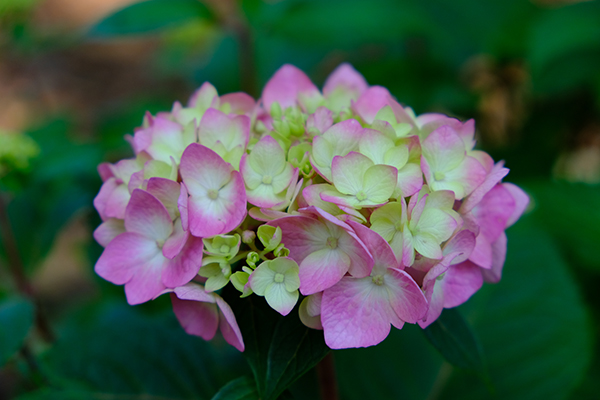
Big Leaf Hydrangea (Hydrangea macrophylla ‘Balimer’ ENDLESS SUMMER)

Bloom Time: June – September

Sun Requirement: Shade – part shade

Water Requirement: Medium

Tolerates: Low and high pH soils

Native to North America: No

Other: Blooms on both old and new growth which makes for A LOT of flowers!

Zones: 4 – 9

Location: Bracken Foundation Children’s Garden

Hydrangea-Endless-Summer-Bloomstruck

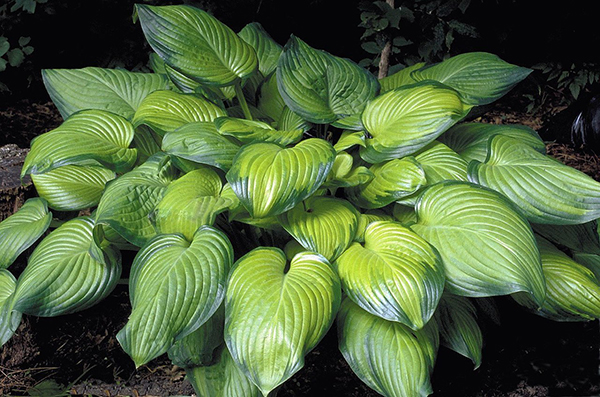
Plantain Lily (Hosta ‘Guacamole’)

Bloom Time: June

Sun Requirement: Shade – part shade

Water Requirement: Medium

Wildlife: Hummingbirds

Tolerates: Heavy shade

Native to North America: No

Other: Plant as a front border/protect from deer

Zones: 3 – 8

Location: Carell Dogwood Garden

Hosta-Guacamole-1

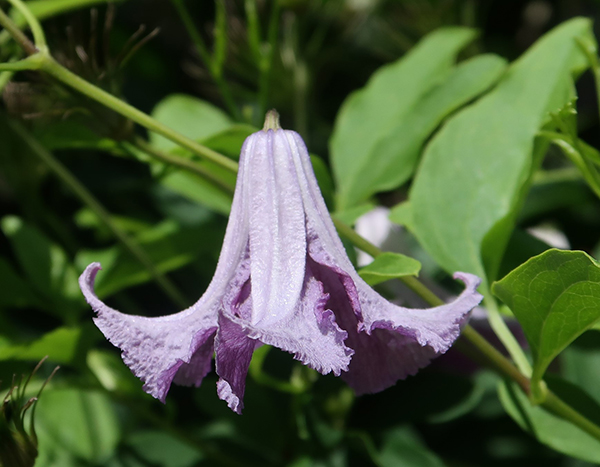
Clematis (Clematis viticella ‘Betty Corning’)

Bloom Time: April – September

Sun Requirement: Full sun – part shade

Water Requirement: Medium

Wildlife: Bees

Tolerates: Deer

Native to North America: No

Other: Vine/extremely heavy bloomer/unique flower shape/fragrant

Zones: 4 – 9

Location: Bradford Robertson Color Garden

Clematis-viticella-Betty-Corning

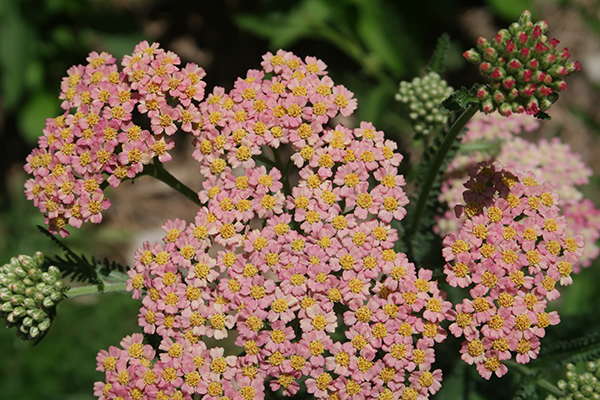
Yarrow (Achillea millefolium ‘Summer Pastels’)

Bloom Time: April – September

Sun Requirement: Full sun

Water Requirement: Dry – Medium

Wildlife: Butterflies

Tolerates: Deer & drought

Native to North America: Yes

Other: Naturalizes well/great cut flower

Zones: 3 – 9

Location: Howe Garden

Achillea-Summer-Pastels-Howe

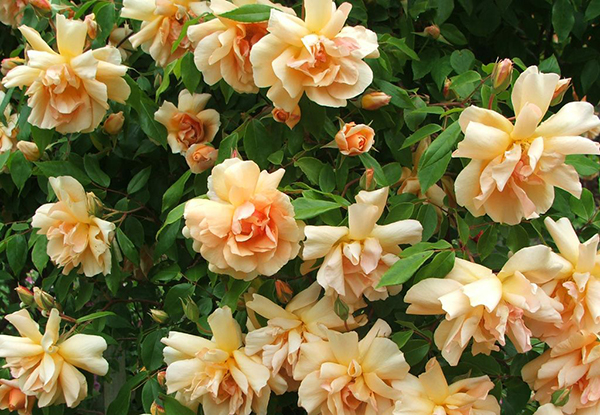
Climbing Rose (Rosa ‘Crepuscule’)

Bloom Time: April – October

Sun Requirement: Full sun

Water Requirement: Medium

Wildlife: Bees & Butterflies

Tolerates: Disease

Native to North America: No

Other: Lovely & powerfully fragrant rose/nearly thornless

Zones: 7 – 10

Location: Bracken Foundation Children’s Garden

Rosa-Crepuscule

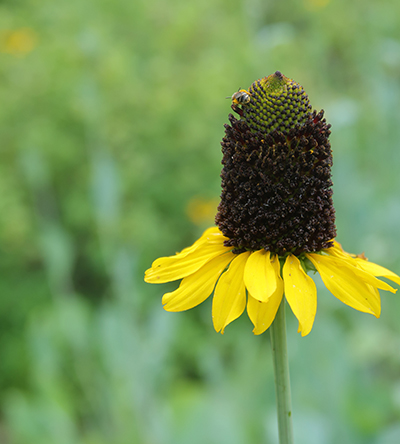
Mexican Hat Flower (Ratibida columnifera)

Bloom Time: June – September

Sun Requirement: Full sun

Water Requirement: Dry – Medium

Wildlife: Butterflies

Tolerates: Drought

Native to North America: Yes

Other: A fun-shaped native /perfect for butterfly gardens/plant in masses

Zones: 4 – 9

Location: Wills Perennial Garden

Ratibida-columnifera-Wills-Perennial-Garden

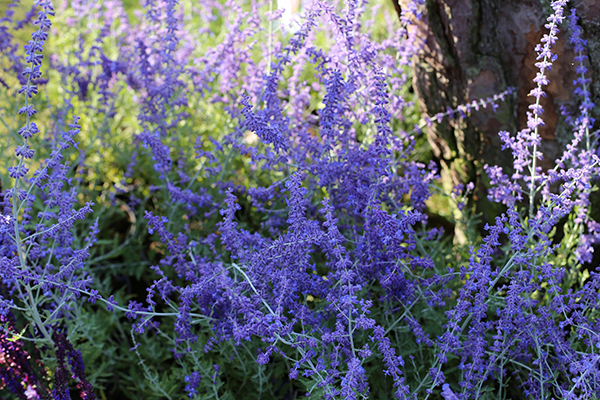
Russian Sage (Perovskia atriplicifolia)

Bloom Time: June – October

Sun Requirement: Full sun

Water Requirement: Dry – Medium

Wildlife: Bees & birds

Tolerates: Rabbit, deer, drought

Native to North America: No

Other: Great dry flower/fragrant foliage

Zones: 5 – 9

Location: Sigourney Cheek Literary Garden

Perovskia-Literary-Garden-1

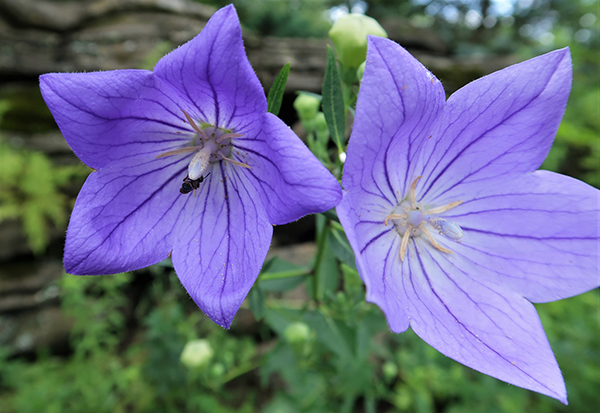
Balloon Flower (Platycodon grandifloris)

Bloom Time: June – August

Sun Requirement: Full sun – part shade

Water Requirement: Medium

Wildlife: Bees & Butterflies

Tolerates: Disease

Native to North America: No

Other: Balloon-shaped flowers/easily propagated from seed

Zones: 3 – 8

Location: Frist Learning Center: Rock Wall

Platycodon-grandifloris-Rock-Wall18
test

Tots! Activity: Mix and Match Animals

Tots! Activity: Mix and Match Animals

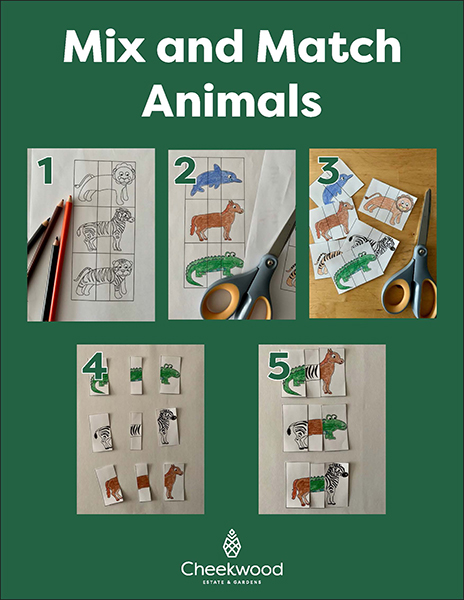
As Cheekwood’s Tots program is temporarily suspended, we are sharing today’s activity for parents and tots to activate at home. Use our files to create your own mix and match animals, then share your work with us by tagging @cheekwood on Instagram and using #cheekwoodtots!

Here’s what you’ll need:• Mix and match animal templates
*See template below

• Crayons, colored pencils or markers

• Scissors

• Glue or tape

• Paper


Animal Template  


Directions:1. Print out the mix and match animal template and color the animals in. Try to make each animal a different color.

2. Cut out the rectangles around the animals, and then the lines to separate the animal parts. You should have three sections per animal.

3. Mix and match pieces to make your own animals!


Try pairing the activity with one of these books:
Lots of Spots by Lois Ehlert

Dr. Seuss’s Book of Animals by Dr. Seuss

Spots, Feathers, and Curly Tails by Nancy Tafuri


Ask your explorer: • What kinds of different coverings do animals have? Fur, feathers, scales, skin.

• Why do you think tigers have fur instead of feathers?

• Why do you think an alligator has skin instead of fur?

• Can you name the new animal you created? Where does it live? What does it like to eat?

Mix-and-Match-Animals
test

Tots! Activity: Bird Nest

Tots! Activity: Bird Nest

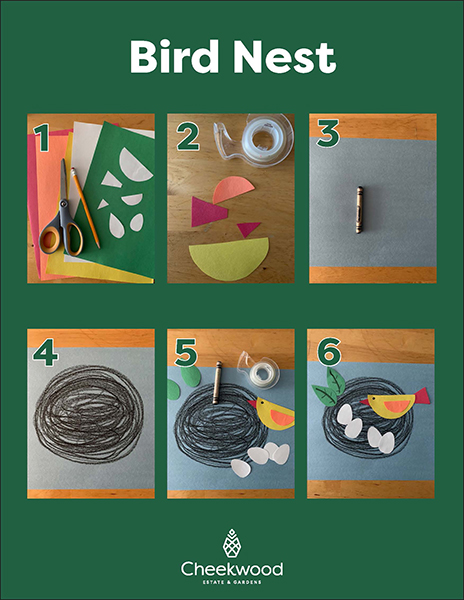
As Cheekwood’s Tots program is temporarily suspended, we are sharing today’s activity for parents and tots to activate at home. Use our files to create your own bird nest, then share your work with us by tagging @cheekwood on Instagram and using #cheekwoodtots!

Here’s what you’ll need:• Bird template
*See template below

• Crayons or markers

• Construction paper in various colors

• Glue or tape

• Scissors


Bird Template  


Directions:1. Print out the bird pieces template. Color the parts in or trace and cut them out of colored paper.

2. On a full piece of paper, draw a big bird nest by drawing ovals over and over or however your Tot decides a twiggy nest is drawn.

3. Assemble your bird by gluing or taping the parts together.

4. Arrange bird, leaves, and eggs in and around the nest and glue or tape all the pieces down.


Try pairing the activity with one of these books:
Birds by Lemniscates

Bird Watch by Christie Matheson

Bird Builds a Nest by Martin Jenkins and Richard Jones


Ask your explorer: • What materials do birds build their nests out of? What would you use to make your nest if you were a bird?

• What do birds use their nests for?

• Have you ever seen a nest in a tree?


Make a bird feeder for your yard: You will need an orange, bird seed, peanut butter, twine, a knife, a small bowl and spoon.

1. Cut your orange in half and scoop out the inside (enjoy as a snack) keeping the peel intact.

2. Poke four equidistant holes into the orange. Run the twine through the holes and tying it at the top so you can hang it up.

3. Fill with a peanut butter and bird seed mixture.

4. Hang it up outside and observe the birds that come to enjoy this treat!

Bird-Nest
Privacy Policy Sitemap Web design by Speak
Back to top