wordpress, Author at Cheekwood - Page 23 of 45 | Page 23
x icon Close
test

Tots! Activity: Egg Carton Turtles
Tots! Activity: Egg Carton Turtles

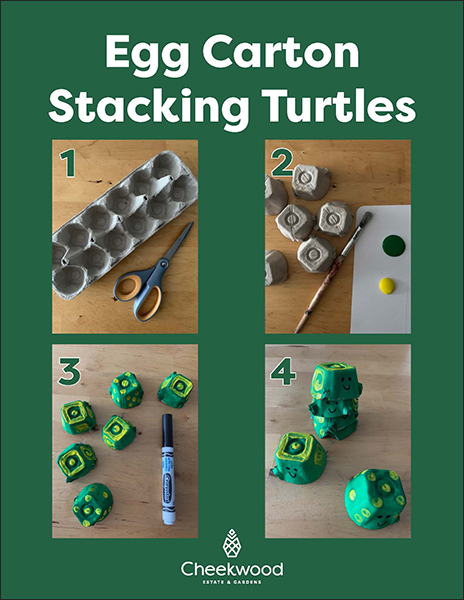
As Cheekwood’s Tots program is temporarily suspended, we are sharing today’s activity for parents and tots to activate at home. Use our files to create your own egg carton turtles, then share your work with us by tagging @cheekwood on Instagram and using #cheekwoodtots!

Here’s what you’ll need:• Egg carton (paper egg carton will work best)

• Scissors

• Green, yellow and brown paint

• Paint brush

• Black marker


Directions:1. Cut paper egg carton into sections so that they look like shells.

2. Paint each section green to look like a turtle and let them dry.

3. Paint on yellow dots and squares for the shell. See how many different turtles you can make.

4. Once completely dry, use a black marker to draw on a face.

5. See how many you can stack without them falling!


Try pairing the activity with one of these books:
Yertle the Turtle by Dr. Seuss

Turtle Splash! Countdown at the Pond by Cathryn Falwell

Mossy by Jan Brett

The Box Turtle by Vanessa Roeder


Ask your explorer: • What did we make our stacking turtles out of?

• What kind of designs did you put on your turtle shells? Why did you pick those designs?

• How many turtles can you stack? Count as you stack them.

• Are there other items at home that we can stack and count? Which items are easier to stack and why?


World Turtle Day is Saturday, May 23! Download our World Turtle Day coloring sheet below:

Turtle Coloring Sheet

Egg-Carton-Turtles
test

Tots! Activity: Turtle Suncatchers

Tots! Activity: Turtle Suncatchers

As Cheekwood’s Tots program is temporarily suspended, we are sharing today’s activity for parents and tots to activate at home. Use our files to create your own turtle suncatcher, then share your work with us by tagging @cheekwood on Instagram and using #cheekwoodtots!

Here’s what you’ll need:• Scissors

• Turtle part template
*See template below

• Crayons

• Hand pencil sharpener

• Wax paper

• Glue or tape

• Iron

• Dish towel or rag


Turtle Template  


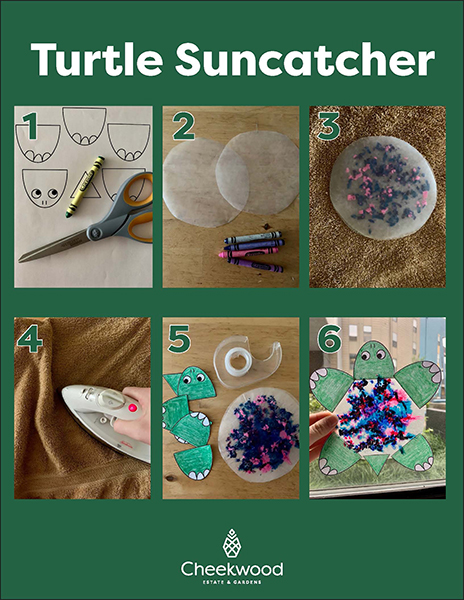
Directions:1. Print out the turtle template and either color it in or cut it out and trace on colored paper.

2. Cut two same sized circles of wax paper for the shell.

3. Shave old crayons and arrange the shavings in a thin layer onto one piece of the wax paper. Place the other piece of wax paper on top when finished.

4. Iron the wax paper between two old towels until crayon is melted and the wax paper is fused. Check every few seconds to see when crayons melt.

5. Once cooled, attach turtle head, feet, and tail with tape or glue.

6. Punch a hole in your suncatcher and loop string through.

7. Hang your suncatcher in the window!


Try pairing the activity with one of these books:
Turtle and Tortoise Are Not Friends by Mike Reiss

Truman by Jean Reidy and Lucy Ruth Cummins

The Foolish Tortoise by Eric Carle


Ask your explorer: • Where do you think turtles live?

• Are there different kinds of turtles? Do you think their shells look different?

• Do you think a turtle can take its shell off? They cannot! It grows with them.

• How did we make the turtle shell in our craft? How did we get the crayons to melt?


World Turtle Day is Saturday, May 23! Download our World Turtle Day coloring sheet below:

Turtle Coloring Sheet

Turtle-Suncatcher
test

Tots! Activity: Nature Prints

Tots! Activity: Nature Prints

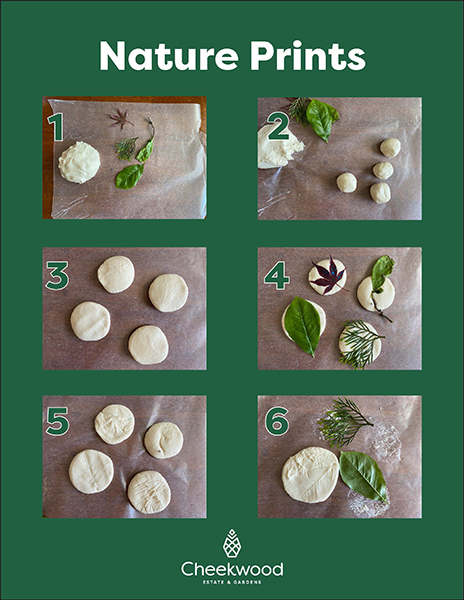
As Cheekwood’s Tots program is temporarily suspended, we are sharing today’s activity for parents and tots to activate at home. Use our files to create your own nature prints, then share your work with us by tagging @cheekwood on Instagram and using #cheekwoodtots!

Here’s what you’ll need:• 2 cups all-purpose flour

• ½ cup salt

• ¾ cup lukewarm water

• Found leaves, twigs, flowers, or any other natural material that has texture


Directions:1. Go on an adventure outside picking up fallen twigs, leaves, and flowers along the way. Look for items with a lot of texture for best results.

2. Make the salt dough by mixing 2 cups flour with ½ a cup of salt in a medium bowl. Slowly knead in ¾ cup of lukewarm water, or until the dough is smooth.

3. Roll dough into small balls, then flatten them slightly with the palm of your hand.

4. Place natural materials on the dough and press down further with the palm of your hand then remove the item. If you want to turn them into a necklace or pendant, poke a hole at least a pinky width away from the edge.

5. Either leave to air dry or bake at 250 for 1.5-2 hours.

6. Once dry, you can paint or color your creations or leave them as is!


Try pairing the activity with one of these books:
The Hike by Alison Farrell

Run Wild by David Covell

Finding Wild by Megan Wagner Lloyd and Abigail Halpin


Ask your explorer: • Can you help me mix this dough? What does the dough feel like?

• How are the natural items we collected similar and different?

• Can you tell me how we made these nature prints?

• Which nature print do you like best? Why?

Nature-Prints
test

Pollinators: The Rhythm Section of the Garden

Pollinators: The Rhythm Section of the Garden

Published: 5/13/2020

Pollination: most of us have a baseline understanding of what the word means, but do we fully understand what a vital force pollination has over the beauty and bounty that surrounds us? The success of our food supply is reliant on a myriad of small creatures who make up the very fibers of the world’s ecosystem. Let’s celebrate the birds, bees, butterflies, bats and other pollinators that are endemic to Tennessee by exploring ways in which we can make our gardens more inviting.

Pollinators are essential to a garden’s success, which can certainly be measured by beauty, though more quantitatively by a good harvest. These animals of various small sizes are essential to the world’s food supply, responsible for bringing us one out of every three bites of food. They also sustain our ecosystems and produce our natural resources by helping plants reproduce.

CaitlinHarris_Aug2016_Songwriters_117

It’s a well-known fact that the Earth’s natural areas have been devastatingly diminished by human activity. Pollinator populations are at a steady and severe decline as a direct result of habitat loss, pests and pathogens, exposure to pesticides and other stressors. Of all the world’s plants, three fourths rely on pollinators (mostly bees) to reproduce. According to the U.S. Department of Agriculture, bees have a crop value of $15 billion a year. To help counterbalance the plummet of these essential creatures, experts advise that we rethink weed-management strategies, as well as pesticide use (especially neonicotinoids), and encourage planting gardens that attract pollinators.

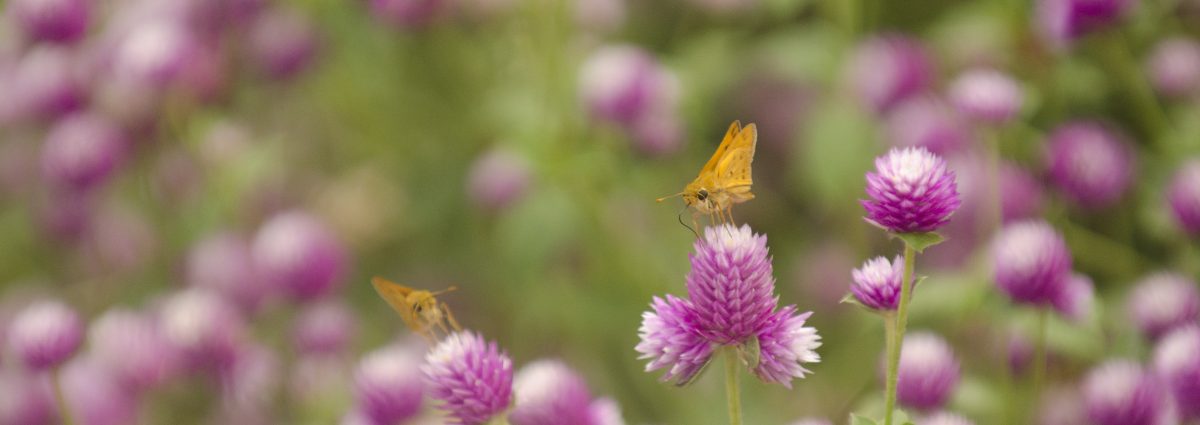
By growing mostly native plants in our gardens, including nectar-rich species, biodiversity is encouraged. Of the 55 genera of bees within Tennessee, some pollinators are “generalists” while others are “specialists”. Generalists will feed on a variety of nectars and pollens while specialists need only one species, either for feeding or for hosting their eggs. Goldenrod, or Solidago, is a good place to start if you want to increase the number of pollinators in your garden fast, since there are 13 species of insects that use this plant and this plant alone!

CaitlinHarris_DSC7114

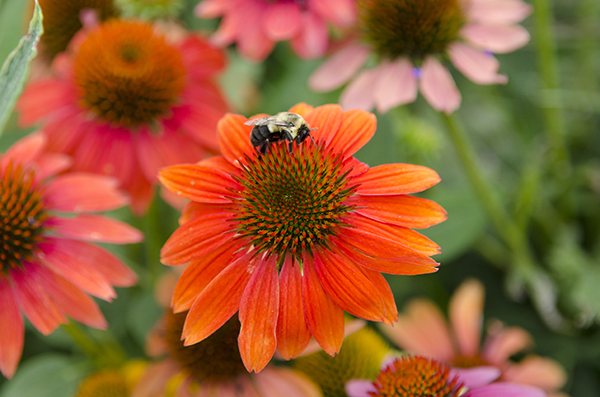
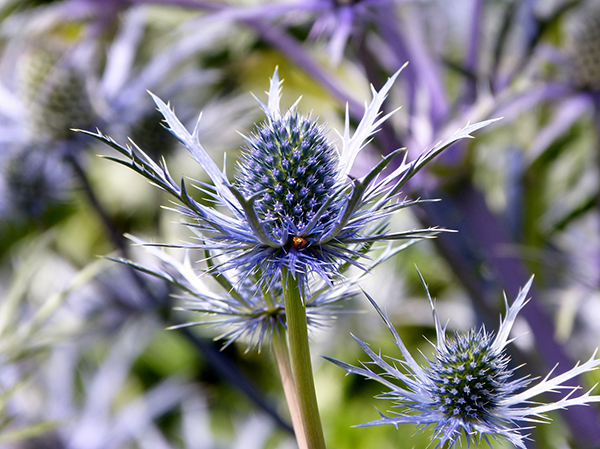
For the healthiest and most pollinator-friendly garden, plant lush layers of floral clumps. Focus on using several individuals of 5-7 different plants that together can ensure an extended bloom period, from March until frost or longer. Ask yourself if the plants you want to use are well-behaved while also providing effective habitats for the pollinators you want to attract, leaning more towards native species when in doubt. However, natives aren’t the only thing to consider when selecting plants. Bees prefer open-faced, or single-flowered blooms, like echinacea or hibiscus and flowers with exposed or long cylindrical centers like Ratibida (Mexican hat plant) and Eryngium (seaholly). Double-flowered blooms just make it too much of a challenge for bees and some other pollinators to access pollen and nectar.

When considering pollinator-rich gardens at Cheekwood, two gardens come to mind: Wills Perennial Garden and the Howe Garden. Both are different in terms of the plant material and the pollinators they attract. The Wills Perennial Garden is a healthy mixture of natives and non-natives, including the early-flowering Ribes odoratum (native) which attracts bees and hummingbirds, and the later-flowering purple-top verbena or Verbena bonariensis, a South American native that will flower until frost, attracts goldfinches. The Wills Perennial Garden also hosts a healthy planting of Asclepias curassavica that serves as a Monarch butterfly host plant.

Eryngium-Sea-Holly4386601_1920

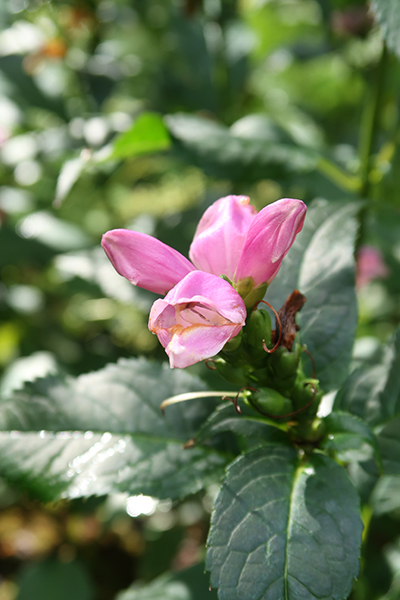
The Howe Garden is a nearly-native garden, staying true to its mission statement and the namesake’s (Cora Howe) legacy, growing many Asclepias tuberosa (butterfly weed), native azaleas, and Tennessee coneflower. I like to think of pollinators as the rhythm section of the garden, steadily increasing the pace until the garden crescendos at the peak of summer and afterward, producing each note slightly further apart as the garden prepares to sleep. This garden awakens before the dawn of spring, in late February. Crocus, Claytonia, Witchhazel, Snowdrops, and Trillium emerge to meet the most eager of pollinators, those bees that venture from the nest for a couple of hours a day as the temperatures begin to rise. Late flowering perennials such as Rudbeckia, Chelone, and Aster, extend the party for those pollinators that linger until later fall and early winter.

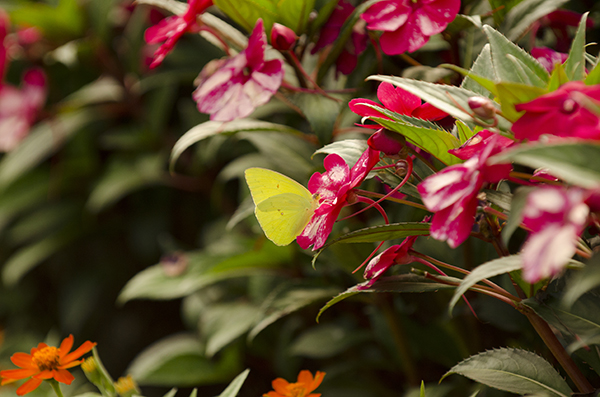
Besides growing plants that pollinators use for food and host plants, there are several other things that can be done within the garden to encourage bees and butterflies to stick around. Planting a row of shrubs or even using a fence can shelter the habitat or garden from wind that can be disruptive to the habitat. Situating your garden in a sunny location is good not only for pollinator-loving plants, but for the insects themselves. Butterflies, in general need warm wings (a minimum of 58 degrees is required) and the sun also helps them with orientation. Be sure to also include plants and shrubs that provide shelter to give butterflies refuge for when inclement weather occurs, or predators are in the area. Salt minerals are also beneficial to butterfly health. This is the reason they can be seen gathering in muddy areas. Keeping a few shallow pans inserted into the ground full of wet, course sand will also add to their quality of life.

A reliable water source is also vital for happy bees. Making a little water oasis with a shallow, pebble-filled container and keeping it fresh will ensure that the bees have plenty of clean drinking water.

Chelone-Howe-2

Twice a year in spring and fall, representatives of the North American Butterfly Association conduct a butterfly count. Below are notes taken from their visit to Cheekwood in September 2019.

North American Butterfly Association

Fall Butterfly Count 9/9/2019

Cheekwood —Rita Venable (observer)

9:15–11:15 a.m.

73–85 deg, F.

20% cloud cover

Wind 0–5 mph.

Covered about 1 mile on foot.

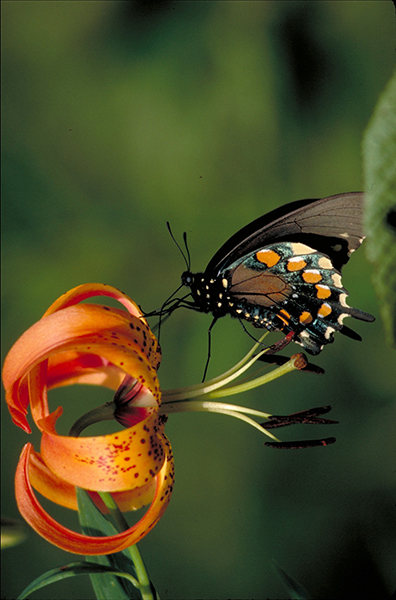
1. Pipevine Swallowtail–2

2. Orange Sulphur–1

3. Cloudless Sulphur­–7 (nectaring on orange canna, honeysuckle, & cardinal flower)

4. Sleepy Orange–2

5. Dainty Sulphur–1

6. Eastern Tailed-Blue–1

7. Gulf Fritillary–12

8. Pearl Crescent–1 (nectaring on mistflower)

9. American Lady–1

10. Common Buckeye–6

11. Hackberry Emperor–2

12. Monarch–1

13. Silver-spotted Skipper–4

14. Wild Indigo Duskywing–4 (1 egg-laying)

15. Clouded Skipper–3

16. Least Skipper–1

17. Fiery Skipper–20

18. Northern Broken-Dash–1

19. Sachem–13

20. Dun Skipper–1

21. Bell’s Roadside-Skipper–2

Field notes: Groundhog, white crownbeard covered with soldier beetles, Eastern bluebird, Carolina wren. Two Wild Indigo Duskywing eggs on wild indigo. Dry weather conditions were ameliorated by the watering of plants.

By fostering gardens for pollinators, we can help offset agricultural spraying and land development contributing to the resulting habitat loss while creating a slice of beauty for ourselves and our neighbors to appreciate. Start small and use plants that create good habitat, minimize pesticide use, and conserve water and soil.

pipevine-swallowtail-butterfly-1155963
test

Tots! Activity: Nature Brushes

Tots! Activity: Nature Brushes

As Cheekwood’s Tots program is temporarily suspended, we are sharing today’s activity for parents and tots to activate at home. Use our files to create your own nature brushes, then share your work with us by tagging @cheekwood on Instagram and using #cheekwoodtots!

Here’s what you’ll need:• Twigs/sticks

• Found leaves, flowers, grass

• String

• Hot glue (optional)

• Paper

• Paint


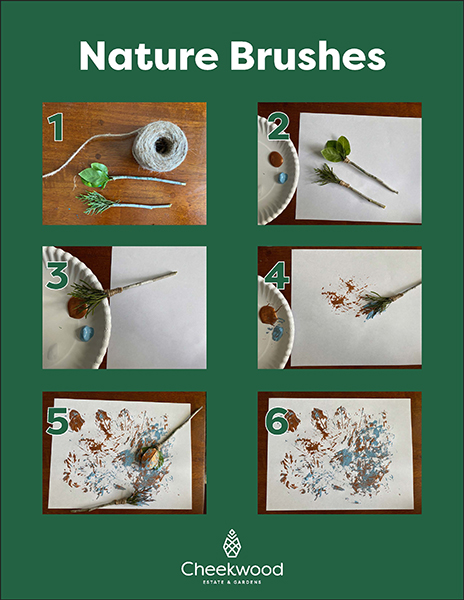
Directions:1. Go on an adventure outside picking up fallen twigs, leaves and flowers along the way.

2. When ready to paint, use string or hot glue to fasten the natural materials to the twigs to make brushes. If you want to make it easier, you can skip attaching your natural items to the twigs.

3. Use the brushes you’ve made to paint and stamp your own nature paintings!


Try pairing the activity with one of these books:
Grandpa Green by Lane Smith

Florette by Anna Walker

The Balcony by Melissa Castrillion


Ask your explorer: • What did you see on our adventure? What sounds did you hear?

• Compare the natural items you gathered on your walk. How are they similar? How are they different?

• What paintbrush do you like the best? Why?

• What are different ways we can sort the left-over gatherings we didn’t use? Can we sort the natural items by their color, size or type of item?
Nature-Brushes
test

Martin Boxwood Gardens

Martin Boxwood Gardens

In celebration of Cheekwood’s 60th anniversary as a public institution, we’re highlighting one of our 12 distinct gardens each month to showcase our wide variety of garden offerings. With 55 acres of rolling hills and 12 intricate, unique gardens, there’s something for everyone to experience and love at Cheekwood.

In celebration of Cheekwood’s 60th anniversary as a public institution, we’re highlighting one of our 12 distinct gardens each month to showcase our wide variety of garden offerings. With 55 acres of rolling hills and 12 intricate, unique gardens, there’s something for everyone to experience and love at Cheekwood.

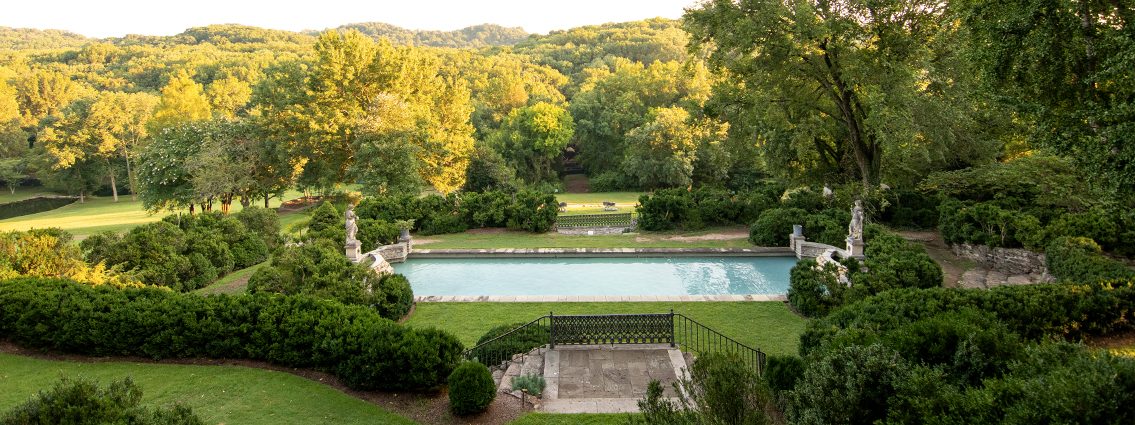
Leslie Cheek Sr. had been acquiring specimen boxwood throughout the South for years. It was a popular trend during the Country Place Era period to obtain and showcase mature plants in the landscape, giving the effect of antiquity to the estates constructed with the money acquired from the success of the Industrial Revolution. The extensive boxwood planting became central to the development of the Cheek’s estate and established Cheekwood’s very first horticultural plant collection.

©Caitlin Harris Photography

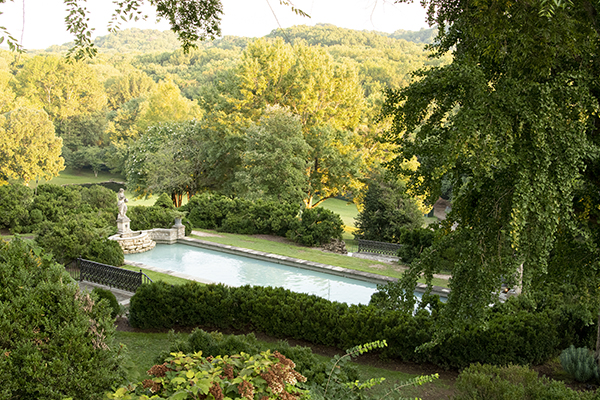
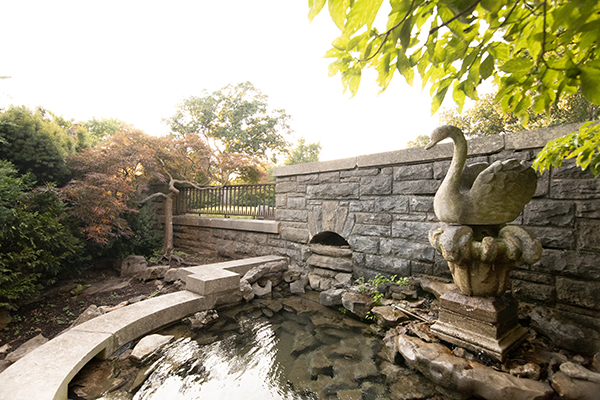
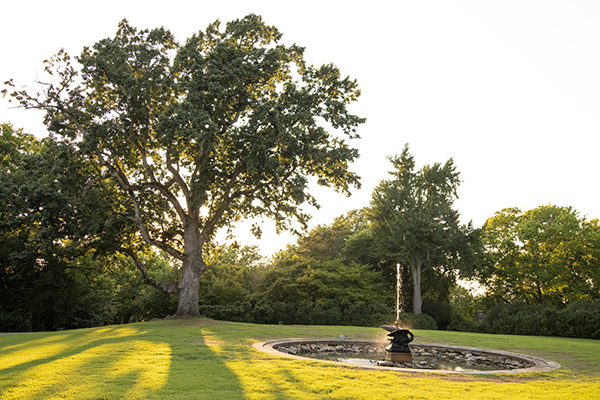
Bryant Fleming the architect of both the mansion and surrounding landscape of Cheekwood had a deep reverence and understanding of European gardens and estates, which is apparent in his work.  At Cheekwood, garden rooms, axial planning, and vistas reflect principles of Italian Renaissance garden design (1330–1550). Transitions—terraces, water elements, and sculpture—are placed to signal a shift in mood. Leslie Cheek’s boxwoods provide the necessary green architecture to create border walls and enclosures connected by natural staircases. The swan, a common Renaissance symbol, is used in two fountains—a large one in the middle of Swan Lawn and a smaller one, the Petite Swan Fountain, near the Loggia. The diminished boundaries between interior and exterior spaces, the strong visual connections created by the use of sculpture and other elements, and the incorporation of circulation within design echo Italian garden effects.

In placing the structures, Fleming juxtaposed his strong use of axes with a lack of symmetry, as in the off-centered orientation of the Swan Fountain. Asymmetrical garden rooms create more intimate experiences than those built on principal axes. Fleming took lines of vision and clarity of spatial structure into account when connecting elements. Examples of this design logic can be seen in the way one’s eye is led from the entrance gate to the front of the Mansion, the rear Loggia to the Swan Fountain, and from the Swan Fountain to the distant hills. Fleming’s goal was to direct the visitor’s attention to the grand vistas beyond the property.

©Caitlin Harris Photography

In 1951, the “Great Blizzard” brought 8 inches of ice and snow, resulting in the worst recorded ice storm in the history of Nashville and killing many of the shrubs in the circular Boxwood Walk that he had collected. Huldah Cheek Sharpe promptly had her father’s treasured boxwoods replaced. In the following decades, a renovation of the boxwood garden, including the Reflecting Pool, was completed by Page/Duke Landscape Architects, and thereafter was called the Martin Boxwood Gardens.

Click here to read about our other distinct gardens.

test

Tots! Activity: TP Roll Fish

Tots! Activity: TP Roll Fish

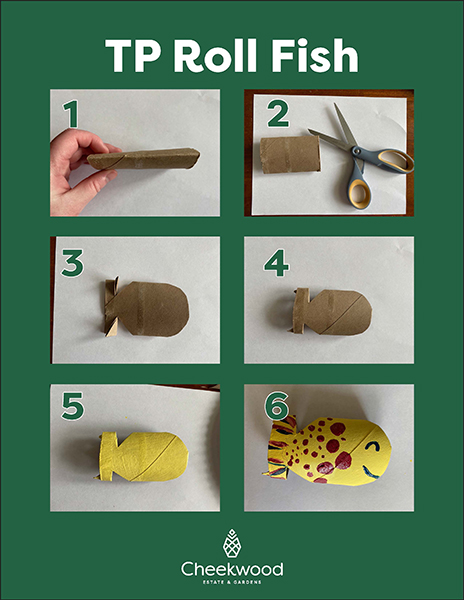
As Cheekwood’s Tots program is temporarily suspended, we are sharing today’s activity for parents and tots to activate at home. Use our files to create your own fish, then share your work with us by tagging @cheekwood on Instagram and using #cheekwoodtots!

Here’s what you’ll need:• Paper towel roll or toilet paper roll

• Paint

• Paint brushes

• Scissors


Directions:1. Flatten cardboard tube.

2. On one open end, cut a semicircle. On the other side, cut two little slits for a tail.

3. Bend those inside the tube to form the tail.

4. Paint your fish!


Try pairing the activity with one of these books:
Swimmy by Leo Lionni

The Pout-Pout Fish by Deborah Diesen

The Rainbowfish by Marcus Pfister


Ask your explorer: • What are some ways animals move? Use the printable cube template below to move like a pond animal.

• Do some animals move in more than one way? For example, on the cube, the duck waddles and flies.

• What is it about an animal that helps them move in a certain way? Is it their fins, wings, legs?


Move like a pond animal: Print out and assemble this cube to move like a pond animal. Cut the image out along the outline. Make sure not to cut between the shapes. Fold the tabs, put glue on the tabs and fold into a cube.


Cube Template

TP-Roll-Fish
Privacy Policy Sitemap Web design by Speak
Back to top