Gardens Archives - Cheekwood
x icon Close
test

The Decorating Dream Team Returns: How Laura Dowling, Renowned Floral Designers and Volunteers Transformed the Historic Mansion for Another Holiday Season
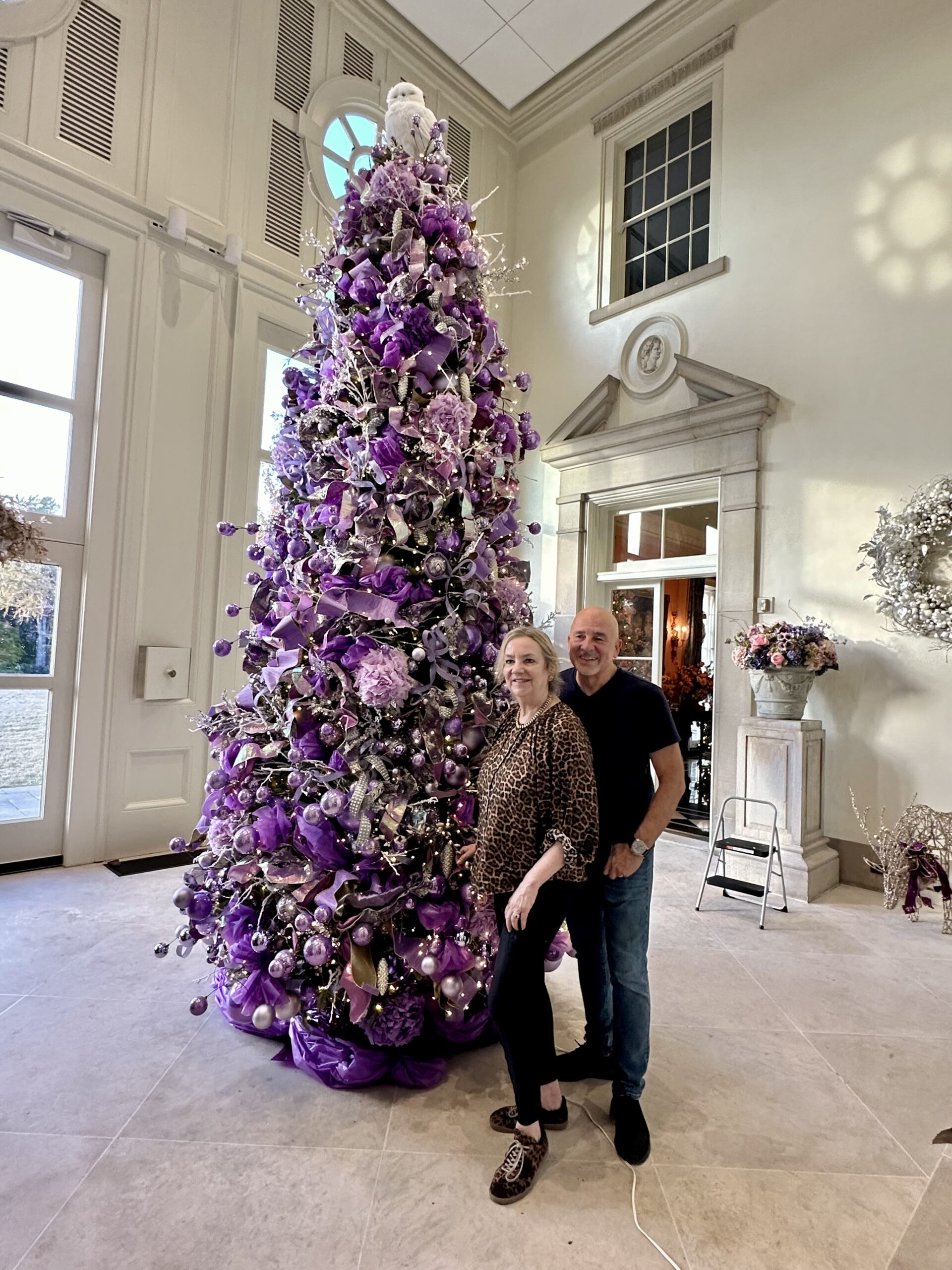
Featured image: Laura Dowling and designer Paul Miller in the Loggia at Cheekwood.

Flower power has taken over the Historic Mansion and Museum at Cheekwood Estate & Gardens for the second year in a row, but this year’s project comes with a fresh approach, newly imagined décor and help from some additional friends.

At first glance, the scene looks familiar. Carefully stacked boxes of ornaments, ribbons, and trimmings fill every empty inch of open space in the period rooms in the Mansion. The flurry of activity crescendos as the opening night of Holiday LIGHTS looms.

However, a closer look reveals some changes starting with the overall theme – Sweet Holiday Dreams.

“This year’s theme reinterprets the Mansion’s holiday décor as a series of enchanting vignettes inspired by classic stories, songs, and traditions,” said Laura Dowling, the former Chief Floral Designer at the White House and the mastermind behind the project. “The idea is that Christmas comes alive in dreams. From music to movies, there is this connection between the holiday and dreams.”

After creating, designing, and installing last year’s stunning décor in the Cheekwood Mansion, Dowling said it was a year-long planning process to devise the new theme, color palettes for each room and envision different decorations for each space. She was inspired by visions of sugarplums, candy-colored hues, and chestnuts roasting over an open fire. 

A discerning eye may recognize individual ornaments or ribbons used in last year’s display but will also notice each has been repurposed in a new way.

“My goal was to use all of the ornaments, ribbons, and topiaries from last year and reimagine them in different spaces throughout the Mansion to create an entirely new look and theme,” said Dowling. “It shows it is possible to use a base collection of décor embellished with a few new elements to create fresh and inspiring designs year after year.”

Whether it is vibrant bursts of color in the Drawing Room inspired by Dolly Parton’s “Hard Candy Christmas” or the whimsical pink and purple trees in the Loggia that pay tribute to the Sugarplum Fairy in The Nutcracker, each space comes alive with vintage-style ornaments, festive bouquets, colorful ribbons, and striking topiaries, wreaths, trees, and garlands – all created with Dowling’s signature touch, infused with her love of history, Paris, and the French garden-style.
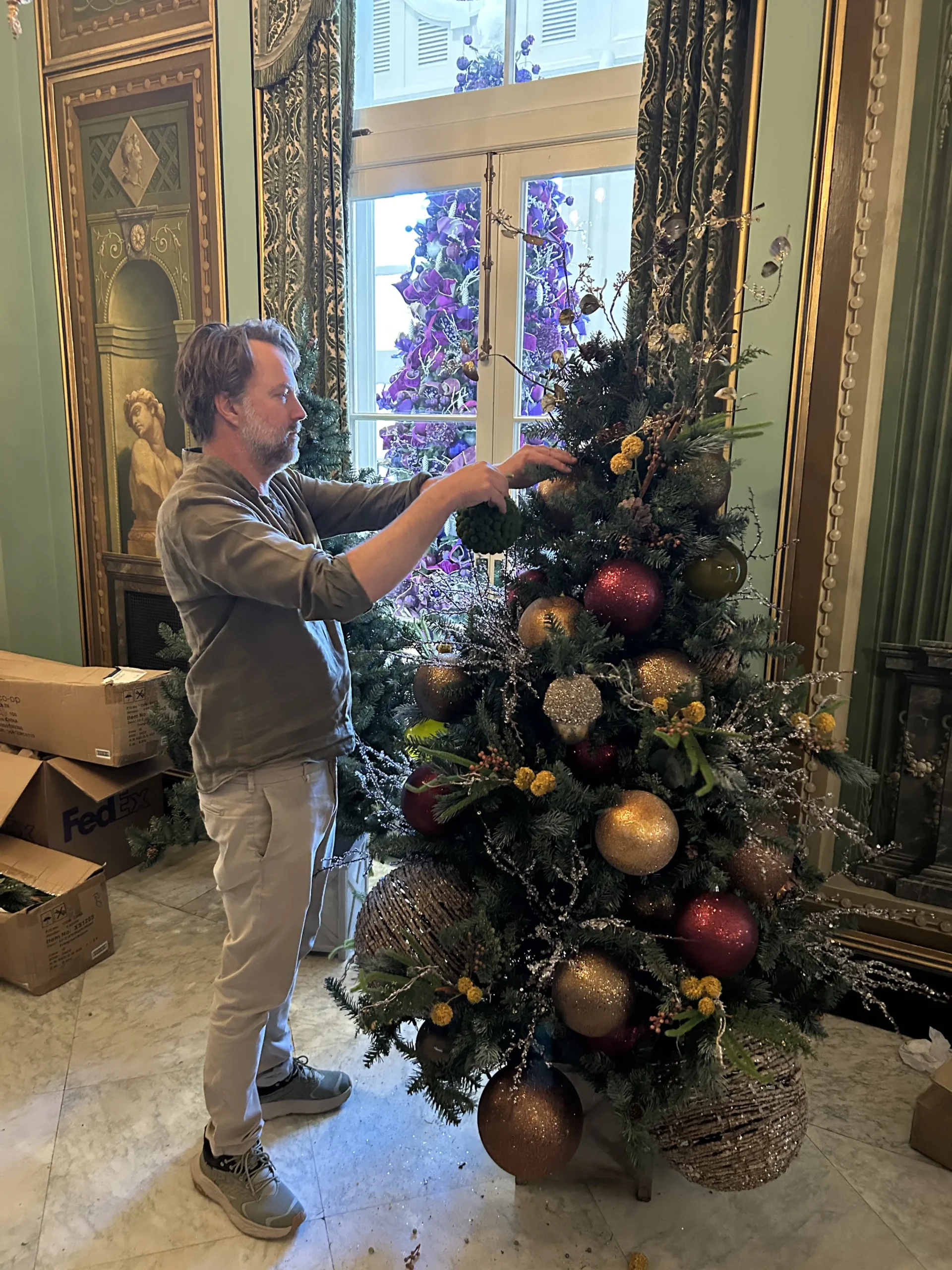

Image 1_Robbie Honey

Robbie Honey decorates a tree in the Mansion.
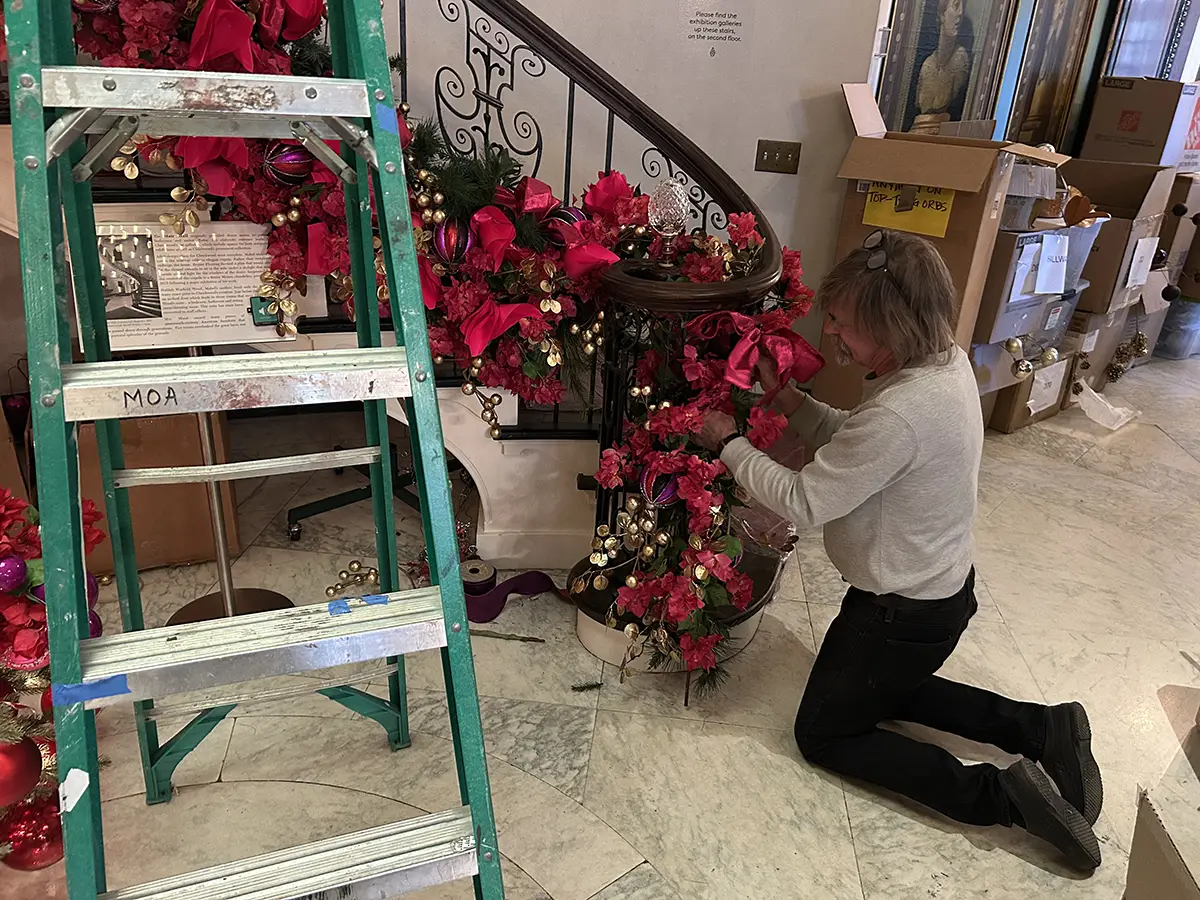
Image 2_Designer works on stairs

A designer decorates a tree in the Mansion.
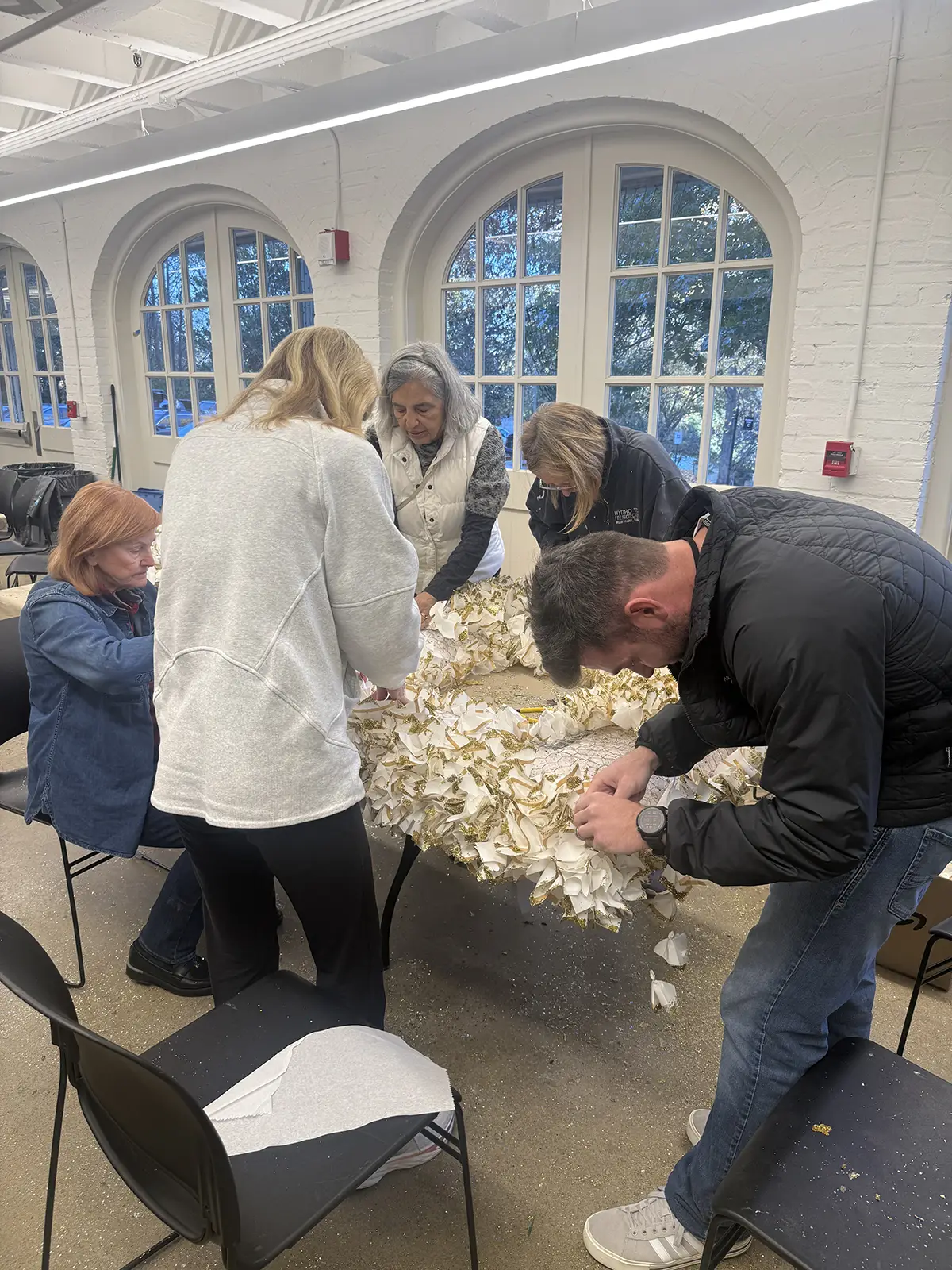
Image 3_Volunteers

Volunteers work on a wreath during Holiday LIGHTS Craft Days.


Transforming more than 10 spaces at the Cheekwood Mansion is just the latest impressive accomplishment on Dowling’s resume. Having served as Chief Floral Designer at the White House from 2009-2015, she managed the floral design for thousands of private and official White House parties, receptions, and state dinners as well as large-scale installations for the Fourth of July, Halloween, and the iconic White House Christmas. She is also an author of five books and is a regular speaker at national, regional, and local horticulture associations, garden clubs, and museums.

The opportunity to collaborate with Dowling brought many familiar faces back to Cheekwood – even if they had to travel across the world to make it happen.

“I did want to come back, but wasn’t going to due to a schedule conflict,” said Robbie Honey, author and renowned floral designer, who traveled from Cape Town, South Africa, to Nashville. “Laura got in contact and said, ‘Can we make this happen? Let’s make this happen,’ and I jumped at it. It is great to be a part of the team.” 

The dream team of florists who brought Dowling’s designs to life was smaller this year, which Dowling said added cohesion and expedited the design process.

“The people who are here are all world-class designers who bring their own touch and ideas to the project,” said Dowling.

While the number of designers working in the Mansion may have decreased, the number of volunteers helping in the studios in the nearby Frist Learning Center more than made up the difference.

For about three weeks, a group of extraordinary volunteers of all ages and levels of artistic ability contributed their time to participate in “Holiday LIGHTS Craft Days.” They were tasked with completing a series of small projects that ended up having a big impact on the overall installation and design. With painstaking precision and hours of dedication, the volunteers took a combination of craft paper, tissue squares, masking tape, and glitter and turned it into about three dozen decorative balls that would later appear on the trees throughout the Mansion. Others dipped 40,000 handmade paper florets in glitter to help create four beautiful geometric snowflake wreaths for the Loggia doors.

“It’s really a testament to how you can take simple things and transform them into something beautiful,” said Dowling.

Many volunteers ended up staying long past their scheduled shifts lending their time and talent to help bring Laura’s vision to life.  

“We had so much fun,” said Joan Cheek, a longstanding Cheekwood board member, supporter, and volunteer. “Sometimes we just opened boxes of ornaments and added wires, so they were ready to hang. Whatever the designers needed, we were ready to help.”

Everyone who played a role in transforming the Mansion into a winter wonderland agrees they can’t wait for guests to come to Cheekwood to see the finished product.

“I think what Laura does so well is using what we had before and transforming it and creating something new and extraordinary,” said Honey. “You will be able to recognize elements if you look closely. Otherwise, you will think it is all new. I hope it inspires a sense of wonder and joy.”

“It’s a privilege to work here and bring creativity, beauty, and inspiration to visitors at Cheekwood,” said Dowling.

Guests are welcome to tour the Mansion during the day or in the evening during Holiday LIGHTS. Holiday LIGHTS opens on November 21 and runs until January 4, 2026.
test

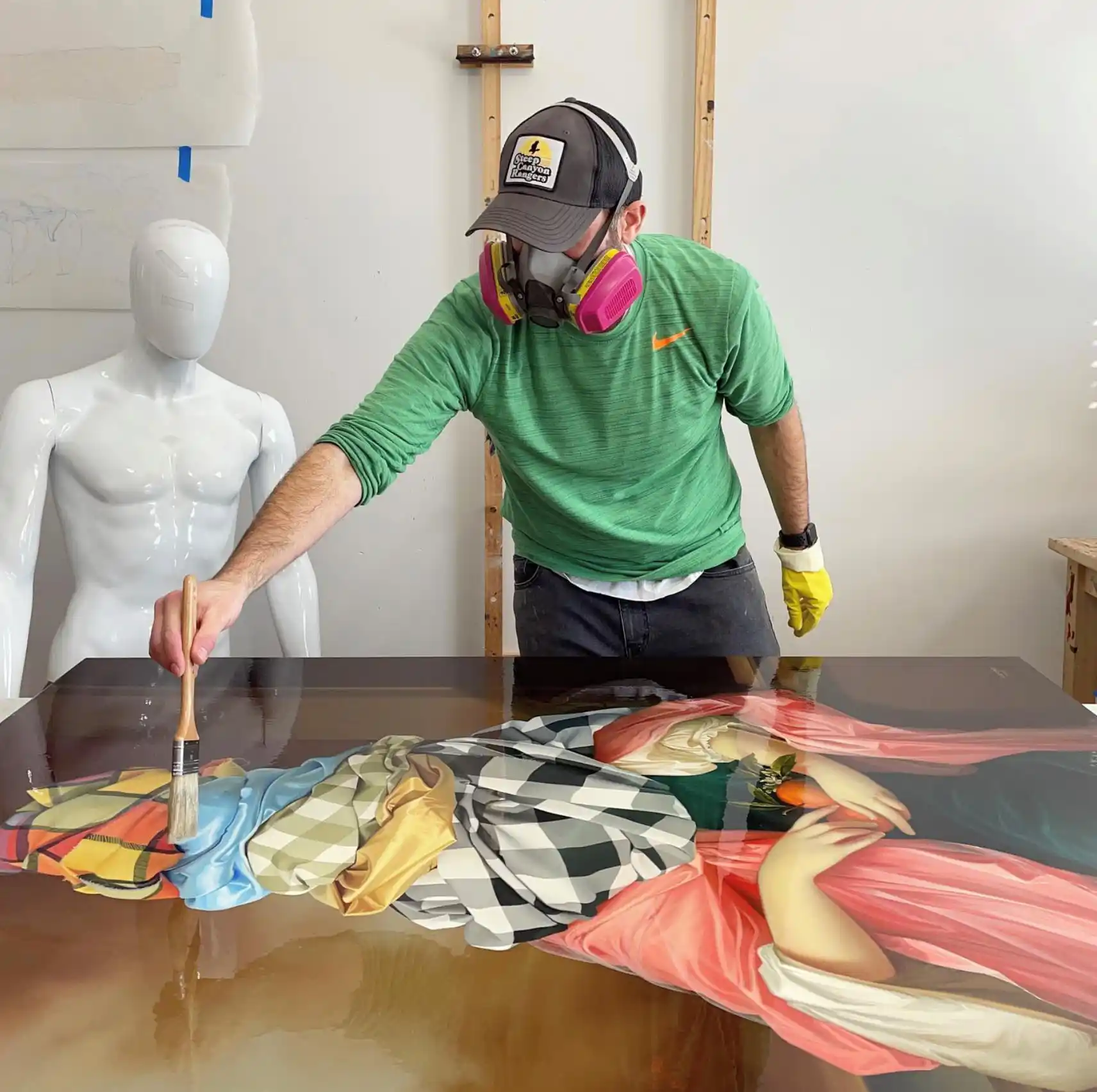
Behind the Curtain with Artist Shawn Huckins

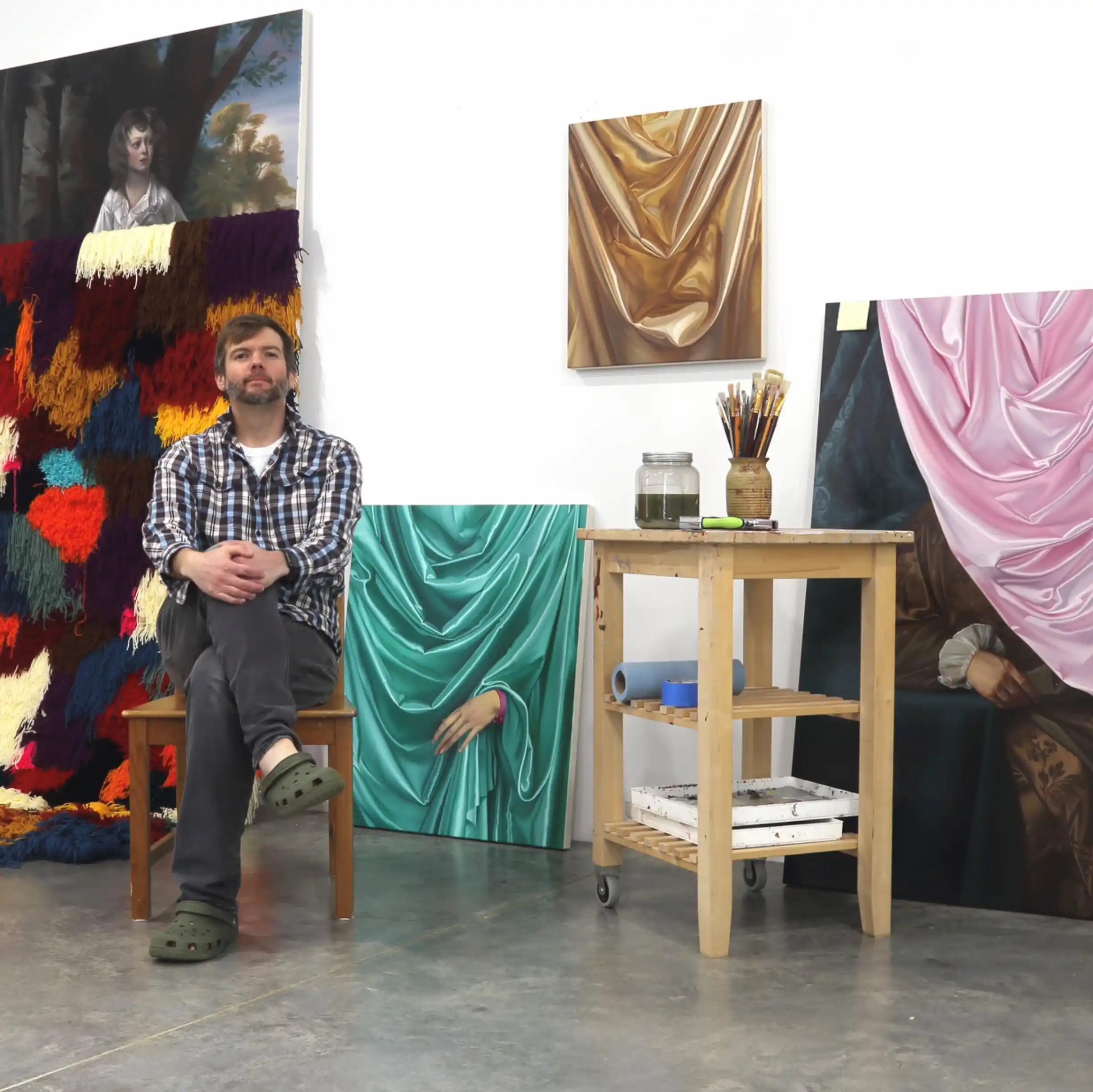
IMAGE 2_ShawnInStudio1
Featured image and image above: Shawn Huckins, courtesy of Shawn Huckins Studio.

Cloth can both conceal and reveal — draped to cover, worn boldly as a statement, or pulled aside to unveil a surprise. Painter Shawn Huckins uses textiles to explore ideas about identity and blending worlds in INTERVENTIONS: Shawn Huckins, on view at Cheekwood through October 26. Launched in 2021, the INTERVENTIONS series invites artists to engage with the Cheekwood Mansion’s historic interiors through their own creative lens.

Seven of Huckins’ paintings are integrated into the historic period rooms of the Mansion, threading a compelling connection between past and present. Each piece draws inspiration from Cheekwood’s permanent collection and its 55-acre estate, inviting visitors to explore history through a modern lens.

Rooted in classical imagery, Huckins’ paintings blend into the Mansion’s surroundings, but a closer look reveals unexpected details.

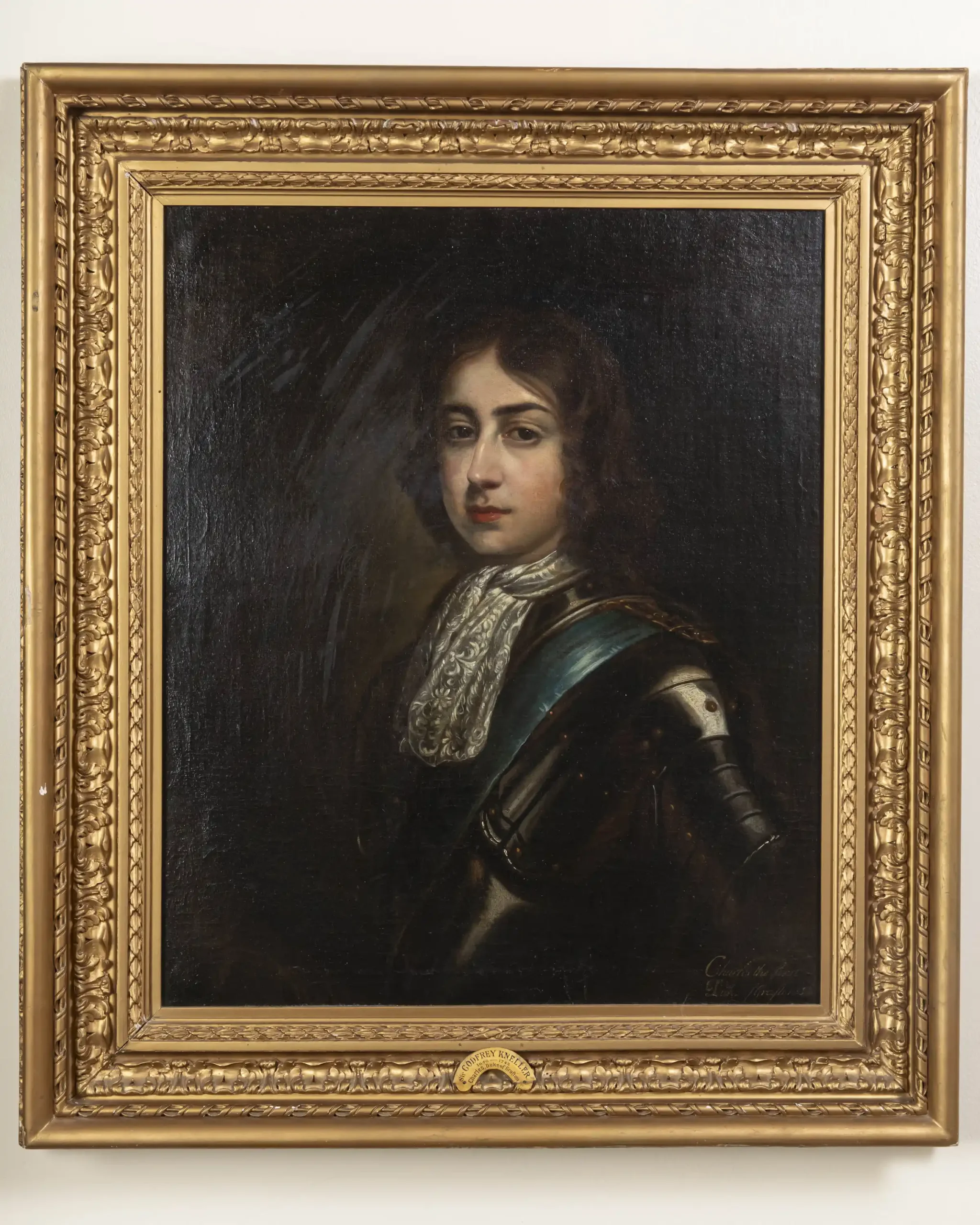
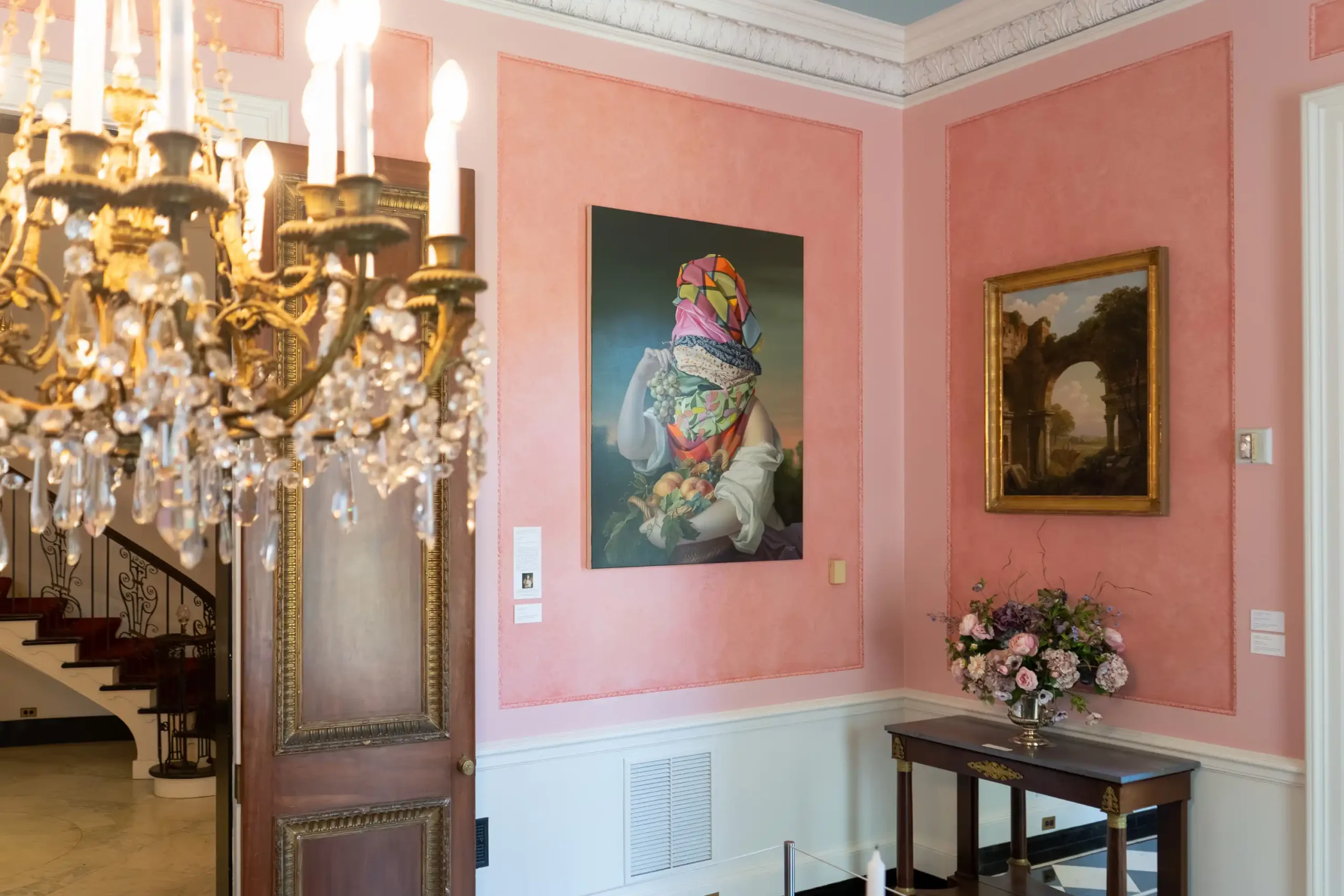
In the Drawing Room, you’ll find Huckins’ contemporary painting Portrait in Metallic Chrome Fabric (Henry Fitzroy after Kneller), inspired by a 17th-century portrait from Cheekwood’s permanent collection. Huckins painted Fitzroy, a military commander, with a silver fabric obscuring part of his face. The juxtaposition of traditional portraiture and flowing metallic fabric creates an interesting peek-a-boo effect.


IMAGE 3_Portrait in Metallic Chrome Fabric (Henry Fitzroy after Kneller)
Shawn Huckins (American, b. 1984), Portrait in Metallic Chrome Fabric (Henry Fitzroy after Kneller), 2025, Oil and acrylic on canvas. On loan from the artist.
IMAGE 4_Cheekwood Doc-8
Godfrey Kneller (English, 1646–1723), Henry Fitzroy (1663–1690), First Duke of Grafton, c.1685, Oil on canvas, Gift of Mr. Thomas Levis. 1961.17.

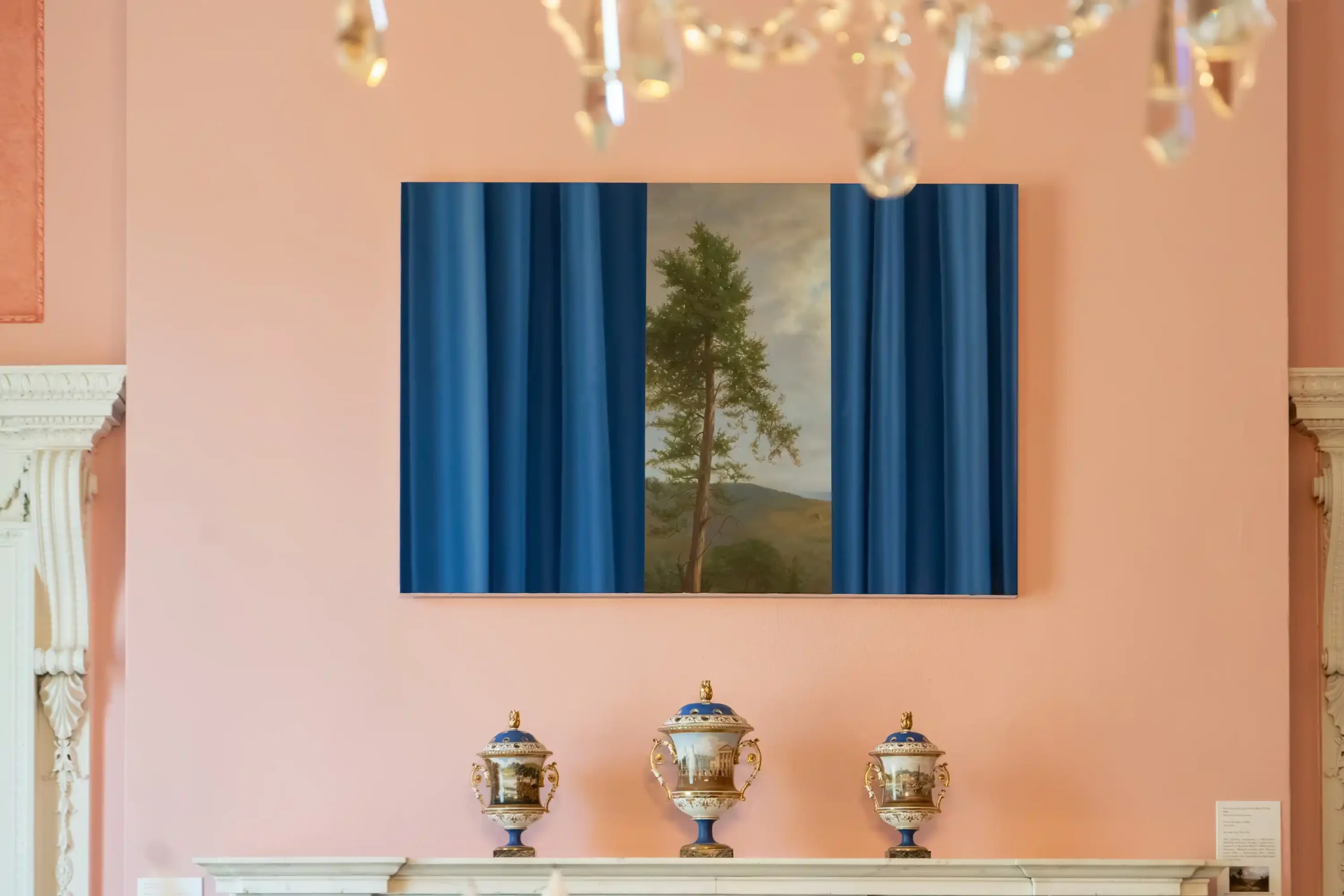
In the Dining Room, the artist took inspiration from the lapis lazuli fireplace, infusing its rich blue hue into Tennessee and Lapis Lazuli Blue Curtain, a Hudson River School-style landscape that reinterprets Alexander H. Wyant’s 1866 painting Tennessee.

Two works in the Butler’s Pantry honor Dutch vanitas painting, featuring hyper-realistic floral still lifes. “These are more experimental to honor Cheekwood’s gardens,” says Huckins, noting this was his first foray into painting flowers. The blooms nod to vanitas symbolism — flowers that wilt as a reminder of life’s fleeting nature.

To achieve lifelike draping in his creations, Huckins arranges real fabric around Isaac, his studio mannequin, and studies how the textiles fall under light. He also experiments with arrangements on the computer before drawing his composition to canvas.

Though everything is painted in INTERVENTIONS, Huckins has used real 3D textiles in his art. “In my last series, I incorporated yarn into the paintings. I made these latch-hook rugs and attached them to the canvas. It was difficult and it made me sneeze a lot, but it was fun,” he says with a laugh.

Playfulness and humor are hallmarks of Huckins’ work, but deeper messages lie within the layers — personal expressions of wrestling with his own insecurities and inner critic. He hopes viewers take away something optimistic.

“The paintings are about identity, so I hope people realize their own self-worth and that there’s beauty all around,” Huckins says. “We’re living in some hard times right now, so just to see the simple things in life — like a tree between two curtains — can be beautiful.”

In the Q&A below, Huckins shares more about his craft and the inspiration behind his INTERVENTIONS exhibition at Cheekwood.

IMAGE 5_Tennessee_DSC4198
Tennessee and Lapis Lazuli Blue Curtain by Shawn Huckins at Cheekwood. Photography by Diana Rosales.


Can you tell us a little bit about your background as an artist?

I’m from Peterborough, New Hampshire, which is a small arts center town in Southwestern New Hampshire. I went to school for film, design, and architecture but I switched because it was too computer based. I graduated in 2006 with a degree in studio art. After that I took day jobs to pay the bills, but I had a text series that got some recognition, and I went full-time as an artist around 2011.


How did you get into this realistic style of painting?

My family, they’re a bunch of carpenters and architects, so everything is detail-oriented and that kind of rubbed off on me. It’s been ingrained in me to be precise in my craft. I tried to do abstract work in the past. My professors in school were like, “Shawn, just loosen up a little bit, you gotta relax.” And I’m like, “I’ll try, but I can’t” [laughs].


What inspired you to start blending classical artworks with modern, contemporary elements?

When I was in school I didn’t take any figure painting courses. When I graduated, I wanted to teach myself how to paint portraits and learn the flesh colors, so I would copy old masters by tracing them to teach myself how to paint.

In the studio I had a piece of tracing paper that had “LOL” on it, and one of my test studies went below the tracing paper, and I saw that contrast between the new and the old. The text series was born from that, combining historical with contemporary things.


What themes did you explore in the seven works you created for INTERVENTIONS, and how do they connect to the Cheekwood Estate?

Within the seven paintings, there are two series. One series is called Dirty Laundry, which is the portraits wrapped in fabric and revealed, and that explores the complexities of identity, the self, insecurities, hiding, all those things.

The second series is my new Curtain series, which combines curtains or draperies with landscapes. And that deals with blending two worlds together, a dreamlike state with reality and where those two crossroads meet.

IMAGE 6_Smoky Mountain Sunrise_Cheekwood Interventions 25_full res-8
Great Smoky Mountains During Sunrise and Red Curtain by Shawn Huckins at Cheekwood. Photography by Sam Angel.


The Curtain series suggests that something’s behind the curtain. What’s behind the curtain and why does that appeal to you?

In the newer work, behind the curtains are mostly made-up landscapes that I’ve conjured up. My partner and I recently built a house in Peterborough, and our bedroom faces the east. We have these long curtains and every morning we see the most beautiful sunrises over Temple Mountain. One morning there was a slit in the curtain. It wasn’t fully closed, and the bursting colors came through the curtains. It was beautiful, it was fairy-tale like, very dreamlike. And I was thinking to myself, “I’m so lucky to be here and to have the opportunity to own this land and just see this every morning.”

So, the Curtain series was kind of born from that visual and expands from that.


Do you have a personal favorite piece in this exhibition?

Great Smoky Mountains During Sunrise and Red Curtain is inspired by a previous painting of mine. The other painting has a blue curtain and in the middle is a view of Mount Monadnock, a mountain where I’m from. I see it from my house; it’s a beautiful thing to see. This painting is part of the Curtain series; it blends two worlds together. With this painting, I swapped out Mount Monadnock with the Great Smoky Mountains to honor Tennessee, where I’m showing at Cheekwood. I wanted to honor the state that we’re in and the Mansion.

The sunrise is a wildfire smoky haze because where I’m from in New Hampshire, lots of wildfire smoke from Canada has been drifting down. It’s horrible, but we have these beautiful sunrises and sunsets. I also think it’s neat that New Hampshire and Tennessee are connected by the Appalachian Mountain range.


Is there a reason why the curtain is red in that painting?

I saw bits of red in the carpet and in the fabric of the chairs in the Mansion Library, so I thought that it would go well with the wood tones. It fits perfectly.


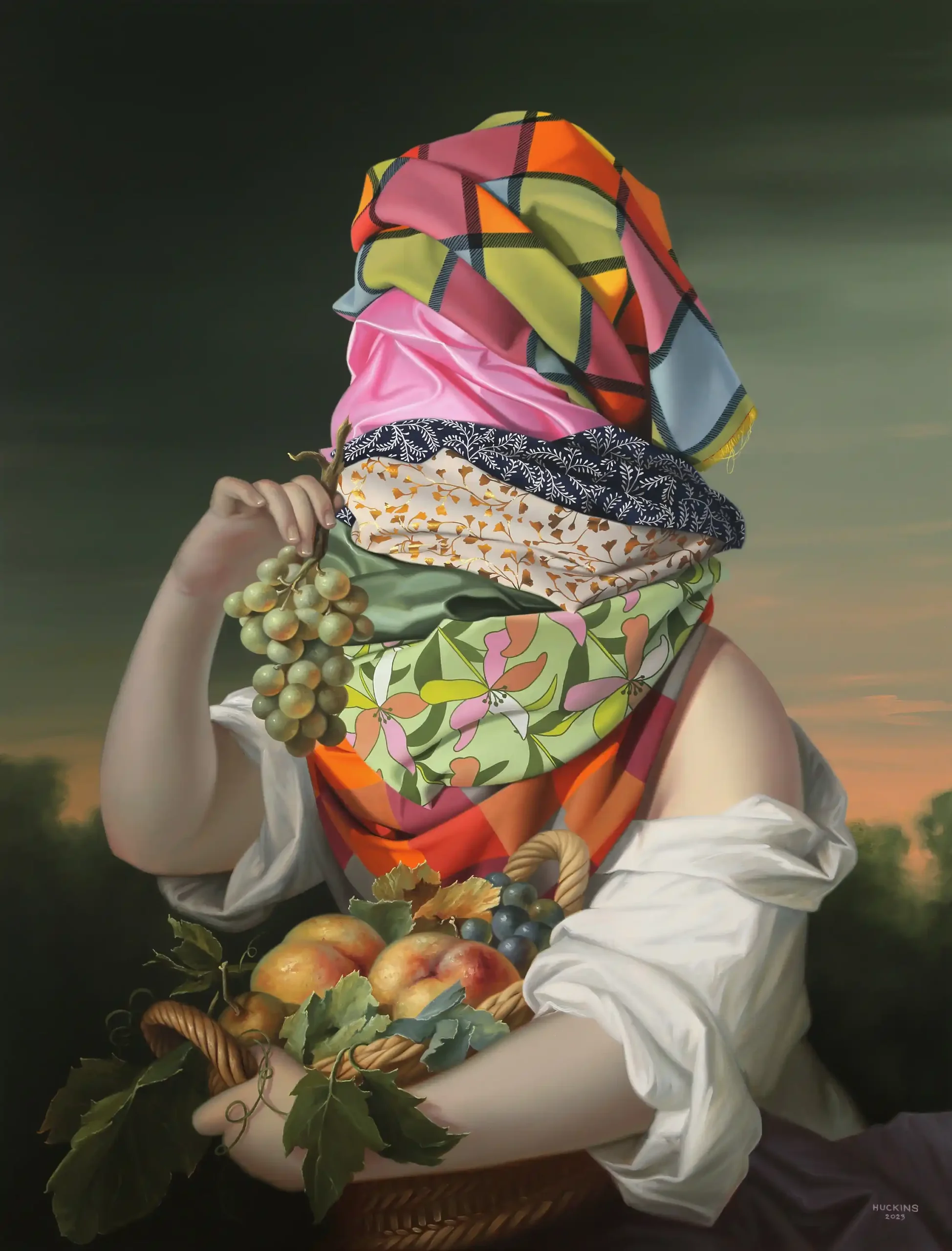
IMAGE 7_Various Floral and Plaid Fabrics, Young Girl Holding a Basket of Fruit (after Drouais)
Shawn Huckins (American, b. 1984), Various Floral and Plaid Fabrics: Young Girl Holding a Basket of Fruit (after Drouais), 2023, Oil and acrylic on canvas. On loan from the artist.
IMAGE 8_DSC4210
Various Floral and Plaid Fabrics: Young Girl Holding a Basket of Fruit (after Drouais) by Shawn Hawkins at Cheekwood. Photography by Diana Rosales.


The fabric is obscuring the face of the figure in Various Floral and Plaid Fabrics: Young Girl Holding a Basket of Fruit (after Drouais), which is common in your work. What inspired that painting?

That painting is part my Dirty Laundry series, which was inspired by Covid. We were all locked in our houses, we were all questioning our life choices, who we are as people. I was questioning myself as an artist; I started questioning my own identity. What I did is I took historical portraits I’ve been working with for 10-plus years, and instead of putting text over them, which I’m known for, I used draped cloth around the faces to hide their identity to symbolize hiding their insecurities, their desires. The whole series was born from my insecurities as a person.


What is the most fun you’ve ever had while making art?

We just built a house and along with that house, we built a studio, too. My entire career I’d been working in a tiny spare bedroom. Now I have a big boy studio so I have room to sprawl out and I can work on more ambitious projects. It’s been really fun the last year and a half, where I can just really focus on making some good work and not be confined by a tiny space.


Do you have a favorite spot in the gardens or has anything caught your eye outdoors at Cheekwood?

The installation by James Turrell, Blue Pesher, is beautiful. I found that space is really calming and meditative – it’s very peaceful in there.


If your art had an odor, what would it smell like?

If you mean a literal odor, such as oil paint, or solvents, that’s what they smell like. But if you mean a metaphorical smell based on imagery, I would say fresh, cold morning air with a breeze of musty basement smell. Maybe a hint of wildfire smoke….

test

Tamara Kostianovsky: A Confluence of Flesh & Fabric

Featured image: Narcissus by Tamara Kostianovsky at Cheekwood. Photo by Leo Sano.

Cheekwood’s 2025 Martin Shallenberger Artist-in-Residence explores analogies between nature and the human body through mixed-media sculptural installations constructed with repurposed textiles.


In conversation with Argentine American artist Tamara Kostianovsky, she explains that at the core of her work is an exploration of connections between the natural environment and human anatomy.

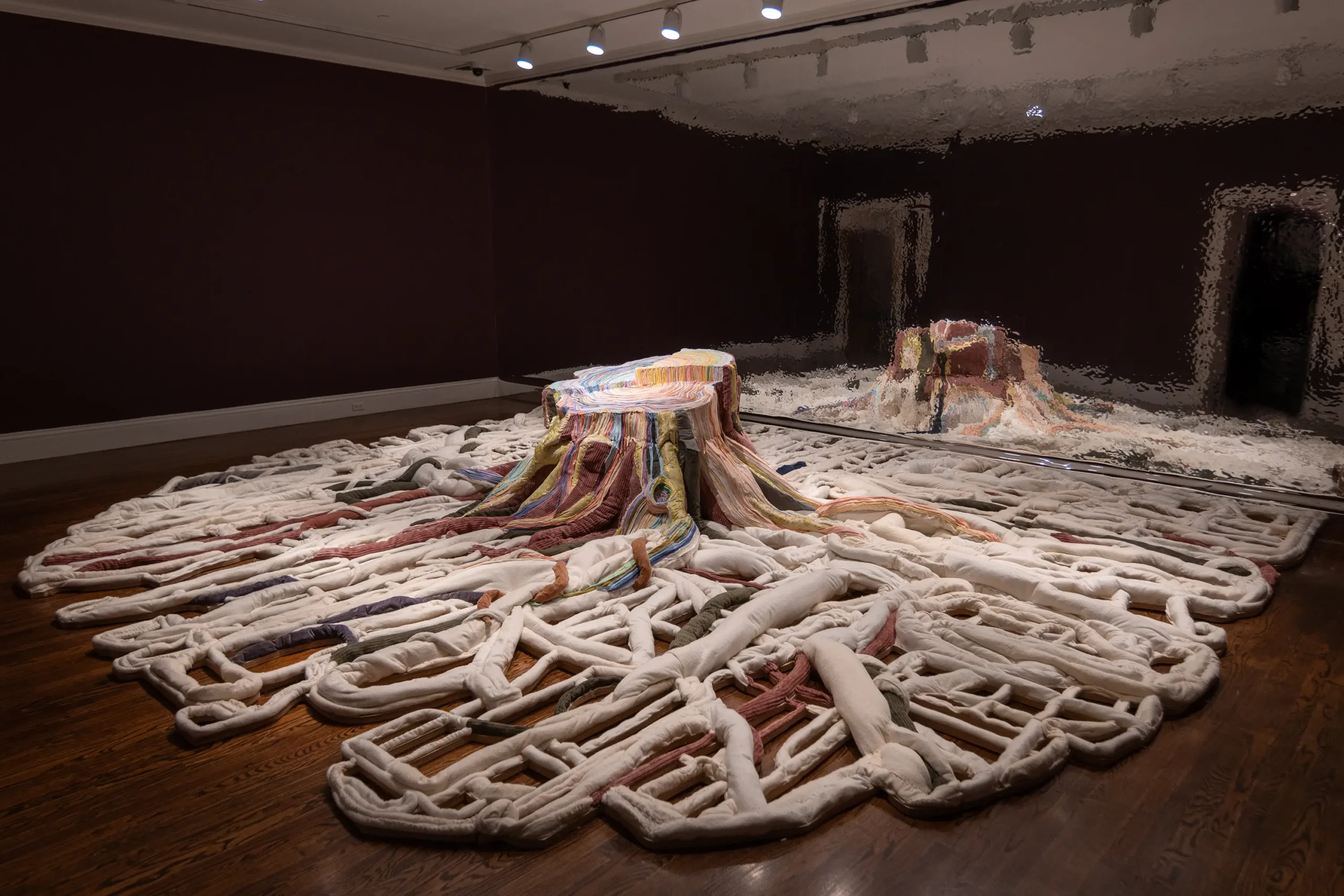
This is the central focus of, Narcissus, a large-scale sculptural installation that fills an entire gallery at Cheekwood. At the center of the enveloping creation is a tree stump, its fabric-woven root system stretching outward across the entire floor like limbs. The wall behind the sculpture is covered entirely in silver reflective Mylar, mirroring the scene back with a surreal effect.

The name “Narcissus” has origins in both botany and human nature: it’s the scientific name for the daffodil genus, and the name of a figure of vanity in Greek mythology, a man who fell in love with his own image reflected to him in a pool of water.

To create Narcissus the sculpture, Kostianovsky began by photographing dead trees in the forest. When she found a tree she liked, she built a true-to-scale sculptural tree form from plywood and armature wire. Next, she glued a high-resolution photograph of the origin tree to the face of her formed tree and traced the lines from the real tree onto her sculpture. Then she used a curved sewing needle to build a fabric surface with vibrantly colored strips of clothing and linens.

“It’s not that I’m making up the knots of the tree – I’m actually following the pattern that exists in nature,” Kostianovsky says.

Read on as Kostianovsky shares more ideas behind her exhibition at Cheekwood, her creative processes, and how an internship with a plastic surgeon led to her discovery of a fascinating world beneath the surface.

Artist-in-Residence: Tamara Kostianovsky is on view at Cheekwood through June 15.

IMAGE 2_Tamara_K_Portrait

Tamara Kostianovsky, Photographed by JC Cancedda. Courtesy of SLAG&RX Gallery and the artist.


How did you discover your passion of working with repurposed textiles?

I started working with textiles after learning about feminist women artists who used their own bodies in their work, particularly performance work in the ’70s and ’80s. I was inspired to include my body in the work and make work that was anti-patriarchal. Coming here from Argentina, I shrunk most of my clothes in the dryer and they were unusable. I started thinking of the clothing as a possible material to make sculpture, and in doing so, I realized there was more than just the anecdote to it, there was a political statement. I wasn’t purchasing art supplies, I was reusing things that would go into the landfill, and to a certain degree I was including my body in the work. I think clothing has an imprint of your body, it carries memories, it carries experiences and even dead cells, if you don’t wash it. So, it was an indirect type of performance in which my body was present without me literally being in the work.

You were a surgical intern when you were younger. How did this inspire your artwork?

When I was an art student, I started interning at a plastic surgical office, and it was there that I discovered a rich world right underneath the skin. The incisions that cut the skin revealed fat and veins that exploded into waterfalls and ligaments that set free the bones or the muscles they once contained. It was really an impressive visual experience. I tried to not think of it as, like, there's a person under all this, so that’s how I separated that. And then after participating passively in these operations, I would walk a few blocks and go to painting class. We were experimenting with oil colors at the time, so when I looked at red, it wasn’t just red, it was the color of blood I had just seen. And yellow was the color of fat. So, there was an immediate connection between human anatomy and painting, and that really became the source of my investigation very early on and I continue with that. To this day when I work with fabric, I think of it as if it’s skin. I try to make fabric have those layers of fat and tissue and flesh and blood. Somehow I became a participant in this tradition of artists that think of flesh as a subject, as an object. I’m proud to be part of that tradition.

What led you to create Narcissus?

"Narcissus" is a site-specific installation in which we see the stump of the tree and a very large and all-encompassing system of roots that take up a particular semi-circular shape to reveal almost like a network of connections, similar to the way that neurons align in the brain. Some of these sections of this network have geometric shapes to them and I was inspired to do that by seeing trees growing in urban environments in which oftentimes the woods try to circumvent the floor tiles or, you know, things on the ground that would have a more geometric orientation. The piece also may be reminiscent of a map of a city, so there is more than one connection that I hope people will be making when thinking about that.

Because it’s such a large artwork and you first worked with a smaller-scale model to plan it out, did it turn out how you imagined or did it kind of transform as you worked?

It turned out better than I imagined, and that’s a pleasant surprise. It was an ambitious work, and I have a small studio with very few people working alongside me. There's something that the space brought about, which is the actual nature of three-dimensionality, and when I work on this kind of scale or slightly smaller, I make a three-dimensional model. So, I knew what this was going to look like and that was planned, and the maquette is exhibited alongside with other works in the gallery next to us. But there was something about seeing the material in the space that really actualized here at Cheekwood.
IMAGE 3_Sunrise_Tamara Kostianovsky

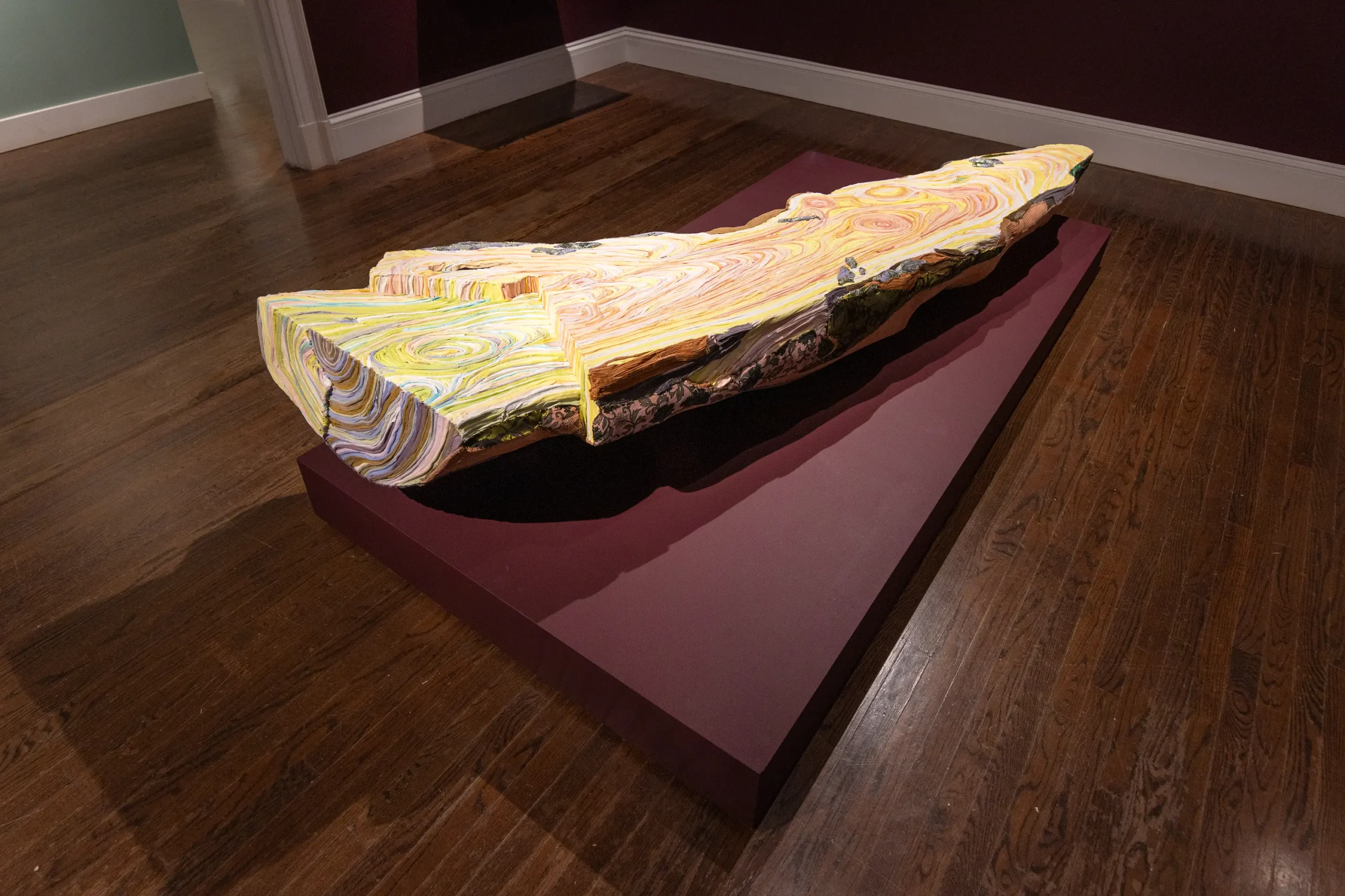
Sunrise by Tamara Kostianovsky at Cheekwood. Photo by Leo Sano.

What were you thinking about while making Sunrise, and how did you approach it physically?

After my father passed away, like many of us who lose a loved one, I was thinking of what to do with his material possessions. Because I had been working with my own clothing at that time, I started thinking of using his clothing. My father spent the last few years of his life dedicated to gardening and he definitely had a green thumb – he would’ve loved it here at Cheekwood. I started making a group of new sculptures that I call “tree carcasses,” which are basically sculptures of dead trees that incorporate some of my father's corduroys, which were part of his signature style. That material lends itself really well to mimic the texture of tree bark. The trees are reminiscent of the color palette of human anatomy. There’s a lot of yellows and flashy colors. What I’m trying to do is create a type of analogy between the body of the tree and the body of a person, to a certain degree that I hope people will identify themselves in the body of the tree and therefore really know that it’s not really something outside of us, it’s the cloth we were all cut from. I thought of this sculpture as a type of memorial, not just for a loved one but also a memorial for the Earth and the trees that we use on a regular basis. You will see that in my artwork, there’s always a mechanical cut to the tree. So, it's not that the trees died in a storm or a lightning strike; it's really because somebody cut them. We can see here the hand of man in the separate planes running lengthwise of the tree. It’s never in one passing that the trees are cut, and that provokes the difference between the planes which I try to bring into my work. The top layer reveals the palette indicative of human anatomy. The shape of the tree itself is reminiscent of a coffin or body lying down or some sort of funeral procession.

Where did you source these specific pieces of fabric that you used?

Well, in here we have some of my father’s pants, in corduroy. We also have some remnants of brocades that I got my hands on through donation from a friend. And then most of the strips that you find in all my work really are kind of edging of the fabric. When fabric textiles are produced, they are sold in rolls and to make them straight, they cut off the edges. There’s a little strip that is usually discarded. I use that discarded material, so it’s already pre-cut, and it’s usually thrown away or goes into landfills. I like to think that I rescue that material, and I use it for my work.

Tell us a little about your piece at Cheekwood titled No Shadows in the Sky.

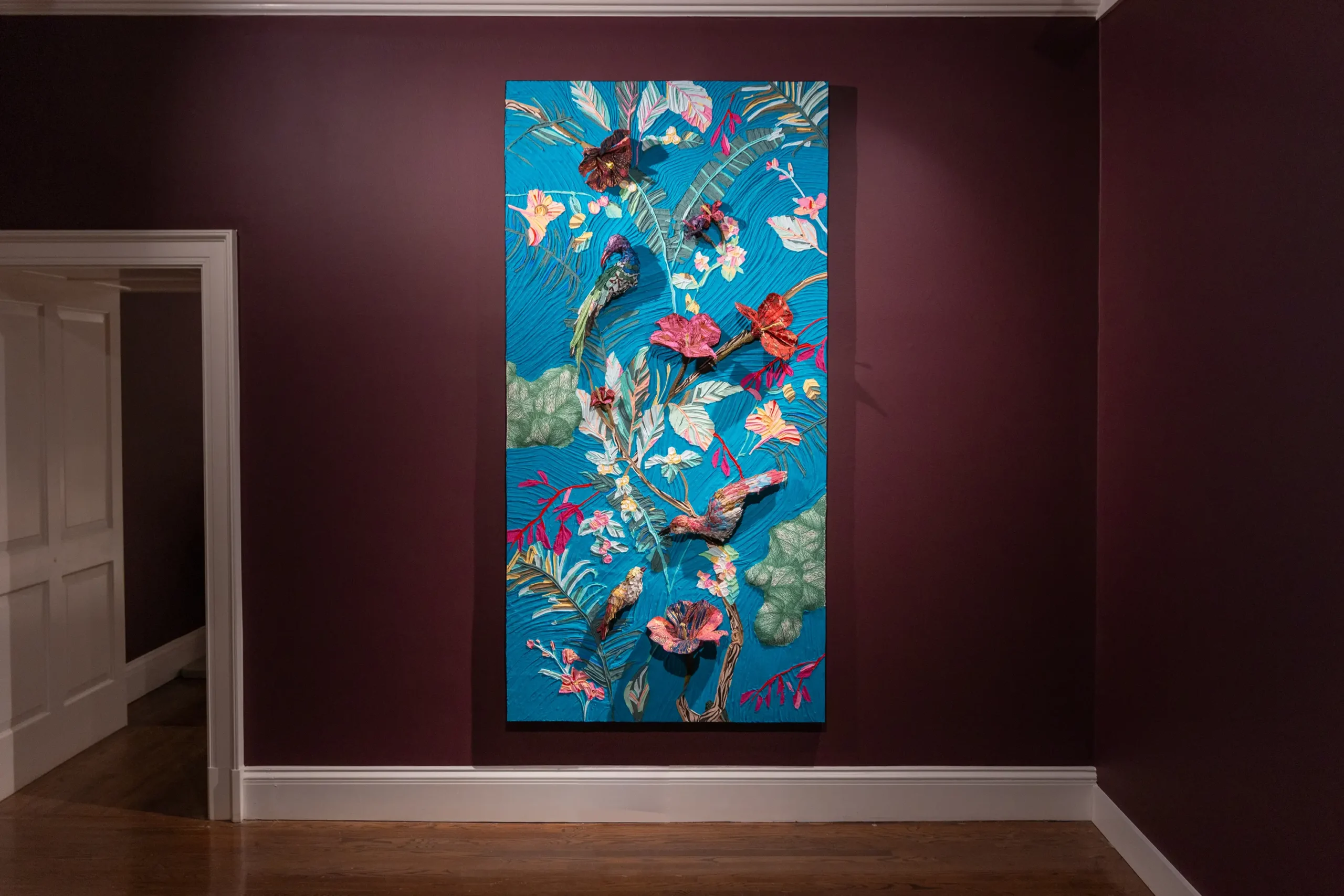
This is a textile panel, made on wood support and covered in textiles. This piece uses a very deep blue, very vibrant. A few years ago, I had an experience to travel to Naples, Florida, to do some research for an exhibition. I had access to seeing the fauna, the egrets, the alligators, and it was impressive just everything I saw there. But the one thing that stuck with me the most was the intensity of the blue sky and that is what inspired this color that is seen in the piece, which, I don’t think I have exaggerated. It was really this intense.
IMAGE 4_No Shadows in the Sky_Tamara Kostianovsky

No Shadows in the Sky by Tamara Kostianovsky at Cheekwood. Photo by Leo Sano.

Are there any memories from your childhood in Argentina that appear in your work?

Before my experience in the plastic surgical office, the image that first got me interested in the arts or awakened an aesthetic experience for me was seeing the meat carcasses that are ubiquitous in Argentina. At the time, they were pretty much in every corner in every meat market. For Argentinians, meat is a source of pride and national identity. People gather around "asados". It’s a strong social aspect of our culture. I think the carcass itself, with the pinks and the reds, there’s something slightly morbid about it, but there’s something incredibly beautiful. Very early on, I also associated the silhouette of the carcass with the female form. So, for me there was a type of identification with it, with a dead body, I mean with the possibilities that can come out of that.

If your art had an odor, what would it smell like?

Do you know about the corpse flower? It’s a massive flower that has a kind of putrid smell, like flesh. That's why it's called the corpse flower. I like the idea of the juxtaposition of meat and flower, you know? That’s very much what I’m into [<em>laughs</em>].
test

Sowing Seeds and Spilling Beans: A Brief History of Carrots

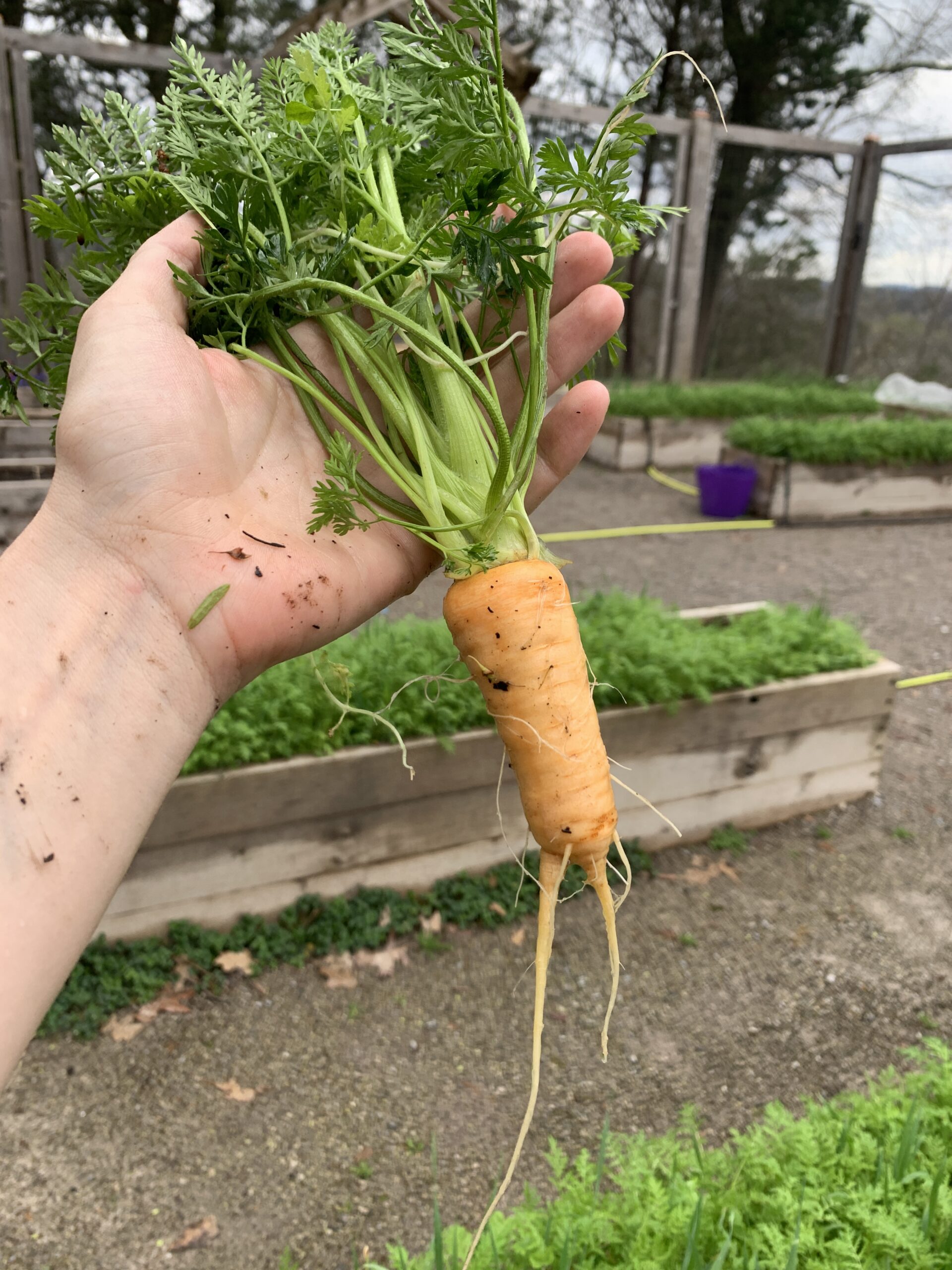
Featured Image: A carrot with personality.

Hello readers!

My name is Natasha, and I’m the Garden Educator at Cheekwood. My work here involves managing a raised bed vegetable garden (the Cheekwood GROWS Garden) and leading educational programming in this space. In this monthly blog series, I explore cultivated edible plants and our relationships with them in Middle Tennessee.

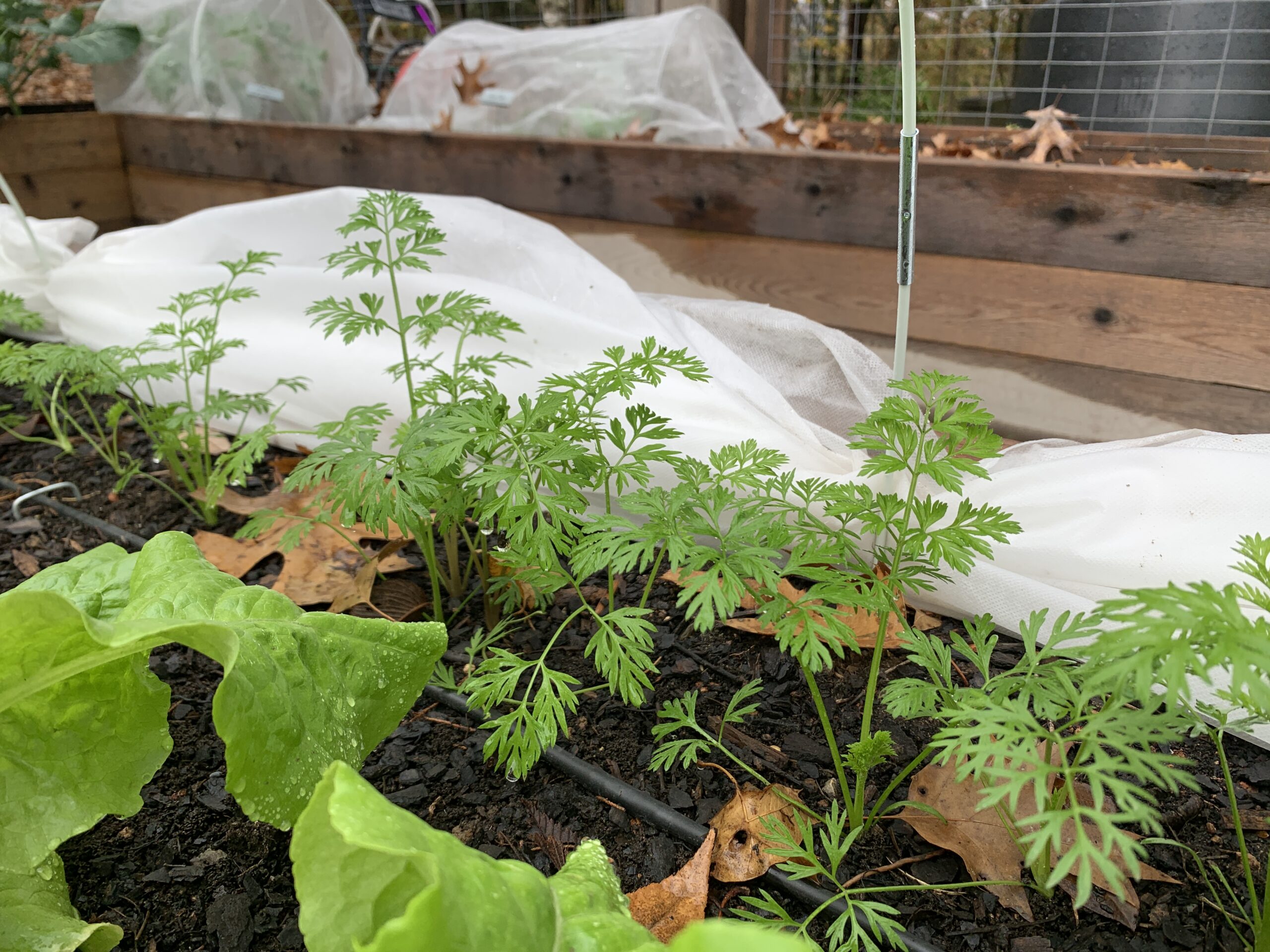
Carrots (Daucus carota) are a sign of spring throughout much of the United States. They are a slow-growing cool season vegetable, somewhat tolerant of frost and less fond of temperatures above 80° F. For growers in our region, that means there are two short windows for planting. Sow carrot seeds in August for a winter harvest, making sure to protect the plants with frost cloth once temperatures start to dip below freezing. Plant in March for a late spring harvest, keeping in mind that soil temperatures need to be at least 40° F for the seeds to germinate.


As their delicate foliage suggests, carrots can be fussy. They prefer finely sifted soil free of rocks or clumps of clay and can take up to 14 days to germinate. The seeds are so tiny that it is difficult to plant them at the correct spacing, meaning that thinning is usually required once or twice during the growing process.

Perhaps the hardest part of growing carrots is the wait time – the roots can take almost three months to fully enlarge! But eventually, they will begin to poke up out of the ground, a signal that it’s time to harvest. These enlarged roots are called taproots, an evolutionary adaptation allowing plants to push deep into the soil to collect and store water and nutrients. If you were to leave a carrot in the ground, it would continue to store energy in its taproot until the following year, when the plant would use the stored energy to put out lacy white flowers, and the root would turn tough and inedible.

Image 2_Carrot early growth

Carrots in an early stage of growth.

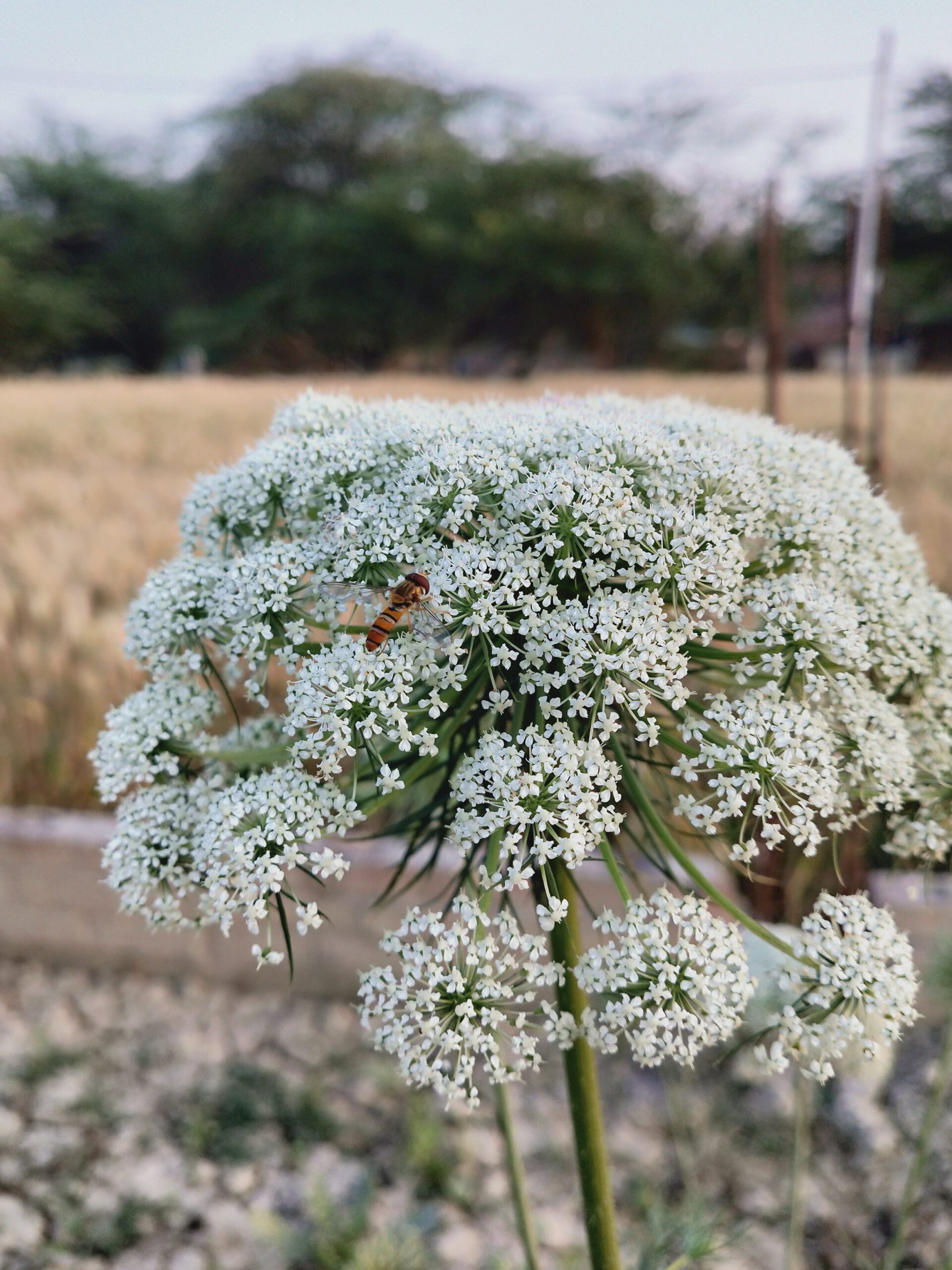
You may have seen these carrot flowers before, as the wild form of Daucus carota is a common roadside weed in much of North America. Often known as Queen Anne’s Lace, this plant is native to temperate regions of West Asia and Europe and categorized as invasive in some regions of the United States. In the wild, Daucus carota does not produce the enlarged roots that we love to crunch on, but the entire plant gives off an unmistakable carrot-y scent.


oppo_2

A wild, flowering carrot, also known as Queen Anne’s Lace.

This fragrance is emblematic of the carrot’s taxonomic family, called Apiaceae. Among this family’s members are culinary herbs that all boast delicate, distinctive scents: cilantro, parsley dill, fennel, and cumin. It’s therefore unsurprising that the first people to intentionally grow Daucus carota did not use the roots as a direct food source but instead harvested the delicately scented leaves and seeds for culinary seasoning and medicinal use. This initial carrot root cultivation took place in present-day Iran and Afghanistan, a region that remains a center of carrot diversity to this day.

It wasn’t until the 10th century that growers began selecting carrot plants with enlarged, colorful roots. The first carrots were purple and yellow, more akin to the rainbow carrots you might see at a farmer’s market than the orange ones on grocery store shelves. Orange carrots did not hit the scene until the 17th century, when Dutch farmers encountered a genetic mutation that caused carrot roots to produce higher quantities of carotenoids: chemical compounds that give many plants an orange hue. These orange carrots were sweeter than their counterparts and quickly gained popularity around the world.

The carrot’s arrival in North America is hard to pinpoint, but it’s clear that it was brought here by colonizers seeking to replicate European agricultural systems. Today, carrots are the fourth most-consumed vegetable in the United States, and their popularity is largely due to the innovation of a Californian farmer. For much of the 20th century, carrot farmers struggled to keep up with the trend towards large-scale mechanized agriculture. Americans increasingly expected aesthetic perfection in grocery stores, and carrots were inherently imperfect. By the 1980s, farmers were discarding more carrots than they were selling due to visual imperfections.

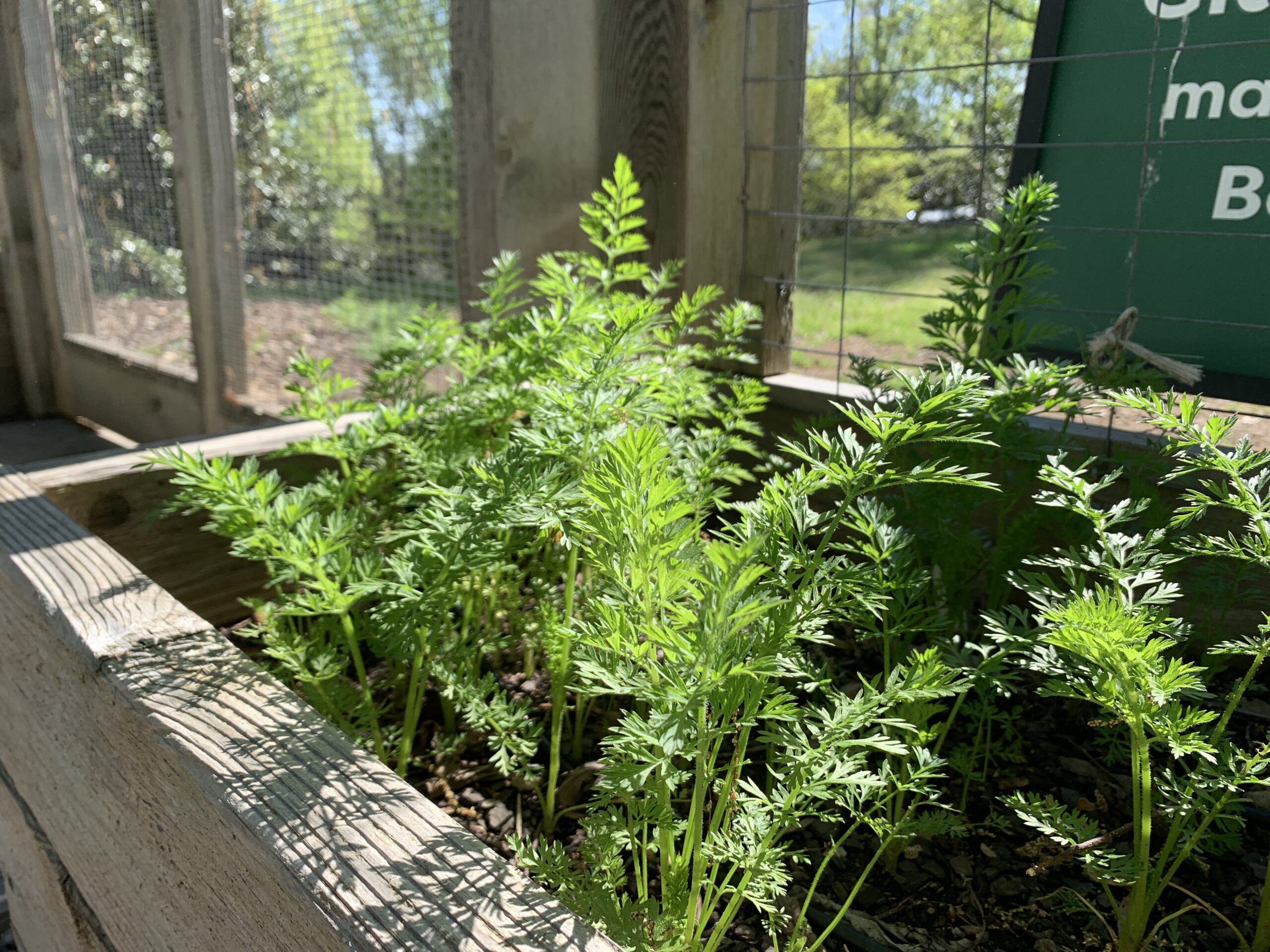
Image 4_Carrot tops

Springtime carrot tops.

Frustrated by this dilemma, farmer Mike Yurosek developed the “baby carrot,” using an industrial potato peeler to shave imperfect carrots down into snack-sized nubs. These were an instant hit, at once solving a waste problem, improving profits for farmers, and turning carrots into convenience food. Carrot consumption doubled within the following decade, and the crop earned its place in the agro-industrial complex. Today, two companies control over 60 percent of commercial carrot production in the U.S.

The nice thing about growing carrots in a home garden is that you don’t have to chop up your imperfect roots or contribute to our commercialized food system. Small seed companies offer endless variety when it comes to color, size, and shape, and I get my seeds from Southern Exposure Seed Exchange to access varieties especially suited to the South and support small farmers growing heirloom seeds. When you’re ready to harvest, see below for a carrot recipe that incorporates multiple parts of the plant as well as some of its Apiaceae relatives.


Roasted Carrots with Carrot Top Tahini Sauce

For the roasted carrots:

  • 2 lb medium-sized carrots
  • 4 tbsp extra virgin olive oil
  • 1 tbsp ground cumin or lightly crushed cumin seeds
  • 1/4 cup maple syrup or honey
  • Salt to taste

For the carrot top tahini sauce:

  • Juice and zest of 2 lemons
  • 2 cloves garlic
  • 2 cups carrot tops, coarsely chopped
  • 1 cup dill, parsley, or cilantro, coarsely chopped
  • 1/2 cup tahini
  • 1/4 cup extra virgin olive oil
  • Salt to taste

Instructions:

For the roasted carrots:

  1. Preheat oven to 425° F and line a sheet tray with parchment paper.
  2. Trim off carrot tops, cut carrots into thirds, then halve them lengthwise. Peeling is not necessary.
  3. In a large bowl, combine carrots, olive oil, cumin, maple syrup, and salt.
  4. Spread carrots onto sheet tray, making sure to space them evenly apart.
  5. Roast carrots in the oven for 30 minutes, or until fork tender and slightly caramelized.

For the carrot top tahini sauce:

  1. Combine lemon juice and zest, garlic, carrot tops, herbs, and olive oil in a blender. Blend until smooth, adding cold water as necessary to help the ingredients combine.
  2. Pour mixture into a medium bowl and add tahini. Whisk until fully incorporated, then season with salt to taste.
  3. Drizzle sauce over roasted carrots and enjoy!

If you have questions, comments, or suggestions for future topics, you can contact me at ngibbs@cheekwood.org.

Sources:

  1. Carrot production statistic source: link
test

Sowing Seeds and Spilling Beans: The Wild World of Cabbages

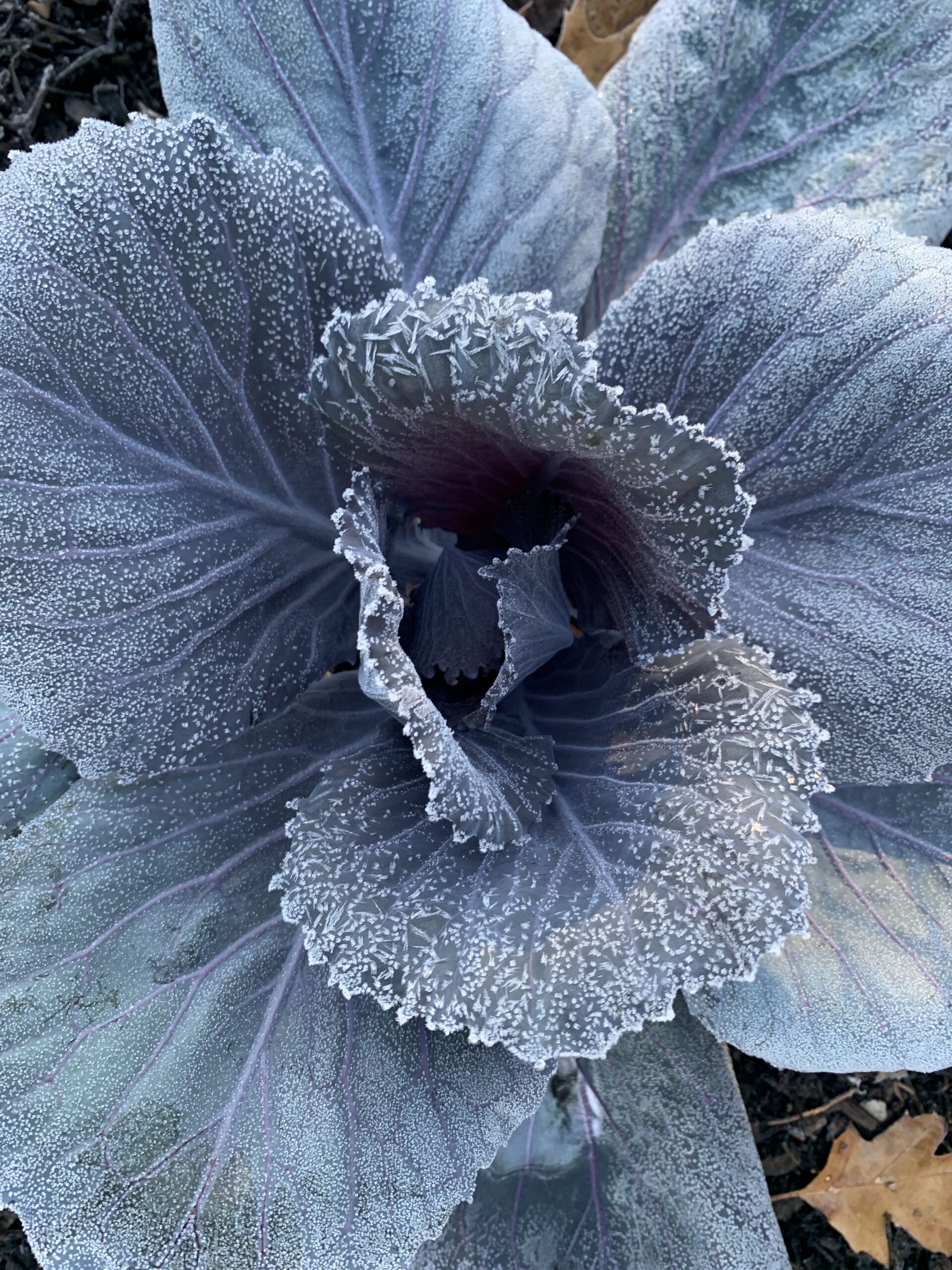
Featured Image: Frosty purple-hued cabbage.

Hello readers!

My name is Natasha, and I’m the Garden Educator at Cheekwood. My work here involves managing a raised bed vegetable garden (the Cheekwood GROWS Garden) and leading educational programming in this space. In this monthly blog series, I explore cultivated edible plants and our relationships with them in Middle Tennessee.

You may know Brassica oleracea by many names. Collard greens, broccoli, kale, cabbage, Brussels sprouts, kohlrabi – all these vegetables are of the same species, despite how different they appear. They thrive in cool weather and will survive light frosts with no protection necessary, which makes them great choices for an early spring vegetable garden.


When found in the wild, B. oleracea is known as wild cabbage. Its original home is the Mediterranean, where it grows along coastal limestone cliffs. To survive this harsh environment, B. oleracea stores lots of water and nutrients within its thick, waxy leaves, like a succulent. In its second year of growth, it uses that nutrient storage to produce bright yellow flowers and reproduce.

The nutrient density of wild cabbage was likely attractive to the people who first chose to eat and grow the plant. Who exactly these people were is difficult to trace. What is certain is that many farmers, across regions and cultures, selectively bred B. oleracea over thousands of years to produce an extraordinary variety of vegetables. While this is not an uncommon practice in agriculture (both beets and chard come from the species Beta vulgaris), B. oleracea provides the most striking example of the power of artificial selection. From this single plant we have developed many vegetables that are cultivars (cultivated varieties) highlighting different parts of the plant:

  • Collards and kale – bred by farmers for their leaves
  • Broccoli and cauliflower – these are large inflorescences (the flowering parts of the plant)
  • Cabbage – a massive terminal bud
  • Brussels sprouts – a collection of lateral buds (this is why they look like tiny cabbages)
  • Kohlrabi – a very swollen stem
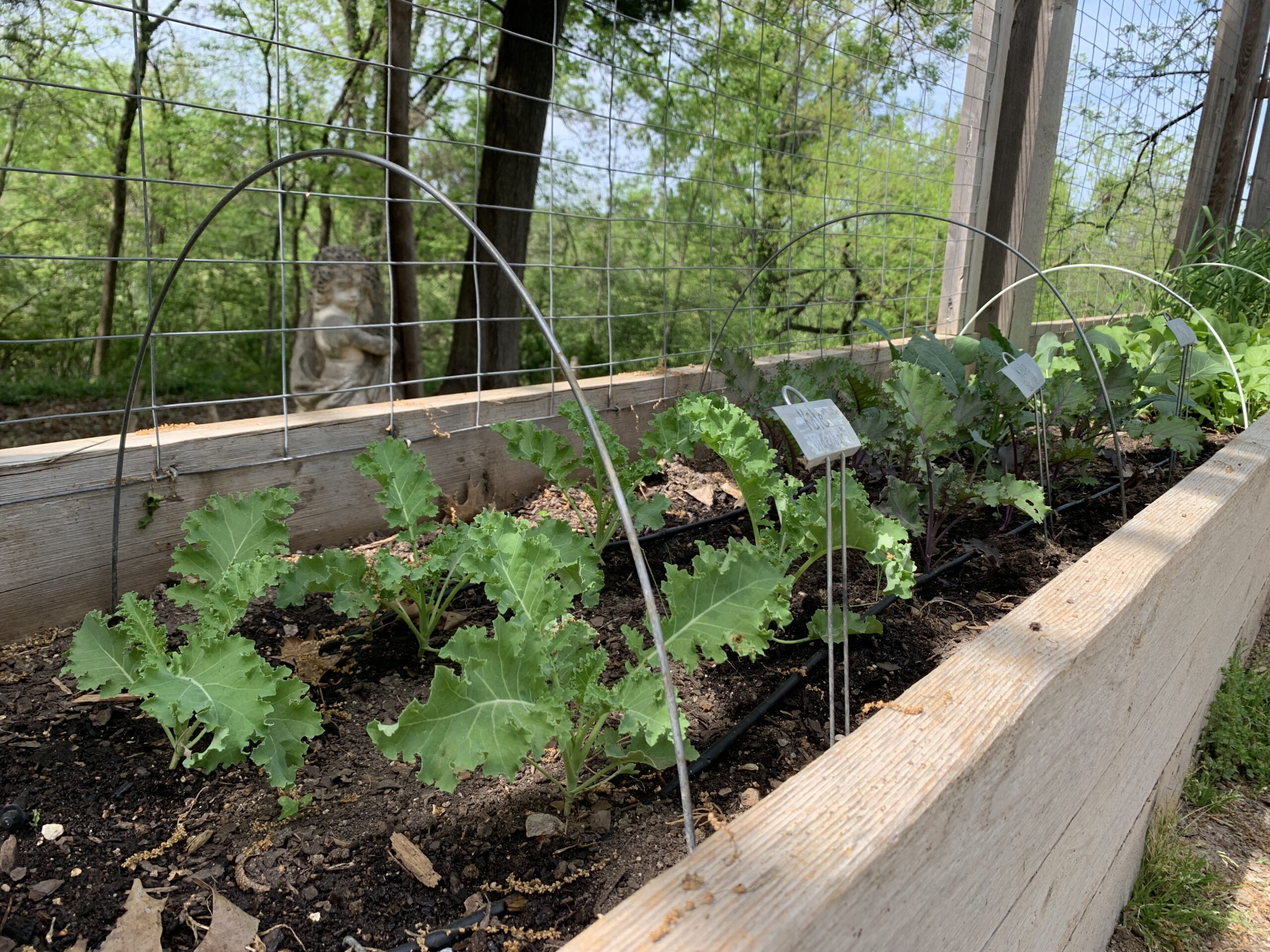
Springtime curly kale

Springtime curly kale.

These vegetables may be nearly genetically identical, but they are separated by cultural context. Cabbage, for example, has long been considered a subsistence crop, bred to have a long shelf life and sustain people through cold winters. Due to its high nutrient content, it was once used to prevent scurvy on long voyages at sea. As with all B. oleracea vegetables, cabbage arrived in North America along with European settler colonialism and has been a staple in regional cuisines ever since. Its popularity is tied to its affordability; in 2022, the USDA reported that cabbage was the cheapest fresh vegetable in grocery stores at about 80 cents per pound.


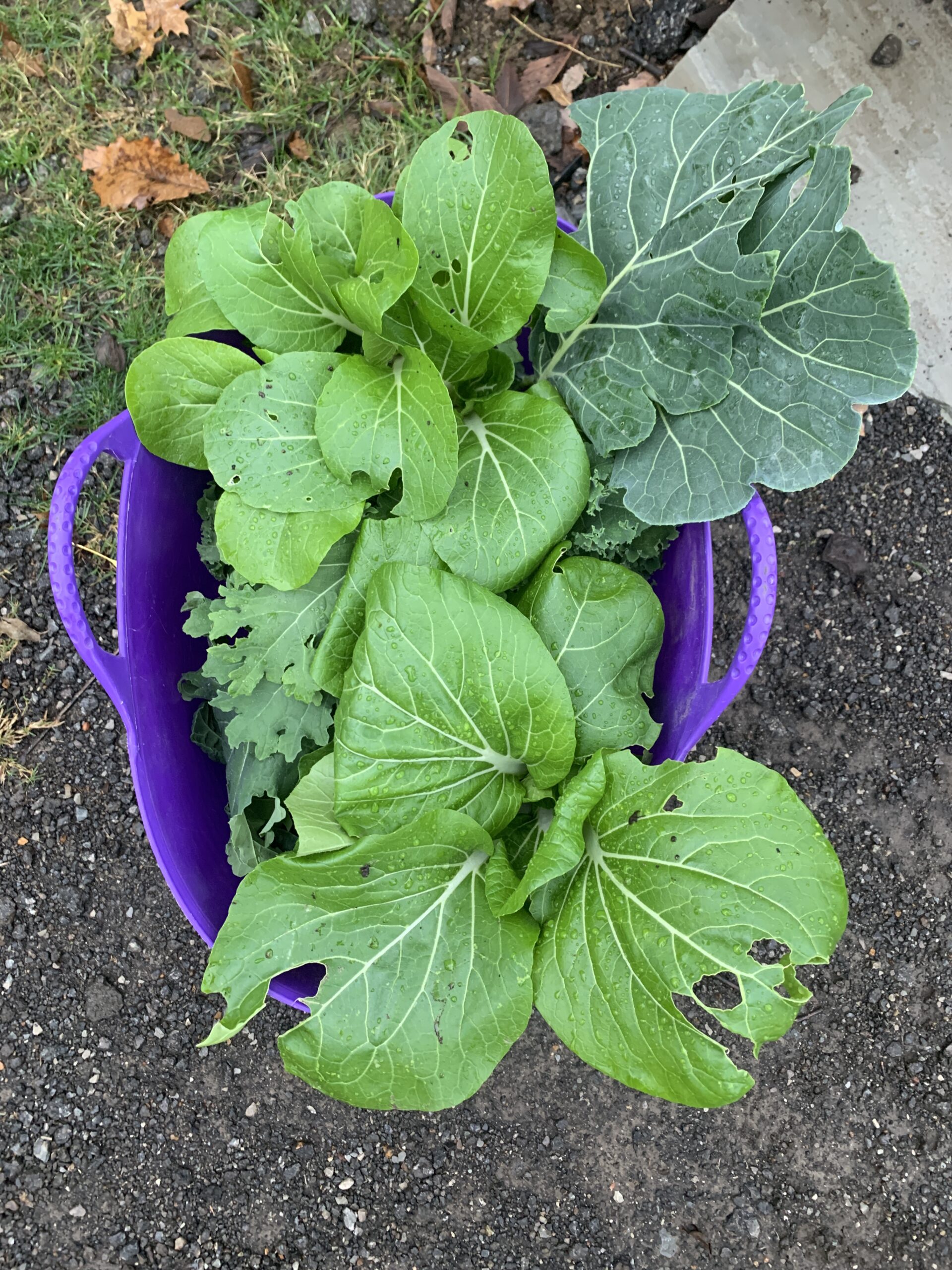
December harvest of cabbages

December harvest of collards, kale, and bok choy (a different brassica species, B. napa).

Collard greens also have a history of subsistence agriculture. Enslaved people laboring on plantations in the South relied on the food they grew in their vegetable gardens for survival. In addition to having little time or resources with which to grow this food, they were limited to growing a select few crops, collards being one of them. By braising collards with ham hocks, they brought the West African culinary tradition of stewed greens to the South and created a life-sustaining dish that remains a soul food staple to this day.

And then we have kale, relatively unknown in the United States until the 2010s, when it rocketed to stardom as a “superfood” touted by nutritionists, celebrities, and recipe bloggers alike for its many health benefits. The USDA reported that from 2007 to 2012, the number of farms growing kale increased from 1,000 to 2,500. Much of this growth happened in the South – today Georgia is second only to California in kale production.

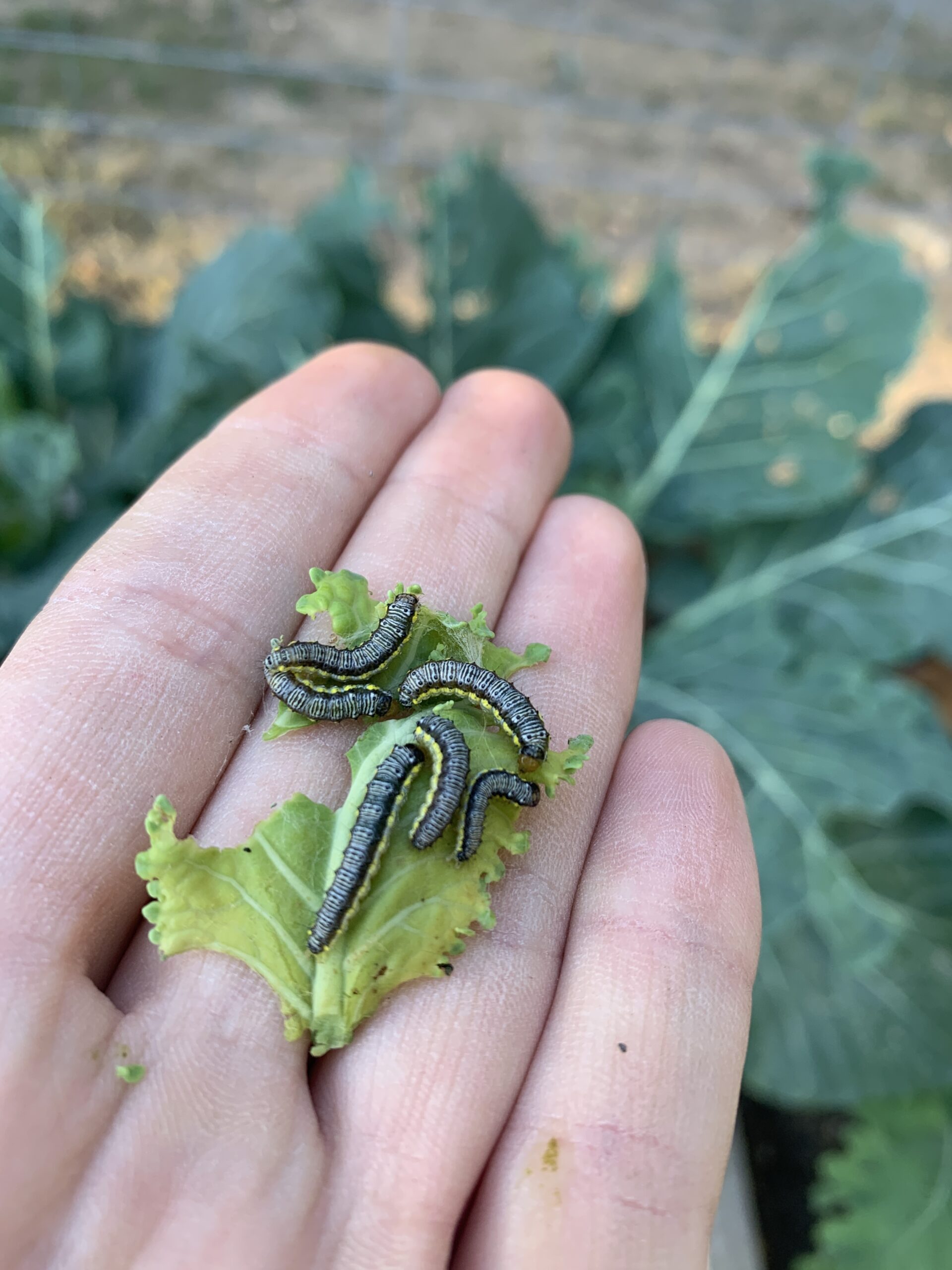
Caterpillars

Cross-striped caterpillars enjoying some collard greens.

But behind the expensive smoothies, salads, and grain bowls is a vegetable that, just like cabbage and collards, has historically fed rural communities. In Scotland, kale was once so widely consumed that the Scots word “kail” became synonymous with dinner. And yes, kale is a healthy vegetable with high concentrations of vitamins and protein. But other cultivars of B. oleracea don’t fall far behind in that regard. Where are all the cauliflower smoothies?

If you’re hoping to grow B. oleracea crops this spring, I recommend planting seeds outdoors as soon as your soil is workable (i.e., not frozen). Alternatively, you could start seedlings indoors in February and transplant them outdoors in March. Our cool season is short, and out of these veggies only collards are particularly heat tolerant. I like to cover brassica crops with protective netting until they are fully grown. This prevents small critters from gobbling the emerging seedlings, and protects growing plants from cabbage moths, who will lay eggs on the underside of brassica leaves that quickly turn into hungry caterpillars. Happy gardening!


Kale Pesto

All B. oleracea crops contain chemical compounds called glucosinolates, which hang out inside the plant’s cells until a pathogen, insect, or herbivore attacks. As soon as the cells are damaged, glucosinolates undergo a chemical reaction and turn into mustard oils. These pungent compounds are unpleasant and sometimes toxic to many insects that would otherwise eat brassicas.

By blending kale into a pesto, you are causing this chemical reaction to occur a million times over, all at once. Dramatic! But don’t worry  – in this recipe, the acidic lemon juice and rich parmesan cheese balance out the mustard oil bitterness of the kale.

Ingredients:

  • 2 cups kale, roughly chopped
  • 3 cloves garlic
  • 3/4 cup grated parmesan cheese
  • 1 cup walnuts
  • Juice of 1/2 lemon
  • 2/3 cup olive oil
  • Salt and pepper to taste

Instructions:

  1. Add all ingredients except olive oil to a food processor and blend until thoroughly combined.
  2. Slowly add olive oil through the chute of the food processor while continuing to blend.
  3. Adjust for seasoning, then serve with your favorite pasta or protein.

If you have questions, comments, or suggestions for future topics, you can contact me at ngibbs@cheekwood.org.

Sources:

  1. Fruit and Vegetable Prices, USDA, 2025, link
  2. Census of Agriculture Historical Archive, USDA, link
test

Sowing Seeds and Spilling Beans: Mexican Marigolds

Marigold Image 2

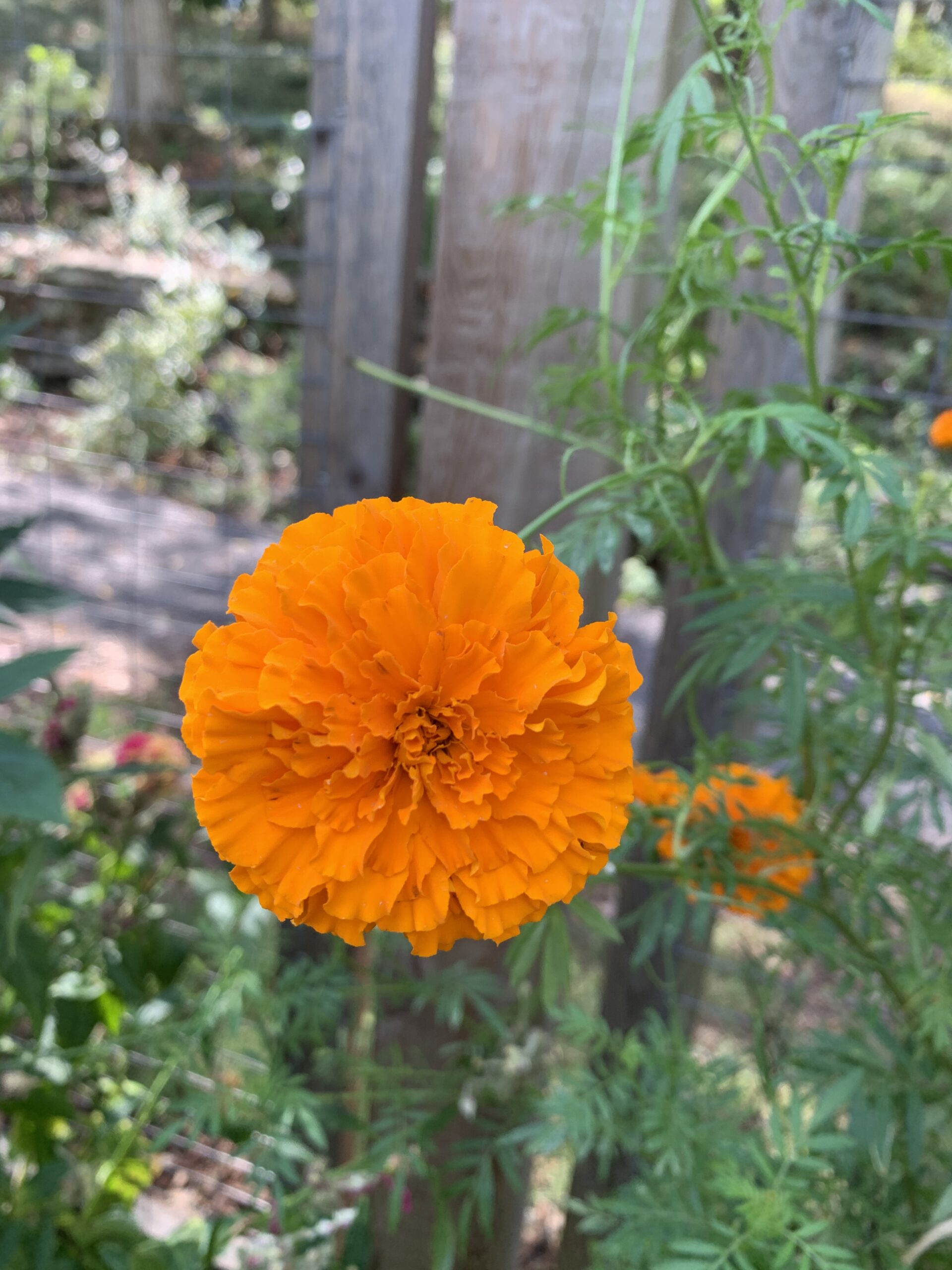
Featured Image: Close-up of a marigold in full bloom.

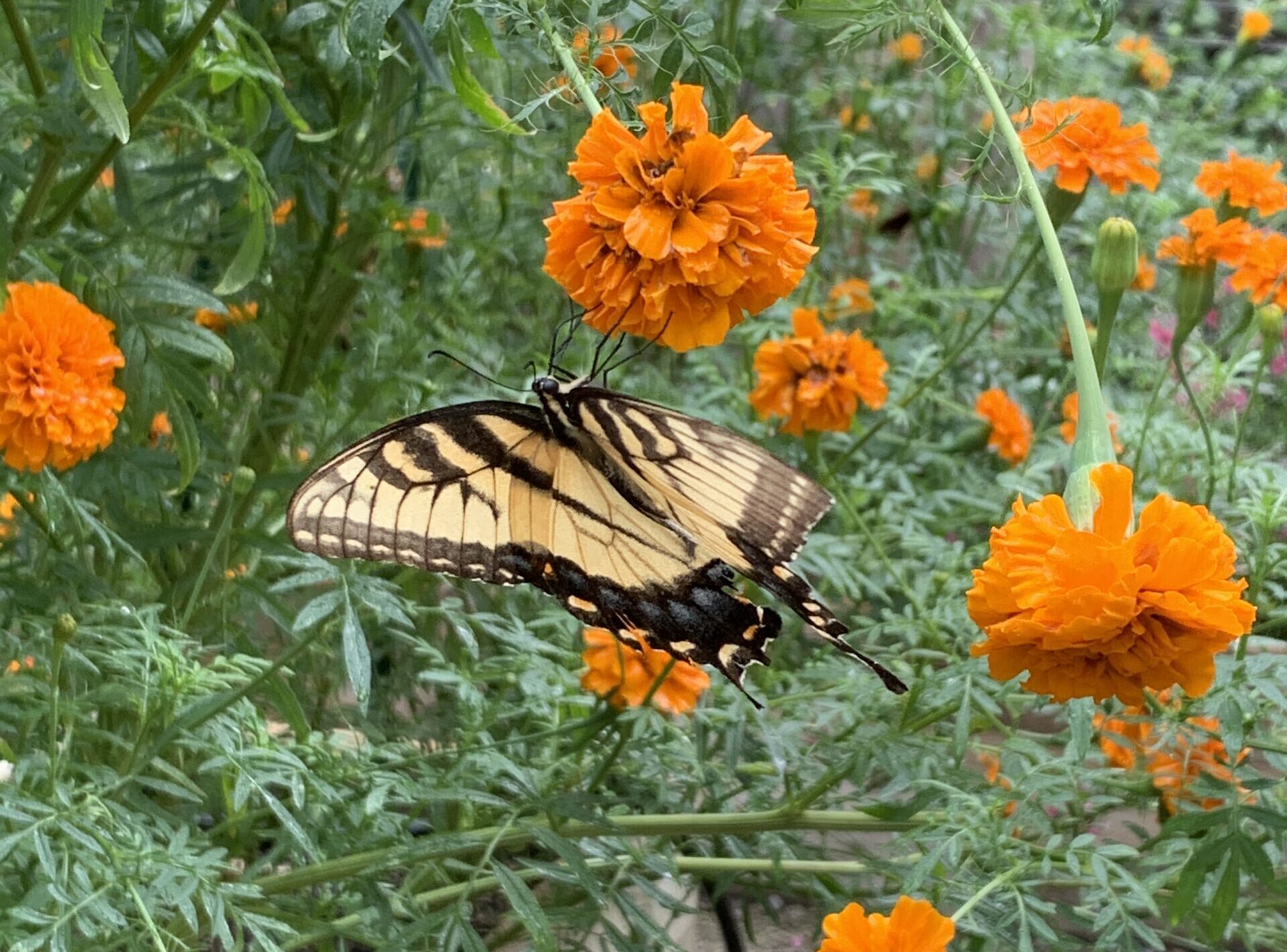
A swallowtail butterfly lands on a marigold.

Hello readers!

My name is Natasha, and I’m the Garden Educator at Cheekwood. My work here involves managing a raised bed vegetable garden (the Cheekwood GROWS Garden) and leading educational programming in this space. In this monthly blog series, I explore cultivated edible plants and our relationships with them in Middle Tennessee.

In Tennessee, marigolds are prolific and easy-to-grow annuals that put on a show all summer long. They are purported to keep pests out of a vegetable garden and are a favorite of butterflies and bees. While certainly not frost tolerant, they will happily bloom well into the fall and reseed for the following year. Just like many culinary herbs, they are edible yet conveniently undesirable to garden foragers such as deer and rabbits. The petals can be used to make herbal tea or tossed in a salad to add some zing.


There are around 50 species of marigold in the Tagetes genus, all of which are native to Central and South America. The showiest is Tagetes erecta, known most aptly by the common name Mexican marigold. I grow these in the raised beds of the Cheekwood GROWS Garden, where without fail they bend and snap under the weight of their own giant blooms and seem to fight against every attempt I make to stake them upright. I don’t mind, though, because their bright orange petals and intense, citrusy aroma are captivating, and it wouldn’t feel like summer without them.

Marigolds are orange because they contain high concentrations of carotenoids, a type of pigment that is also responsible for the vibrant colors of carrots, sweet potatoes, pumpkins, and deciduous leaves in the fall. Carotenoids are ubiquitous and essential in the world of plants; they help them survive high UV levels, attract pollinators, and complete photosynthesis.

The flower’s captivating scent comes from a complex cocktail of chemical compounds called monoterpenes (one of these monoterpenes is limonene, which can also be found in citrus fruits!). Strongly scented monoterpenes allow marigolds to deter predators – this is why gardeners will often plant marigolds among vegetables as a means of pest control.

Marigold Image 3

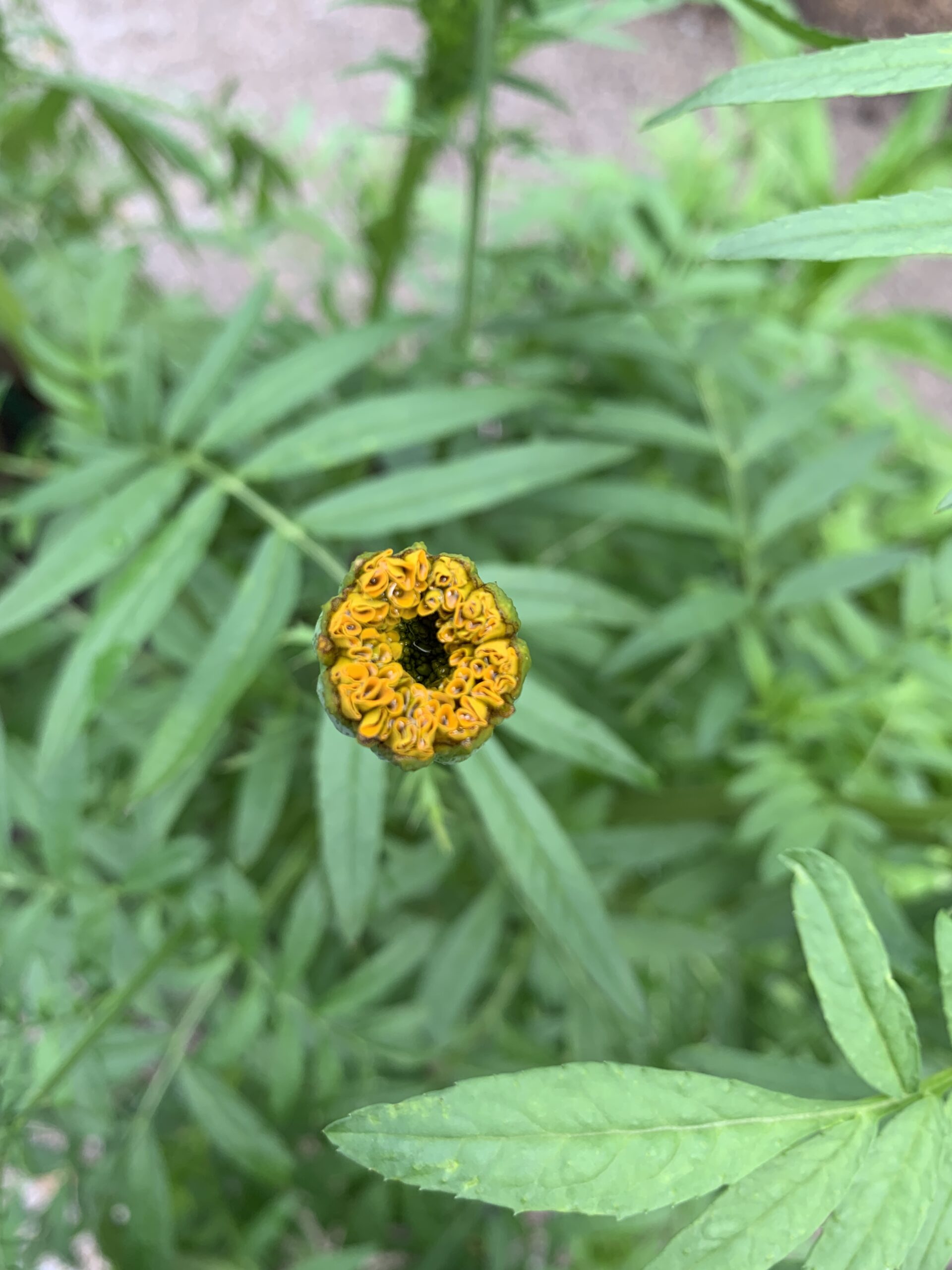
A marigold about to bloom.


In the case of the Mexican marigold, carotenoids and monoterpenes have an effect unrelated to biological function: Humans have valued and cultivated the brightly colored and scented flowers for hundreds of years. This is not an uncommon phenomenon – all cultivated plants have some sort of aesthetic, medicinal, or nutritional value – but Mexican marigolds have gained cultural importance around the globe, and I think that this is a lovely unintended consequence.

Tagetes erecta were cultivated by the Aztecs as well as the Mesoamerican civilizations that preceded them. In the Nahuatl language, the word for this flower is cempoalxóchitl, meaning “flower of 20 petals”– likely a reference to the plant’s ability to produce an abundance of intricate blooms. The Aztecs selectively bred cempoalxóchitl to develop large flower heads and vibrant colors, and used them extensively in medicine, celebrations, and rituals.

In the 16th century, Spanish colonizers took marigold seeds from the Aztecs back to Spain, and so began the plant’s globalization. They became popular ornamentals in gardens throughout much of Europe and quickly naturalized in North Africa. For this reason, British botanists mistakenly identified marigolds as indigenous to Africa, and the common name “African marigold” has stuck around among English speakers to this day1. Among European Christians, they became symbols of the Virgin Mary, giving us the name marigold (Mary’s gold). Spanish and Portuguese traders brought seeds to the Indian subcontinent, where marigolds quickly became a sacred flower integral to weddings, funerals, and festivals such as Diwali.

Today, cempoalxóchitl flowers play an important role back in their homeland of Mexico during El DÍa de los Muertos, a holiday honoring the lives of the departed and rejoicing in the temporary return of their spirits. The festivities take place at the beginning of November – notably around the same time as Diwali – and marigolds adorn the ofrendas (memorial altars) put together by families to celebrate loved ones. The flowers’ strong scent is believed to guide departed souls from the afterlife to the world of the living. This tradition can be traced back to pre-Hispanic times, when Aztecs used marigolds to honor Mictēcacihuātl, their deity of death, who guided spirits to and from the underworld.

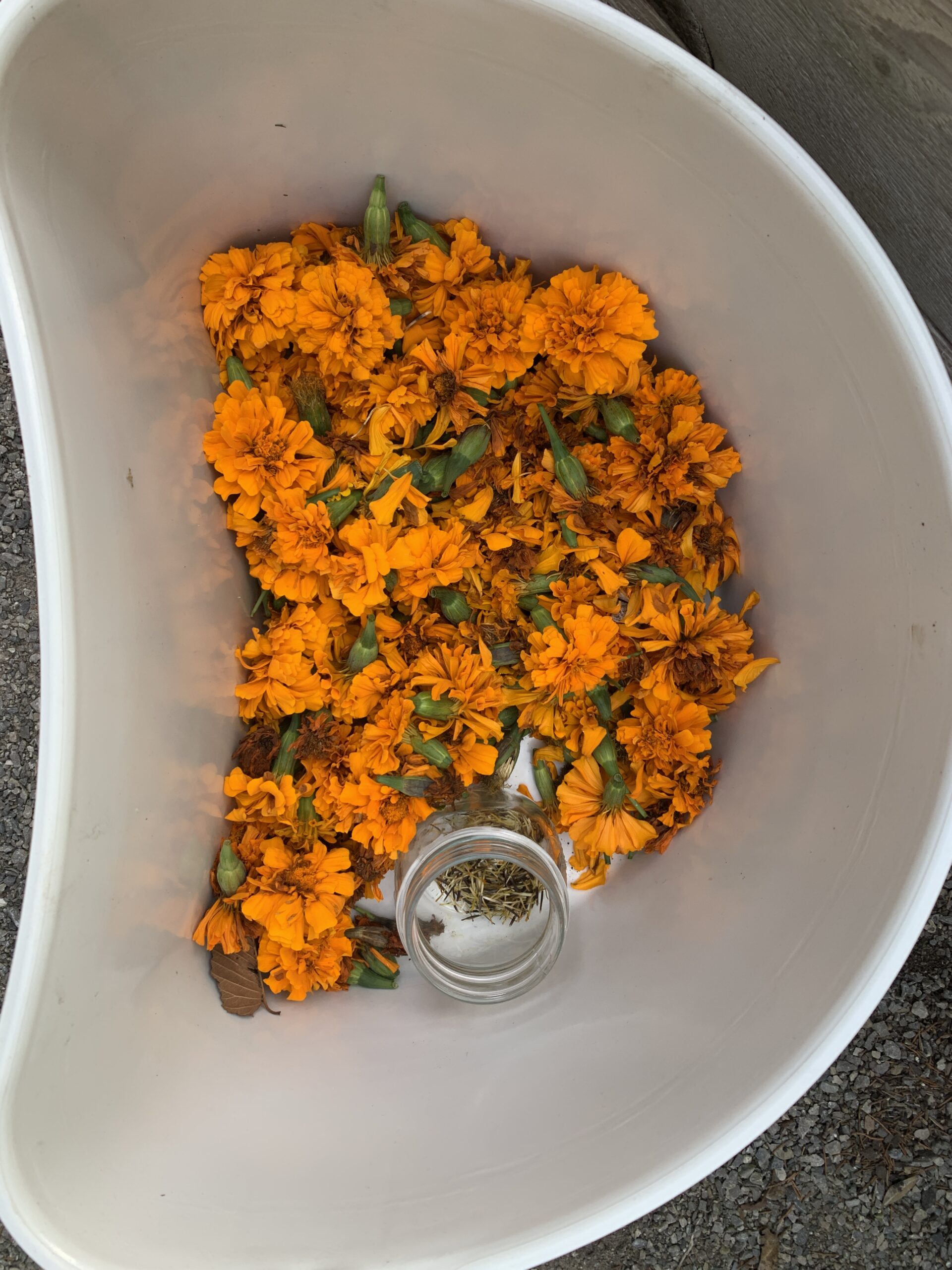
Cheekwood’s 25th El Día de los Muertos festival will take place on November 2 and 3. In preparation for this event, I have been collecting and drying marigold blooms for the past few months and will be facilitating a seed saving activity from 10 AM – 2 PM on both days in the Cheekwood GROWS Garden. I invite you to visit and save some cempoalxóchitl seeds for your garden next year!

Marigold Image 4

Collecting marigold blooms for seed saving.

Marigold Image 5

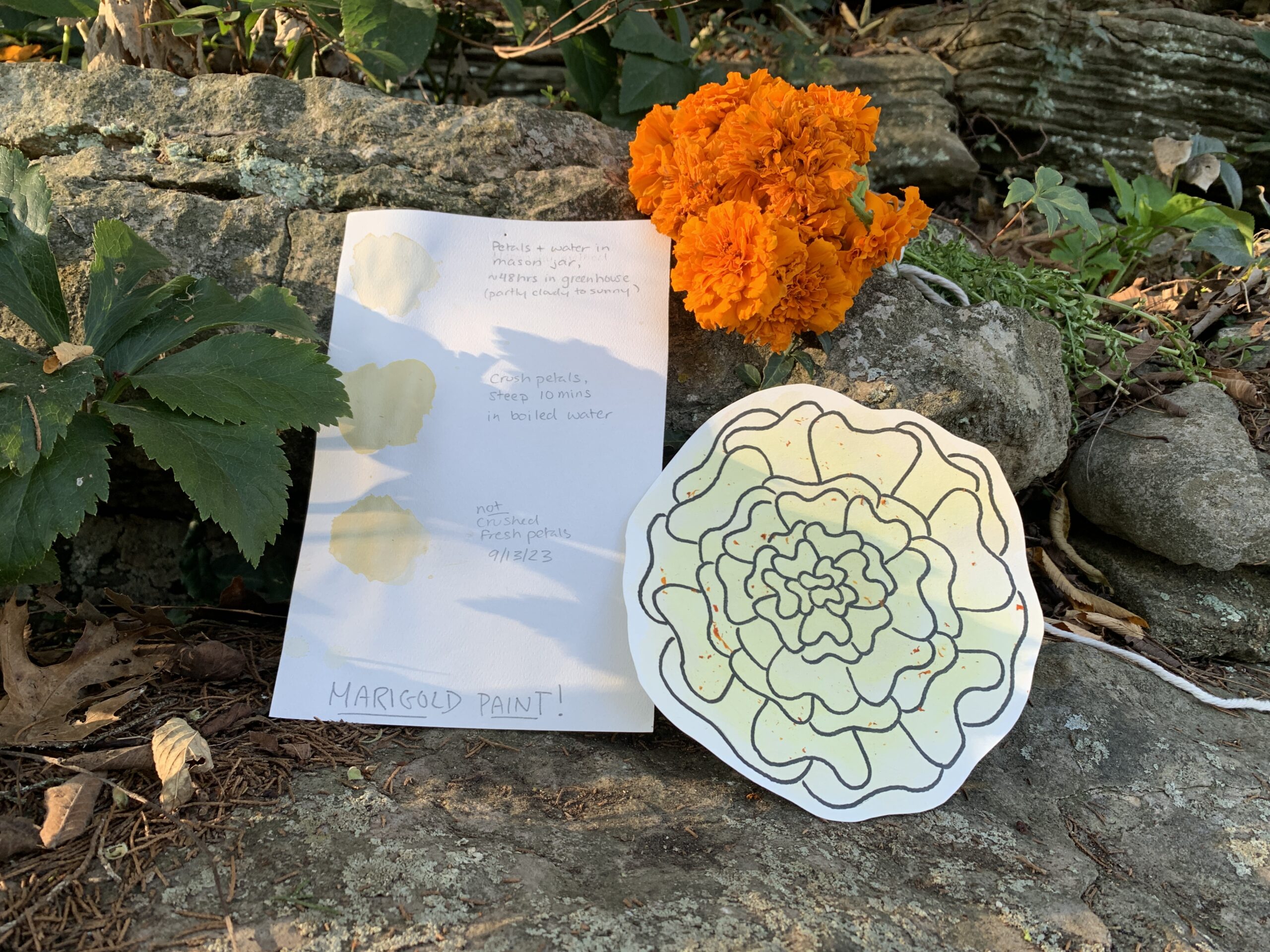
Experimenting with marigold as a natural dye.


Painting with Marigolds

I’m no expert when it comes to natural dyes, but I love to experiment. The vibrant pigments in marigolds make them relatively easy to transfer to paper or fabric! You can do this in a few different ways:

  1. Crush some fresh petals, either with your hands or using a mortar and pestle. Once the petals have broken down and your hands (or the pestle) have turned orange, you’re ready to paint! Rubbing the crushed petals on watercolor paper will produce a bright yellow pigment flecked with orange.
  2. Stuff a mason jar to the brim with fresh petals. Boil some water and pour over petals to cover. Let rest for at least 10 minutes (but feel free to wait longer). Strain the petals out of the liquid and use like ink or watercolor. This method produces a less vibrant, but equally lovely, deep yellow shade.

If you have questions, comments, or suggestions for future topics, you can contact me at ngibbs@cheekwood.org.

Sources:

  1. Dalman, Nate. “Marigolds.” University of Minnesota Extension, 2022, link
test

Sowing Seeds and Spilling Beans: Harvesting Okra

Okra Image 2_iOS

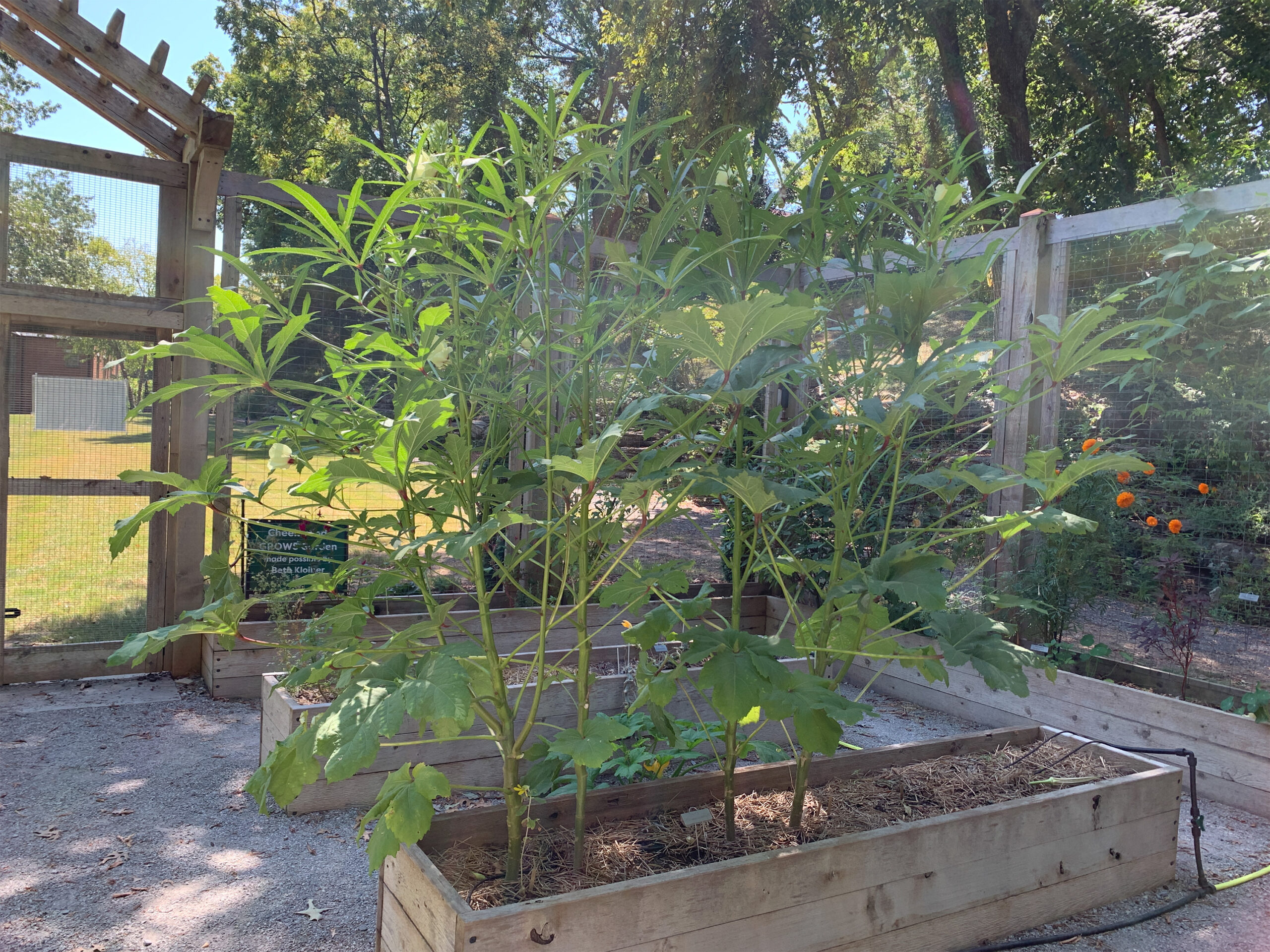
Featured Image: Okra plants in the Cheekwood GROWS Garden.

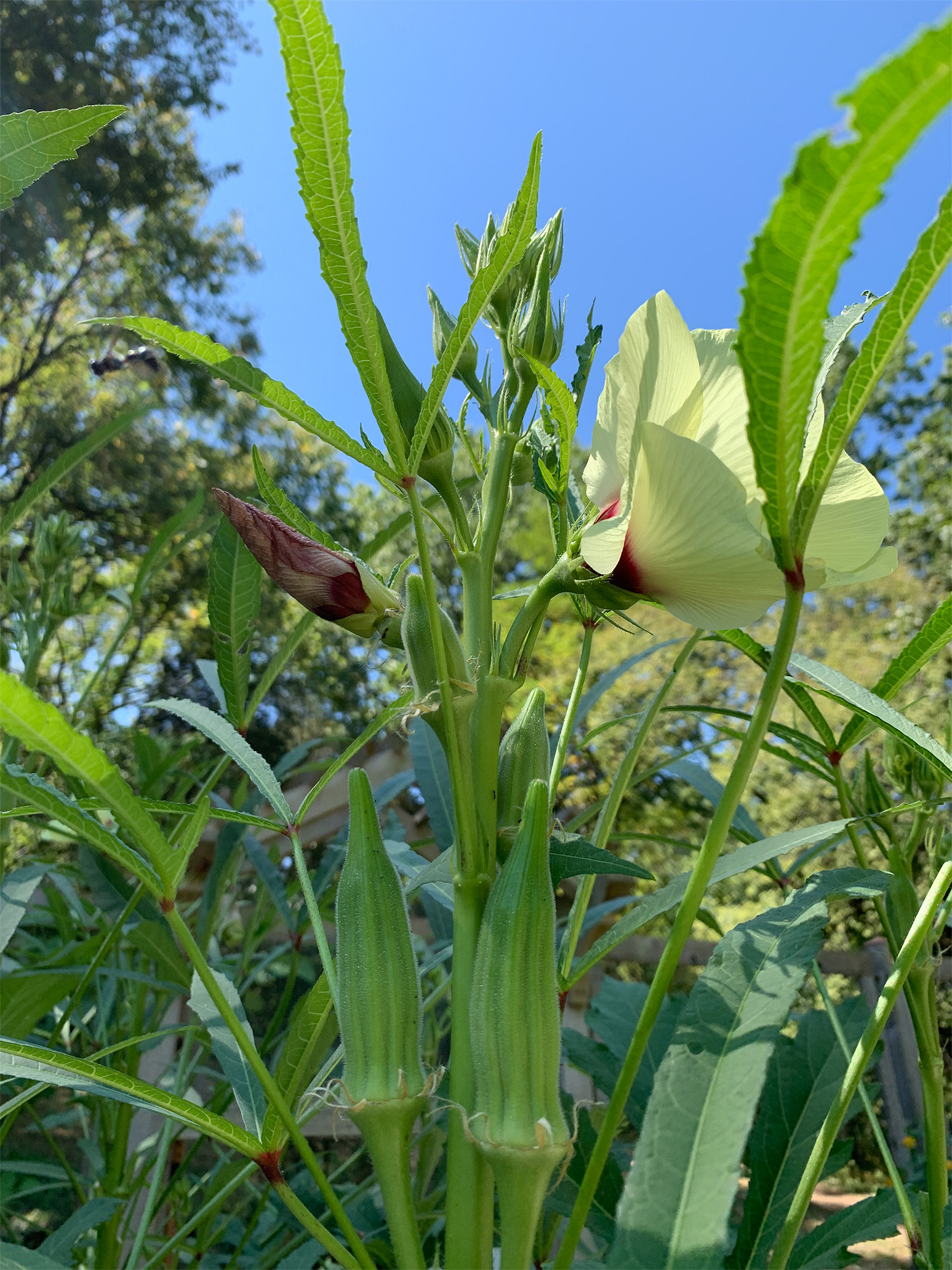
Okra fruits emerging on the plant.

Hello readers!

My name is Natasha, and I’m the Garden Educator at Cheekwood. My work here involves managing a raised bed vegetable garden (the Cheekwood GROWS Garden) and leading educational programming in this space. I’m excited to be starting this monthly blog series, in which I hope to explore cultivated edible plants and our relationships with them in Middle Tennessee.

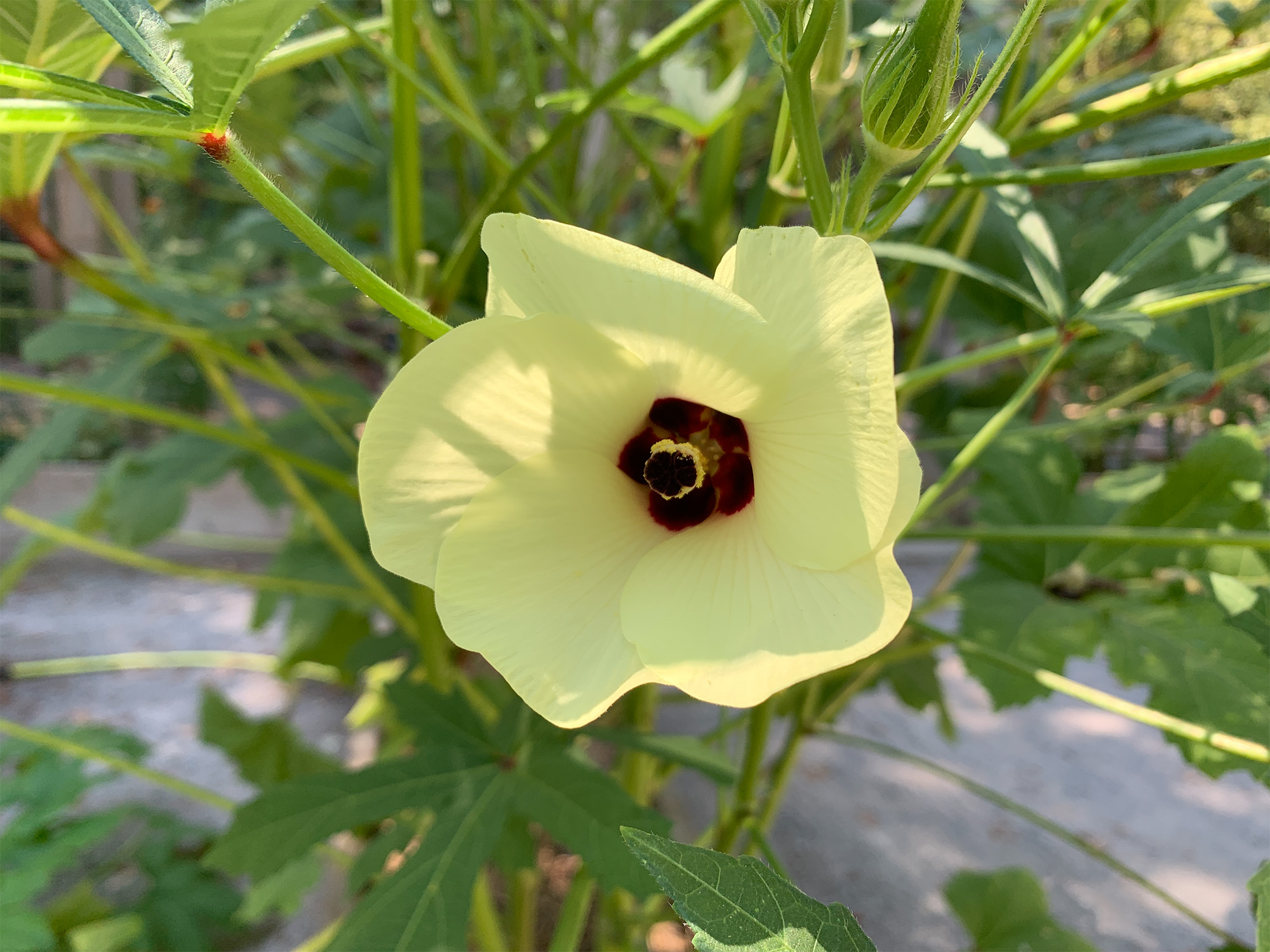
As summer begins to wind down, I have been thinking a lot about okra (Abelmoschus esculentus). A member of the mallow family (Malvaceae), hibiscus, cotton, and cacao are among its relatives. With its vigorous growth habit and ephemeral, red-tinged flowers, okra is a joyful plant. It thrives in heat, tolerates poor soil, and rarely faces significant pest or disease issues. The flowers only bloom for a single day, after which they quietly fall off the plant to reveal tiny fruits emerging behind them. Okra stands tall and strong with no staking necessary and will produce an abundance of these tasty fruits that can be prepared and eaten in countless ways – provided you catch them before they turn woody and tough, a change that will occur before you know it (i.e., in 4-5 days)!

Okra has ancient origins. The plant was first collected from the wild and cultivated over 3,000 years ago in the Abyssinian center of origin – a region encompassing present-day Ethiopia and parts of Somalia, known as an ancient agricultural hotspot. Wheat, sorghum, broad beans, and coffee are other significant crops now grown around the world that can be traced back to this biodiverse center of origin.

From there, okra spread around the world. It is an important ingredient in cuisines throughout the Indian subcontinent, the Middle East, and West Africa. It was enslaved Africans who brought okra – along with thousands of years of agricultural and culinary tradition –  to North America as a means of cultural preservation and survival. They grew the plant as a food crop in the American South, where it thrived in the rich soils and heat just as it did in its place of origin. Okra quickly became a staple of Southern cuisine and important food crop of the African diaspora.


Distinct okra recipes developed across the South in response to diverse cultural influences, from Creole gumbo in Louisiana to the okra and tomato stew of the Gullah Geechee people along the Southern Atlantic coast. Something that all okra recipes contend with in one way or another is one of its unique botanical features: the slime it secretes when cut open. The scientific term for this gelatinous substance is mucilage, and it acts as a lubricant to help okra plants efficiently transport and utilize water – a definite advantage in hot weather.

In gumbo, the slime acts as a thickener, giving the dish its signature mouthfeel. Pickling okra achieves the opposite effect, as the acidity from the brine cuts the gooeyness of the slime. Fried okra lands somewhere between these two; exterior crunch and interior slime balance each other out. I am a fan of all three, and welcome okra’s unusual mouthfeel as something truly unique among the vegetables widely available in this country.

Okra Image 3_iOS

Okra flower up-close.


As mentioned earlier, okra has a short harvest window and is best picked when the pods are about 3 inches long. I, however, have forgetful gardening tendencies and collected pods of all sizes this growing season. The slightly larger pods are still delicious but benefit from a longer cooking time; I like to halve them lengthwise and roast them in the oven. The very large pods contain jumbo white seeds – these can be removed and gently toasted in a pan with seasonings of your choice for a tasty snack! Okra is also perfectly edible, and in fact very delicious, freshly picked off the plant. It has a wonderful crunch that tends to fade during cooking.

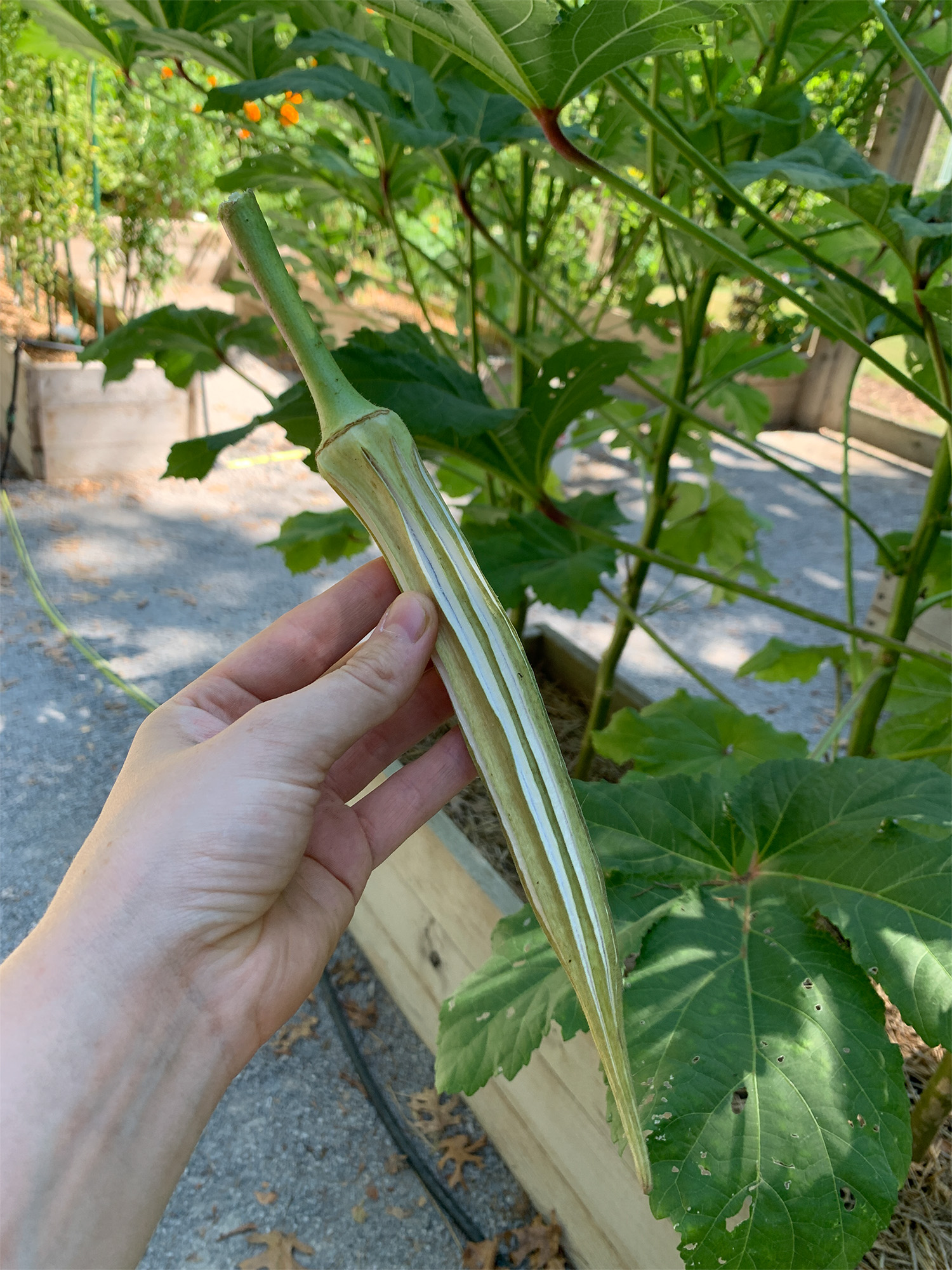
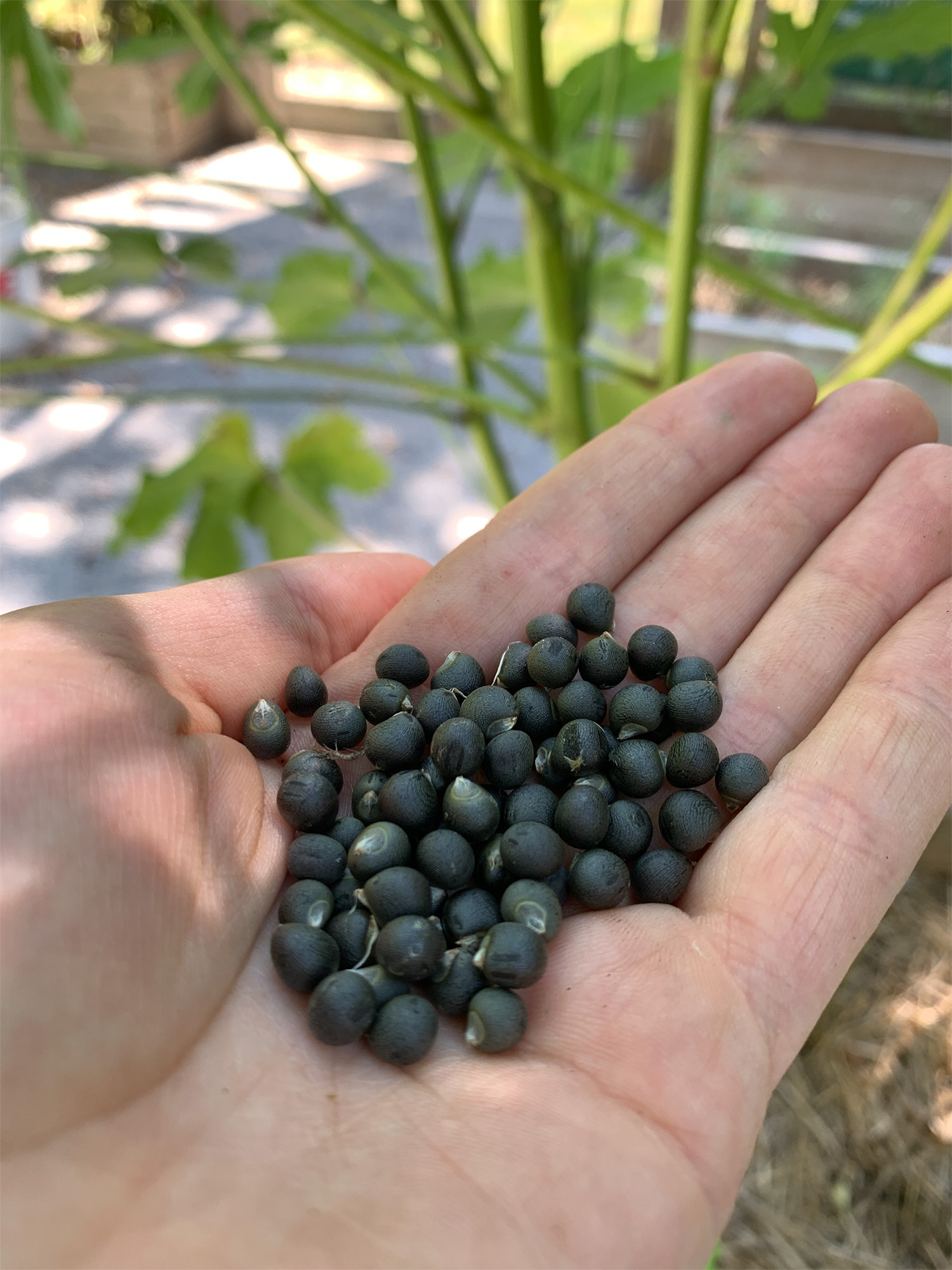
If you hope to save okra seeds for the following year, leave a few pods on your plant to grow huge and dry out. Towards the end of the summer, the ridges on these pods will become more pronounced and the green color will fade to white in between these ridges. At this point, you can harvest the pods, split them lengthwise, and remove the seeds within. You’ll know that they’re ready to save because they’ll have turned from a pearly white to a deep, green-tinged black. Since okra flowers are self-pollinating (both male and female parts exist in a single flower), the seeds you collect should produce the same variety you grew originally. Happy gardening!

Okra Image 4_iOS

Okra fruit that has dried out on the plant.

Okra Image 5_iOS

Okra seeds collected from dried-out pods.


Quick Fridge-Pickled Okra

Makes one 16-ounce jar

Ingredients

  • 8 oz fresh okra (10-15 pods, depending on size)
  • 3 cloves garlic, peeled and smashed
  • 1 fresh chile, split lengthwise, or 1-2 tsp dried chile flakes
  • 1 sprig fresh basil
  • 1 tsp black mustard seeds
  • 1 tsp black peppercorns
  • 1.5 tbsp granulated sugar
  • 1 tbsp kosher salt
  • 1 cup white vinegar
  • 0.5 cup water

Instructions

  1. Combine vinegar, water, sugar, and salt in a small saucepan. Simmer on the stovetop until sugar and salt have dissolved completely.
  2. In a clean, 16 oz mason jar, add okra, garlic, chile, basil, mustard seeds, and peppercorns.
  3. Pour heated brine over the vegetables and seasonings to fill the jar.
  4. Let the jar come to room temperature, then seal and refrigerate for at least 48 hours.
  5. Enjoy!

Thank you for reading my very first blog post.

If you have questions, comments, or suggestions for future topics, you can contact me at ngibbs@cheekwood.org.

Privacy Policy Sitemap Web design by Speak
Back to top