wordpress, Author at Cheekwood - Page 21 of 45 | Page 21
x icon Close
test

Pineapples – The King of Fruits

Pineapples – The King of Fruits

Published: 6/27/2020

During the hot summer months, pineapples are best known for their sweet flavor and refreshing consistency. Whether serving it in a fruit salad, grilling it with chicken, or blending it into a breakfast smoothie or frozen beverage on vacation, the pineapple is a widely popular fruit loved by many.

But did you know that the pineapple has a significant meaning throughout history? Pineapples were a rare and expensive fruit in Europe and highly sought after, making them popular beginning in the late 15th century. They were usually only enjoyed by kings and therefore became known as a symbol of lavish hospitality. From their first deliverance on Spanish European soil in the 15th century, though the 17th century, pineapples were referred to as the “king of fruits.”

In the 17th century, cultivating rare tropical plants was an esteemed pastime in Europe. Having hothouses and orangeries were very fashionable and a hobby of the wealthy. They began appearing in art, fashion, and literature in the 17th century and gained their height of popularity in Georgian designs of 18th century.
IMG_4590
IMG_4588

Pineapples also started appearing in architectural embellishments as a welcoming symbol, found commonly on gateposts or friezes. With the pineapple being integrated into Georgian architecture and designs sweeping across Great Britain, it was only a matter of time before this trend made its way to America.

The Cheeks, who were known for their extensive travels abroad, saw many pineapple-inspired emblems on their many British and European tours. They acquired many architectural pieces in 1929 in Great Britain from noble estates and famed antique dealers. Several elements of architectural salvage from former prominent British estates incorporated the pineapple. The Cheeks brought back references to this elegant European symbol of hospitality to Nashville, where it became the favorite symbol of their estate Cheekwood upon completion in 1932.

In 1960, the year Cheekwood opened to the public the pineapple made its way onto the Cheekwood logo, and in 2017 it received a modern redesign with the intention of spreading the message of hospitality and inclusivity to all who see it.

Today, you’ll find pineapples all throughout Cheekwood’s estate, on doors, gates, fences, and artwork. Have you ever noticed them? Some places you can find them include:

• On the capitals of old ironwork posts surrounding the historic core

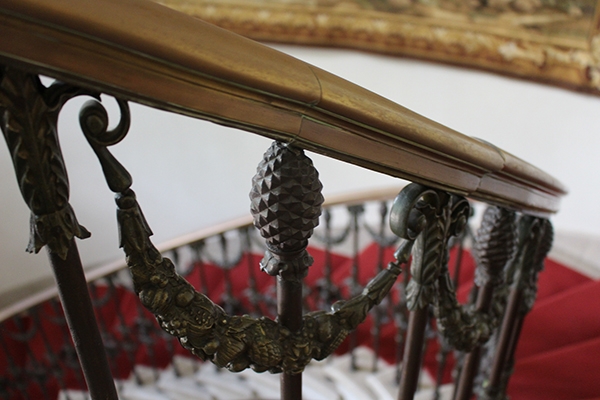
• On the balustrades of the Entrance Hall staircase

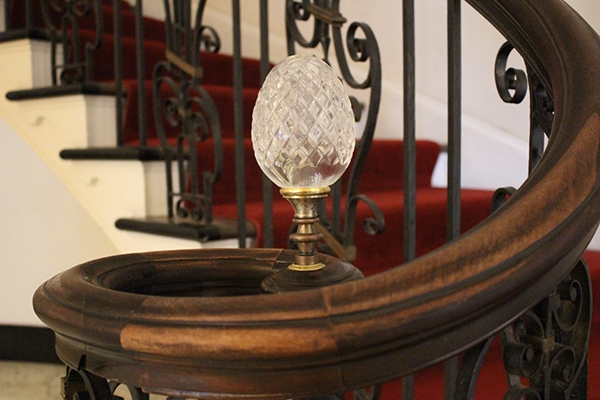
• On the crystal finial at the end of the Stair Hall staircase on the first floor

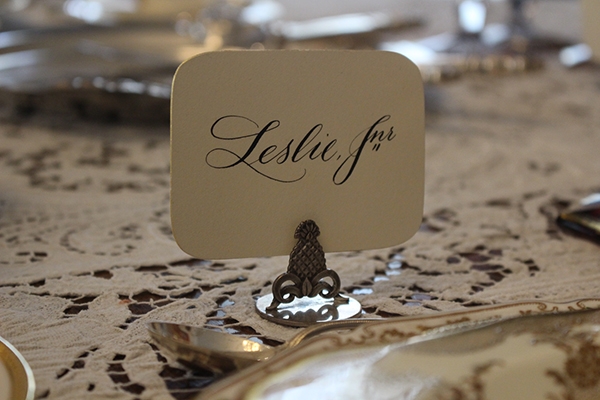
• The Tiffany silver pineapple place card holders on the dining table

Next time you’re visiting Cheekwood, take note of these subtle pineapple symbols throughout the estate and gardens, and see if can spot any other pineapple symbols. Share your pineapple emblem photos on social media using #CheekwoodPineapple for a chance to be featured on our accounts!

IMG_4584
test

Tots! Activity: Painted Butterflies

Tots! Activity: Painted Butterflies

As Cheekwood’s Tots program is temporarily suspended, we are sharing today’s activity for parents and tots to activate at home. Use our files to create your own painted butterflies, then share your work with us by tagging @cheekwood on Instagram and using #cheekwoodtots!

Here’s what you’ll need:• Butterfly template
*See template below

• Paper

• Paint

• Paint Brush

• Scissors if cutting out your butterfly


Butterfly Template


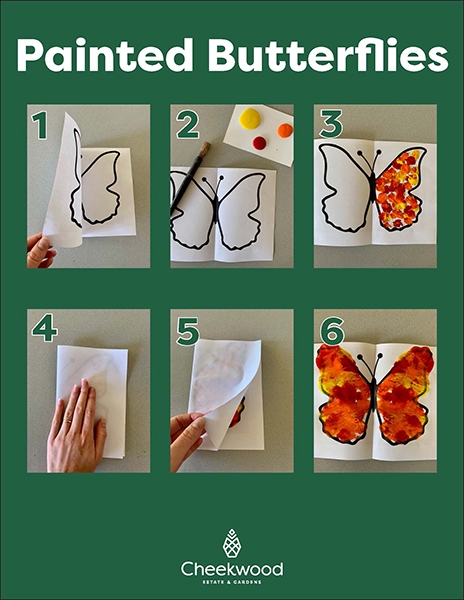
Directions:1. Print the butterfly template. Fold the butterfly in half down the body so that the two wings meet.

2. Dab paint on one of the wings.

3. When finished putting paint on one of the wings, fold the paper in half again along the fold that you previously created.

4. Rub the paper and gently press the paint around.

5. Open the paper and lay flat to dry.

6. Optional: Once dry, cut out your butterfly!


Try pairing the activity with one of these books:
Butterfly Park by Elly MacKay

Waiting for Wings by Lois Ehlert

A Butterfly is Patient by Dianna Aston


Ask your explorer: • What happened when you folded your paper with the paint inside?

• What do the wings look like? They are the same, it’s called symmetry.

• Can you see or think of anything else that has symmetry?

• Do you know what butterflies eat?


Here are a few tips on how you can make your backyard butterfly friendly:• Make sure that there are areas in your garden that get plenty of sunlight throughout the day. Try putting stones down in those sunny spots for butterflies to rest on. Butterflies are cold-blooded insects that like to warm their bodies by basking in the sun.

• Create a butterfly puddle. Place a shallow dish in your garden, fill with sand and top with a little bit of soil. Push your thumb gently into the center and add water as needed. This puddle will act as a source of nourishment for many butterflies passing by.

• Grow butterfly and caterpillar loving plants such as native honeysuckle, milkweed, lantana, purple coneflower and phlox. Make sure to grow only native varieties of these plants!

Painted-Butterflies
test

Tots! Activity: Caterpillars

Tots! Activity: Caterpillars

As Cheekwood’s Tots program is temporarily suspended, we are sharing today’s activity for parents and tots to activate at home. Use our files to create your own caterpillars, then share your work with us by tagging @cheekwood on Instagram and using #cheekwoodtots!

Here’s what you’ll need:• Paper

• Paint

• Black Marker

• Pompoms, cotton ball, bottle cap, or use your fingers


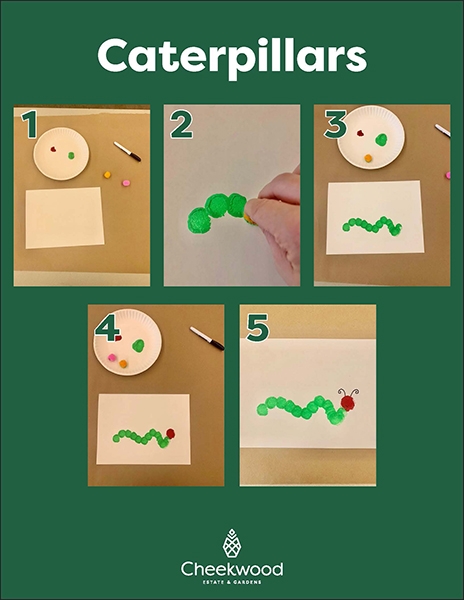
Directions:1. Using a pompom, cotton ball or your finger, dip it in the paint. Stamp the paint in a line. The line can be curly, straight, zigzag, or any other way.

2. Using a different color paint, stamp one dot on one end to make the caterpillar’s head.

3. Let dry completely.

4. Draw a face on the head and some legs on the body.


Try pairing the activity with one of these books:
Caterpillar Dreams by Clive McFarland

The Amazing Life Cycle of Butterflies by Kay Barnham and Maddie Frost

The Very Hungry Caterpillar by Eric Carle


Ask your explorer: • What does a caterpillar become? How does it do that?

• What do you think caterpillars eat?

• Why are there different kinds of caterpillars?

• How many dots did you make for the caterpillars body?

Caterpillar
test

Tots! Activity: Twirling Ladybugs

Tots! Activity: Twirling Ladybugs

As Cheekwood’s Tots program is temporarily suspended, we are sharing today’s activity for parents and tots to activate at home. Use our files to create your own twirling ladybugs, then share your work with us by tagging @cheekwood on Instagram and using #cheekwoodtots!

Here’s what you’ll need:• Ladybug template
*See template below

• Crayons, markers or colored pencils

• Glue

• Scissors

• String


Ladybug Template


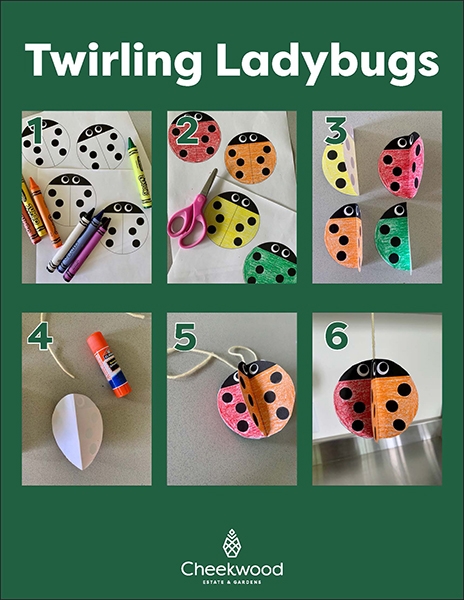
Directions:1. Print 1-2 templates. Color or cut out of colored paper

2. If using only two sides, glue them together with a string in the middle. Hang up.

3. If using 4 sides, fold each ladybug in half down the wing line. Glue the ladybugs together with a string between them to make a more 3D ladybug.

4. Hang them up and let them twirl!


Try pairing the activity with one of these books:
The Grouchy Ladybug by Eric Carle

Look Out Ladybug! by Jack Tickle

The Very Lazy Ladybug by Isobel Finn and Jack Tickle


Ask your explorer: • How many spots are on your ladybug?

• How many spots do you think a ladybug can have?

• How many different colors do you think ladybugs can be? Can you name the colors?

• How do you think ladybugs help our garden and plants? They eat other bugs that want to eat plants.

Twirling-Ladybugs
test

Tots! Activity: Fireflies

Tots! Activity: Fireflies

As Cheekwood’s Tots program is temporarily suspended, we are sharing today’s activity for parents and tots to activate at home. Use our files to create your own fireflies, then share your work with us by tagging @cheekwood on Instagram and using #cheekwoodtots!

Here’s what you’ll need:• Jar template
*See template below

• Yellow paint (glow in the dark if you have it)

• Black pen or marker


Jar Template


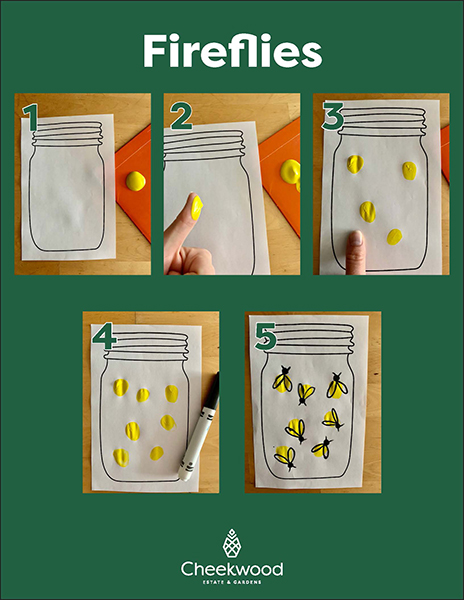
Directions:1. Print template and cut it out if desired.

2. Using a round stamp (qtip, cotton ball, fingers, etc.) dot paint inside the jar.

3. Once dry, draw wings and antennae onto the dots to make fireflies.


Try pairing the activity with one of these books:
The Very Lonely Firefly by Eric Carle

Firefly Home by Jane Clarke and Britta Teckentrupp

Lucy’s Light (
Once Upon a Garden) by Jo Rooks


Ask your explorer: • Why do you think fireflies light up?

• Do you think other animals can also do that?

• How is a firefly different from a spider?

• How are fireflies different from other insects?

Fireflies
test

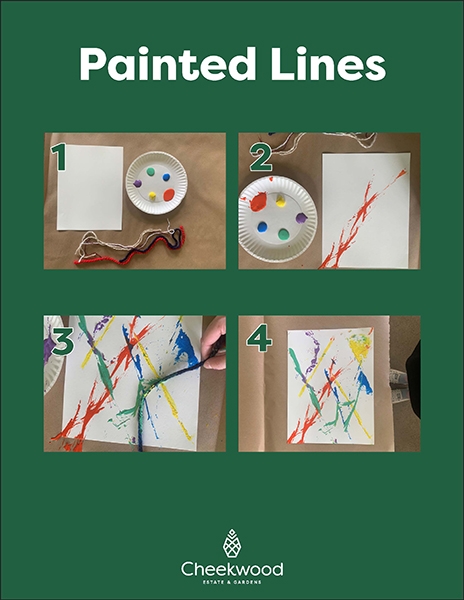
Tots! Activity: Painted Lines

Tots! Activity: Painted Lines

As Cheekwood’s Tots program is temporarily suspended, we are sharing today’s activity for parents and tots to activate at home. Use our files to create your own painted lines, then share your work with us by tagging @cheekwood on Instagram and using #cheekwoodtots!

Here’s what you’ll need:• Yarn, string, twine

• Paint

• Paper


Directions:1. Put paint on a paper plate and cut small pieces of string.

2. Have your Tot dip the string into the paint covering the string or yarn in paint and drag it across a piece of paper to make lines.

3. Encourage them to move the yarn in different ways to make different kinds of lines!


Try pairing the activity with one of these books:
Lines That Wiggle by Candace Whitman and Steve Wilson

Ish by Peter H Reynolds

When a Line Bends… A Shape Begins by Rhonda Gowler Greene and James Kaczman


Ask your artist: • How did you make these lines?

• Why did you choose that color?

• What is your favorite part of your picture? Why?

• Can you describe your lines? Are they wavy, zigzag, curved?

Painted-Lines-1
test

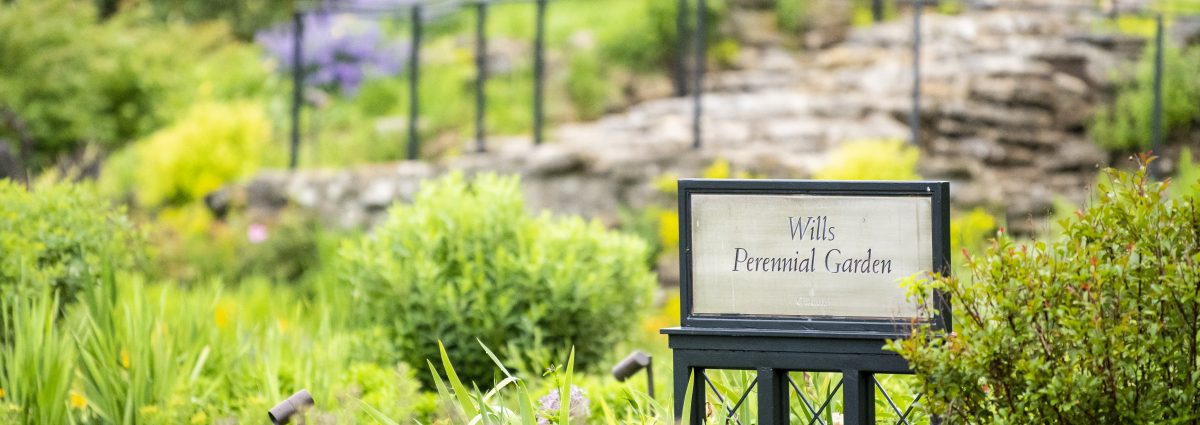
Wills Perennial Garden

Wills Perennial Garden

In celebration of Cheekwood’s 60th anniversary as a public institution, we’re highlighting one of our 12 distinct gardens each month to showcase our wide variety of garden offerings. With 55 acres of rolling hills and 12 intricate, unique gardens, there’s something for everyone to experience and love at Cheekwood.

In the summer of 1977, an iris collection was donated to Cheekwood by Mrs. Ellen Wills. She dedicated it to her late husband, Jesse Ely Wills, the famed iris hybridizer, former president of the American Iris Society and winner of the Dykes Medal Award. The donated iris collection planted the seed for something bigger, a memorial garden for the beloved Jesse E. Wills, philanthropist and pillar of the business community, iris breeder, poet, and wildlife lover.

The design for the memorial garden was a collaborative effort between Duncan Callicott, Cheekwood’s executive director of horticulture at the time, and a local landscape architecture firm, Kevin Turner & Associates. Together the team created a space that would capture Jesse Wills’ essence: a garden fit for the cultivation of irises, a home for pollinators and other wildlife, an auditory experience, and a spectacular open view of the sky. The Wills Perennial garden officially opened and dedicated in April of 1981.

©Caitlin Harris Photography

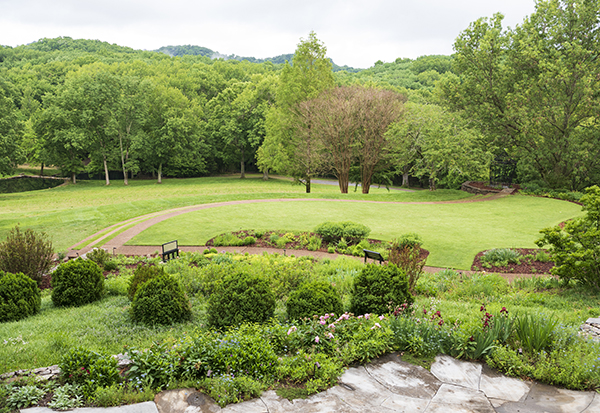
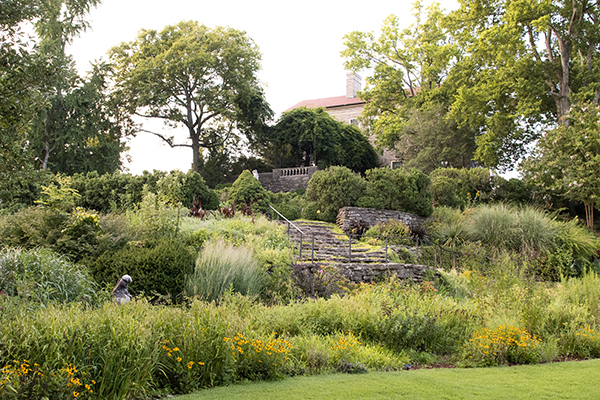
The perennial garden is set on a terrace, elevated above the three interconnected ponds of the Robinson Family Water Garden. To the southwest of this site, the protected hills of the Warner Parks provide the perfect scene for a setting sun. From out of the original rock wall of the circular drive grows creeping raspberry, candytuft, and a variety of sedum that give the perennial garden a reference to the historic estate and a connection to the Reflecting Pool and Swan Lawn on the opposite side. The Wills Perennial Garden offers an organic and loose arrangement, mirroring the way in which the Mansion’s stonework becomes less formed and compact the further it moves into the surrounding landscape.

Besides the exuberant color matched with a variety of texture and fragrance, another layer of the Wills Perennial Garden is an auditory one. An array of buzzing pollinators inhabits this garden like no other, creating the pitches of a vibrant symphony. With a diverse plant palette to ensure a long bloom period, shrubs for shelter, and full sun exposure, hospitality is offered for fiery skippers’ soft squeaks, duskywing hums, and the fluttering of eastern tiger swallowtail. Goldfinches swarm to the purple-top verbena and the hummingbirds incessantly seek out the red salvias and aromatic bee balm.

©Caitlin Harris Photography

June is Perennial Garden Month, and we encourage you to get out to the Wills Perennial Garden and experience the sights, sounds, and smells of this beloved, unique garden. With its many colors, textures, and layers, its sure to leave you feeling inspired to plant your own perennial garden a home.

Click here to read about our other distinct gardens. For a look at what’s currently blooming in the gardens, check out our Gardeners’ Top Picks here.

Privacy Policy Sitemap Web design by Speak
Back to top