wordpress, Author at Cheekwood - Page 20 of 45 | Page 20
x icon Close
test

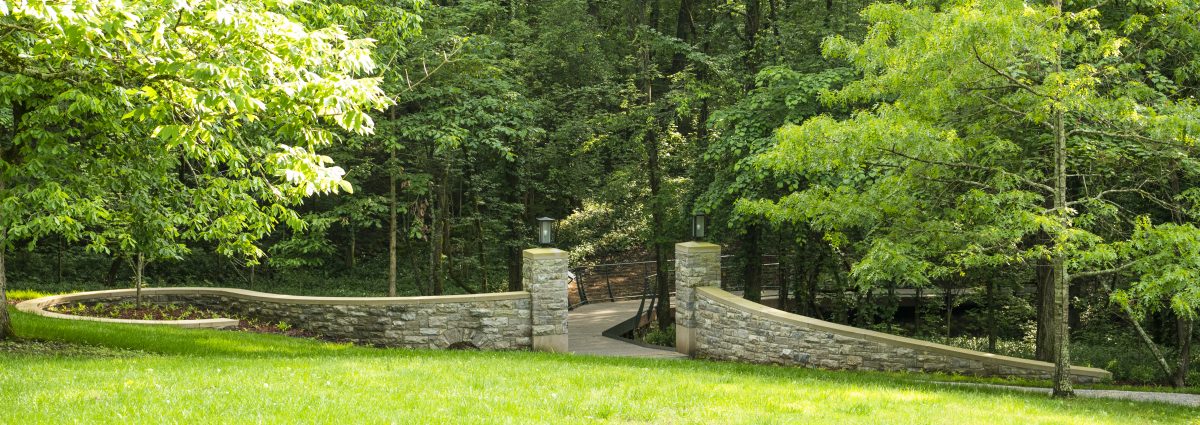
Forest Bathing: Connecting with Nature
Forest Bathing: Connecting with Nature

Date: 7/13/2020

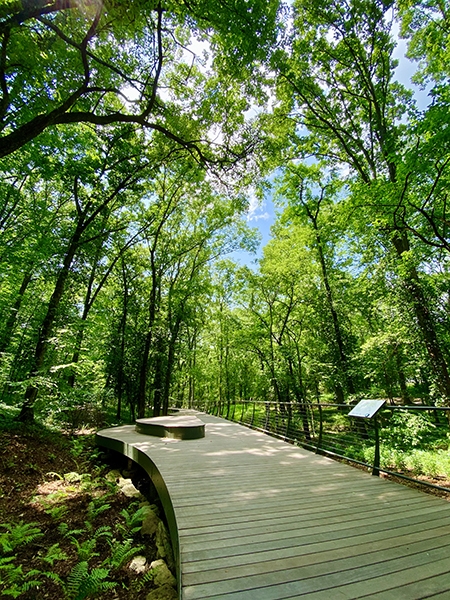
Next month, Cheekwood will offer a new wellness class called Shinrin-yoku Forest Bathing for Beginners. The class offers a gentle sensory walk on our newly renovated Carell Trail while encouraging individuals to connect with nature – no water needed! Read on to find out what Georgia Bromehead, certified Association of Nature and Forest Therapy (ANFT) guide and owner of Forest Therapy Nashville, has to say about this unique practice.

What is Shinrin-yoku forest bathing?

Forest bathing, or forest therapy, is a guided, sense-based and mindful way to be in nature. Taking place in a small area with a forest therapy guide, crafted invitations offer ways to interact with natural beings that make space for healing of mind, body, and spirit in a simple yet profound way. Based on the Japanese practice of “Shinrinyoku,” or “forest bathing,” we “bathe” in not only immune-boosting chemical compounds of nature, but also in the feeling of being present and connected.

What are the benefits of practicing forest bathing?

Forest bathing became an official idea in the 1980s after Japan realized its population was working itself into an unhealthy state. They conducted experiments on blood pressure, stress hormones like cortisol, and even the immune system and found benefits from being in the forest even for a short period of time. Phytoncides, particles put off by trees to combat assailants such as fungi, are breathed by us and increase immunity. We are literally bathing in healing air! The practice and scientific studies are still big in Japan and Korea. Along with physical health benefits, people have experienced increased peacefulness, creativity, calmness, and joy after a forest therapy walk. Inspired by the movement, Amos Clifford brought the idea to United States in the early 2000s and combined it with his background in psychotherapy, creating forest therapy and, later, ANFT.

Is this something I can do by myself?

With practice, you may begin your own forest bathing, but let me help you at first. Guides with ANFT learn a specific sequence of sensory-based activities that allow folks to bathe in and journey through the healthful benefits of nature. One important thing that forest bathers and ANFT guides note is, ‘The forest is the therapist; the guide just opens the doors.’ Guided forest bathing practice helps you learn how to approach nature in a way you can do on your own.

ANFT highlights secondarily the importance of “culture repair” that comes along with gathering with other human beings to “be” and truly listen, which is a beautiful part of the experience. Forest therapy and forest bathing are not therapies in a traditional sense, and can look incredibly simple from the outside. Sometimes, however, within each participant, there is a profound connection and healing taking place through remembering the self and our connection to the natural world.

What inspired you to lead forest bathing experiences?

I am passionate about forest bathing and forest therapy because there is no pass or fail. It is not a meditation to feel guilty about not doing enough. It is not a plant identification course to exercise the brain. The practice is a very simple opportunity to be in our bodies and senses in a way we do not often live. It can feel quite childlike – not in a silly way, but a way that makes you feel alive. If all I do is provide a short time for a person to be quiet and smell a tree they have never smelled, that brings me immense joy.

What can I expect from a forest bathing class at Cheekwood?

Forest bathing classes at Cheekwood will be shorter, modified versions of a full ANFT style forest therapy walk, but will be a great primer and time to connect. Participants should expect to move slowly through a series of mindful prompts and invitations and, if comfortable, share their experiences.

What should I wear?

Participants should wear comfortable shoes and clothing for both walking and sitting. Since we will be practicing in the summer, bug spray, sunscreen, and hats are encouraged too! And don’t forget to wear your cloth face mask when social distancing is not an option outdoors.
Forest-Bathing

Learn More

Experience the beauty of our new Carell Trail while joining others in the peaceful practice of forest bathing. Shinrin-yoku Forest Bathing for Beginners classes will be held at Cheekwood each Wednesday morning in August at 9:30 AM. To register, please visit our Wellness Programs page.

To find out more about forest bathing and forest therapy, we encourage you to visit these websites:

• Association of Nature and Forest Therapy

• Forest Therapy Nashville

• Wasatch Forest Therapy

test

Tots! Activity: Starry Night

Tots! Activity: Starry Night

As Cheekwood’s Tots program is temporarily suspended, we are sharing today’s activity for parents and tots to activate at home. Use our files to create your own starry night inspired masterpiece, then share your work with us by tagging @cheekwood on Instagram and using #cheekwoodtots!

Here’s what you’ll need:• Blue Paper

• Black Paper

• Apple Core (and apple snack!)

• Yellow paint

• Glue

• Scissors

• Q-tip


Directions:1. Parent/guardian should cut up an apple so that the core is intact.

2. Dip the bottom of the apple core in yellow paint, and use as a stamp to create star shapes on the blue paper

3. Using the black paper, cut out some Van-Gogh inspired tree and building shapes.

4. Glue the shapes to the blue paper- It is okay to overlap!

5. Dip the Q-tip in the yellow paint and use it to dot yellow windows on the buildings.


Try pairing the activity with one of these books:
My Museum by Joanne Liu

We Are All Works of Art by Mark Sperring


Ask your artist: • Do things look different at night than they do during the daytime? How?

• Does this town look like a place you’ve been before?

• Can you describe the town you’ve made? What is it called? Who lives there? What season is it?

• How many stars do you see on your painting? How many windows?

NathanZucker_8530-1200x425
test

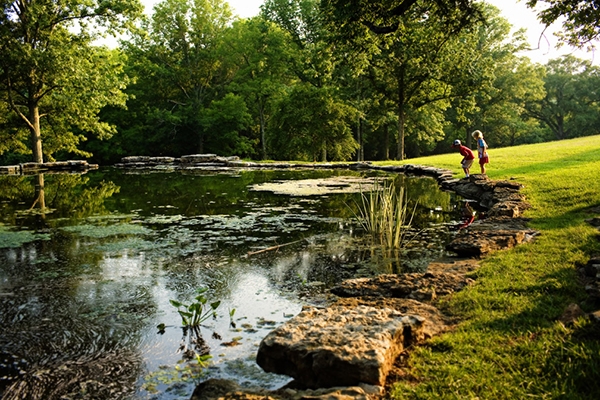
Robinson Family Water Garden

Robinson Family Water Garden

In celebration of Cheekwood’s 60th anniversary as a public institution, we’re highlighting one of our 12 distinct gardens each month to showcase our wide variety of garden offerings. With 55 acres of rolling hills and 12 intricate, unique gardens, there’s something for everyone to experience and love at Cheekwood.

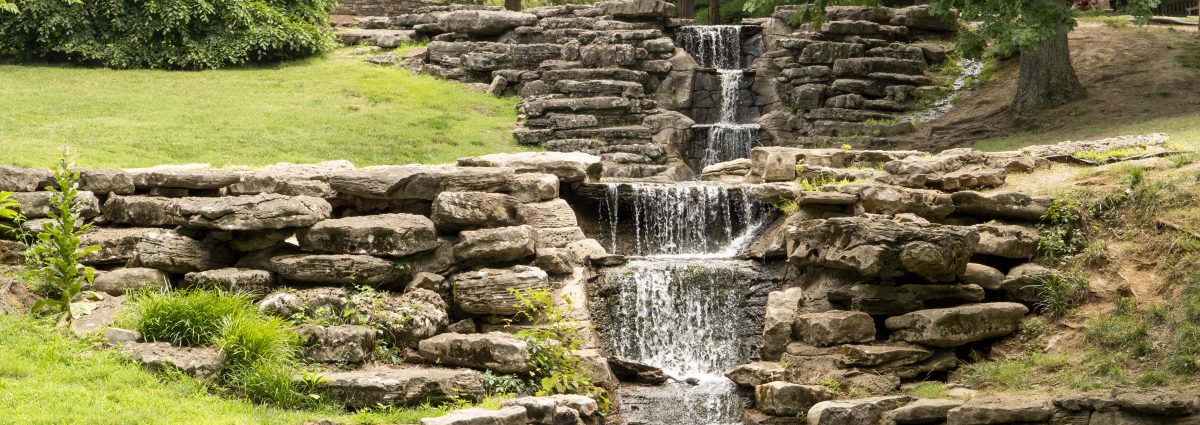
The fountains, pools, and man-made creeks and ponds were originally connected by a system of underground pipes and pumps. As the water traveled through this environmentally sound arrangement, it was aerated and cooled naturally, preventing the growth of algae and bacteria. Beginning at the Swan Fountain, the water flowed downhill through a series of smaller pools, rills, and underground pipes to the Reflecting Pool. Water continued traveling under the main drive and eventually reached the three largest ponds situated in a nonlinear and unorthodox, Fleming-esque placement. In the following decades, a renovation of the ponds was made possible by the Robinson Family, and the Water Garden was named in their honor.

When the windows of the house were open, the sounds of trickling water could be heard inside, a feature that Mabel Cheek expressed to Fleming as a design necessity. The source for the water was the Red Spring House on the west fork of Richland Creek. This spring originally used to provide water for Belle Meade Plantation, and the Cheeks purchased the spring specifically to provide their own supply of residential water.

Click here to read about our other distinct gardens. For a look at what’s currently blooming in the gardens, check out our Gardeners’ Top Picks here.

2008 3590 kidspond_72.jpg
test

Tots! Activity: Colorful Paintings

Tots! Activity: Colorful Paintings

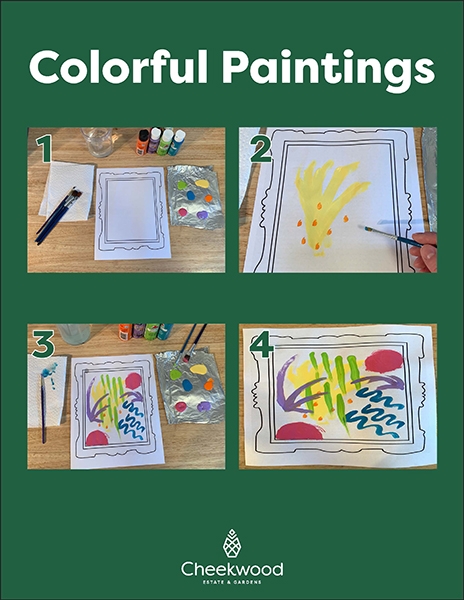
As Cheekwood’s Tots program is temporarily suspended, we are sharing today’s activity for parents and tots to activate at home. Use our files to create your own colorful paintings, then share your work with us by tagging @cheekwood on Instagram and using #cheekwoodtots!

Here’s what you’ll need:• Frame templates
*See template below

• Paper

• Paint

• Paintbrushes or anything to manipulate the paint


Frame 1  Frame 2  Frame 3


Directions:1. Print out your favorite frame template or all three.

2. Paint or color the frame if you want or leave it as is.

3. Using brushes, fingers, cardboard, or any other utensils, tell your Tot to paint what they feel.


Try pairing the activity with one of these books:
I Feel Teal by Lauren Rille

The Museum by Susan Verde and Peter H. Reynolds


Ask your artist: • Which colors make you feel warm? Which colors make you feel cold?

• How does this color make you feel?

• Why did you choose these colors?

• How would your painting be different if you felt happy or sad?

• What is your favorite part of your picture?

Colorful-Paintings
test

Tots! Activity: Spiders

Tots! Activity: Spiders

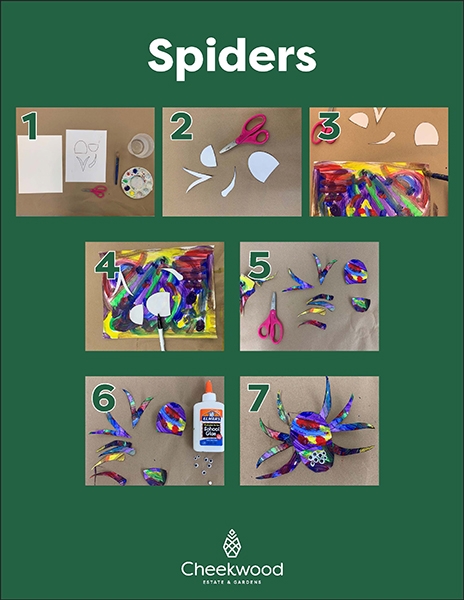
As Cheekwood’s Tots program is temporarily suspended, we are sharing today’s activity for parents and tots to activate at home. Use our files to create your own spider, then share your work with us by tagging @cheekwood on Instagram and using #cheekwoodtots!

Here’s what you’ll need:• Spider parts template
*See template below

• Paper

• Paint or markers

• Paint brush

• Scissors

• Glue


Spider Template


Directions:1. Print out the spider part template. Cut out the pieces.

2. Cover a separate piece of paper in paint, using different colors and textures. Do more than one if you want! Let dry.

3. Find your favorite parts of your painting and place the spider parts on top. Trace the template, and cut out the pieces.

4. Put your spider together. Remember: spiders have 8 legs!


Try pairing the activity with one of these books:
The Very Busy Spider by Eric Carle

Diary of a Spider by Doreen Cronin

Pete the Cat and the Itsy Bitsy Spider by James Dean


Ask your artist: • Why did you choose these spots of your painting?

• What do spiders make?

• Do you think spiders are insects? How are they different?

• How many legs does your spider have?

Spiders
test

Gardeners’ Top Picks July 2020

Gardeners’ Top Picks July 2020

You won’t want to miss these summertime stunners! Check out our garden team’s top plant picks for July.

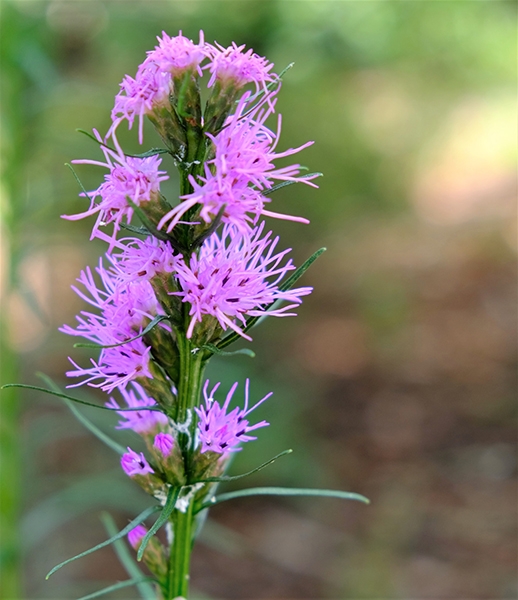
Blazing Star (Liatris spicata ‘Kobold’)

Bloom Time: July – August

Sun Requirement: Full sun

Water Requirement: Medium

Wildlife: Birds, butterflies, & hummingbirds

Tolerates: Clay soil, heat & humidity

Native to North America: Yes

Other: Great selection for rain gardens / makes an excellent cut flower

Zones: 3 – 8

Location: Bracken Foundation Children’s Garden

Liatris-CH-23-1

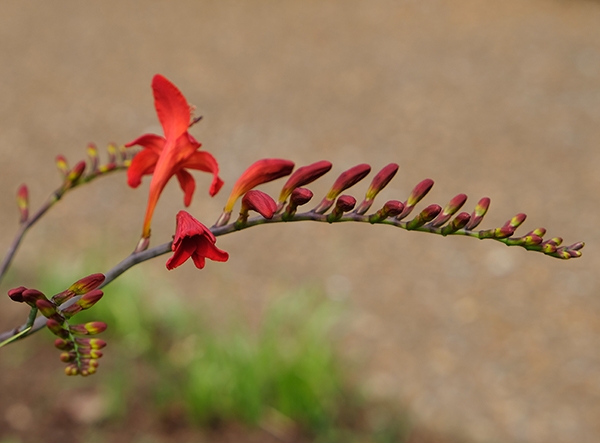
Montbretia (Crocosmia ‘Lucifer’)

Bloom Time: June – August

Sun Requirement: Part sun – shade

Water Requirement: Medium

Wildlife: Hummingbirds

Tolerates: Clay soil

Native to North America: No

Other: Great plant for front borders / provides late season color

Zones: 5 – 9

Location: Wills Perennial Garden

Crocosmia-Lucifer-WI-2

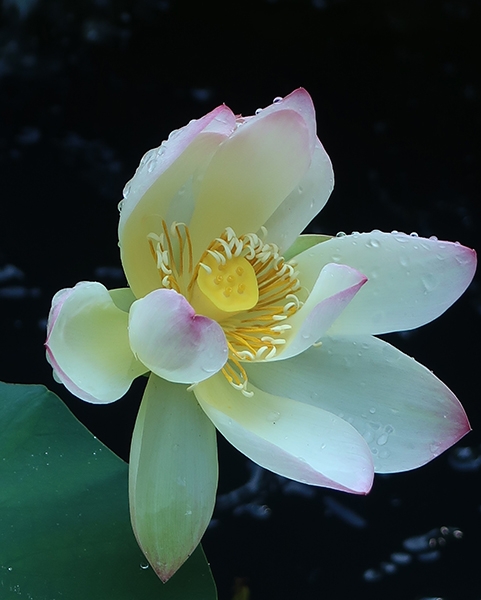
Water Lily (Nelumbo ‘Drunken Cocubine’)

Bloom Time: June – August

Sun Requirement: Full sun

Water Requirement: Wet

Wildlife: Bees & butterflies

Tolerates: Some shade

Native to North America: Yes

Other: Fragrant blooms / plant in rain gardens or ponds

Zones: 5 – 10

Location: Herb Study Garden: Fountain

Nelumbo-Drunken-Cocubine-1

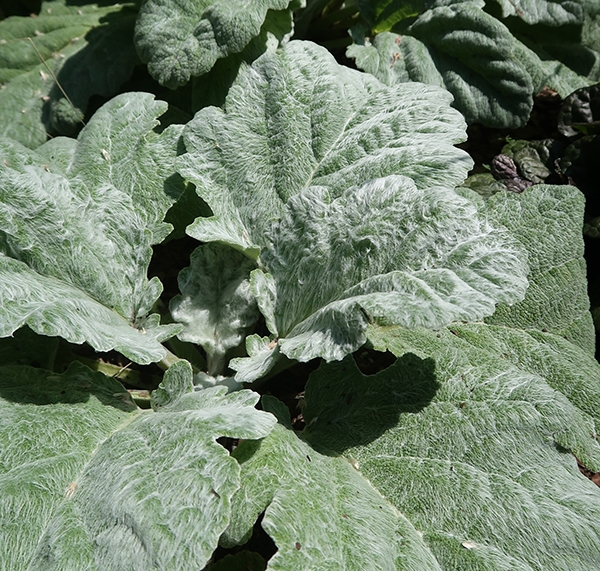
Lamb’s Ear (Stachys byzantina ‘Big Ears’)

Sun Requirement: Full sun

Water Requirement: Dry – Medium

Wildlife: Bees use the plant for nesting material.

Tolerates: Deer

Native to North America: No

Other: Unique ground cover

Zones: 4 – 9

Location: Burr Terrace Garden

Stachys-Helen-von-Stein-BU

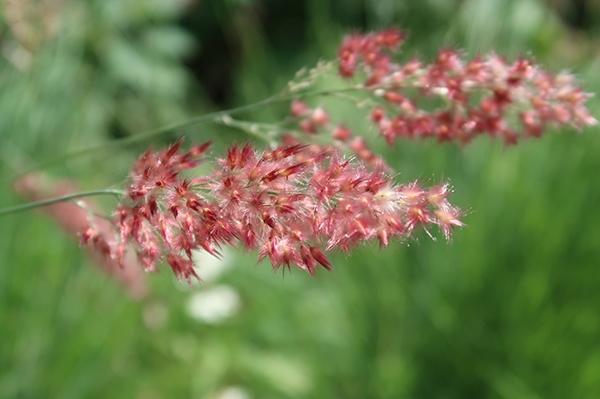
Ruby Grass (Melinus nernviglumis)

Bloom Time: July – August

Sun Requirement: Full sun

Water Requirement: Medium

Wildlife: Wind pollinated

Tolerates: Black walnut

Native to North America: No

Other: Great plant for mass plantings and containers

Zones: 8 – 10

Location: Bradford Robertson Color Garden

Melinas-CO2

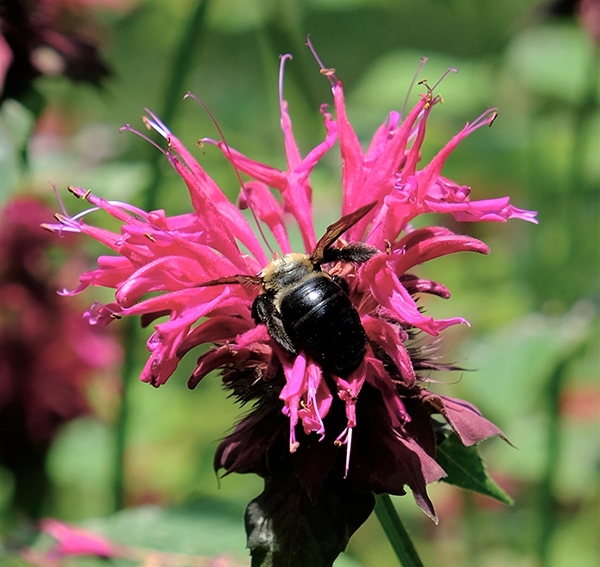
Bee Balm (Monarda ‘Raspberry Wine’)

Bloom Time: July – August

Sun Requirement: Full sun – part shade

Water Requirement: Medium

Wildlife: Bees, butterflies & birds

Tolerates: Deer, rabbit, wet soil

Native to North America: Yes

Other: Foliage has a pleasant, aromatic foliage / bee balm will naturalize

Zones: 4 – 9

Location: Howe Garden: Tool Shed Bed

Monarda-Howe-2

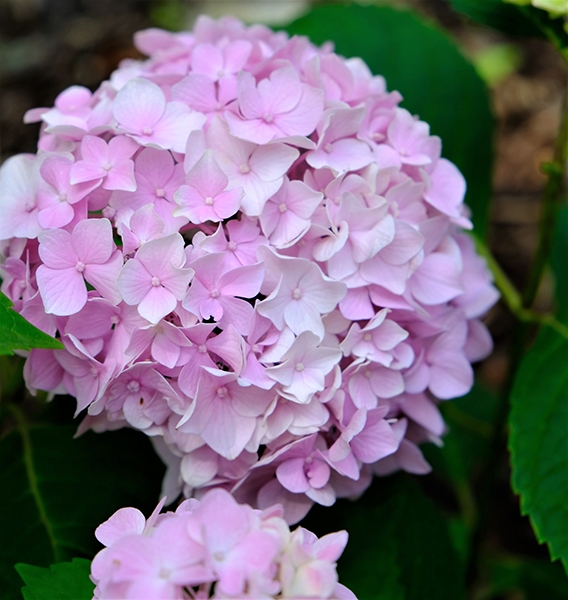
Mophead Hydrangea (Hydrangea macrophylla ‘Penny Mac’)

Bloom Time: June – September

Sun Requirement: Part shade

Water Requirement: Medium

Wildlife: The flowers are sterile

Tolerates: Full sun if soil is consistently moist

Native to North America: No

Other: Makes a beautiful shrub border / the flowers dry well

Zones: 6 – 9

Location: Bracken Foundation Children’s Garden

Hydrangea-Penny-Mac-CH-29-5

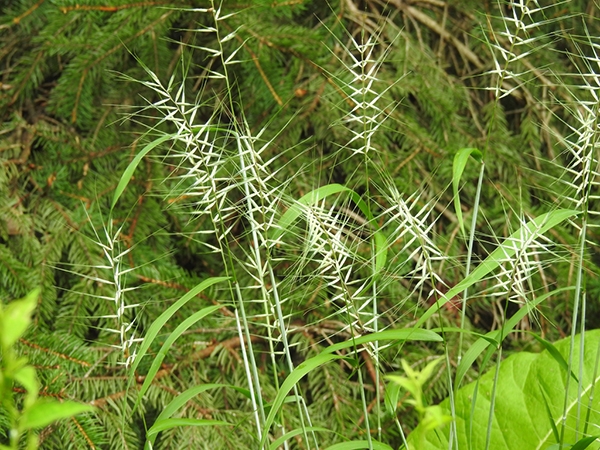
Eastern Bottlebrush Grass (Elymus hystrix)

Bloom Time: July – October

Sun Requirement: Full sun – part shade

Water Requirement: Dry – Medium

Wildlife: Birds

Tolerates: Drought, heavy shade, erosion

Native to North America: Yes

Other: Easy to grow and naturalize

Zones: 5 – 9

Location: Ann & Monroe Carell Jr. Family Sculpture Trail: Hickory Loop

Elymus-hystrixSC
test

Tots! Activity: Cupcake Liner Spiders

Tots! Activity: Cupcake Liner Spiders

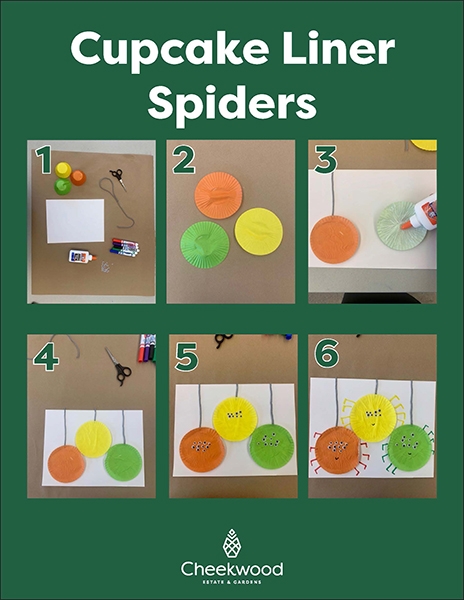
As Cheekwood’s Tots program is temporarily suspended, we are sharing today’s activity for parents and tots to activate at home. Use our files to create your own cupcake liner spiders, then share your work with us by tagging @cheekwood on Instagram and using #cheekwoodtots!

Here’s what you’ll need:• Bright cupcake liners in big and small sizes

• Googly eyes (optional)

• Markers, crayons or colored pencils

• String

• Glue

• White paper or construction paper


Directions:1. Flatten cupcake liners.

2. Glue string onto the paper with the cupcake liner at the end so that it looks like your spider is hanging down

3. Wait for it to dry, or make sure not to touch and move the strings.

4. Add eyes and legs to your spiders! Remember: spiders have 8 eyes and legs!


Try pairing the activity with one of these books:
Walter’s Wonderful Web by Tim Hopgood

The Weaver by Qian Shi


Ask your explorer: • Why do spiders make webs?

• Are spiders helpful in our garden or home?

• How long do you think spiders spend making their webs?

• Do you think spider webs feel like the string, or do you think it feels different?

Cupcake-Liner-Spiders
Privacy Policy Sitemap Web design by Speak
Back to top