Historic Initiative Archives - Cheekwood
x icon Close
test

Sowing Seeds and Spilling Beans: Harvesting Okra


Okra Image 2_iOS

Featured Image: Okra plants in the Cheekwood GROWS Garden.

Okra fruits emerging on the plant.

Hello readers!

My name is Natasha, and I’m the Garden Educator at Cheekwood. My work here involves managing a raised bed vegetable garden (the Cheekwood GROWS Garden) and leading educational programming in this space. I’m excited to be starting this monthly blog series, in which I hope to explore cultivated edible plants and our relationships with them in Middle Tennessee.

As summer begins to wind down, I have been thinking a lot about okra (Abelmoschus esculentus). A member of the mallow family (Malvaceae), hibiscus, cotton, and cacao are among its relatives. With its vigorous growth habit and ephemeral, red-tinged flowers, okra is a joyful plant. It thrives in heat, tolerates poor soil, and rarely faces significant pest or disease issues. The flowers only bloom for a single day, after which they quietly fall off the plant to reveal tiny fruits emerging behind them. Okra stands tall and strong with no staking necessary and will produce an abundance of these tasty fruits that can be prepared and eaten in countless ways – provided you catch them before they turn woody and tough, a change that will occur before you know it (i.e., in 4-5 days)!

Okra has ancient origins. The plant was first collected from the wild and cultivated over 3,000 years ago in the Abyssinian center of origin – a region encompassing present-day Ethiopia and parts of Somalia, known as an ancient agricultural hotspot. Wheat, sorghum, broad beans, and coffee are other significant crops now grown around the world that can be traced back to this biodiverse center of origin.

From there, okra spread around the world. It is an important ingredient in cuisines throughout the Indian subcontinent, the Middle East, and West Africa. It was enslaved Africans who brought okra – along with thousands of years of agricultural and culinary tradition –  to North America as a means of cultural preservation and survival. They grew the plant as a food crop in the American South, where it thrived in the rich soils and heat just as it did in its place of origin. Okra quickly became a staple of Southern cuisine and important food crop of the African diaspora.


Distinct okra recipes developed across the South in response to diverse cultural influences, from Creole gumbo in Louisiana to the okra and tomato stew of the Gullah Geechee people along the Southern Atlantic coast. Something that all okra recipes contend with in one way or another is one of its unique botanical features: the slime it secretes when cut open. The scientific term for this gelatinous substance is mucilage, and it acts as a lubricant to help okra plants efficiently transport and utilize water – a definite advantage in hot weather.

In gumbo, the slime acts as a thickener, giving the dish its signature mouthfeel. Pickling okra achieves the opposite effect, as the acidity from the brine cuts the gooeyness of the slime. Fried okra lands somewhere between these two; exterior crunch and interior slime balance each other out. I am a fan of all three, and welcome okra’s unusual mouthfeel as something truly unique among the vegetables widely available in this country.

Okra Image 3_iOS

Okra flower up-close.


As mentioned earlier, okra has a short harvest window and is best picked when the pods are about 3 inches long. I, however, have forgetful gardening tendencies and collected pods of all sizes this growing season. The slightly larger pods are still delicious but benefit from a longer cooking time; I like to halve them lengthwise and roast them in the oven. The very large pods contain jumbo white seeds – these can be removed and gently toasted in a pan with seasonings of your choice for a tasty snack! Okra is also perfectly edible, and in fact very delicious, freshly picked off the plant. It has a wonderful crunch that tends to fade during cooking.

If you hope to save okra seeds for the following year, leave a few pods on your plant to grow huge and dry out. Towards the end of the summer, the ridges on these pods will become more pronounced and the green color will fade to white in between these ridges. At this point, you can harvest the pods, split them lengthwise, and remove the seeds within. You’ll know that they’re ready to save because they’ll have turned from a pearly white to a deep, green-tinged black. Since okra flowers are self-pollinating (both male and female parts exist in a single flower), the seeds you collect should produce the same variety you grew originally. Happy gardening!
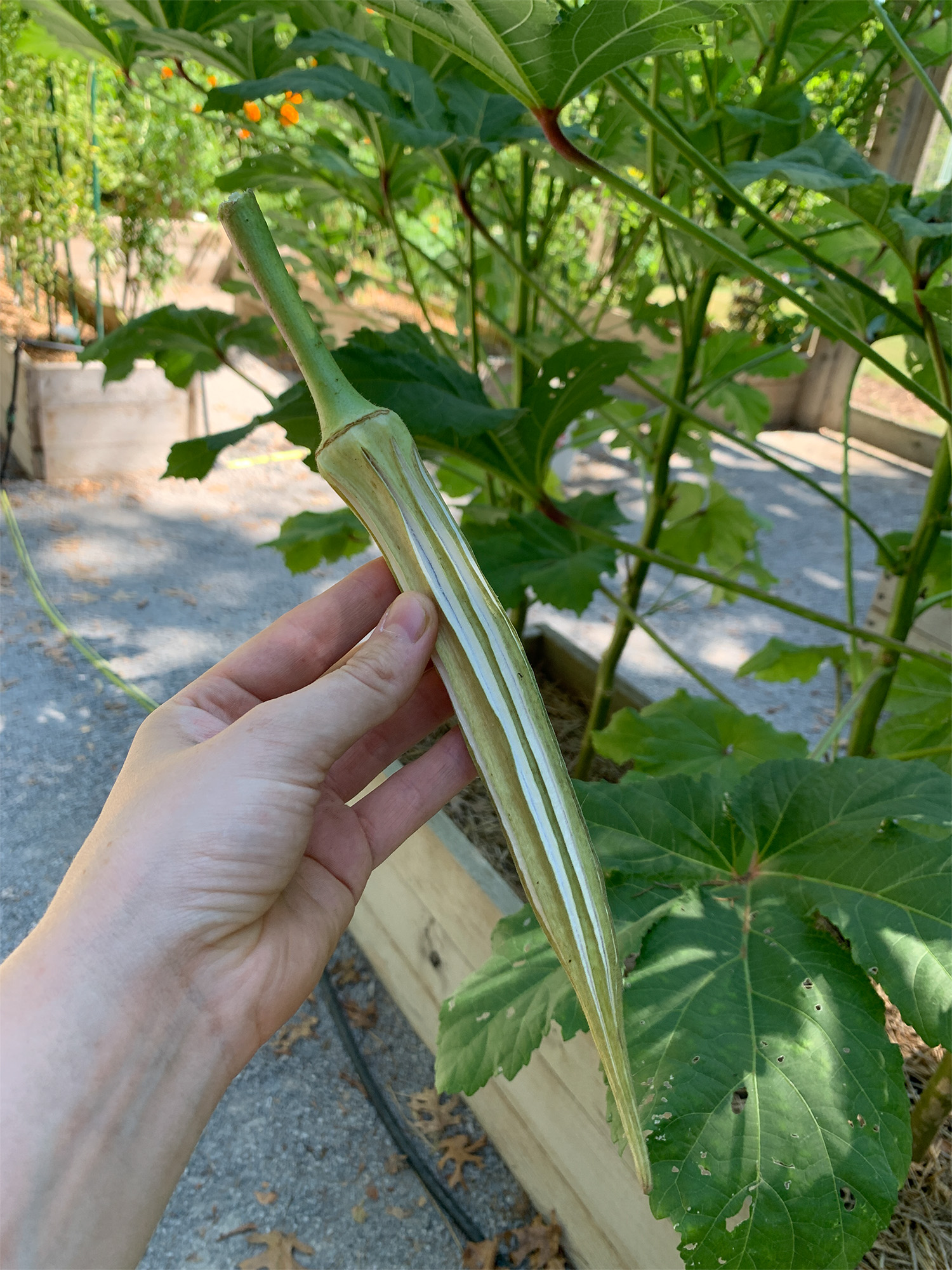
Okra Image 4_iOS

Okra fruit that has dried out on the plant.

Okra Image 5_iOS

Okra seeds collected from dried-out pods.


Quick Fridge-Pickled Okra

Makes one 16-ounce jar

Ingredients

  • 8 oz fresh okra (10-15 pods, depending on size)
  • 3 cloves garlic, peeled and smashed
  • 1 fresh chile, split lengthwise, or 1-2 tsp dried chile flakes
  • 1 sprig fresh basil
  • 1 tsp black mustard seeds
  • 1 tsp black peppercorns
  • 1.5 tbsp granulated sugar
  • 1 tbsp kosher salt
  • 1 cup white vinegar
  • 0.5 cup water

Instructions

  1. Combine vinegar, water, sugar, and salt in a small saucepan. Simmer on the stovetop until sugar and salt have dissolved completely.
  2. In a clean, 16 oz mason jar, add okra, garlic, chile, basil, mustard seeds, and peppercorns.
  3. Pour heated brine over the vegetables and seasonings to fill the jar.
  4. Let the jar come to room temperature, then seal and refrigerate for at least 48 hours.
  5. Enjoy!

Thank you for reading my very first blog post.

If you have questions, comments, or suggestions for future topics, you can contact me at ngibbs@cheekwood.org.
test

Historic Profile: Seasonal Festivity Brightens the Year

“There is something in the very season of the year that gives a charm to the festivity of Christmas.”

“Old Christmas,” The Sketchbook of Washington Irving, 1819-20

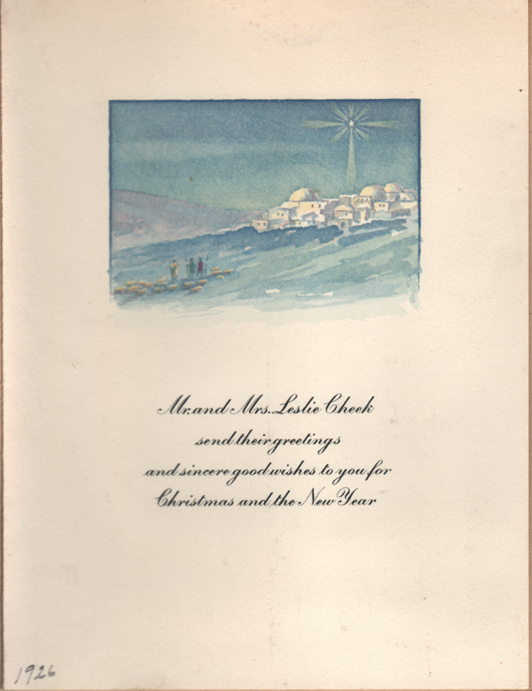
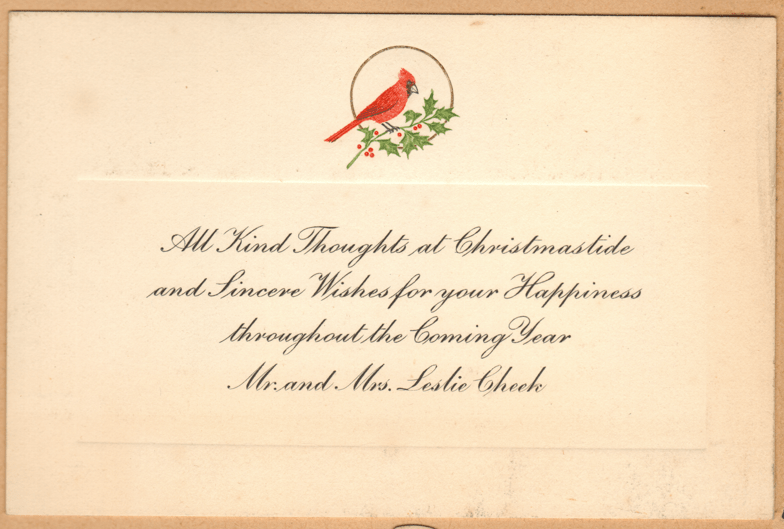
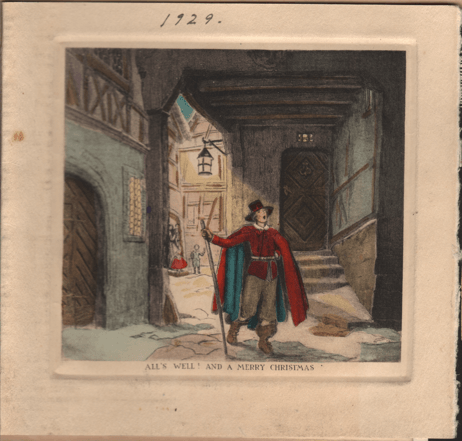
Seasonal festivity brightens the year’s shortest days at the approach of a holiday that combines the deeply sacred and secular as well. In 1928, the city of Nashville first launched its Christmas Season with a downtown parade, and Tennessee’s Legislative Plaza glowed with holiday lights and gigantic letters that blazoned, MERRY CHRISTMAS. The city thus joined the national celebration of the Bethlehem Nativity in tandem with gift giving, Christmas cards, lighted fir trees, and the North Pole from which Santa Claus would alight in his toy-filled sleigh pulled by reindeer, thanks mainly to Clement C. Moore’s A Visit from St. Nicholas (1820), better known as “The Night Before Christmas.”

By 1933, the Cheek family had settled into their country estate, Cheekwood, and Mrs. Leslie Cheek—Mabel— began her holiday plans, writing to daughter Huldah of a “delicious” dessert (“which I will try out on you at Christmas”) and posting her letter to her daughter at boarding school in Pennsylvania: “MAIL EARLY FOR CHRISTMAS.” Two years later, Huldah’s “Christmas list” perplexed her mother, who found just one item, a “pajama suit” to be a suitable holiday gift.

Christmas-Card-1929
Christmas Card 1926

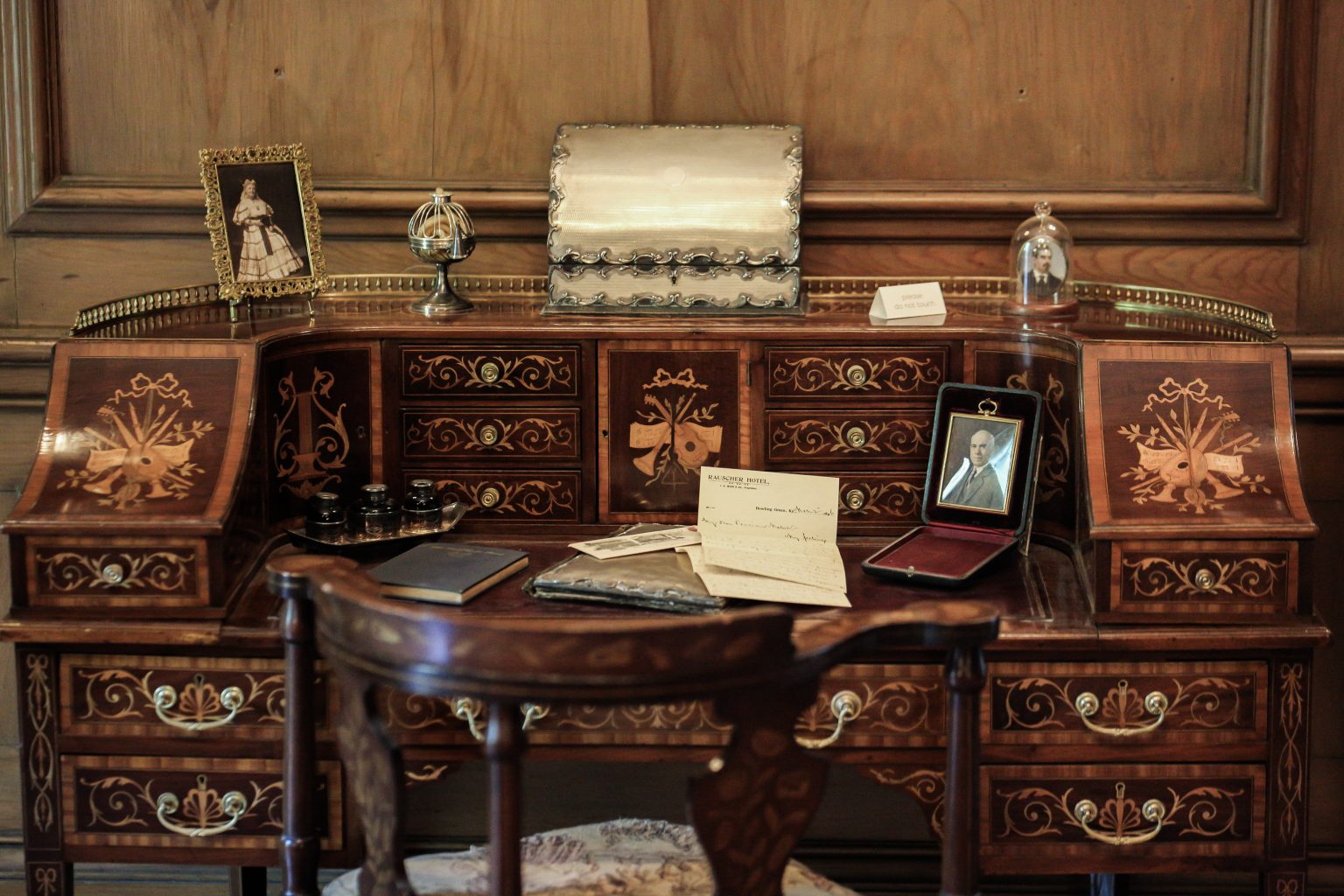
Mabel customarily penned letters to Huldah and to her son, Leslie, Junior, in her favorite room at Cheekwood, the library, where she worked at her desk of inlaid woods. On the library shelves were the complete writings of two authors who might be dubbed founding fathers of the Yuletide holiday: Charles Dickens and Washington Irving. The American, Irving (b. 1783), and his English counterpart, Dickens (b.1812), were both represented at Cheekwood in leather-bound volumes that paid tribute to their status as literary figures of consequence. Both honed their skills in tales of a heart-warming Yuletide holiday that established the tradition with values of charity, friendship, and festivity as well.

Dickens’s A Christmas Carol (1843) is the better-known story of the impoverished Cratchit family, their hobbled son, Tiny Tim, and the miserable and miserly Ebenezer Scrooge who finally grasps his mortality and the imperative of empathy and generosity. A Christmas Carol was first brought to the silver screen in movie theaters in the 1938 production, starring Reginald Owen as Scrooge and Terry Kilburn as Tiny Tim.

Washington Irving’s “Old Christmas” predates A Christmas Carol by two decades and situates American readers in England “of yore,” harkening to an era of the English Squire’s country house and nearby village, where friends and family gather at the glowing hearth, attend services at the nearby cathedral where the choir sings in “triumphant harmony,” and on Christmas Day feast on roasted fowl and puddings in a spirit of merriment and fellowship.

It has been noted that, just as Charles Dickens presented a tale applicable to America, so Washington Irving’s “Old Christmas” deliberately appealed to the U.S. to ally with England by setting aside the rancor generated by the War of 1812, which stung in recent memory. Irving’s “Old Christmas” was thus a holiday appeal for peace in the guise of a yuletide reminiscence of Old England at its best.

Dickens, Irving, and a Cheek family Christmas coalesce in the WWII years of the 1940s, when Huldah’s husband, Walter Sharp, chronicled the family Christmas of 1944 in a lengthy letter to his mother in Franklin, Tennessee. Serving as a US Army Lieutenant stationed in Fort Sam Houston, Texas, Walter described a Texas Christmas with Huldah, their infant, Leslie, and his mother-in-law, Mabel Cheek. An old electric train was resuscitated in this moment when wartime production mandated that viable metals serve the war effort, though the baby preferred to “cuddle” a toy lamb. Walter continues, “Huldah gave me a lovely vase in Steuben glass, which is the finest American glass” and concludes, “Of course we missed all of you at Christmas, but, curiously, you didn’t seem so very far away….It was just as if we could run around the corner and there you all would be.”

There you all would be…. In place and in mind, those words speak volumes over the holidays, from years gone by to the farthest future.

Christmas-Card-1
Portrait Photo of Cecelia Tichi

Blog post provided by Cheekwood’s Writer-in-Residence, Cecelia Tichi, Ph.D.

Cecelia Tichi is an award-winning author and Professor of English and American Studies Emerita at Vanderbilt University. Her books span American literature and culture from colonial days to modern times, but her recent work draws upon the Gilded Age (post-1870) that prompted her book on Jack London and another on seven activists in that tumultuous era.

Cecelia’s research and teaching inspired What Would Mrs. Astor Do? The Essential Guide to the Manners and Mores of the Gilded Age, followed by Gilded Age Cocktails and Jazz Age Cocktails , which set the stage for her mystery crime novels that boast “Gilded” in each title.

Cecelia can be followed on her website: https://cecebooks.com/

test

Historic Profile: Family Traditions Merged with Timely Customs

“Thanksgiving becomes the American holiday that embraces all that we value.”
James W. Baker, Thanksgiving: The Biography of an American Holiday

Season of mists and mellow fruitfulness,
Close bosom-friend of the maturing sun,
Conspiring with him how to load and bless
With fruit the vines that round the thatch-eves run;
To bend with apples the moss’d cottage-trees,
And fill all fruit with ripeness to the core….

John Keats, from To Autumn

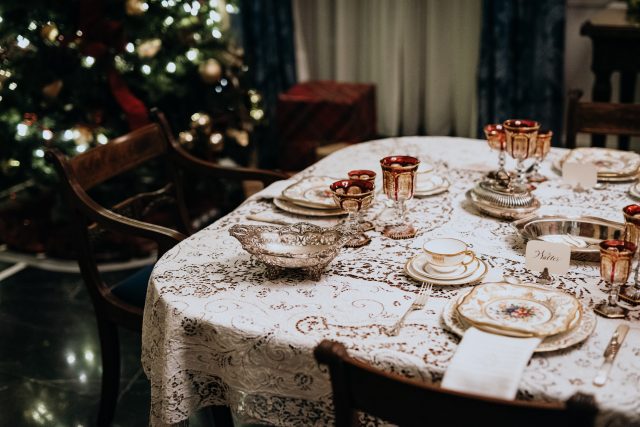
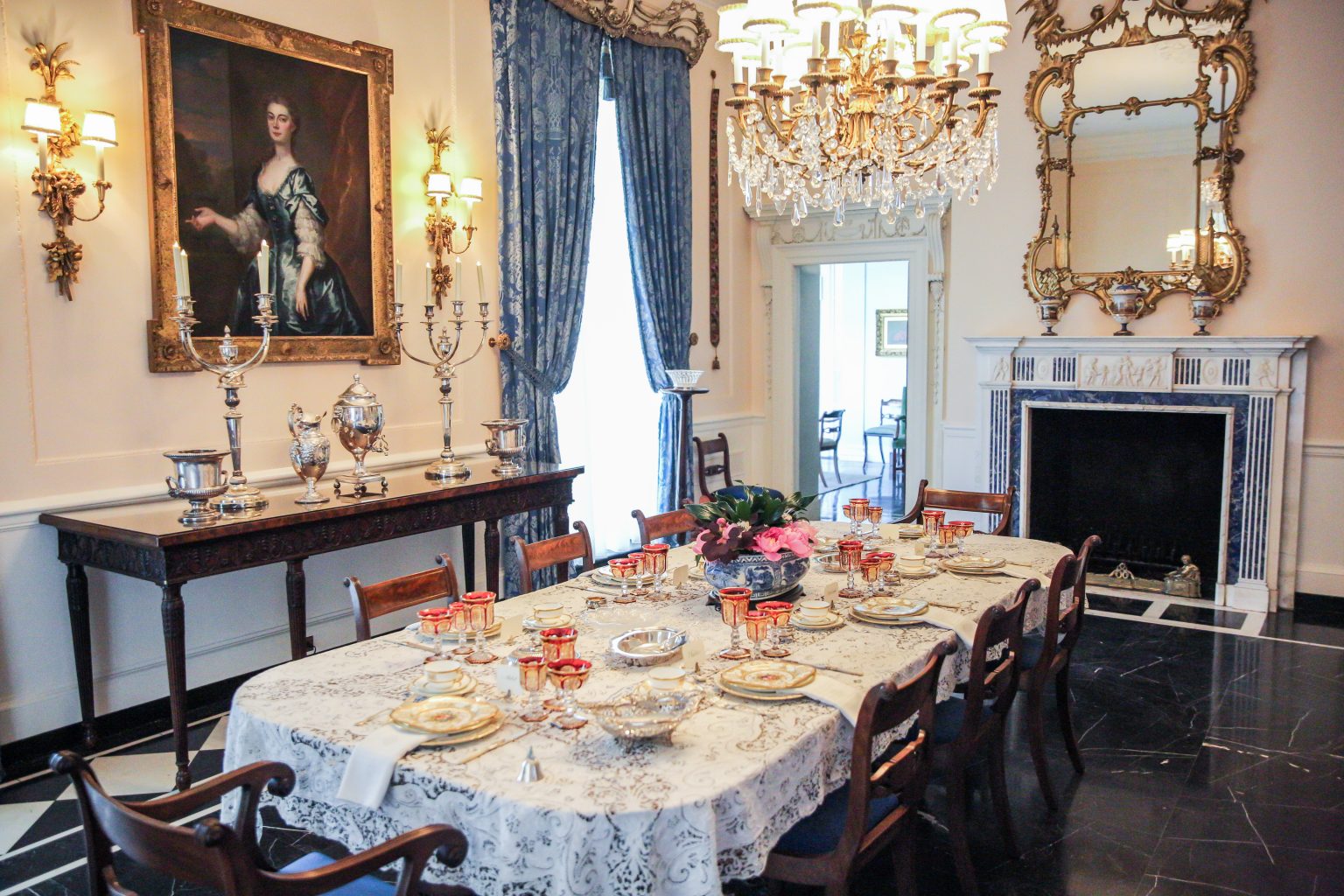
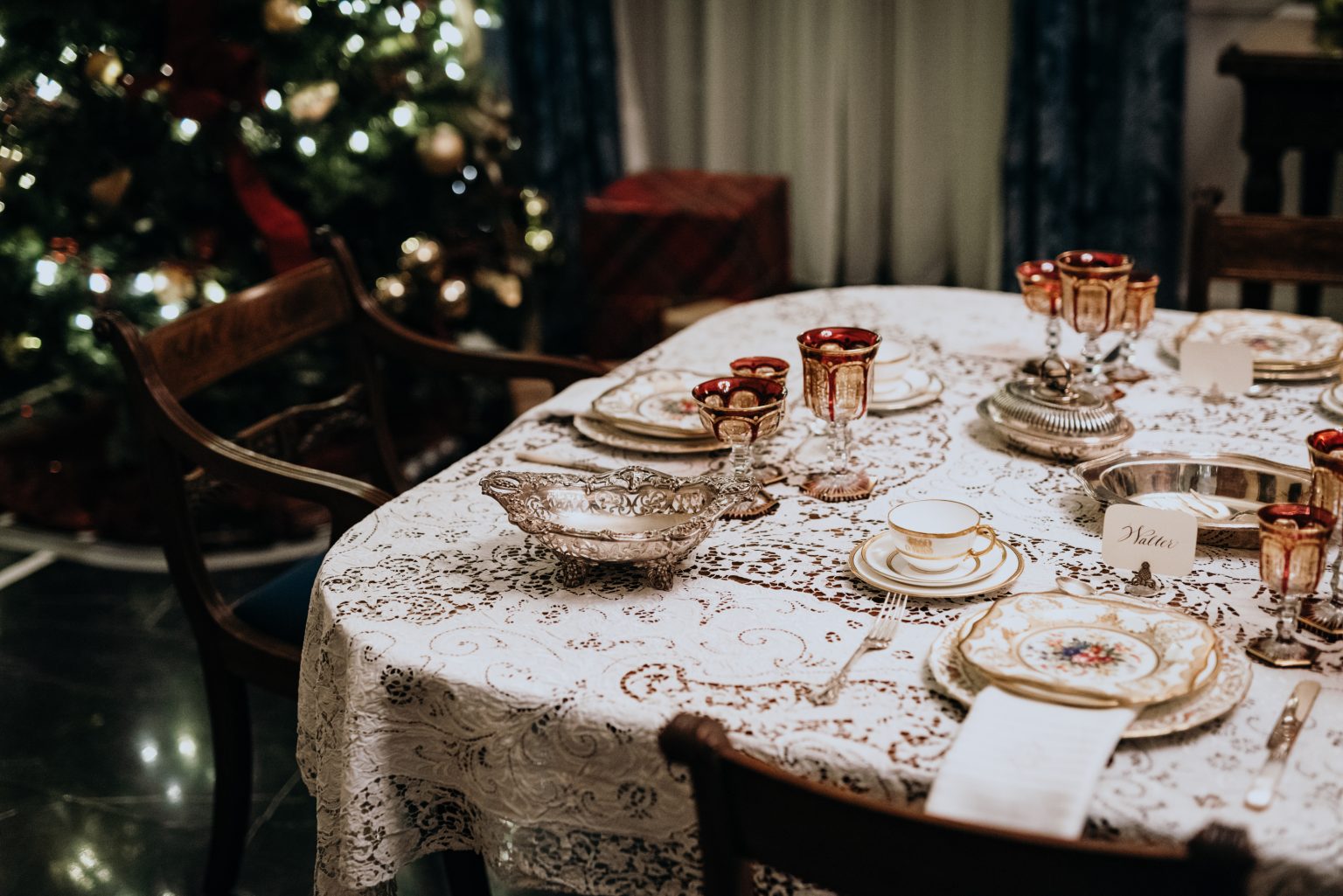
Family traditions merged with timely customs when Nashville prepared for the annual Thanksgiving holiday on the third Thursday of November. Early in the autumn, questions of whose turn it was to host Thanksgiving this year were settled, and guests invited to Cheekwood would understand that preparations fell mainly to Mabel Cheek as the lady of the house. From childhood in her Clarksville, Tennessee home, Mabel doubtless had observed and participated in the holiday planning. As the mistress of Cheekwood, she would monitor the sumptuous feast at each point of preparation, just as she saw to it that every room sparkled, as did the china, silver, and her favorite ruby-red glassware, with the pristine linens crisp from the flatiron and the table arrangements at the standard of the preeminent country estate. (The guests need not know that Mabel reported on extensive “housekeeping” in a pre-Thanksgiving letter to her daughter, Huldah, who was away at college. “My fifth week with the same general cleaner,” Mabel wrote, also mentioning a seasonal dinner party that anticipated Thanksgiving in the dining room: “The table was beautiful in autumn flowers and fruits.”)

Dining Room in the Cheek Mansion

By the early 1930s when Leslie and Mabel Cheek moved into Cheekwood, few recalled that a “Day of Thanksgiving and Praise” was proclaimed in 1863 by President Abraham Lincoln. The sixteenth US President was esteemed in the northern states that embraced the first Thanksgiving of Pilgrims and Native Americans sharing a meal in social harmony in the Plymouth Colony on the shores of Cape Cod, Massachusetts in 1621. The South, however, took a different view of the inaugural Thanksgiving holiday. A similar feast had occurred two years earlier in 1619 at the Berkeley Plantation in Virginia, and the president of William & Mary College, Lyon G. Tyler, fervently advocated for the South’s preeminence in Thanksgiving.

The Cheeks did not enter into the “First Thanksgiving” debate, but perhaps Mabel realized that volumes purchased for the Cheekwood library linked directly to the development of the national holiday. For $125.00, the Cheeks acquired Godey’s Ladies Books, 1854-1858, thus furnishing their shelves with bound volumes of magazines produced by Sarah Josepha Hale, the editor-in-chief of the first major US magazine for women, Godey’s Ladies Book. According to historian James W. Baker, the widowed Mrs. Hale “began her advocacy of Thanksgiving in 1837” and in the following decades became the “godmother” of Thanksgiving for her campaign to have “the last Thursday in November declared Thanksgiving in every state and Territory.” Apart from Mrs. Hale’s letters to Lincoln promoting the holiday, no direct evidence exists to link the magazine to the President’s proclamation, but her campaign is widely credited as foundational for the creation of the national holiday.

Photo of Table setting

The exact recipes for Thanksgiving fare at Cheekwood may not be fully known. Perhaps Mabel had attended the Centennial Club program, Thanksgiving Menu—demonstration and recipes,” on November 8, 1927. And possibly the Cheekwood kitchen held a copy of Housekeeping in Old Virginia (1879), principally a cookbook of recipes contributed by ladies throughout the South, including seven recipes for roast turkey.

When the Cheekwood mahogany dining room table was extended to accommodate all guests, rain or shine, on the third Thursday of November, a prayerful thanks was given for a holiday said to be unique to the United States of America.

Blog post provided by Cheekwood’s Writer-in-Residence, Cecelia Tichi, Ph.D.

Cecelia Tichi is an award-winning author and Professor of English and American Studies Emerita at Vanderbilt University. Her books span American literature and culture from colonial days to modern times, but her recent work draws upon the Gilded Age (post-1870) that prompted her book on Jack London and another on seven activists in that tumultuous era.

Cecelia’s research and teaching inspired What Would Mrs. Astor Do? The Essential Guide to the Manners and Mores of the Gilded Age, followed by Gilded Age Cocktails and Jazz Age Cocktails , which set the stage for her mystery crime novels that boast “Gilded” in each title.

Cecelia can be followed on her website: https://cecebooks.com/

Portrait Photo of Cecelia Tichi
test

Historic Profile: The Cheekwood Letters—a Kaleidoscope of Commitment

In 2019, Cheekwood was gifted a shoebox full of letters that had been pulled from the closet of a relative. This find proved to be a true treasure – missives between Cheek family members dating from the 1880s to the 1950s. When the pandemic hit in 2020, Cheekwood was thrilled to receive funding from NEH to support staff members as they worked to transcribe and scan each of the 247 letters. The contents of the letters give an incredible look into the daily life of the Cheeks, from the days of Leslie and Mabel’s courtship to their lives with young children, to their shared years at Cheekwood, and to the next generation’s ownership of the estate. As part of her time as Writer-in-Residence, Cecelia Tichi has read through the letters and supplied her thoughts on their meaning.

And none will hear the postman’s knock
Without a quickening of the heart….

W. H. Auden, Night Mail, 1936

Letters posted to and from the Cheekwood estate continued a vibrant and longtime tradition of personal correspondence among the Cheek and Wood family members. To put pen to paper was de rigueur for pleasure and commitment, and the US Post Office sped the family’s first-class missives from the late 1800s and well into the twentieth century. The initial letters between Leslie Cheek and his devoted fiancée, Mabel Wood (soon to be Mrs. Cheek), broadened in due course as the family correspondence included letters of Mabel and Leslie and their children, Leslie, Jr. (b. 1908) and Huldah (b. 1915). Eventually, the family letters crossed into every region of the country and the globe, for the well-traveled Cheeks kept up correspondence at every locale, be it for duty or leisure. The Cheekwood heritage thus amplifies its grounds, gardens, and magisterial home to include a trove of correspondence, a kaleidoscope of the life and times of its founding family.

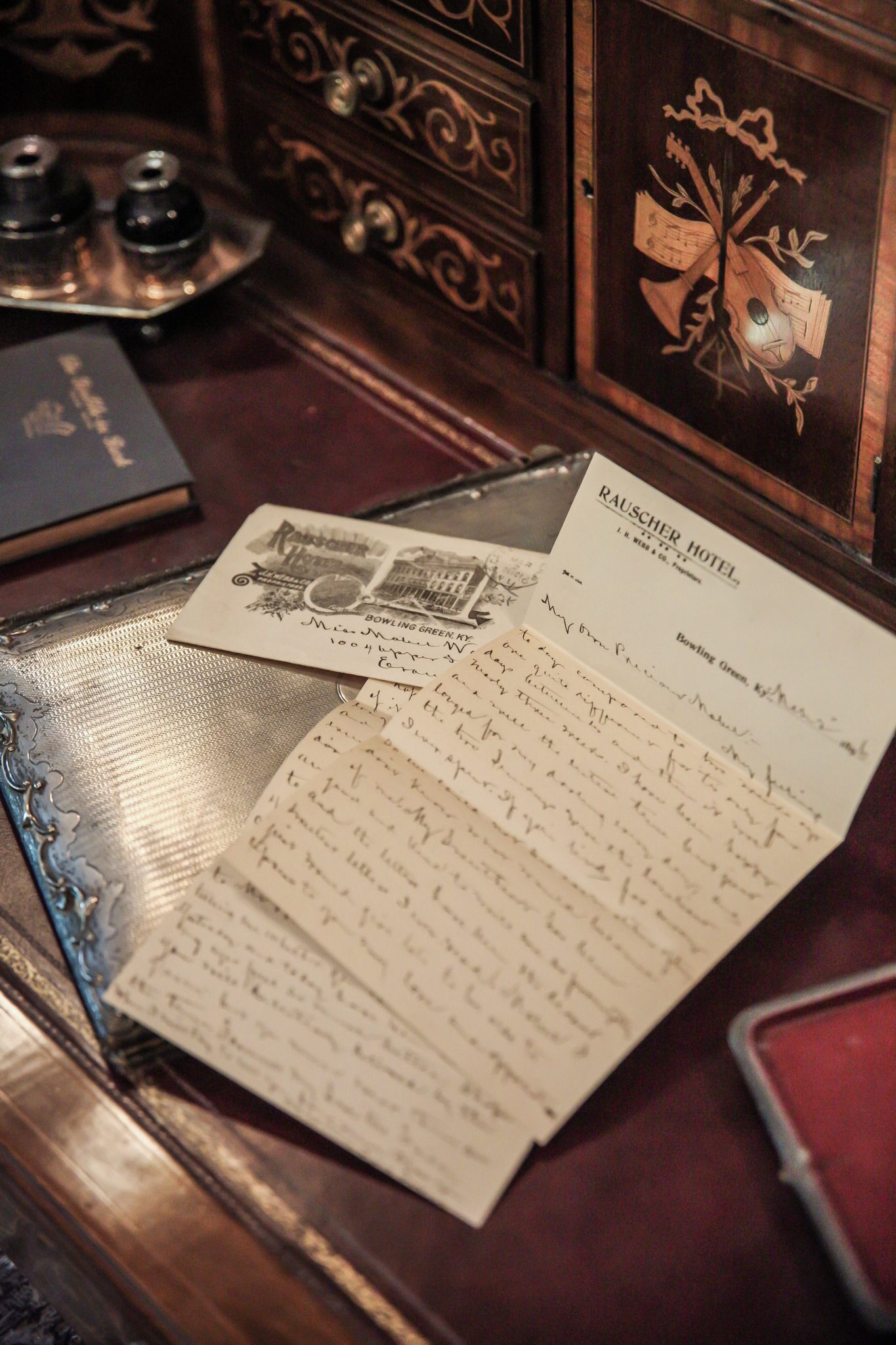
From the era of sharpened goose quills and inkpots, handwritten letters were aesthetic objects in and of themselves. For the Cheeks and their social set, it was second nature to have at hand the proper stationery and pens too. By the mid-1800s, the Crane Company was known for quality papers worthy of personal correspondence (as well as US banknotes, for the company won government contracts to produce paper currency). On good paper, including fine hotel or business letterhead stationery, the strokes of a pen held firm, never to “bleed” as in coarse, pulp papers. By the years of Leslie and Mabel’s courtship, the fountain pen was surpassing the inkwell, which had required repeated dipping with the penpoint nib. The innovative fountain pen held a reservoir of ink and allowed the letter writer to proceed without interruption to the page—and in the fine penmanship drilled since grade school days and considered a measure of one’s character.

To sample the letters of Leslie and Mabel’s courtship, we scent the “exquisite roses” that Mabel received in spring, 1895: “Really, Mr. Cheek, I fairly dimpled with delight.” In response, Leslie admitted how much he missed her. “While tis only three days since I saw you,” he confessed, “still it seems like a long time to me…all alone in my room.” Leslie nonetheless hoped her dreams would be “all pleasant.” “Believe me Miss Mabel,” he concluded, “I will always love you” and closed with, “Most Sincerely Yours, Leslie C—”

Historic letters

The letters soon began, “My darling husband,” and from Leslie, “My Candy” and “Dearest Love,” and the volume of their correspondence in years to come attests to Leslie’s busy, prosperous business career and Mabel’s involvement in art and culture in Nashville and beyond. In short order, issues of household economy and furnishing came to the fore, as the new Mrs. Leslie Cheek, sojourning to New York City in 1906, compared the prices of floor coverings (“I looked for carpets today at Lord & Taylors [sic]…these people wanted $2.75 a yard”). Mabel also remarked on the weather (“beastly”) and a Broadway play, Peter Pan (“queer…but delightful”).

Parenthood predictably enters the letters with qualms about nursemaids and schedules, and Mabel’s letters take a maternal turn, at times in comic exasperation, as when she heard her toddler son’s “tongue going like a bell clapper,” but otherwise ebullient that Leslie, Junior, is “handsomer than ever” and “full of play and curiosity.” In due course, daughter Huldah weighs in, telling her father that “brother plays bucking bronco with me and it is great fun but hard on mother’s nerves, as she thinks every ‘buck’ will be my last.”

The letters spool through the years, as Leslie, Junior, and Huldah enroll in prep and boarding schools, and thereafter to college (Huldah to Bryn Mawr, her brother to Harvard). By 1933, the letters originate from Cheekwood, where parental encouragement mixes with admonitions for serious study and supplies the latest household doings (“I have worked hard getting the draperies down…. The carpenters are working on loggia which promises to be very lovely but are not making sufficient progress, so Daddy will double the force Monday morning”).

In 1922, Emily Post had lamented in Etiquette that “the art of general letter-writing…is shrinking until the letter threatens to become a telegram, a telephone message, a post-card.” Yet she conceded that “people do write letters…and there are some who possess the divinely flexible gift for a fresh turn of phrase, for delightful keenness of observation.” Over hundreds of letters, the Cheek family correspondence demonstrates that “gift” in abundance.

Mabel Cheek's Writing Desk

Blog post provided by Cheekwood’s Writer-in-Residence, Cecelia Tichi, Ph.D.

Cecelia Tichi is an award-winning author and Professor of English and American Studies Emerita at Vanderbilt University. Her books span American literature and culture from colonial days to modern times, but her recent work draws upon the Gilded Age (post-1870) that prompted her book on Jack London and another on seven activists in that tumultuous era.

Cecelia’s research and teaching inspired What Would Mrs. Astor Do? The Essential Guide to the Manners and Mores of the Gilded Age, followed by Gilded Age Cocktails and Jazz Age Cocktails , which set the stage for her mystery crime novels that boast “Gilded” in each title.

Cecelia can be followed on her website: https://cecebooks.com/

Portrait Photo of Cecelia Tichi
test

Historic Profile: Good to the Last Drop: The Cheekwood Coffee Connection

“I was ready for brunch which I ate at the Maxwell House Coffee and Mayfair Drug on the corner of Broadway and 45th. This I have always wanted to do.”

Letter from Mabel Cheek to her daughter, Huldah, New York City, Dec. 10, 1933

Holiday shopping took Mrs. Leslie Cheek—Mabel—to New York City from Nashville just a year after their family had moved to their newly-completed estate, Cheekwood. Her spirited letter from the Savoy Plaza Hotel reported several “finds” in the department stores, plus a museum visit, Broadway plays, and a Prohibition-era confession to her daughter: “I will have you believe, I went to a speak-easy.”

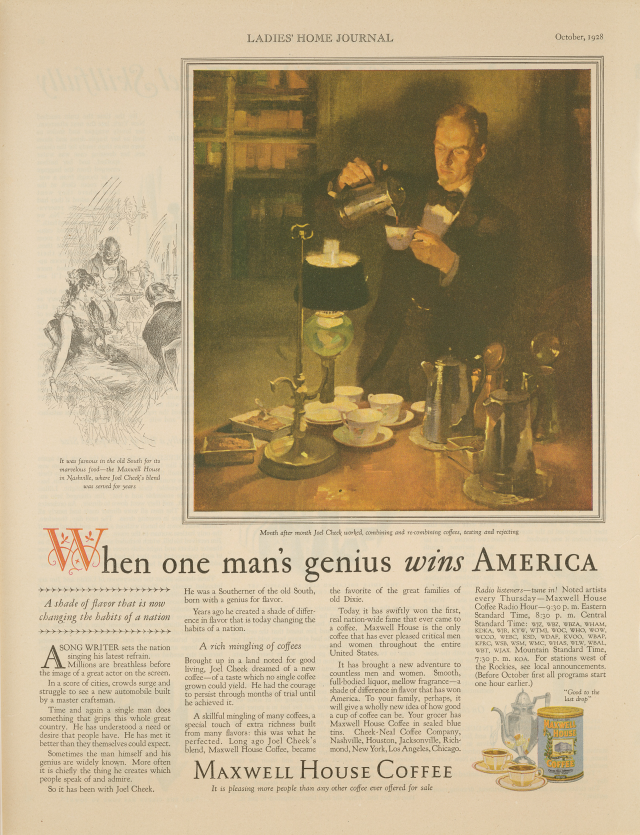
Mrs. Cheek did not reveal what cocktail she imbibed at the risqué after-hours oasis, but her brunch beverage was surely the signature drink largely credited with the founding of Cheekwood: Maxwell House Coffee. Her husband Leslie’s investments in the coffee business first established by his father’s cousin became enormously valuable when the coffee surged as a well-known and respected brand. Blazoned in azure blue cans with burnt-orange lettering, Maxwell House was welcomed nationwide, perhaps inspiring Irma S. Rombauer to observe in 1931 in her bestselling, The Joy of Cooking, “Thanks especially to vacuum-packed cans, making good coffee at home has become a surefire delight.”

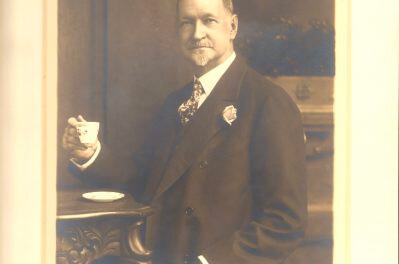
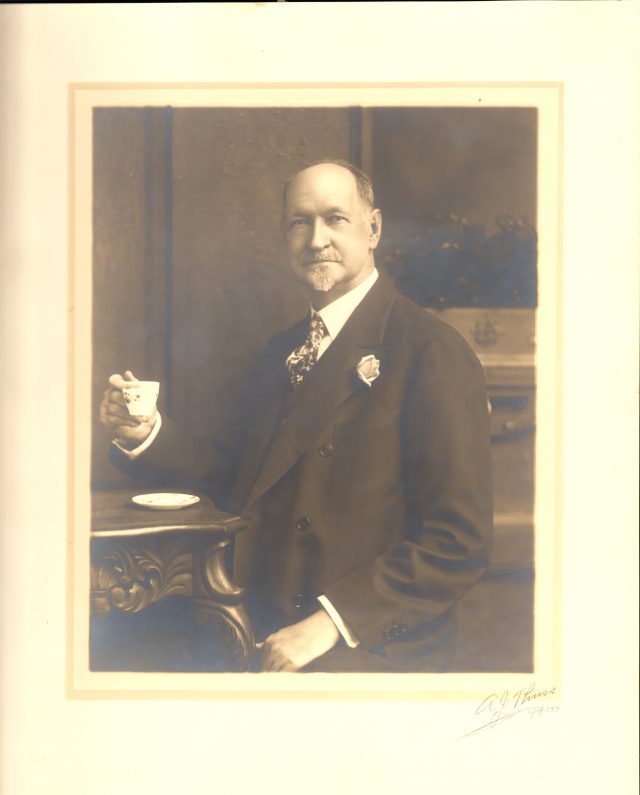
Joel-Cheek-with-cup-and-saucer-portrait-

Served at fine restaurants, resorts, and hotels, the branded coffee saluted Nashville’s preeminent Maxwell House, which opened in 1869 and proclaimed itself “the palatial residence of the regular boarder and the luxurious resting place of the weary traveller.” The hotel scored a presidential coup when it hosted President William Howard Taft, but greater glory redounded to the credit of the coffee when Taft’s successor visited Nashville in 1907, sipped the hotel’s signature brew, and declared it to be “good to the last drop.” Thus did President Theodore Roosevelt coin the slogan familiar to this day, joining his praise to the Maxwell House Coffee brand.

Varied brands of foods, beverages, and a host of other products have been long familiar to modern consumers, but branding itself has a history linked to the Cheeks’ association with Maxwell House Coffee. Until the late 1800s, foodstuffs such as flour and oats—and coffee beans—were sold in bulk, scooped from a sack or a barrel, weighed, and purchased as commodities. Homemakers were expected to roast the green coffee beans and grind them too. While quality could be anyone’s guess, as America’s popular morning beverage was sometimes found to be adulterated with tree bark, sawdust, and acorns, Maxwell House would never dream of besmirching its high-quality blend of coffee, and its unique brand resulted from business enterprise that revolutionized the purchase, process, and distribution of the generic foodstuffs, including coffee.

Article

With patents and trademarks, companies could guarantee quality and reliability. Quaker Oats and Gold Medal Flour kept company with Maxwell House Coffee when, according to historian Don Doyle, the company “introduced a prepared coffee already roasted, blended…and canned, ready for home use.” “It would cost more than rival brands,” Doyle adds, “but Cheeks sought a prestige market,” and “Maxwell House Coffee eventually captured one-third of the American coffee market.”

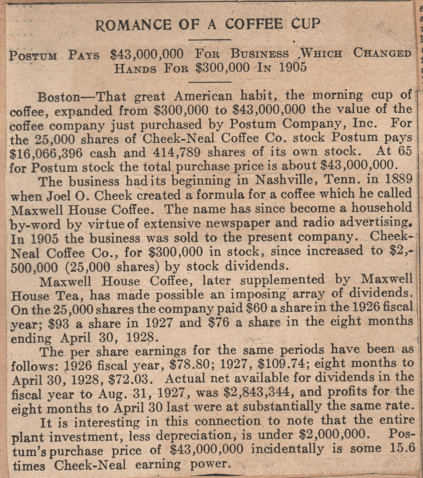
Newspaper Clipping Romance-of-a-Coffee-Cup

Blog post provided by Cheekwood’s Writer-in-Residence, Cecelia Tichi, Ph.D.

Cecelia Tichi is an award-winning author and Professor of English and American Studies Emerita at Vanderbilt University. Her books span American literature and culture from colonial days to modern times, but her recent work draws upon the Gilded Age (post-1870) that prompted her book on Jack London and another on seven activists in that tumultuous era.

Cecelia’s research and teaching inspired What Would Mrs. Astor Do? The Essential Guide to the Manners and Mores of the Gilded Age, followed by Gilded Age Cocktails and Jazz Age Cocktails , which set the stage for her mystery crime novels that boast “Gilded” in each title.

Cecelia can be followed on her website: https://cecebooks.com/

Portrait Photo of Cecelia Tichi
test

Historic Profile: For the Nashville Community—Mabel Wood Cheek

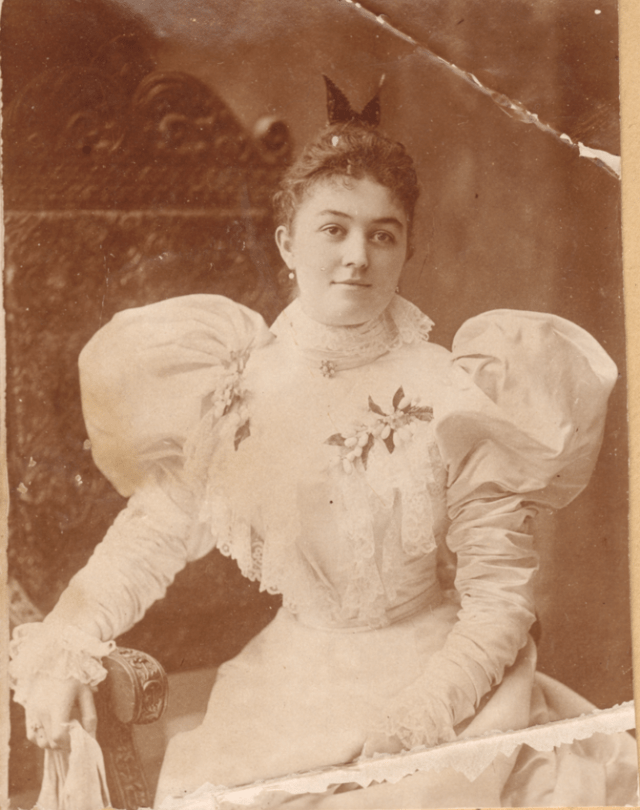
The 1896 Nashville Blue Book listed eminent families and their clubs, but the directory was nowhere in the mind of Miss Mabel Wood of Clarksville, Tennessee, when she wed Mr. Leslie Cheek in that same year, 1896, and moved to their new home in Nashville. The new Mrs. Cheek, who had been educated in Baltimore, set about homemaking for her successful businessman husband and, soon enough, cared for their children, Leslie, Junior, born in 1908, and Huldah in 1915. This busy wife and mother, an avid reader, might have been aware of the Nashville Society Blue Book (1900) and also of Mrs. William W. Geraldon’s Social Directory (1911), which included the names of debutantes and eligible sons of the city’s leading families. Mabel Cheek, however, had no need of such directories to verify her place in Nashville or the modern world, not when her family resided in the architect-designed Italianate house on West End Avenue, nor when the well-traveled family moved to their country house estate in 1932—Cheekwood.


The Cheeks’ prominence was gainsaid, and Mabel a leading figure in the vibrant art and culture of her adopted city. Periodically, she opened the estate to large gatherings. For instance, in 1933, when the Tennessee State Legislature named the iris the floral symbol of the state, Mabel invited the membership of the Iris Society, “more than one hundred-fifty strong,” she recalled, to stroll the Cheekwood gardens and enjoy fruit punch and cake on the loggia.

Of the diverse organizations in which Mabel Cheek took an active part—from the Ornithological Society to the Review Club—first and foremost for her was the Centennial Club. Organized in 1894 “on a statewide basis for public work,” the club had first planned a Woman’s Building for the upcoming Tennessee Centennial Exposition of 1897 and supervised “all exhibits and projects pertaining to women’s work.” By the 1920s, when Leslie, Jr., and Huldah were in school, Mabel found time for active involvement in this dynamic club that now was organized in departments.

Mrs. Leslie Cheek’s name soon suffused the Centennial Club programs. In June, 1920, she presented Travels in China, Japan, and Korea, illustrating her talk with “projected colored post cards on the screen.” Three years later, she presented a book review of Visiting in China, and in 1928, “India—Travel Talk by Mrs. Leslie Cheek.” Her name appears, in addition, on the governance roster, as a “2nd vice-president” for 1921-23 and as a director in 1935.

Mabel Wood Cheek Wedding Photo

Mabel’s letters to her daughter Huldah, who was attending Bryn Mawr College outside Philadelphia, open a window onto the seriousness of her presentations. Among numerous travels, she detailed her visit to Mexico, first in a private Pullman car, then by motor “to inspect a cocoa factory” and “a tile factory,” all the while dazzled by the plethora of camelias cleverly “refrigerated” with banana stalks. (“Mexico is very interesting….we went to a bull fight….the spectacle of the crowd was wonderful…. Cortez Place is also there with its celebrated [Diego] Rivera murals.”)

As Mabel wrote to her daughter, “I have tried to see everything and remember it, for I will need it all for my paper on Mexico for the Review Club.” The “paper” became a serious endeavor, and we imagine Mabel composing it at her desk in the Cheekwood Library.

A short letter to Huldah from her father, Leslie, remarks, “Mother will entertain her Review Club on May 14 [1935], when she will deliver her talk on ‘Mexico.’” He adds, “I will be relieved when it is over—mother just puts too much of herself into these efforts.”

Surely not so, for Nashville’s art, culture, and generosity of spirit abided in such women as Mabel Wood Cheek who committed their intelligence and unflagging energies to “The Athens of the South.”

Mabel

Blog post provided by Cheekwood’s Writer-in-Residence, Cecelia Tichi, Ph.D.

Cecelia Tichi is an award-winning author and Professor of English and American Studies Emerita at Vanderbilt University. Her books span American literature and culture from colonial days to modern times, but her recent work draws upon the Gilded Age (post-1870) that prompted her book on Jack London and another on seven activists in that tumultuous era.

Cecelia’s research and teaching inspired What Would Mrs. Astor Do? The Essential Guide to the Manners and Mores of the Gilded Age, followed by Gilded Age Cocktails and Jazz Age Cocktails , which set the stage for her mystery crime novels that boast “Gilded” in each title.

Cecelia can be followed on her website: https://cecebooks.com/

Portrait Photo of Cecelia Tichi
test

Historic Profile: The Pleasure of Your Company—Cheekwood Entertains!

Costume parties had been a longstanding Nashville social tradition when Leslie Cheek, Jr., let his imagination conjure summer evening galas at the family’s newly completed country estate, Cheekwood. The guests would be required to arrive en déguisement, a festive custom the Cheek family well knew from the Dinner Club’s annual “Costume Ball” held downtown at the Hermitage Club, the old Renaissance-Revival building located between Church and Union Streets. Some Nashvillians ordered costumes from dressmakers, but others enjoyed cobbling together a patchwork of wearables to suggest western ranch wear, nautical garb, or Sherwood Forest’s own Robin Hood. In any case, the photographers and reporters for Nashville’s Tennessean and Banner newspapers were on hand to memorialize the evening.

Leslie Cheek, at twenty-four years of age, imagined his costume parties based on distinct historical periods so that guests would coordinate and complement one another’s appearance. The young man might have recalled other such historically themed parties, especially those honoring President George Washington, for Washington’s Birthday prompted elaborate national celebrations from schoolrooms to ballrooms, and social occasions that ranged from afternoon teas to formal balls. (In 1925, the Finitimus Club of East Nashville held a banquet in which “The George Washington Birthday motif was featured in every appointment…and club members were appropriately dressed in colonial costumes.”) Annually in February, the gentlemen’s powdered wigs and knee britches, together with ladies’ floor-length gowns with snug sleeves commemorated the first President and his lady, Martha Washington. The year 1933 was just after the bicentennial of Washington’s birth, and thoughts of eighteenth-century costuming apparently gave young Leslie Cheek his idea for a party centered on a distinct historical era.

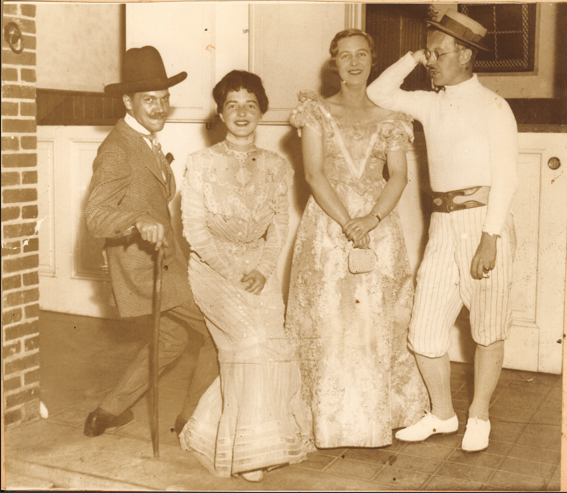
Guests at the Victorian Stable Party

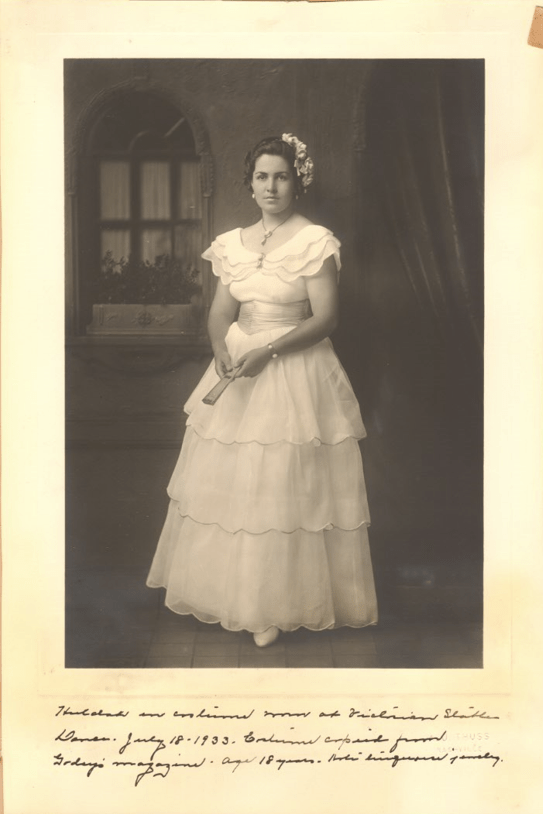
The “Victorian Stable Party” on July 18, 1933 asked Cheekwood’s guests to don the gowns and formal evening suits of Queen Victoria’s era, then to enjoy the informality of the setting, the Cheekwood stable where refreshments were served near the stalls where horses and automobiles kept company. The guests happily complied with the request that they step into history in their clothing, for photographs show gentlemen in top hats and formal (swallowtail) coats, while ostrich plumes waved on ladies’ broad-brimmed hats, and their gowns reached to the floor, since no Victorian lady dared bare an ankle. Leslie’s guests might not have imagined that the festive Victorian Stable Party was not to be their only occasion for historical costuming at Cheekwood, for their host would soon summon friends and family for a second evening of historical costuming, one vastly different from the era of Queen Victoria.

Huldah at the Victorian Stable Party

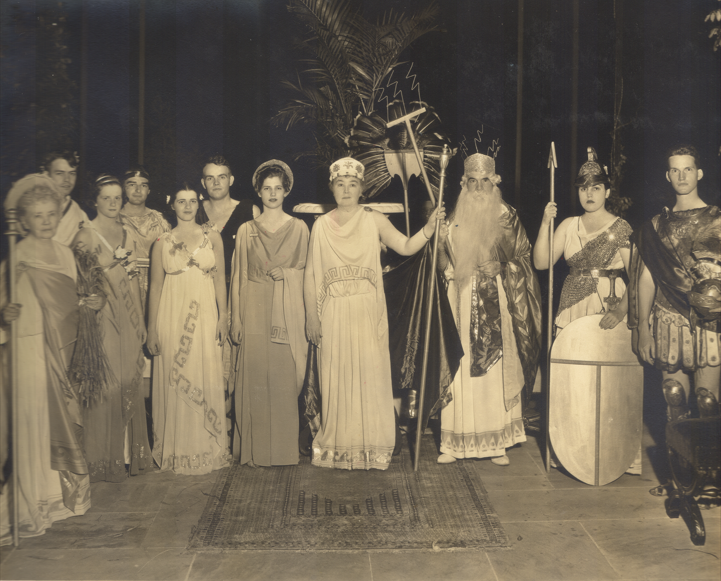
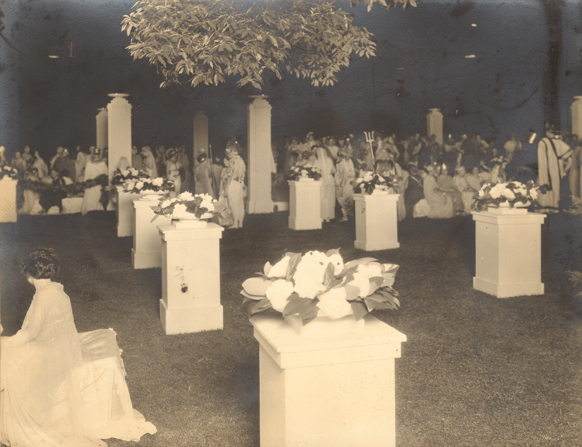
Leslie reached much deeper into the past for a party the next year. On July 10, 1934, the mansion’s Loggia and Swan Lawn were transformed into a Greek acropolis for the costume ball whose theme was Greek and Roman mythology. In their invitations, guests were assigned either a Greek or Roman god or goddess, and they were expected to arrive in costume for the evening, as they did. We imagine the partygoers congratulating one another on their classical apparel. Among the Cheeks, Mrs. Cheek’s mother went as Ceres, the goddess of agricultural bounty. Leslie Sr. was Zeus, the mighty ruler, and Mrs. Cheek (Mabel) was Hera, the goddess of motherhood and marriage. Huldah was Athena, associated with wisdom, crafts, and warfare. Leslie had designed the invitations and assigned himself the identity best suited to the host. A student of architecture, he came as Iktinos, the architect of the Parthenon in Athens, Greece. The architect of two successful summer parties, Leslie well deserved the honor.

Swan Lawn Costume Ball Set Up

Blog post provided by Cheekwood’s Writer-in-Residence, Cecelia Tichi, Ph.D.

Cecelia Tichi is an award-winning author and Professor of English and American Studies Emerita at Vanderbilt University. Her books span American literature and culture from colonial days to modern times, but her recent work draws upon the Gilded Age (post-1870) that prompted her book on Jack London and another on seven activists in that tumultuous era.

Cecelia’s research and teaching inspired What Would Mrs. Astor Do? The Essential Guide to the Manners and Mores of the Gilded Age, followed by Gilded Age Cocktails and Jazz Age Cocktails , which set the stage for her mystery crime novels that boast “Gilded” in each title.

Cecelia can be followed on her website: https://cecebooks.com/

Portrait Photo of Cecelia Tichi
Privacy Policy Sitemap Web design by Speak
Back to top