Gardens Archives - Page 6 of 12 - Cheekwood | Page 6
x icon Close
test

Gardeners’ Top Picks September 2020

Gardeners’ Top Picks September 2020

As the autumn season sets in, our gardens become a canvas for fall florals. From cardinal flowers to the ever-popular chrysanthemums that steal the show, there’s so much to see in our gardens this month. Check out our garden team’s top plant picks for September. Use this as your guide as you explore the grounds!

Cardinal Flower (Lobelia cardinalis)

Bloom Time: July – September

Sun Requirement: Full sun – part shade

Water Requirement: Medium – wet

Wildlife: Butterflies & hummingbirds

Tolerates: Deer & wet soil

Native to North America: Yes

Other: A perfect selection for water gardens; this plant requires constant moisture to thrive.

Zones: 3 – 9

Location: Water Garden – Upper Stream
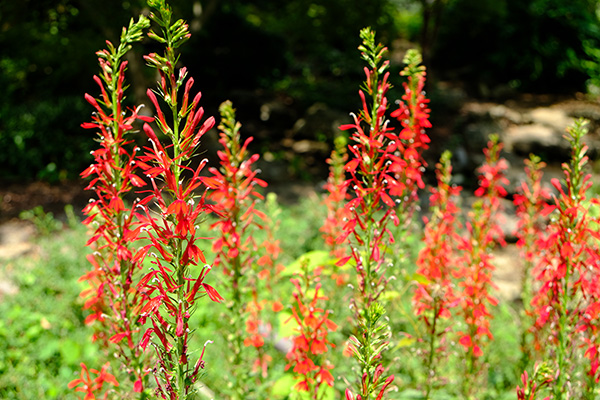
Lobelia-cardinalis

Groundcover Rose (Rosa ‘Meigalpio’ Red Drift®)

Bloom Time: June – October

Sun Requirement: Full sun – part shade

Water Requirement: Medium

Wildlife: Butterflies

Tolerates: Deer

Native to North America: No

Other: This groundcover rose is an excellent choice for draping over rock walls.

Zones: 4 – 10

Location: Sigourney Cheek Literary Garden
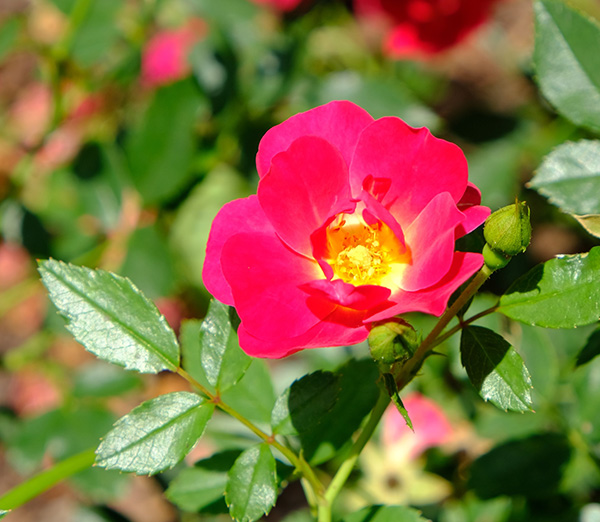
Rosa-Red-Drift-2

Bigleaf Magnolia (Magnolia macrophylla)

Bloom Time: May

Sun Requirement: Full sun – part shade

Water Requirement: Medium

Wildlife: Birds will eat fruit

Native to North America: Yes

Other: M. macrophylla has the largest single flower and largest simple leaves of any tree indigenous to North America.

Zones: 5 – 8

Location: Howe Garden – Pond
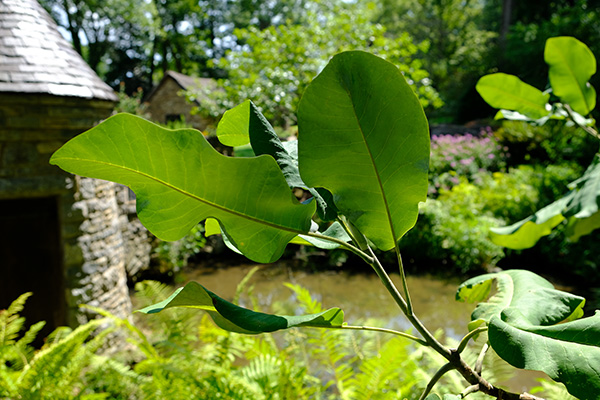
Magnolia-macrophylla-Howe

Autumn Fern (Dryopteris erythrosora ‘Brilliance’)

Sun Requirement: Full shade – part shade

Water Requirement: Medium

Wildlife: Provides foraging space and shelter for ground feeding birds and other small critters.

Tolerates: Rabbits

Native to North America: No

Other: Semi-evergreen in warmer climates.

Zones: 5 – 8

Location: Carell Dogwood Garden
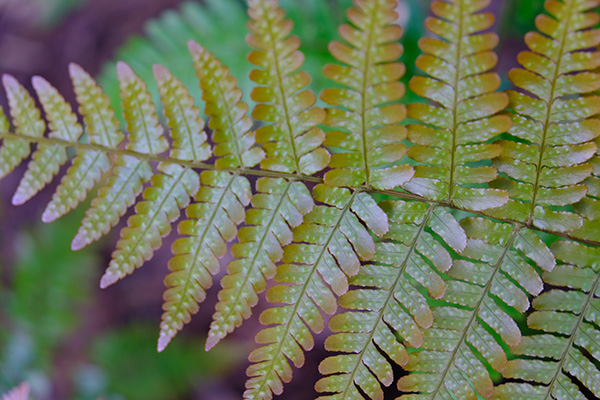
Dryopteris-erythrosora-Brilliance-Dogwood-Garden-16

Bluebeard (Caryopteris x clandonensis)

Bloom Time: July – September

Sun Requirement: Full sun

Water Requirement: Medium

Wildlife: Bees & Butterflies

Tolerates: Occasional Drought

Native to North America: No

Other: A large shrub-like perennial with fragrant and showy flowers.

Zones: 5 – 9

Location: Wills Perennial Garden
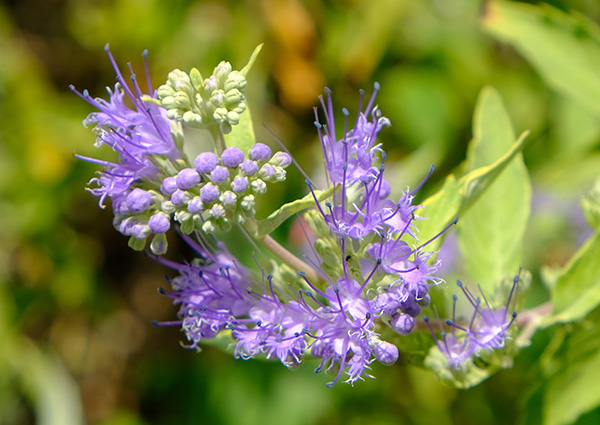
Caryopteris-sp.-Wills-3-1

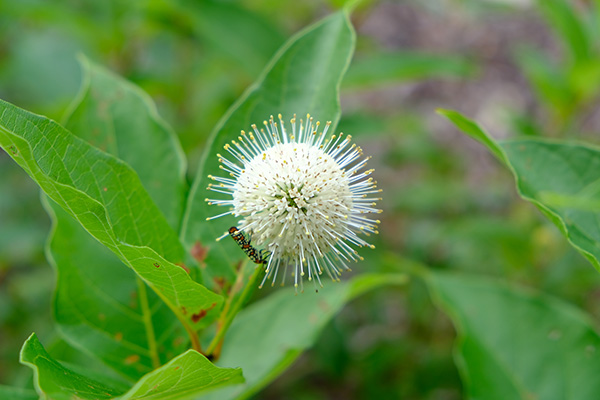
Buttonbush (Cephalanthus occidentalis ‘Kolmoon’ Magical® Moonlight)

Bloom Time: May – June

Sun Requirement: Full sun – part shade

Water Requirement: Medium – wet

Wildlife: Bees & Butterflies

Tolerates: Wet soils

Native to North America: Yes

Other: The fragrant flowers are a nectar source to bees and butterflies. The attractive fruit contains nut-like seeds which provide food for waterfowl and other birds.

Zones: 5 – 9

Location: Bracken Foundation Children’s Garden
Cephanthus-occ.-Kolmoon

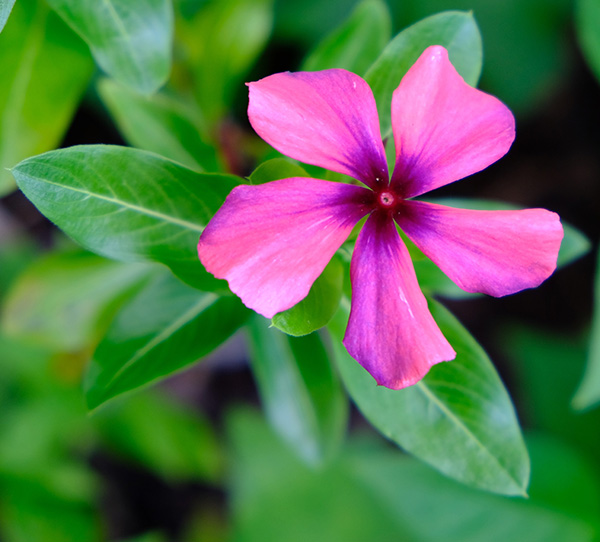
Upright Vinca (Vinca ‘Tattoo Papaya’)

Bloom Time: June – September

Sun Requirement: Full sun

Water Requirement: Medium

Wildlife: Bees & Butterflies

Tolerates: Drought

Native to North America: Yes

Other: Upright Vinca will self seed and appear again the following spring.

Zones: 7 – 9

Location: Burr Terrace Garden
Vinca-Burr

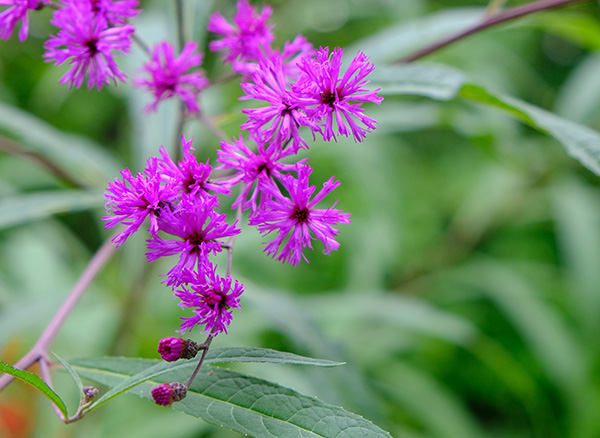
Ironweed (Vernonia lettermanii)

Bloom Time: August – September

Sun Requirement: Full sun

Water Requirement: Dry – medium

Wildlife: Butterflies

Tolerates: Drought

Native to North America: Yes

Other: Great plant for dryer regions of the landscape and excellent late-season color. The foliage provides a fine texture.

Zones: 4 – 9

Location: Herb Study Garden
Vernonia-lettermanii2-1
test

Sigourney Cheek Literary Garden

Sigourney Cheek Literary Garden

In celebration of Cheekwood’s 60th anniversary as a public institution, we’re highlighting one of our 12 distinct gardens each month to showcase our wide variety of garden offerings. With 55 acres of rolling hills and 12 intricate, unique gardens, there’s something for everyone to experience and love at Cheekwood.

The literary garden pays tribute to the late Sigourney Cheek, a lifelong learner, inspirational spirit, author, and avid gardener. Designer, Ben Page, drew inspiration from Sigourney’s personal garden at her Nashville home, Honeywood. This garden, which opened on May 17, 2012, serves as a place to seek solace and become inspired by embracing poetry, book readings, writing, and reflective thought at literary events.

Sigourney loved Nashville deeply and supported many local not-for-profit institutions. In 1989 she co-founded Nashville’s Antique and Garden Show, and soon after served as Chairman of the Board of Cheekwood Botanical Gardens and Museum of Art. Her own garden was a testament to her love of gardening and is listed as “an important American Garden” at The Smithsonian Institution.

©Caitlin Harris Photography

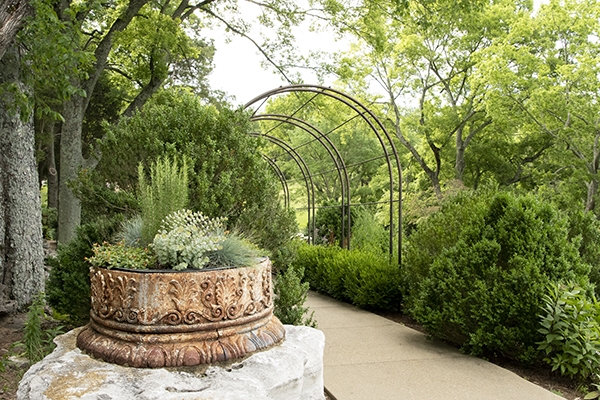
The use of iconic antique imagery was meaningful to Sigourney Cheek. In the literary garden, visitors will find a fifteenth-century French tub, which features a nineteenth-century beer tap. An owl, carved from solid stone by Charlie Hunt of Hunt Memorials of Nashville, was moved from Sigourney’s home garden. Two patinaed, repurposed nineteenth-century planters were originally the capitals on columns at an old courthouse in Mississippi.

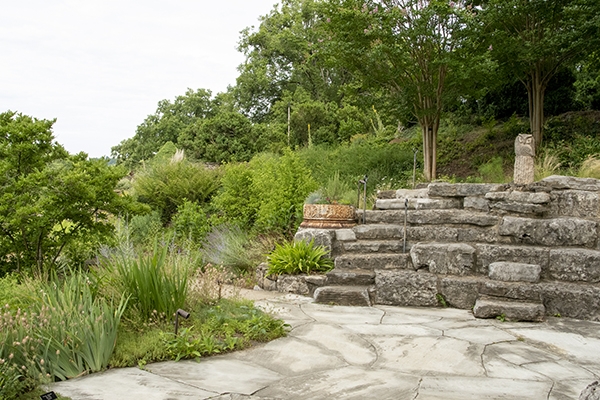
Cheekwood continues to evolve the horticulture of this site to respond to the warm microclimate generated by the western exposure of the limestone retaining wall. Espalier plants and vines will flourish here, softening the limestone perimeter. Hardy dry land plants, subtly evocative of a Mediterranean climate, will thrive within this nook set above the surrounding terrain and reach back to Sigourney Cheek’s love for the country of Spain.

From the elevated perspective of the Sigourney Cheek Literary Garden, visitors can view the serene topography and enjoy the best vantage of the setting sun on the estate. Providing dappled shade during the summer and a sunny oasis in the winter, the space is designed to promote mindfulness and encourage visitors to sit down and linger with nature.

Click here to read about our other distinct gardens. For a look at what’s currently blooming in the gardens, check out our Gardeners’ Top Picks here.

©Caitlin Harris Photography
test

A Simple Breakdown of Compost

A Simple Breakdown of Compost: How to Turn Your Rubbish into Garden Gold

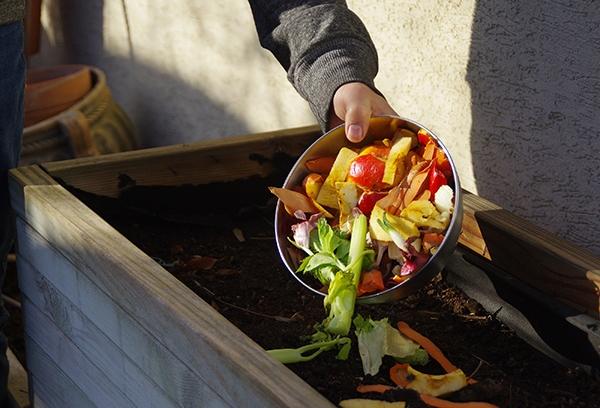
Banana peels, eggshells, coffee grounds, leaves. These are a few of my favorite things…to throw into my compost pile. Integrating compost into your garden’s soil is the least expensive, most helpful thing you can do to improve the overall health of your garden. Learn how to start and nourish a simple compost pile, making good use of materials you would otherwise throw away.

The Location

First, build your rubbish pile directly on the ground, and you can contain it by using chicken wire, a staple gun, and some 2 x 4s. This allows easy access for all the tiny insects, worms, and fungi that will eventually break down the material. A compost pile will do fine in either sun or shade but selecting a site in full sun will accelerate the cooking process due to the higher temperature.

Ecology Compost Supply - Kitchen Waste Recycling In Backyard Com

The Rubbish

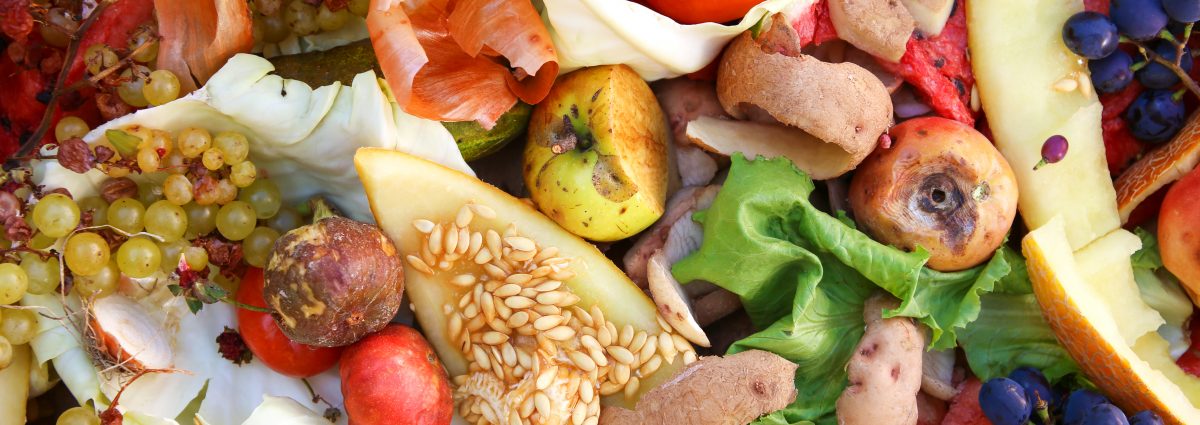
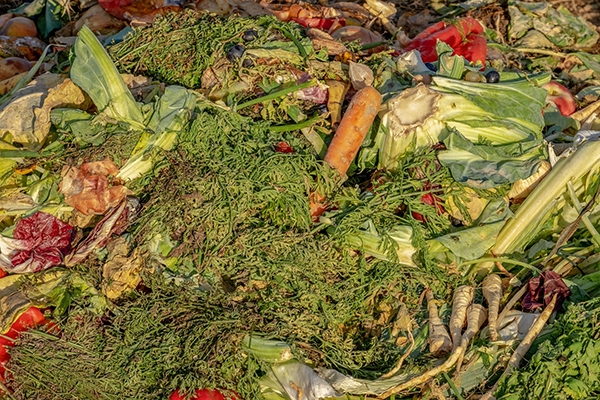
With the proper ingredients, anyone can execute and maintain a compost pile to be proud of. If you eat fruits and vegetables, mow the grass, make coffee and tea at home, or rake the leaves in the fall, you have the right materials to start a compost. It is a satisfying and beautiful thing to create life from waste!

Some suitable items for compost piles include:

  • • Animal manure-Herbivores only!
  • • Brown paper bags
  • • Cardboard
  • • Clean paper – not glossy or coated
  • • Paper towels
  • • Dryer and vacuum cleaner lint
  • • Crushed eggshells
  • • Fireplace ashes
  • • Hair and fur
  • • Nut shells
  • • Paper towel and toilet paper rolls
  • • Wood chips

Refrain from adding meat and milk products. These will attract unwanted wildlife like rats, racoons, and even coyotes and bears. Treated wood, coated paper, and those pesky produce stickers all contain toxic chemicals that do not belong in your future garden soil. Avoid feeding your compost citrus peels and onions. Both contain natural chemicals and high acidity that can kill worms and other microorganisms, slowing down the decomposition in your pile.

Much like meat and dairy products, cooked vegetables emit unpleasant odors. Too much of these substances can attract flies and rodents. If you have plenty of leaves (carbon) to offset the high nitrogen content of cooked vegetables, then adding a little bit here and there will be fine.

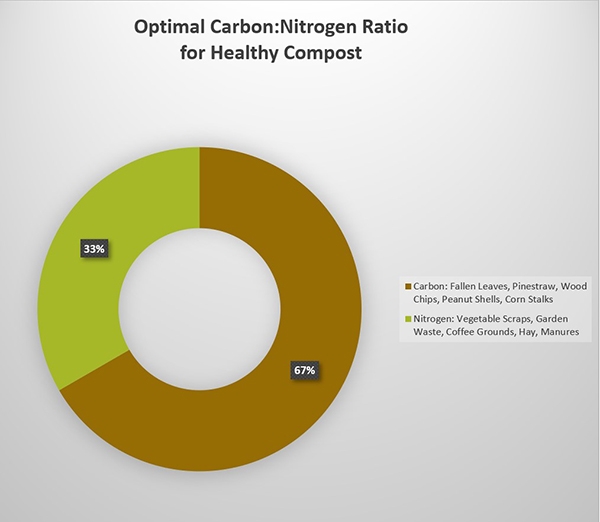
The optimal ratio for a compost should be roughly 70% carbon (leaves, pine straw, wood chips, nut shells) and 30% nitrogen (vegetable scraps, garden weeds, coffee grounds, manures, hay.)

Garden-Compost-Graph

The Not-so-Creepy Crawlers

Now that you have the location and ingredients right, the magic can happen with the help of some good friends. Earthworms, snails, and fungi are looking for a vitamin-rich compost pile to inhabit. These creatures of various sizes eat the decaying material and excrete organic compounds that enrich the compost. As the small critters travel throughout the pile in a tunneling fashion, the compost is aerated, which supports bacterial growth by providing a healthy oxygen supply. As these compost dwellers excrete and die, additional food becomes available for the rest of the decomposers.

Maintaining Your Compost

Physically churn the compost pile every few weeks to regulate the temperature, aerate the contents, and to keep the aroma from offending the neighbors. A healthy compost pile has an earthy smell with a slightly sweet undertone. Remember to turn the newly added rubbish toward the middle where the most microbial action is happening. Water the pile after you church it to ensure there is consistent moisture throughout.

Collect all the leaves, pine straw, and other brown materials you possibly can. You can never have enough carbon-especially in the summer when grass clippings are abundant.

Last but not least, have fun! Starting a compost pile is simple and can be easily enjoyable. Maintaining it is neither time-consuming nor too physically taxing and it is a project that the whole family can get involved with. Composting helps keep waste at a minimum and is an excellent way to steward the environment. And in the end, you are left with healthy, nutrient-dense soil that will in turn provide you beautiful plants in your garden.

By Shanna Jones, Plant Collections Manager

Compost-1
test

Gardeners’ Top Picks August 2020

Gardeners’ Top Picks August 2020

There is so much to see in the gardens this month! Check out our garden team’s top plant picks for August. Use this as your guide as you explore the grounds.

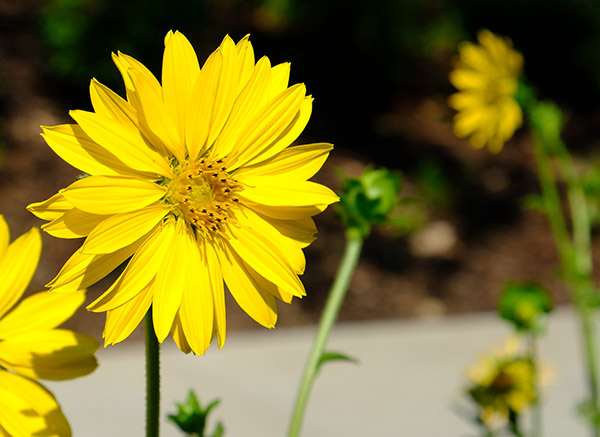
Rosinweed (Silphium asteriscus)

Bloom Time: July – October

Sun Requirement: Full sun

Water Requirement: Medium

Wildlife: Butterflies, bees, & songbirds

Tolerates: Drought & Deer

Native to North America: Yes

Other: Indigenous people used the sap of rosinweed to make a chewing gum.

Zones: 4 – 8

Location: Bracken Foundation Children’s Garden

Silphium-asteriscusCH-14-2

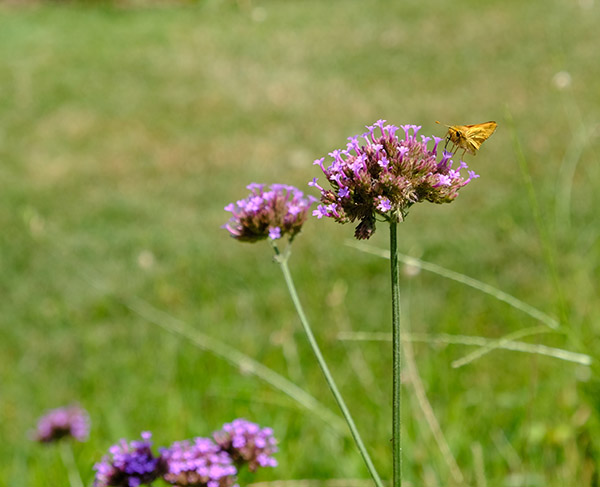
Purple Top Verbena (Verbena bonariensis)

Bloom Time: June – Frost

Sun Requirement: Full sun – part shade

Water Requirement: Medium

Wildlife: Butterflies & goldfinch

Tolerates: Poor soils

Native to North America: No

Other: Will self seed and naturalize in warmer climates.

Zones: 7 – 11

Location: Wills Perennial Garden / Front Lawn at Sapphire Star

Verbena-bonariensis-Wills-2

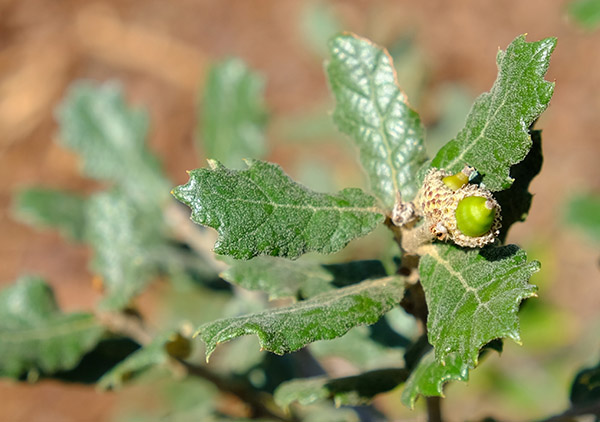
Mexican Oak (Quercus greggii ‘La Siberia’)

Sun Requirement: Full sun

Water Requirement: Medium

Wildlife: Deer resistant

Tolerates: Clay & drought

Native to North America: Yes

Other: New leaves are fuzzy and crinkly. ‘La Siberia’ is a town located near the High Mexican Valley.

Zones: 7 – 11

Location: Sigourney Cheek Literary Garden

Quercus-gregii-La-Siberia-Literary

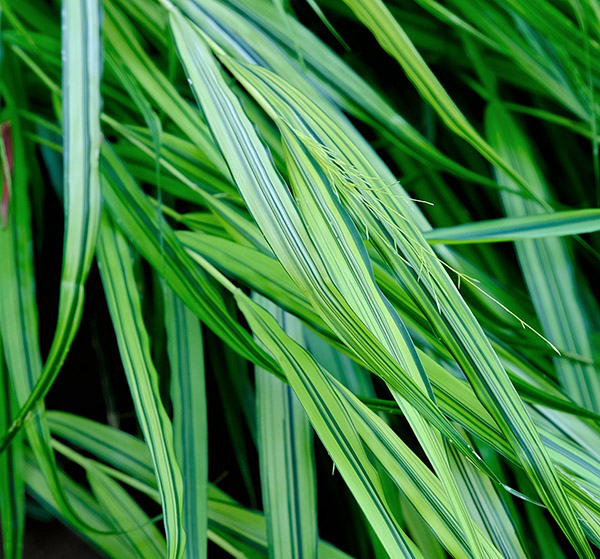
Japanese Forest Grass (Hakonechloa macra ‘Aureola’ )

Sun Requirement: Part shade

Water Requirement: Medium

Wildlife: Deer resistant

Tolerates: Shade

Native to North America: No

Other: ‘Aureola’ is a gold-striped variety.

Zones: 5 – 9

Location: Burr Terrace Garden

Hakonechloa-macra-Aureola-BU-3

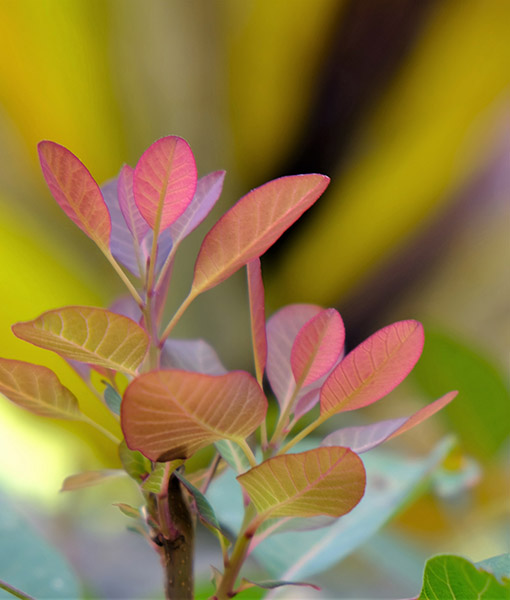
Smokebush (Cotinus coggyria ‘Purple Smoke’)

Bloom Time: May – July

Sun Requirement: Full sun

Water Requirement: Medium

Wildlife: Deer resistant

Tolerates: Drought

Native to North America: No

Other: Foliage color is various shades of purple throughout growing season / Excellent fall color as well

Zones: 5 – 8

Location: Bradford Robertson Color Garden: Arches

Cotinus-coggygria-Purple-Smoke-2

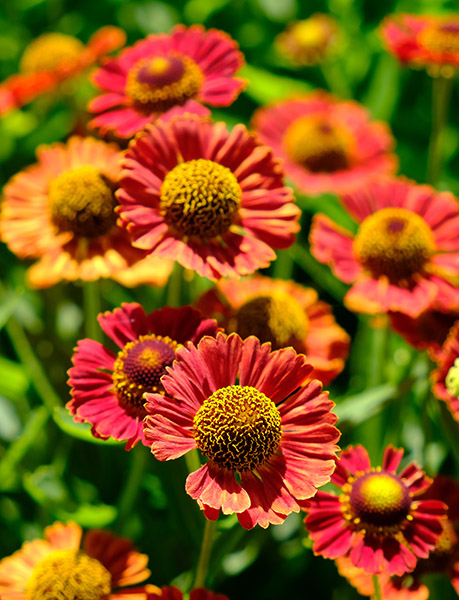
Sneezeweed (Helenium autumnale ‘Mariachi Salsa’ )

Bloom Time: July – October

Sun Requirement: Full sun

Water Requirement: Medium – wet

Wildlife: Butterflies

Tolerates: Rabbits & deer

Native to North America: Yes

Other: Use as a front border for aesthetic reasons and to deter rabbits.

Zones: 3 – 8

Location: Howe Garden

Helenium-autumnale-Mariachi-Salsa-2-1

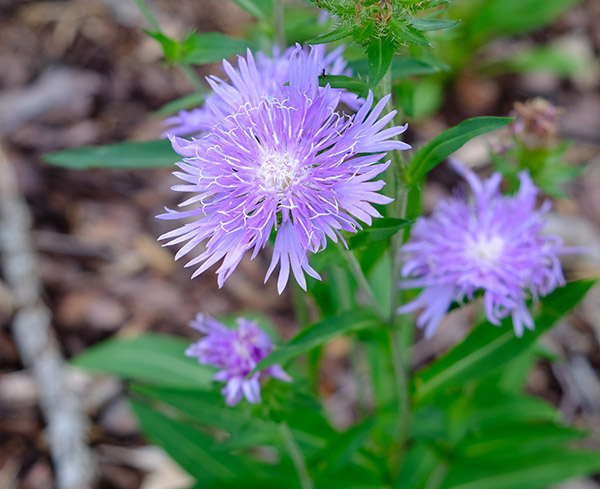
Stoke’s Aster (Stokesia laevis ‘Peachie’s Pick’)

Bloom Time: June – September

Sun Requirement: Full sun

Water Requirement: Medium

Wildlife: Butterflies & bees

Tolerates: Drought & heat

Native to North America: Yes

Other: If deadheaded consistently, this plant will rebloom in the fall.

Zones: 5 – 9

Location: Bracken Foundation Children’s Garden

Stokesia-Peachies-Pick

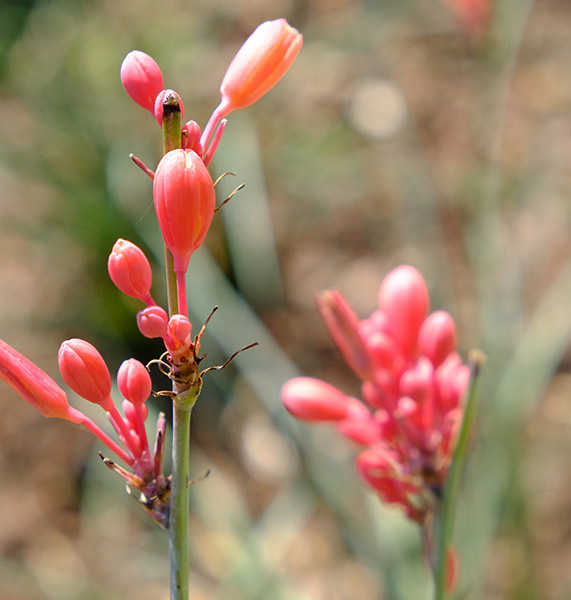
Red Yucca (Hesperole parviflora)

Bloom Time: July – August

Sun Requirement: Full sun

Water Requirement: Dry

Wildlife: Hummingbirds & butterflies

Tolerates: Drought

Native to North America: Yes

Other: Excellent rock garden plant and a favorite of hummingbirds!

Zones: 5 – 10

Location: Sigourney Cheek Literary Garden

Hesperole-Literary-3
test

Robinson Family Water Garden

Robinson Family Water Garden

In celebration of Cheekwood’s 60th anniversary as a public institution, we’re highlighting one of our 12 distinct gardens each month to showcase our wide variety of garden offerings. With 55 acres of rolling hills and 12 intricate, unique gardens, there’s something for everyone to experience and love at Cheekwood.

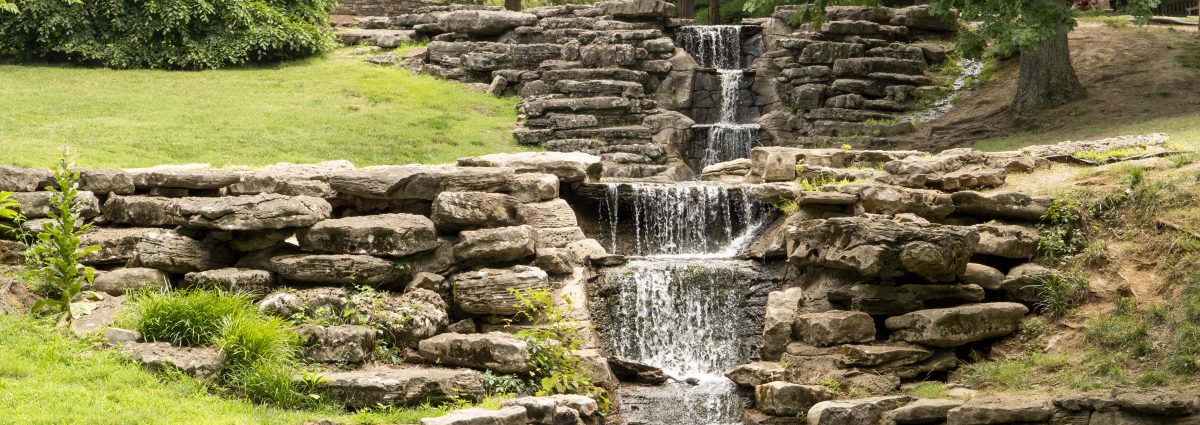
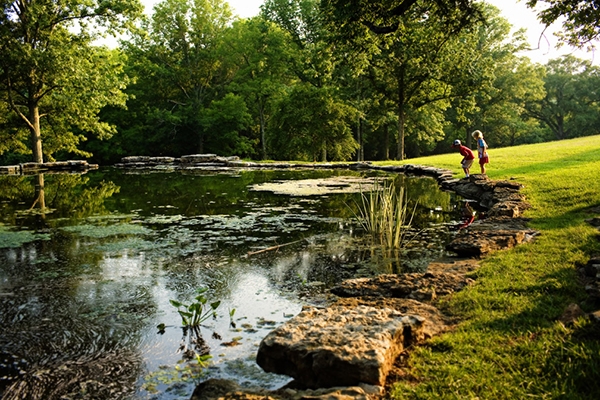
The fountains, pools, and man-made creeks and ponds were originally connected by a system of underground pipes and pumps. As the water traveled through this environmentally sound arrangement, it was aerated and cooled naturally, preventing the growth of algae and bacteria. Beginning at the Swan Fountain, the water flowed downhill through a series of smaller pools, rills, and underground pipes to the Reflecting Pool. Water continued traveling under the main drive and eventually reached the three largest ponds situated in a nonlinear and unorthodox, Fleming-esque placement. In the following decades, a renovation of the ponds was made possible by the Robinson Family, and the Water Garden was named in their honor.

When the windows of the house were open, the sounds of trickling water could be heard inside, a feature that Mabel Cheek expressed to Fleming as a design necessity. The source for the water was the Red Spring House on the west fork of Richland Creek. This spring originally used to provide water for Belle Meade Plantation, and the Cheeks purchased the spring specifically to provide their own supply of residential water.

Click here to read about our other distinct gardens. For a look at what’s currently blooming in the gardens, check out our Gardeners’ Top Picks here.

2008 3590 kidspond_72.jpg
test

Gardeners’ Top Picks July 2020

Gardeners’ Top Picks July 2020

You won’t want to miss these summertime stunners! Check out our garden team’s top plant picks for July.

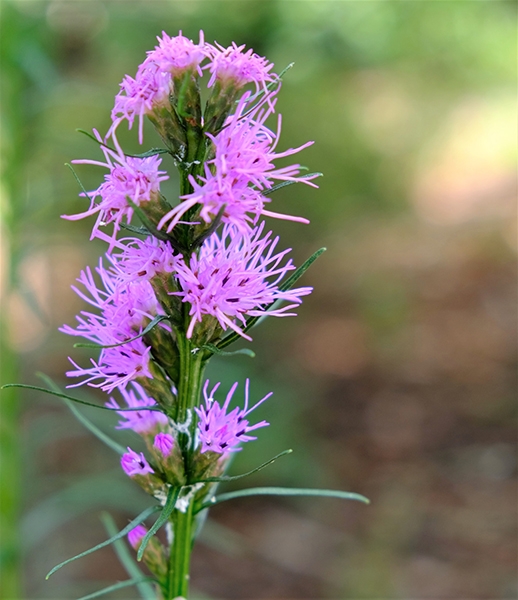
Blazing Star (Liatris spicata ‘Kobold’)

Bloom Time: July – August

Sun Requirement: Full sun

Water Requirement: Medium

Wildlife: Birds, butterflies, & hummingbirds

Tolerates: Clay soil, heat & humidity

Native to North America: Yes

Other: Great selection for rain gardens / makes an excellent cut flower

Zones: 3 – 8

Location: Bracken Foundation Children’s Garden

Liatris-CH-23-1

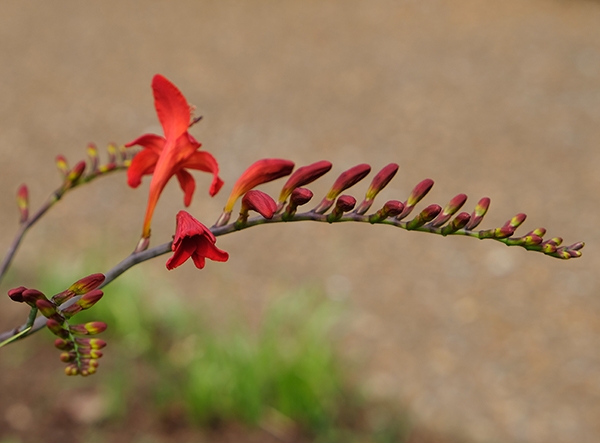
Montbretia (Crocosmia ‘Lucifer’)

Bloom Time: June – August

Sun Requirement: Part sun – shade

Water Requirement: Medium

Wildlife: Hummingbirds

Tolerates: Clay soil

Native to North America: No

Other: Great plant for front borders / provides late season color

Zones: 5 – 9

Location: Wills Perennial Garden

Crocosmia-Lucifer-WI-2

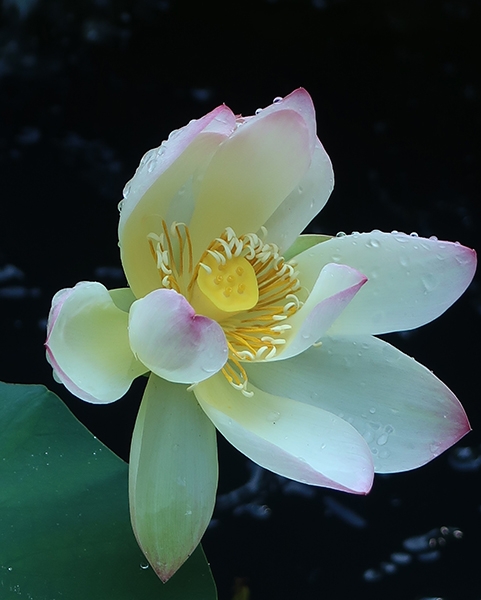
Water Lily (Nelumbo ‘Drunken Cocubine’)

Bloom Time: June – August

Sun Requirement: Full sun

Water Requirement: Wet

Wildlife: Bees & butterflies

Tolerates: Some shade

Native to North America: Yes

Other: Fragrant blooms / plant in rain gardens or ponds

Zones: 5 – 10

Location: Herb Study Garden: Fountain

Nelumbo-Drunken-Cocubine-1

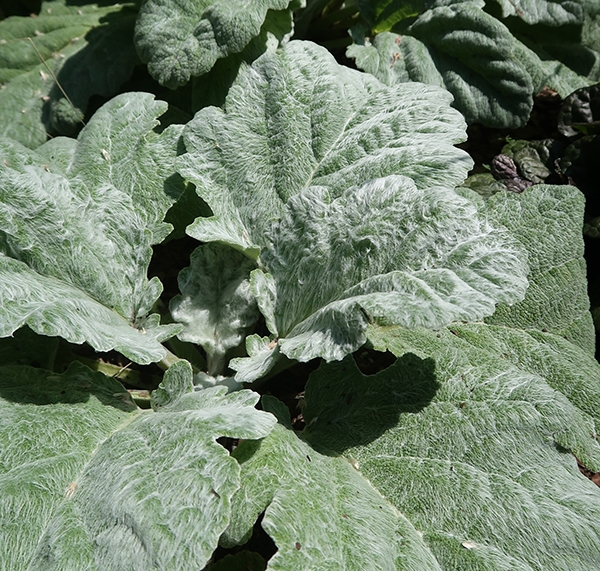
Lamb’s Ear (Stachys byzantina ‘Big Ears’)

Sun Requirement: Full sun

Water Requirement: Dry – Medium

Wildlife: Bees use the plant for nesting material.

Tolerates: Deer

Native to North America: No

Other: Unique ground cover

Zones: 4 – 9

Location: Burr Terrace Garden

Stachys-Helen-von-Stein-BU

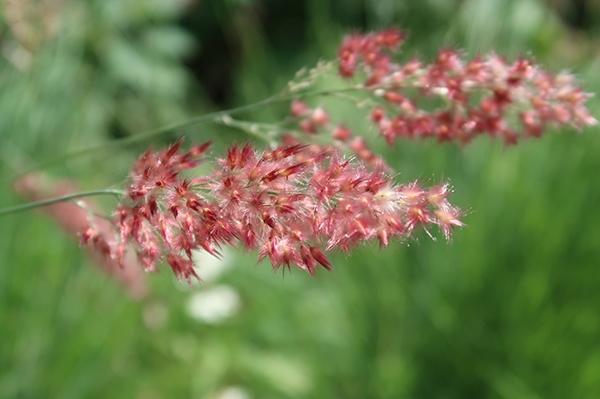
Ruby Grass (Melinus nernviglumis)

Bloom Time: July – August

Sun Requirement: Full sun

Water Requirement: Medium

Wildlife: Wind pollinated

Tolerates: Black walnut

Native to North America: No

Other: Great plant for mass plantings and containers

Zones: 8 – 10

Location: Bradford Robertson Color Garden

Melinas-CO2

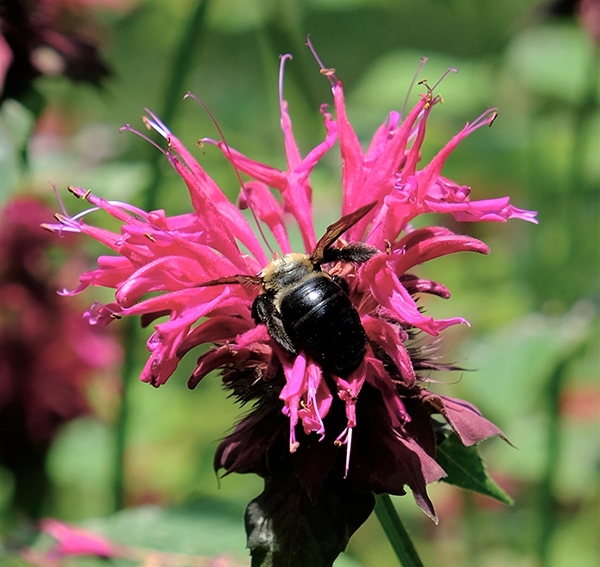
Bee Balm (Monarda ‘Raspberry Wine’)

Bloom Time: July – August

Sun Requirement: Full sun – part shade

Water Requirement: Medium

Wildlife: Bees, butterflies & birds

Tolerates: Deer, rabbit, wet soil

Native to North America: Yes

Other: Foliage has a pleasant, aromatic foliage / bee balm will naturalize

Zones: 4 – 9

Location: Howe Garden: Tool Shed Bed

Monarda-Howe-2

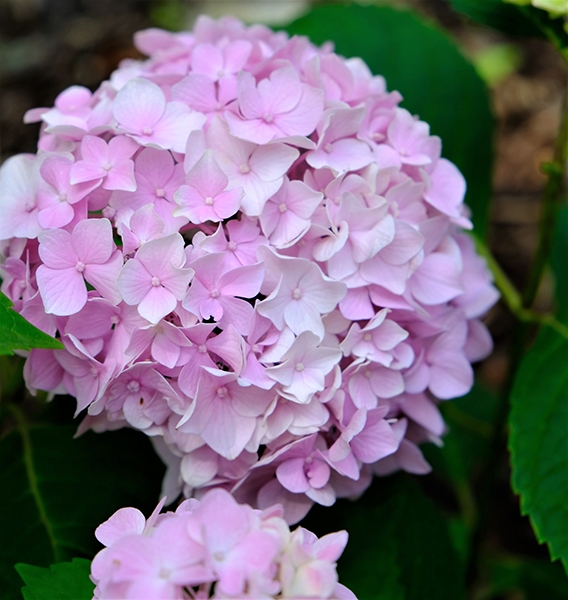
Mophead Hydrangea (Hydrangea macrophylla ‘Penny Mac’)

Bloom Time: June – September

Sun Requirement: Part shade

Water Requirement: Medium

Wildlife: The flowers are sterile

Tolerates: Full sun if soil is consistently moist

Native to North America: No

Other: Makes a beautiful shrub border / the flowers dry well

Zones: 6 – 9

Location: Bracken Foundation Children’s Garden

Hydrangea-Penny-Mac-CH-29-5

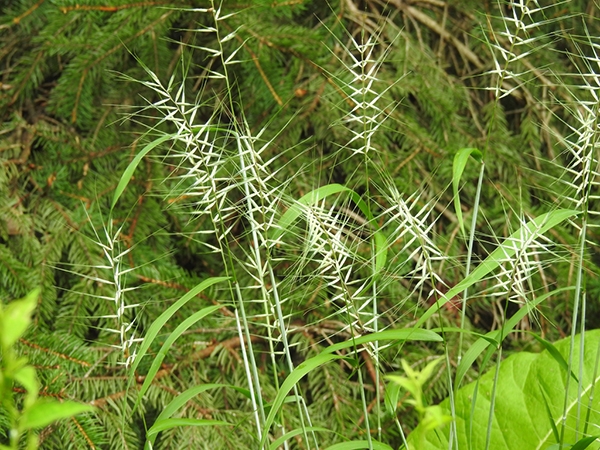
Eastern Bottlebrush Grass (Elymus hystrix)

Bloom Time: July – October

Sun Requirement: Full sun – part shade

Water Requirement: Dry – Medium

Wildlife: Birds

Tolerates: Drought, heavy shade, erosion

Native to North America: Yes

Other: Easy to grow and naturalize

Zones: 5 – 9

Location: Ann & Monroe Carell Jr. Family Sculpture Trail: Hickory Loop

Elymus-hystrixSC
test

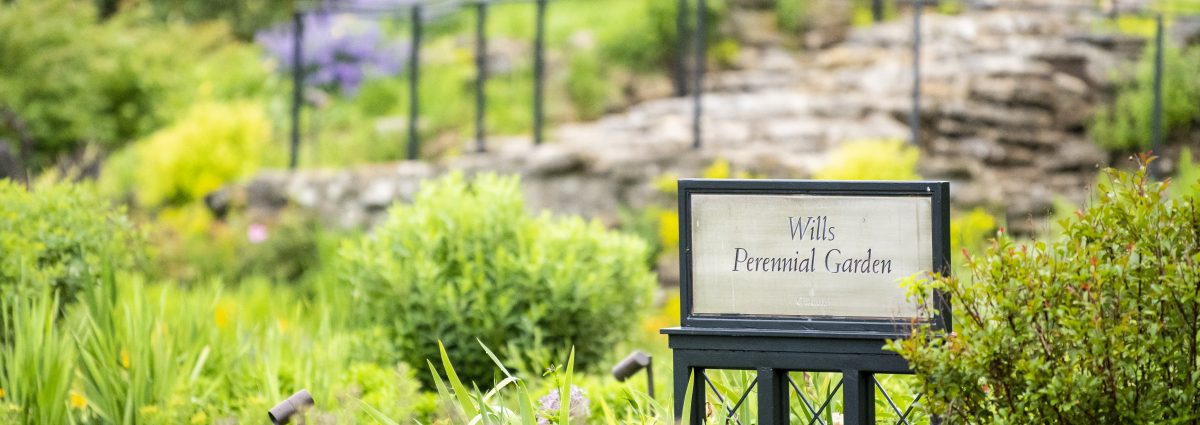
Wills Perennial Garden

Wills Perennial Garden

In celebration of Cheekwood’s 60th anniversary as a public institution, we’re highlighting one of our 12 distinct gardens each month to showcase our wide variety of garden offerings. With 55 acres of rolling hills and 12 intricate, unique gardens, there’s something for everyone to experience and love at Cheekwood.

In the summer of 1977, an iris collection was donated to Cheekwood by Mrs. Ellen Wills. She dedicated it to her late husband, Jesse Ely Wills, the famed iris hybridizer, former president of the American Iris Society and winner of the Dykes Medal Award. The donated iris collection planted the seed for something bigger, a memorial garden for the beloved Jesse E. Wills, philanthropist and pillar of the business community, iris breeder, poet, and wildlife lover.

The design for the memorial garden was a collaborative effort between Duncan Callicott, Cheekwood’s executive director of horticulture at the time, and a local landscape architecture firm, Kevin Turner & Associates. Together the team created a space that would capture Jesse Wills’ essence: a garden fit for the cultivation of irises, a home for pollinators and other wildlife, an auditory experience, and a spectacular open view of the sky. The Wills Perennial garden officially opened and dedicated in April of 1981.

©Caitlin Harris Photography

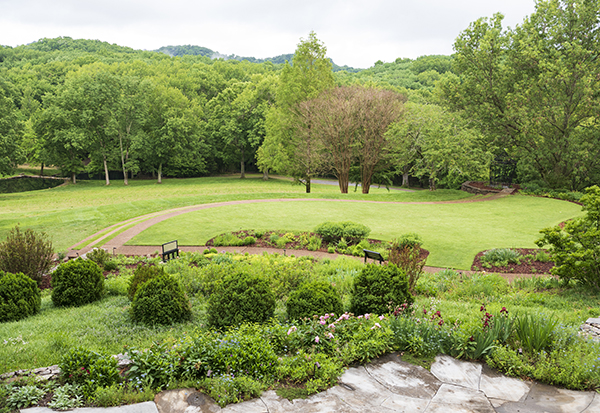
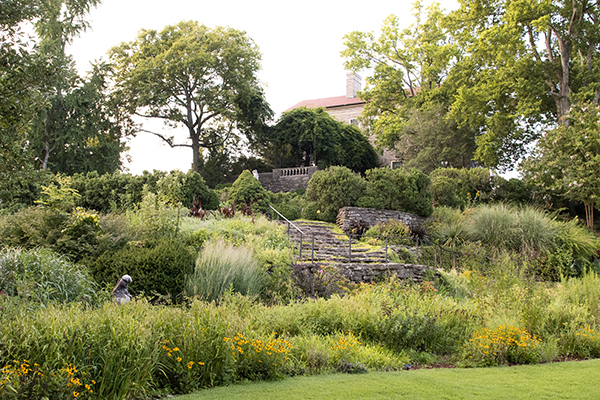
The perennial garden is set on a terrace, elevated above the three interconnected ponds of the Robinson Family Water Garden. To the southwest of this site, the protected hills of the Warner Parks provide the perfect scene for a setting sun. From out of the original rock wall of the circular drive grows creeping raspberry, candytuft, and a variety of sedum that give the perennial garden a reference to the historic estate and a connection to the Reflecting Pool and Swan Lawn on the opposite side. The Wills Perennial Garden offers an organic and loose arrangement, mirroring the way in which the Mansion’s stonework becomes less formed and compact the further it moves into the surrounding landscape.

Besides the exuberant color matched with a variety of texture and fragrance, another layer of the Wills Perennial Garden is an auditory one. An array of buzzing pollinators inhabits this garden like no other, creating the pitches of a vibrant symphony. With a diverse plant palette to ensure a long bloom period, shrubs for shelter, and full sun exposure, hospitality is offered for fiery skippers’ soft squeaks, duskywing hums, and the fluttering of eastern tiger swallowtail. Goldfinches swarm to the purple-top verbena and the hummingbirds incessantly seek out the red salvias and aromatic bee balm.

©Caitlin Harris Photography

June is Perennial Garden Month, and we encourage you to get out to the Wills Perennial Garden and experience the sights, sounds, and smells of this beloved, unique garden. With its many colors, textures, and layers, its sure to leave you feeling inspired to plant your own perennial garden a home.

Click here to read about our other distinct gardens. For a look at what’s currently blooming in the gardens, check out our Gardeners’ Top Picks here.

Privacy Policy Sitemap Web design by Speak
Back to top