Gardens Archives - Page 2 of 12 - Cheekwood | Page 2
x icon Close
test

Weed Wrangle at Home
What is Weed Wrangle?

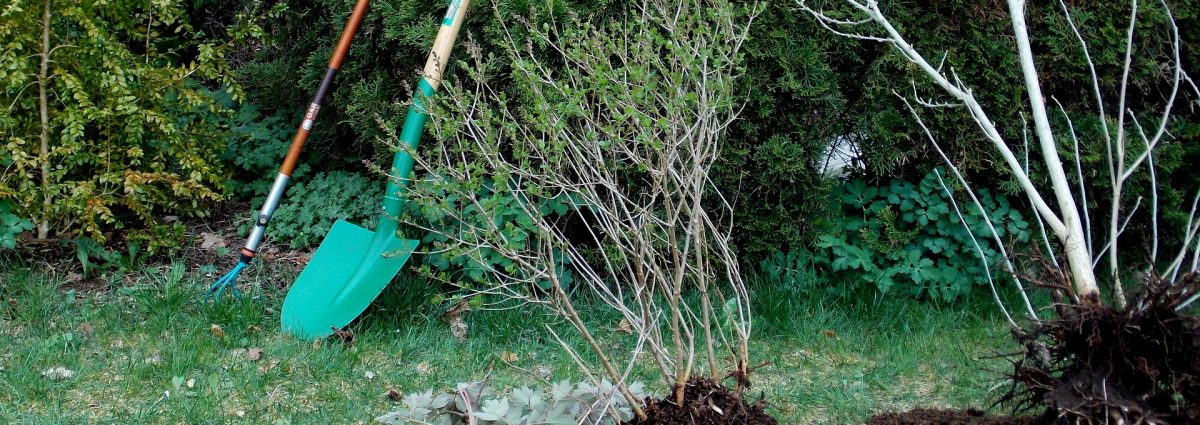
Weed Wrangle is a one-day, area-wide, volunteer effort to help rescue our public parks and green spaces from non-native invasive species through hands-on removal of especially harmful trees, vines, and flowering plants. Supervised by an expert in invasive weed management, Weed Wrangle volunteers learn, practice and begin a habit of maintaining an area free of non-native invasive plants and encourage replanting with natives in removal areas. By engaging our neighbors and challenging them to take action in their own spaces, we hope to create a movement that will have the greatest impact on the invasive plant population.

Weed-Wrangle-Day-640x221

Aggressively Invasive Plants

Not all non-native plants are considered invasive (think daffodils, camellias, and many roses, just to name a few). However, many plants introduced to North America exhibit an aggressive nature due to their ability to grow vegetatively, bloom, and produce copious amounts of seed in an extremely rapid manner. Pair this advantageous trait with a wide adaptability to climate and cultural conditions and little to no disease or pest issues…green monsters are lurking in everyone’s backyard!

Below are three of the most common and recognizable plants to eliminate from your greenspace.

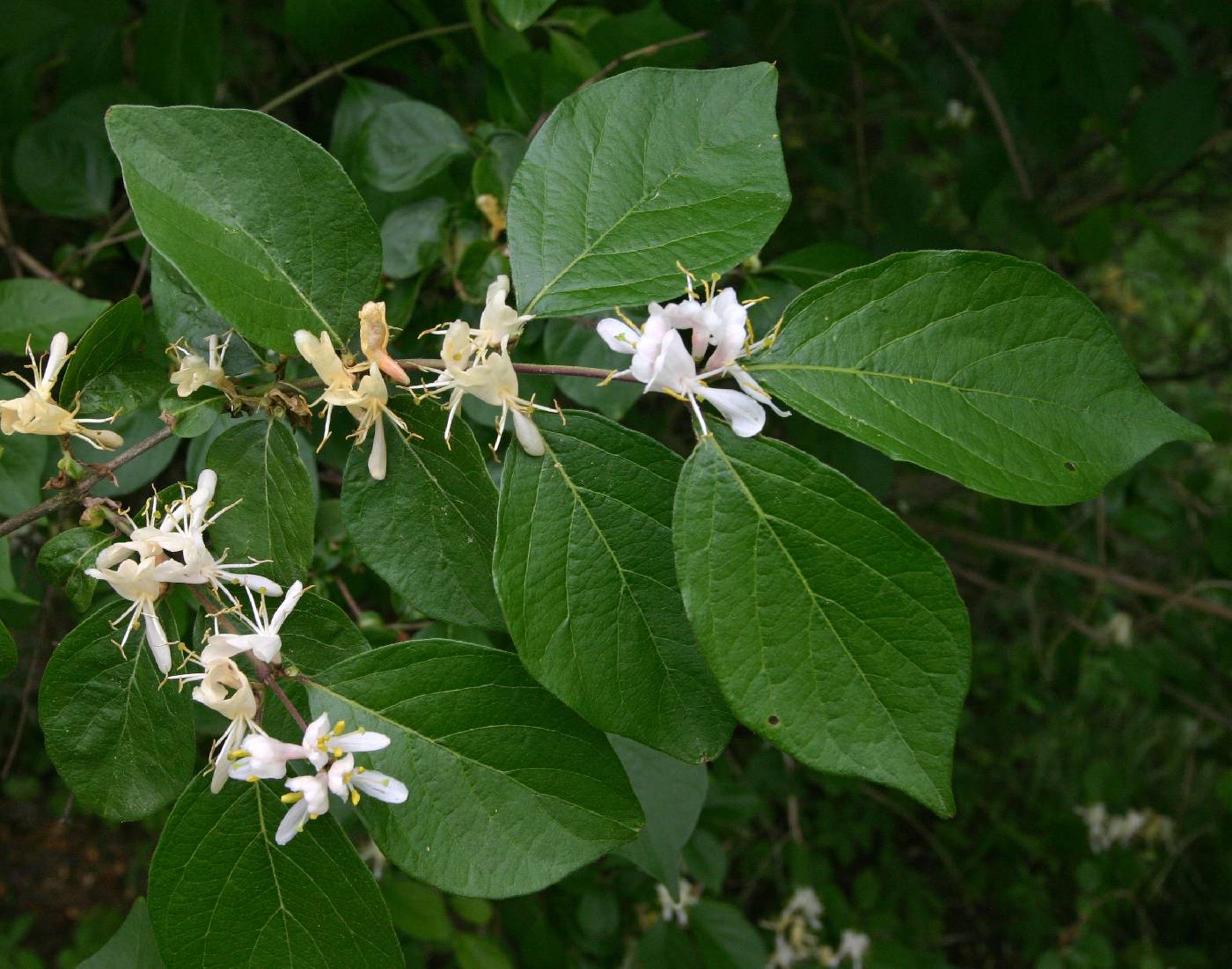
Lonicera mackii (Amur bush Honeysuckle)

The fragrance of these sweet-smelling honeysuckle shrubs may activate the olfactory senses and induce a cherished memory for many, but there are major consequences to turning a blind eye to this plant.
Lonicera_maackii_4253er_1526730100

Native alternatives:


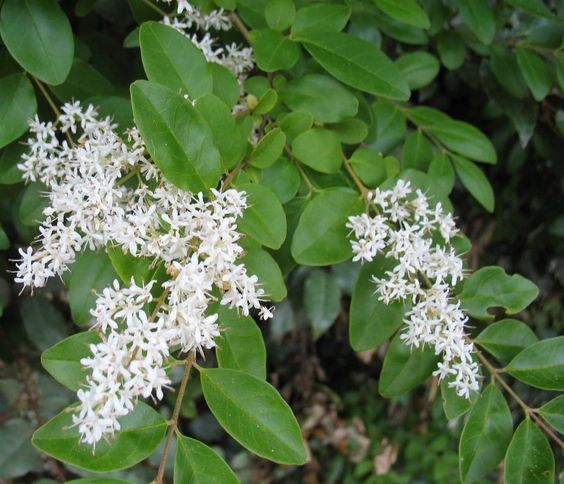
Ligustrum japonicum (Privet)

Used to create lush and effective edges, there are Asian and European species of this plant that have taken over natural woodlands.
Ligustrum-japonicum-2

Native alternatives:


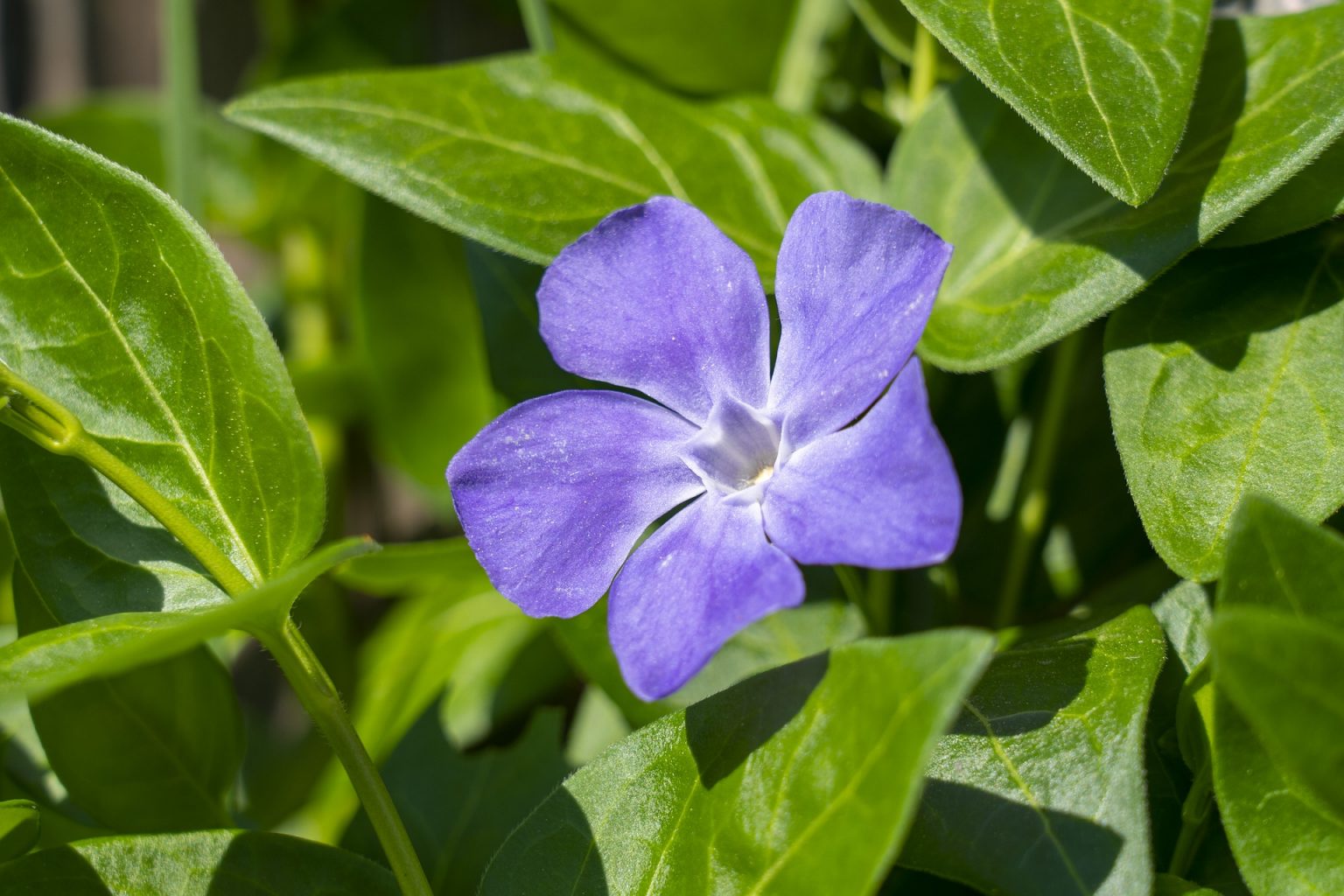
Vinca major and V. minor (Periwinkle):

With an innocent-sounding name, this groundcover is known to encroach and strangle its green neighbors. Don’t let the attractive bloom fool you.
vinca-gba0372b8f_1920-1536x1024

To Help With Wrangling

As with any project, it is important to have the right tools for invasive plant removal. Weeds refers to any plant in the wrong place. These misplaced plants can range from a small, herbaceous, shallowly rooted plant to a full-grown tree. Closely inspect the property to best understand the type of tools needed for the project. The following list are common tools used for removing plants big and small.

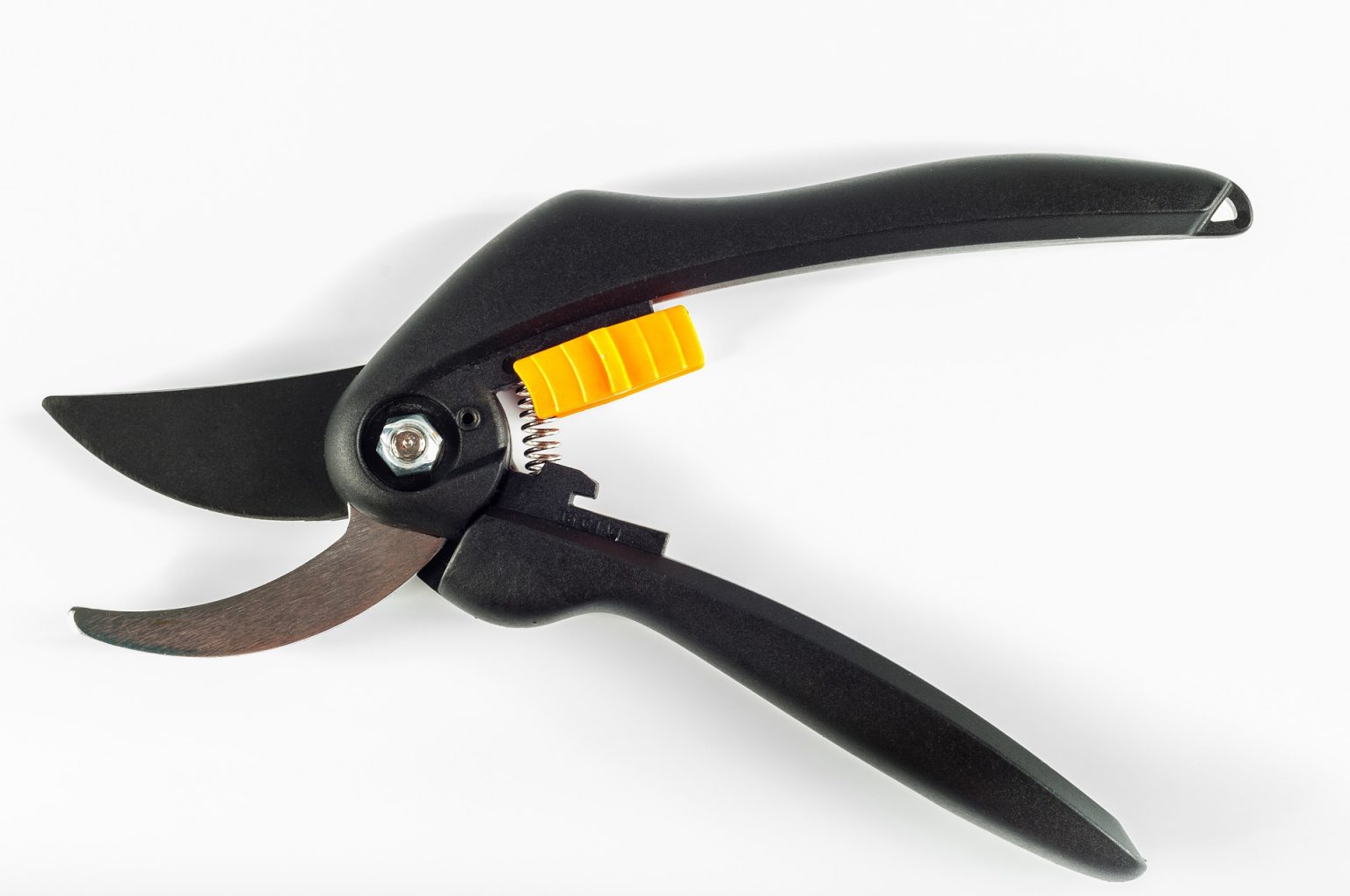
  • Hand pruners
  • Loppers
  • Handsaw
  • Shovel
  • Post digger
  • Soil knife (Hori-hori)
background-g9e4d6e111_1920-1536x1020

After the wrangle has ceased, it is important to know that the newly fallow land will not stay so for long, inviting the most persistent of species to grow. It is important to install native plant material as soon as possible. These plants will cover the soil’s surface area, providing competition to any non-native species. As importantly, installing the native plants will restore biodiversity to the landscape. The native alternatives to each invasive species listed above are only suggestions. There are tons of trees, shrubs, herbaceous perennials and groundcovers native to Tennessee to choose from.

Plants adapted to a location tend to thrive in that location. When plants not only survive, but flourish, then the surrounding elements also benefit. Native plants show excellent performance because over time they have naturally evolved to develop resistances to many common diseases and pests in their community. This can lead directly to a reduction in pesticide use. Less pesticide use results in improved water quality and aquatic life due to less chemical runoff occurrences.

For additional reading about invasive species, methods of weed removal, and Weed Wrangle, please visit this resourceful link: https://www.tnipc.org/. It is always a great idea to do one’s own research to correctly identify plant material and effectively access the situation. And remember – wear gloves and drink plenty of water!

Native Plant Guide

March 5, 2022 | 9 AM – 12 PM 

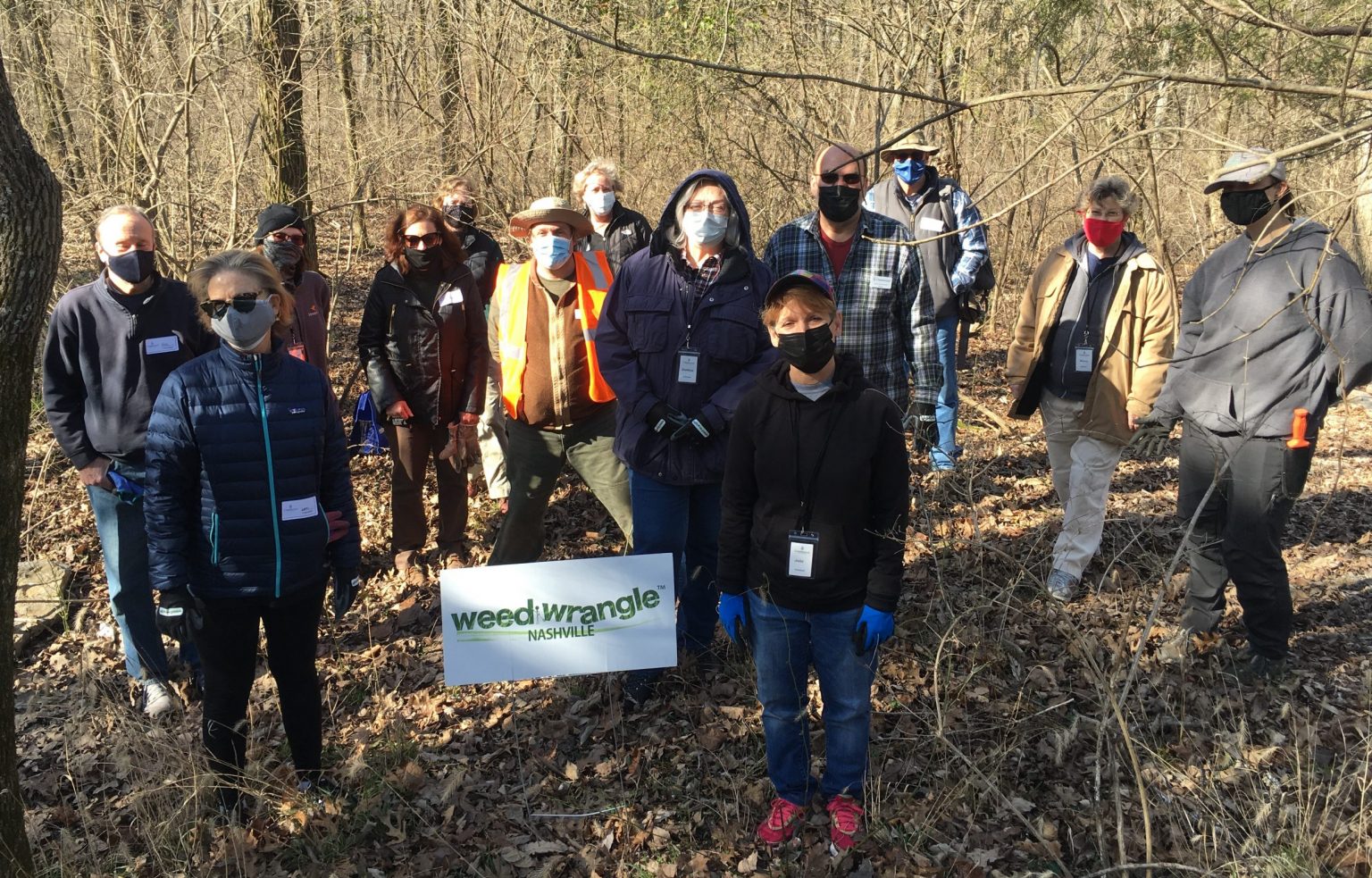
Volunteer with Cheekwood’s horticulture team and learn to identify and remove invasive plants at our gardens for the Weed Wrangle event!  This is an important conservation initiative as we join our community partners in enhancing our environment. 
Learn more

Weed-Wrangle-2021-Volunteer-Team-scaled-e1646069193947-1536x983
test

Top Plant Picks January 2022

Top Plant Picks January 2022

Kick off the new year by checking out a few of our featured plants! Cheekwood’s Plant Collections Manager, Shanna Jones, shares her top plant picks for January.

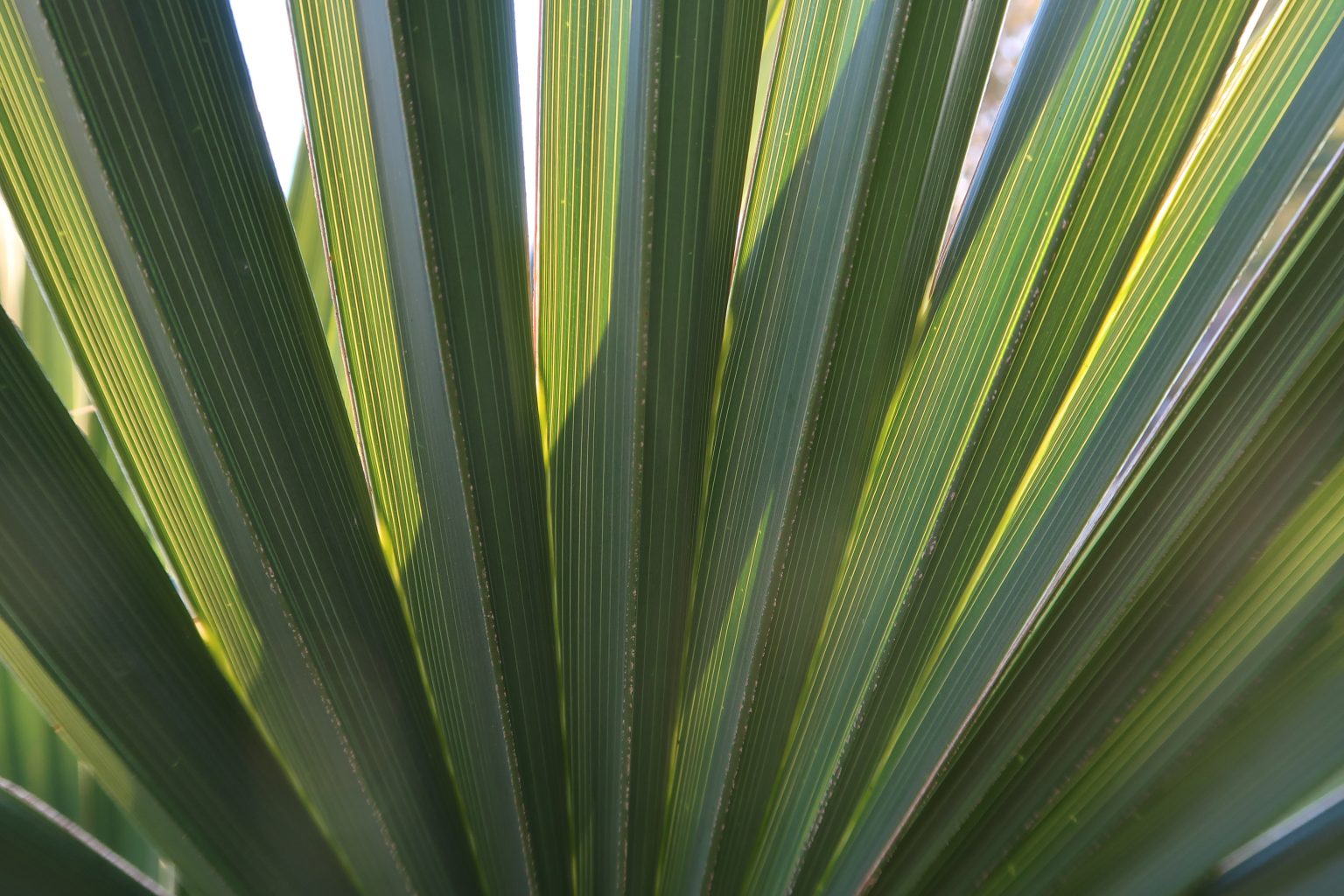
Saw Palmetto (Serenoa repens)

Bloom Time: June

Sun Requirement: Full sun

Water Requirement: Dry – medium

Wildlife: Bees collect nectar for honey production. Raccoons, bears, wild hogs, deer and tortoises enjoy the fruit.

Tolerates: Drought

Native to North America: Yes

Zones: 8 – 11

Other: Resistant to most disease and pests. Performs best in well-drained soils.

Location: Wills Perennial Garden

Serenoa-repens-2018-0298-8-1536x1024

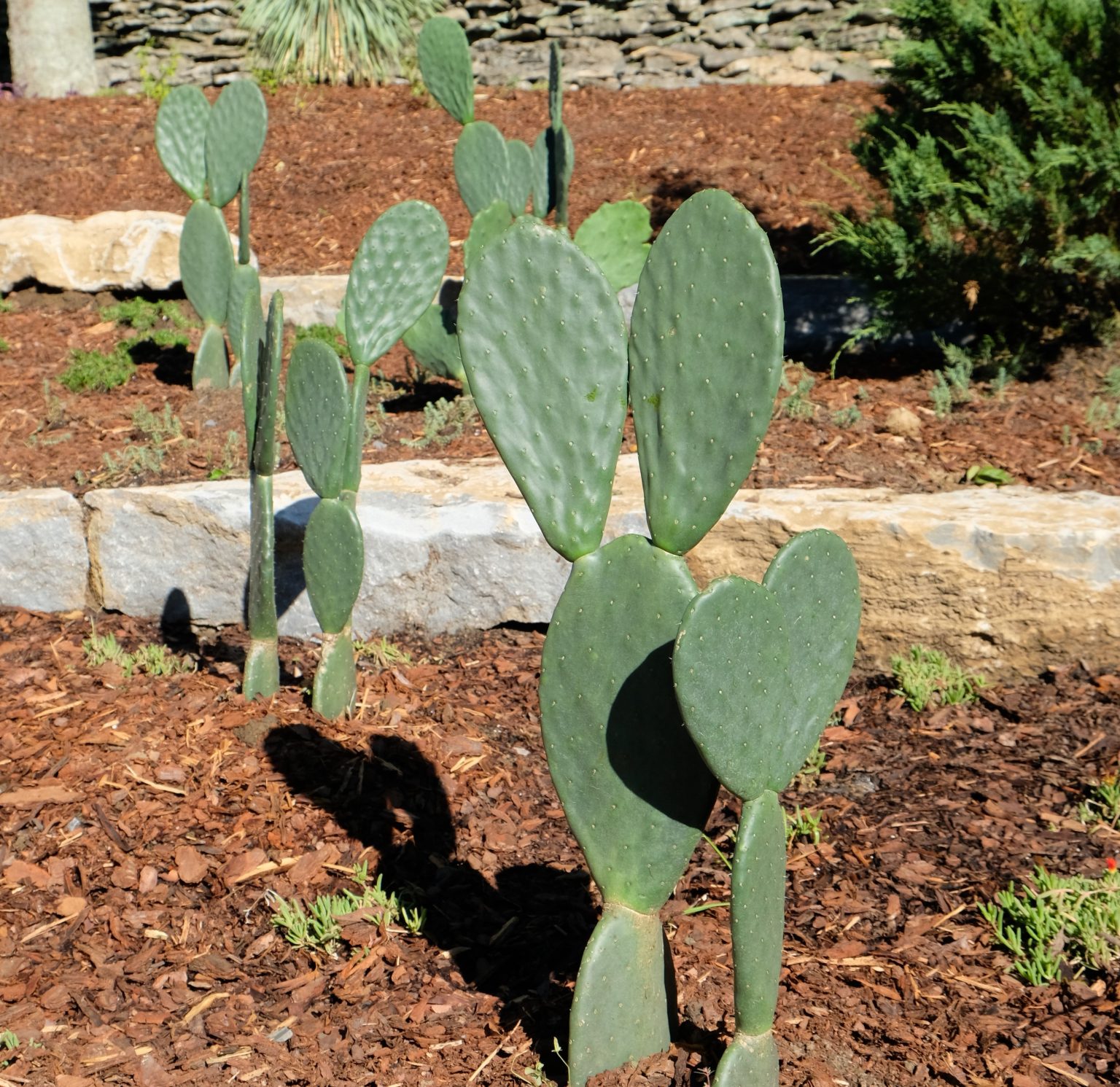
Eastern Prickly Pear (Opuntia humifusa)

Bloom Time: July

Sun Requirement: Full sun

Water Requirement: Dry

Wildlife: A diverse range of bees feed on the nectar and collect pollen.

Tolerates: Drought, rabbit, & dry soil

Native to North America: Yes

Zones: 5 – 8

Other: Irregularly shaped. Excellent specimen plant. Susceptible to wind damage.
Location: Sigourney Cheek Literary Garden

Opuntia-humifusa-2-1536x1491

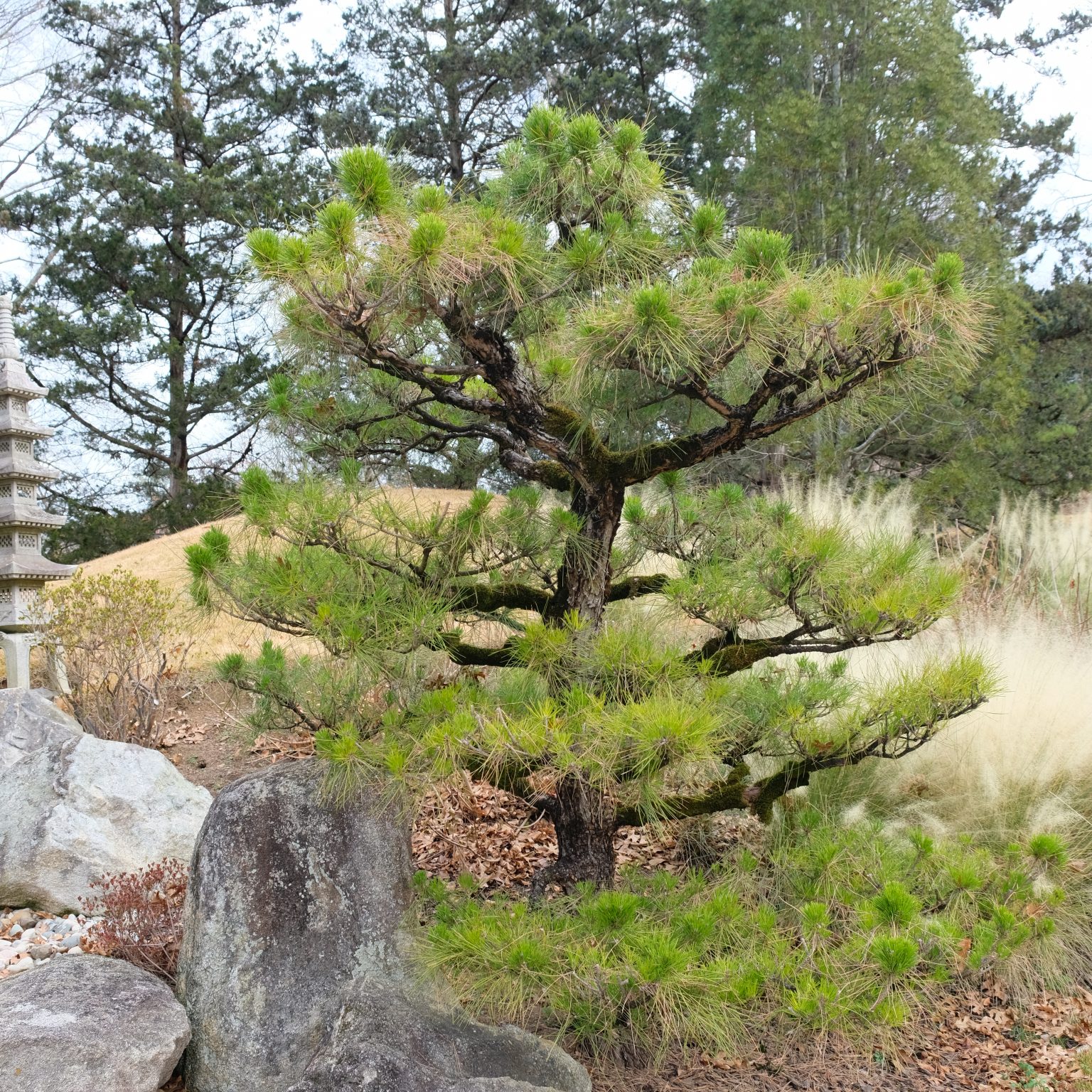
Japanese Black Pine (Pinus thunbergii)

Sun Requirement: Full sun

Water Requirement: Medium

Wildlife: Imperial Moth (Eacles imperialis) larvae

Tolerates: Deer & salt

Native to North America: No

Zones: 5 – 8

Other: Irregularly shaped. Excellent specimen plant. Susceptible to wind damage.
Location: Blevins Japanese Garden

Pinus-thunbergii-2-1536x1536

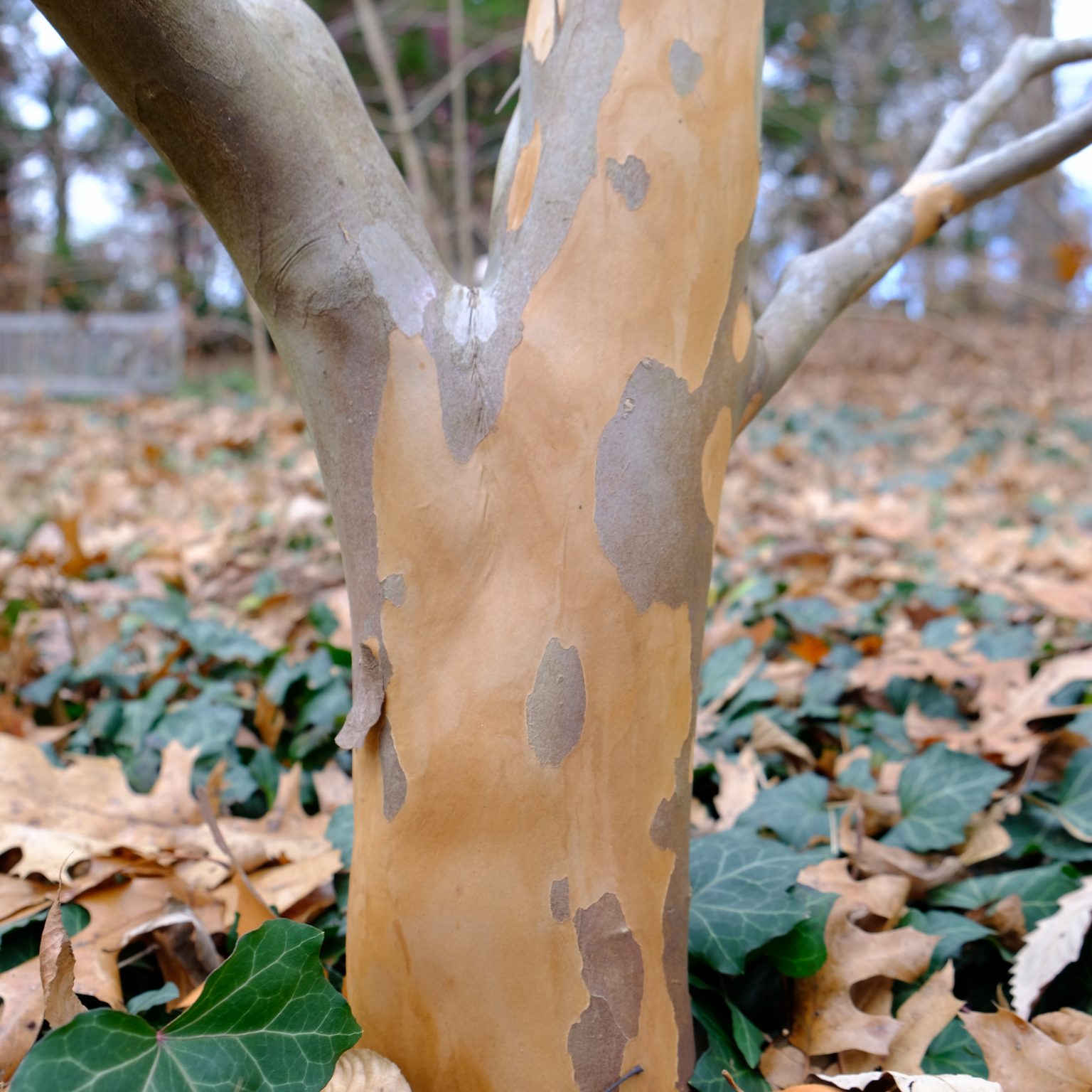
Japanese Stewartia (Stewartia pseudocamellia)

Bloom Time: June

Sun Requirement: Full sun – part shade

Water Requirement: Medium

Wildlife: Bees

Tolerates: Deer

Native to North America: No

Zones: 5 – 8

Other: Outstanding fall color. A member of the tea family. Will not tolerant drought.

Location: Turner Seasons Garden

Stewartia-pseudocamellia-2-1536x1536

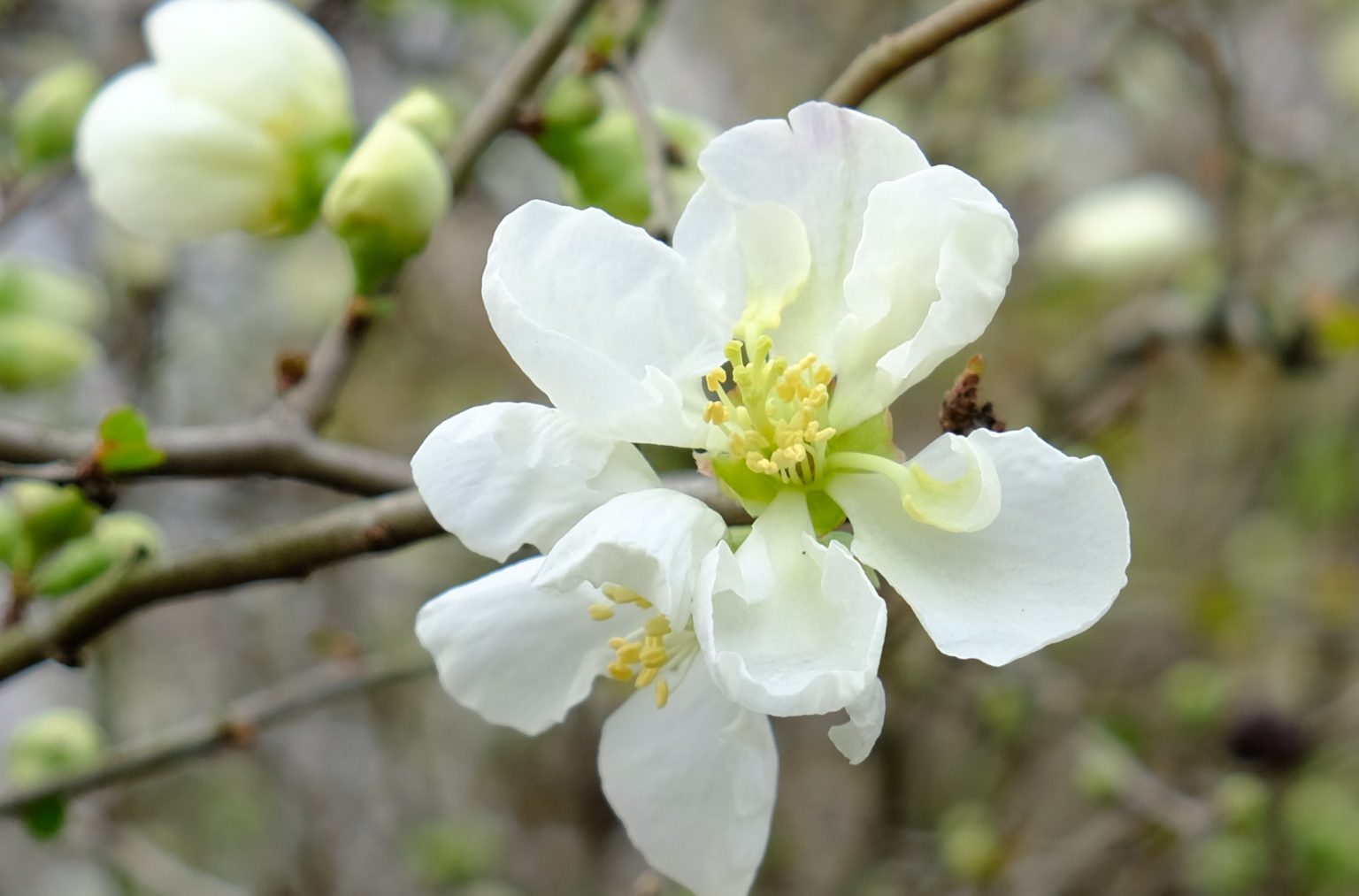
Quince (Chaenomeles japonica ‘Jet Trail’)

Bloom Time: January – March

Sun Requirement: Full sun – part shade

Water Requirement: Medium

Wildlife: Pollinated by bees

Tolerates: Drought

Native to North America: No

Zones: 5 – 8

Other: The fruit is edible, but best used in preserves and jellies.

Location: Carell Dogwood Garden

Chaenomeles-japonica-Jet-Trail-2-1536x1013

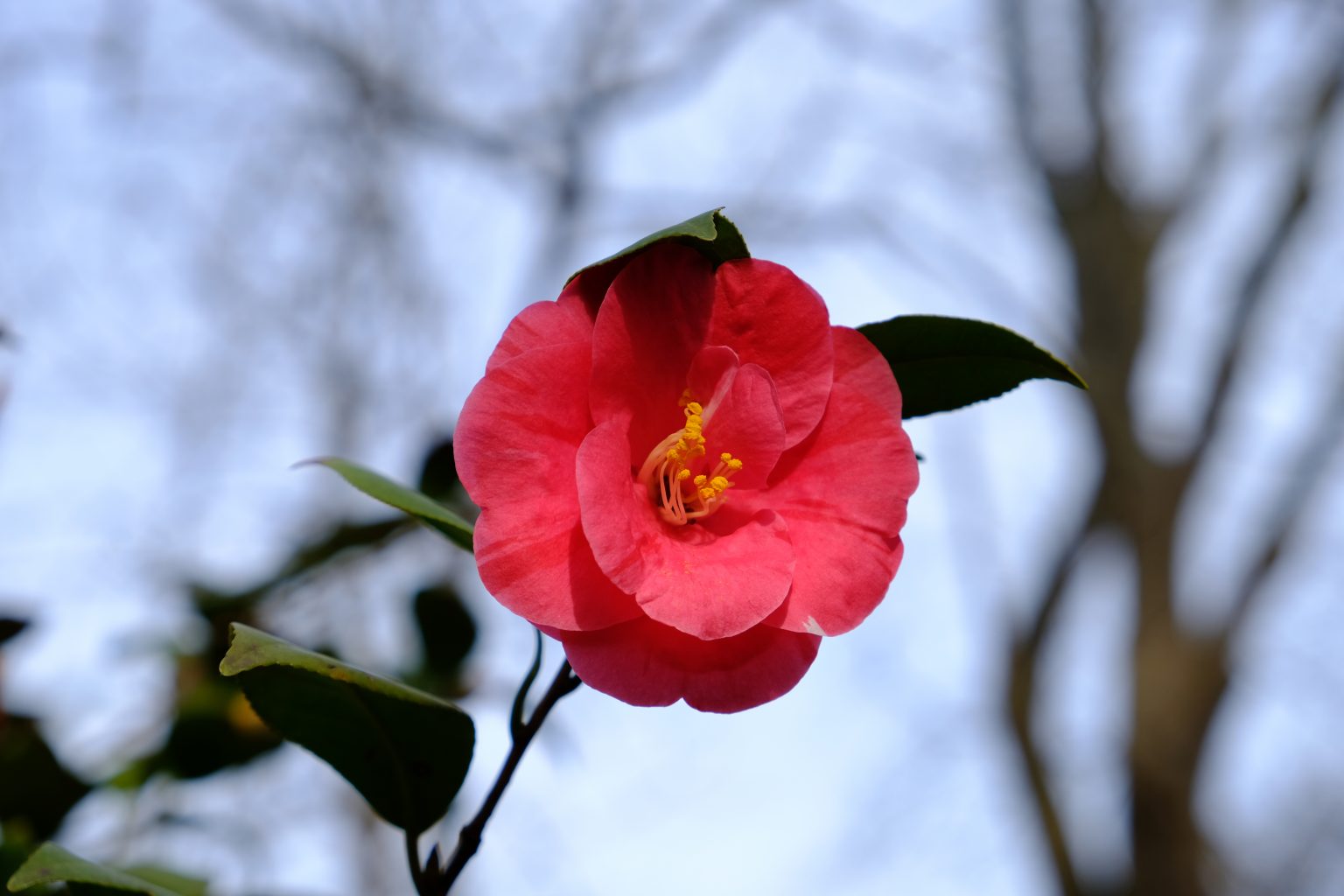
Camellia (Camellia japonica)

Bloom Time: December – February

Sun Requirement: Part shade

Water Requirement: Medium

Wildlife: Honeybees and bumblebees

Tolerates: Drought, once established

Native to North America: No

Zones: 7 – 9

Other: Provide winter protection in colder zones. Prune after flowering.

Location: Carell Dogwood Garden

Camellia-japonica-6-1536x1024

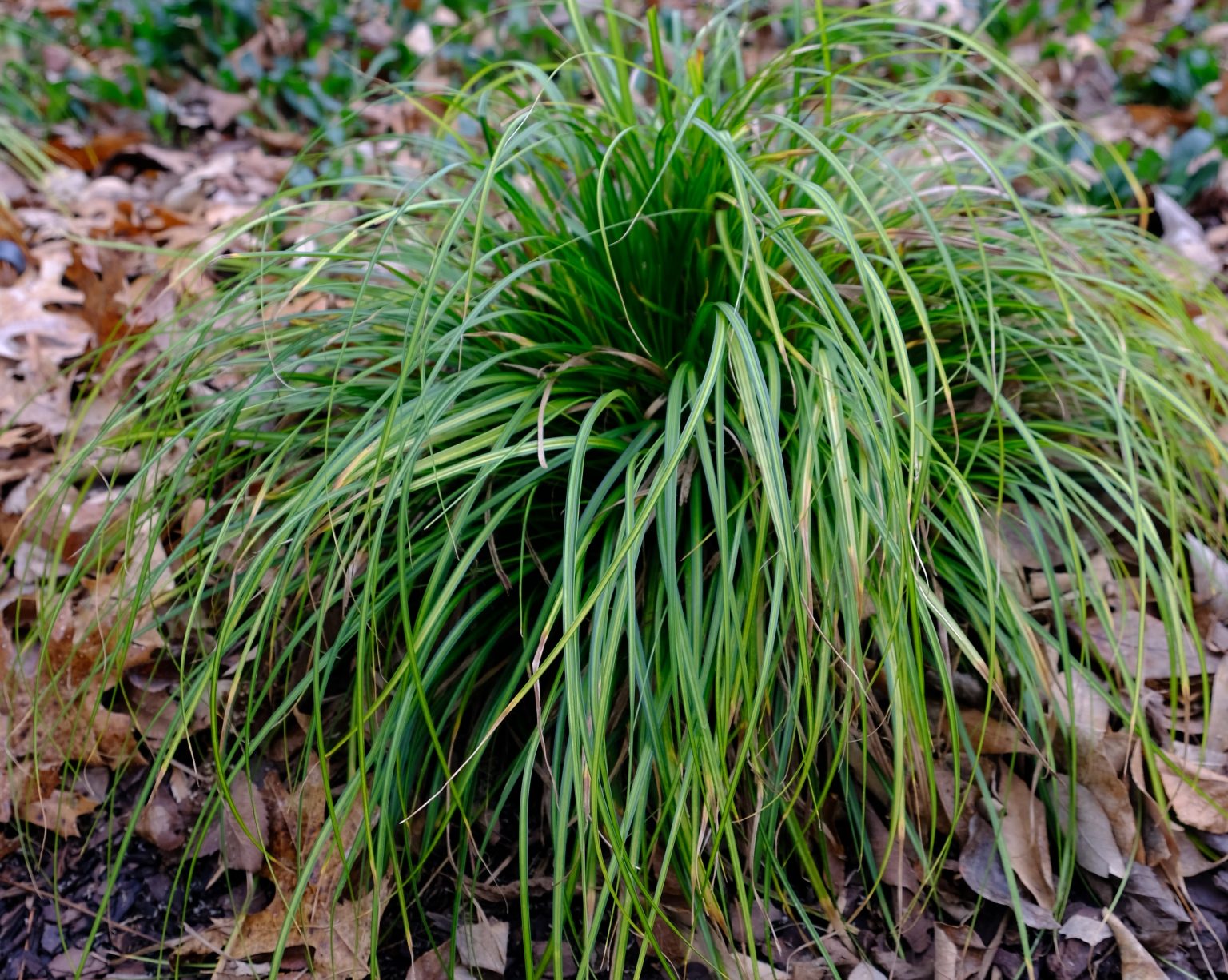
Sedge (Carex oshimensis Evercolor® ‘Everlime’)

Bloom Time: May

Sun Requirement: Part shade

Water Requirement: Medium – wet

Wildlife: Seeds provide food for turkeys and sparrows. Caterpillars eat the leaves.

Tolerates: Deer

Native to North America: No

Zones: 5 – 9

Other: Evergreen grass in milder climates.

Location: Howe Garden

Carex-oshimensis-Evercolor-Everlime-1-Copy-1536x1226

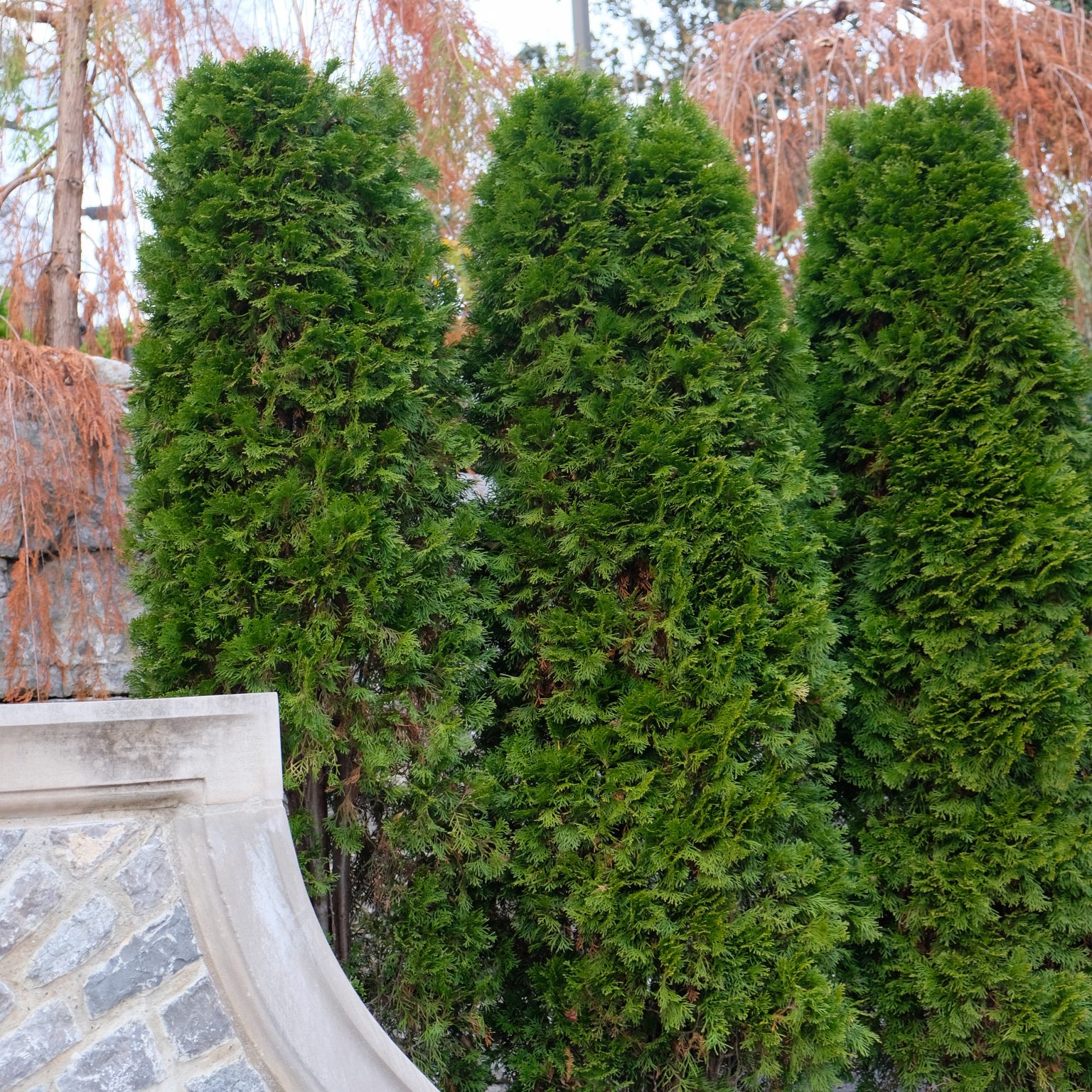
Arborvitae (Thuja occidentalis ‘Emerald’)

Bloom Time: Flower are very inconspicuous.

Sun Requirement: Full sun – part shade

Water Requirement: Medium

Wildlife: Nesting site for songbirds. Shelter (and food) for deer during the winter

Tolerates: Heat & clay soil

Native to North America: Yes

Zones: 2 – 7

Other: Narrow, compact, and pyramidal form, excellent for screening

Location: Bradford Robinson Color Garden

Thuja-arborvitae-Green-Giant-1-1536x1536
test

Top Plant Picks December 2021

Top Plant Picks December 2021

There are still plenty of beautiful plants that stand out during winter! Cheekwood’s Plant Collections Manager, Shanna Jones, shares her top plant picks for December.

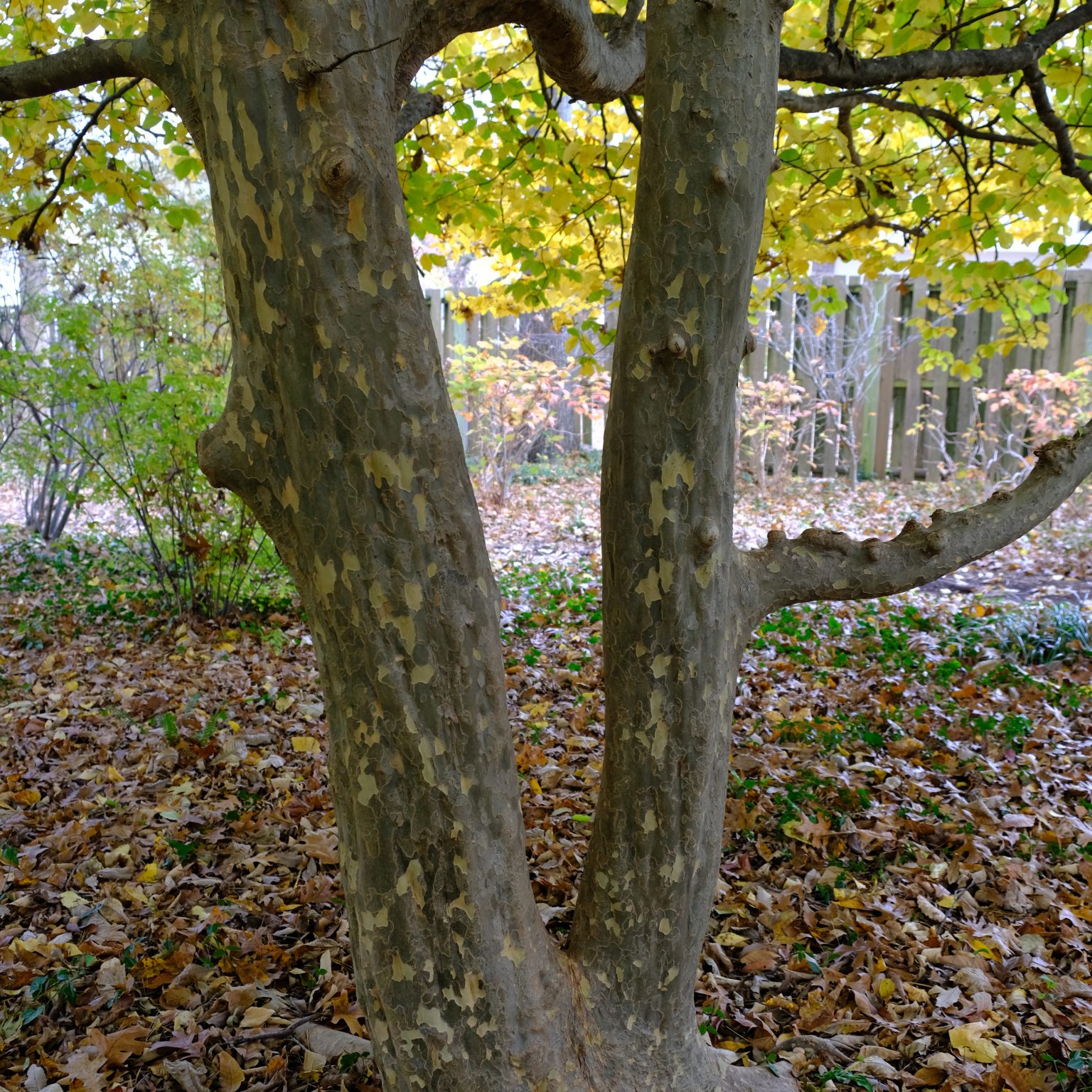
Persian Parrotia (Parrotia persica)

Bloom Time: April – May

Sun Requirement: Part shade – full sun

Water Requirement: Medium

Tolerates: Clay soil

Native to North America: No

Zones: 6 – 9

Other: Beautiful bark. Excellent street tree. Flowers are attractive, though very small. Yellow, orange, and scarlet fall color. Prefers slightly acidic soil which will also increase the fall color value. Wind pollinated. Hamamelidaceae family.

Location: Carell Dogwood Garden & Martin Boxwood Gardens

Parrotia-persica-3-Copy-1-1536x1536

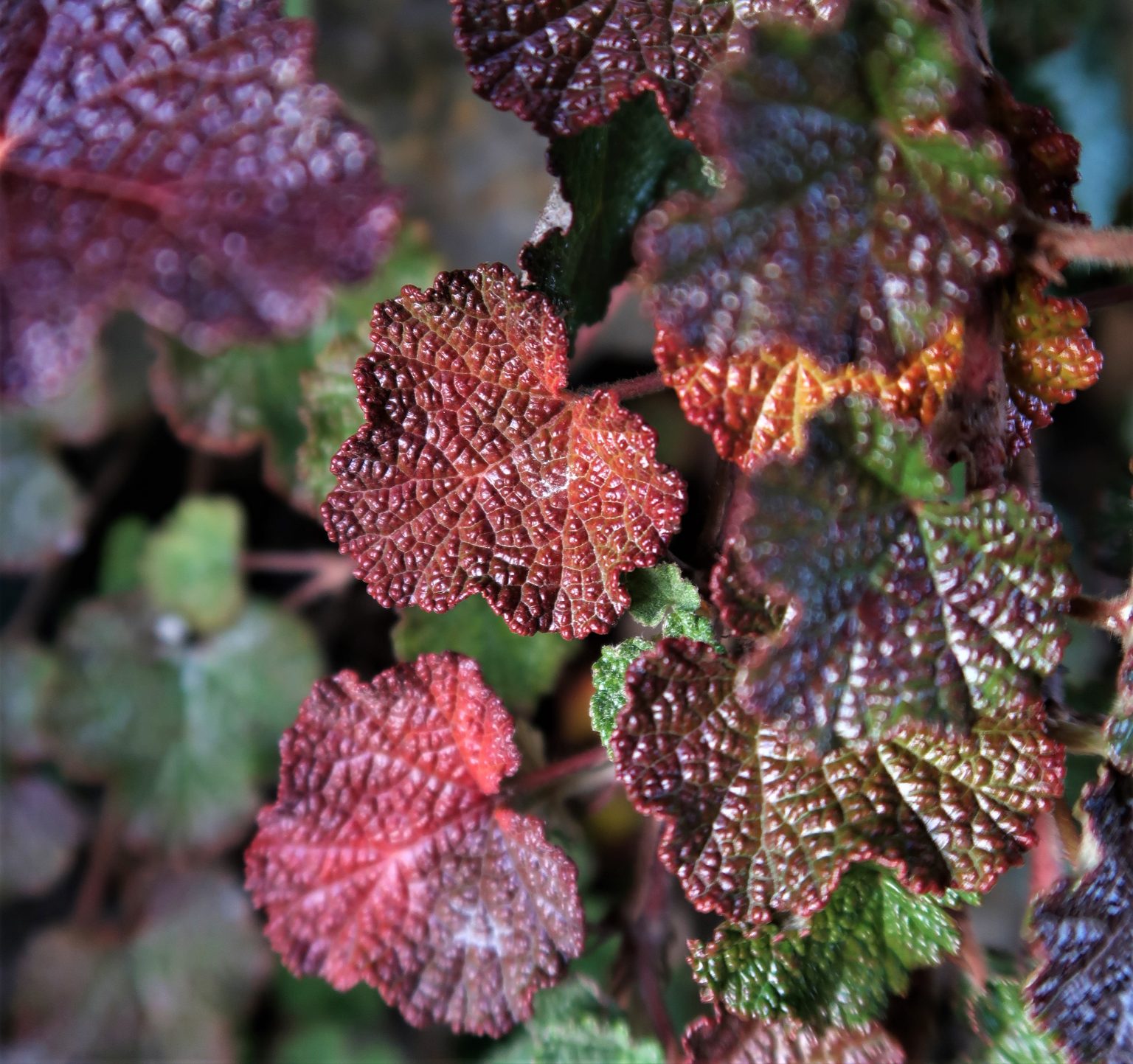
Creeping Raspberry (Rubus hayata-koidzumii)

Bloom Time: July

Sun Requirement: Full sun – part shade

Water Requirement: Dry – medium

Wildlife: Birds will eat the fruit.

Tolerates: Acidic soils & drought

Native to North America: No

Zones: 7 – 9

Other: Evergreen. Incredibly attractive fall color. Beautiful ground cover!

Location: Wills Perennial Garden

Rubus-calycinoides5-1-1536x1443

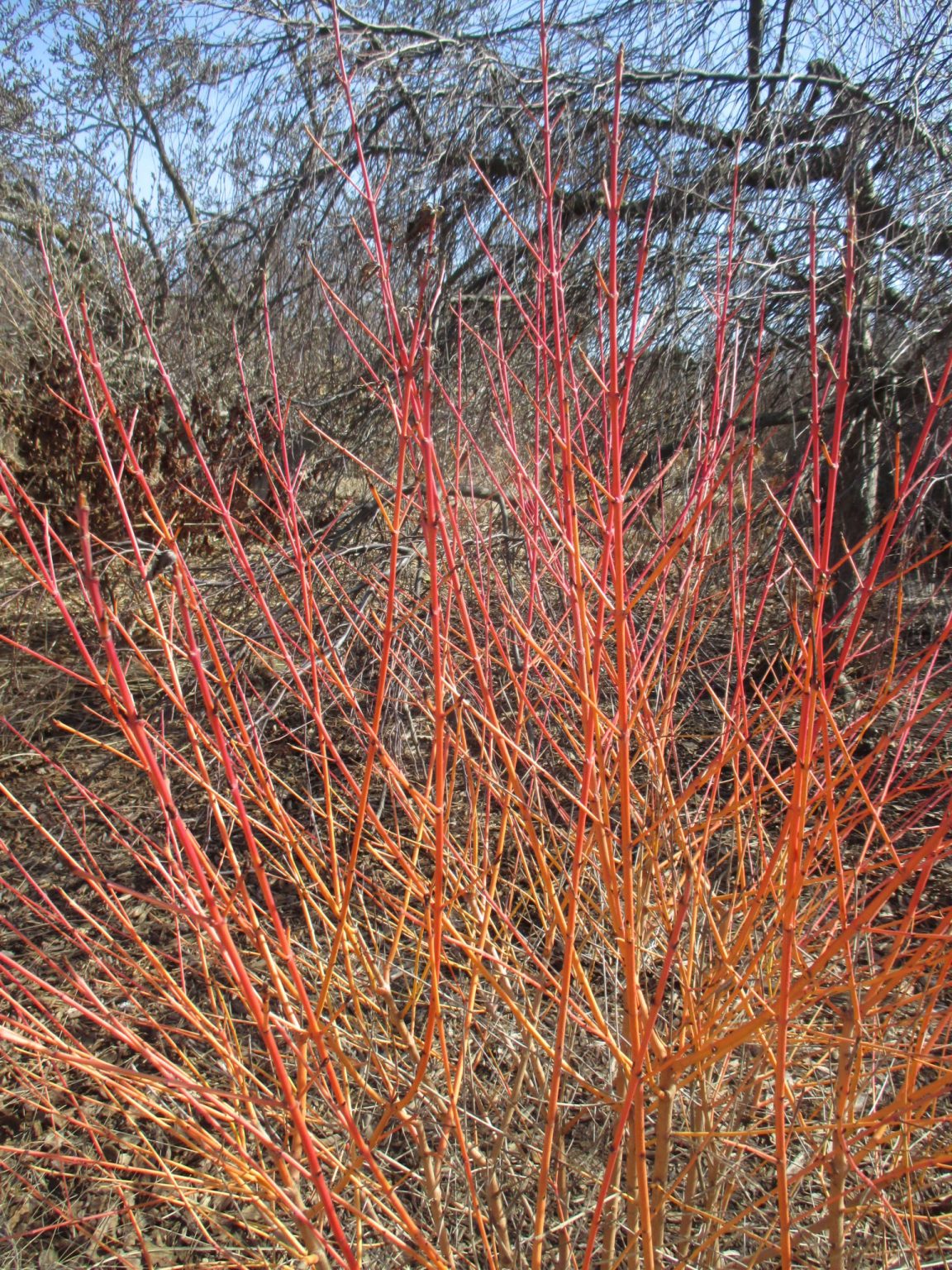
Coral Bark Willow (Salix alba subsp. vitellina ‘Britzensis’)

Bloom Time: April – May

Sun Requirement: Full sun – part shade

Water Requirement: Medium – wet

Wildlife: Butterflies

Tolerates: Deer, wet conditions

Native to North America: No

Zones: 4 – 8

Other: Vibrant red stem color provides winter interest. Thrives in wet conditions. Excellent screen selection.

Location: Bracken Foundation Children’s Garden

Salix-alba-subsp.-vitellina-Britzensis-1-1152x1536

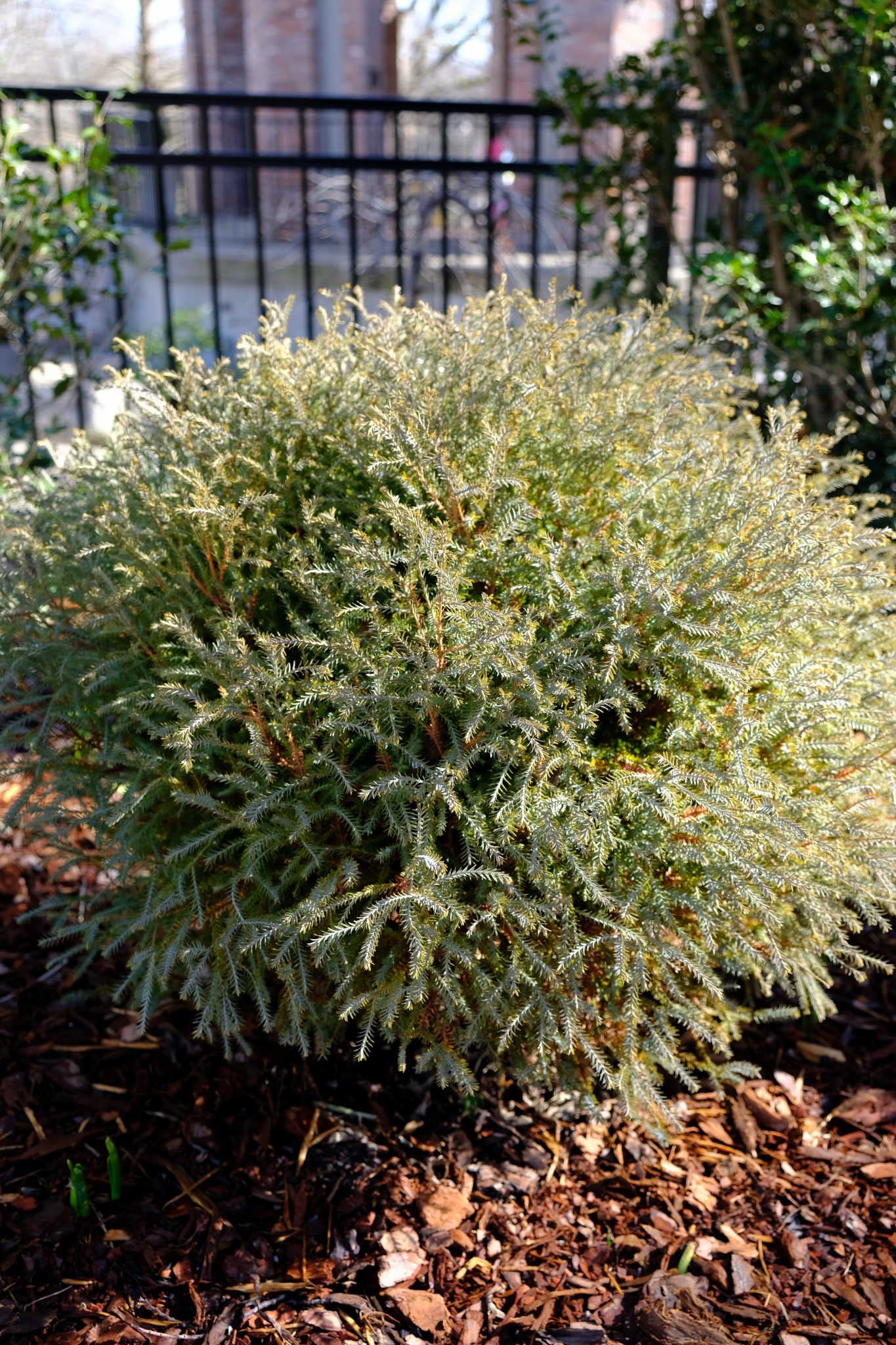
American Arborvitae (Thuja occidentalis ‘Bobozam’ MR. BOWLING BALL)

Bloom Time: Non-flowering

Sun Requirement: Full sun – part shade

Water Requirement: Medium

Tolerates: Clay soil

Native to North America: Yes

Zones: 3 – 7

Other: “Arborvitae” translates to “tree of life”. ‘Bobozam’ is a globular, dwarf variety that rarely requires pruning. Maximum size is 3ft. x 3 ft. Gray-green and needle-like, though soft. Also known as ‘Linesville’. Prefers limestone soils.

Location: Bracken Foundation Children’s Garden

Thuja-occidentalis-Bobazam-Mr.-Bowling-Ball®-2019-0561-8-1-1365x2048

Alabama Croton (Croton alabamensis)

Bloom Time: March – April

Sun Requirement: Full sun – part shade

Water Requirement: Medium

Tolerates: Drought

Native to North America: Yes

Zones: 6 – 8

Other: This is a RARE plant that is currently on the global vulnerable list. Terrifically unique foliage with excellent fall and winter color. Semi-evergreen to evergreen.

Location: Howe Garden & the Ann & Monroe Carell Jr. Family Sculpture Trail

Croton-alabamensis-2020-0935-5-1-1536x1024

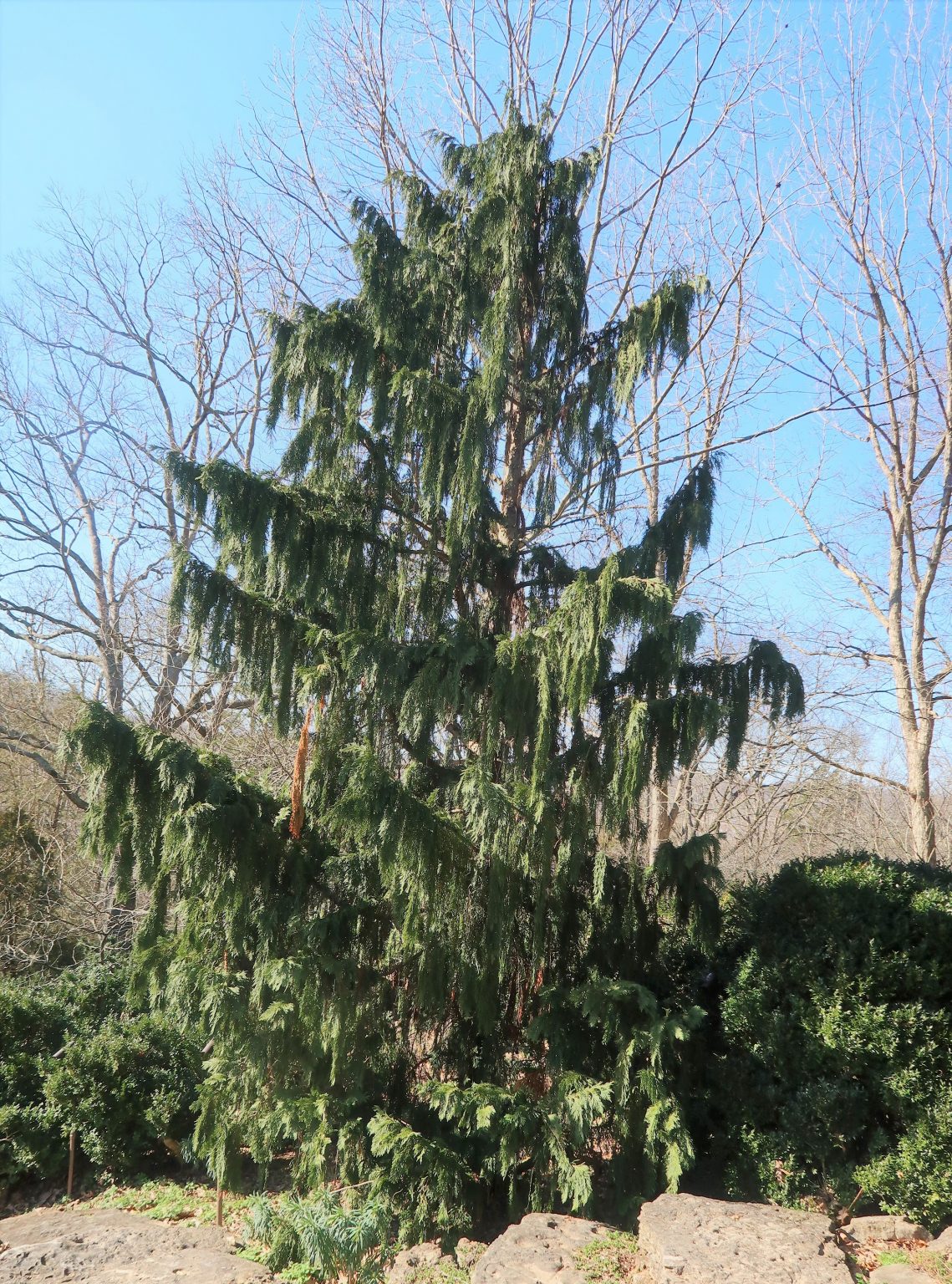
Weeping Alaskan Cedar (Callitropsis nootkatensis ‘Pendula’)

Bloom Time: April

Sun Requirement: Full sun

Water Requirement: Medium

Wildlife: Provides cover for birds, small mammals

Tolerates: Strong winds, alkaline soil, and shade

Native to North America: Yes

Zones: 4 – 7

Other: Sometimes known as Cupressus (or Xanthocyparis) nootkatensis. Drought tolerant once established. Outstanding specimen tree. Male cones and female flowers exist on same tree.

Location: Martin Boxwood Gardens

Chamaecyparis-nootkatensis-2-1-1139x1536

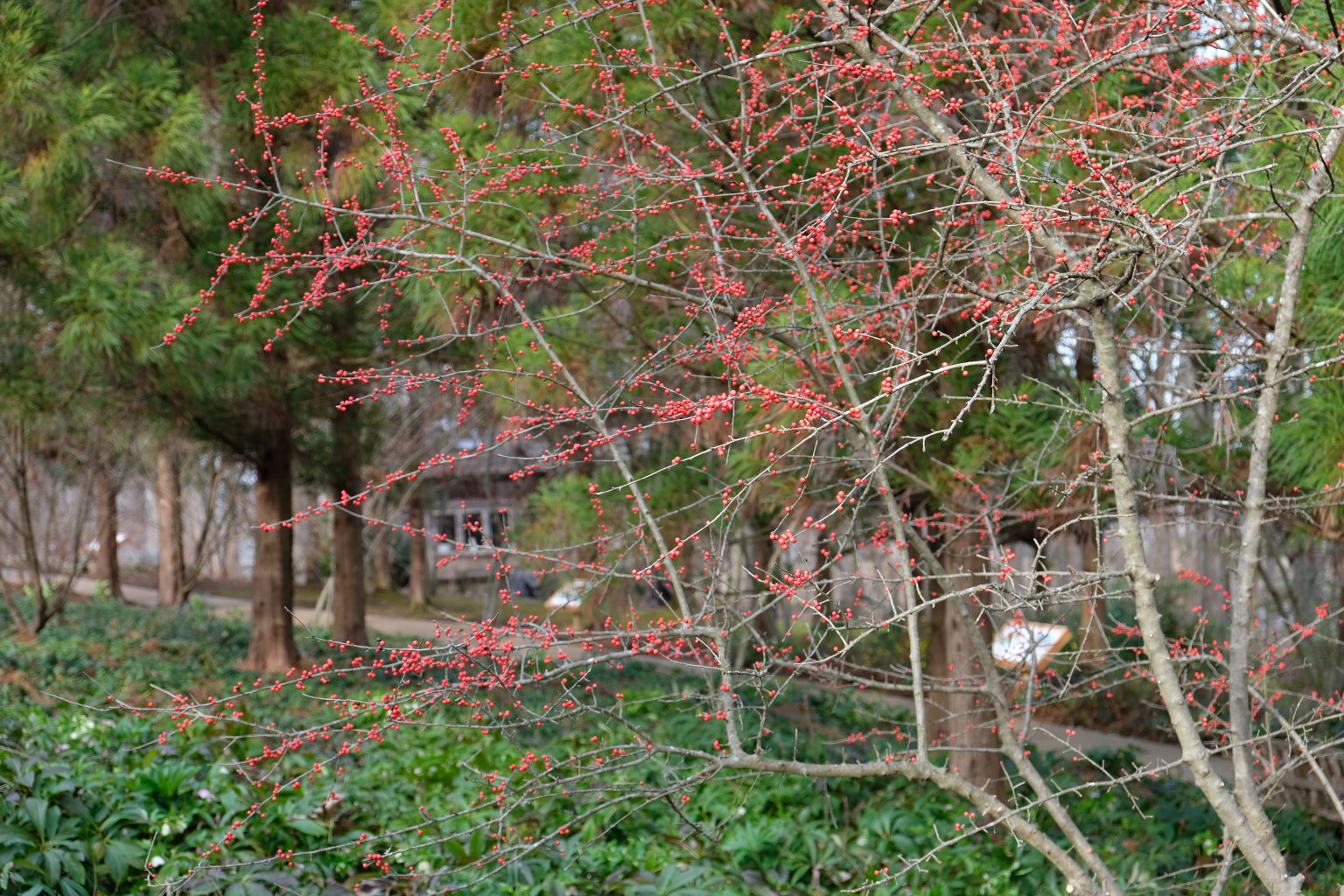
Possumhaw (Ilex decidua ‘Warren’s Red’)

Bloom Time: May

Sun Requirement: Full sun

Water Requirement: Medium

Wildlife: Birds, deer, possums & other small mammals eat the fruit.

Tolerates: Clay soil & low pH

Native to North America: Yes

Zones: 5 – 9

Other: A deciduous holly, the berries provide exceptional winter interest. Excellent component for rain gardens.

Location: Turner Seasons Garden

2004-0707-Ilex-decidua-3-2-1536x1024

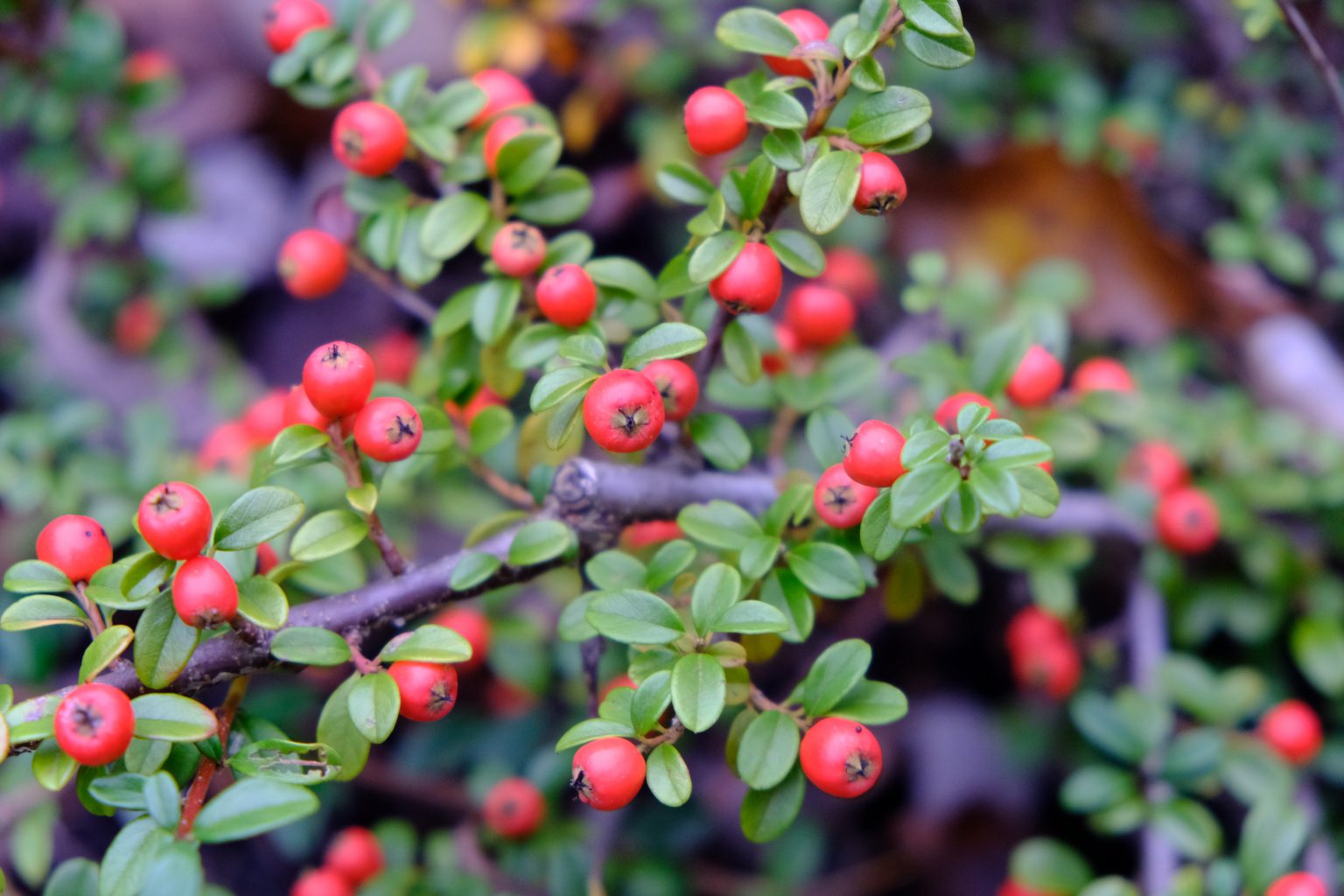
Bearberry Cotoneaster (Cotoneaster dammeri ‘Coral Beauty’)

Bloom Time: May – June

Sun Requirement: Full sun – part shade

Water Requirement: Medium

Wildlife: Butterflies

Tolerates: Drought & Deer

Native to North America: No

Zones: 5 – 8

Other: Tough Plant! Excellent evergreen, woody groundcover used for erosion control.

Location: Blevins Japanese Garden

Cotoneaster-dammeri-Coral-Beauty-2020-0607-JA-13-1-1-1536x1024
test

Top Plant Picks November 2021

Top Plant Picks November 2021

Fall is the perfect time to check out all the color in the gardens! Cheekwood’s Plant Collections Manager, Shanna Jones, shares her top plant picks for November.

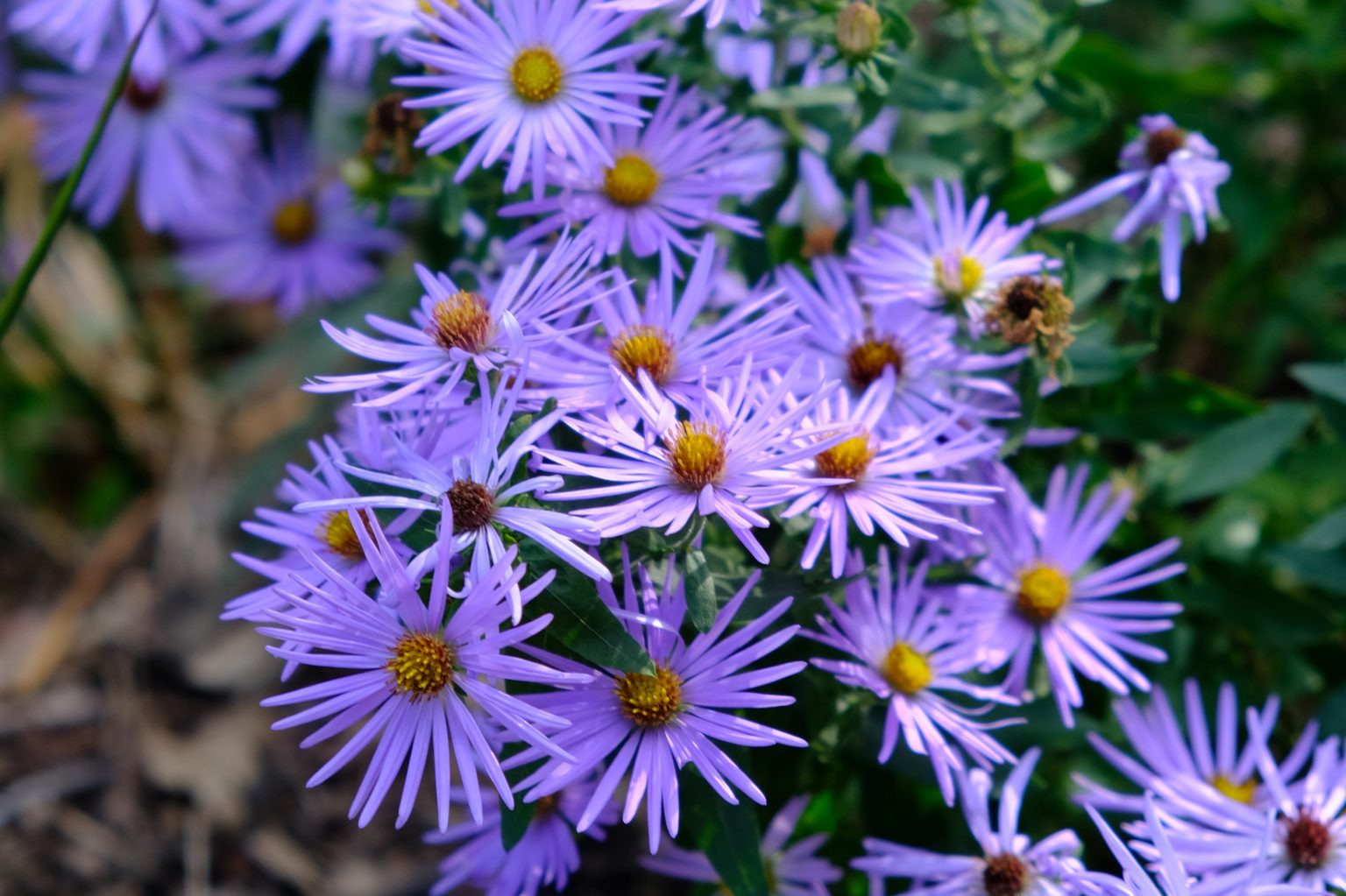
Aster (Aster oblongifolius ‘Raydon’s Favorite’)

Bloom Time: October – November

Sun Requirement: Full sun

Water Requirement: Dry – medium

Wildlife: Bees & butterflies

Tolerates: Deer & rabbits

Native to North America: Yes

Zones: 3 – 8

Other: Wonderful selection for late season color; plant in masses for best effect

Location: Howe Garden & Bracken Foundation Children’s Garden

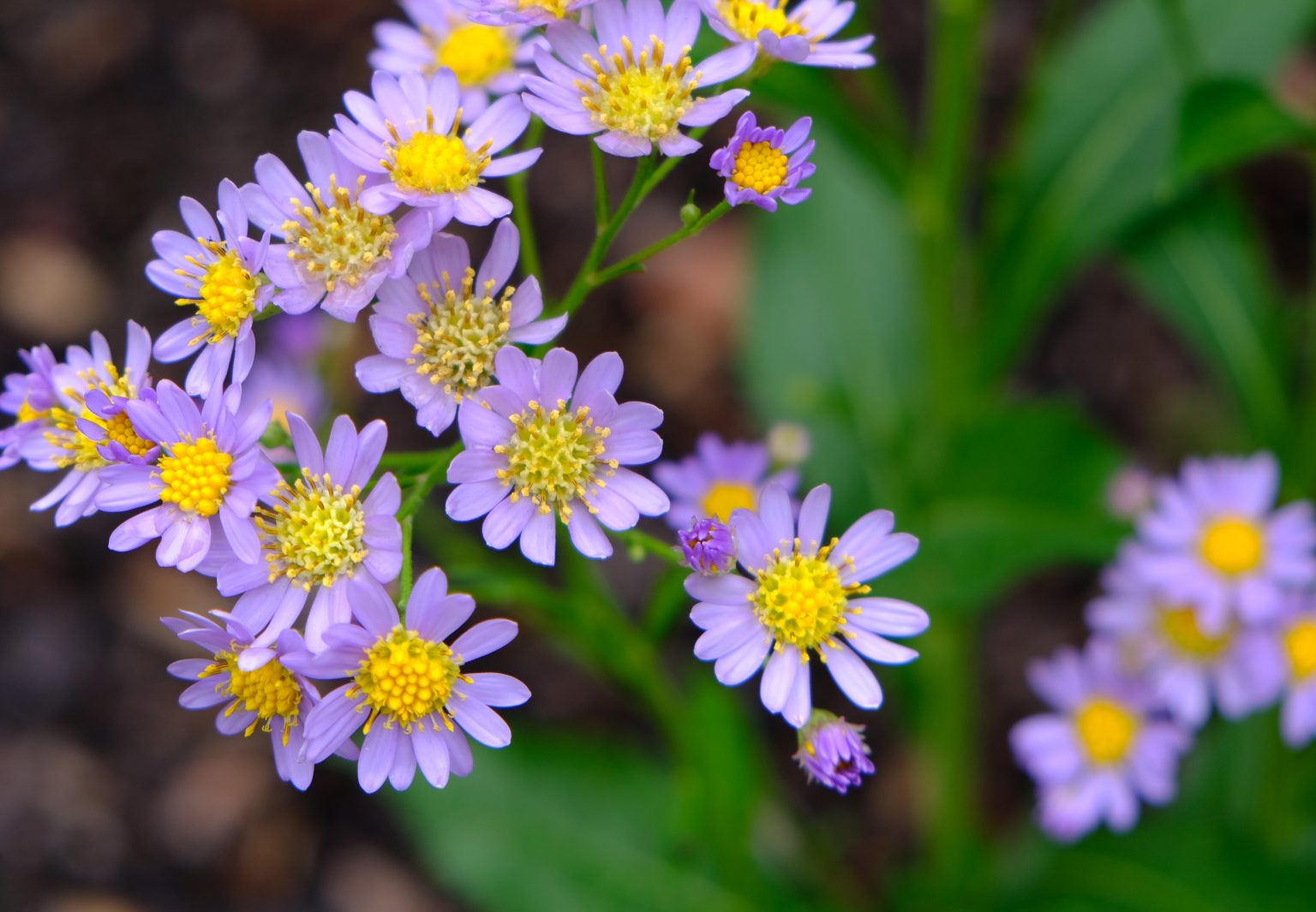
Aster-oblongifolius-Raydons-Favorite-3-1-1536x1023

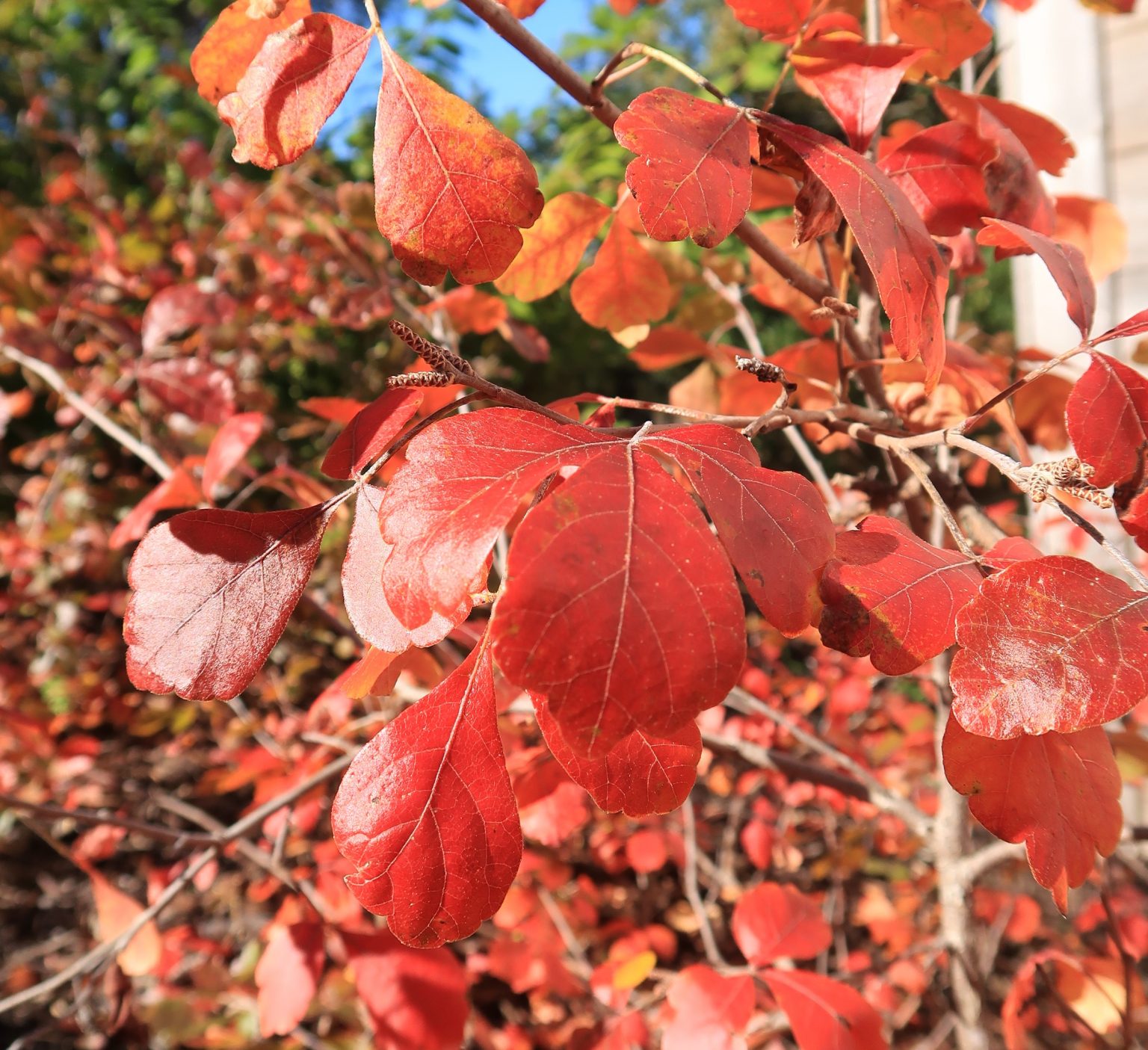
Fragrant Sumac (Rhus aromatica ‘Gro-Low’)

Bloom Time: March – April

Sun Requirement: Full sun – part shade

Water Requirement: Medium – dry

Wildlife: Berries provide winter nourishment for small mammals and birds.

Tolerates: Drought & erosion

Native to North America: Yes

Zones: 3 – 9

Other: Magnificent fall color. Four-season interest.

Location: The Carell Trail (Tree Poem)

Rhus-aromatica-Gro-low-2020-0280-FLC8-1-1536x1405-1

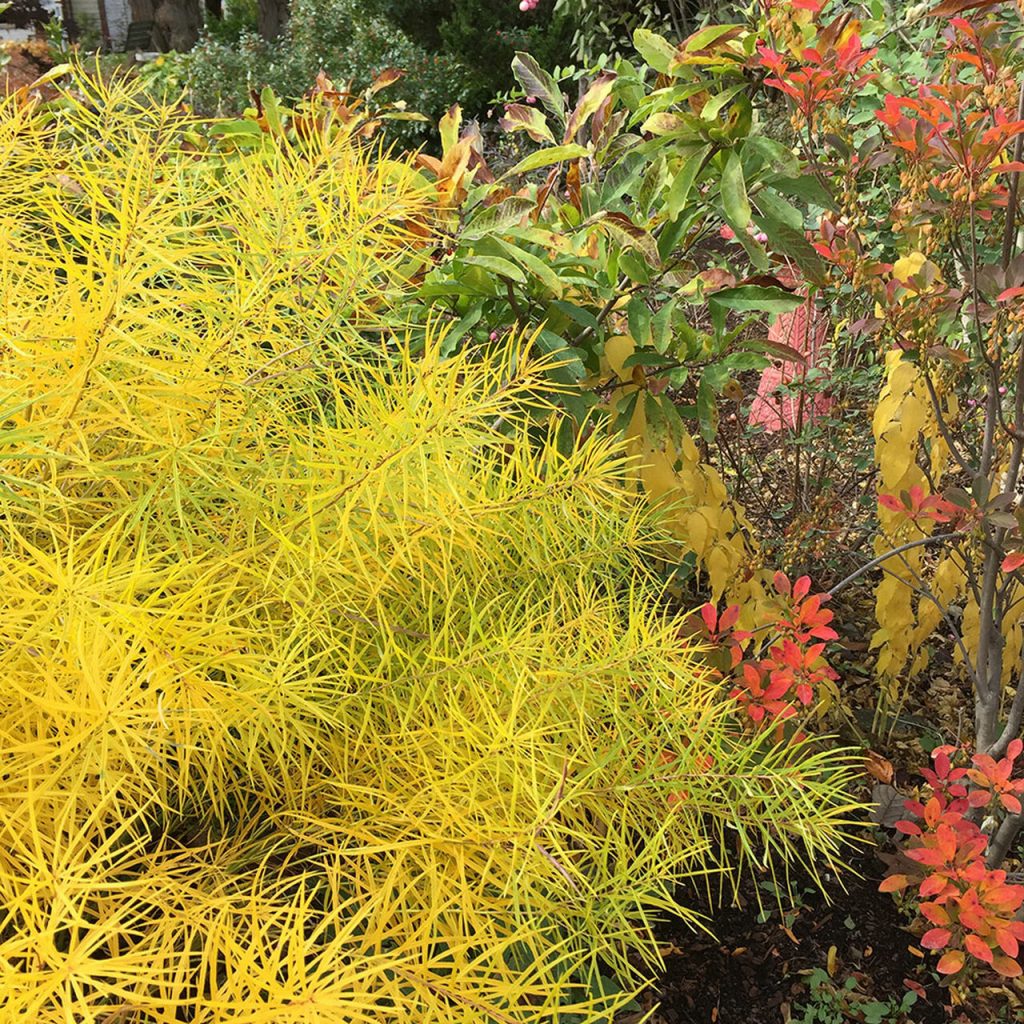
Arkansas Amsonia (Amsonia hubrichtii)

Bloom Time: April – May

Sun Requirement: Full sun – part shade

Water Requirement: Medium

Wildlife: Butterflies

Tolerates: Deer

Native to North America: Yes

Zones: 5 – 8

Other: Golden fall color. Cut back to half after flowering to avoid floppiness.

Location: Carell Dogwood Garden & Howe Garden

amsonia-hubrichtii__97784.1615306478-1-1024x1024

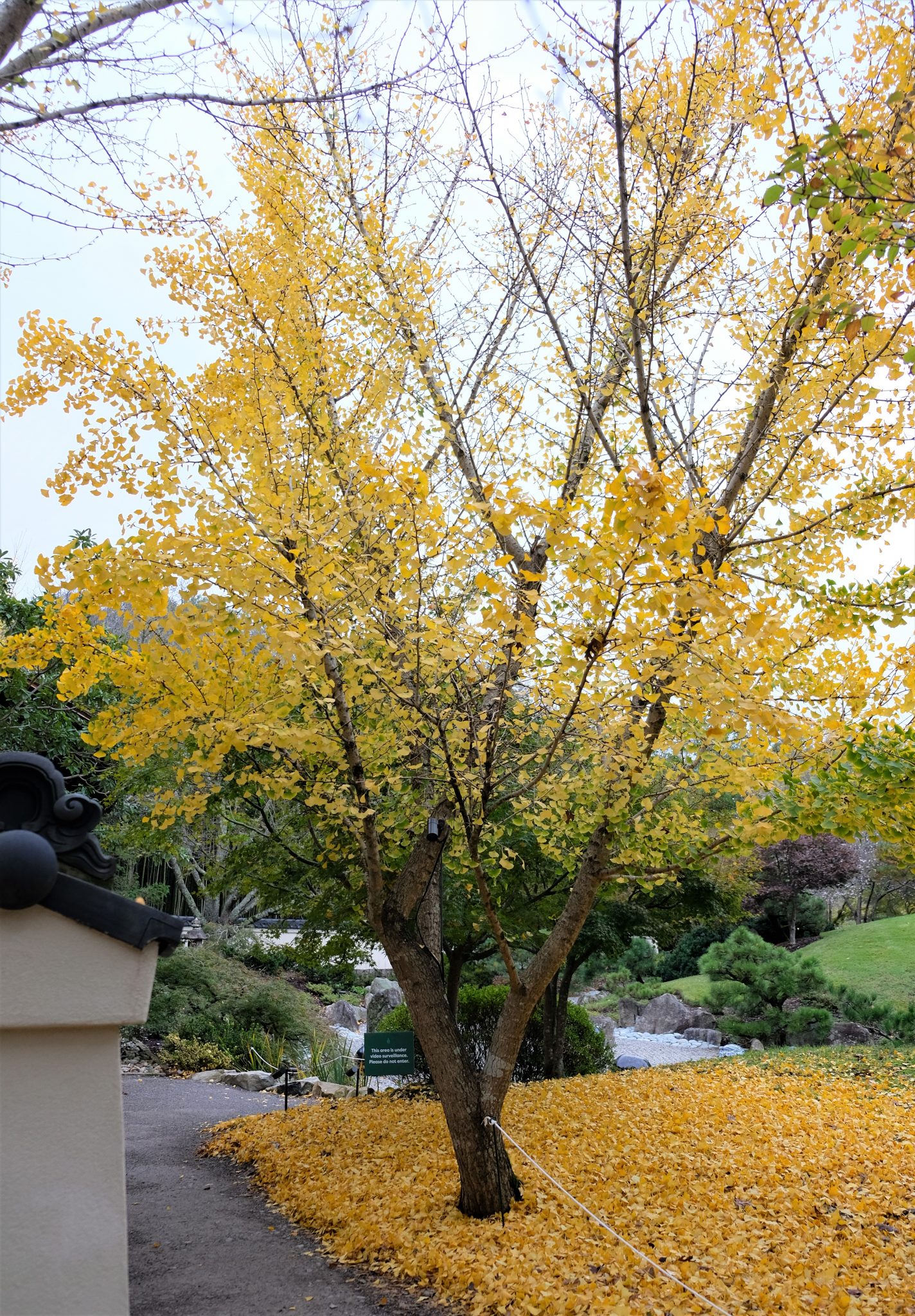
Maidenhair Tree (Ginkgo biloba)

Bloom Time: March – April

Sun Requirement: Full sun

Water Requirement: Medium

Tolerates: Deer

Native to North America: No

Zones: 4 – 8

Other: Exceptional yellow fall color. Female trees produce messy and foul-smelling fruit.

Location: Reflecting Pool & Blevins Japanese Garden

Ginkgo-biloba-1999-1072-JAL-16-1-1-1424x2048

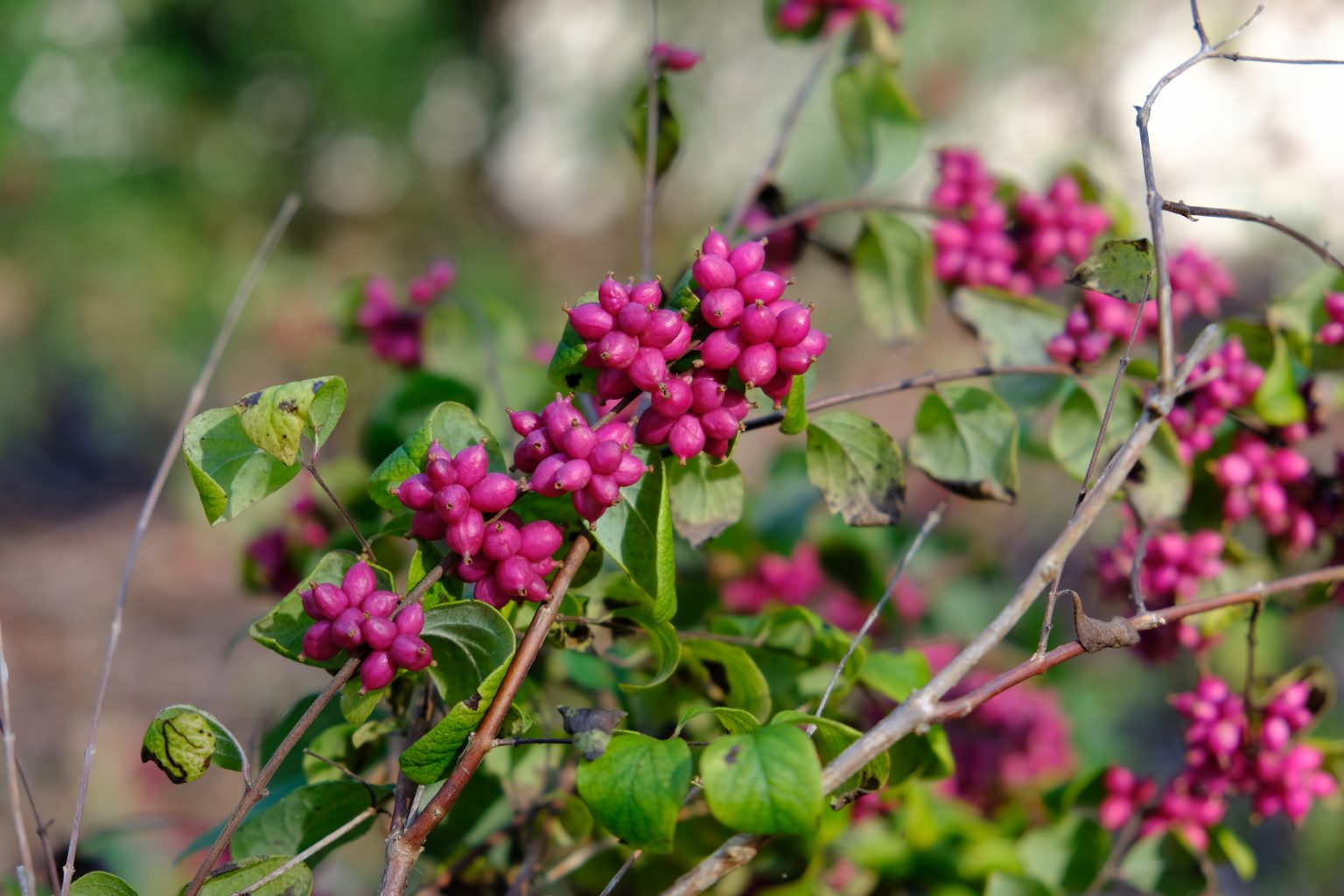
Coralberry (Symphoricarpos orbiculatus)

Bloom Time: June – July

Sun Requirement: Full sun – part shade

Water Requirement: Medium

Wildlife: Birds

Tolerates: Deer, drought, & dry soil

Native to North America: Yes

Zones: 2 – 7

Other: Excellent winter interest; use stems for floral arrangements.

Location: Bracken Foundation Children’s Garden

Symphoricarpos-orbiculatus-1-1-1536x1024

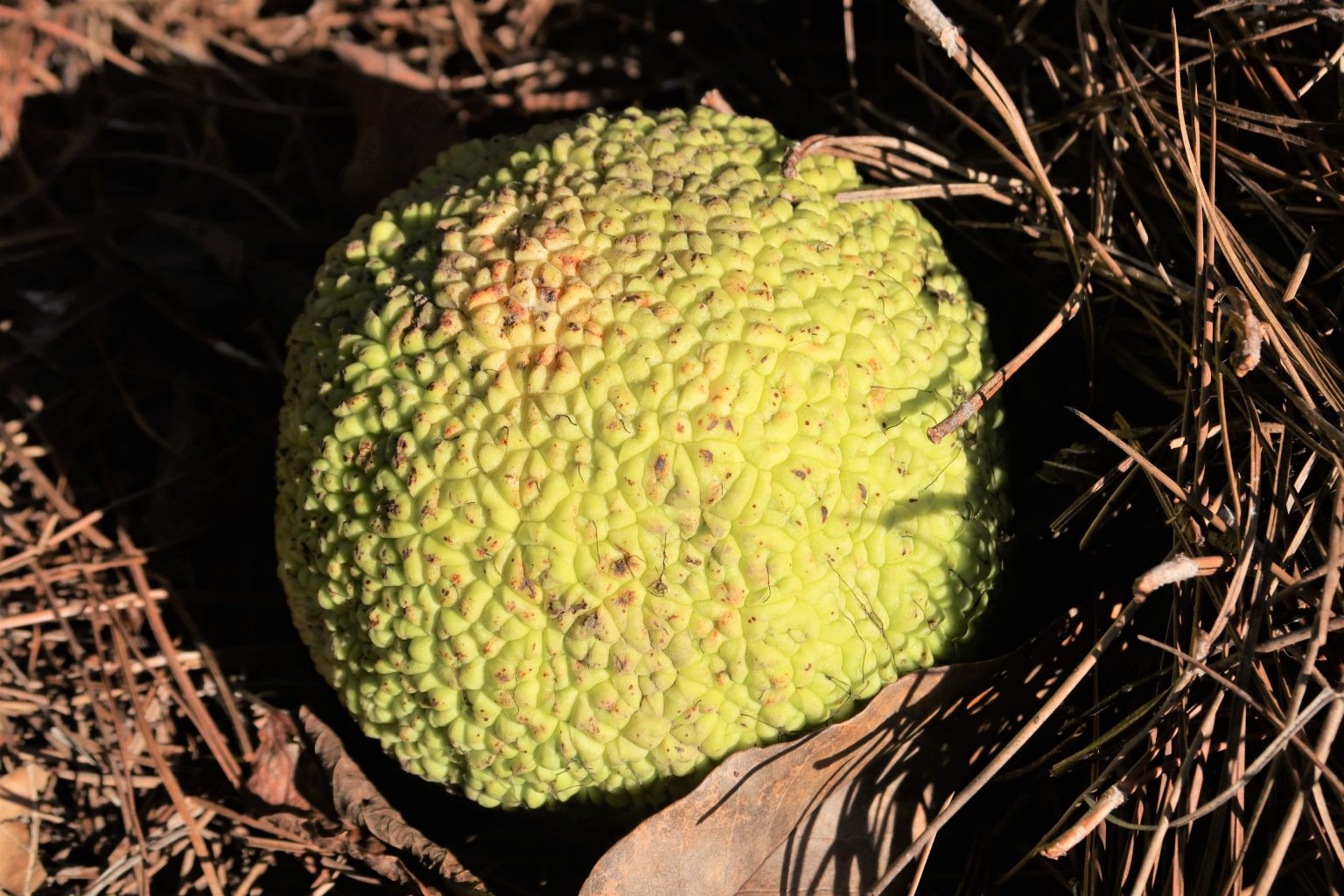
Osage Orange (Maclura pomifera)

Bloom Time: June

Sun Requirement: Full sun – part shade

Water Requirement: Medium – dry

Wildlife: Some deer & squirrels

Tolerates: Drought & poor soil

Native to North America: Yes

Zones: 4 – 9

Other: Tough tree! Thrives in poor soil. Wood is orange and resistant to decay. The seeds of the fruit are edible.

Location: Robinson Family Water Garden

Maclura-pomifera-fruit-2018-0260-WA-1-1-1536x1024

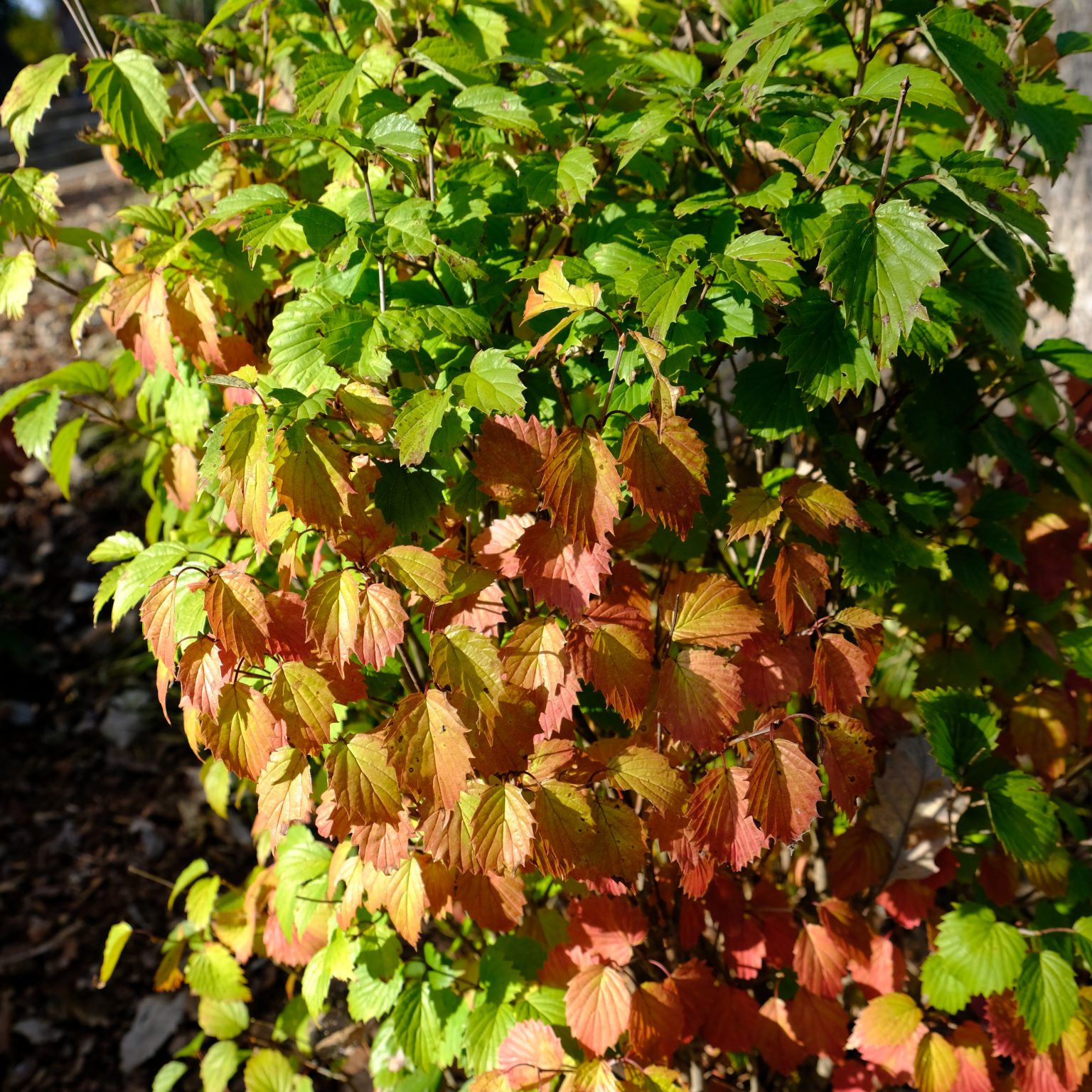
Arrowhead Viburnum (Viburnum dentatum ‘Blue Muffin’)

Bloom Time: June – July

Sun Requirement: Part sun – full sun

Water Requirement: Medium – dry

Wildlife: Birds & butterflies

Tolerates: Deer

Native to North America: Yes

Zones: 3 – 8

Other: Brilliant fall color. Berries attract birds.

Location: Bracken Foundation Children’s Garden

Viburnum-dentatum-Christom-BLUE-MUFFI5-1-1536x1536

Orange Coneflower (Rudbeckia fulgida)

Bloom Time: July – November

Sun Requirement: Full sun

Water Requirement: Medium – dry

Wildlife: Bees & butterflies

Tolerates: Drought, deer, & some shade

Native to North America: Yes

Zones: 3 – 9

Other: Plant to aid late season pollinators.

Location: Wills Perennial Garden

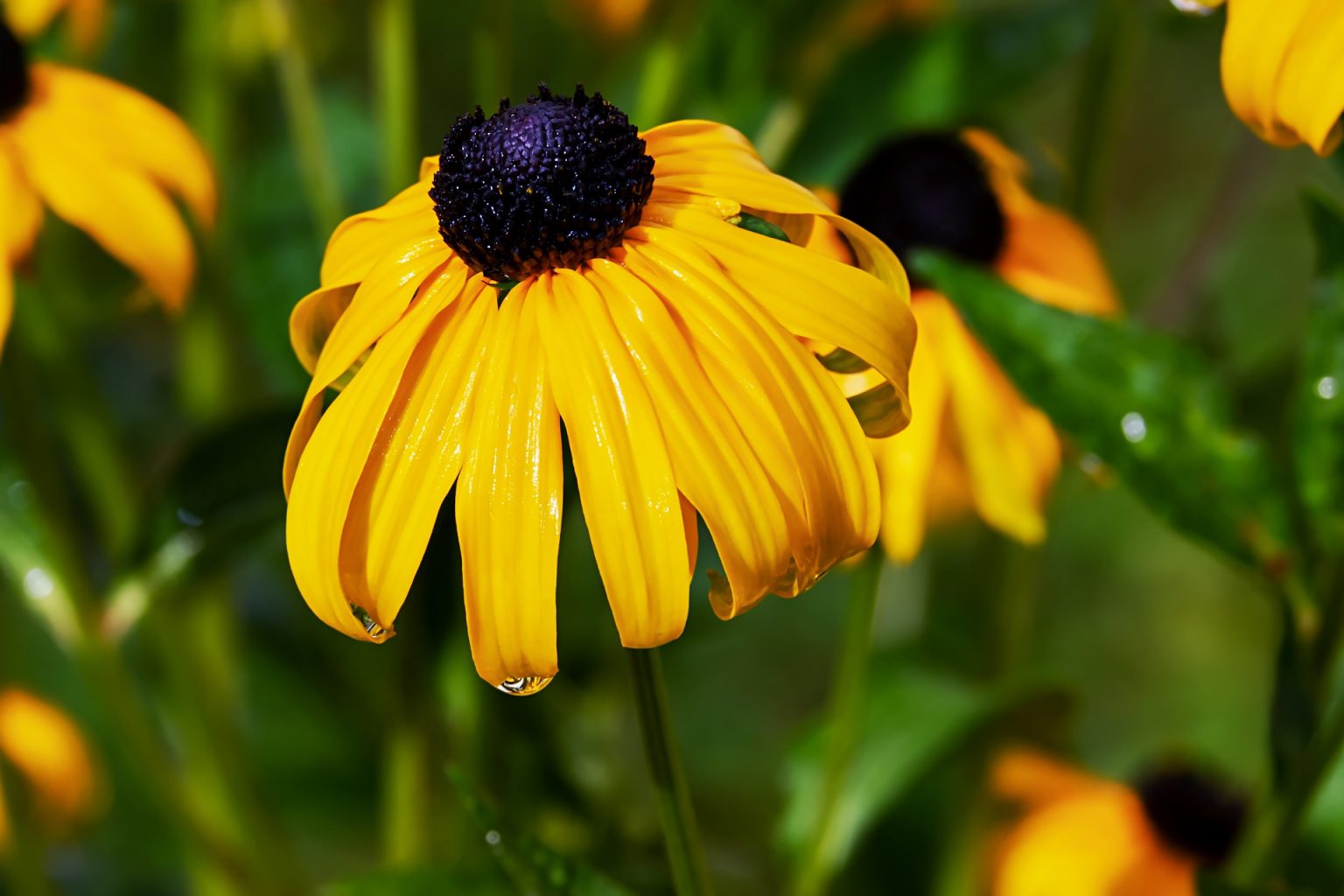
Rudbeckia-fulgida-1-1536x1024
test

Top Plant Picks October 2021

Top Plant Picks October 2021

There’s so much more than mums to see during Cheekwood Harvest! Cheekwood’s Plant Collections Manager, Shanna Jones, shares her top plant picks for October.

Chinese Abelia (Abelia chinensis)

Bloom Time: August – October

Sun Requirement: Full sun – part shade

Water Requirement: Medium

Wildlife: Butterflies & bees

Tolerates: Deer

Native to North America: No

Zones: 7 – 9

Other: Makes an effective hedge when planted in mass.

Location: Bradford Robertson Color Garden

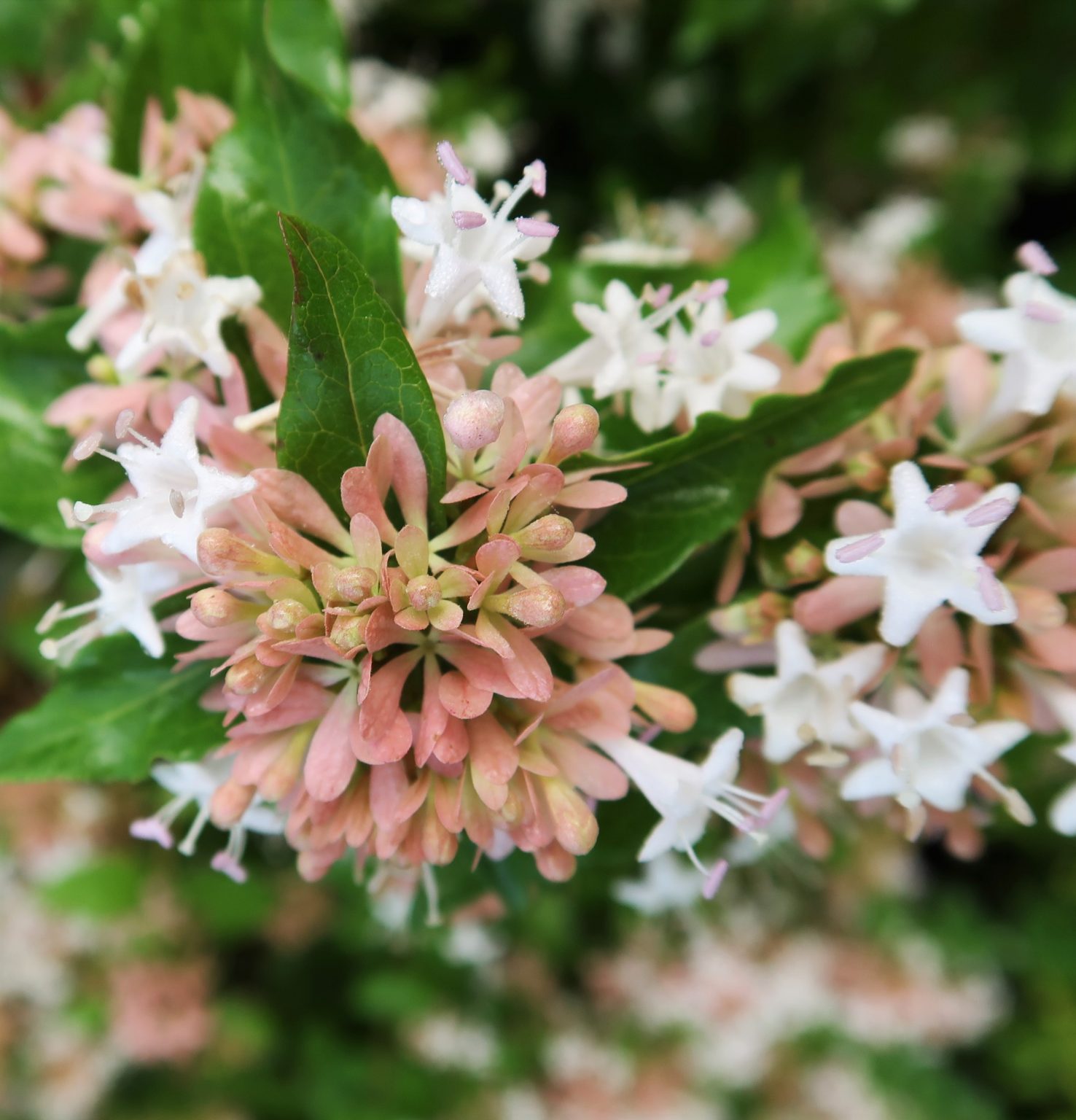
Abelia-chinensis-Color-Garden-1-1-1476x1536

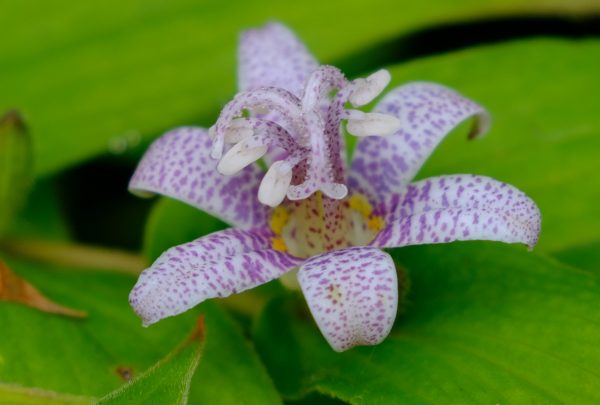
Toadlily (Tricyrtis hirta ‘Miyazaki’)

Bloom Time: August – October

Sun Requirement: Part shade – full shade

Water Requirement: Medium – wet

Wildlife: Butterflies, bees & hummingbirds

Native to North America: No

Zones: 4 – 8

Other: Plant where detailed flowers can be appreciated up close. Rabbits enjoy eating the new leaves and flower buds.

Location: Carell Dogwood Garden

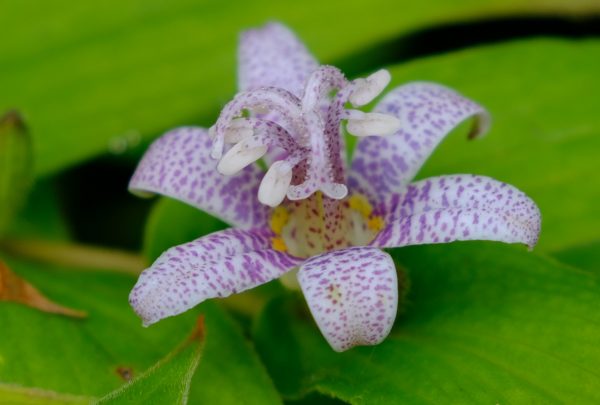
Tricyrtis-hirta-Miyazaki-1-1-e1630691566303

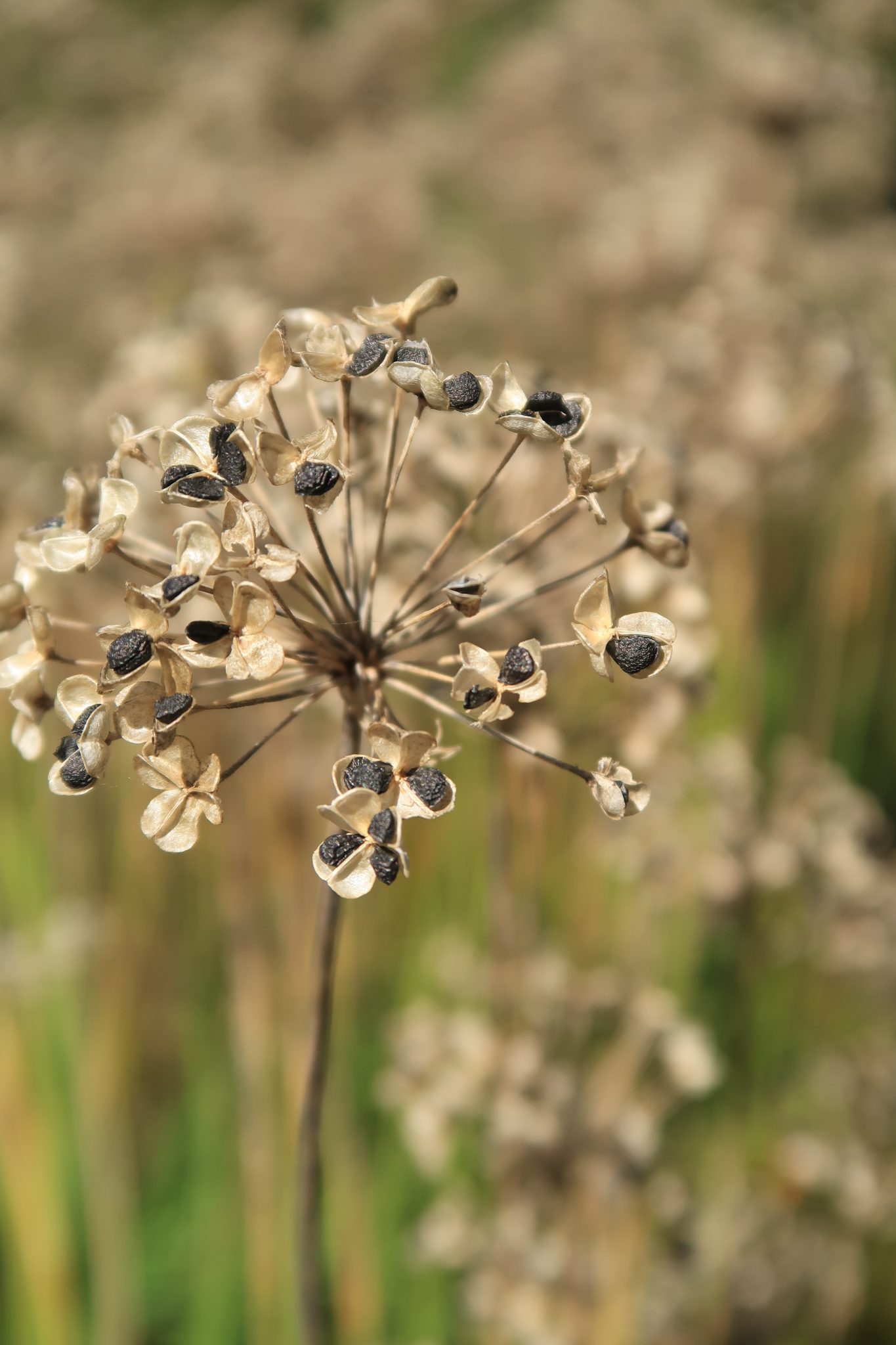
Chives (Allium schoenoprasum)

Bloom Time: April – May

Sun Requirement: Full sun – part shade

Water Requirement: Medium

Wildlife: Butterflies

Tolerates: Deer & drought

Native to North America: Yes

Zones: 4 – 8

Other: Seed heads provide attractive garden interest in the fall

Location: Wills Perennial Garden

Allium-schoenoprasum-WI6-1-1365x2048

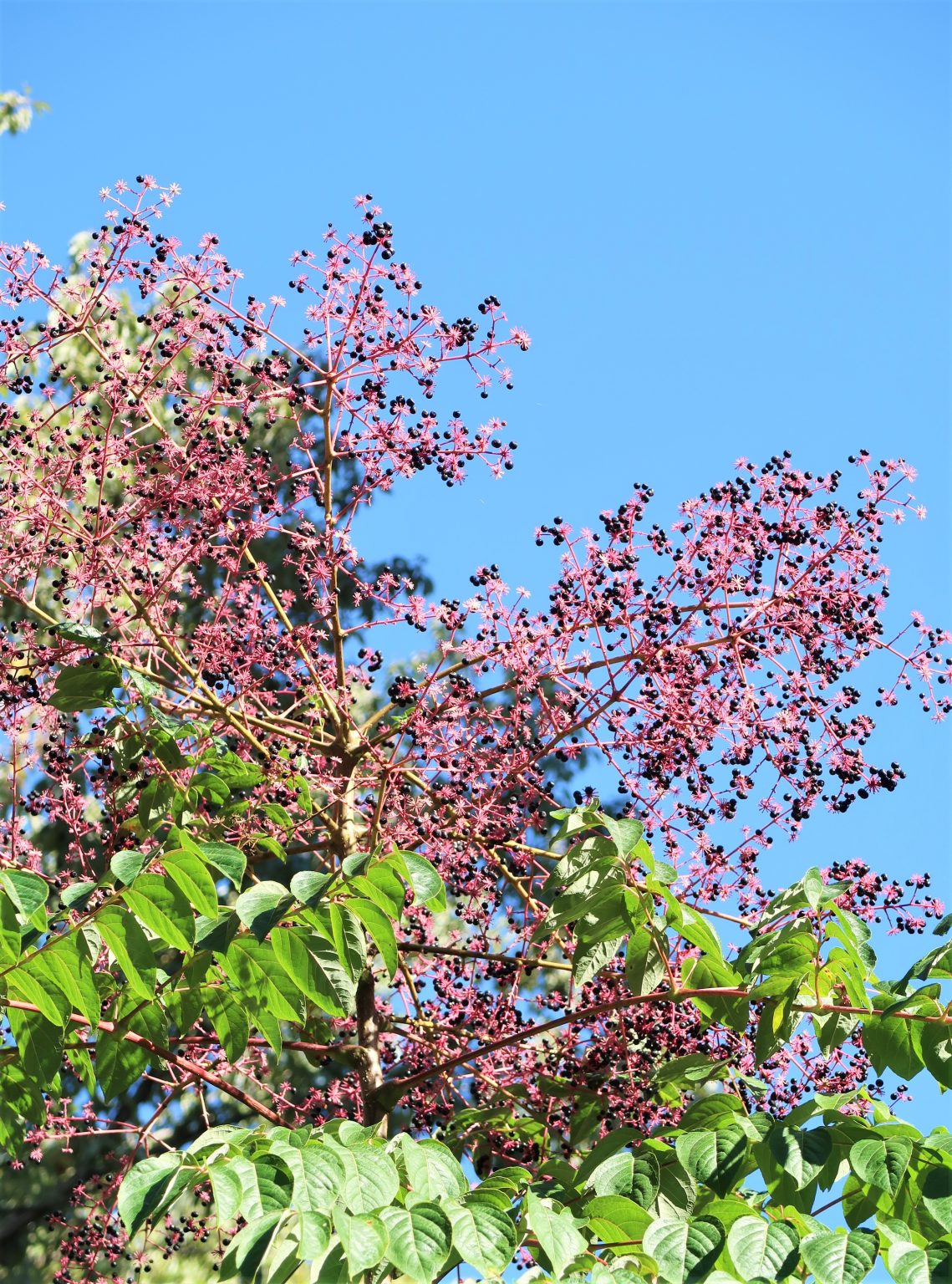
Devil’s Walking Stick (Aralia spinosa)

Bloom Time: July – August

Sun Requirement: Full sun – part shade

Water Requirement: Medium

Wildlife: Birds

Tolerates: Drought

Native to North America: Yes

Zones: 4 – 9

Other: Leaves present a tropical effect. Fruit is an excellent food source for birds.

Location: Ann & Monroe Carell Jr. Family Sculpture Trail & Herb Study Garden

Aralia-spinosa-2020-0281-HS5-1-1139x1536

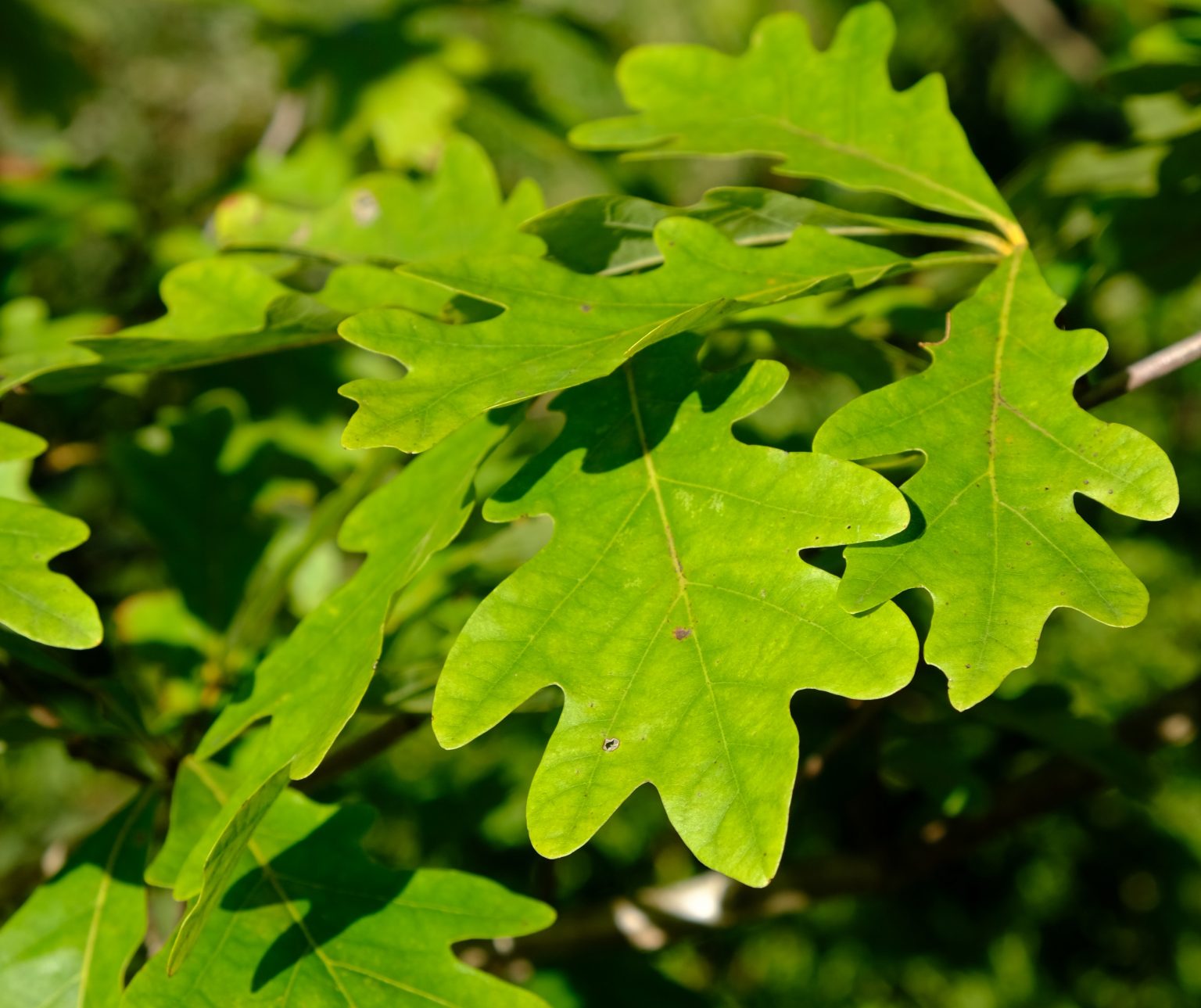
White Oak (Quercus alba)

Bloom Time: May – June

Sun Requirement: Full sun – part shade

Water Requirement: Dry – medium

Wildlife: Acorns provide fruit for a variety of wildlife

Tolerates: Drought, dry soil

Native to North America: Yes

Zones: 3 – 9

Other: The white oak is commonly used as a street tree and makes a picturesque shade tree at maturity.

Location: Sigourney Cheek Literary Garden

2020-0679-Quercus-alba-13-1-1536x1289

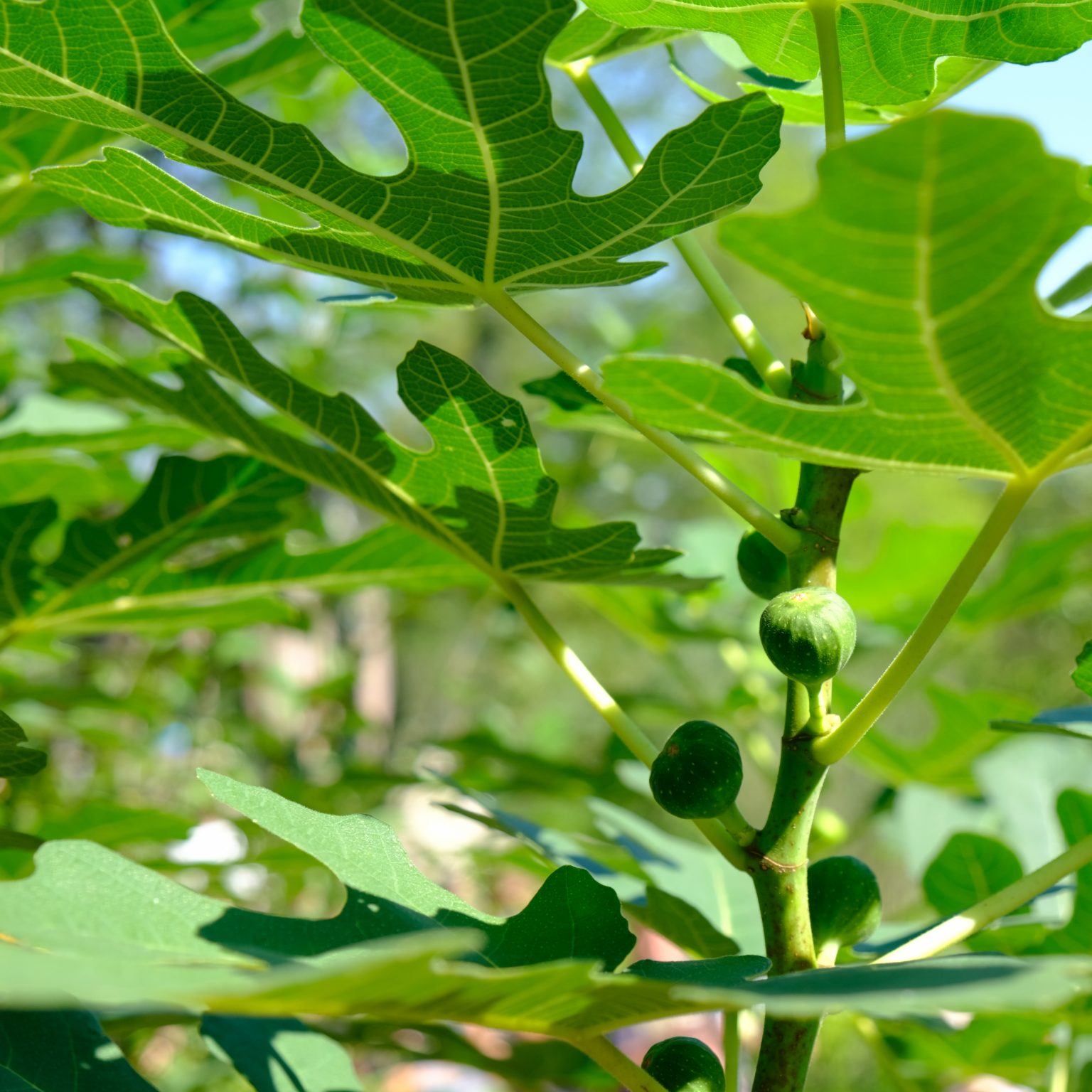
Fig (Ficus carica ‘Chicago Hardy’)

Bloom Time: Spring – inconspicuous

Sun Requirement: Full sun – part shade

Water Requirement: Medium

Wildlife: Birds

Tolerates: Colder temps than any other F. carica

Native to North America: No

Zones: 6 – 10

Other: Produces fruit in late summer or early fall. ‘Chicago Hardy’ is the most cold-hardy of the species.

Location: Bracken Foundation Children’s Garden

Ficus-carica-Chicago-Hardy-2-1-1536x1536

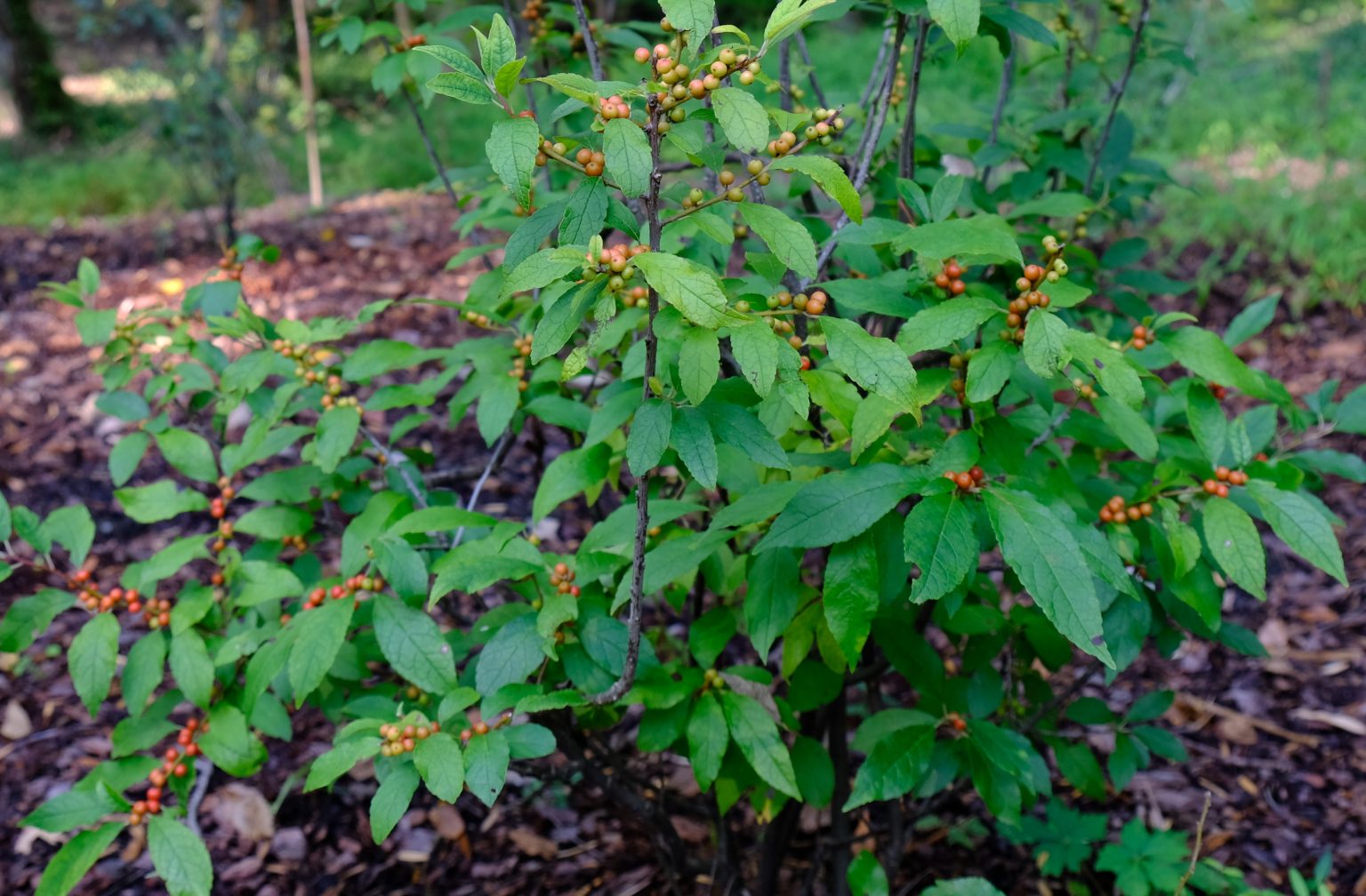
Winterberry (Ilex verticillata)

Bloom Time: June – July

Sun Requirement: Full sun – part shade

Water Requirement: Medium – wet

Wildlife: Birds

Tolerates: Wet soil

Native to North America: Yes

Zones: 3 – 9

Other: Be sure to plant at least one male in a grouping to ensure berry production occurs.

Location: Ann & Monroe Carell Jr. Family Sculpture Trail & Howe Garden

Ilex-verticillata-8-1-1536x1008

Tartarian Aster (Aster tartaricus ‘Jindai’)

Bloom Time: September – October

Sun Requirement: Full sun

Water Requirement: Medium

Wildlife: Butterflies

Tolerates: Disease and insect damage

Native to North America: No

Zones: 4 – 8

Other: This cultivar seldom needs summer pinching to control height as long as it is grown in full sun.

Location: Bracken Foundation Children’s Garden

Aster-tataricus-JindaiCH-25-2-1-1536x1065
test

Top Plant Picks September 2021

Top Plant Picks September 2021

As the autumn season sets in, our gardens become a canvas for fall florals. From cardinal flowers to the ever-popular chrysanthemums that steal the show, there’s so much to see in our gardens this month. Cheekwood’s Plant Collections Manager, Shanna Jones, shares her top plant picks for September.

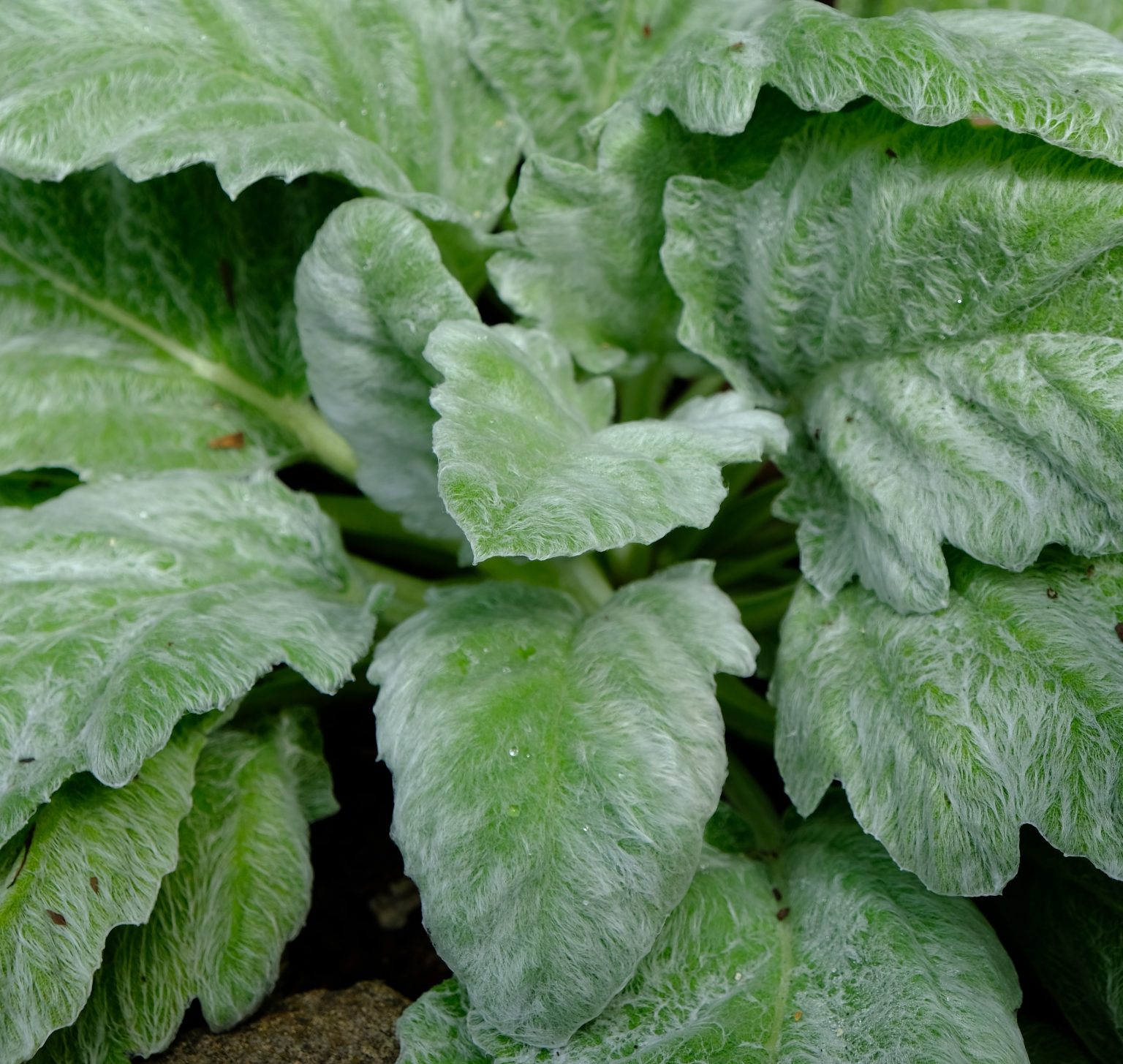
Salvia argentea

Bloom Time: May – June

Sun Requirement: Full sun

Water Requirement: Dry – Medium

Tolerates: Drought, deer, rabbit

Native to North America: No

Other: Short-lived perennial. Adds fantastic interest to the garden with both texture and color

Location: Herb Study Garden: Blue and Silver

Salvia-argentea-1-1-1536x1455

Toad Lily (Tricyrtis hirta ‘Miyazaki’)

Bloom Time: August – September

Sun Requirement: Part shade – full shade

Water Requirement: Medium – wet

Wildlife: Butterflies & bees

Tolerates: Good disease and pest resistance

Native to North America: No

Zones: 4 – 8

Other: Plant in front borders where the flowers can be best appreciated. For best performance, plant in moist, organic, rich soil. Will naturalize in optimal conditions.

Location: Carell Dogwood Garden

Tricyrtis-hirta-Miyazaki-1-1-e1630691566303

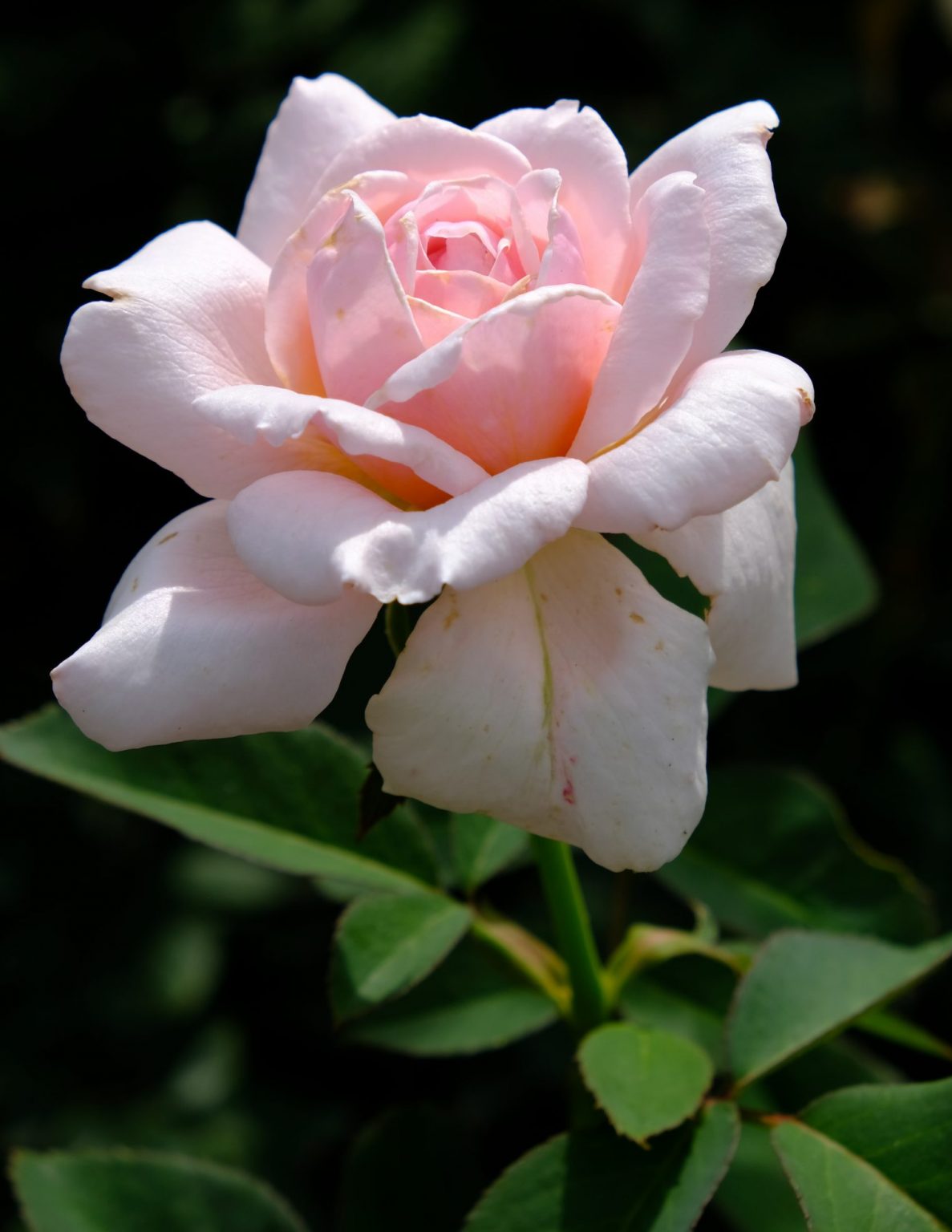
Shrub Rose (Rosa ‘Quietness’)

Bloom Time: May – October

Sun Requirement: Full sun

Water Requirement: Medium

Wildlife: Butterflies

Native to North America: No

Zones: 5 – 9

Other: Constantly blooming! Little pruning required.

Location: Rose Study Garden

Rosa-Quietness-1-scaled-e1630691759737-1187x1536

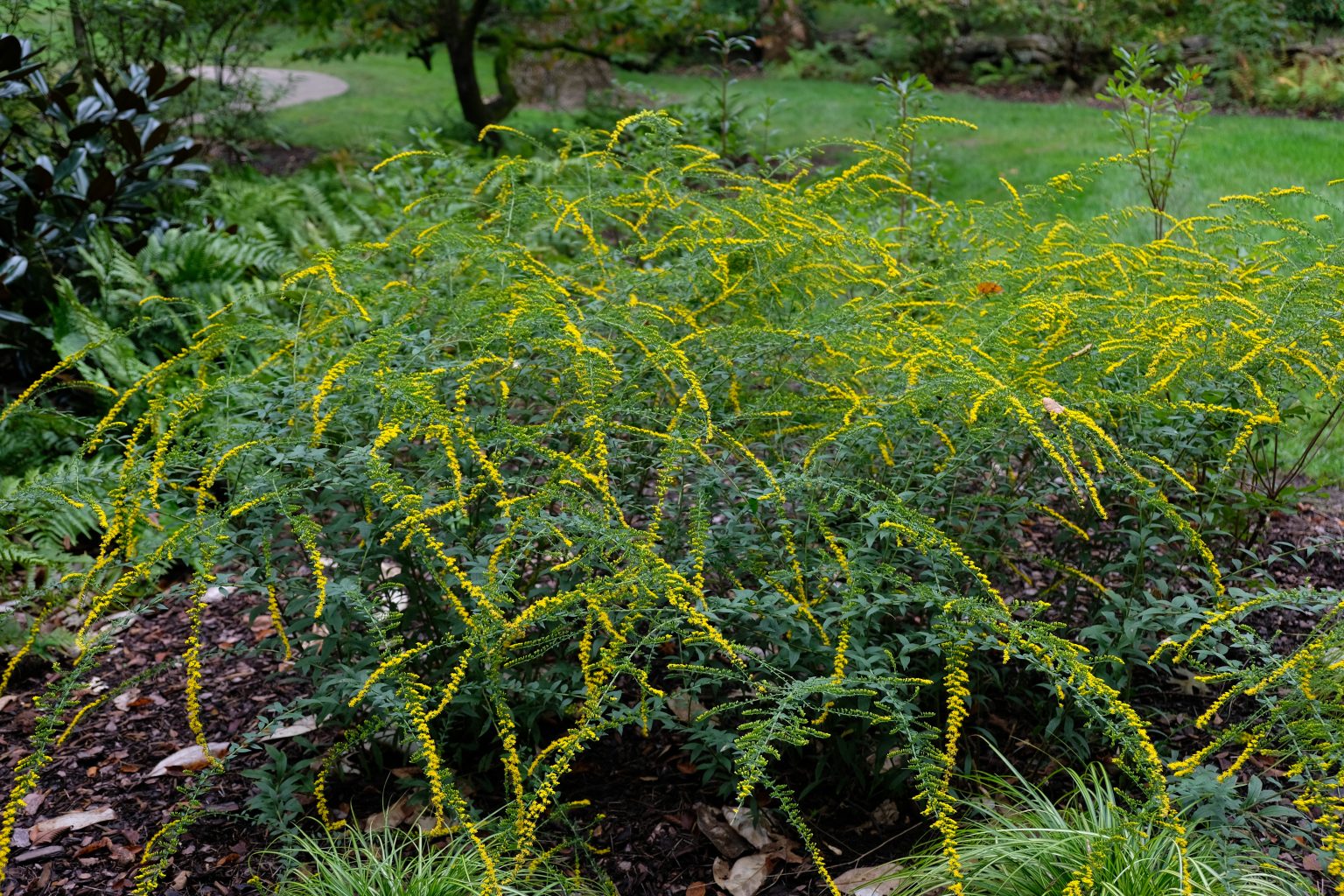
Goldenrod (Solidago rugosa ‘Fireworks’)

Bloom Time: September – October

Sun Requirement: Full sun

Water Requirement: Medium – wet

Wildlife: Butterflies & bees

Tolerates: Deer & wet soil

Native to North America: Yes

Zones: 4 – 8

Other: Graceful habit. No serious insect or disease pressures. DOES NOT cause hay fever. .

Location: Howe Garden

Solidago-HO-Sign-11-1-1536x1024

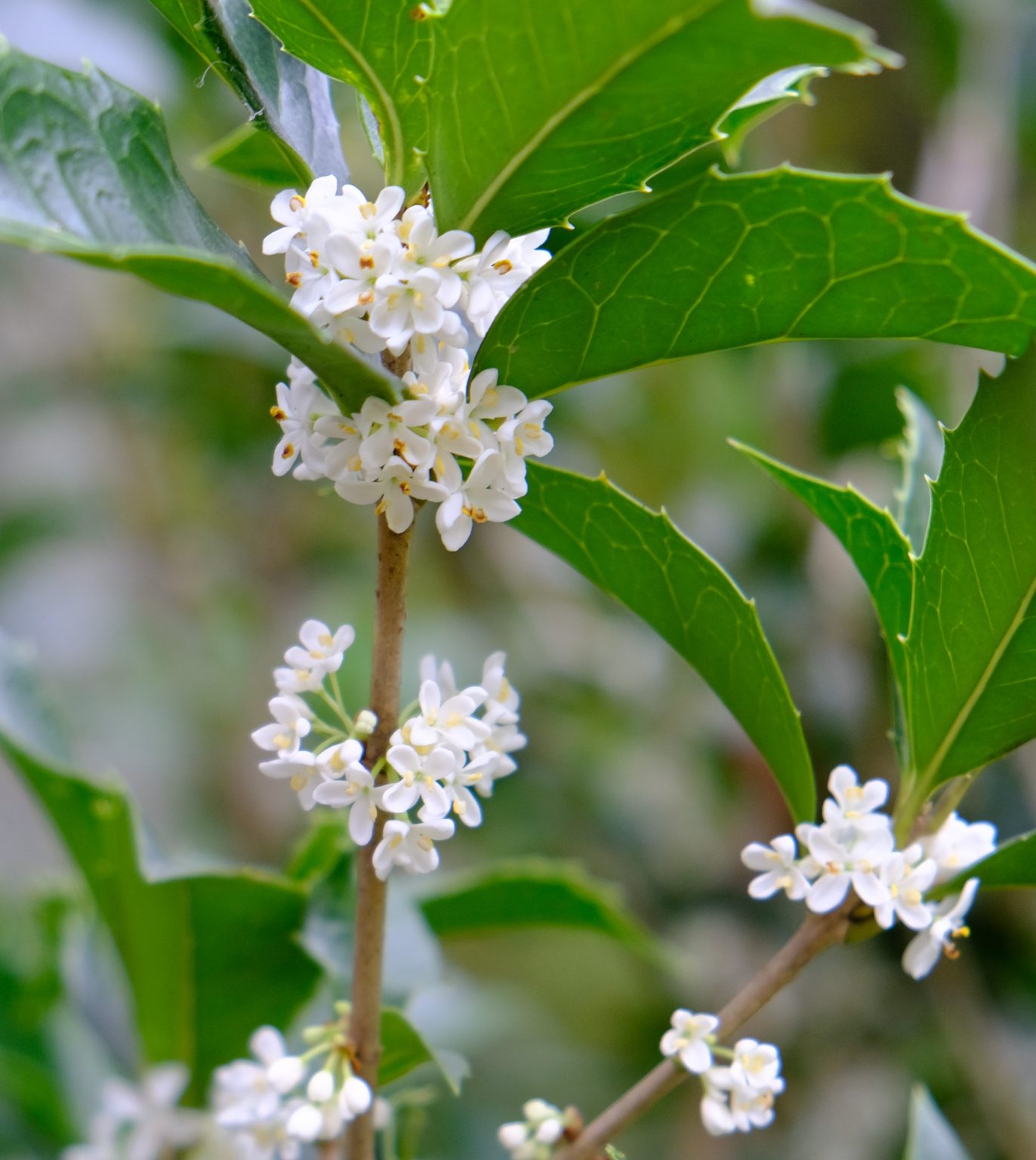
Fortune Tea Olive (Osmanthus xfortunei ‘Fruitlandii’)

Bloom Time: September – October

Sun Requirement: Full sun – part shade

Water Requirement: Medium

Wildlife: Bees

Tolerates: Deer

Native to North America: No

Zones: 7 – 9

Other: Most cold tolerant species of Osmanthus. Extremely fragrant, similar to the scent of gardenia. A member of the olive family.

Location: Blevins Japanese Garden

Osmanthus-fortuei-Fruitland-JA-4-1-1372x1536

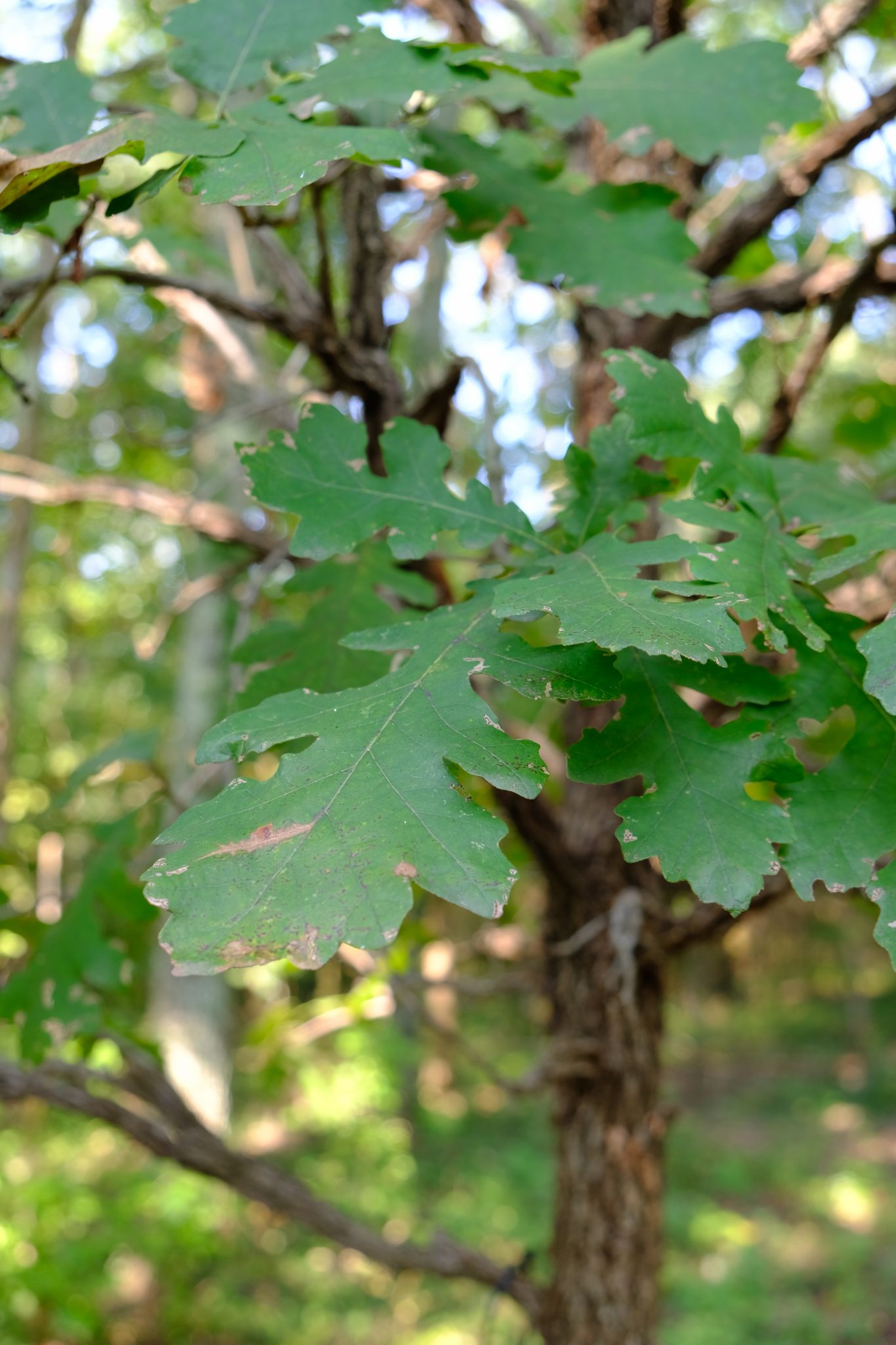
Bur Oak/Mossycup Oak (Quercus macrocarpa)

Bloom Time: April

Sun Requirement: Full sun

Water Requirement: Dry – medium

Wildlife: The acorns of this oak provide food for wood ducks, wild turkeys, white-tailed deer, rabbits, mice, squirrels and other rodents.

Tolerates: Drought & dry soil

Native to North America: Yes

Zones: 3 – 8

Other: Monoecious. Leaves can be variable in shape. Twigs are sometimes winged. Fruit is fringed.

Location: Ann & Monroe Carell Jr. Family Sculpture Trail

Quercus-macrocarpa-1-1-1365x2048

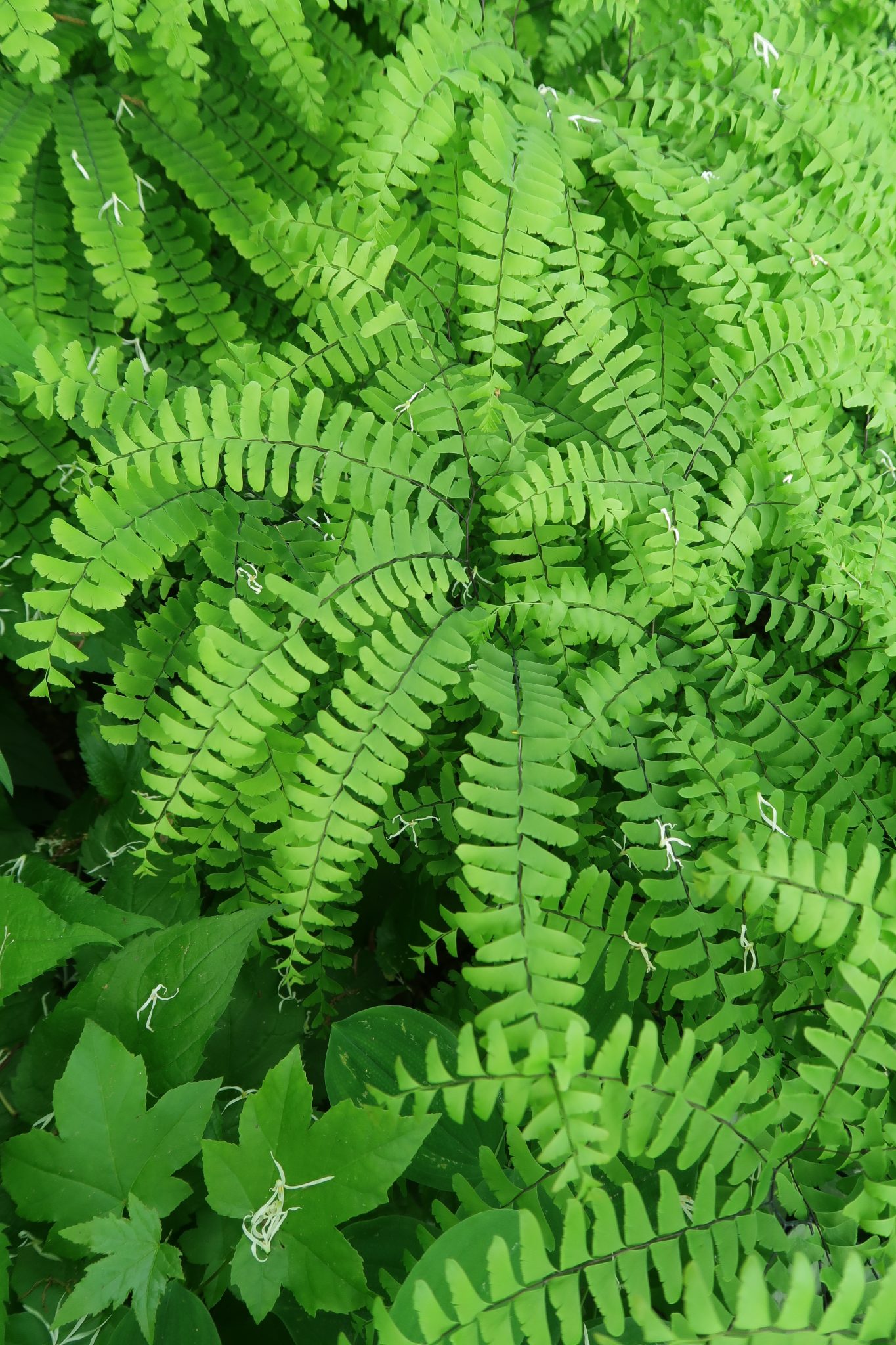
Northern Maindenhair Fern (Adiantum pedatum)

Sun Requirement: Part shade – shade

Water Requirement: Medium

Wildlife: Provides shelter for lizards and frogs.

Tolerates: Heavy shade

Native to North America: Yes

Zones: 3 – 8

Other: Beautiful, swirled frond arrangement with black stems.

Design tip: Combine with broad-leaved plants such as hostas for best effect.

Location: Howe Garden, Bracken Foundation Children’s Garden, and the Ann & Monroe Carell Jr. Family Sculpture Trail

Adiantum-pedatum-2012-0090-Howe-8-1-1365x2048

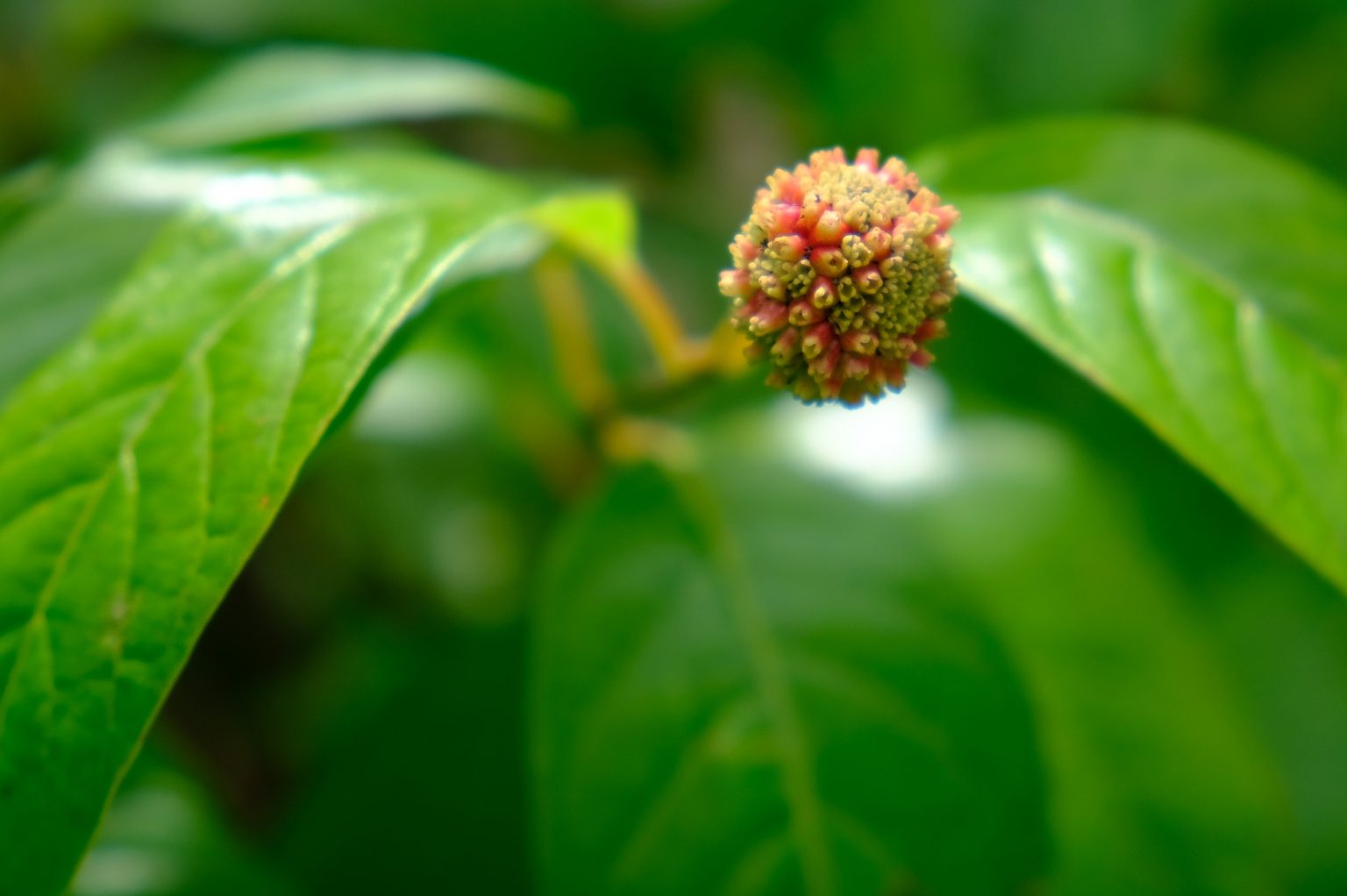
Buttonbush (Cephalanthus occidentalis ‘SMCOSS’ Sugar Shack®)

Bloom Time: June – July

Sun Requirement: Full sun – part shade

Water Requirement: Medium – wet

Wildlife: Butterflies & hummingbirds

Tolerates: Wet soil

Native to North America: Yes

Zones: 4 – 10

Other: Sugar Shack® is a compact form. Fragrant flowers. Showy fruit.

Location: Robinson Family Water Garden – Weaver Walk

Cephalanthus-occidentalis-Sugar-Shack-2-1-1536x1022
test

Top Plant Picks August 2021

Top Plant Picks August 2021

As summer continues, celebrate the season by taking a stroll through our gardens! Cheekwood’s Plant Collections Manager, Shanna Jones, shares her top plant picks for August.

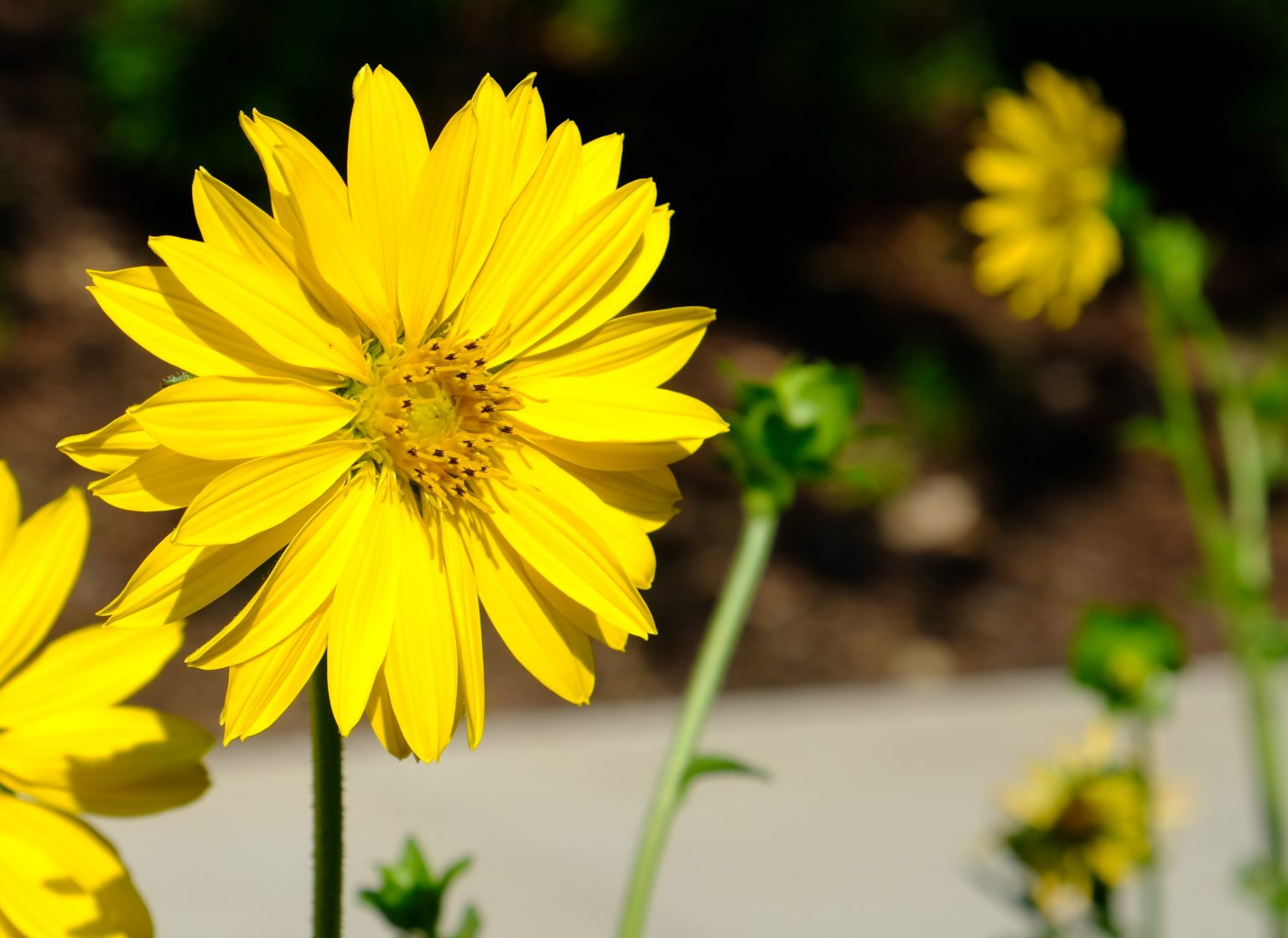
Rosinweed (Silphium asteriscus)

Bloom Time: July – October

Sun Requirement: Full sun

Water Requirement: Medium

Tolerates: Drought & Deer

Wildlife: Butterflies, bees & songbirds

Native to North America: Yes

Location: Bracken Foundation Children’s Garden

Zones: 4-8

Other:  Indigenous peoples used the sap of rosinweed to make a chewing gum.

Silphium-asteriscusCH-14-2-1536x1119

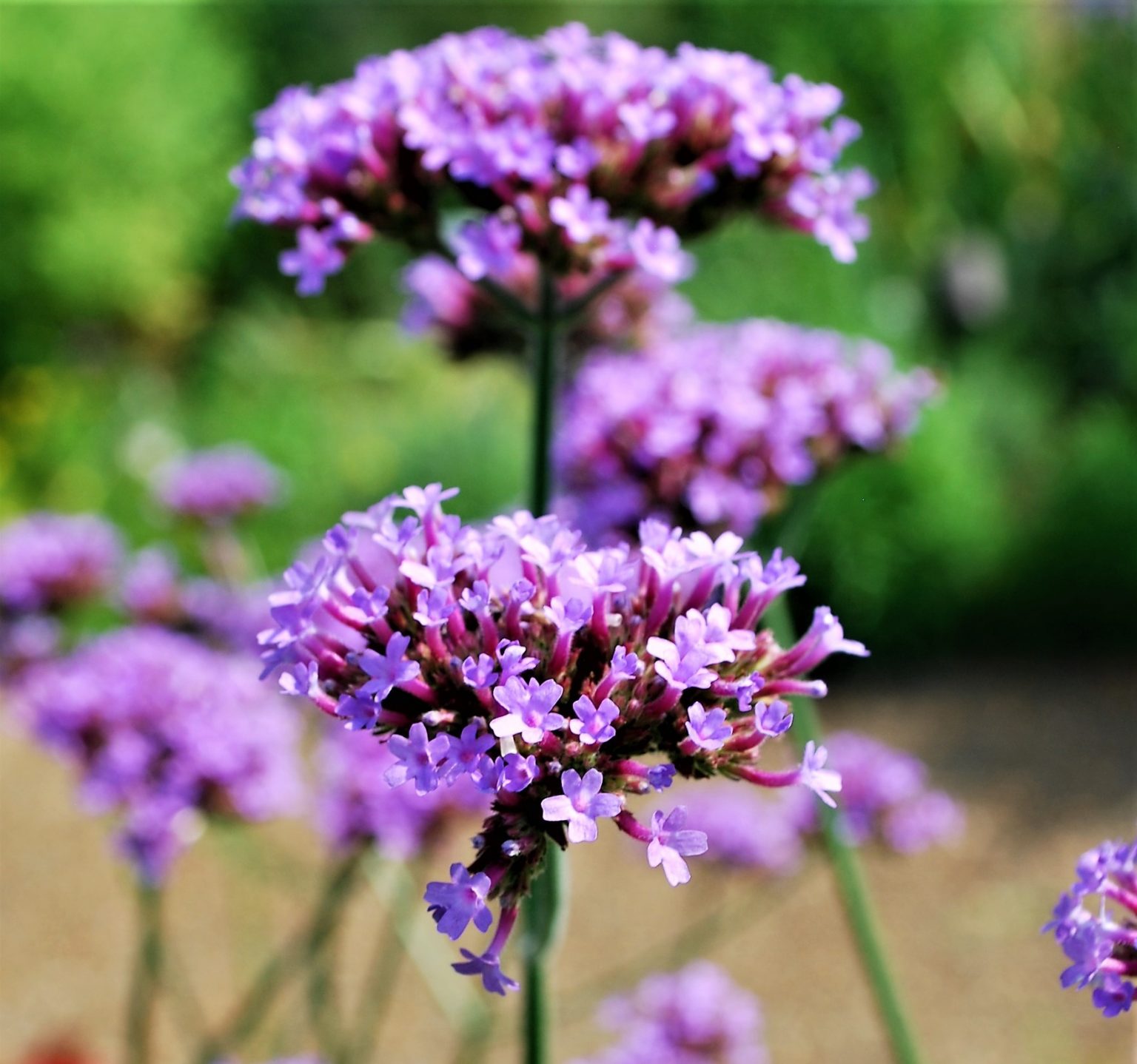
Purple Top Verbena (Verbena bonariensis)

Bloom Time:  June – Frost

Sun Requirement: Full sun – part shade

Water Requirement: Medium

Tolerates: Poor soils

Wildlife: Butterflies & Goldfinches

Native to North America: No

Location: Wills Perennial Garden

Zones: 7-11

Other:  Will self-seed and naturalize in warmer climates.

2013-0006_Verbena_-bonariensis_LI-1536x1438

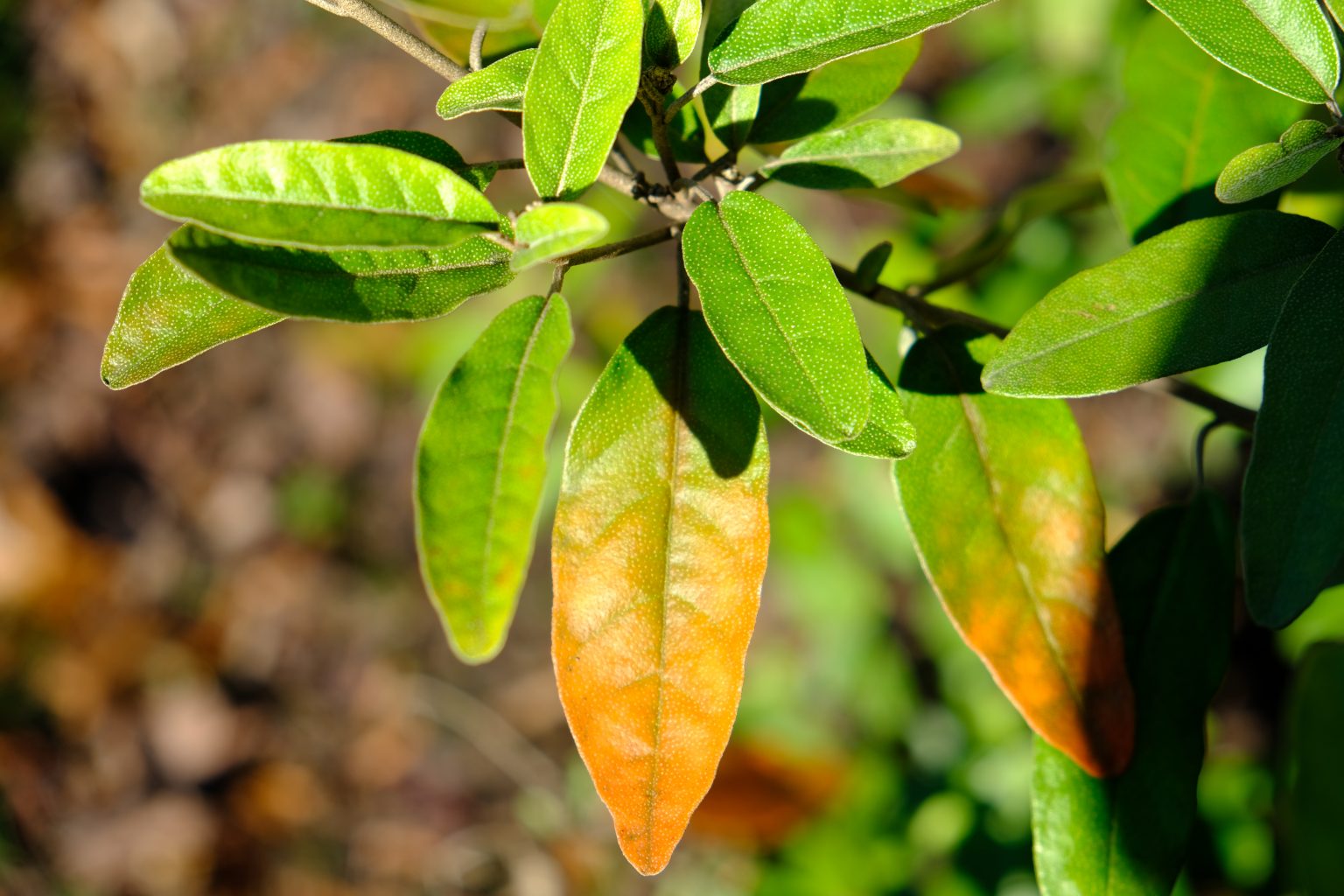
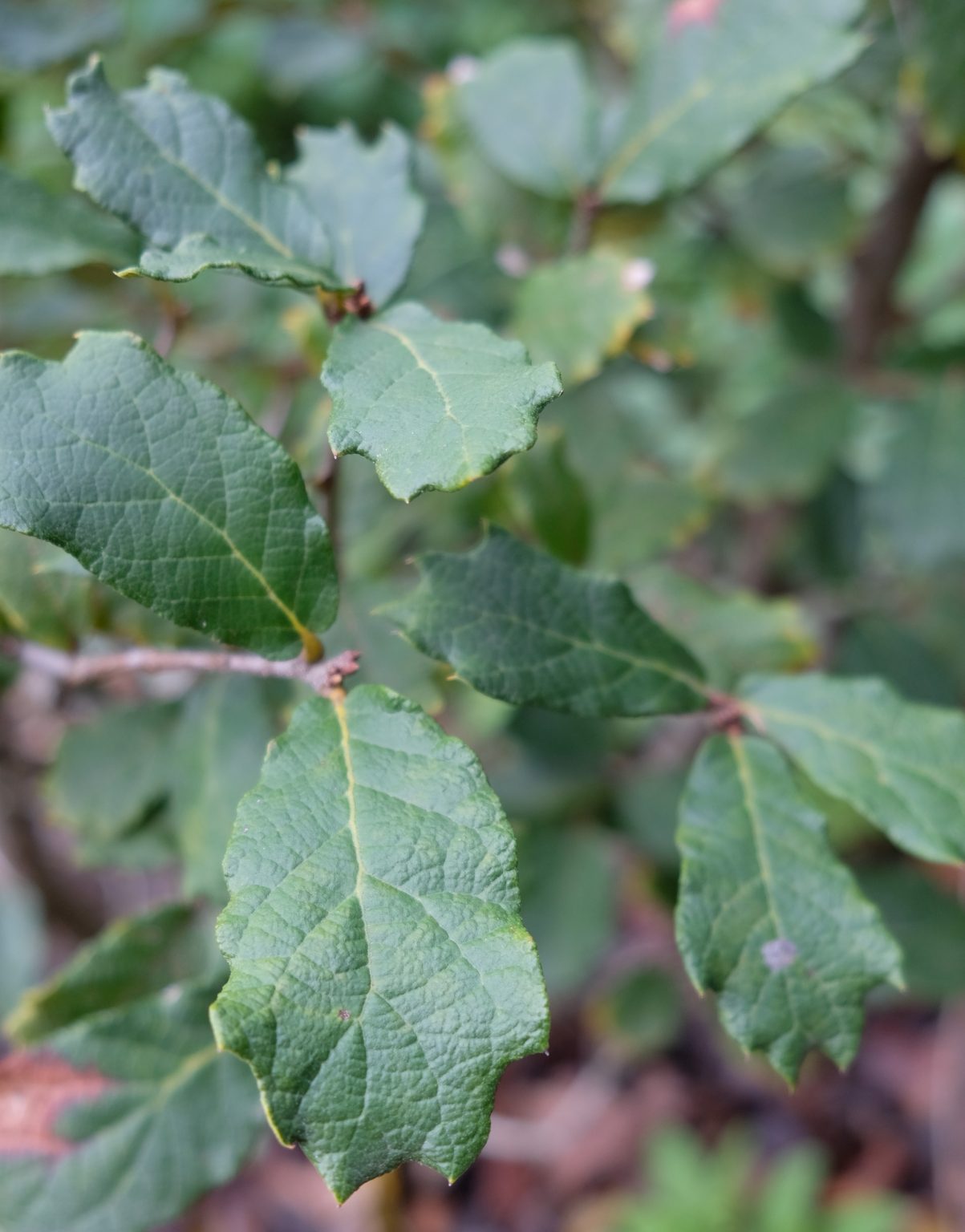
Mexican Oak (Quercus greggii “La Siberia”)

Sun Requirement: Full sun

Water Requirement: Medium

Tolerates: Clay, deer & drought

Wildlife: Birds & squirrels

Native to North America: Yes

Location: Sigourney Cheek Literary Garden

Zones: 7-11

Other:  New leaves are fuzzy and crinkly. ‘La Siberia’ is a town located near the High Mexican Valley.

Quercus-greggii-La-Siberia-LI-1203x1536-1

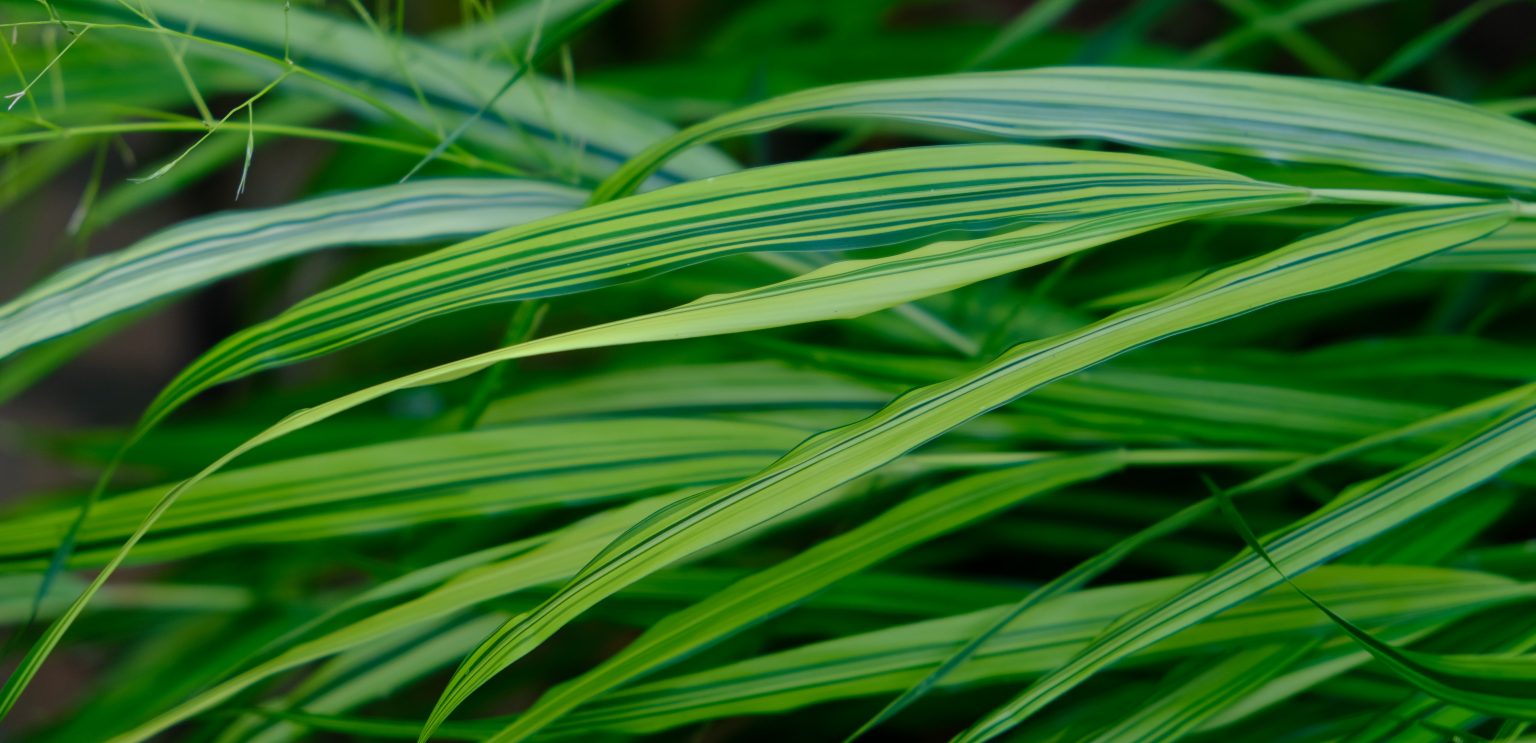
Japanese Forest Grass (Hakonechloa macra “Aureola”)

Bloom Time:  N/A

Sun Requirement: Part Shade-shade

Water Requirement: Medium

Tolerates: Deer & shade

Native to North America: No

Location: Burr Terrace Garden

Zones: 5-9

Other:  ‘Aureola’ is a gold-striped variety.

Hakonechloa-macra-Aureola-BU-5-1536x743

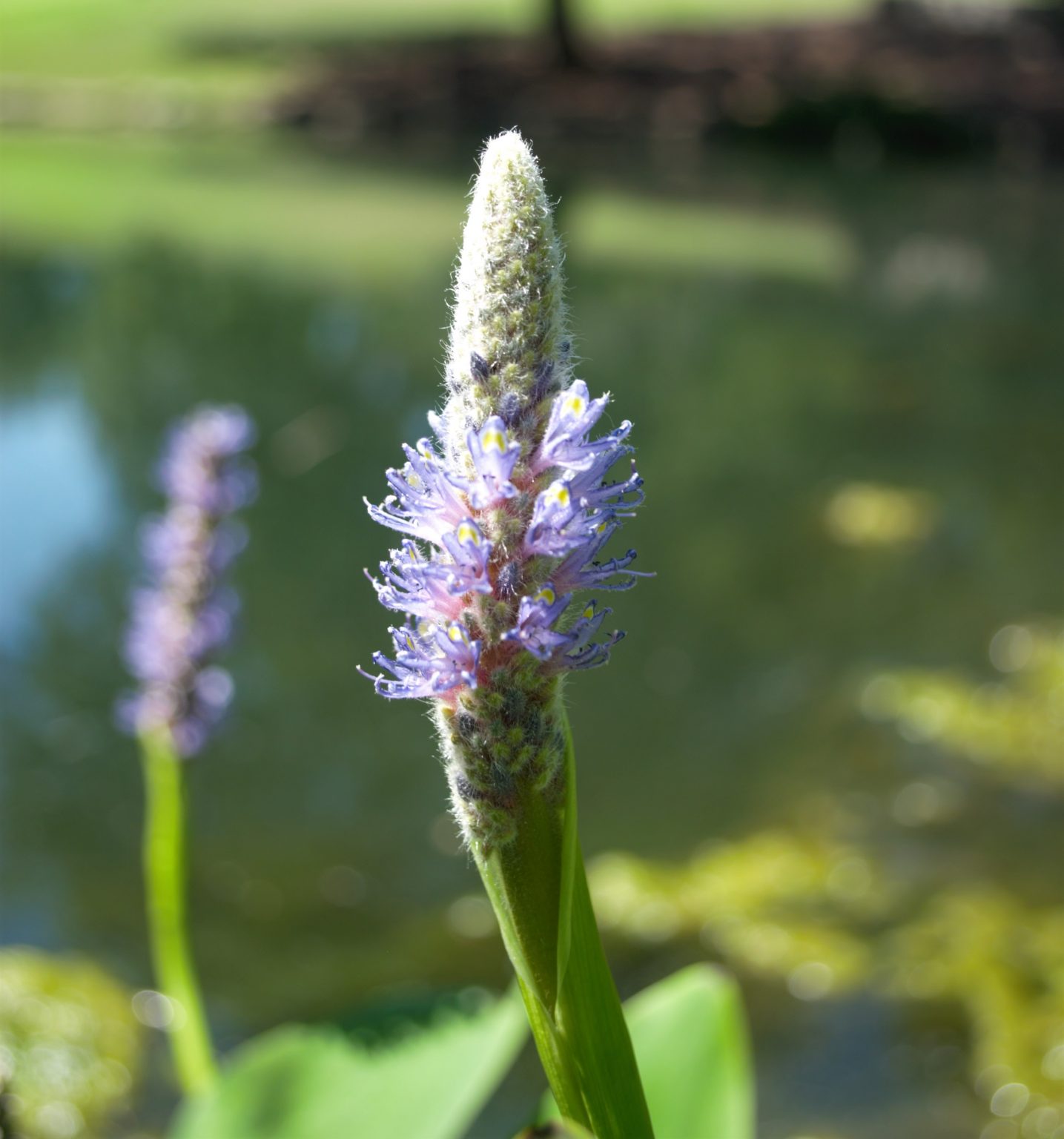
Pickerel Weed (Pontederia cordata)

Bloom Time:  July – October

Sun Requirement: Full sun

Water Requirement: Wet

Tolerates: Low fertility

Wildlife: Dragonflies and fish

Native to North America: Yes

Location: Martin Boxwood Gardens Grotto & Robinson Family Water Garden

Zones: 3-8

Other: Seeds and leaves are edible.

Pickerel-Weed-1435x1536

Rattlesnake Master (Eryngium yuccifolium)

Bloom Time:  June-September

Sun Requirement: Full Sun

Water Requirement: Dry-medium

Tolerates: Drought

Wildlife: Butterflies & bees

Native to North America: Yes

Location: Howe Garden

Zones: 5-9

Other:  Plant host to swallowtail butterfly larvae.

Eryngium-yuccifolium-1536x1024

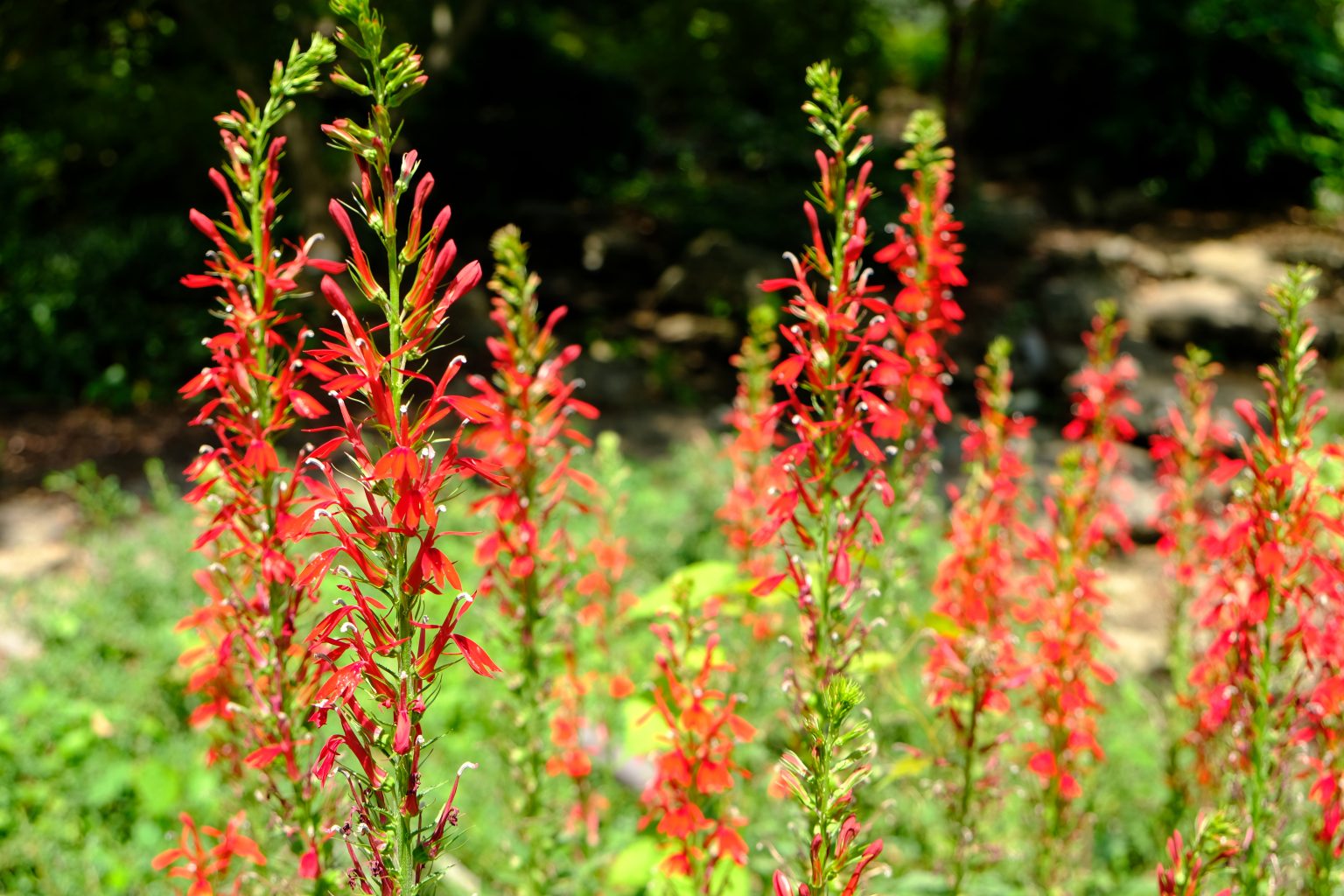
Cardinal Flower (Lobelia cardinalis)

Bloom Time: July – September

Sun Requirement: Full sun – part shade

Water Requirement: Medium- wet

Tolerates: Drought

Wildlife: Butterflies & Bees

Native to North America: Yes

Location: Howe Garden, Herb Study Garden, and The Carell Trail

Zones: 3-9

Other:  Great for rain gardens and woodland edges.

Lobelia-cardinalis-1-1536x1024
Privacy Policy Sitemap Web design by Speak
Back to top