Gardens Archives - Page 8 of 12 - Cheekwood | Page 8
x icon Close
test

Bulb Basics

Bulb Basics

With virtual tours of Cheekwood in Bloom showing the 150,000 colorful bulbs covering our grounds, we’re getting down to basics about bulbs!

What’s in a Bulb?

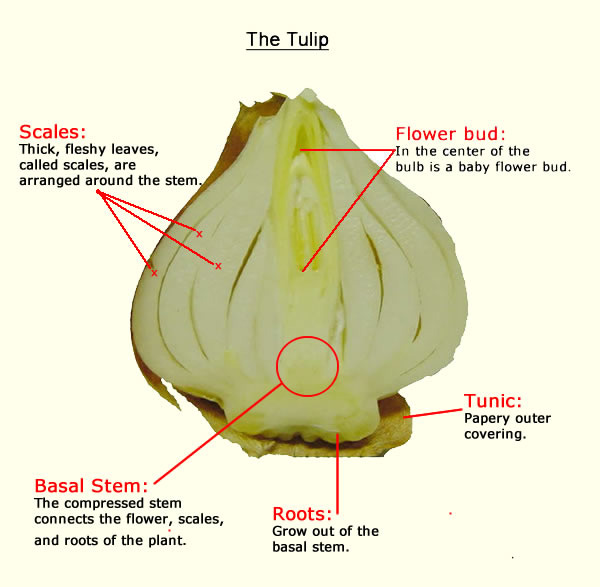
True bulbs, like tulips and daffodils, contain five parts:

  1. Scales
  2. Flower Bud
  3. Basal Stem
  4. Roots
  5. Tunic

Notice how the diagram is a vertical cross-cut of a bulb, showing a miniature plant! If you cut a bulb horizontally, you will find rings formed by scales. You can try this at home with an onion, garlic, leek, or shallot!

Image courtesy of the University of Wisconsin-Madison Arboretum

Vegetable Bulbs

You might only think of tulips or daffodils when you hear the term “bulb,” but did you know there are other types of bulbs you may find in your kitchen? These plants all grow from an underground mass of food storage tissues. Bulbs store enough food to enable them to grow and flower with no additional nutrients during their first year.

True Bulbs: onion, garlic, leek, shallot

Tubers: potato, jicama, yam

Rhizomes: ginger, bamboo

Corms: taro, water chestnut, dasheen

Tuberous Roots: sweet potato, cassava (tapioca)
diagram_photo_label

Garden Spotlight

Bradford Robertson Color Garden

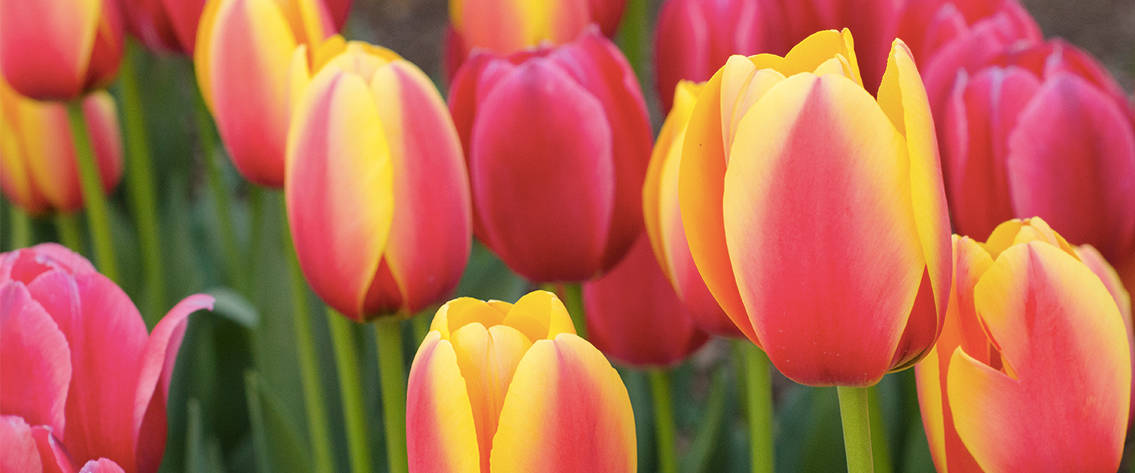
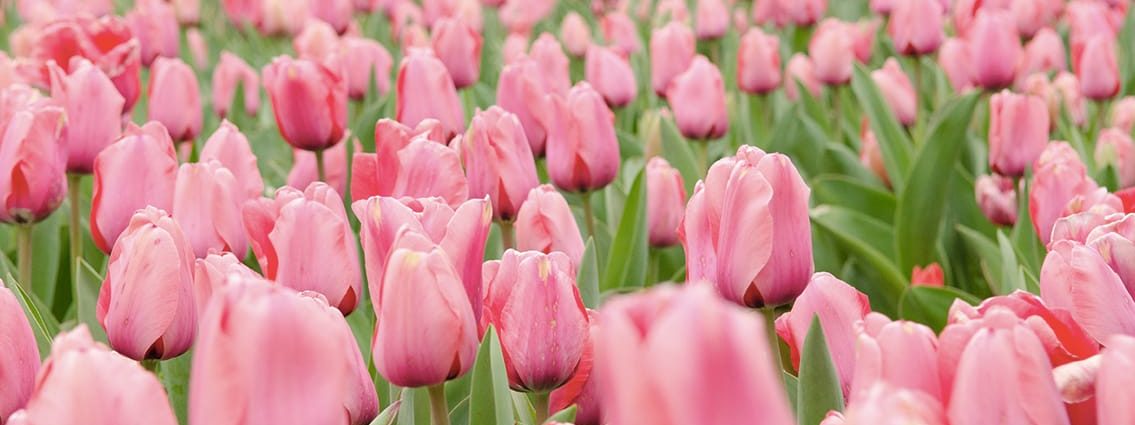
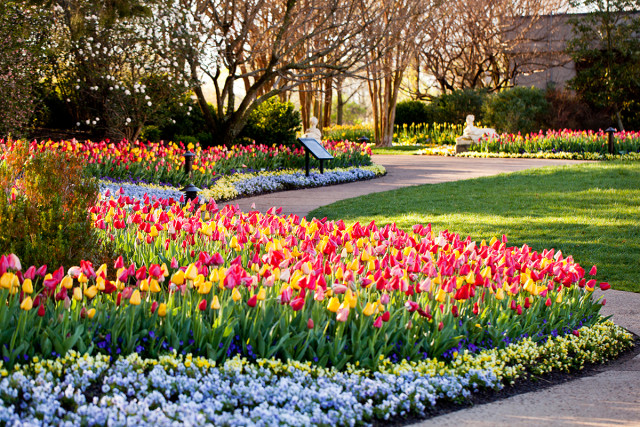
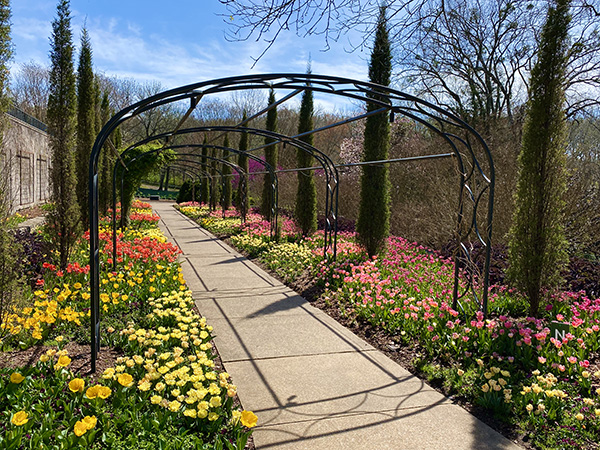
Many of Cheekwood’s colorful blooms can be found in the Bradford Robertson Color Garden, including 30 different varieties of tulips. The Color Garden presents the current season, using color as its main element of design. An allée of crape myrtles leads into this garden where sweeping curves of colorful annuals, perennials, and tropical plants border a sloping lawn and give a view of the distant hills. By giving context to the time of year, its exuberant plant material and meandering path lead guests to walk beneath a set of verdant arches, setting a hospitable tone for the entire visit.

The garden was designed by Naud Burnett in 1998 under the leadership of Bob Brackman, who was then the Director of Horticulture at Cheekwood. Burnett is noted for designing the Color Garden and Fern Dell at the Dallas Arboretum in Dallas, Texas.

This vibrant display does not appear overnight; Cheekwood’s gardeners prepare garden beds and begin planting hardy spring bulbs in the fall. Interested in planting bulbs of your own? Check out our tip sheet!
Tulip Tips

color-garden-22-sRGB-lr-e1466617453816-1

Take a virtual tour of the Bradford Robertson Color Garden during Cheekwood in Bloom!

Virtual Tour

Follow along on Instagram, Facebook and Twitter for more virtual blooms!

We hope these educational coloring sheets can offer meditative comfort for kids and adults of all ages. Download one of our educational coloring sheets below, and use #CheekwoodinBloom for your chance to be featured!

Daffodil   Hyacinth   Tulip   Pansy

Blooms-Slider-1
test

Gardeners’ Top Picks April 2020

Gardeners’ Top Picks April 2020

Spring has sprung, and the gardens are in full bloom here at Cheekwood! Our garden team has hand selected their top plant picks for April.

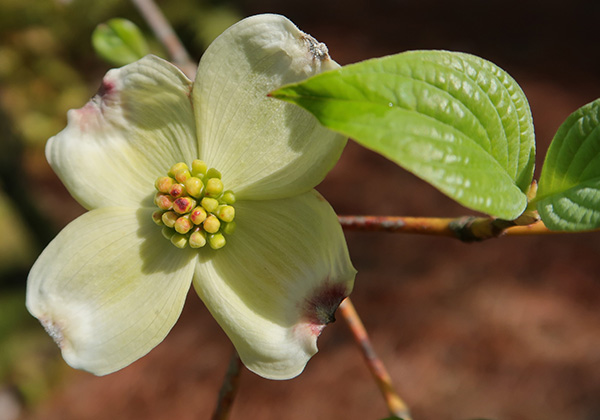
Flowering Dogwood (Cornus florida ‘Autumn Gold’)

Bloom Time: April – May

Sun Requirement: Part shade

Water Requirement: Medium

Wildlife: Birds & butterflies

Tolerates: Deer & clay soil

Native to North America: Yes

Other: Birds love the berries that follow flowering.

Zones: 5 – 9

Location: Carell Dogwood Garden

Cornus-florida-Autumn-Gold-Dogwwod-Gaden2

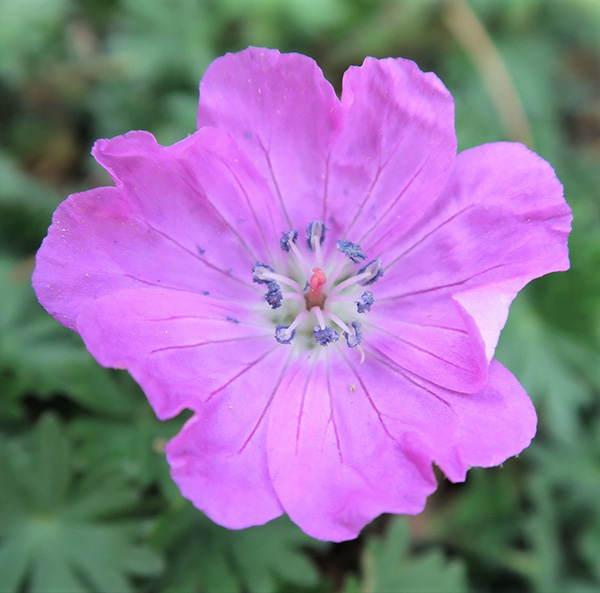
Bloody Cranesbill (Geranium sanguineum ‘Max Frei’)

Bloom Time: April – May

Sun Requirement: Full sun – part shade

Water Requirement: Medium

Wildlife: Butterflies

Tolerates: Rabbits, deer & clay soil

Native to North America: No

Other: Great plant for rock gardens.

Zones: 3 – 8

Location: Carell Dogwood Garden

Geranium-Max-Frei-DO-2

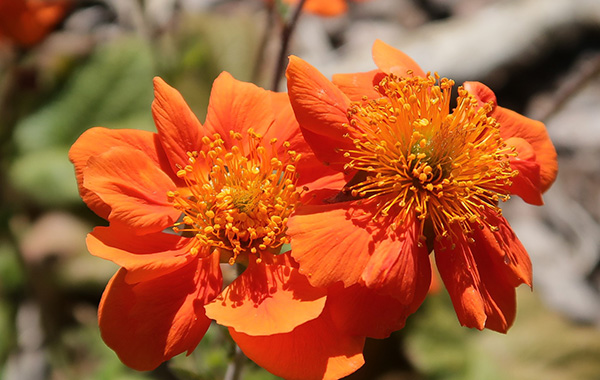
Geum (Geum ‘Tim’s Tangerine’)

Bloom Time: April – May

Sun Requirement: Full sun – part shade

Water Requirement: Medium

Wildlife: Bees

Tolerates: Deer

Native to North America: No

Other: Will bloom in spring and again in fall.

Zones: 5 – 7

Location: Turner Seasons Garden

Geum-Tims-Tangerine-Seasons-Garden-Summer-3

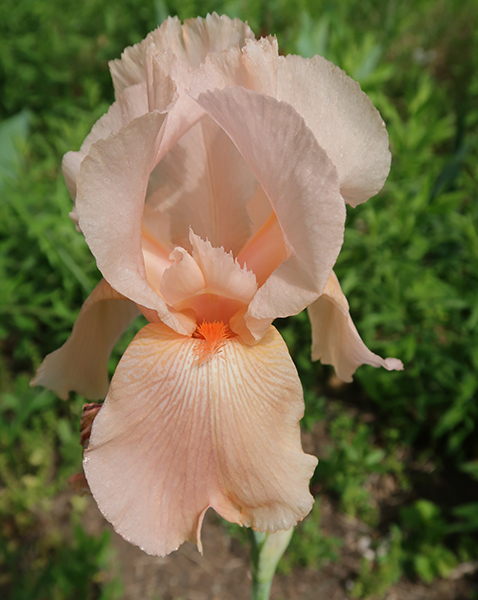
Bearded Iris (Iris ‘Beverly Sills’)

Bloom Time: April – May

Sun Requirement: Full sun

Water Requirement: Medium

Tolerates: Deer & drought

Native to North America: No

Other: Dykes Medal award winner

Zones: 3 – 9

Location: Wills Perennial Garden

Iris-Beverly-Sills-Wills-Garden-3-1

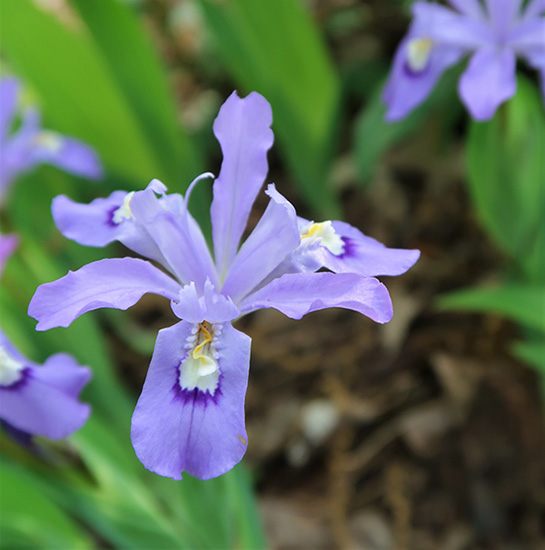
Dwarf Crested Iris (Iris cristata)

Bloom Time: April – May

Sun Requirement: Full sun – part shade

Water Requirement: Medium

Wildlife: Bees & hummingbirds

Tolerates: Deer & drought

Native to North America: Yes

Other: Can create a spectacularly vibrant early spring groundcover.

Zones: 3 – 9

Location: Howe Garden

Iris-cristata-Dwarf-crested-iris-Howe

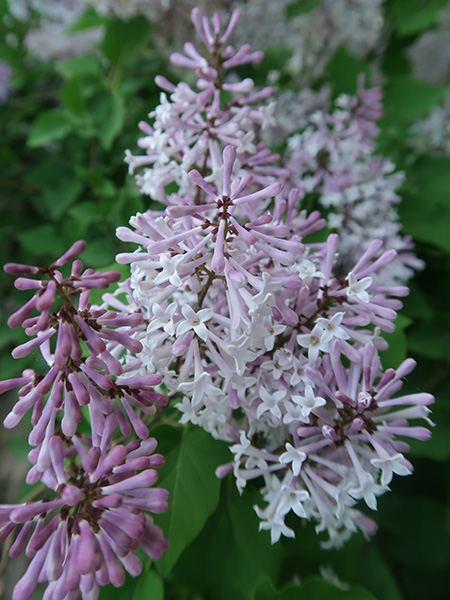
Manchurian Lilac (Syringa pubescens subsp. patula ‘Miss Kim’)

Bloom Time: April – May

Sun Requirement: Full sun

Water Requirement: Medium

Wildlife: Butterflies & hummingbirds

Tolerates: Deer

Native to North America: No

Other: Lilacs are extremely fragrant. This cultivar is mildew resistant.

Zones: 3 – 8

Location: Frist Learning Center: Rock Wall

Syringa-pubescens-subsp.-patula-Miss-KimFLC-Rock-Wall-5

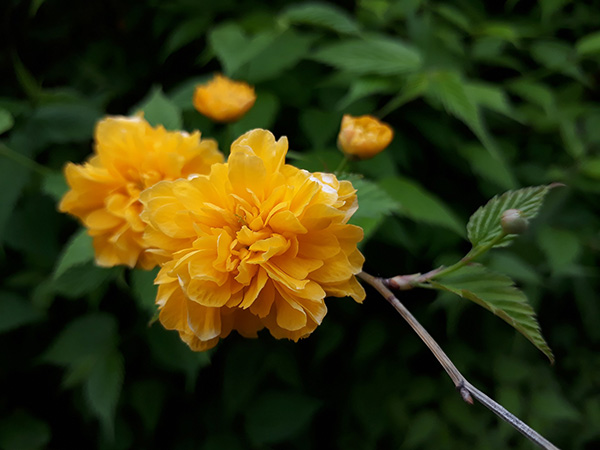
Japanese Kerria (Kerria japonica ‘Pleniflora’)

Bloom Time: April – May

Sun Requirement: Part shade

Water Requirement: Medium

Wildlife: Bees

Tolerates: Deer & heavy shade

Native to North America: No

Other: Excellent as either a specimen or a hedge planting.

Zones: 4 – 9

Location: Bracken Foundation Children’s Garden

Kerria-japonica-Pleniflora-Childrens-Garden

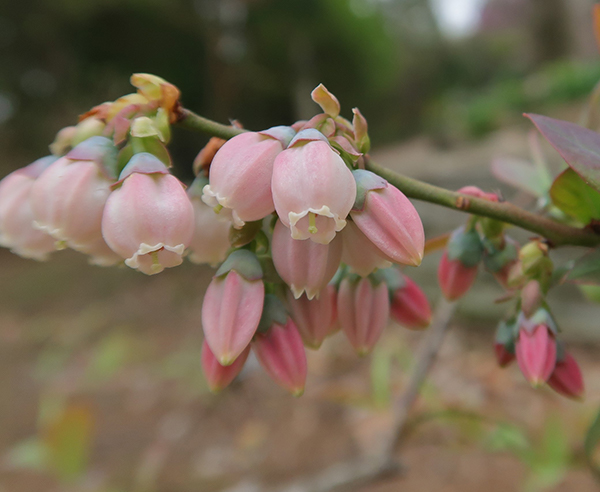
Highbush Blueberry (Vaccinium corymbosum ‘Sunshine Blue’)

Bloom Time: April

Sun Requirement: Full sun

Water Requirement: Medium – wet

Wildlife: Birds & butterflies

Tolerates: High pH soils

Native to North America: Yes

Other: Best usage is as an ornamental plant. Does not have a high fruit production.

Zones: 6 – 10

Location: Herb Study Garden

Vaccinum-corybosum-Sunshine-Blue-Herb-Study-garden
test

Spring Gardening Tips

Spring Gardening Tips

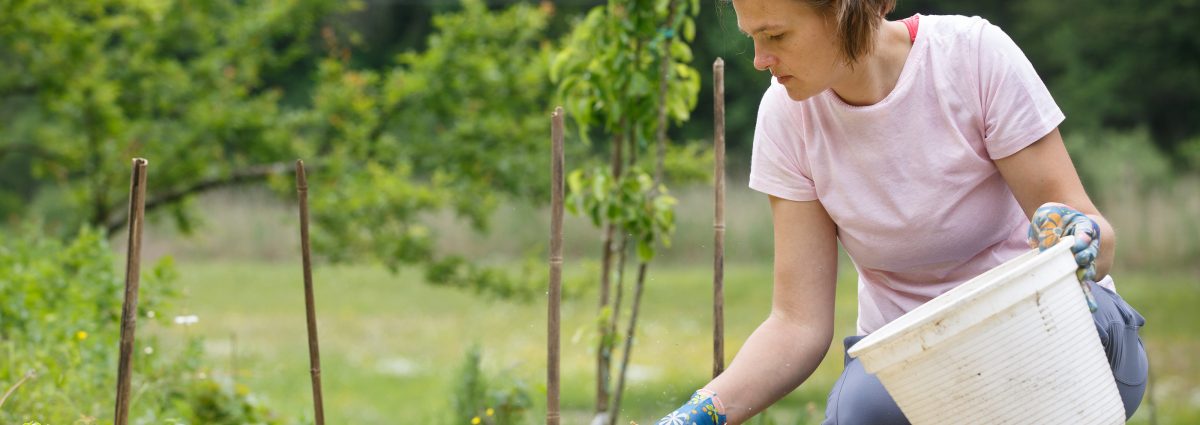
Make the most of your time at home by freshening up your yard! Check out these spring gardening tips from our Plant Collections Manager, Shanna Jones.

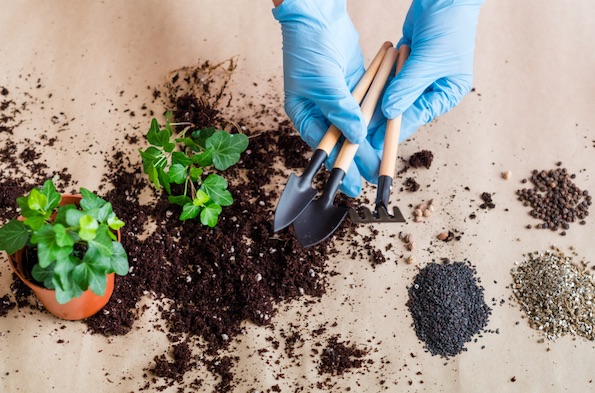
1. Plant seeds. A lot of us may have seeds left over from last year or maybe someone gave you a store-bought seed packet or seeds sourced their own garden. Most likely, some of the seeds are still viable-meaning they will germinate. Start by planting them inside – it’s not entirely safe to plant tomatoes, peppers, and other summer vegetables outside just yet because of the cooler nighttime temperatures. The 2 week quarantine provides a perfect amount of time to sow seeds-use an empty egg carton, thin them and repot into bigger larger containers.

2. Begin a compost pile. Only food scraps, lawn clippings and leaves required!

3. Get ahead of the weeds. Pulling weeds can be extremely satisfying and therapeutic. The more weeds you can eradicate now, before they set seed, the less weed issues you’ll have in the months ahead.

4. Organize your gardening shed/ space. You’ll be glad you did. I always find that I feel more creative and inspired after I’ve organized my space. This is also a great way to take inventory of your supplies and tools.

5. Divide select perennials, like Hosta and Daylily, for instance. Some perennials can become overgrown and dividing them will help their performance by giving the plants more room to grow and absorb nutrients and water.

While we’ve enjoyed sharing our gardens with you, it’s now YOUR turn to share your garden with us.⁠ Tag us in your garden photos on Instagram, Facebook and Twitter!

Gardening-Workshop
test

Gardeners’ Top Picks March 2020

Gardeners’ Top Picks March 2020

With over 150,000 blooming bulbs in our gardens, there’s plenty to see this spring during Cheekwood in Bloom! Our garden team has hand selected their top plant picks for March. Use this as your guide as you explore the grounds.

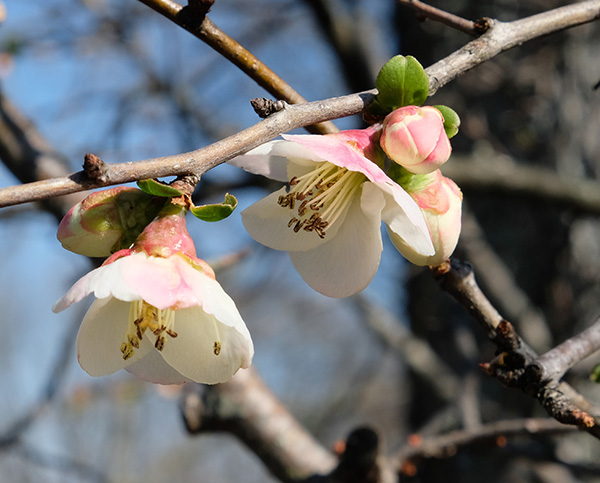
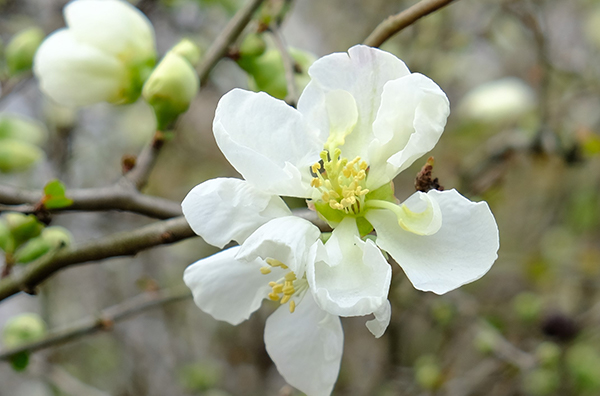
Quince (Chaenomeles hybrid)

Bloom Time: February – March

Sun Requirement: Full sun

Water Requirement: Medium

Tolerates: Drought

Native to North America: No

Other: The fruit is used to make jelly. Plant is best used as a hedge.

Zones: 5 – 9

Location: Carell Dogwood Garden

Chaenomeles-hybrid-3

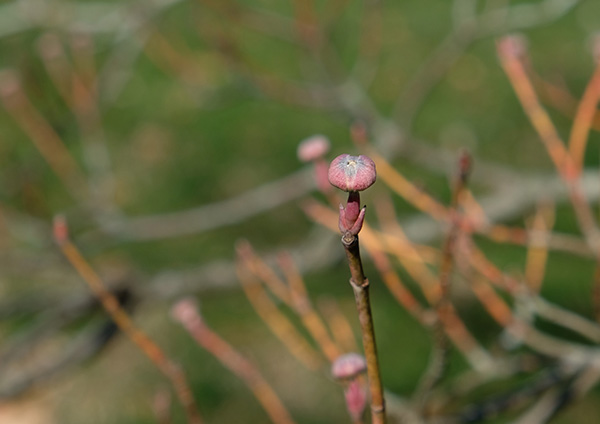
Flowering Dogwood (Cornus florida ‘Autumn Gold’ (flower buds)

Bloom Time: April – June

Sun Requirement: Full sun

Water Requirement: Medium

Wildlife: Birds & Butterflies

Tolerates: Deer

Native to North America: Yes

Other: Great tree for small front yards or woodland areas.

Zones: 5 – 9

Location: Carell Dogwood Garden

Cornus-florida-Autumn-Gold-4

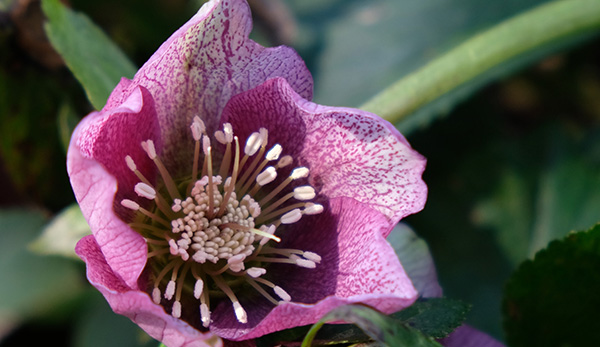
Lenten Rose (Helleborus ‘Red Mountain’)

Bloom Time: January – April

Sun Requirement: Shade

Water Requirement: Medium

Tolerates: Deer & Heavy shade

Native to North America: No

Other: One of the best groundcovers for shady areas.

Zones: 4 – 9

Location: Fern Garden

Helleborus-Red-Mountain-1

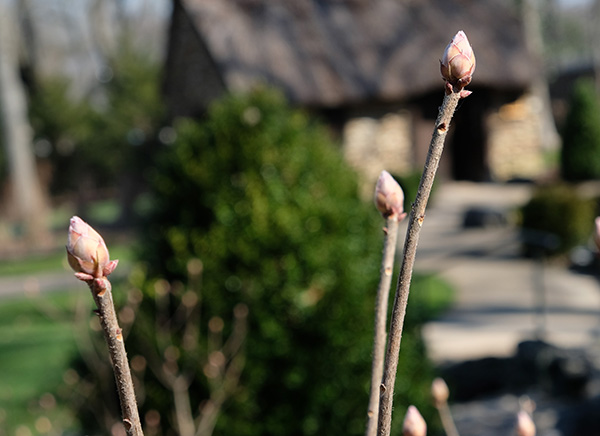
Azalea (Rhododendron ‘Colonel Moseley’ (flower buds)

Bloom Time: April – May

Sun Requirement: Part Shade – Shade

Water Requirement: Medium

Wildlife: Butterflies

Tolerates: Rabbit

Native to North America: Yes

Other: Azaleas do not like wet feet. Beautiful presentation as a mass planting or hedge.

Zones: 6 – 9

Location: Howe Garden

Rhododendron-Col.-Mosely

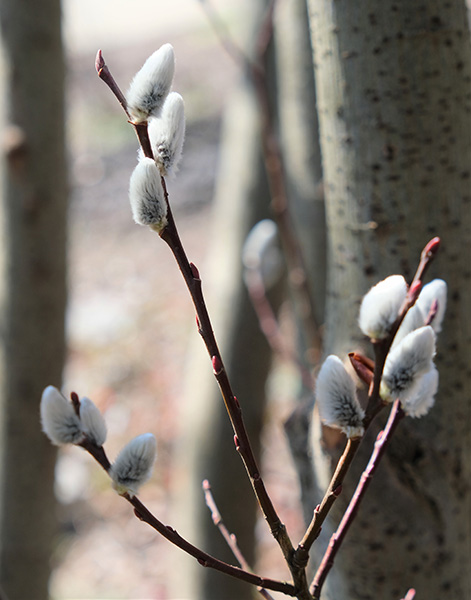
Pussy Willow (Salix caprea)

Bloom Time: March – April

Sun Requirement: Full Sun – Part Shade

Water Requirement: Medium – Wet

Wildlife: Purple Emperor Butterfly

Tolerates: Deer & Wet Soil

Native to North America: No

Other: Great winter interest! Excellent specimen for rain gardens.

Zones: 4 – 8

Location: Robinson Family Water Garden

Salix-caprea-3

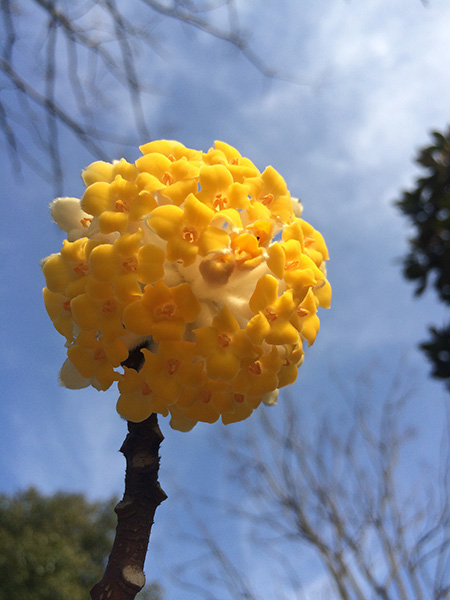
Paperbush (Edgeworthia chrysantha)

Bloom Time: February – March

Sun Requirement: Part Shade

Water Requirement: Medium

Wildlife: Bees

Tolerates: Some sun, if given enough water.

Native to North America: No

Other: Heavenly fragrance!!

Zones: 7 – 10

Location: Alcove of Botanic Hall

Edgeworthia

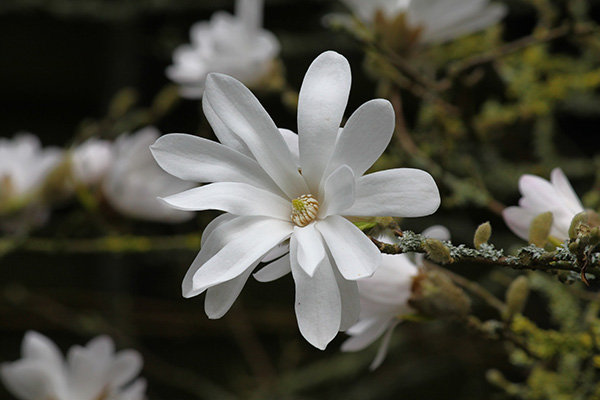
Star Magnolia (Magnolia stellata)

Bloom Time: March – April

Sun Requirement: Full Sun – Part Shade

Water Requirement: Medium

Wildlife: Bees

Tolerates: Clay Soil

Native to North America: No

Other: Excellent specimen tree.

Zones: 4 – 9

Location: Petite Swan Lawn

magnolia-3323060_1920

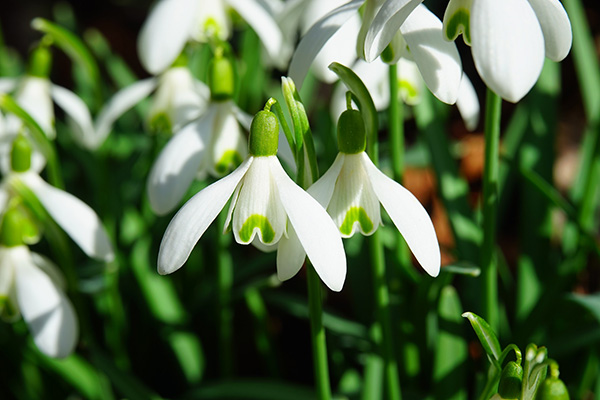
Snowdrop (Galanthus sp.)

Bloom Time: March

Sun Requirement: Full Sun – Part Shade

Water Requirement: Medium

Tolerates: Deer

Native to North America: No

Other: Looks best when planted en masse.

Zones: 3 – 7

Location: Howe Garden

Galanthus
test

Carell Dogwood Garden

Carell Dogwood Garden

In celebration of Cheekwood’s 60th anniversary as a public institution, we’re highlighting one of our 12 distinct gardens each month to showcase our wide variety of garden offerings. With 55 acres of rolling hills and 12 intricate, unique gardens, there’s something for everyone to experience and love at Cheekwood.

Between the Herb Study Garden and the Burr Terrace Garden, the Carell Dogwood Garden encompasses a wide swath along the eastern property line where a flourishing understory of dogwood are intertwined with an array of hydrangea cultivars. Christmas fern which remains evergreen in Nashville’s mild climate adds texture with its long-indented fronds. Lenten roses carpet the garden floor throughout the year with persisting leathery foliage, and native trilliums arise in early spring to bloom quickly and go dormant again.

Cheekwood has been cultivating various Cornus species since 1982, when Mr. Monroe Carell Jr. and his wife Mrs. Ann Scott Monroe graciously donated their personal collection of dogwood trees. Mrs. Carell was a key member of the Horticultural Society of Middle Tennessee, even serving as president at one time. Mr. Carell served on Cheekwood’s Board of Trustees for many years, chairing a Future of Cheekwood campaign. This collaboration led to Cheekwood’s inheritance, an assemblage of a treasured native tree species that soon transformed into a lovely woodland garden.

The installation beneath stately Shumard and Chinquapin oaks has matured over the past several decades to become a picturesque understory of dappled light. This is the perfect environment for perennial companion plantings of hosta, astilbe, and the ephemeral bleeding hearts. Where there was once an empty plot of land between two prominent gardens is now an attractive promenade rich in species diversity, a proper woodland garden.

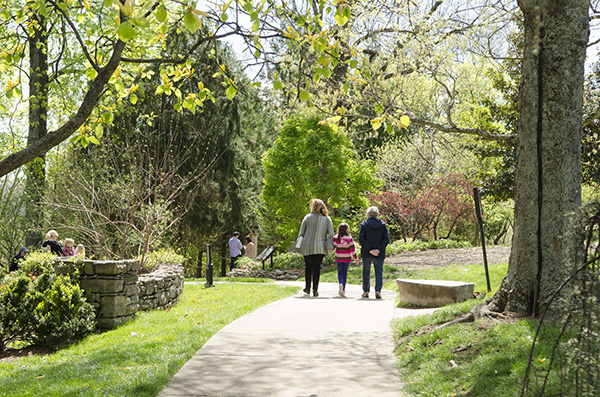
It is not always the case that a botanical garden’s plant collection, especially trees, are seen growing in one location. However, the way in which these quintessential spring-flowering trees are staged along a slightly curving path is breathtaking. Visitors are naturally encouraged to slow their pace and admire the many wonderful attributes of the dogwoods at every bend. The very presence of the collection is a unique habitat, a room of protection, not only fitting for shade-loving plants, but a refuge for birds and squirrels.

DSC1283

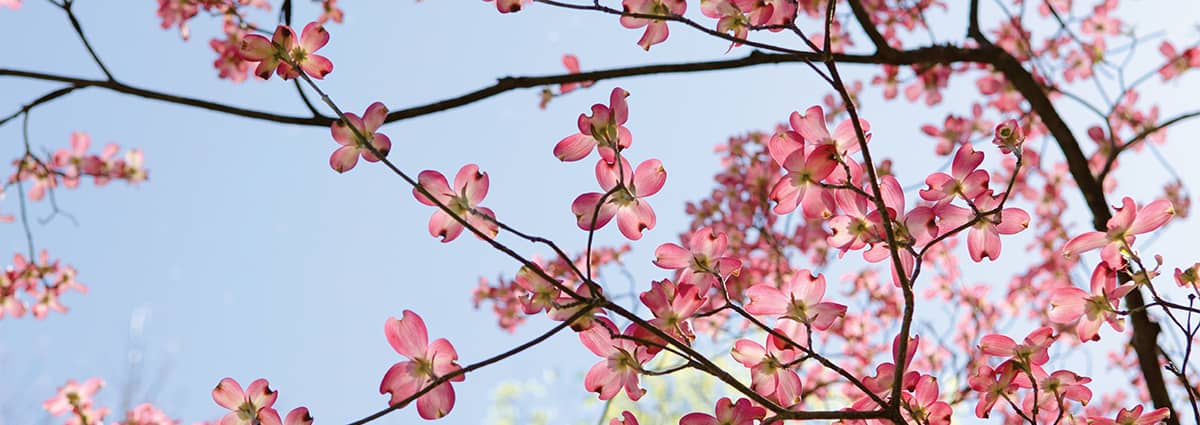
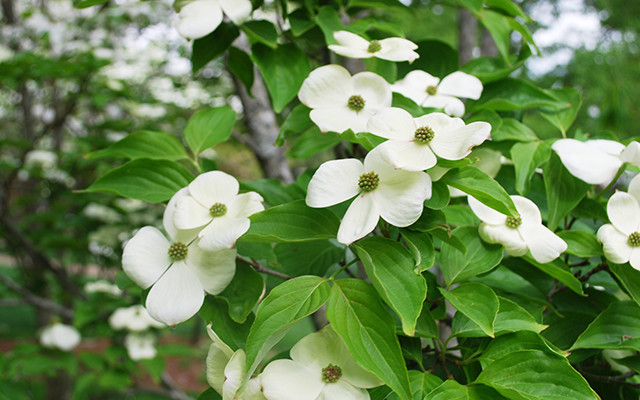
The most common dogwood in our Tennessee woodlands is the native Cornus florida. A small, understory tree, it produces a profusion of open-faced, white flowers in the spring. Its leaves tinge burgundy against the surrounding hills in fall. In the winter months, before the foliage completely emerges, the flowering dogwood’s horizontal branching patterns can be fully appreciated, adorned with the small meringue-shaped buds that await spring’s season to bloom.

The native Tennessee dogwood is beloved for its elegant, understated beauty, but also for its punctuality. They are one of the earliest flowering trees to greet the spring after a long winter, a true harbinger of the season. To walk among the allèe of dogwoods of white and shades of pink in full bloom at Cheekwood is a sought-after experience.

The Carell Dogwood Garden at Cheekwood is the centerpiece of our Nationally Certified Cornus Collection. In 2012, the collection became the very first of its kind to be recognized by the Plant Collections Network, a collaborative effort between the American Public Gardens Association and the USDA-Agricultural Research Service. What began as just under 200 specimens donated to Cheekwood in 1982 by the Carell family has expanded into an acclaimed assortment of one of the most beloved trees in our region.

Plant collections relate to a garden’s mission. Cheekwood aims to be a primary source for horticultural display, education, research, conservation, and enjoyment. Dogwoods are well suited for Cheekwood with their undeniable beauty, endemic to Tennessee. The estate currently displays just over 300 individuals and 14 different species of dogwood, including 23 varieties of Cornus florida. These 23 varieties of Flowering Dogwood have been selected to represent breeding achievements for superior blooms, foliage, growth habit, vigor, hardiness, as well as disease and insect resistance. Cheekwood has a well-developed Plant Collections Policy and enhancing and expanding the Cornus Collection remains the institution’s primary collecting mission. Other than the picturesque flowering dogwood, Cheekwood is also the proud home of several Cornus officinalis (Japanese Cornel Dogwood), which blooms in February, and the evergreen Chinese dogwood (C. angustata), which blooms in early June.

The Carell Dogwood Garden is a magnificent component of Cheekwood’s 12 distinct gardens and is beautiful throughout the seasons. Be sure to pick up a Gardeners’ Top Picks for a look at what’s in bloom during your next visit to Cheekwood.

Click here to read about our other distinct gardens.

dogwoods-640x400-1
test

Gardeners’ Top Picks February 2020

Gardeners’ Top Picks February 2020

We may be gearing up for spring, but these featured winter plants are not to be missed! Our garden team has hand selected their top plant picks for February. Use this as your guide as you explore the grounds.

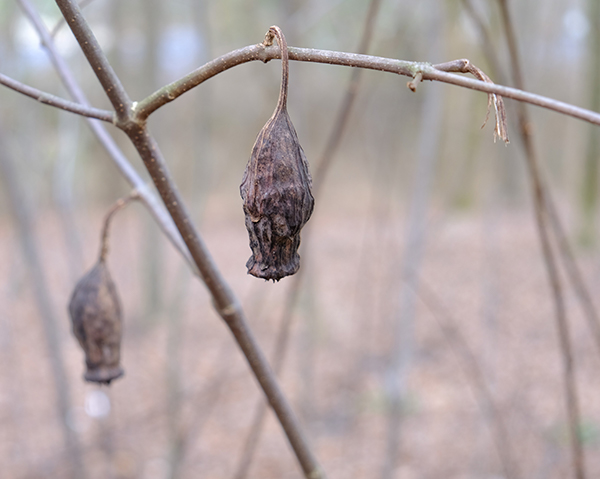
Carolina Allspice (Calycanthus floridus ‘Athens’ (seedpod)

Bloom Time: May – June

Sun Requirement: Full Sun – Part shade

Water Requirement: Medium

Wildlife: Butterflies are attracted to the nectar.

Tolerates: Deer & drought

Native to North America: Yes

Other: Fragrant flowers. Leaves release a pleasant aroma when crushed. Flowers produce urn-shape fruits that provide winter interest.

Zones: 4 – 8

Location: Herb Study Garden

Calycanthus-floridus-Athens-1

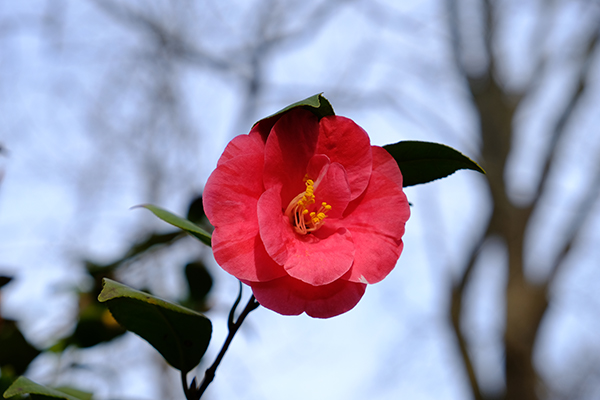
Camellia (Camellia japonica)

Bloom Time: December – February

Sun Requirement: Part shade

Water Requirement: Medium

Tolerates: Drought after established

Native to North America: No

Other: Provide winter protection in colder zones. Prune after flowering.

Zones: 7 – 9

Location: Carell Dogwood Garden: Hydrangea Trail

Camellia-japonica-6

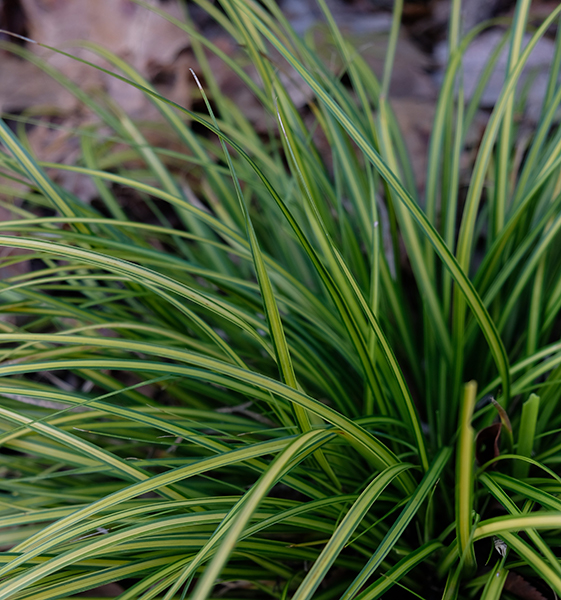
Sedge (Carex oshimensis ‘Eversheen’)

Sun Requirement: Part shade

Water Requirement: Medium – Wet

Tolerates: Deer

Native to North America: No

Other: Evergreen grass in milder climates.

Zones: 5 – 9

Location: Howe Garden Entrance

Carex-Evercolor-4

Quince (Chaenomeles x superba ‘Jet Trail’)

Bloom Time: January – March

Sun Requirement: Full Sun – Part shade

Water Requirement: Medium

Wildlife: Pollinated by bees

Tolerates: Drought

Native to North America: No

Other: The fruit is edible, but best used in preserves in jellies.

Zones: 5 – 8

Location: Carell Dogwood Garden Entrance

Chaenomeles-japonica-Jet-Trail-2

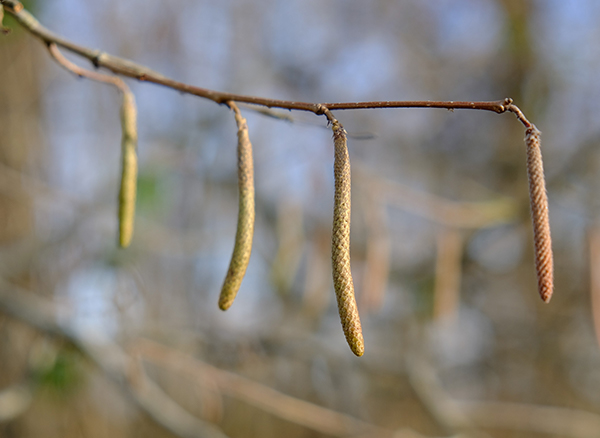
Hazelnut / Common Filbert (Corylus avellana (catkins)

Bloom Time: March – April

Sun Requirement: Full Sun – Part shade

Water Requirement: Medium

Wildlife: The nuts are a food source for squirrels and birds.

Tolerates: High winds & shade

Native to North America: No

Other: The male catkins provide great winter interest.

Zones: 4 – 8

Location: Carell Dogwood Garden

corylus-avellana

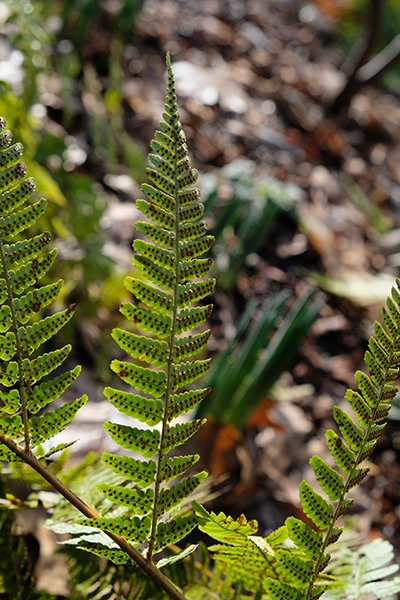
Autumn Fern (Dryopteris erthrosora ‘Brilliance’)

Sun Requirement: Part shade – Shade

Water Requirement: Medium

Tolerates: Rabbits & heavy shade

Native to North America: No

Other: Evergreen fern in milder climates. Makes a beautiful groundcover.

Zones: 5 – 8

Location: Howe Garden

Dryopteris-Autumn-Brillance-1

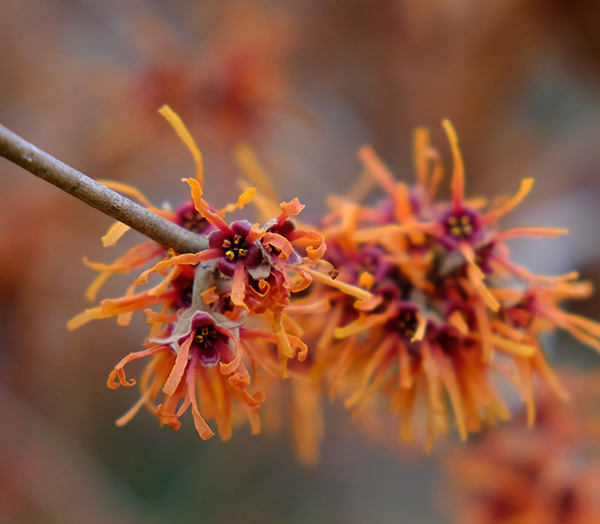
Ozark Witchhazel (Hamamelis vernalis ‘Sandra’)

Bloom Time: January – March

Sun Requirement: Full Sun – Part shade

Water Requirement: Medium

Wildlife: Birds eat the fruit.

Tolerates: Deer

Native to North America: Yes

Other: Wonderful winter-flowering hedge.

Zones: 4 – 8

Location: Howe Garden

Hamamelis-vernalis-Sandra-1

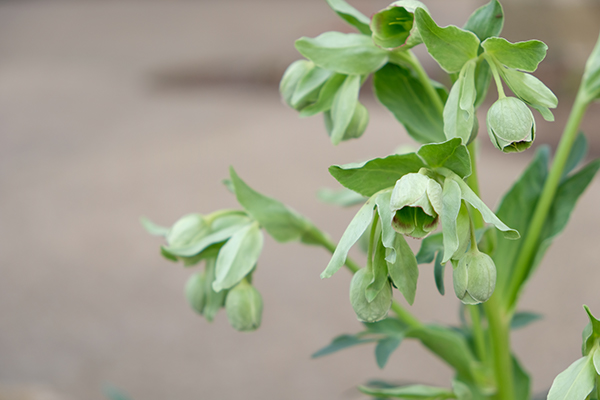
Stinking Hellebore (Helleborus foetidus)

Bloom Time: January – March

Sun Requirement: Part shade – Full shade

Water Requirement: Medium

Wildlife: Attracts bees and other insects.

Tolerates: Deer

Native to North America: No

Other: Makes a superb groundcover. True green flowers with pink tinge.

Zones: 5 – 9

Location: Turner Seasons Garden

Helleborus-foetidus-1
test

Herb Study Garden

Herb Study Garden

In celebration of Cheekwood’s 60th anniversary as a public institution, we’re highlighting one of our 12 distinct gardens each month to showcase our wide variety of garden offerings. With 55 acres of rolling hills and 12 intricate, unique gardens, there’s something for everyone to experience and love at Cheekwood.

Cheekwood’s Herb Study Garden was installed in 1983 and is located between the Turner Seasons and Carell Dogwood Gardens. This garden is devoted to the study and evaluation of herbal plants to determine those that can be successfully grown year-round in Middle Tennessee. The garden is a project of the Herb Society of Nashville (HSN), Unit of the Herb Society of America. They are devoted to promoting the knowledge, use, and delight of herbs through educational programs, research and sharing the experience of its members with the community.

The Herb Study Garden is categorized by 7 themed sections that are planted in raised beds constructed of stonework. Plants with medicinal, culinary, and household uses are categorized within these themed garden beds which provide visitors with the historical relevance of the herbs along with their contemporary uses. The 7 primary categories of the garden include:

1. Blue Flowered Herbs with Gray & Silver Foliage
2. Annual Display Bed rotating seasonally
3. Texture and Fragrance
4. Culinary
5. Herbs used by Native Americans of Middle Tennessee
6. Herbs Brought Over & Used by Early Colonists of Tennessee
7. Mediterranean Herbs


During the spring season, guests can find Magnolia stellata (Star Magnolia) blooming with primula and various ephemerals including bloodroot and anemone. Water lilies and lotus grace the circular fountain and bloom all summer long, in addition to a plethora of popular kitchen herbs like oregano and thyme. In fall, marigolds, goldenrod, and beautyberry take center stage.

An arbor, outfitted with bench seating, is situated in the middle of the garden and anchors climbing roses, clematis, and other vines. In the summer months, it is used to showcase tropical plants such as citrus and gingers. The arbor also provides a beautiful centerpiece for wedding ceremonies.

Like the Burr Terrace Garden, this space was originally designed by James W. Coile, and the similarities of the two can be seen in the circular forms and intimate scale that Coile incorporated into many of his designs. In 1999, the Herb Study Garden was enlarged as part of a more expansive renovation at Cheekwood. This opportunity allowed the HSN to increase the scope and variety of herbal plants showcased, enhancing the educational quality of the space for Cheekwood guests as well as HSN members.

Did you know? The five columns providing the stately backdrop for the Herb Study Garden’s amphitheater are relics of the Tennessee State Capitol. One hundred years after their construction, the columns had deteriorated significantly, and it was decided to replace the porous, soft Tennessee limestone with columns made from the more durable Indiana limestone. After several decades in storage, the columns were moved to Cheekwood in December of 1999. The addition of the Tennessee Capitol artifacts to the Herb Study Garden was part of an expansion that was finished and dedicated on June 13, 2001.

These relics, including accessories to the columns that now function as a bench and even part of the water feature, are on loan for a total of 50 years from the Tennessee State Museum. These artifacts reflect Tennessee heritage while also paying homage to Greek Revival Architecture, the design of the state capitol and many buildings that were erected in the late 18th and early 19th centuries. The ruins are reminiscent of ancient Greece, alluding to Nashville’s nickname, “Athens of the South”, and add a sense of antiquity to the botanical garden layer of Cheekwood.

The Herb Study Garden is a magnificent component of Cheekwood’s 12 distinct gardens and is beautiful throughout the seasons. Be sure to pick up a Gardeners’ Top Picks for a look at what’s in bloom during your next visit to Cheekwood.

Click here to read about our other distinct gardens.

Privacy Policy Sitemap Web design by Speak
Back to top