Arts or Education Archives - Page 4 of 17 - Cheekwood | Page 4
x icon Close
test

The Sculpture of William Edmondson: Tombstones, Garden Ornaments, and Stonework
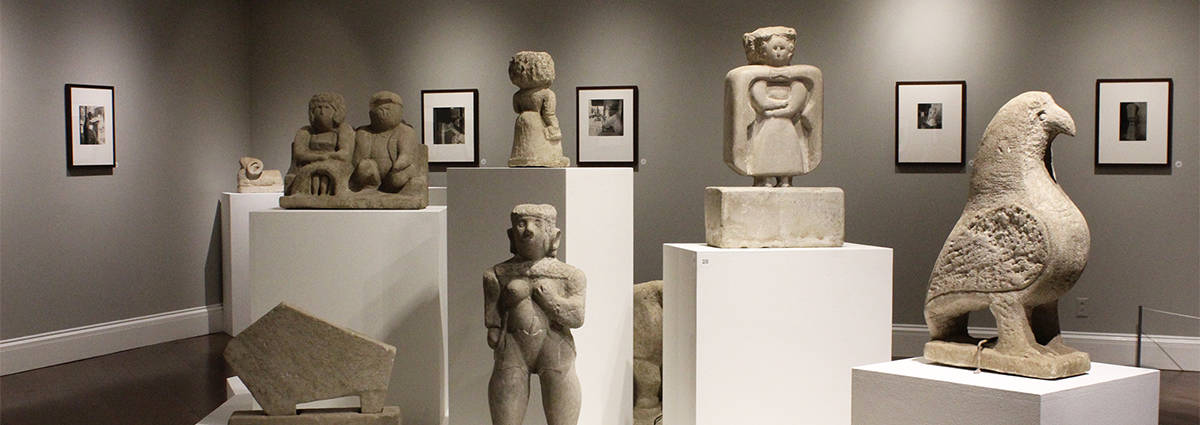
The Sculpture of William Edmondson: Tombstones, Garden Ornaments, and Stonework

Cheekwood Estate & Gardens
Fisk University Art Galleries
August 12 – October 31, 2021

William Edmondson (1874-1951) was the most notable sculptor active in Nashville during the 1930s and 40s, and today he remains one of the most important folk or self-taught American artists of the twentieth century. In 1937, he became the first Black artist to receive a solo exhibition at the Museum of Modern Art in New York, which helped Edmondson gain national and international prominence for his limestone carvings. He also attracted significant local attention from neighbors, collectors, and noted intellectuals and creatives, including photographers like Louise Dahl-Wolfe, Edward Weston, and Consuelo Kanaga. These individuals came from across Nashville and from around the country to see Edmondson at work on his property in the city’s Edgehill neighborhood, just east of Peabody College (now part of Vanderbilt University). Edmondson’s life in Nashville directly shaped the form and content of his work, but its reach and impact extended far beyond the limits of the city he called home.
1-1475x1536

The Sculpture of William Edmondson: Tombstones, Garden Ornaments, and Stonework draws on new scholarship and methodologies to contextualize Edmondson’s carvings, both within the histories of Nashville during the Interwar years and the history of modern art in the United States. Edmondson has largely been confined to narratives that focus on his supposed artistic discovery by white patrons in the 1930s; his work’s formal resonance with so-called primitivism and direct carving techniques; and his place in the traditions of Black “outsider” art in the United States. This exhibition revisits Edmondson’s work within these frameworks, but also reconsiders his work on its own terms and as part of a comprehensive practice that included the creation of commercial objects rather than strictly fine art. Edmondson’s carvings were intended to be seen and used by the public, in everyday spaces and places. The exhibition’s title references this aspect of Edmondson’s practice, and more specifically, the sign that hung outside his studio, advertising what was for sale and on view in his yard, including tombstones, birdbaths, and statuary.
2-1112x1536

Cheekwood Estate & Gardens is the greatest single repository of sculptures by Edmondson and related works, including a substantial collection of photographs of the artist and his work gifted by Dahl-Wolfe. The Sculpture of William Edmondson is the first large-scale museum examination of the artist’s career in over twenty years. The exhibition offers an opportunity to highlight and reevaluate Cheekwood’s significant holdings, while more fully contextualizing his practice by placing it alongside notable loans from private and public collections. Additionally, Cheekwood’s collection of Edmondson and Edmondson-related work are now accessible digitally, for the first time in the institution’s history, through a new online collection resource. The exhibition is also accompanied by a richly illustrated catalogue, published by Vanderbilt University Press, which features new scholarship by Renée Ater, Kéla Jackson, Ellen Macfarlane, Anne Monahan, and Learotha Williams. Of particularly note is an essay written by Nashville historian, Betsy Phillips, on the tombstones carved by Edmondson in Nashville cemeteries—marking the first time such a list has been compiled and published.
3-1536x1024

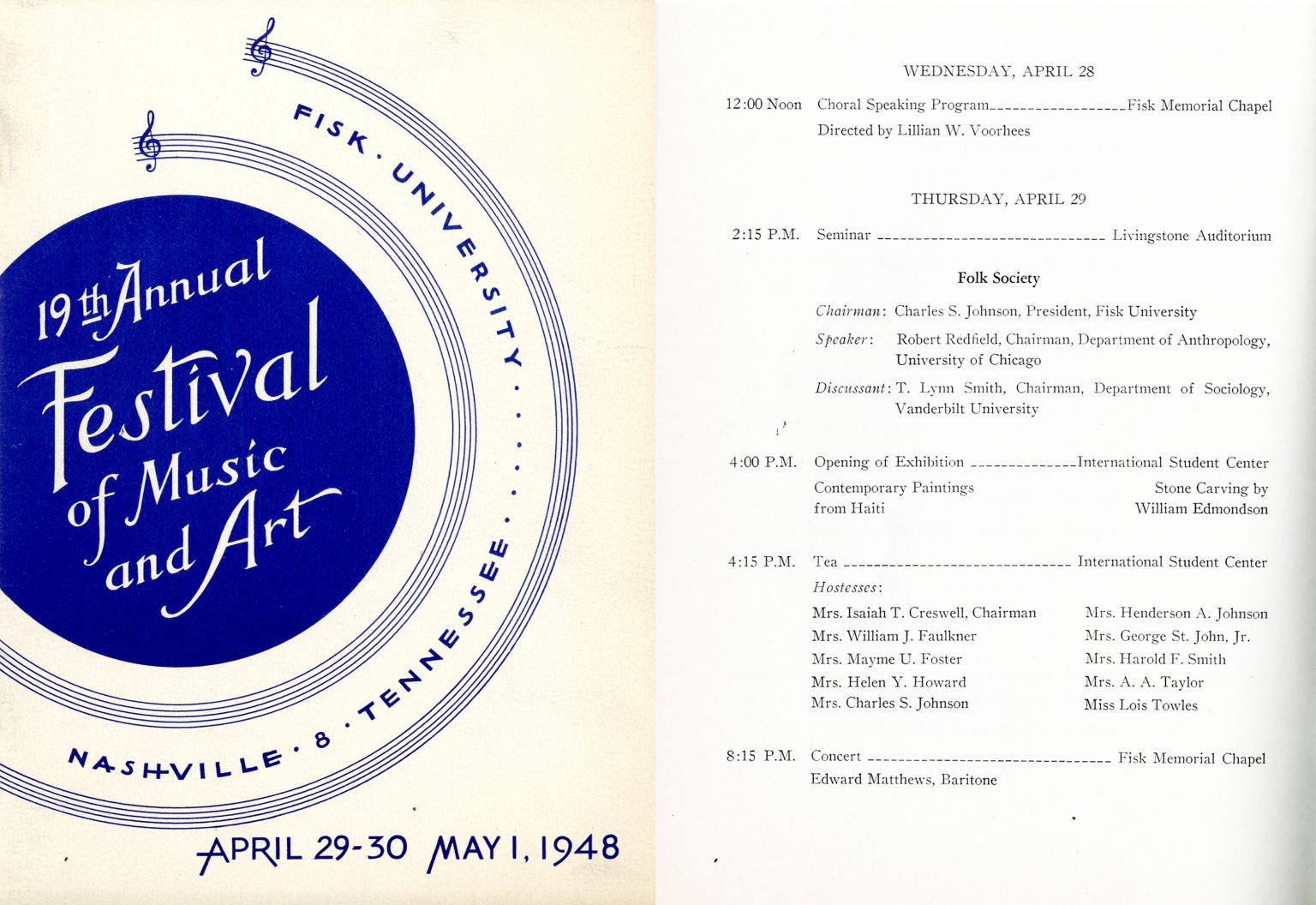
The Sculpture of William Edmondson: Tombstones, Garden Ornaments, and Stonework will be on view at both Cheekwood and the Fisk University Art Galleries. This concurrent presentation helps more fully contextualize Edmondson’s work across Nashville during a particularly rich moment in the city’s cultural history, which also included an exhibition of his work at Fisk University in 1948, presented as part of its annual Spring Arts Festival. The two-venue presentation, however, also speaks to the underlying goals of this exhibition: to make Cheekwood’s tremendous collection of Edmondson and Edmondson-related works more widely and easily accessible for all.
Edmondson-Blog-1536x1056

The Sculpture of William Edmondson: Tombstones, Garden Ornaments, and Stonework supported by

Additional support provided by

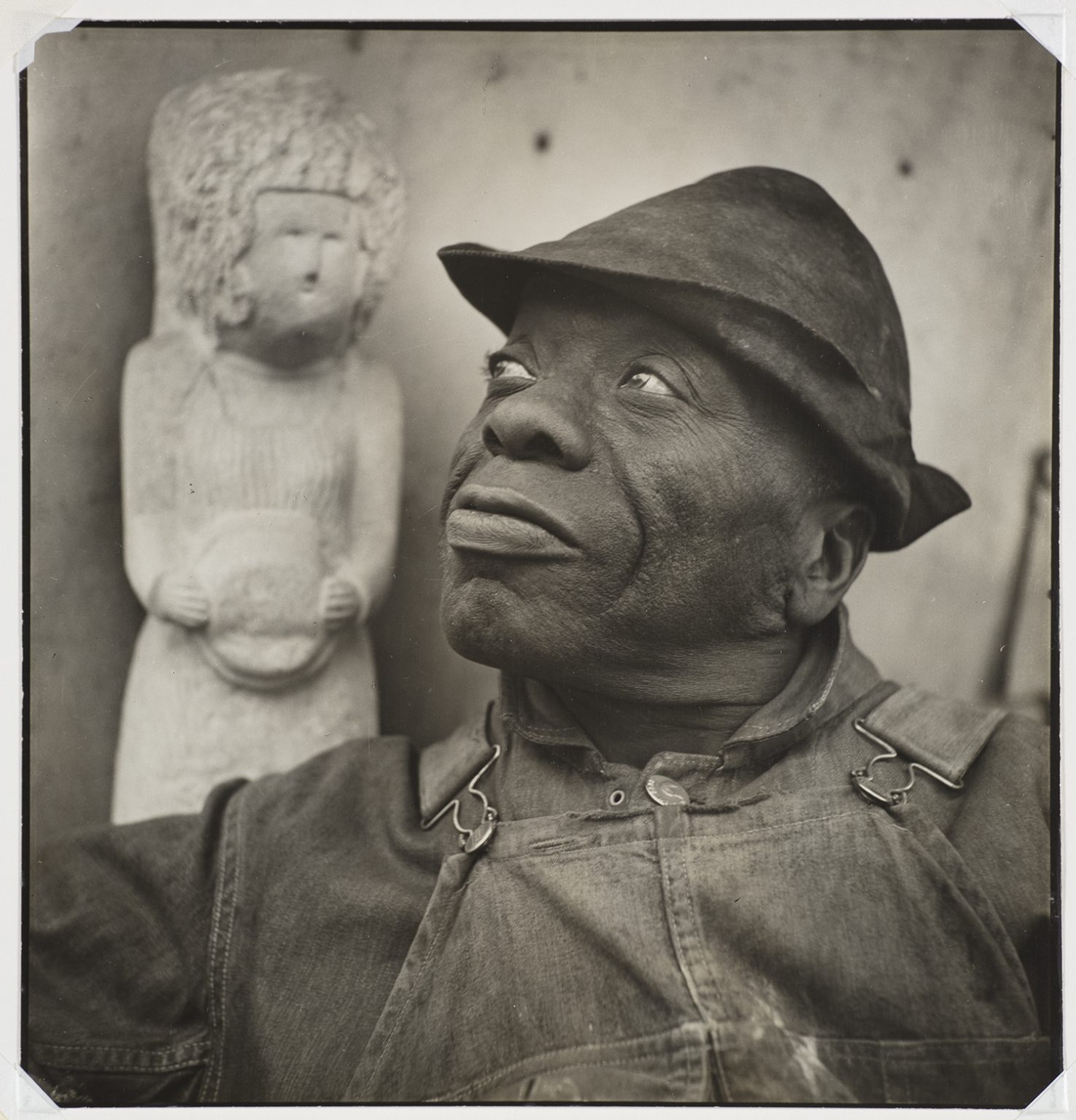
Image #1

William Edmondson, Sculptor, Nashville, Tennessee, 1937. Gelatin silver print. Gift of the Artist. 1964.3.1. © Center for Creative Photography, Arizona Board of Regents / Artists Rights Society (ARS), New York, Center for Creative Photography, University of Arizona: Louis-Dahl-Wolfe, Archive/ Gift of the Louise Dahl-Wolfe Trust

Image #2

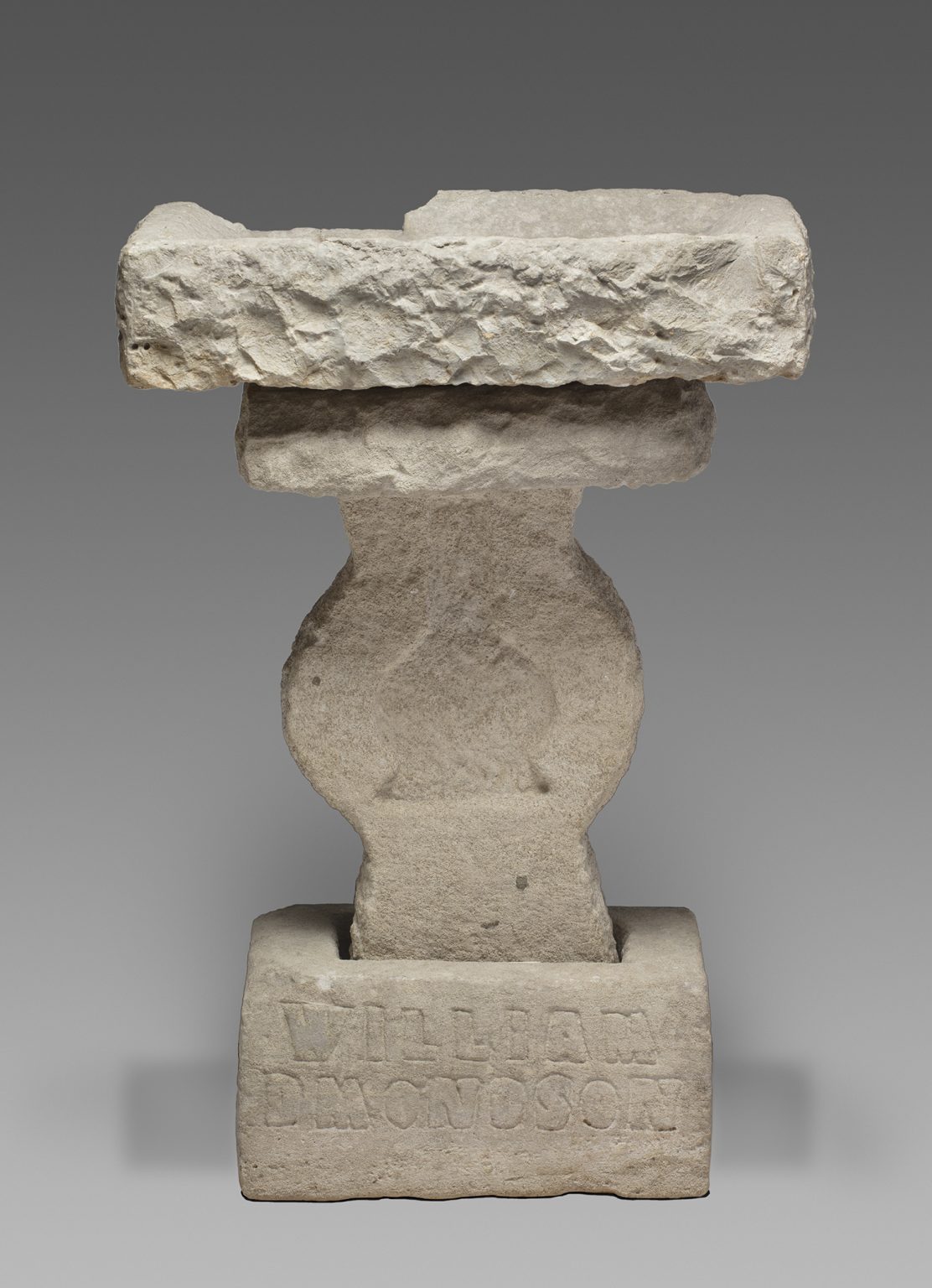
William Edmondson (American, 1874-1951). Birdbath, 1938. Limestone. Gift of Sophia Ezzell Dobson. 1994.20a-d. Photo: © Eric Wheeler, 2021

Image #3

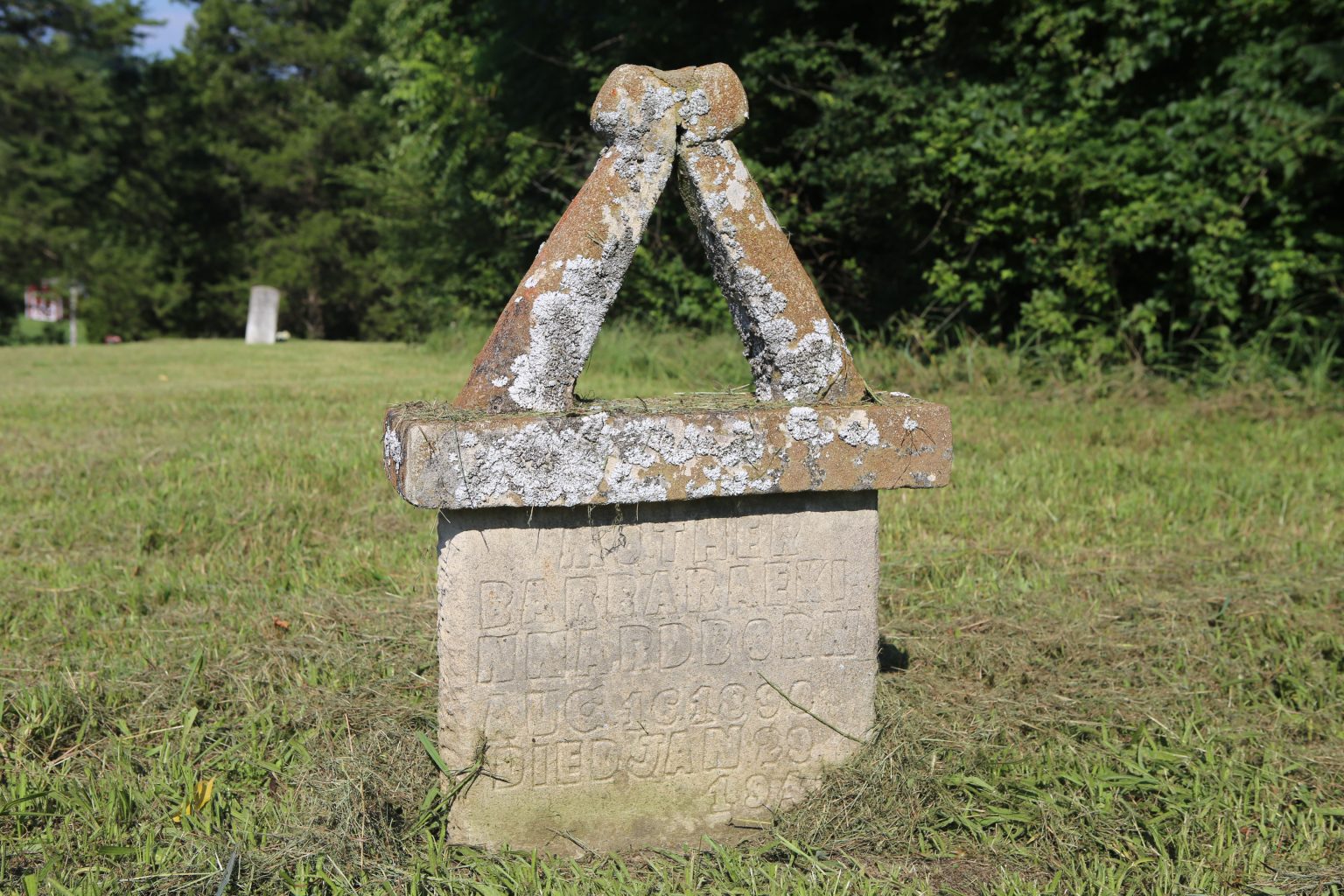
William Edmondson, (American, 1874-1951). Barbara Kinnard Tombstone, 1940. Limestone. Mount Pisgah Cemetery. Photo courtesy of Marin R. Sullivan.

Image #4A/B

Pamphlet for the Fisk University Spring Arts Festival, 1948. Courtesy of Fisk University, John Hope and Aurelia E. Franklin Library, Special Collections and Archives.
test

In Celebration of International Sculpture Day…

In Celebration of International Sculpture Day…Plensa Sculpture Returns to Cheekwood

Published April 21, 2021

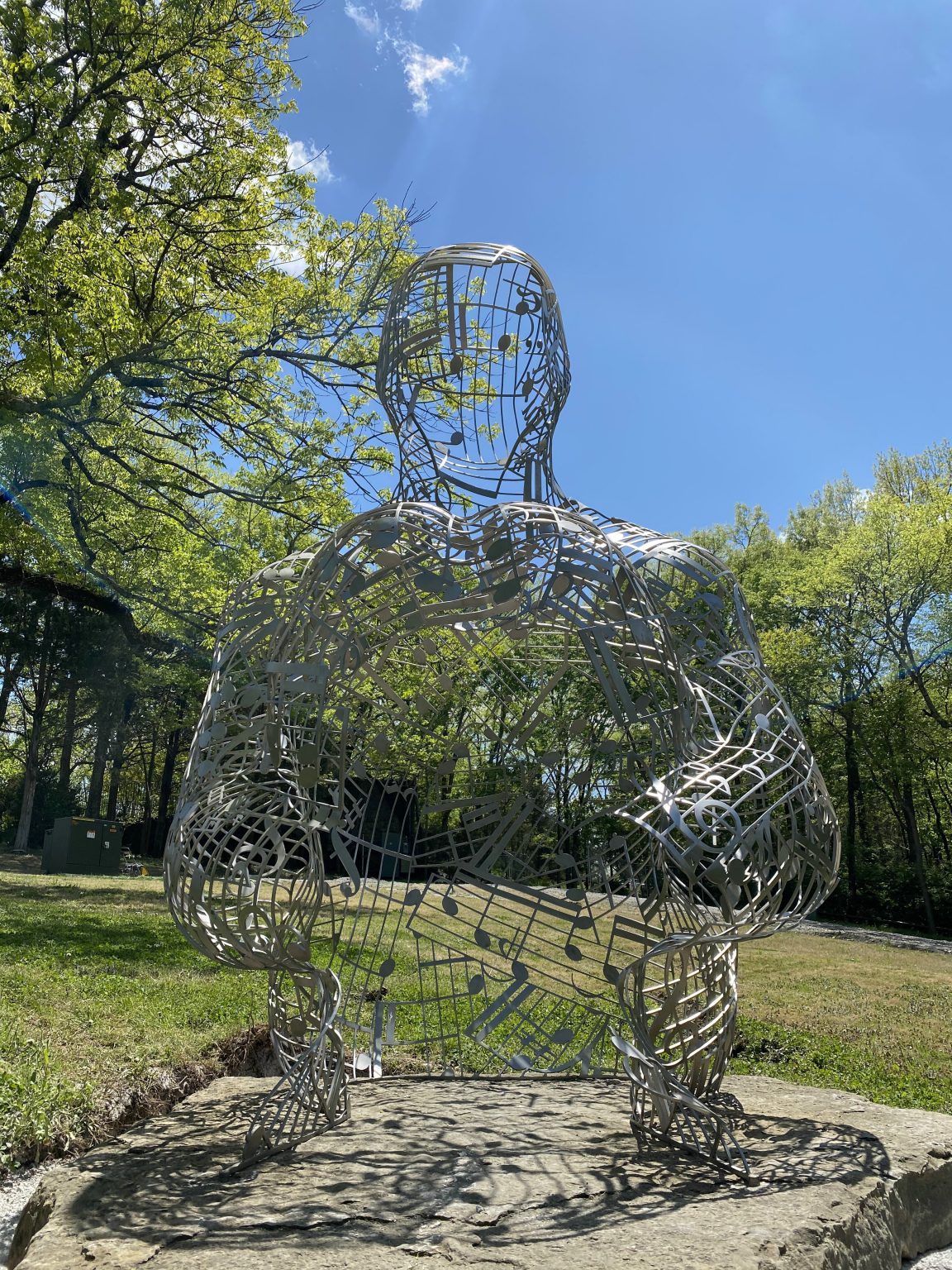
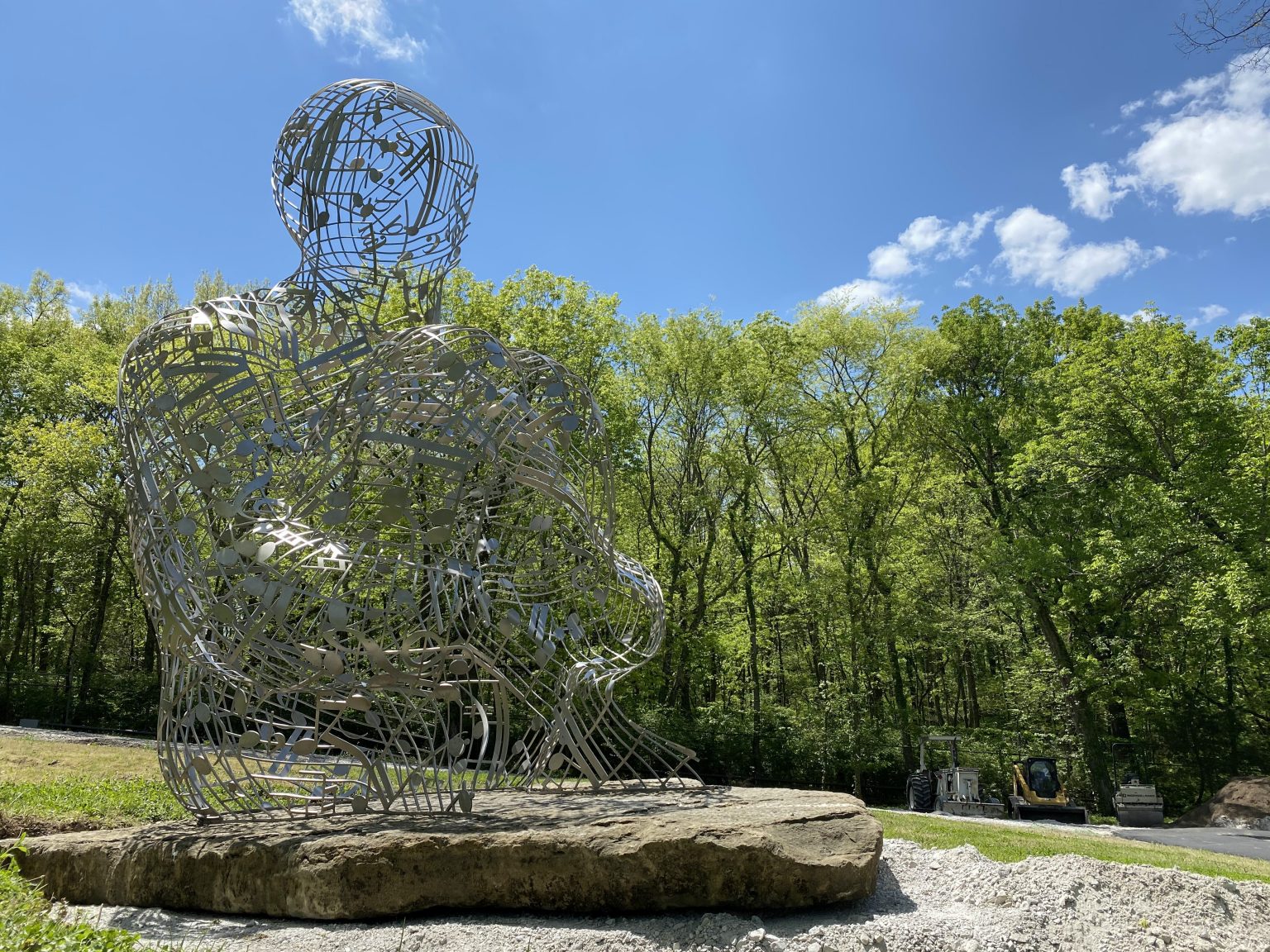
In 2015 Cheekwood acquired Silent Music II by the internationally renowned Spanish artist Jaume Plensa (b. 1955). First shown as part of the exhibition Jaume Plensa: Human Landscape, held that same year, the sculpture has since been on view at Riverfront Park in downtown Nashville, in the Riverview Gardens managed by Cheekwood in partnership with Metro Parks. Silent Music II is now back on the Cheekwood grounds, installed near the main entrance of the Ann and Monroe Carell Jr. Family Sculpture Trail.

Jaume Plensa (Spanish, b. 1955). Silent Music II, 2013. Stainless steel and stone. In honor of Lisa & David Manning, The Cheekwood Campaign. 2015.2.

IMG_5969-blog-1536x1152
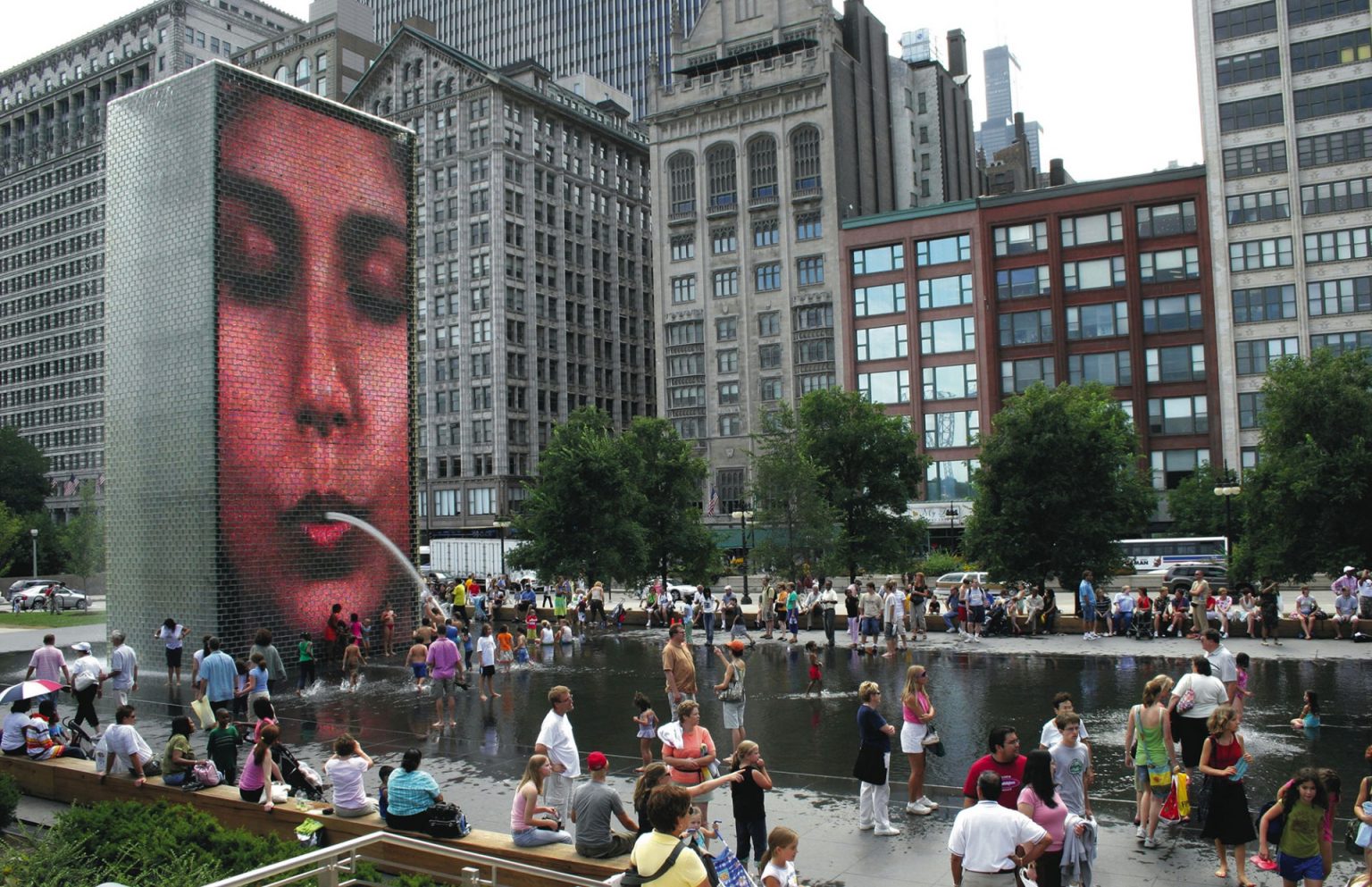
Crown-Fountain-1-1536x993

Born in Barcelona, Spain, where he still lives and works, Plensa has become one of the world’s foremost sculptors, particularly of large-scale, outdoor or public works. He has realized major projects in Bangkok, Calgary, London, Montréal, Paris, Shanghai, and Tokyo among many other cities. Plensa is perhaps best known in the United States for the celebrated Crown Fountain (2004) in Chicago’s Millennium Park and the nearly forty-six-foot high, six-ton Echo (2011), first shown at Madison Square Park in New York and now installed at the Olympic Sculpture Park in Seattle.

Jaume Plensa (Spanish, b. 1955). Crown Fountain, 2004. Glass, stainless steel, LED screens, light, wood, black granite, and water. 2 towers, 16 meters high. Millennium Park, Chicago. Photo courtesy: jaumeplensa.com © Jaume Plensa

The majority of Plensa work is figural, often depicting the forms of human bodies or faces, and draws on the traditions of portraiture. His figures are usually shown at rest or in poses of contemplation, though their identities are left open to interpretation. For Plensa, the focus on the body is not just about physical presence, but the ways in which human beings perceive and experience the world—a theme further echoed by the artist’s frequent references to language and music in his work.

Plensa frequently references his childhood memories of listening to his father play the piano, and the impact of growing up in a house filled with books and music. He recalls the total body experience of being enveloped by the sounds of poems being read or the melodies emanating from the piano, of the sounds and words swirling around him. This is the feeling he seeks to evoke with his sculptures of faceless, open forms constructed from letters from different alphabets and musical notes like those visible in Silent Music II.

The metal notes that comprise the transparent, open body of Silent Music II are a specific nod to Nashville and its long, rich connection to music, but they also reference the universal language of music, a form of communication that is not just heard, but also, in its silence, felt across the human experience. As Plensa himself states, “Silence to me is the capacity to be you with yourself and to try to understand the rest of the world, not to be apart.” One musical note or letter along, after all, does not carry much weight, but as the artist continues, “together with other letters you get a word. A word with a word becomes a text, and so on. A person alone is nothing, but together with others we become family, a neighborhood, a city, a county, a country. My portraits are similar – I love diversity, that is the richness of our society, and it’s the same as putting all the alphabets together, creating amazing diversity and how well we are when we are together.” [i]

[i] As quoted in Ginny Van Alyea, “An Interview with Jaume Plensa,” Chicago Gallery News, Published November 8, 2017, https://www.chicagogallerynews.com/news/2017/11/an-interview-with-artist-jaume-plensa.

IMG_5962-1152x1536
test

Permanent Collection Highlight: The Boy

Permanent Collection Highlight: The Boy

Publish Date: 3/31/2021

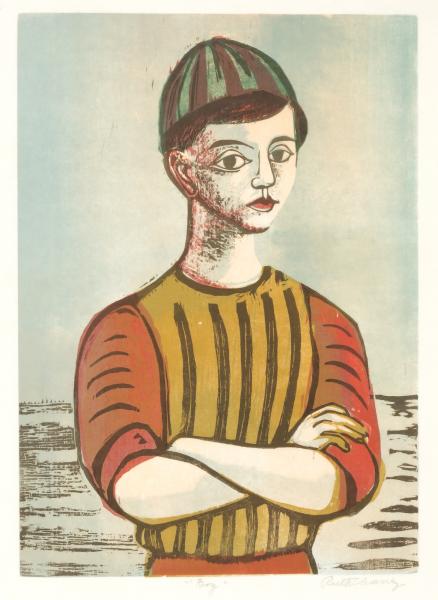
The Boy, c. 1935-43
Woodcut

Ruth Chaney, 1908 – 1973
American

Anonymous gift
1982.6.21

Ruth Chaney was born Kansas City, Missouri. Her work depicts scenes of everyday life in New York City. The Boy was published as part of the Works Progress Administration Federal Art Project, which was the first major attempt at government support of the visual arts in the United States and was the most extensive and influential of the visual arts projects conceived during the Depression of the 1930s by the administration of President Franklin D. Roosevelt. Chaney created a series of woodcuts under the patronage of the Federal Art Project including The Boy.

Chaney led a committee set up by the Public Use of Arts Committee, an offshoot of the Federal Art Project that created art for the New York subway system. There was such a favorable response to the committee’s subway art plan that an exhibition was organized to display their work at the Museum of Modern Art in 1938, just two years after the first Works Progress Administration Federal Art Project’s exhibition New Horizons in American Art. The exhibition, Subway Art, opened in February 1938 and focused not only on the art itself, but also the innovation that artists and scientists together created, allowing it to be displayed in a nontraditional setting.

A couple years later, Chaney’s work was part of another exhibition at the Museum of Modern Art entitled American Color Prints Under $10. The show was organized as a vehicle for bringing affordable art prints to the general public. It is evident from Chaney’s participation in this program and these exhibitions that she understood the relationship between the artist and the public. Her work was rooted in the idea that it would be accessible and readily available, expanding upon the ethos that art is for everyone.

Chaney, along with other female artists, were looking at breaking down the barriers between the artist, the elite and the consumer, the public. She explored art as a democratic practice that should be readily available to all. Chaney believed that art was to enhance a person’s life and no one should be excluded from that. Chaney, along with the other artists in Women to Watch, fought for equality in not only their own visibility in the field, but who would be allowed to see and collect their work.

Chaney’s work will be on display in Women to Watch: Celebrating the Centennial of Women’s Suffrage through May 2.

Learn More

Ruth-Chaney-The-Boy

Learn more about Women to Watch: Celebrating the Centennial of Women’s Suffrage from our Curator of Paintings and Works on Paper, Campbell Mobley.

test

Spring Blooms from Cheekwood to Your Home

Spring Blooms from Cheekwood to Your Home

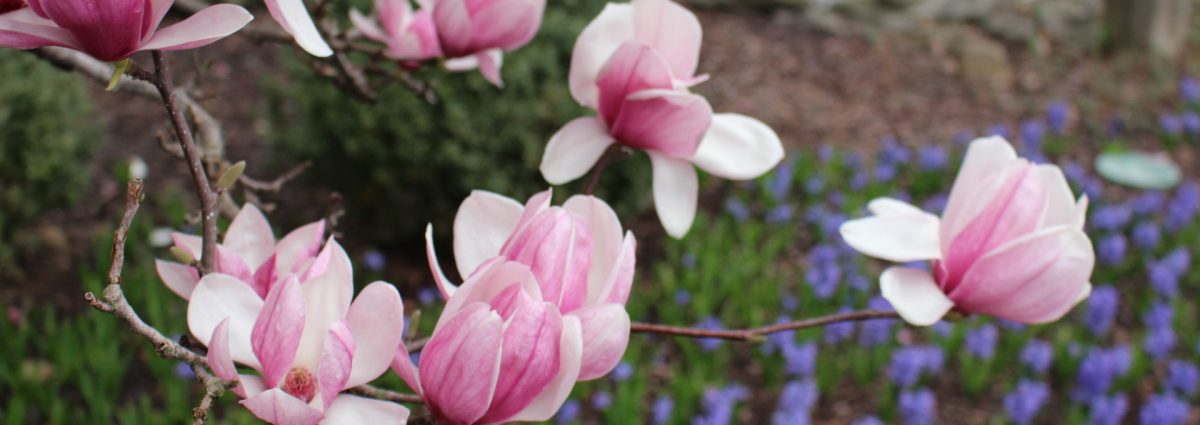
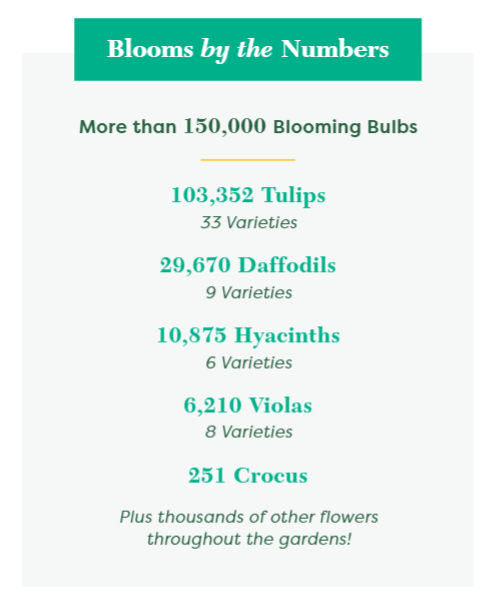
Each year, Cheekwood welcomes spring with Cheekwood in Bloom, a seasonal festival filled with over 150,000 flowers, wellness opportunities, and special happenings. The show features a variety of flowers including 100,000 tulips, plus daffodils, hyacinths, violas, crocus and many other blooms and flowering trees like magnolias and dogwoods. Every year the flower displays are beautiful, but this year there’s something even more spectacular as it is the first year Cheekwood has embarked on “theming” the tulip display.

We know that due to COVID-19 some people may not be able to visit our Cheekwood in Bloom display or activities this year in person, so we have brought Cheekwood in Bloom to you virtually!

We invite you to read on for more information regarding the inspiration behind this year’s spring plantings at Cheekwood and enjoy the video walkthrough with our Vice President of Gardens & Facilities, Peter Grimaldi.

If you are feeling inspired after reading about our Cheekwood in Bloom display, we hope you read on for ideas to freshen up your garden and your home! Our Plant Collections Manager, Shanna Jones, shares 5 garden tasks you should be doing this spring.

And your garden isn’t the only thing that can use some blooms this season! Celebrate the spirit of spring with a fresh spring wreath. Wreaths are great activities for crafters of all levels, from budding beginners to expert florists. If you’re looking for a charming way to brighten your door, read on!

Blooms-by-the-Numbers-2021

Cheekwood in Bloom Display

“The perennial challenge of creating novel beauty in the Bradford Robertson Color Garden each spring must draw on many sources of inspiration,” said Vice President of Gardens & Facilities, Peter Grimaldi, “and the creative spark for this year’s display came in conversation with new Vice President of Museum Affairs Jim Tottis as he effused the names of various artists and artworks relevant to the subject at hand – tulips! Specifically referencing George Hitchcock’s oil painting Bulb fields with windmill, c. 1890, the concept developed quickly from American Impressionism to rows of tulips planted in bands of color interrupted only by towering windmills.”

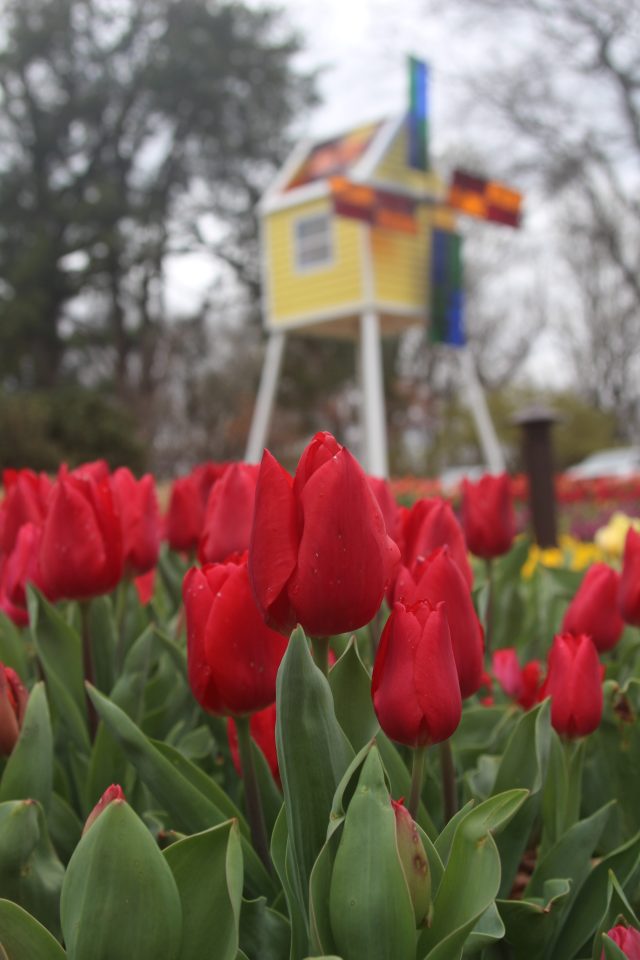
This year’s display was Dutch-inspired and makes a dramatic reference to Holland and the iconic imagery of fields of tulips planted in production. Visitors are greeted immediately by three-foot bands of orange, red, yellow, and pink stacked neatly behind the sidewalk that quickly sweep away to follow the curves of the Color Garden’s interior panel. Hyacinths and violas are overlaid in a checkerboard pattern of complimentary colors to further set off the very intentional expression of planted rows. The eye is not tied to the ground plane, however, as two giant windmills preside over the garden.

Abstracted from the same classical associations as the fields of tulips, the windmills reach over twenty feet toward the sky to catch the breeze and reflect the light caught by shimmering blades and prismatic roofs. A pair of smaller ‘kidmills’ feature telescopic, prismatic and bug-eye viewing tubes to activate the display and create an interactive experience for Cheekwood’s youngest guests and make a playful connection between classical beauty and the visible spectrum of light.

Originally conceived in the margins of a conversation about American art, the Blooms display will transport you directly to Holland or wherever your imagination may take you this spring.

IMG_9810-640x960

Virtual Tour with Peter Grimaldi, Vice President of Gardens & Facilities

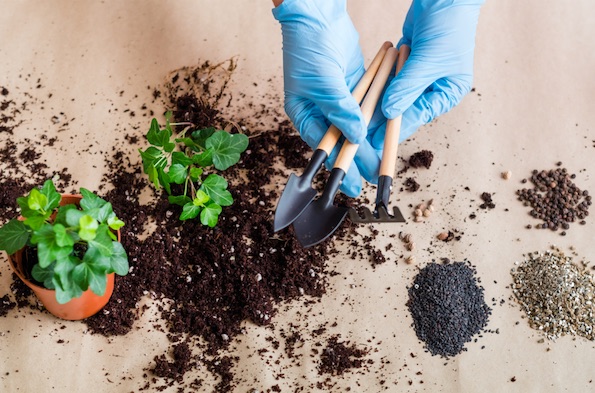
5 Garden Tasks for Spring

Now that you’ve learned a little bit about our Cheekwood in Bloom display, we invite you to use these tips provided by our Plant Collections Manager, Shanna Jones, to freshen up your own garden at home this spring!

  1. Fertilize acid-loving woody plants. It is best practice to fertilize blueberries, hydrangeas, rhododendrons, azaleas, and other plants in the Ericaceae family at least twice a year: once before they flower in late winter or early spring, and again after they flower in May or June. Remember: do not fertilize in fall. Doing so will create new growth that may not have time to harden off before freezing temperatures set in.
  2. Prep for vine growing veggies like beans and even cucumbers by constructing trellises, arbors, or tuteurs using wood and wire or whatever materials spark your creativity.
  3. Sow vegetables and other annual seeds inside before the last frost (normally mid April). You do not need a greenhouse to get ahead of the game! Simply choose a sunny windowsill or invest in grow lights and a multi-tiered shelf that can accommodate more space.
  4. Now is the time to plant seed potatoes. Growing potatoes in bags is ideal if you have a smaller garden or only a patio.
  5. Deadhead and thin out old wood from hydrangeas that bloom on new wood: smooth and panicle hydrangeas ( arborescens and H. paniculata). Do so before any sign of new growth, cutting back to 18-24” above ground. For bigger flowers, these hydrangeas can even be cut all the way back to the ground.
Gardening-Workshop

How to Make a Fresh Spring Wreath

Whether using plant material from your gardens, or picking some up from a local shop, we hope you draw inspiration from our Cheekwood in Bloom festival and enjoy making and displaying this beautiful DIY spring wreath.

What You’ll Need: 

  1. 1 Oasis 12” Ring Holder (available on Amazon or your local wholesale florist) 
  2. Sharp scissors, floral shears, or floral knife 
  3. A bucket with water for plant material 
  4. Small gauge wire (optional for wrapping stems of tuberous plants like daffodils and tulips to add stability) 
  5. Fresh plant material 

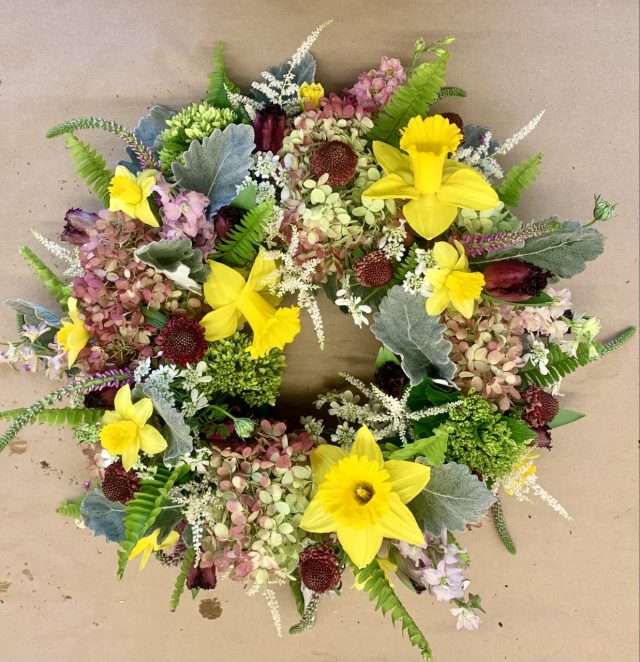
For this project, we used a combination of blooms purchased at a local wholesale florist along with stunning daffodils found in the gardens at Cheekwood. The color palette is primarily warm, using pinks, reds, and yellows, as well as pastels to celebrate springtime. You may wish to create your own design, using blooms from your own backyard. If you cut your own plant material, it is best to do so in the early morning or evening and then immediately put the items in water.  

When selecting your plant material:  

  • Stick to a simple color palette and shift tones within the palette. For example, follow a warmer palette with reds, pinks, oranges, and yellows or conversely, choose a cooler palette using blues, dark greens, and deep purples. Keeping your color palette simple will allow you to experiment with textures, shapes, and sizes while still looking cohesive.  
  • Cut or purchase in odd numbers—odd numbers create visual interest.  
  • Don’t be afraid to ask for advice from your local floral shop. They can help with selecting aesthetically pleasing color palettes and a variety of plant textures and sizes for your wreath.  
1.Header-640x662

For this fresh spring wreath example, we used the following plant material:

Primary Anchor Flowers
• Antique Hydrangeas: 3-5 stems
• Mini Green Hydrangeas: 3-5 stems

Secondary Anchor Flowers
• Mini Queen Anne’s Lace: 5-7 stems

Showstopper Flower
• Large daffodils: 3-5 stems

Accent Flowers
• Small Parrot Tulips: 10-15 stems
• Larkspur: 5-7 stems
• Veronica: 7-9 stems
• Astilbe: 7-9 stems
• Scabiosa: 5-7 stems
• Small Daffodils: 5-7 stems

Foliage
• Dusty Miller: 3-5 stems
• Swordfern: 10-12 fronds


Directions:

1. Prepare your Oasis foam and flowers. Soak Oasis foam in cold water for at least 15-30 minutes. The foam keeps your blooms hydrated. Similarly, prepare your plant material by giving them a fresh cut with your shears or scissors. Put them in your bucket of water while you work.


2. Place your Primary Anchor Flowers to establish the overall shape and diameter of the wreath. In general, begin with your largest blooms and finish with your smaller pieces. Larger blooms should be used as anchors, taking up the bulk of the wreath space. Divide these pieces into manageable stems, no longer than 3-4″, to avoid poking through the Oasis foam. Cut the stems at an angle to create a point, which will make insertion much easier. When inserting the stem into the foam, push in a bit deeper, so the overall height of the wreath does not get too tall, too quickly. You will be able to build up the height with smaller pieces later.

The Antique Hydrangeas and Mini Hydrangeas serve as Primary Anchor Flowers for our example. Because hydrangeas have a conical shape, we angled them outward to keep them from sticking straight up.

3. Place your Secondary Anchor Flowers to continue filling space. When filling your wreath, work in a circular motion to ensure even coverage. Remember to use all the edges of your Oasis foam-front, inside, and outside. Just be sure to leave a gap on the inside of the foam—after all, that’s what makes it a wreath! Take a moment to hold up your wreath as you work to inspect your coverage. This is also a good time to make sure your stems are securely in the foam by giving a gentle shake.

We used Queen Anne’s Lace for our Secondary Anchor Flower.

4. Alternate colors and textures as you work. This helps keep your composition balanced.

These small Parrot Tulips perfectly balance out our color palette after the Queen Anne’s Lace.

5. Highlight your Showstopper Flower. Add the vibrant bloom that takes center stage early on in your composition. These flowers create eye-catching focal points on your wreath. Remember the rule of odd numbers and work in 3s, 5s, and 7s.

Naturally, we chose these large daffodils grown at Cheekwood as our Showstopper Flower!

6. Begin to vary the heights of your stems as you add your Accent Flowers. Continue with the general rule of cutting stems at 3-4″ long while beginning to experiment with varying the heights of your Accent Flowers.

Our Accent Flowers are pink Larkspur, purple Veronica, and white Astilbe.

7. Consider the natural shape and direction of each plant as you begin to add foliage. Every bloom will have curvature to it—that’s the beauty of nature! Embrace the shape and direction of each plant rather than forcing it to fit on your wreath.

This Dusty Miller adds unique texture and shape to our wreath.

8. Stabilize the stems of small, tuberous blooms with wire before inserting. While this is an optional step, the wire adds additional rigidity to the stem, which helps with insertion. Gently wrap some small gauge wire around the stems of any delicate tuberous flowers, like these small daffodils below.

9. Finish adding the details with your final Accent Flowers and foliage pieces. Take the time to add your finishing touches—it’s all in the details!

We finished our wreath with burgundy Scabiosa and vibrant green Swordfern.

10. Place your wreath in an area of indirect light and don’t forget to keep it hydrated! Check the moisture in your Oasis foam daily and submerge in water as needed to keep your blooms looking their finest.

Want to see these beautiful blooms for yourself? We’re open daily during Cheekwood in Bloom, and we’ve extended our hours until 7 PM through April 6. Capacity is limited, and advanced reservations are required.

See all of our happenings, wellness opportunities, exhibitions, and more here!

Learn more about Cheekwood in Bloom

Cheekwood in Bloom is presented by

test

Permanent Collection Highlight: Echo Lying Down

Permanent Collection Highlight: Echo Lying Down

Publish Date: 2/15/2021

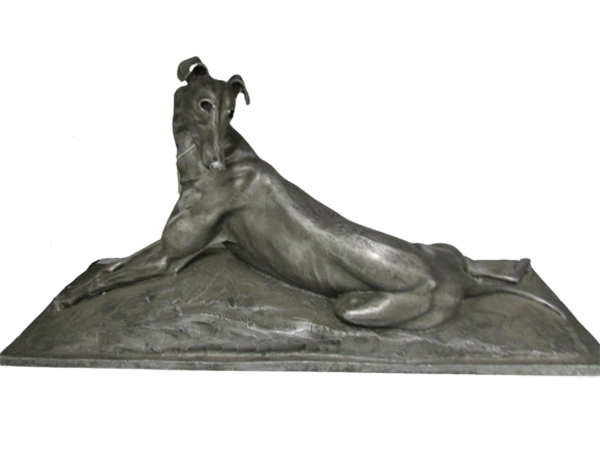
Echo Lying Down, 1935

Aluminum

Anna Hyatt Huntington (American, 1876-1973)

This spring, the Stallworth and Thompson Galleries will be installed to display Cheekwood’s collection of American paintings, sculpture and decorative arts from the Centennial through the Second World War. Cheekwood’s permanent collection gallery will display many favorite works from the museum collection that best illuminate the creative artistic talents that were prominent during Cheekwood’s designated collecting era of American Art from 1875-1940. The permanent collection gallery will contain paintings, sculpture and decorative arts will open February 20, 2021.

A highlight of the new permanent collection gallery installation is Anna Hyatt Huntington’s (American, 1876-1973) Echo Lying Down, 1935. Last seen on view at Cheekwood in 1964, the aluminum sculpture of Huntington’s elegant greyhound named Echo is perched on a piece of green marble. Huntington among some of New York City’s most prominent sculptors. At a time when very few women were successful artists, she had a thriving career. Hyatt Huntington exhibited often, traveled widely, received critical acclaim at home and abroad, and won awards and commissions. Huntington was born in Cambridge Massachusetts to the daughter of a professor of paleontology and zoology at Harvard University. This resulted in her early interest in animals and animal anatomy. She married Archer Milton Huntington, son of railroad magnate and industrialist Collis P. Huntington. Together, the Huntingtons founded Brookgreen Gardens in South Carolina.

Huntington is best known for her large-scale sculptures, but also created smaller pieces, often of domestic animals. These were given a personal, and often whimsical, quality. Huntington was known for her portrayal of the everyday gestures of animals, as seen in Echo Lying Down. In the sculpture, Echo looks as if it has just heard its name called and looking back at its owner, Huntington and her husband. Huntington came out of the generation of female sculptors at the end of the nineteenth century and we are thrilled to display the work again. While Huldah’s dogs Hiro and Aristotle are memorialized in the Bracken Foundation Children’s Garden, Echo will take over the role of guard dog, from inside the museum.

Echo-Lying-Down
test

Celebrating 30 Years of Scholastic Art at Cheekwood

Publish Date: 2/5/2021

2021 marks the 30th year that Cheekwood has had the honor of hosting The Scholastic Art Competition & Exhibition for Middle Tennessee. A program of the Alliance for Young Artists and Writers, this competition is one of the oldest and most prestigious student art competitions in the country. For nearly a century, the competition has aimed to support students’ artistic discoveries and encourage them to seek opportunities to showcase and share their art.  Serving as a regional affiliate is a tradition that has become an invaluable part of Cheekwood’s history, and one that The Tennessee Credit Union has sponsored since 1991.

Background on the Scholastic Art & Writing Awards

The Alliance for Young Artists and Writers, a national nonprofit organization, was established in 1994 to provide guidance and support for the next generation. The Alliance fosters the creative development of youth across the country through The Scholastic Art and Writing Awards, the most prestigious recognition initiative for creative teens, and the largest source of scholarships for young artists.

The Scholastic Art and Writing Awards began in 1923 when Maurice Robinson, the founder of the Scholastic book company, realized that students were being recognized for their athletic and academic achievements, but not their creative ones. He began the Scholastic Competition as a way to showcase the talents of young artists and writers, and assist them in beginning creative careers. The Scholastic Art & Writing Awards recognize student achievement in the visual and literary arts in 28 categories, including architecture, painting, flash fiction, poetry, printmaking, fashion design, Expanded Projects, and more.

Since the program’s founding in 1923, the Awards have fostered the creativity and talent of millions of students and has included noted artists such as Red Grooms and Andy Warhol among past winners. The program has an impressive legacy of being the first to acknowledge creative talent and is today’s largest source of scholarships for creative teens.

The Awards Process

Students ages 13 and up residing in the United States, U.S. territories and military bases, or Canada, are invited to submit original work in 28 art and writing categories, including architecture, painting, flash fiction, poetry, printmaking, fashion design, and a new category, Expanded Projects, which includes interdisciplinary and experimental visual art.

In 2020, over 320,000 works were submitted to regional programs for judging – that’s a lot of art and a lot of talent. Many young artists submit their pieces for chances at scholarships and recognition of their creativity. For the program at Cheekwood, hundreds of students submit photographs of their works online to be judged at Cheekwood by expert panels of jurors including local artists, curators, and professors. Cheekwood receives submissions from students in public schools, private schools, homeschool programs, and other educational programs in Middle Tennessee, including the following counties: Cheatham, Davidson, Dickson, Maury, Robertson, Rutherford, Sumner, Williamson, and Wilson.

Once these are received, jurors have just a few days to pour over a thousand submitted pieces and choose the winners. “As a juror, it is a pleasure to see such impressive skill and imagination showcased in these students’ artworks. This next generation of emerging artists embodies a wealth of creativity that inspires critical thinking, empathy, and hope for our world,” said Arielle Altenburg.

Choosing from such a large and incredible selection is not an easy task for the jurors, but there are some guidelines to help determine the winners in each category. All works are blindly adjudicated based on originality, technical skill, and the emergence of personal vision or voice. 

– Originality: Work that breaks from convention, blurs the boundaries between genres, and challenges notions of how a particular concept or emotion can be expressed.

– Technical Skill: Work that uses technique to advance an original perspective or a personal vision or voice, and show skills being utilized to create something unique, powerful, and innovative.

– Emergence of a Personal Vision: Work with an authentic and unique point of view and style.

To see the jurors for the 2021 Middle Tennessee Scholastic Art Awards, click here.

Scholastic-2020-Warner-Tidwell-Photography

The Awards

All entries are considered for several award categories including Gold Key, Silver Key, Honorable Mention, and American Visions Nominees. Gold Key represents the top 5% of entries, and there are only five American Vision Nominees per region and these nominees then have their works entered into a competition to be judged by a panel of jurors in New York City, where one artist is selected to receive the American Vision Medal.

– The American Vision Awards is a national-level recognition that showcases the best works of each region. The American Vision nominees in the Middle Tennessee Region receive a Gold Key Certificate and an American Visions Nomination Seal. Of the five nominated works from our region, one is selected in national judging to receive an American Vision Medal, which is the highest regional honor.

– Gold Key artwork demonstrates the highest level of achievement in technique, originality, and personal voice. Gold Key Award winners receive a certificate, a lapel pin, and the opportunity to compete nationally in New York City. Gold Key awarded works are displayed in the Historic Mansion & Museum Art Galleries during the Scholastic Art Exhibition.

– Silver Key artwork demonstrates achievement worthy of recognition on the regional level. Award winners are recognized for the exceptional quality and execution of their artwork and receive a certificate and lapel pin. Silver Key awarded works are displayed digitally in the Historic Mansion & Museum Art Galleries.

– Honorable Mention artworks are accomplished works that show great skill and potential. Award winners are recognized for their skill with a certificate.

To see all winners of the 2021 Middle Tennessee Scholastic Art Awards, click here.

The Artist by Mattie Ree Neal, Lipscomb Middle High Academy, American Vision Nominee, 2020.  (right)

Middle Tennessee Scholastic Art Awards Exhibition at Cheekwood

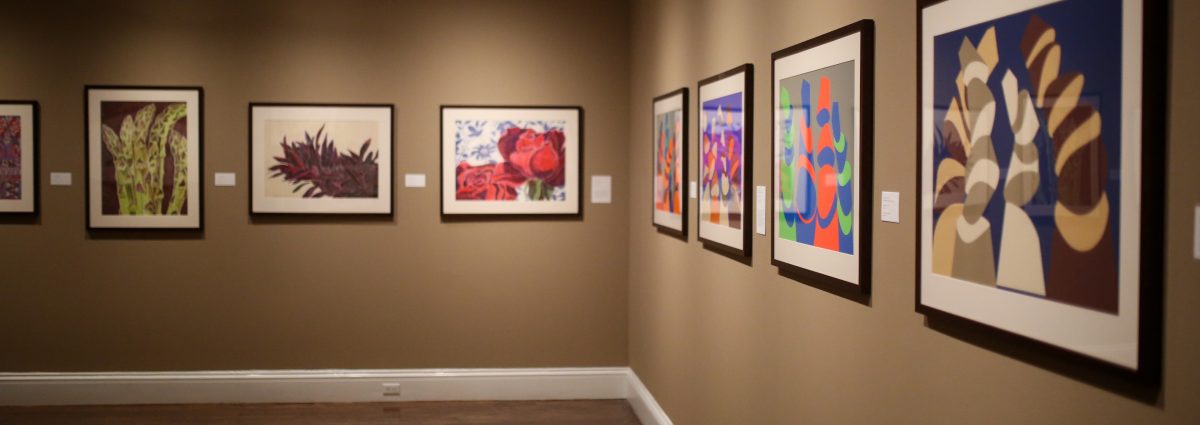
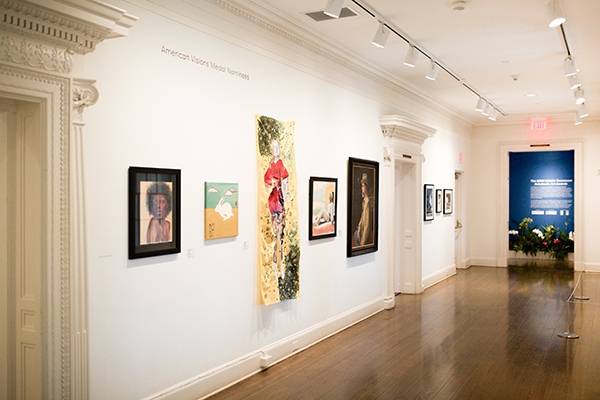
While the ceremony honoring the award recipients went virtual this year, the art works themselves can still be seen in Cheekwood’s Historic Mansion & Museum Art Galleries from February 6 – February 21, and a lot has been packed in for this two-week long exhibition.


This year 523 students from 29 total schools, programs, and institutions submitted over 1100 works of art for the competition. Cheekwood’s galleries showcase 85 Gold Key Award Recipient Pieces and a slideshow featuring the 102 Silver Key pieces.


The works within this exhibition range in medium and subject matter, with no two being remotely alike – a credit to the talented artists featured in the exhibition. While strolling through the galleries, one often must remind themselves that these pieces are the product of those who are in grades 7-12, as the works themselves are so well-done, and so creative, that this information itself is often unbelievable.

The artists in the show draw inspiration from many sources – family, friends, hobbies, God, and even just the passion for creating itself.

“I’m mostly inspired by the people that surround me. Many of my family members and friends are talented creatives, not just in physical skillsets but in the way they love and live. They inspire my own sense of creativity by setting such profound examples of what it means to be an artist – to be a storyteller, a source of compassion, a challenger,” said Bella Ravella, Grade 12, American Vision Nominee. “In that sense, I’m also inspired by unique and socially impactful artwork, anything that communicates purpose.”

Ravella’s work, “I, too, am America” Vol 1,is what most would consider a socially impactful artwork. Depicting a homeless man smiling and waving an American flag, humbly asking for change in front of a large high-rise, the piece is named recalling the last line in Langston Hughes’ famous “I, Too” poem, and reflects the language in that piece.

While Ravella’s moving photograph focuses on an individual previously unknown to the artist, many of those featured in the exhibition capture the essence of individuals that have deep connections to the artists’ everyday lives.

“[sic] sweet cookie refers to my great grandmother nicknamed ‘Cookie’ who passed away recently. She was sweet just like a cookie, so the name has some symbolism to it,” said Addi Gerlach, Grade 12, American Vision Nominee. “[For this piece] I wanted to [draw] an old woman because of the beautiful textures and lovely aging they have. So who better to draw than my own great grandmother herself?”

The work is hyper-realistic showing the age of the subject, but also the beauty. Fully detailed, close up in grey scale, staring at the viewer. Another piece within this exhibition Barriers utilizes this realistic technique as well, but goes in almost the complete opposite direction in every way.

Barriers, a work by Chloe Salvatore, a senior at Summit High School and American Vision Nominee, features a young woman with bright pink hair. Colorful and vibrant, the subject is quite literally using her hands as a barrier between herself and the audience. “Barriers represents how we push other people away and only let them see certain parts of us, and how we are afraid to try new things because of the fear of failure,” said Salvatore.

Within this piece, you are able to see that fear, that level of insecurity, that the artist is trying to express and push into her art. “I am a perfectionist. I always feel the need for my art to look as realistic as I can,” says Salvatore, “I believe perfectionism is fueled by both insecurity and pride, and this is something I’ve been exploring through my art this year.

Many of the teens in this show plan to pursue art in the future as a career, with most planning to attend college in that pursuit and scholarships are one of the possible benefits of winning an award in The Scholastic Art Competition. In 2021, Nossi College of Art offers award recipients pursuing a bachelor’s degree a scholarship of $4,400 to encourage these creative teens to follow the path into the arts world.

And walking through the galleries, it is easy to understand why Nossi College of Art would encourage pursuit along this path. Guests will feel a sense of awe as they walk through the galleries in the Historic Mansion & Museum, turning a corner to see K9 Police drawn with such detail by 8th grader Amelia Wang that it is hard to believe it is not a photograph, and then stumbling upon The Blind Queen by 10th grader Saida Bolduc, a work that has so much to look at that the viewer is left pondering the symbolism of each element, each stroke, long after they have left the exhibition. In a truly unprecedented year, one thing has not changed – the talent that is on display only gets better every year, and this year is no exception.

Middle Tennessee Scholastic Art Awards Sponsor

The Tennessee Credit Union has sponsored the Middle Tennessee Scholastic Art Awards since 1991 and shows their support in more ways than one, with continued support of the exhibition easily seen by a visit to their offices. Over the 30 years that Cheekwood has hosted the Middle Tennessee Scholastic Art Awards and The Tennessee Credit Union (TTCU) has graciously presented the exhibition, it has become a tradition for TTCU staff to select and purchase one Gold Key piece. Each piece is framed with a plaque noting the winner’s name and year of the exhibition. Nearly 30 pieces now adorn the TTCU offices in Nashville. You can see images of some of the works by clicking this link.
“We are proud to sponsor the 30th Anniversary of this Exhibition and look forward
to the continuation of this partnership. We continue to be inspired by the students and their educators who have connected the community by fostering creativity and demonstrating academic achievement through art. As an organization built by teachers, we value the Scholastic Art Awards Program and how it promotes
and supports the future of creative minds.”

– Michael D. Martin, President and CEO, The Tennessee Credit Union.

test

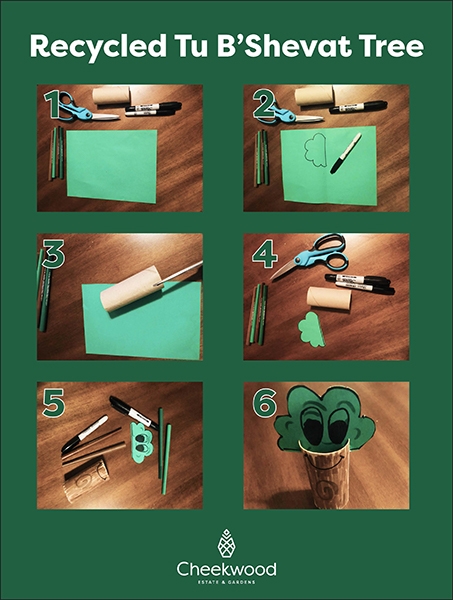
Tots! Activity: Recycled Tu B’Shevat Tree

Tots! Activity: Recycled Tu B’Shevat Tree

As Cheekwood’s Tots program is temporarily suspended, we are sharing today’s activity for parents and tots to activate at home. Use our files to create your own Tu B’Shevat Tree out of recycled paper rolls, then share your work with us by tagging @cheekwood on Instagram and using #cheekwoodtots!

Here’s what you’ll need:

• Green construction paper

• Scissors

• Toilet paper roll

• Markers, crayons or colored pencils

• Stamps and ink pads

• Stickers

Recycled-Tu-BShevat-Tree

Directions:

1. On a piece of green construction paper, draw a large tree top shape and cut it out.

2. On one open side of the toilet paper roll, cut two small slits on each side. This is where the treetop will be placed.

3. Color and decorate the treetop previously cut out.

4. Stand the toilet paper roll up with the cut side up. Please the treetop into the slit.

5. Optional: If your tree is having a hard time standing, cut a square piece of thick paper/cardboard and glue it to the bottom of the tree.

Privacy Policy Sitemap Web design by Speak
Back to top