wordpress, Author at Cheekwood - Page 26 of 45 | Page 26
x icon Close
test

Tots! Activity: Kitchen Scrap Gardening

Tots! Activity: Kitchen Scrap Gardening

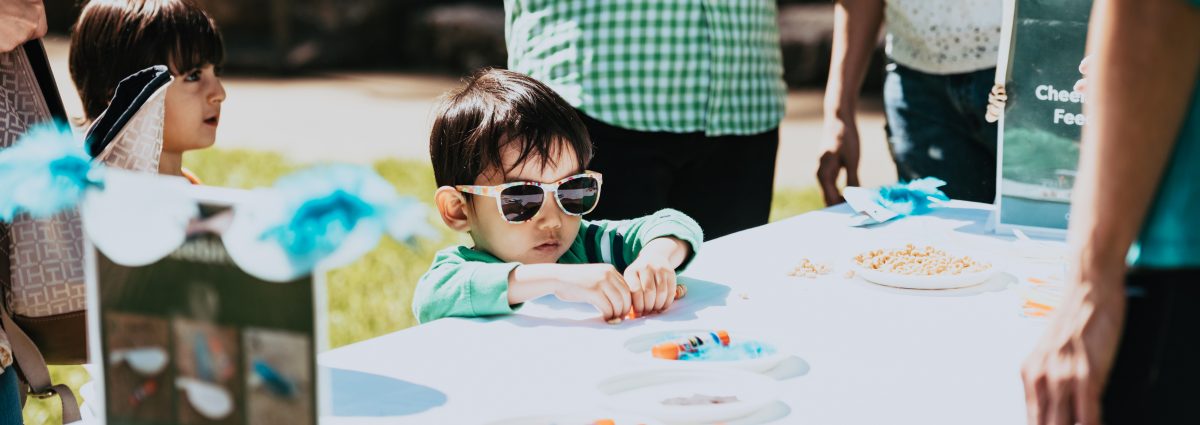
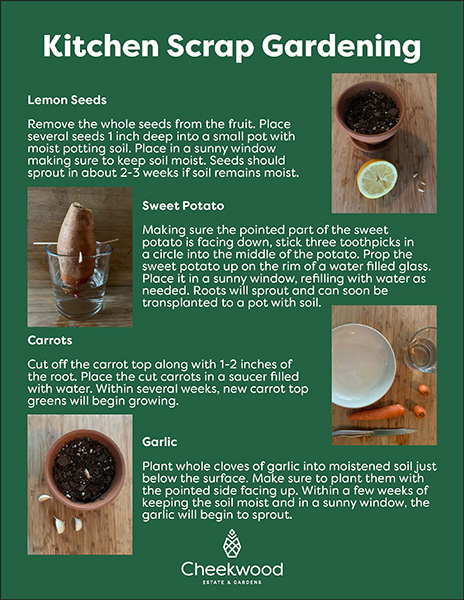
As Cheekwood’s Tots program is temporarily suspended, we are sharing today’s activity for parents and tots to activate at home. Learn how you can regrow fruits and veggies from produce you already have in your kitchen, then share the progress of your garden with us by tagging @cheekwood on Instagram and using #cheekwoodtots!

Here’s what you’ll need:• Various kitchen veggie and fruit scraps (garlic, lemon seeds, bell pepper seeds, ginger, sweet potatoes, onions, carrots, beets, celery)

• Various growing containers

• Potting Soil

• Water

• Toothpicks
*For sweet potatoes or ginger


Try pairing the activity with one of these books:
Eating the Alphabet by Lois Elhert

Growing Vegetable Soup by Lois Elhert

How a Seed Grows by Helene J. Jordan and Loretta Krupinski

Kitchen-Scrap-Gardening-2
test

Bracken Foundation Children’s Garden

Bracken Foundation Children’s Garden

In celebration of Cheekwood’s 60th anniversary as a public institution, we’re highlighting one of our 12 distinct gardens each month to showcase our wide variety of garden offerings. With 55 acres of rolling hills and 12 intricate, unique gardens, there’s something for everyone to experience and love at Cheekwood.

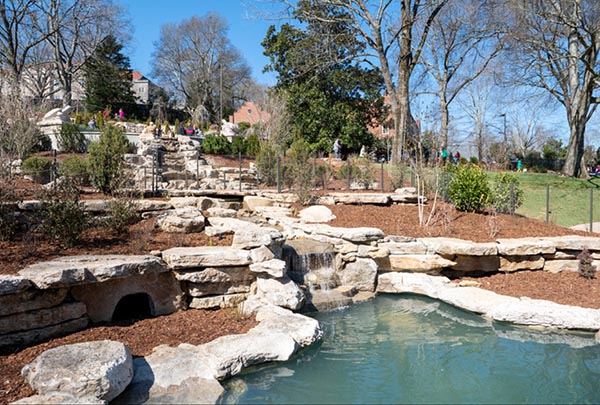
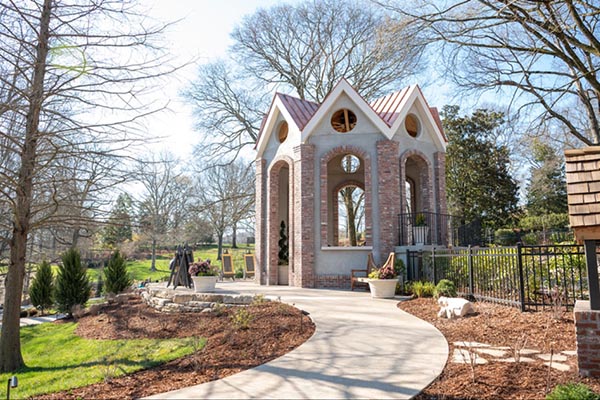
The Bracken Foundation Children’s Garden occupies a dynamic two-acre space on the eastern side of the property and bridges the botanical garden progression with the historic core. Situated between the Howe Garden and the Frist Learning Center, Cheekwood’s youngest garden is intended to be evocative of the historic estate. Designed by Tres Fromme in collaboration with the local landscape architecture firm HDLA, this space is truly a celebration of Cheekwood’s year-round beauty.

Paying homage to Bryant Fleming’s inspiration for the estate, the Children’s Garden incorporates a series of connected garden rooms amid a woodland setting, alongside an open lawn with multiple occasions to experience scenic vistas, characteristic of a Country Place Estate.

The children’s garden is presented as a journey through the arts. When exploring the children’s garden, guests have a fully immersive experience of several types of creative expression. Performance, the art of horticulture, the visual arts and literature, along with the vital art of play are all depicted through key architectural and landscape design elements.

Turtle-Pond
Studio-Pavilion

The performing arts are celebrated at the performance stage, where children can let their imaginations inspire them to improvise through dance, song, and pretend. This stage is defined by a mature tree canopy of decades-old ash trees and a stately southern magnolia. It is also used as a venue for professional concerts and other events.

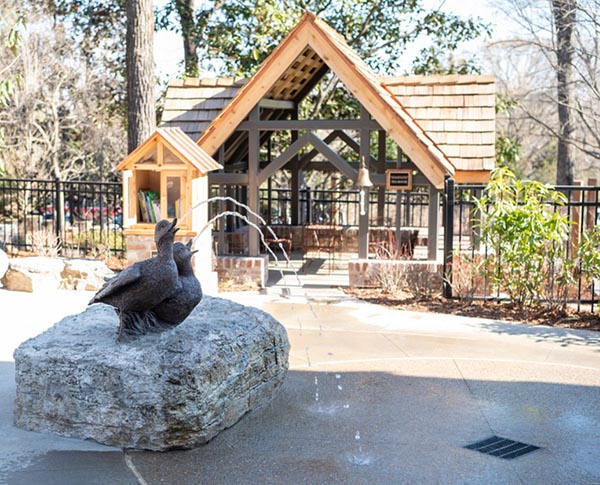
The Studio Pavilion marks the center for visual arts, where children can dip their brushes in water basins and create original artwork on slate tablets in plein air style. The literary arts are hosted in a natural setting in the Living Library. Bookshelves frame an outdoor room where visitors can rest or launch a scavenger hunt to find the natural elements categorized and stored upon the stone shelves.

The art of horticulture is prominently featured throughout the children’s garden and design cues are borrowed from the other spaces it borders. The incorporation of dogwoods and smaller shade perennials is a direct correlation to the Carell Dogwood and Burr Terrace Gardens.

The art of play is celebrated along the woodland adventure path that features log hoppers, a rope bridge and balance beams. The path originates at a stone labyrinth, an active though mindful feature of the garden. In the middle of the labyrinth lives one of Tennessee’s most treasured natives, the yellowwood, known for its picturesque shape and white, pendulous sweet pea-like blooms.

Playtime is consolidated and fully contained within Little Woods for the garden’s smallest visitors. Here children can spend time in the digging quarries, create scenes within the fairy garden, have a tea party inside the Japanese-style tea house, and travel the miniature adventure path.

Splash-Pad

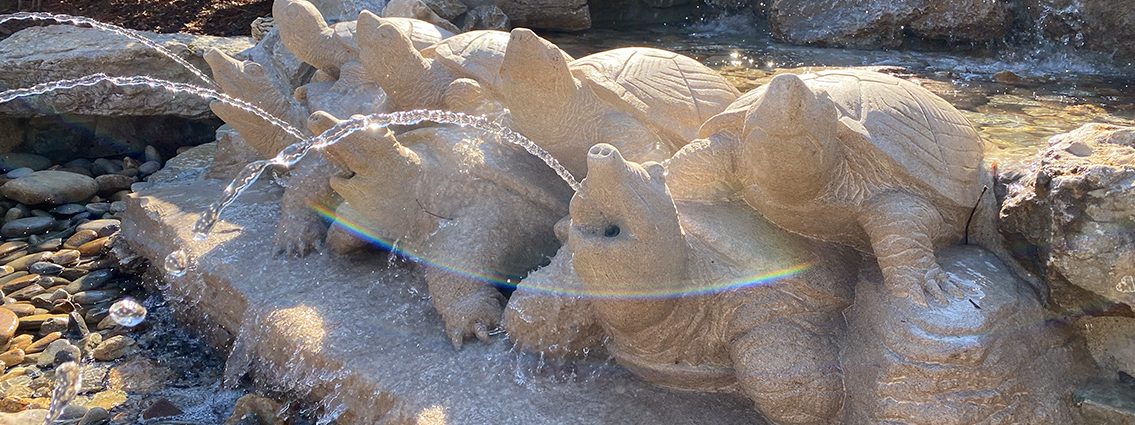
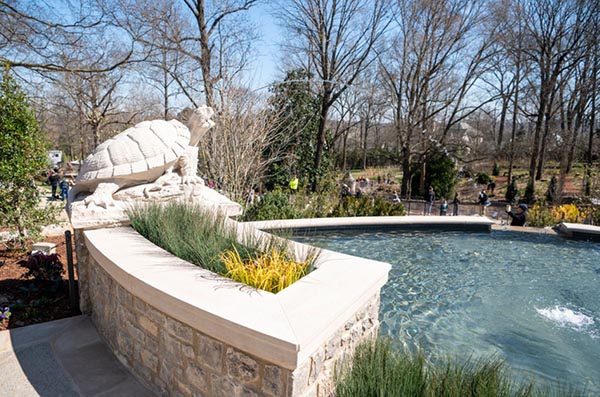
Turtles come alive in the turtle pond, where Cheekwood partners with the Tennessee Wildlife Resources Agency to maintain a sanctuary for native turtles confiscated from the illegal pet trade. Cheekwood’s permit allows the institution to serve as a rehabilitation center to these turtles, ensuring that the animals have every need met by a well-trained and knowledgeable staff with a background in zoological studies who also oversees the children’s garden.

The Bracken Foundation Children’s Garden is a place for people of all ages and is a true destination at any time with its many ways to offer pure delight and fun ways to learn. Horticulturally intriguing, with interactive surprises at every turn, spending time in the children’s garden at Cheekwood is a truly rich experience.

Click here to read about our other distinct gardens.


Check out our Tots! weekly art and garden activities in the Bracken Foundation Children’s Garden and Frist Learning Center every Tuesday – Saturday.

Tots! Activities   Virtual Tour

Turtle-Pond-3
test

Tots! Activity: Cherry Blossoms

Tots! Activity: Cherry Blossoms

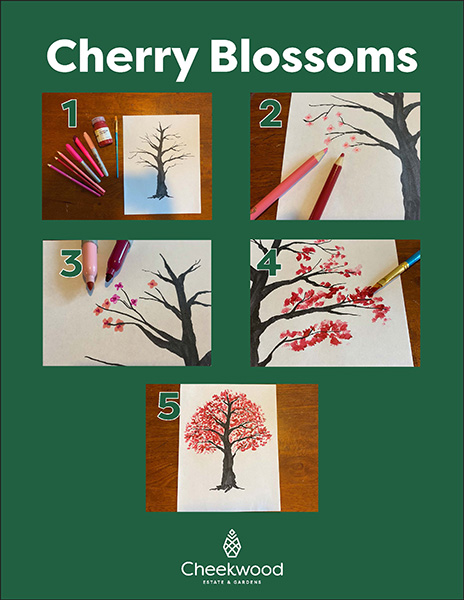
As Cheekwood’s Tots program is temporarily suspended, we are sharing today’s activity for parents and tots to activate at home. Use our files to create your own cherry blossom tree, then share your work with us by tagging @cheekwood on Instagram and using #cheekwoodtots!

Here’s what you’ll need:•  Paper tree trunk
*See template below
• Colored pencils, markers or paint and paint brushes


Tree Template  


Try pairing the activity with one of these books:
Sakura’s Cherry Blossoms by Robert Paul Weston

Wabi Sabi by Mark Reibstein and Ed Young

Ojiichan’s Gift by Chieri Uegaki and Genevieve Simms

Cherry-Blossoms-1
test

Bulb Basics

Bulb Basics

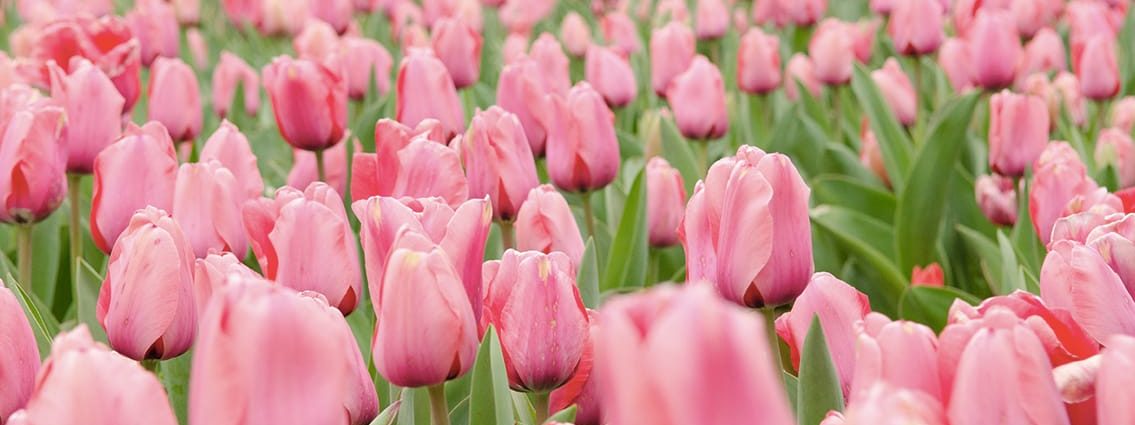
With virtual tours of Cheekwood in Bloom showing the 150,000 colorful bulbs covering our grounds, we’re getting down to basics about bulbs!

What’s in a Bulb?

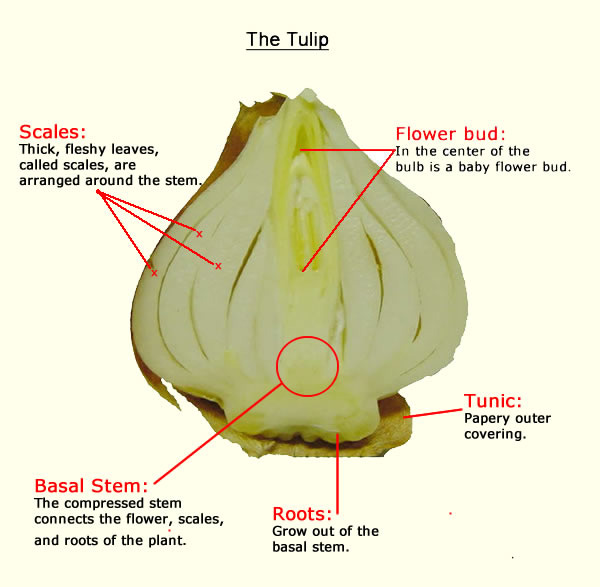
True bulbs, like tulips and daffodils, contain five parts:

  1. Scales
  2. Flower Bud
  3. Basal Stem
  4. Roots
  5. Tunic

Notice how the diagram is a vertical cross-cut of a bulb, showing a miniature plant! If you cut a bulb horizontally, you will find rings formed by scales. You can try this at home with an onion, garlic, leek, or shallot!

Image courtesy of the University of Wisconsin-Madison Arboretum

Vegetable Bulbs

You might only think of tulips or daffodils when you hear the term “bulb,” but did you know there are other types of bulbs you may find in your kitchen? These plants all grow from an underground mass of food storage tissues. Bulbs store enough food to enable them to grow and flower with no additional nutrients during their first year.

True Bulbs: onion, garlic, leek, shallot

Tubers: potato, jicama, yam

Rhizomes: ginger, bamboo

Corms: taro, water chestnut, dasheen

Tuberous Roots: sweet potato, cassava (tapioca)

diagram_photo_label

Garden Spotlight

Bradford Robertson Color Garden

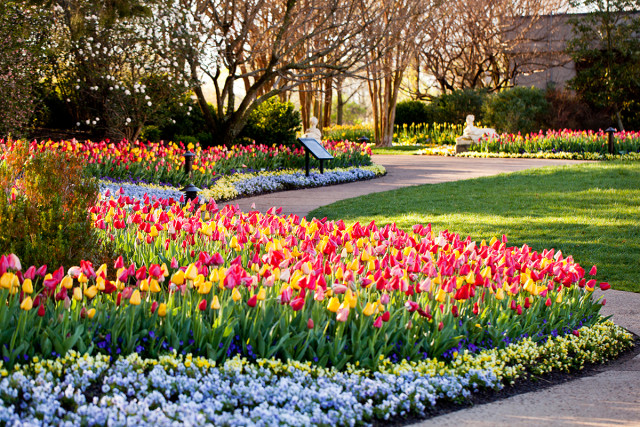
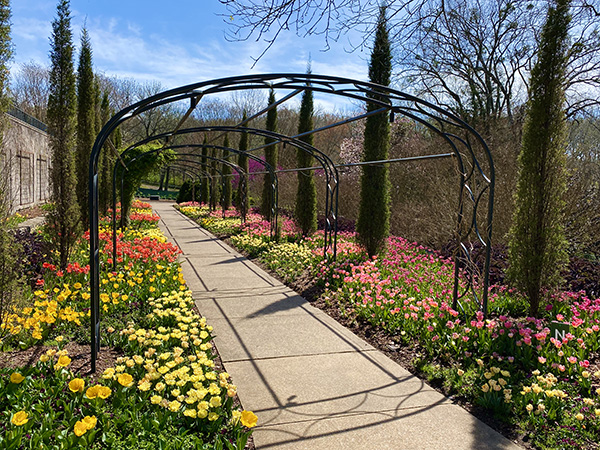
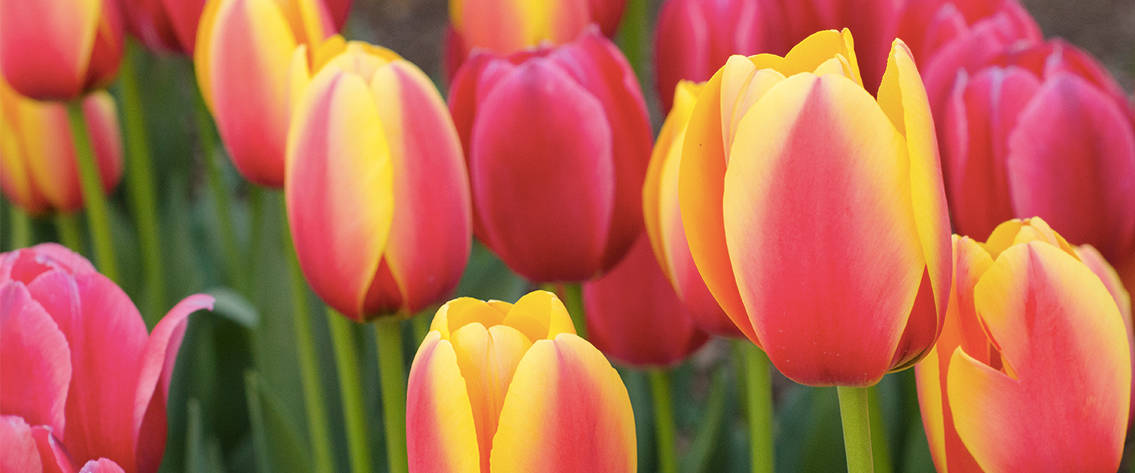
Many of Cheekwood’s colorful blooms can be found in the Bradford Robertson Color Garden, including 30 different varieties of tulips. The Color Garden presents the current season, using color as its main element of design. An allée of crape myrtles leads into this garden where sweeping curves of colorful annuals, perennials, and tropical plants border a sloping lawn and give a view of the distant hills. By giving context to the time of year, its exuberant plant material and meandering path lead guests to walk beneath a set of verdant arches, setting a hospitable tone for the entire visit.

The garden was designed by Naud Burnett in 1998 under the leadership of Bob Brackman, who was then the Director of Horticulture at Cheekwood. Burnett is noted for designing the Color Garden and Fern Dell at the Dallas Arboretum in Dallas, Texas.

This vibrant display does not appear overnight; Cheekwood’s gardeners prepare garden beds and begin planting hardy spring bulbs in the fall. Interested in planting bulbs of your own? Check out our tip sheet!

Tulip Tips

color-garden-22-sRGB-lr-e1466617453816-1

Take a virtual tour of the Bradford Robertson Color Garden during Cheekwood in Bloom!

Virtual Tour

Follow along on Instagram, Facebook and Twitter for more virtual blooms!

We hope these educational coloring sheets can offer meditative comfort for kids and adults of all ages. Download one of our educational coloring sheets below, and use #CheekwoodinBloom for your chance to be featured!

Daffodil   Hyacinth   Tulip   Pansy

Blooms-Slider-1
test

Gardeners’ Top Picks April 2020

Gardeners’ Top Picks April 2020

Spring has sprung, and the gardens are in full bloom here at Cheekwood! Our garden team has hand selected their top plant picks for April.

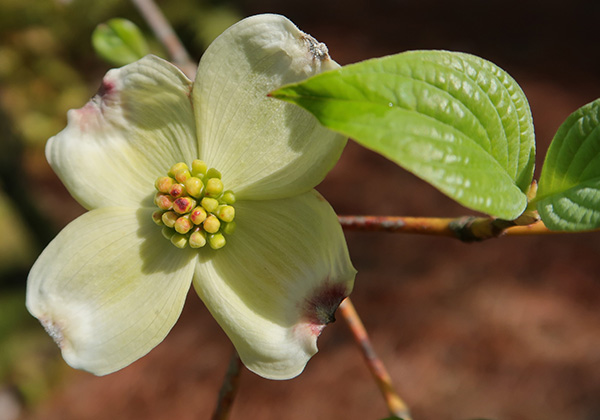
Flowering Dogwood (Cornus florida ‘Autumn Gold’)

Bloom Time: April – May

Sun Requirement: Part shade

Water Requirement: Medium

Wildlife: Birds & butterflies

Tolerates: Deer & clay soil

Native to North America: Yes

Other: Birds love the berries that follow flowering.

Zones: 5 – 9

Location: Carell Dogwood Garden

Cornus-florida-Autumn-Gold-Dogwwod-Gaden2

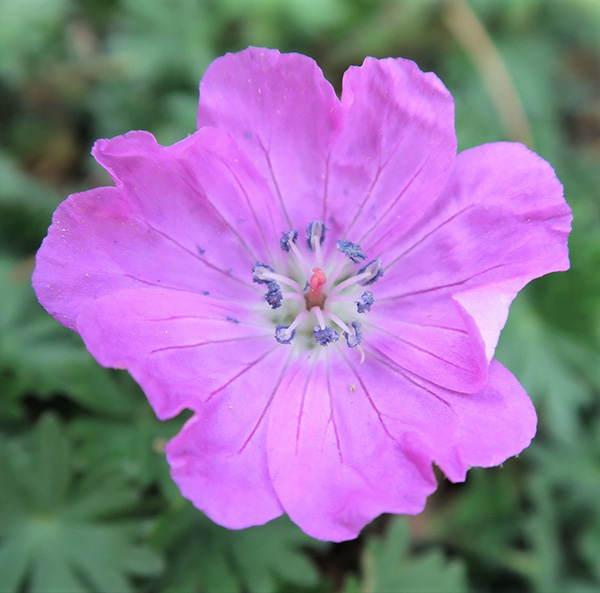
Bloody Cranesbill (Geranium sanguineum ‘Max Frei’)

Bloom Time: April – May

Sun Requirement: Full sun – part shade

Water Requirement: Medium

Wildlife: Butterflies

Tolerates: Rabbits, deer & clay soil

Native to North America: No

Other: Great plant for rock gardens.

Zones: 3 – 8

Location: Carell Dogwood Garden

Geranium-Max-Frei-DO-2

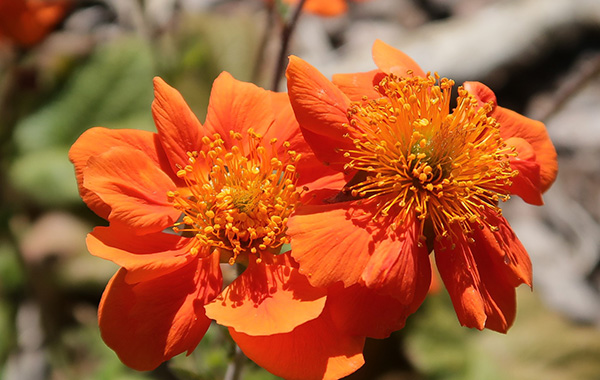
Geum (Geum ‘Tim’s Tangerine’)

Bloom Time: April – May

Sun Requirement: Full sun – part shade

Water Requirement: Medium

Wildlife: Bees

Tolerates: Deer

Native to North America: No

Other: Will bloom in spring and again in fall.

Zones: 5 – 7

Location: Turner Seasons Garden

Geum-Tims-Tangerine-Seasons-Garden-Summer-3

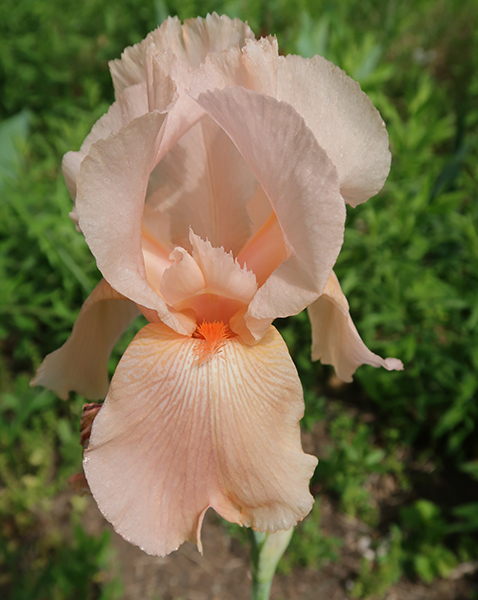
Bearded Iris (Iris ‘Beverly Sills’)

Bloom Time: April – May

Sun Requirement: Full sun

Water Requirement: Medium

Tolerates: Deer & drought

Native to North America: No

Other: Dykes Medal award winner

Zones: 3 – 9

Location: Wills Perennial Garden

Iris-Beverly-Sills-Wills-Garden-3-1

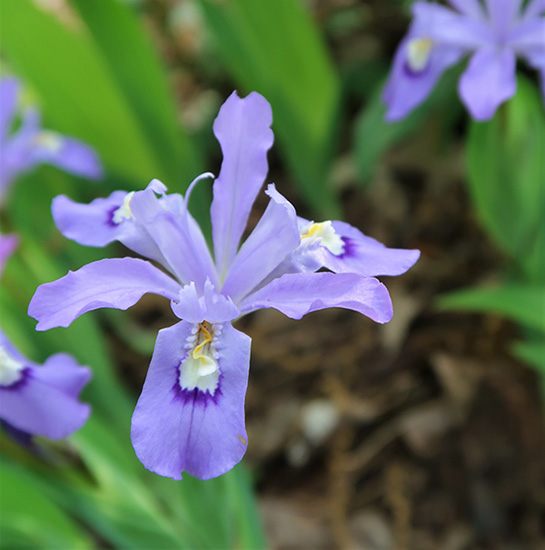
Dwarf Crested Iris (Iris cristata)

Bloom Time: April – May

Sun Requirement: Full sun – part shade

Water Requirement: Medium

Wildlife: Bees & hummingbirds

Tolerates: Deer & drought

Native to North America: Yes

Other: Can create a spectacularly vibrant early spring groundcover.

Zones: 3 – 9

Location: Howe Garden

Iris-cristata-Dwarf-crested-iris-Howe

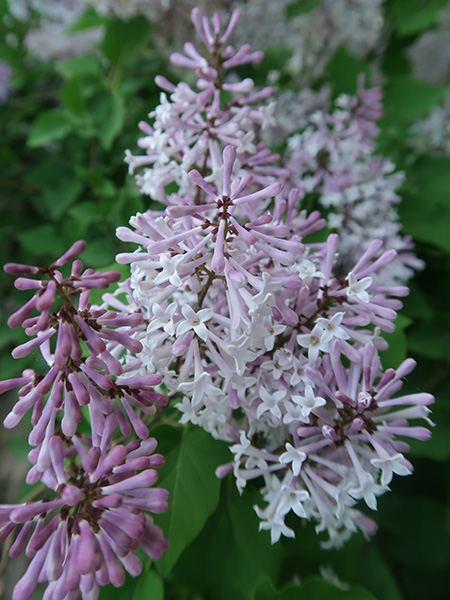
Manchurian Lilac (Syringa pubescens subsp. patula ‘Miss Kim’)

Bloom Time: April – May

Sun Requirement: Full sun

Water Requirement: Medium

Wildlife: Butterflies & hummingbirds

Tolerates: Deer

Native to North America: No

Other: Lilacs are extremely fragrant. This cultivar is mildew resistant.

Zones: 3 – 8

Location: Frist Learning Center: Rock Wall

Syringa-pubescens-subsp.-patula-Miss-KimFLC-Rock-Wall-5

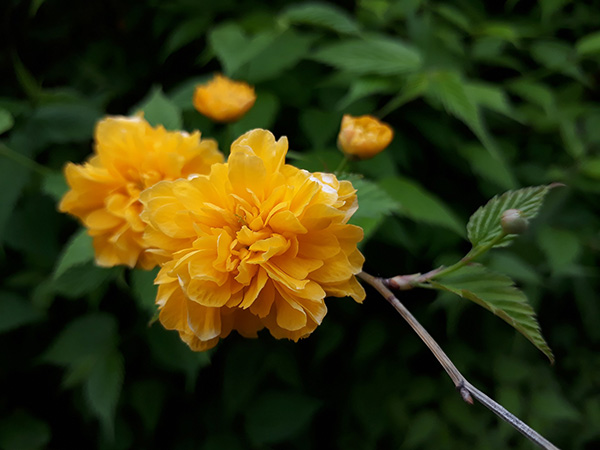
Japanese Kerria (Kerria japonica ‘Pleniflora’)

Bloom Time: April – May

Sun Requirement: Part shade

Water Requirement: Medium

Wildlife: Bees

Tolerates: Deer & heavy shade

Native to North America: No

Other: Excellent as either a specimen or a hedge planting.

Zones: 4 – 9

Location: Bracken Foundation Children’s Garden

Kerria-japonica-Pleniflora-Childrens-Garden

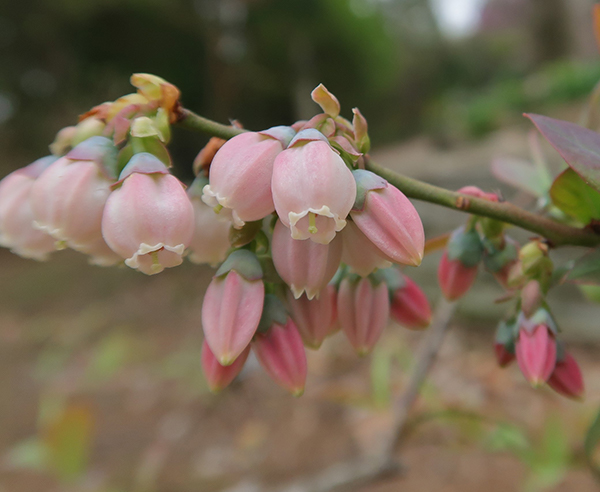
Highbush Blueberry (Vaccinium corymbosum ‘Sunshine Blue’)

Bloom Time: April

Sun Requirement: Full sun

Water Requirement: Medium – wet

Wildlife: Birds & butterflies

Tolerates: High pH soils

Native to North America: Yes

Other: Best usage is as an ornamental plant. Does not have a high fruit production.

Zones: 6 – 10

Location: Herb Study Garden

Vaccinum-corybosum-Sunshine-Blue-Herb-Study-garden
test

Tots! Activity: Flowers

Tots! Activity: Flowers

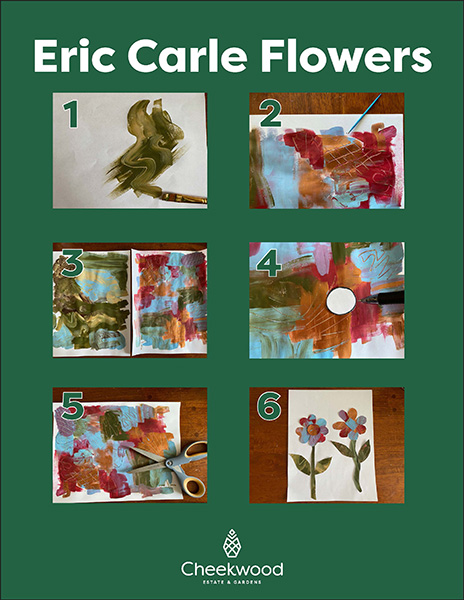
As Cheekwood’s Tots program is temporarily suspended, we are sharing today’s activity for parents and tots to activate at home. Use our files to create your own flowers inspired by Eric Carle, then share your work with us by tagging @cheekwood on Instagram and using #cheekwoodtots!

Here’s what you’ll need:•  Paper

•  Paint

•  Brushes

•  Flower parts template
*See template below
•  Pencil

•  Scissors

•  Glue

•  Toothpicks or other objects to add texture


Flower Template  


Try pairing the activity with one of these books:
The Tiny Seed by Eric Carle

The Very Hungry Caterpillar by Eric Carle

The Mixed-Up Chameleon by Eric Carle

Little Cloud by Eric Carle


Online StorytimeJoin Rachel Rodriguez for a live stream of her bilingual song and storytime on Friday, April 3 at 11 AM. Read, dance, and learn Spanish as you celebrate springtime!


Learn more

Eric-Carle-Flowers
test

Five Women Artists

Can you name five women artists? During the month of March, The National Museum of Women in the Arts is asking this as part of their annual initiative to recognize females in the art world. As tribute to Women’s History Month, the NMWA will use the hashtag #5WomenArtists to challenge people to name five female artists. Can you?

Peggy Bacon (1895 – 1987) was an American printmaker, illustrator and author. She was a well-known caricaturist of prominent and interesting figures of the late 1920s and 1930s. Bacon studied at the Art Students League in New York. Prior to her completion, Bacon had already exhibited her work and published an illustrated book. She was integrated into the New York arts scene and studied under John Sloan (1871-1951) and George Bellows (1882 – 1925). Like her mentors, Bacon focused on modern life, but hers was always with a touch of humor. Outside of exhibitions, her work was published in The New Yorker and Town and Country magazines. Bacon’s works are in the collections of the Museum of Modern Art, the Whitney Museum of American Art, as well as in Cheekwood’s collection of works on paper.

“The aim of a caricature is to heighten and intensify to the point of absurdity all the subject’s most striking attributes; a caricature should not necessarily stop at ridiculing the features but should include in its extravagant appraisal whatever of the figure may be needed to explain the personality, the whole drawing imparting a spicy and clairvoyant comment upon the subject’s peculiarities.”[i] – Peggy Bacon, n.d.

Coke-Break

Isabel Bishop (1902 – 1988) was an American painter and graphic artist. Bishop was a leader of the Fourteenth Street School of artists that continued the legacy of urban realist painting from the Ashcan school. These and other relatively untheoretical urban realists generally highlighted the bustle of the rapidly modernizing city. Bishop’s work focused on fleeting moments in New Yorker’s daily lives. Bishop only created 175 works in nearly 60 years, putting a great focus on sketches and the planning of a painting. Cheekwood’s collection of works on paper boasts several etchings and sketches by Bishop. Bishop’s works is also in the collections of the Whitney Museum of American Art and the National Museum of Women in the Arts.

Louise Dahl-Wolfe (1895 – 1989) was an American photographer. Dahl-Wolfe was a fashion photographer from 1936 – 1958 for Harper’s Bazaar. She was known for her exacting ideals in the reproduction of her images. Her insistence set the standards of elegance for fashion photography in the 1940s and 1950s. Dahl-Wolfe shifted away from “stiff societal portraits to a more natural and relaxed style of photography”[ii] that is still in effect today. Her photographs captured the new sensibility of the modern woman, more independent and active, often shot in glamorous, exotic locales. In 1964 and, again, in 1984, Dahl-Wolfe donated 1929 photographs to Cheekwood’s collections. Her work is also in the permanent collections of the National Museum of Women in the Arts and the Museum of Modern Art.

“The camera is a medium of light, one that actually paints with light. In using the spotlights with reflecting lights, I could control the quality of the forms revealed to build a composition. Photography to my mind is not a fine art. It is splendid for recording a period in time, but it had definite limitations, and the photographer certainly doesn’t have the freedoms of a painter.”[iii] – Louise Dahl-Wolfe, 1984

Lee Krasner (1908 – 1984) was an American painter. Krasner was a major figure in the abstract expressionist movement in the immediate postwar period of the late 1940s and 1950s. Abstract expressionists were interested in monumental size works that reflected spontaneity and expressions of feeling. Krasner’s painterly style of abstract expressionism was influenced of Henri Matisse (1869-1964) and Piet Mondrian (1872-1944). Art historian Robert Hobbs said “Krasner’s brand of Abstract Expressionism was different from that of her male colleagues. Where they saw painting as a personal expression of self, she saw her art as an open-ended exploration – an exploration that never resolved itself into a single, signature style…Her style was constantly changing and re-forming as herself grew and changed.”[iv] Krasner’s work is in the permanent collections of major museums, including the Smithsonian American Art Museum, Museum of Modern Art and Cheekwood.

Georgia O’Keeffe (1887-1986) was an American painter. O’Keeffe was a major figure in American art for seven decades. Her primary subjects were landscapes, flowers and bones, O’Keeffe produced some 900 paintings of uniquely American images. O’Keeffe was in the circle of early American modernists, as well as influential art critics and writers. Their discussions about art greatly validated and influenced O’Keeffe’s own work. In 1949, O’Keeffe moved permanently from the New York art scene to New Mexico where she had spent significant time prior, always producing some of her most important paintings. Despite this shift, O’Keeffe and her work solidified her place in the canon of American art. Her work is the collections of the Whitney Museum of American Art and the Art Institute of Chicago. Cheekwood holds a small collection of works on paper by O’Keeffe from the John A. and Margaret Hill Collection of Southwest Art, given to the museum in 1991.

Isabel Bishop, Coke Break. 1969.7.


[i] “Peggy Bacon.” American Art 6, no. 4 (1992): 17. Accessed March 10, 2020. www.jstor.org/stable/3109079.

[ii] Schwiegershausen, Erica. “A Legendary Fashion Photographer, Revisited.” The New York Times, April 20, 2016. https://www.nytimes.com/2016/04/20/t-magazine/fashion/fashion-photographer-louise-dahl-wolfe-book.html.

[iii] Arnold, Rebecca. “Looking American: Louise Dahl-Wolfes Fashion Photographs of the 1930s and 1940s.” Fashion Theory 6, no. 1 (2002): 45–60. https://doi.org/10.2752/136270402778869127.

[iv] Simpson, Pamela H. Woman’s Art Journal 22, no. 1 (2001): 59-61. Accessed March 10, 2020. doi:10.2307/1358737.

Privacy Policy Sitemap Web design by Speak
Back to top