wordpress, Author at Cheekwood - Page 25 of 45 | Page 25
x icon Close
test

Tots! Activity: Oil Marbling

Tots! Activity: Oil Marbling

As Cheekwood’s Tots program is temporarily suspended, we are sharing today’s activity for parents and tots to activate at home. Use our files to create your own marble oil painting, then share your work with us by tagging @cheekwood on Instagram and using #cheekwoodtots!

Here’s what you’ll need:• Thick paper (watercolor paper or cardstock)

• Vegetable oil

• Food coloring or watercolor paint

• Water

• Baking sheet or pie pan

• Small bowls

• Spoon

• Somewhere for your project to dry


Directions:

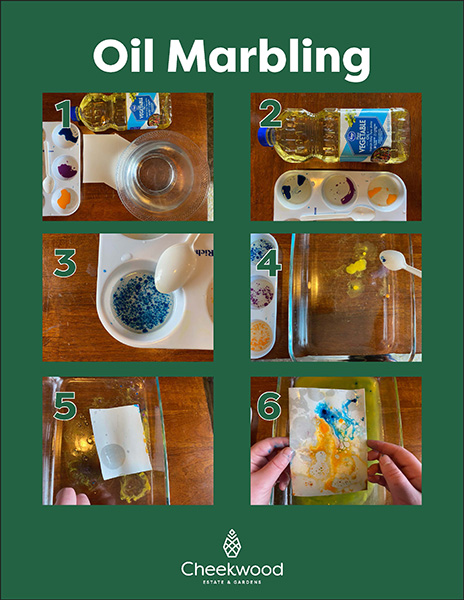
  1. In a small bowl, mix a little vegetable oil with liquid food coloring or liquid watercolors. The more coloring you add, the stronger the color will be on your paper.
  2. Put an inch of water in a pie pan or baking dish larger than your paper.
  3. Scoop or pour colored oil into the baking dish with the water. Give it a gentle stir to break up the oil.
  4. Place paper on top of water but do not submerge.
  5. Take out and leave to dry on something that is oil resistant.
  6. Once dry, they can be used for cards or whatever you want!

Try pairing the activity with one of these books:
Mix it Up by Herve Tullet

Little Blue and Little Yellow by Leo Lionni

Mouse Paint by Ellen Stoll Walsh

Oil-Marbling
test

Tots! Activity: Earth Day Paintings

Tots! Activity: Earth Day Paintings

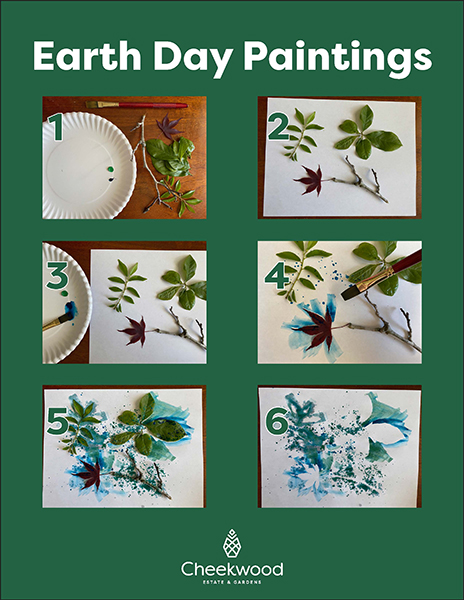
As Cheekwood’s Tots program is temporarily suspended, we are sharing today’s activity for parents and tots to activate at home. Use our files to create your own Earth Day painting, then share your work with us by tagging @cheekwood on Instagram and using #cheekwoodtots!

Here’s what you’ll need:• Leaves, twigs, rocks, flowers, or any other natural item found outside

• Paintbrushes or spray bottles

• Paper

• Paint (watercolor or watered down tempera)


Try pairing the activity with one of these books:
The Curious Garden by Peter Brown

The Tree Lady: The True Story of How One Tree-Loving Woman Changed a City Forever by H. Joseph Hopkins

The Green Giant by Katie Cottle


Take a pledge to protect our planet, and download our Earth Day coloring sheet:

Earth Day Pledge


Looking for other fun ways to be involved in Earth Day? Find more at-home activities here:

Virtual Activities

Earth-Day-Paintings
test

The History of the Ann & Monroe Carell Jr. Family Sculpture Trail

Posted on

Cheekwood is now nearing the completion of a major improvement project of The Carell Trail that began in 2019. A generous lead gift to The Cheekwood Campaign by The Ann & Monroe Carell Foundation has enabled significant enhancements to make The Carell Trail more accessible and enjoyable for generations to come, including lighting and paving of the Hickory Loop, updated wayfinding and signage, improved horticulture design, and restoration of the sculptures.

We cannot wait for you to see these changes when Cheekwood reopens, and encourage you to share your experiences of our #CheekwoodSculpture! For more information on the outdoor sculpture at Cheekwood, including information on individual works, visit: https://cheekwood.local/explore/art/sculpture-trail/
Marin Sullivan
Curator of Sculpture
Learn More

[1] John Wetenhall as quoted in David Wood, “A walk in the woods: the Carell Sculpture Trail at Cheekwood Botanical Garden, Nashville, Tennessee,” Sculpture Journal 15. 1 (2006): 113.

Eric Orr (American, 1939-1998). Cheekwood Prime Matter, 1997-98. Bronze, copper, stainless steel, and mechanical components. Museum purchase through funds provided by Ann & Monroe Carell, Jr., 1999.2. (hero image)

Though modelled after these English examples, Wetenhall’s intent was to acquire and commission works by artists of regional, national, and international significance that responded to Cheekwood’s distinct natural setting in Nashville. As Wetenhall reflected in 2006, “We got a chain saw and a chip machine and cut a mile path through the trees, then invited artists from America and Europe to work with the natural environment. After you’ve walked the trail, you never think about sculpture the same way again.”[i]Over twenty years later, walking The Carell Trail still engenders the transformative experience described by Wetenhall. The works installed along it create beautiful, thought-provoking dialogues with the surrounding landscape, which have the ability to not only change how we think about sculpture, but also nature itself. The Carell Trail, in many ways, perfectly unifies what is visible across across Cheekwood: art and gardens.One of the most unique features at Cheekwood is its permanent collection of outdoor sculpture, which includes everything from statuary collected by the Cheek Family to large-scale contemporary commissions, created specifically for the institution. Of particular note is the Ann & Monroe Carell Jr. Family Sculpture Trail. A 1.5-mile loop in a wooded area on Cheekwood’s 55-acre property, The Carell Trail features ten works that examine the relationship between art, nature, and humanity in diverse and thoughtful ways.

In 1995 John Wetenhall, who was then-Director of the Cheekwood Museum of Art, initiated the project. A few years before he joined the institution, Wetenhall received a grant from the National Endowment for the Arts to survey outdoor sculpture in Europe, visiting some of the world’s most notable sculpture gardens, parks, and collections, including the Yorkshire Sculpture Park and the Forest of Dean Sculpture Trail in England.

test

Tots! Activity: Recycled Butterflies

Tots! Activity: Recycled Butterflies

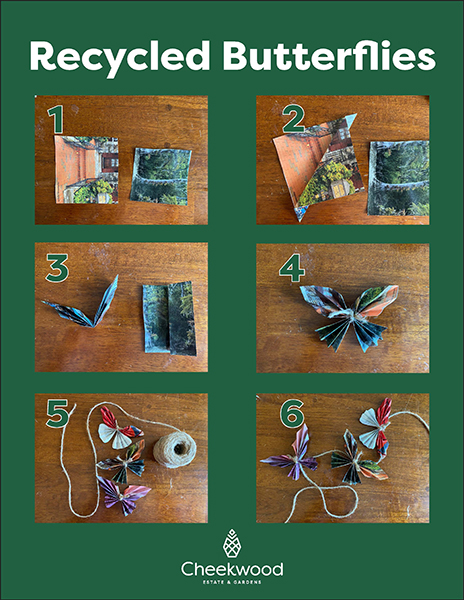
As Cheekwood’s Tots program is temporarily suspended, we are sharing today’s activity for parents and tots to activate at home. Use our files to create your own recycled butterfly, then share your work with us by tagging @cheekwood on Instagram and using #cheekwoodtots!

Here’s what you’ll need:•  Old magazines

• Scissors

• String or twine

• Printed template
*See template below

• Pencil


Butterfly Template


Try pairing the activity with one of these books:
A Butterfly is Patient by Dianna Hutts Aston

Little Butterfly by Laura Logan

The Earth Gives More by Sue Flies

The Little Gardener by Emily Hughes


Here are a few tips on how you can make your backyard butterfly friendly:• Make sure that there are areas in your garden that get plenty of sunlight throughout the day. Try putting stones down in those sunny spots for butterflies to rest on. Butterflies are cold-blooded insects that like to warm their bodies by basking in the sun.

• Create a butterfly puddle. Place a shallow dish in your garden, fill with sand and top with a little bit of soil. Push your thumb gently into the center and add water as needed. This puddle will act as a source of nourishment for many butterflies passing by.

• Grow butterfly and caterpillar loving plants such as native honeysuckle, milkweed, lantana, purple coneflower and phlox. Make sure to grow only native varieties of these plants!


Earth Day is Wednesday, April 22. Take a pledge to protect our planet, and download our Earth Day coloring sheet:

Earth Day Pledge

Recycled-Butterflies
test

Tots! Activity: Flowering Trees

Tots! Activity: Flowering Trees

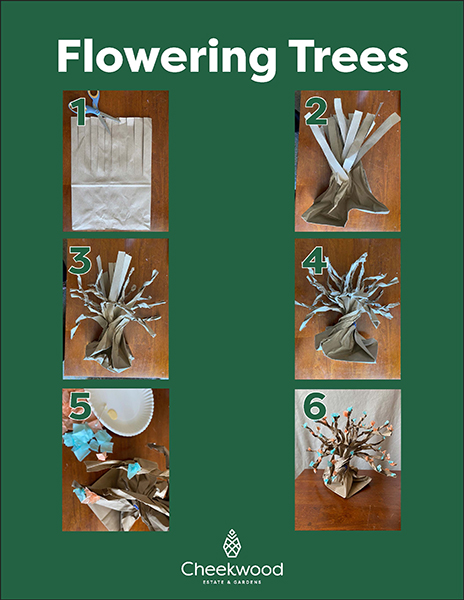
As Cheekwood’s Tots program is temporarily suspended, we are sharing today’s activity for parents and tots to activate at home. Use our files to create your own flowering tree, then share your work with us by tagging @cheekwood on Instagram and using #cheekwoodtots!

Here’s what you’ll need:•  Paper bag

• Scissors

• Colored paper or tissue paper

• Glue


Try pairing the activity with one of these books:
We Planted a Tree by Diane Muldrow and Bob Staake

A Walk in the Forest by Maria Dek

Tree by Britta Teckentrup

Flowering-Trees
test

Gardening and the Senses

Gardening and the Senses

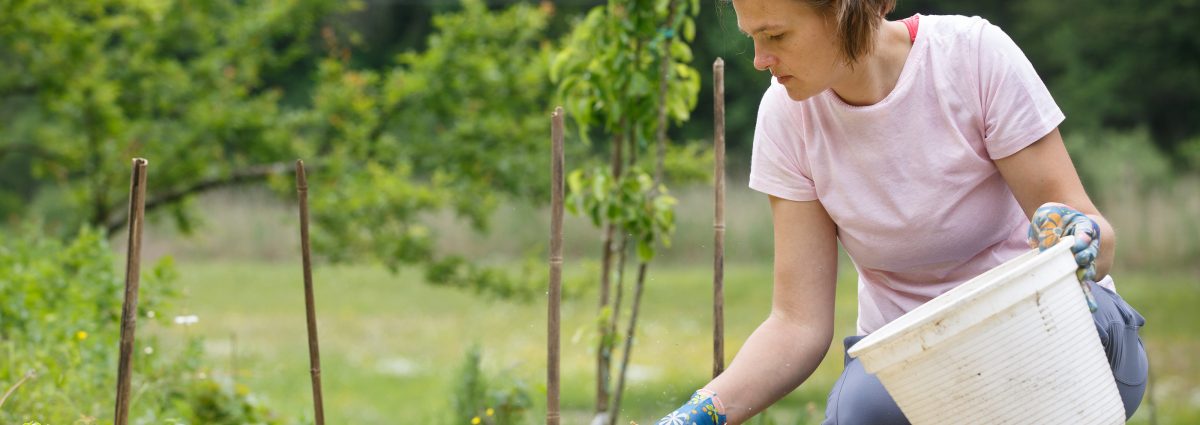
While staying Safer at Home, we can’t help but notice the changes happening outside, the reminders that spring has indeed sprung: birds chirping, a warm breeze blowing, fragrant flowers blooming, and more. Use the steps below to take a few moments to sit outside and appreciate the natural world around you by awakening your five basic senses.

©Caitlin Harris Photography

Mindfulness Through Your Senses

Find a comfortable seat in a place surrounded by nature, place your hands on your lap, take a few deep inhales and exhales, and tune in.

Sight: Slowly look all around, panning your gaze by turning your head. Notice the details of the natural world and the variations in colors, shapes, forms, shadows, and light.

Sound: Now close your eyes and observe the sounds in your environment—birds singing, bees buzzing, leaves rustling. Rather than fixating on one, simply immerse yourself in all the sounds around you.

Smell: Take a deep inhale and enjoy any fragrances lingering in the air, possibly from nearby flowers, grass, trees, or food.

Touch: Turn your attention to the sensations in and on your body. Notice the ground beneath you and observe any sensations on your skin, such as a slight breeze or the warmth of the sun.

Taste: Now turn to your kitchen or home garden and savor a snack. Close your eyes to relish the flavors on your taste buds.

DCIM101GOPRO

Garden Spotlight: The Burr Terrace Garden

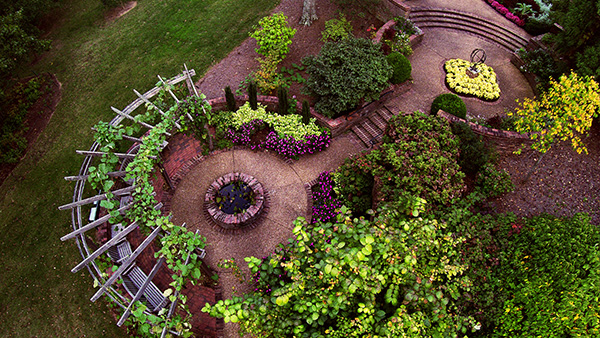
The Burr Terrace Garden officially opened at Cheekwood on Sunday, October 15, 1972 in memory of Elizabeth Parker Burr by her daughter, Mrs. Ruth Puryear. Ruth emphasized two main concepts for the garden’s design to landscape architect, W. James Coile: to stimulate the senses and provide accessibility for the differently abled. Initially, a heavy emphasis was placed on special considerations to benefit people with visual impairments. Coile consulted the principal and superintendent of the Tennessee School for the Blind about featuring plants to stimulate all the senses into the original design. The petite knot and surrounding beds of the Burr Garden originally contained culinary, medicinal, and other “household” herbs, as well as other aromatic and textural plant material. Braille labels and raised beds also provided more accessibility to people with visual impairments.

Interested in making your garden more accessible and sensory-friendly?

– Check out our tip sheet here!

– Consider raising the soil by building a raised bed garden. Watch a how-to video here!

– Plant sensory-friendly plants that have high contrasting colors like daffodils, rainbow chard, marigolds, pansies, or sunflowers. Choose plants that have fun textures such as wooly lamb’s ear or aloe vera. Enjoy herbs or aromatic plants like jasmine, sweet peas, lavender, or lemon balm.

The Burr Terrace Garden: Inspiration from Italy

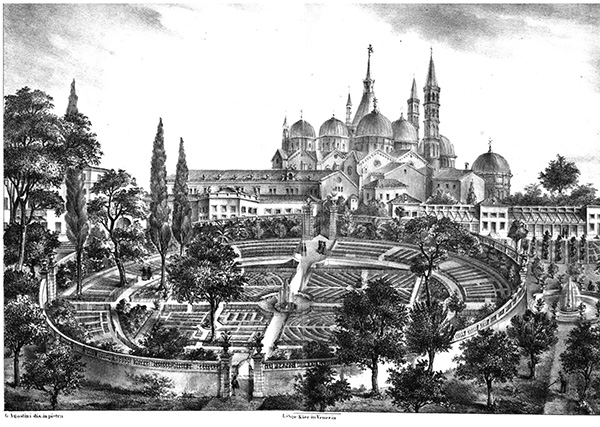
The Burr Garden was built in the likeness of The Botanical Garden of Padua (Orto Botanico di Padova), which was constructed in 1542 in Padua, Italy. It is the oldest surviving botanical garden in the world. For over five centuries, the garden in Padua has been devoted to research, teaching, and circulating scientific and horticultural knowledge to the public, originally with an emphasis on medicinal plants. Similarities between the Burr Terrace garden and the Orto Botanico di Padova include:

– The rounded hardscaped garden outlines
– The organic shapes of the beds
– Water feature
– The use of focal points to draw one in further into the rounded landscape

Orto-Botanica-di-Padova

Creative Design for Smaller Spaces

Today, the Burr Terrace Garden represents phases in time as they relate to historical gardening themes. Within the entrance garden, visitors will find present-day horticulture trends, often corresponding to the seasonal display design found in the Bradford Robertson Color Garden. Here the original intent still holds true as “a garden to exemplify good landscape and gardening practices.” Visitors are exposed to a variety of plant combinations and creative designs for a smaller scale, appropriate for their home gardens.

Home Garden Challenge

Show us what your sensory-friendly home gardens look like! Tag @cheekwood on Instagram and use #HomeGardens.

Sensory Gardening Word Search and Crossword Puzzle

Sharpen your sense of sight with a word search or test your memory with a crossword!

Word Search   Crossword

Image: Unknown Reprinted in “L’Orto botanico di Padova nell’ anno 1842” by Roberto De Visiani (1842)

test

Tots! Activity: Dogwoods

Tots! Activity: Dogwoods

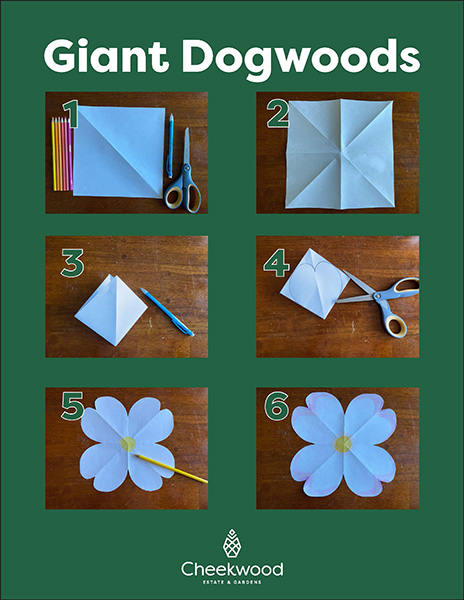
As Cheekwood’s Tots program is temporarily suspended, we are sharing today’s activity for parents and tots to activate at home. Use our files to create your dogwood blossom, then share your work with us by tagging @cheekwood on Instagram and using #cheekwoodtots!

Here’s what you’ll need:•  Square piece of paper
*Use the template below instead of folding your paper for an easier version

• Scissors

• Markers, crayons, colored pencils


Dogwood Template  


Try pairing the activity with one of these books:
Fletcher and the Springtime Blossoms by Julia Rawlinson

Hot Dog, Cold Dog by Frann Preston-Gannon

Giant-Dogwoods
Privacy Policy Sitemap Web design by Speak
Back to top