wordpress, Author at Cheekwood - Page 2 of 45 | Page 2
x icon Close
test

Top Plant Picks October 2022

Top Plant Picks October 2022

Fall is here and the gardens are changing! Cheekwood’s Horticulturist Sage McClain, shares her top plant picks for October.

Illcium parviflorum (Small Anise Tree )

Bloom Time: May to June

Sun Requirement: Full Sun to Full Shade

Water Requirement: Medium to Wet

Wildlife: Fly pollinated

Tolerates: Tolerates heavy shade, erosion, and wet soil. Deer resistant.

Native to North America: Yes

Zones: 7 – 10

Other: This evergreen shrub does well in woodland or shade gardens. The leaves of this plant emit a licorice aroma when crushed.

Location: Bracken Foundation Children’s Garden
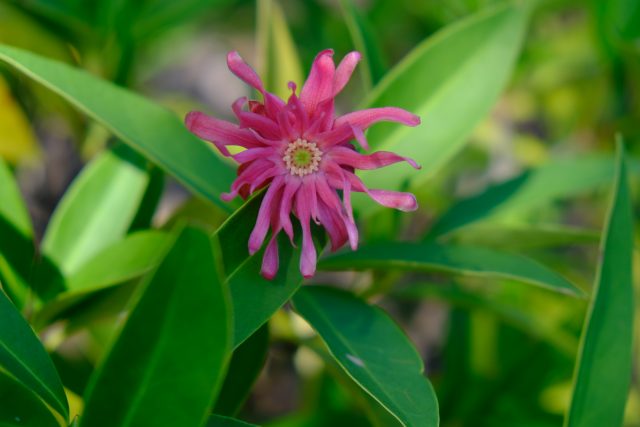
Illicium-parviflorum--640x427

Physostegia virginiana (Fall Obedient Plant)

Bloom Time: August to November

Sun Requirement: Full Sun to Part Shade

Water Requirement: Medium

Wildlife: A good nectar source for butterflies and hummingbirds

Tolerates: Tolerates moist soils and is fairly pest resistant

Native to North America: Yes

Zones: 3 – 9

Other: Forms dense upright clumps with beautiful lavendar flowers that are typically teeming with bumblebees.

Location: Bracken Foundation Children’s Garden

Physostegia-virginiana--640x427

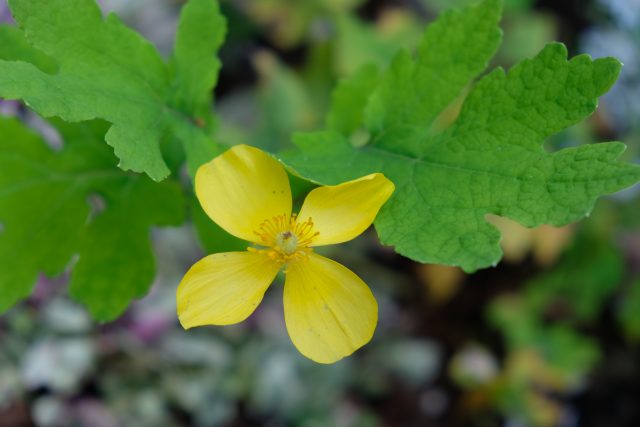
Stylophorum diphyllum (Yellow Wood Poppy)

Bloom Time: March to October

Sun Requirement: Full Shade to Part Shade

Water Requirement: Medium

Wildlife: Chipmunks feed on seeds

Tolerates: Tolerates lime and acidic soils

Native to North America: Yes

Zones: 4 – 9

Other: This native wildflower is considered endangered in many areas. Adds a pop of yellow to shade gardens.

Location: Howe Garden
Stylophorum-diphyllum--640x427

Solidago rugosa (Fireworks Goldenrod)

Bloom Time: July to October

Sun Requirement: Full Sun

Water Requirement: Medium

Wildlife: Good for pollinators. Deer Resistant

Tolerates: Appreciates moisture, Average Soil

Native to North America: Yes

Zones: 4 – 9

Other: This plant grows in clumps and produces tall golden yellow blooms. Does not cause allergies contrary to popular thought

Location: Herb Garden

Solidago-rugosa-Fireworks-Goldenrod-640x853

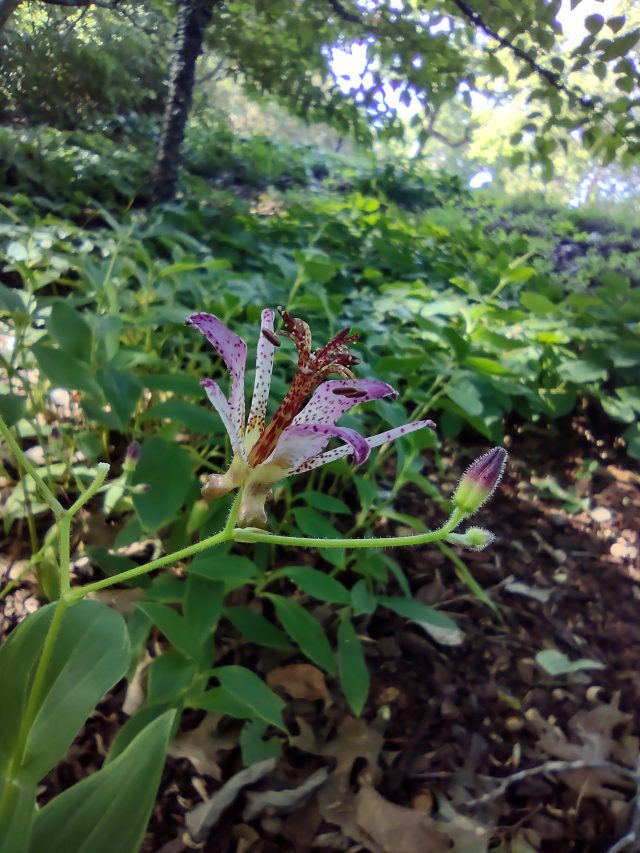
Tricyrtis hirta (Toad Lily)

Bloom Time: September to November

Sun Requirement: Shade to Part Shade

Water Requirement: Medium to Wet

Wildlife: Attracts bumblebees!

Tolerates: Needs moist but well drained soil

Native to North America: No

Zones: 4 – 8

Other: This beautiful perennial is best used in woodland shade gardens. It has unique pale lilac flowers that bloom in fall.

Location: Dogwood Garden
Tricyrtis-hirta-Toad-Lily-640x853-1

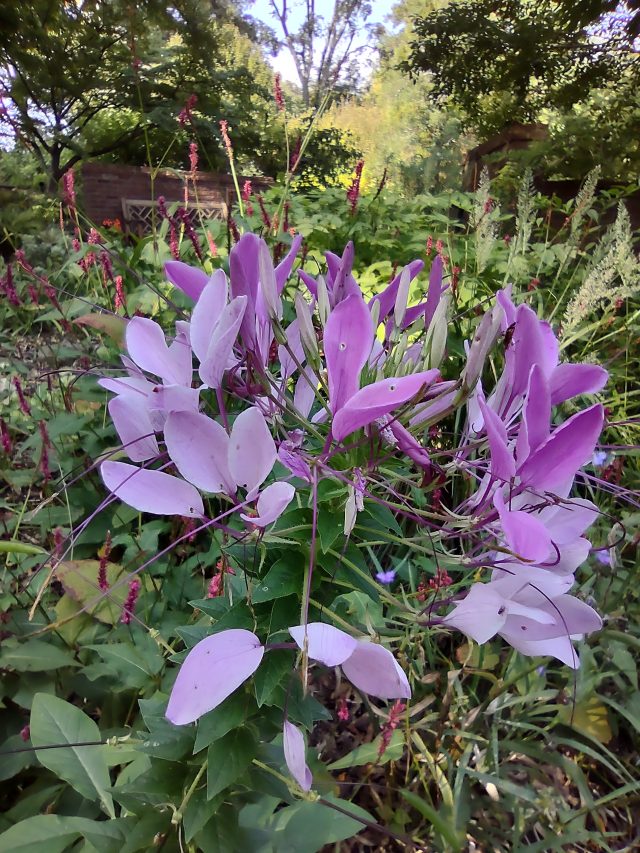
Cleome hassleriana (Spider Flower)

Bloom Time: June to November

Sun Requirement: Full Sun to Part Sun

Water Requirement: Medium

Wildlife: Attracts multiple pollinators, including bats

Tolerates: Tolerates shade, just may need staking

Native to North America: No

Zones: 10, 11

Other: This quick growing annual produces blooms with long, wispy stamens and seedpods. Not Hardy but a prolific Reseeder.

Location: Burr Garden
Cleome-hassleriana-Spider-Flower-640x853

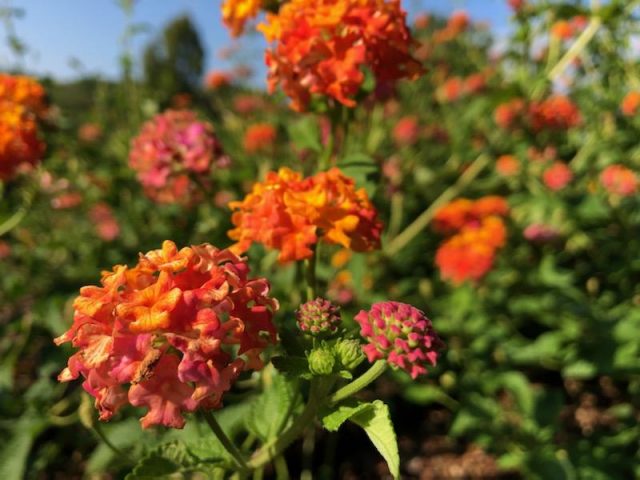
Lantana camara (Miss Huff Lantana)

Bloom Time: June to November

Sun Requirement: Full Sun

Water Requirement: Low to Medium

Wildlife: Will attract pollinators, Birds for berries

Tolerates:Extreme heat and reflected heat from sidewalks etc.

Native to North America: No

Zones: 7 – 11

Other: This showy shrub is great used as an annual bedding plant, in containers, or even as a house plant.

Location: Literary Garden
Lantana-camara-Hardy-Miss-Huff-640x480

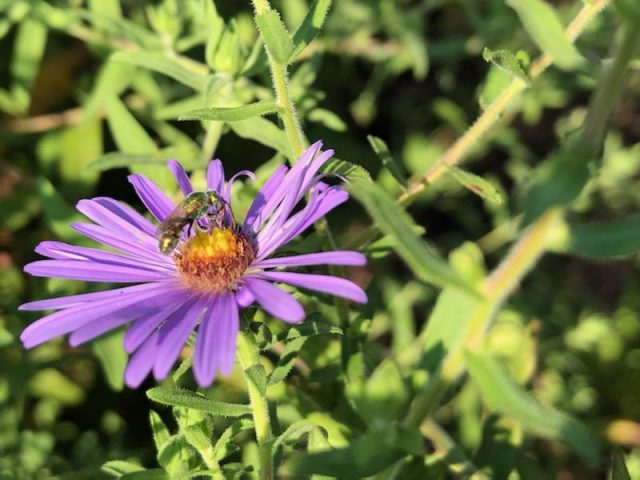
Symphyotrichum spp. (Aster)

Bloom Time: August to October

Sun Requirement: Full Sun

Water Requirement: Medium

Wildlife: Late season source for pollinators

Tolerates: Tolerates low humidity and even short frosts

Native to North America: Yes

Zones: 3 – 8

Other: Prolific Reseeder. Easy to pull. Great late season color for your garden!

Location: Wills Perennial Garden
Symphyotrichum-app.-Aster-640x480
test

Historic Profile: Good to the Last Drop: The Cheekwood Coffee Connection

“I was ready for brunch which I ate at the Maxwell House Coffee and Mayfair Drug on the corner of Broadway and 45th. This I have always wanted to do.”

Letter from Mabel Cheek to her daughter, Huldah, New York City, Dec. 10, 1933

Holiday shopping took Mrs. Leslie Cheek—Mabel—to New York City from Nashville just a year after their family had moved to their newly-completed estate, Cheekwood. Her spirited letter from the Savoy Plaza Hotel reported several “finds” in the department stores, plus a museum visit, Broadway plays, and a Prohibition-era confession to her daughter: “I will have you believe, I went to a speak-easy.”

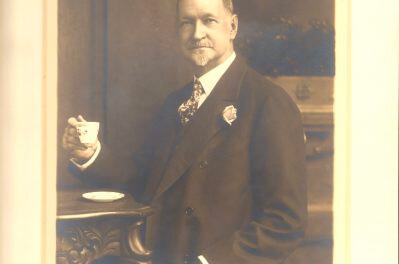
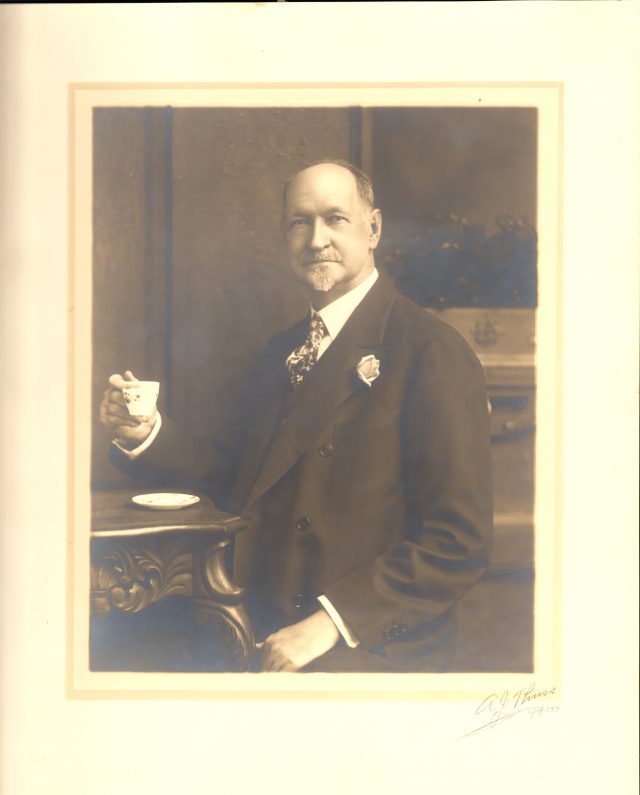
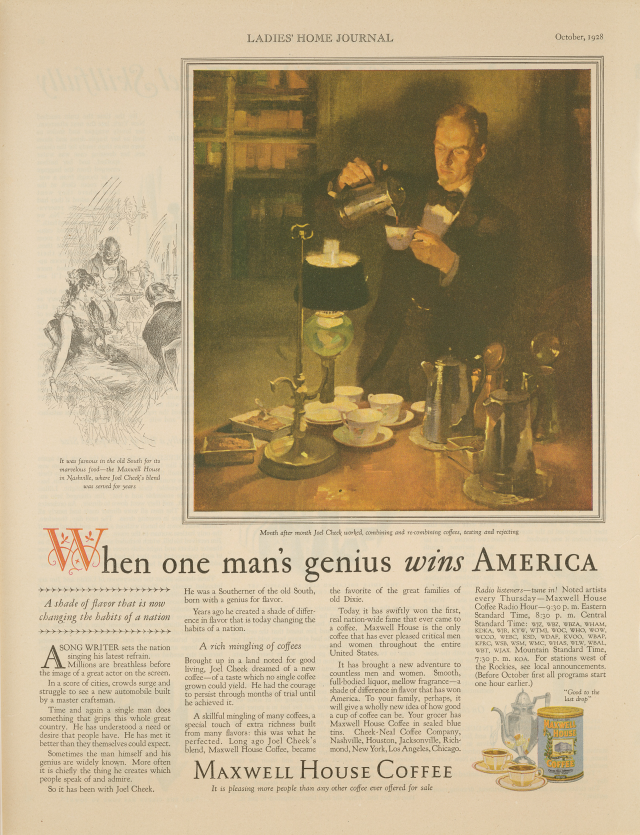
Mrs. Cheek did not reveal what cocktail she imbibed at the risqué after-hours oasis, but her brunch beverage was surely the signature drink largely credited with the founding of Cheekwood: Maxwell House Coffee. Her husband Leslie’s investments in the coffee business first established by his father’s cousin became enormously valuable when the coffee surged as a well-known and respected brand. Blazoned in azure blue cans with burnt-orange lettering, Maxwell House was welcomed nationwide, perhaps inspiring Irma S. Rombauer to observe in 1931 in her bestselling, The Joy of Cooking, “Thanks especially to vacuum-packed cans, making good coffee at home has become a surefire delight.”

Joel-Cheek-with-cup-and-saucer-portrait-

Served at fine restaurants, resorts, and hotels, the branded coffee saluted Nashville’s preeminent Maxwell House, which opened in 1869 and proclaimed itself “the palatial residence of the regular boarder and the luxurious resting place of the weary traveller.” The hotel scored a presidential coup when it hosted President William Howard Taft, but greater glory redounded to the credit of the coffee when Taft’s successor visited Nashville in 1907, sipped the hotel’s signature brew, and declared it to be “good to the last drop.” Thus did President Theodore Roosevelt coin the slogan familiar to this day, joining his praise to the Maxwell House Coffee brand.

Varied brands of foods, beverages, and a host of other products have been long familiar to modern consumers, but branding itself has a history linked to the Cheeks’ association with Maxwell House Coffee. Until the late 1800s, foodstuffs such as flour and oats—and coffee beans—were sold in bulk, scooped from a sack or a barrel, weighed, and purchased as commodities. Homemakers were expected to roast the green coffee beans and grind them too. While quality could be anyone’s guess, as America’s popular morning beverage was sometimes found to be adulterated with tree bark, sawdust, and acorns, Maxwell House would never dream of besmirching its high-quality blend of coffee, and its unique brand resulted from business enterprise that revolutionized the purchase, process, and distribution of the generic foodstuffs, including coffee.

Article

With patents and trademarks, companies could guarantee quality and reliability. Quaker Oats and Gold Medal Flour kept company with Maxwell House Coffee when, according to historian Don Doyle, the company “introduced a prepared coffee already roasted, blended…and canned, ready for home use.” “It would cost more than rival brands,” Doyle adds, “but Cheeks sought a prestige market,” and “Maxwell House Coffee eventually captured one-third of the American coffee market.”

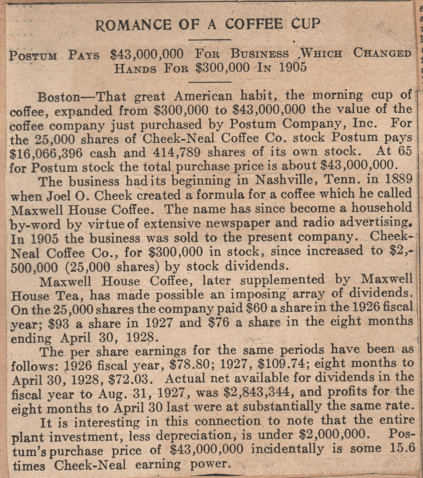
Newspaper Clipping Romance-of-a-Coffee-Cup

Blog post provided by Cheekwood’s Writer-in-Residence, Cecelia Tichi, Ph.D.

Cecelia Tichi is an award-winning author and Professor of English and American Studies Emerita at Vanderbilt University. Her books span American literature and culture from colonial days to modern times, but her recent work draws upon the Gilded Age (post-1870) that prompted her book on Jack London and another on seven activists in that tumultuous era.

Cecelia’s research and teaching inspired What Would Mrs. Astor Do? The Essential Guide to the Manners and Mores of the Gilded Age, followed by Gilded Age Cocktails and Jazz Age Cocktails , which set the stage for her mystery crime novels that boast “Gilded” in each title.

Cecelia can be followed on her website: https://cecebooks.com/

Portrait Photo of Cecelia Tichi
test

Top Plant Picks September 2022

Top Plant Picks September 2022

Fall is coming and the gardens are changing! Cheekwood’s Horticulturist Sage McClain, shares her top plant picks for September.

Chelone lyonii ‘Hot Lips’ (Pink Turtlehead)

Bloom Time: July – October

Sun Requirement: Sun to Full Shade

Water Requirement: Wet

Wildlife: Attracts bumblebees and hummingbirds

Tolerates: Moist and acidic soil. Deer resistant.

Native to North America: Yes

Zones: 3 – 8

Other: A very versatile native plant that tolerates full sun to shade. Forms clumps and is perfect for a woodland or stream garden. The pink flowers resemble the heads of open-mouthed turtles.

Location: Bracken Foundation Children’s Garden

Chelone-lyoni-Hot-Lips-CH-August-2022--1536x1024

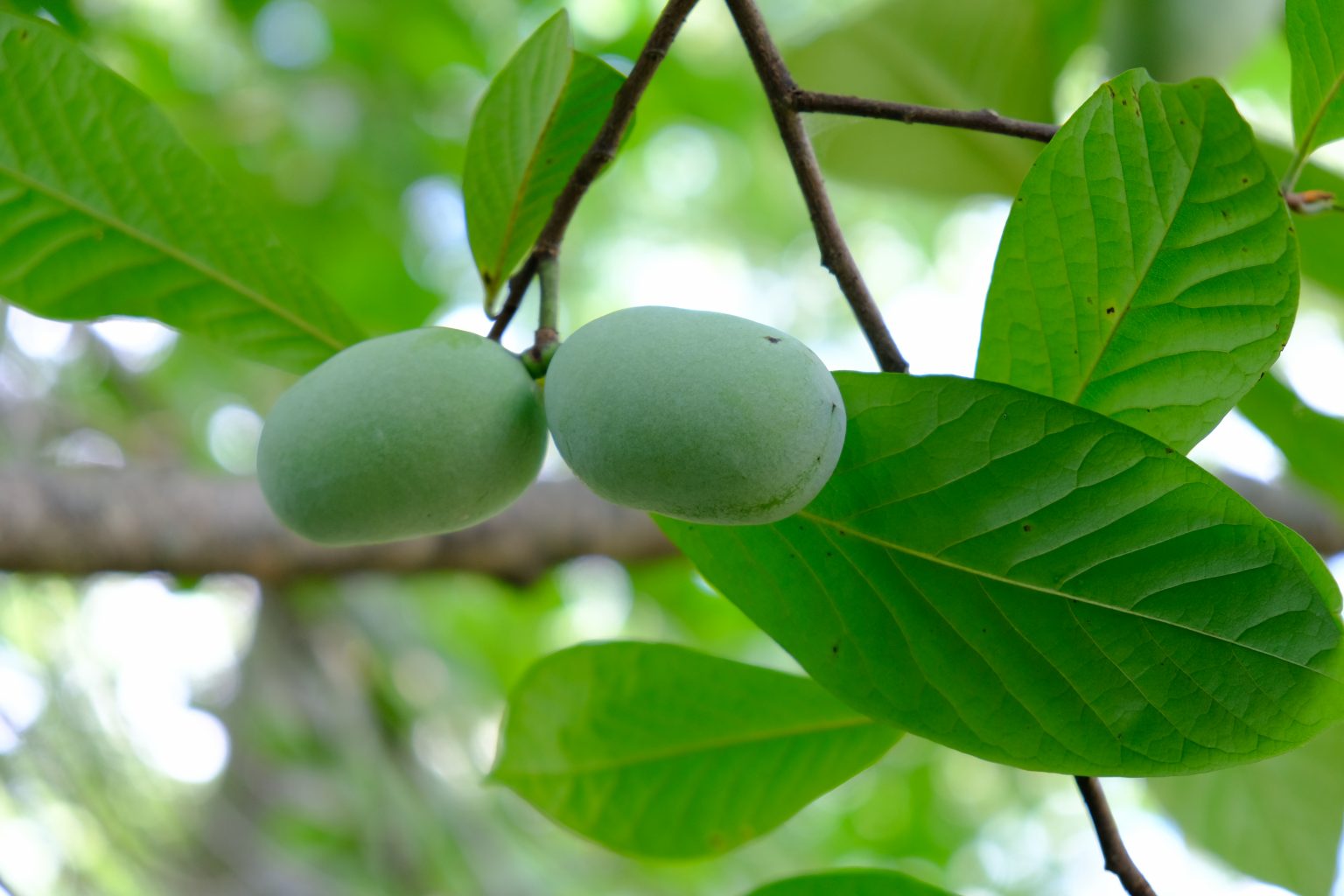
Asimina triloba (Pawpaw)

Bloom Time: March – May

Sun Requirement: Partial Shade

Water Requirement: Medium

Wildlife: Host plant to the Zebra Swallowtail butterfly and Pawpaw Sphinx Moth.

Tolerates: Pest resistant

Native to North America: Yes

Zones: 5 – 8

Other: This small understory tree produces North America’s largest native edible fruit. The bark and leaves act as a natural insect repellent.

Location: Howe Garden

Asimina-triloba-Howe-August-2022--1536x1024

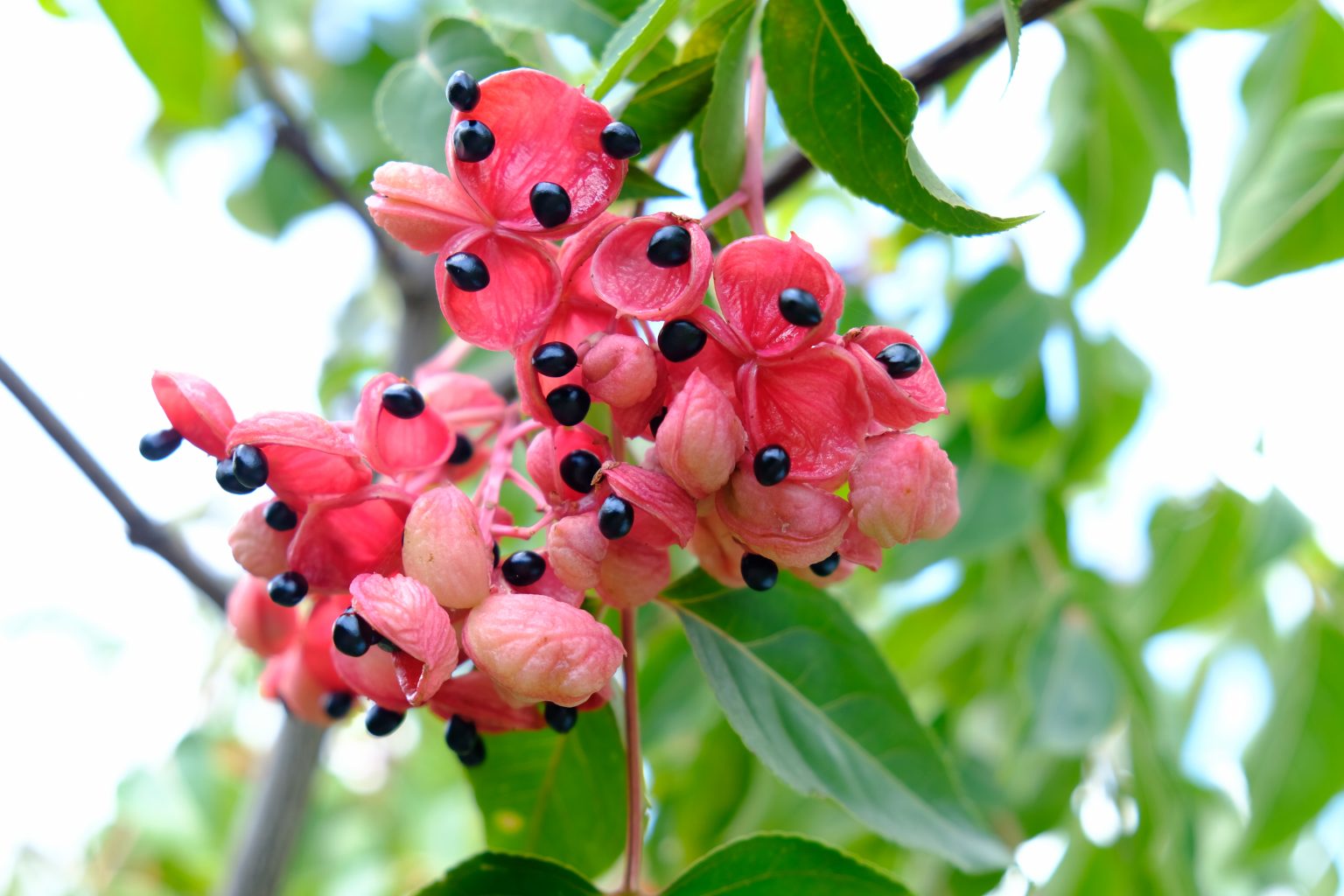
Euscaphis japonica (Korean Sweetheart Tree)

Bloom Time: June – September

Sun Requirement: Full Sun to Partial Shade

Water Requirement: Medium

Wildlife: Attracts birds

Tolerates: Drought tolerant

Native to North America: No

Zones: 6 – 8

Other: Interesting landscape specimen! Produces heart-shaped seed pods in the late summer to fall.

Location: Color Garden

Euscaphis-japonica--1536x1024

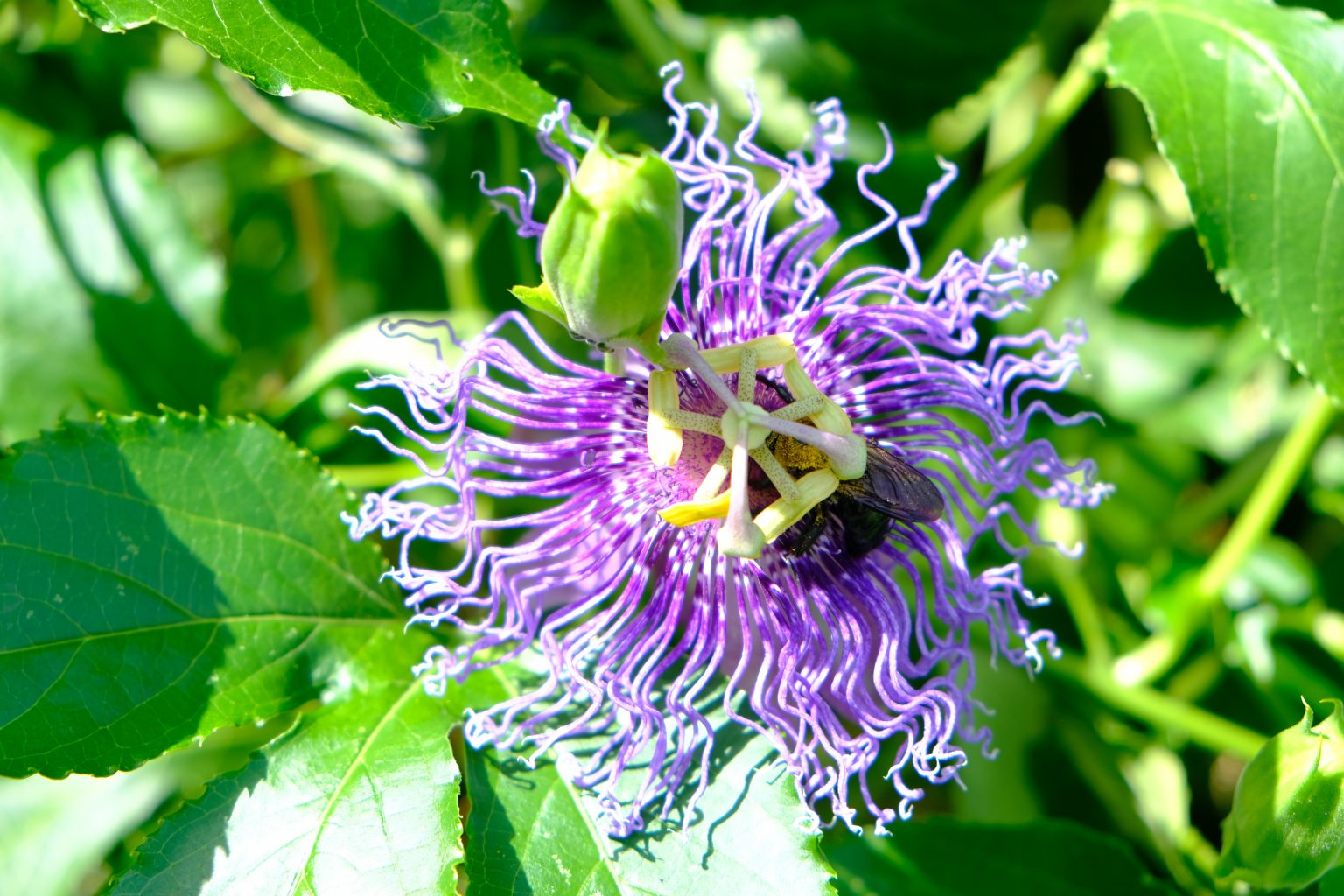
Passiflora incarnata x cincinnata (Passionflower)

Bloom Time: June – September

Sun Requirement: Full Sun to Partial Shade

Water Requirement: Medium

Wildlife: Host plant to the Gulf Fritillary Butterfly, Attracts many pollinators

Tolerates: Can handle a variety of conditions from full sun to partial shade as well as being relatively drought and heat tolerant

Native to North America: Yes

Zones: 5 – 9

Other: This climbing vine has very showy purple flowers during the summer to early fall. Wonderful addition for pollinator gardens.

Location: Mansion Front Lawn

Passiflora-incarnata-x-cincinnata--1536x1024

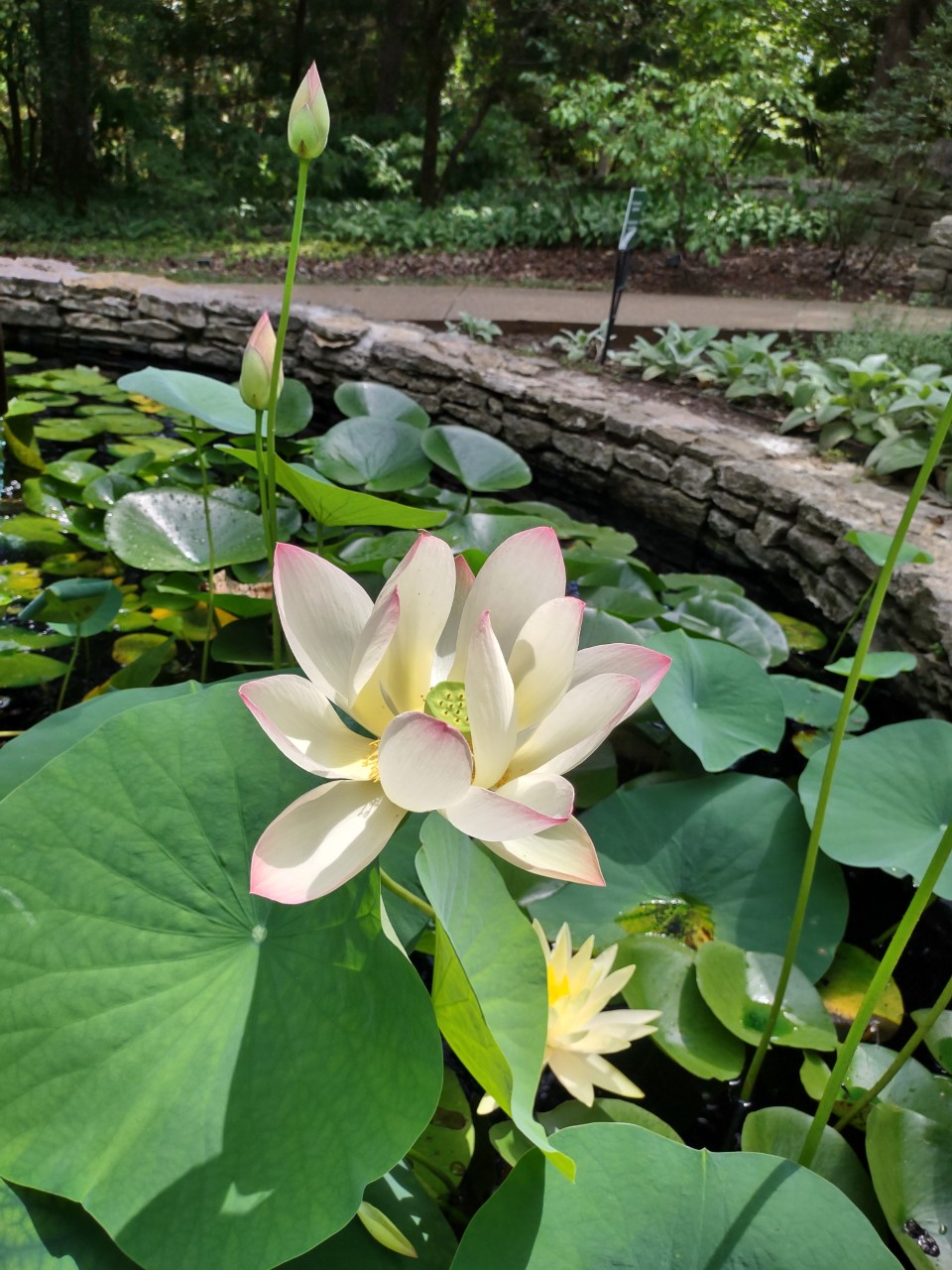
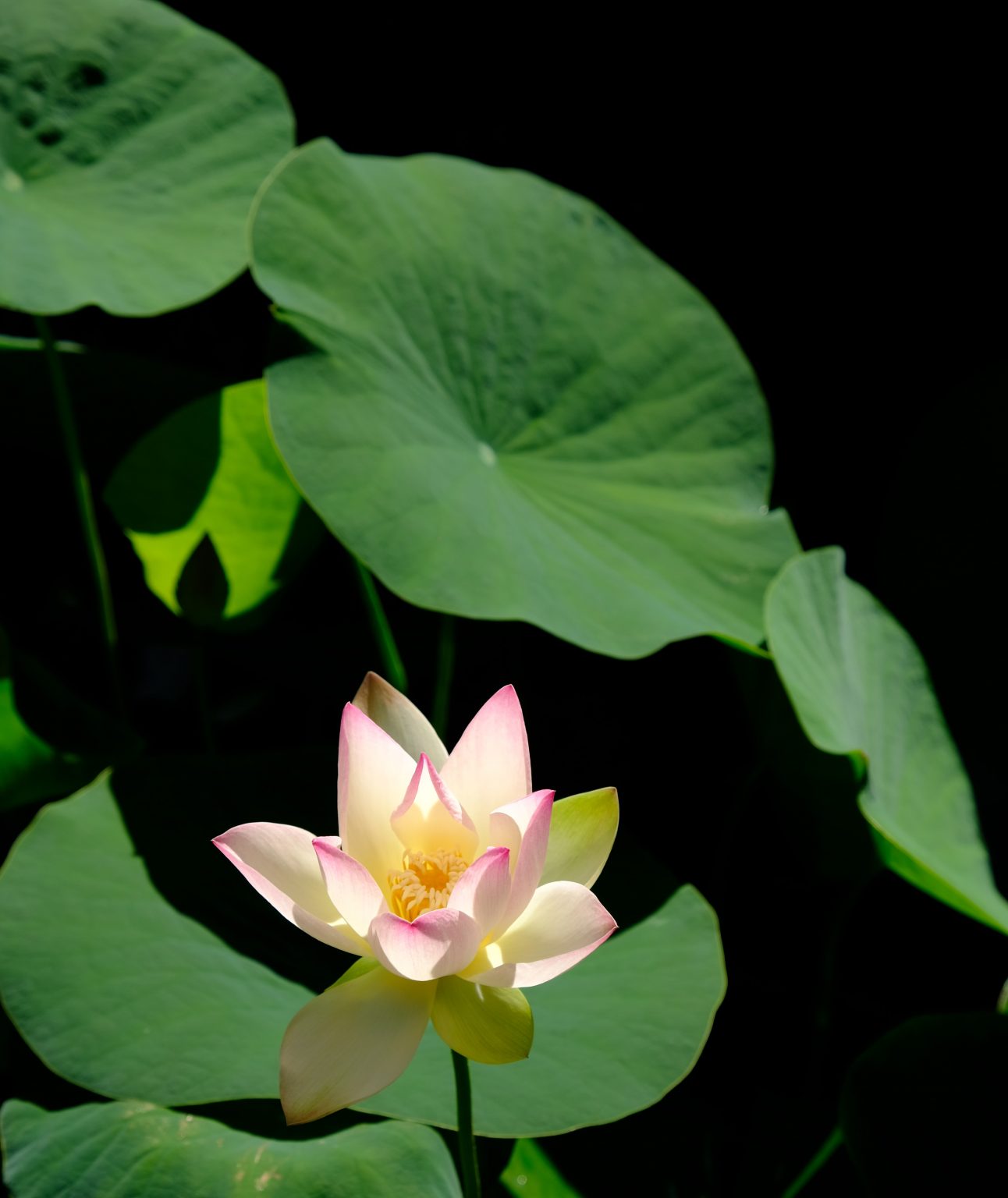
Nelumbo nucifera (Lotus)

Bloom Time: July-September

Sun Requirement: Full sun

Water Requirement: Water Plant

Wildlife: Pollinator Plant

Tolerates: Standing water

Native to North America: No

Zones: 4 – 10

Other: This aquatic plant produces large fragrant flowers that open in the mornings and close at night each day. Attractive foliage, seed receptacles and blooms make this the perfect addition to a water garden or pond!

Location: Herb Garden

Nelumbo-nucifera

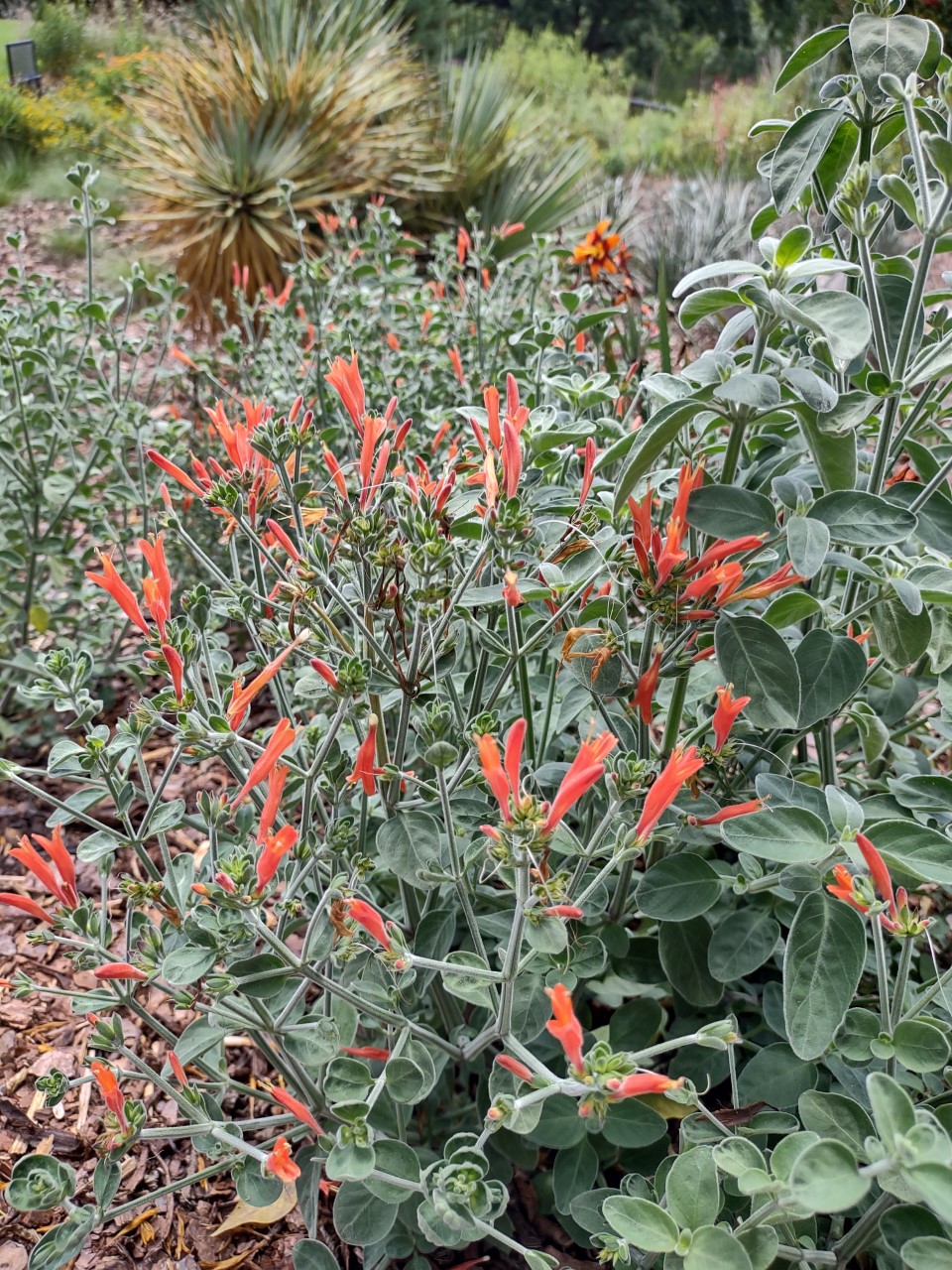
Dicliptera suberecta (Hummingbird Plant)

Bloom Time: Mid Summer to Frost

Sun Requirement: Full Sun to Part Shade

Water Requirement: Low

Wildlife: Hummingbird Pollinator

Tolerates: Drought tolerant

Native to North America: No

Zones: 7 – 9

Other: A hummingbird magnet during summer through fall! This long-blooming perennial is drought tolerant and has velvety blue-grey leaves.

Location: Literary Garden

Dicliptera-suberecta

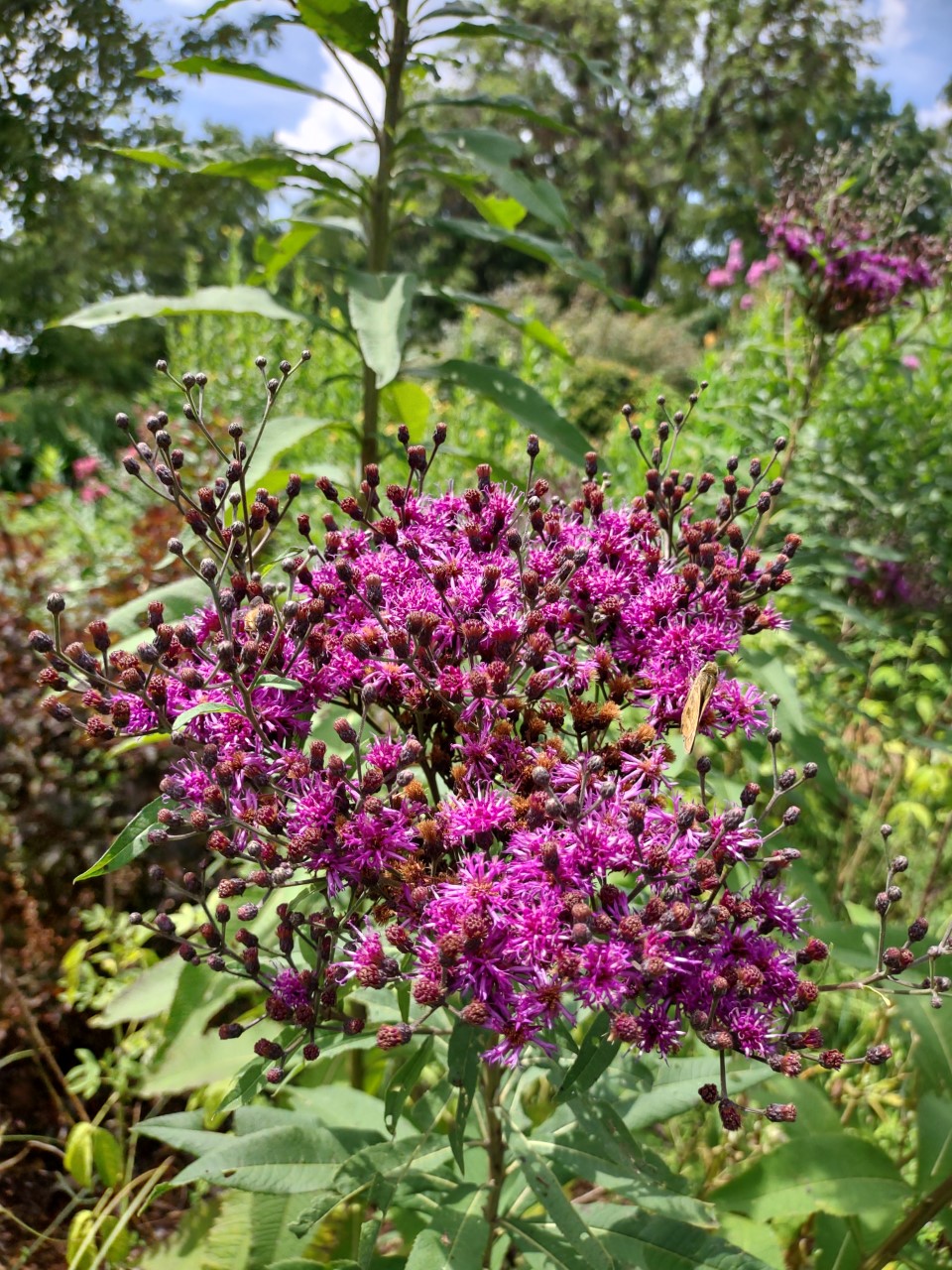
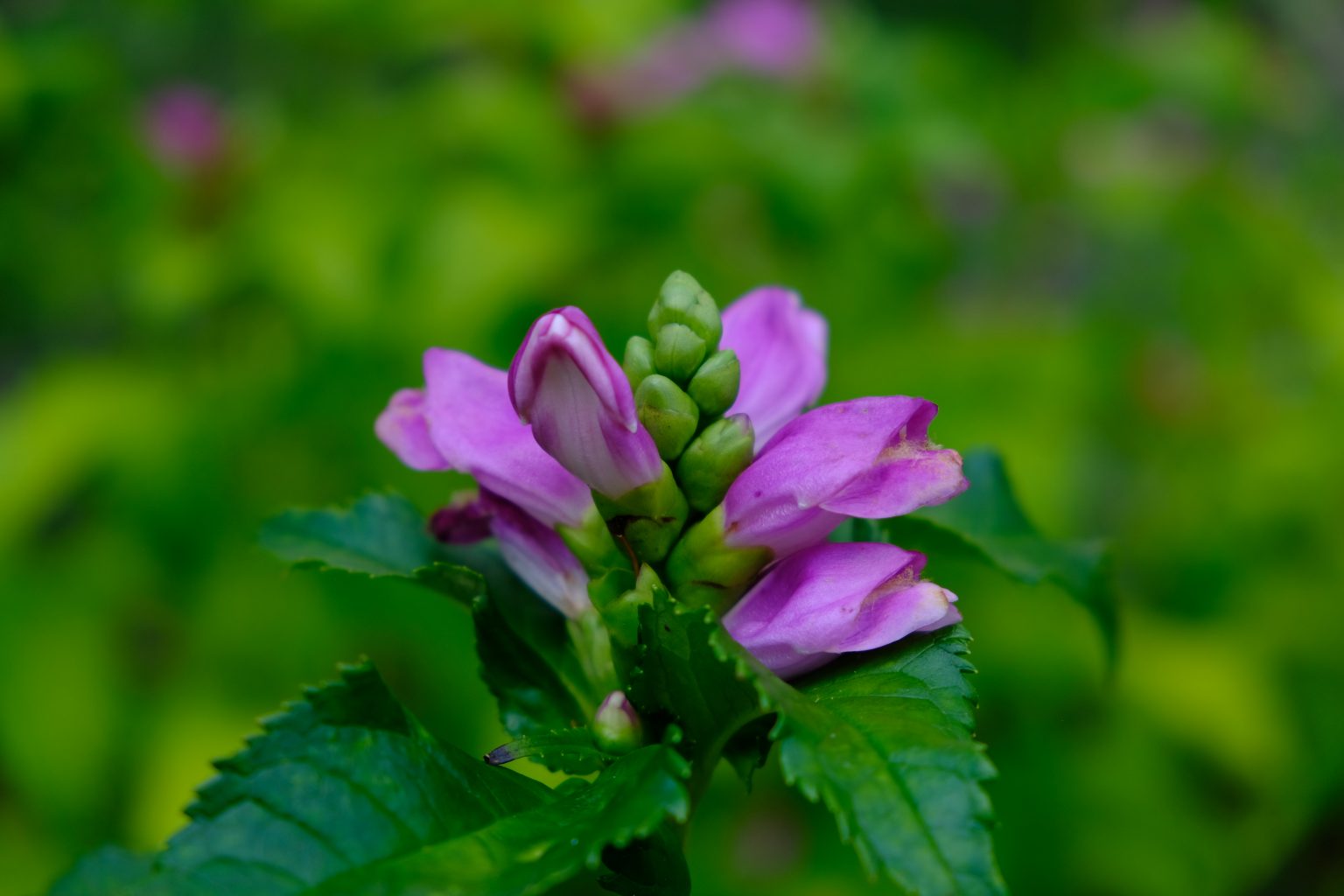
Vernonia baldwinii (Ironweed)

Bloom Time: July – November

Sun Requirement: Full Sun

Water Requirement: Low

Wildlife: Great Pollinator plant

Tolerates: Tolerates both moist and dry soils

Native to North America: Yes

Zones: 5 – 9

Other: This long-blooming plant does best in natural areas and large meadows where large colonies can be appreciated.

Location: Wills Perennial Garden
Vernonia-baldwinii

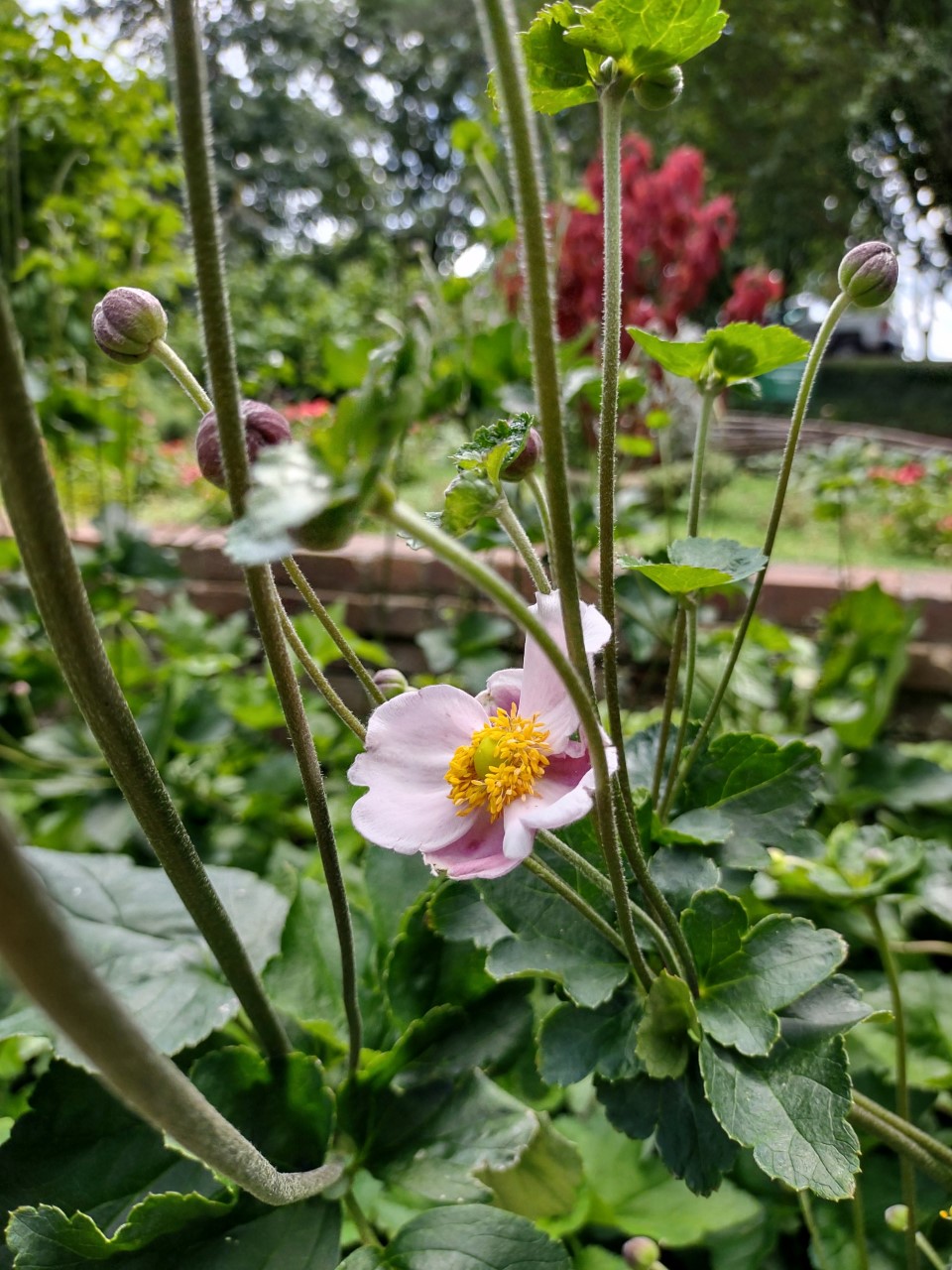
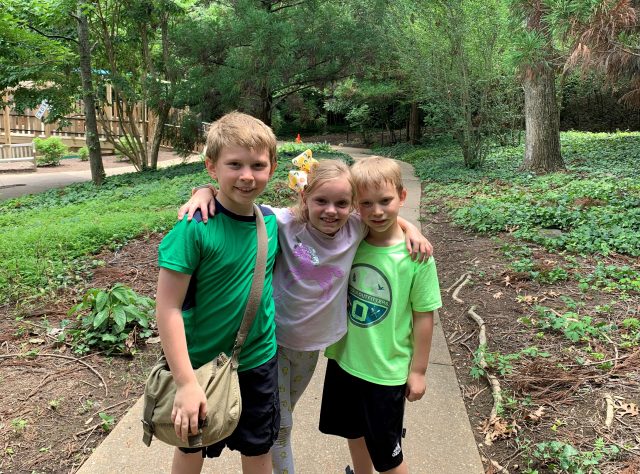
Anemone robustissima (Pink Windflower)

Bloom Time: August-Frost

Sun Requirement: Part Shade

Water Requirement: Medium

Wildlife: Attracts butterflies

Tolerates: Has a good resistance to most insects and diseases

Native to North America: No

Zones: 4 – 8

Other: Ideal for perennial borders or woodland gardens. Its pale pink flowers attract butterflies and make great cut flowers.

Location: Burr Garden
Anemone-robustissima
test

Historic Profile: For the Nashville Community—Mabel Wood Cheek

The 1896 Nashville Blue Book listed eminent families and their clubs, but the directory was nowhere in the mind of Miss Mabel Wood of Clarksville, Tennessee, when she wed Mr. Leslie Cheek in that same year, 1896, and moved to their new home in Nashville. The new Mrs. Cheek, who had been educated in Baltimore, set about homemaking for her successful businessman husband and, soon enough, cared for their children, Leslie, Junior, born in 1908, and Huldah in 1915. This busy wife and mother, an avid reader, might have been aware of the Nashville Society Blue Book (1900) and also of Mrs. William W. Geraldon’s Social Directory (1911), which included the names of debutantes and eligible sons of the city’s leading families. Mabel Cheek, however, had no need of such directories to verify her place in Nashville or the modern world, not when her family resided in the architect-designed Italianate house on West End Avenue, nor when the well-traveled family moved to their country house estate in 1932—Cheekwood.


The Cheeks’ prominence was gainsaid, and Mabel a leading figure in the vibrant art and culture of her adopted city. Periodically, she opened the estate to large gatherings. For instance, in 1933, when the Tennessee State Legislature named the iris the floral symbol of the state, Mabel invited the membership of the Iris Society, “more than one hundred-fifty strong,” she recalled, to stroll the Cheekwood gardens and enjoy fruit punch and cake on the loggia.

Of the diverse organizations in which Mabel Cheek took an active part—from the Ornithological Society to the Review Club—first and foremost for her was the Centennial Club. Organized in 1894 “on a statewide basis for public work,” the club had first planned a Woman’s Building for the upcoming Tennessee Centennial Exposition of 1897 and supervised “all exhibits and projects pertaining to women’s work.” By the 1920s, when Leslie, Jr., and Huldah were in school, Mabel found time for active involvement in this dynamic club that now was organized in departments.

Mrs. Leslie Cheek’s name soon suffused the Centennial Club programs. In June, 1920, she presented Travels in China, Japan, and Korea, illustrating her talk with “projected colored post cards on the screen.” Three years later, she presented a book review of Visiting in China, and in 1928, “India—Travel Talk by Mrs. Leslie Cheek.” Her name appears, in addition, on the governance roster, as a “2nd vice-president” for 1921-23 and as a director in 1935.

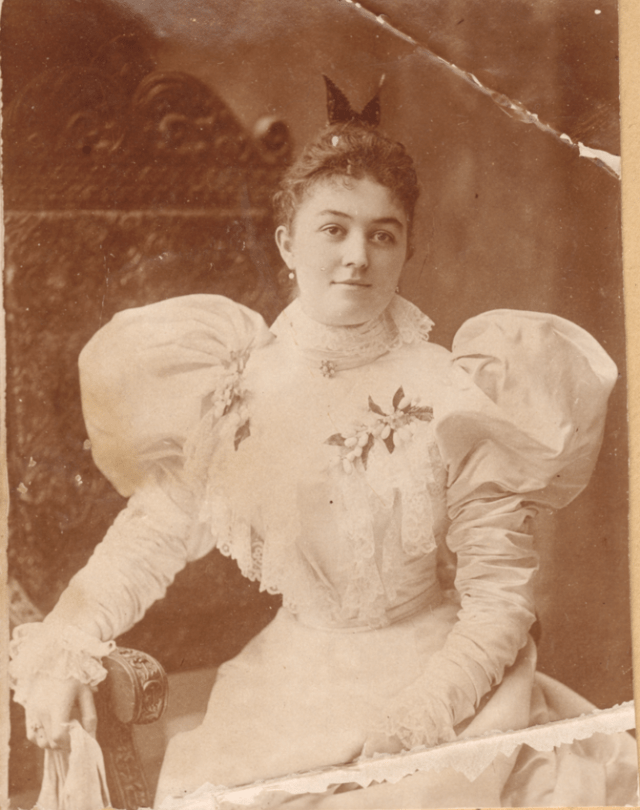
Mabel Wood Cheek Wedding Photo

Mabel’s letters to her daughter Huldah, who was attending Bryn Mawr College outside Philadelphia, open a window onto the seriousness of her presentations. Among numerous travels, she detailed her visit to Mexico, first in a private Pullman car, then by motor “to inspect a cocoa factory” and “a tile factory,” all the while dazzled by the plethora of camelias cleverly “refrigerated” with banana stalks. (“Mexico is very interesting….we went to a bull fight….the spectacle of the crowd was wonderful…. Cortez Place is also there with its celebrated [Diego] Rivera murals.”)

As Mabel wrote to her daughter, “I have tried to see everything and remember it, for I will need it all for my paper on Mexico for the Review Club.” The “paper” became a serious endeavor, and we imagine Mabel composing it at her desk in the Cheekwood Library.

A short letter to Huldah from her father, Leslie, remarks, “Mother will entertain her Review Club on May 14 [1935], when she will deliver her talk on ‘Mexico.’” He adds, “I will be relieved when it is over—mother just puts too much of herself into these efforts.”

Surely not so, for Nashville’s art, culture, and generosity of spirit abided in such women as Mabel Wood Cheek who committed their intelligence and unflagging energies to “The Athens of the South.”

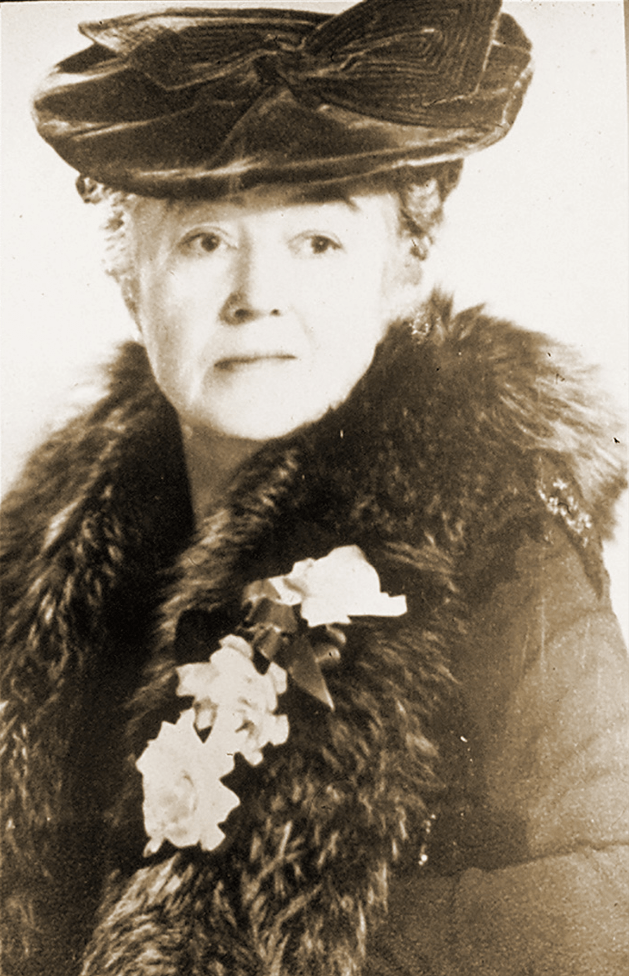
Mabel

Blog post provided by Cheekwood’s Writer-in-Residence, Cecelia Tichi, Ph.D.

Cecelia Tichi is an award-winning author and Professor of English and American Studies Emerita at Vanderbilt University. Her books span American literature and culture from colonial days to modern times, but her recent work draws upon the Gilded Age (post-1870) that prompted her book on Jack London and another on seven activists in that tumultuous era.

Cecelia’s research and teaching inspired What Would Mrs. Astor Do? The Essential Guide to the Manners and Mores of the Gilded Age, followed by Gilded Age Cocktails and Jazz Age Cocktails , which set the stage for her mystery crime novels that boast “Gilded” in each title.

Cecelia can be followed on her website: https://cecebooks.com/

Portrait Photo of Cecelia Tichi
test

Top Plant Picks August 2022

Top Plant Picks August 2022

August is in full effect and the gardens are loving it! Cheekwood’s Plant Collections Manager, Shanna Jones, shares her favorite plants at the estate!

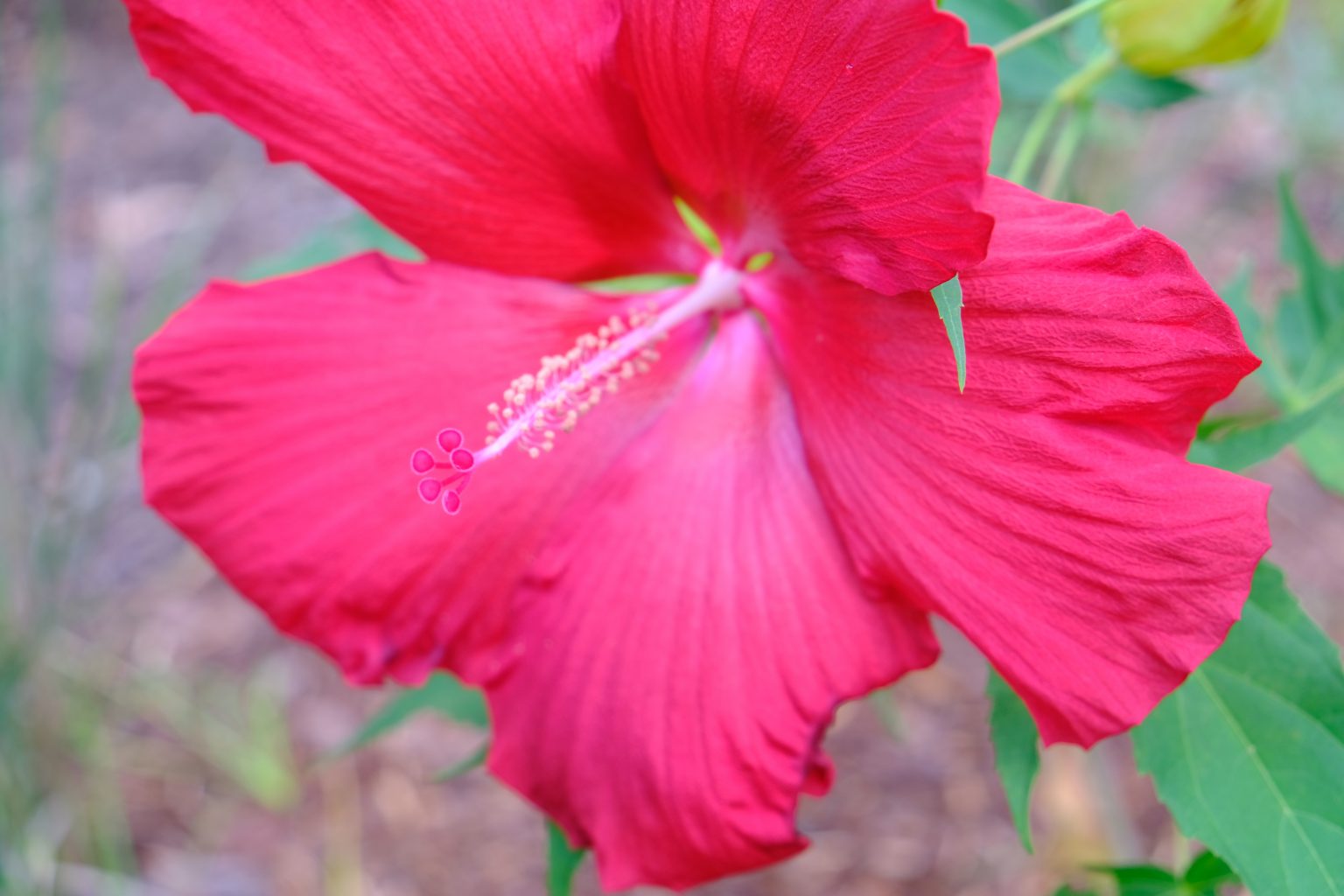
Hibiscus ‘Lord Baltimore’ (Hibiscus)

Bloom Time: July – September

Sun Requirement:  Full sun

Water Requirement: Medium – wet

Wildlife: Butterflies

Tolerates: Deer & wet soils

Native to North America: Yes

Zones: 4 – 9

Other: Keep deadheaded for optimal blooming. Great specimen for wet areas!

Location: Bracken Foundation Children’s Garden

Hibiscus-Lord-Baltimore-1536x1024

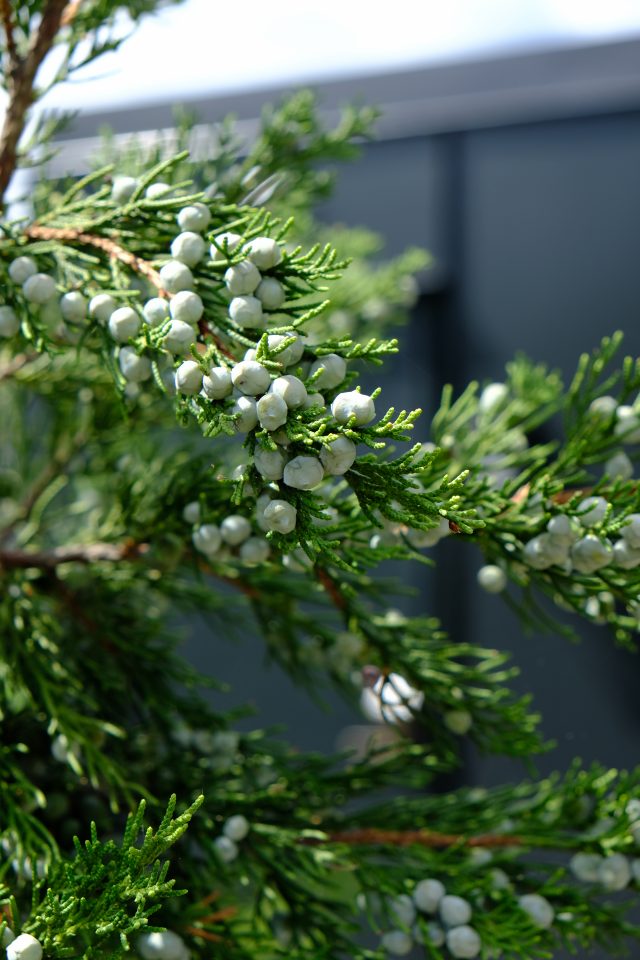
Juniperus chinensis ‘Hetzii Columnaris’ (Upright Chinese Juniper)

Bloom Time: N/A

Sun Requirement:  Full sun

Water Requirement: Medium

Wildlife: Berries provide food for birds

Tolerates: Deer & drought

Native to North America: No

Zones: 4 – 9

Other: Fast-growing; easily shaped. Can grow to 15′ x 15′. Good size for a large container display.

Location: Gillespie Border/ Beer Garden

Juniperus-chinensis-Hetzii-Columnaris-2-640x960

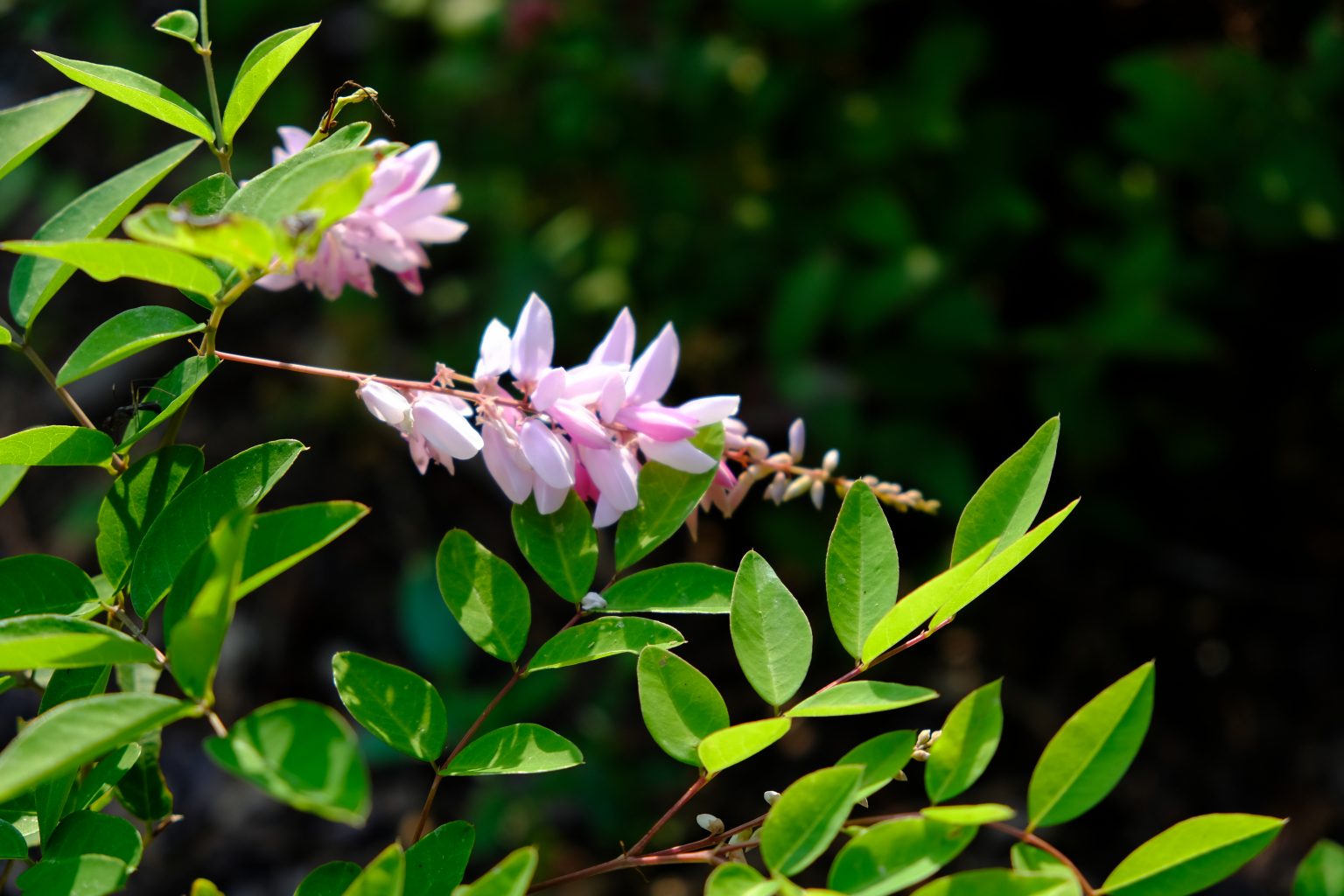
Indigofera amblyantha (Chinese Indigo)

Bloom Time: May – September

Sun Requirement: Full sun

Water Requirement: Medium

Wildlife: Bees

Tolerates: Some shade

Native to North America: No

Zones: 6 – 8

Other: A member of the pea family, this plant is the source of the dye, indigo. It is a deciduous shrub. Can grow to be 4′ – 6′ tall.

Location: Bracken Foundation Children’s Garden

Indigofera-amblyantha-1536x1024

Nelumbo nucifera ‘Drunken Concubine’ (Lotus)

Bloom Time: June – August

Sun Requirement: Full sun

Water Requirement: Wet

Wildlife: Pollinated by beetles

Tolerates: Acidic waters

Native to North America: No

Zones: 4 – 11

Other: Grows in submerged water. In addition to the beautiful flower bloom, its fruiting body is very unique and used in floral displays

Location: Herb Study Garden

Nelumbo-nucifera-Drunken-Concubine-4-1-1292x1536

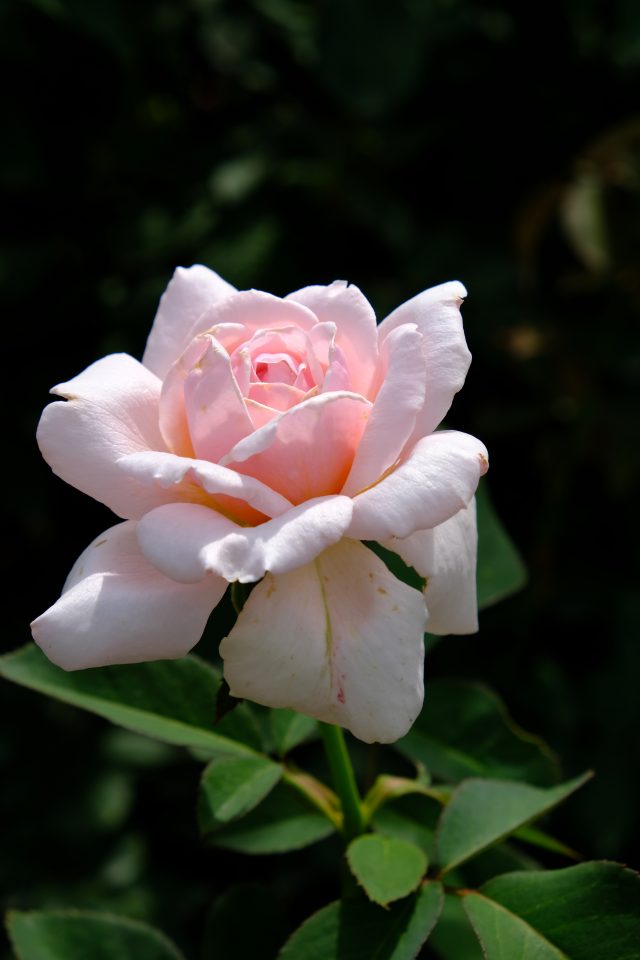
Rosa ‘Quietness’ (Rose)

Bloom Time: May – October

Sun Requirement: Full sun

Water Requirement: Medium

Wildlife: Bees & butterflies

Tolerates: Some shade

Native to North America: No

Zones: 5 – 9

Other: Introduced in 2003, ‘Quietness’ is a double bloom and moderately fragrant.

Location: Rose Study Garden

Rosa-Quietness-640x960

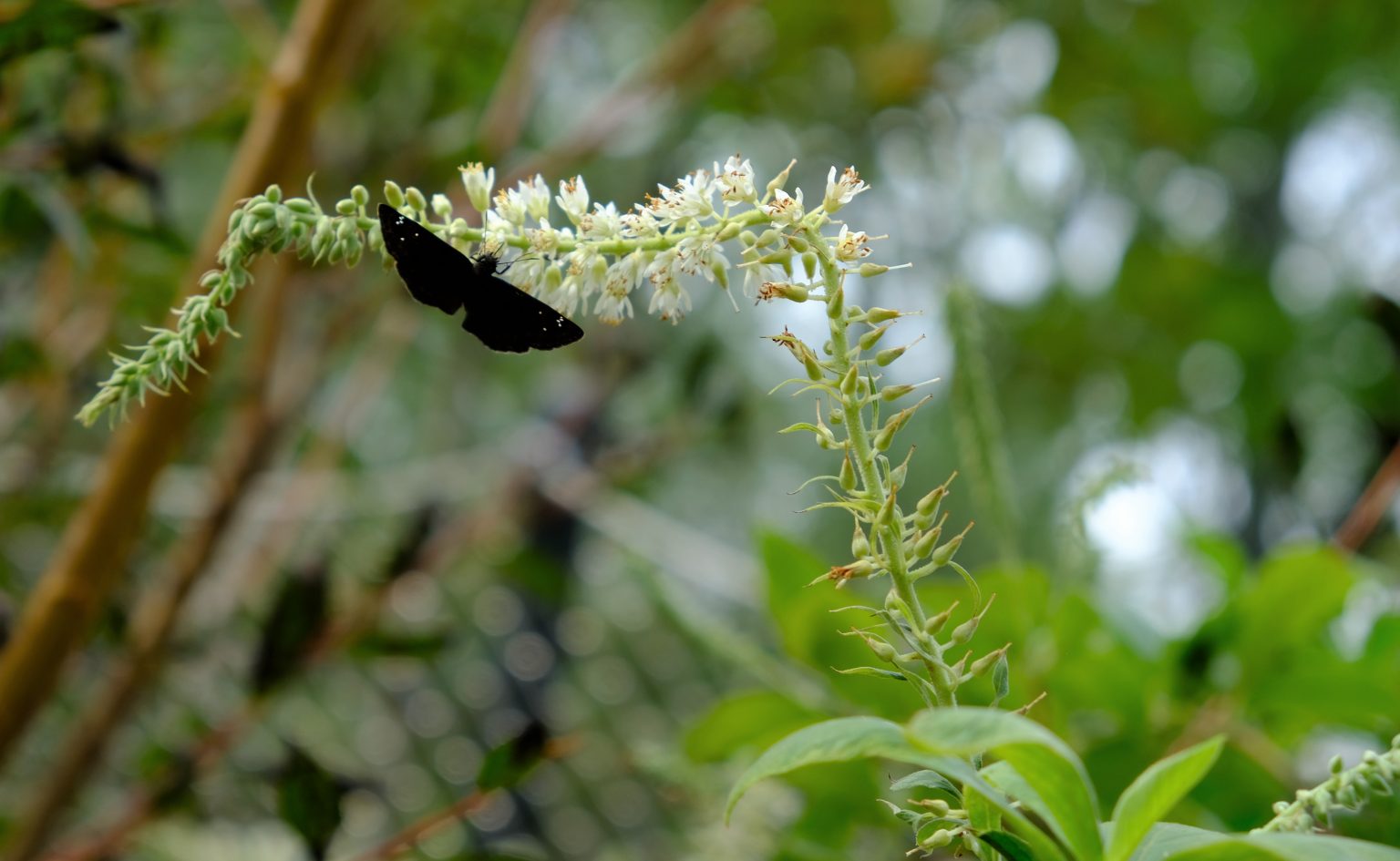
Clethra tomentosa ‘Cottondale’ (Summersweet)

Bloom Time: July – September

Sun Requirement: Part shade

Water Requirement: Medium – wet

Wildlife: Butterflies

Tolerates: Wet soil & erosion

Native to North America: Yes

Zones: 7 – 9

Other: A fragrant, deciduous shrub, it was found growing wild in the Florida panhandle.

Location: Bracken Foundation Children’s Garden

Clethra-tomentosa-Cottondale-3-1-1536x945

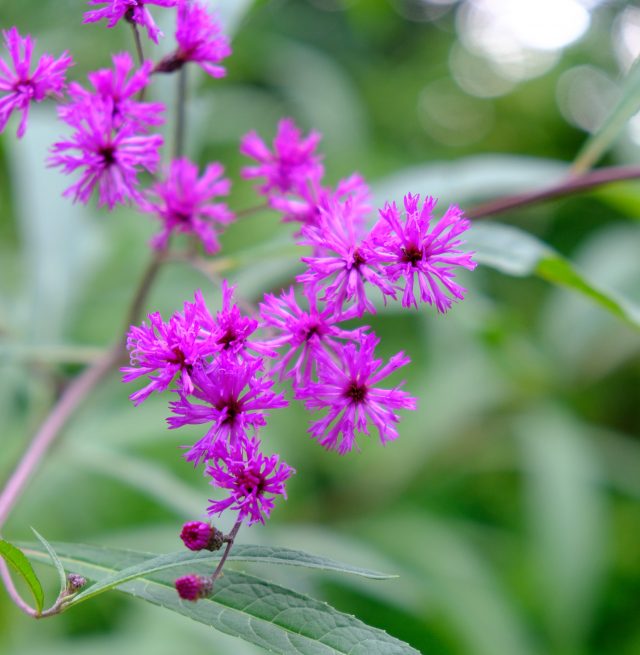
Vernonia lettermanii (Ironweed)

Bloom Time: July – August

Sun Requirement: Full sun

Water Requirement: Dry – medium

Wildlife: Butterflies & hummingbirds

Tolerates: Drought

Native to North America: Yes

Zones: 4 – 9

Other: A low-maintenance, late summer blooming perennial that tolerates a range of soil types.

Location: Bracken Foundation Children’s Gard

vERNONIA-LETTERMANII-4-640x655

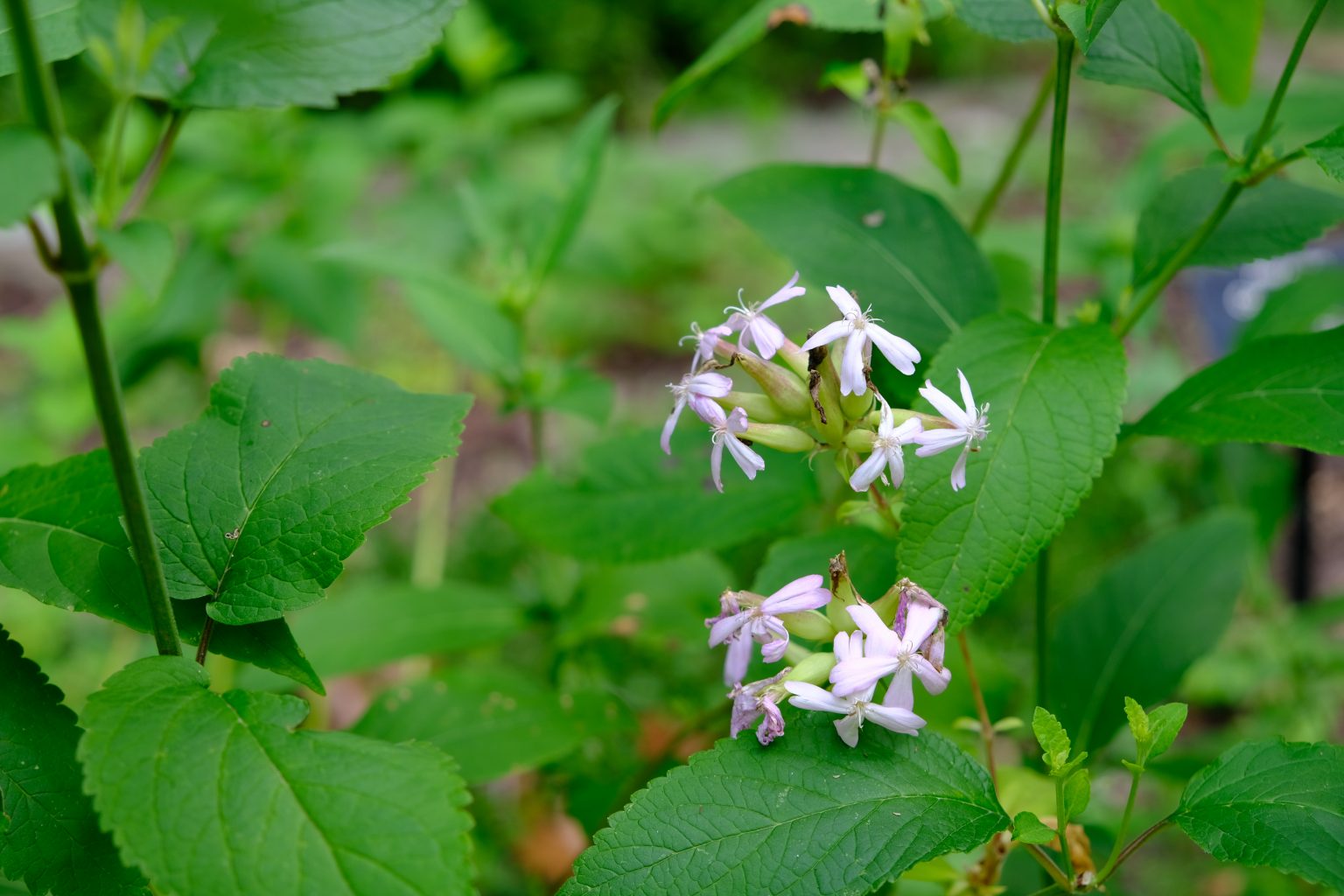
Saponaria officinalis (Common soapwort)

Bloom Time: July – September

Sun Requirement: Full sun – part shade

Water Requirement: Dry – medium

Wildlife: Bees, butterflies, hummingbirds

Tolerates: Deer & rabbit

Native to North America: No

Zones: 3 – 9

Other: A native to Europe, soapwort has naturalized well in N. America. Is leaves contain as substance that lathers!

Location: Herb Study Garden

Soapanaria-officinalis-1536x1024
test

Historic Profile: The Pleasure of Your Company—Cheekwood Entertains!

Costume parties had been a longstanding Nashville social tradition when Leslie Cheek, Jr., let his imagination conjure summer evening galas at the family’s newly completed country estate, Cheekwood. The guests would be required to arrive en déguisement, a festive custom the Cheek family well knew from the Dinner Club’s annual “Costume Ball” held downtown at the Hermitage Club, the old Renaissance-Revival building located between Church and Union Streets. Some Nashvillians ordered costumes from dressmakers, but others enjoyed cobbling together a patchwork of wearables to suggest western ranch wear, nautical garb, or Sherwood Forest’s own Robin Hood. In any case, the photographers and reporters for Nashville’s Tennessean and Banner newspapers were on hand to memorialize the evening.

Leslie Cheek, at twenty-four years of age, imagined his costume parties based on distinct historical periods so that guests would coordinate and complement one another’s appearance. The young man might have recalled other such historically themed parties, especially those honoring President George Washington, for Washington’s Birthday prompted elaborate national celebrations from schoolrooms to ballrooms, and social occasions that ranged from afternoon teas to formal balls. (In 1925, the Finitimus Club of East Nashville held a banquet in which “The George Washington Birthday motif was featured in every appointment…and club members were appropriately dressed in colonial costumes.”) Annually in February, the gentlemen’s powdered wigs and knee britches, together with ladies’ floor-length gowns with snug sleeves commemorated the first President and his lady, Martha Washington. The year 1933 was just after the bicentennial of Washington’s birth, and thoughts of eighteenth-century costuming apparently gave young Leslie Cheek his idea for a party centered on a distinct historical era.

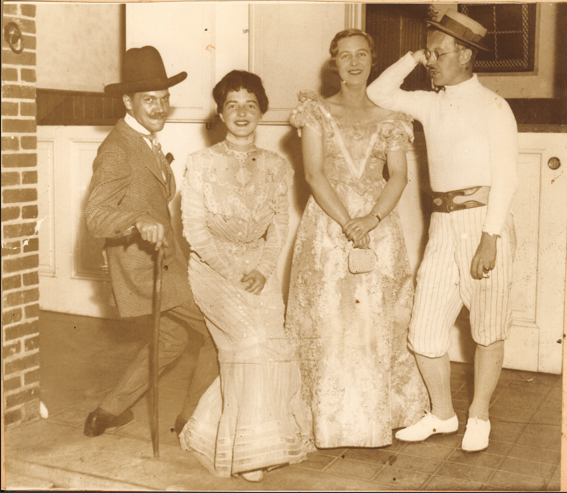
Guests at the Victorian Stable Party

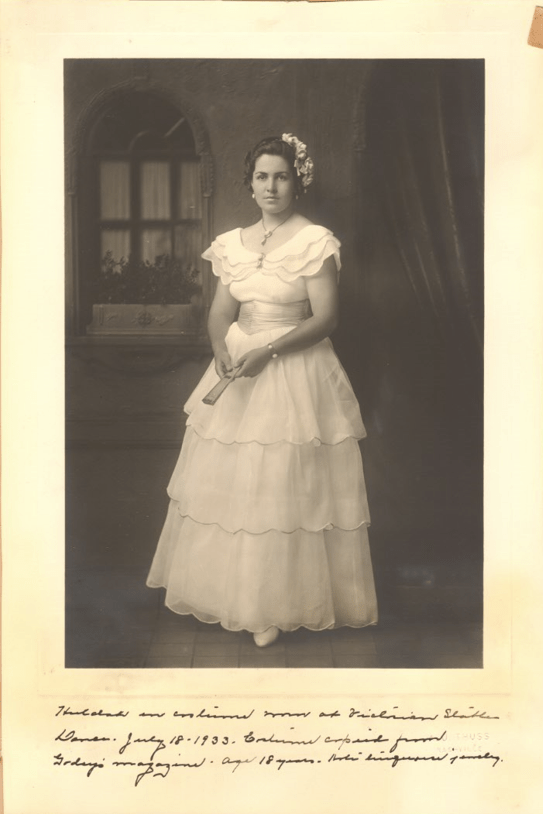
The “Victorian Stable Party” on July 18, 1933 asked Cheekwood’s guests to don the gowns and formal evening suits of Queen Victoria’s era, then to enjoy the informality of the setting, the Cheekwood stable where refreshments were served near the stalls where horses and automobiles kept company. The guests happily complied with the request that they step into history in their clothing, for photographs show gentlemen in top hats and formal (swallowtail) coats, while ostrich plumes waved on ladies’ broad-brimmed hats, and their gowns reached to the floor, since no Victorian lady dared bare an ankle. Leslie’s guests might not have imagined that the festive Victorian Stable Party was not to be their only occasion for historical costuming at Cheekwood, for their host would soon summon friends and family for a second evening of historical costuming, one vastly different from the era of Queen Victoria.

Huldah at the Victorian Stable Party

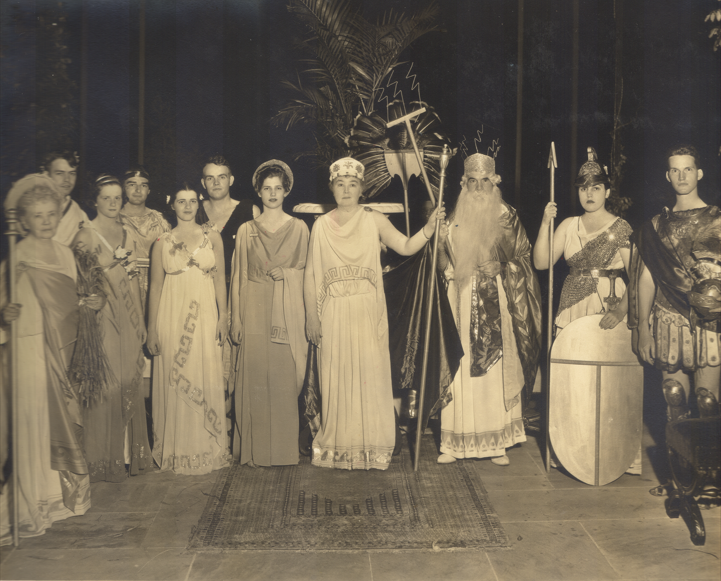
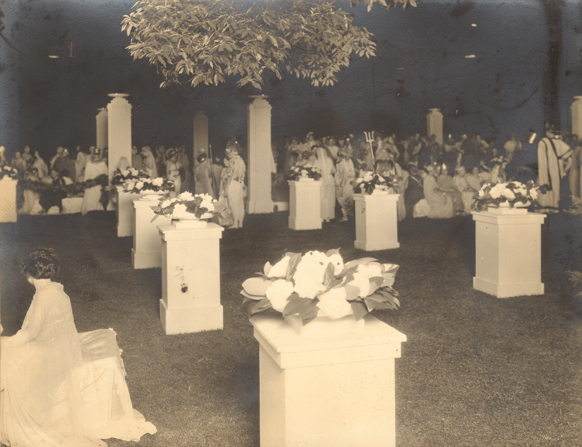
Leslie reached much deeper into the past for a party the next year. On July 10, 1934, the mansion’s Loggia and Swan Lawn were transformed into a Greek acropolis for the costume ball whose theme was Greek and Roman mythology. In their invitations, guests were assigned either a Greek or Roman god or goddess, and they were expected to arrive in costume for the evening, as they did. We imagine the partygoers congratulating one another on their classical apparel. Among the Cheeks, Mrs. Cheek’s mother went as Ceres, the goddess of agricultural bounty. Leslie Sr. was Zeus, the mighty ruler, and Mrs. Cheek (Mabel) was Hera, the goddess of motherhood and marriage. Huldah was Athena, associated with wisdom, crafts, and warfare. Leslie had designed the invitations and assigned himself the identity best suited to the host. A student of architecture, he came as Iktinos, the architect of the Parthenon in Athens, Greece. The architect of two successful summer parties, Leslie well deserved the honor.

Swan Lawn Costume Ball Set Up

Blog post provided by Cheekwood’s Writer-in-Residence, Cecelia Tichi, Ph.D.

Cecelia Tichi is an award-winning author and Professor of English and American Studies Emerita at Vanderbilt University. Her books span American literature and culture from colonial days to modern times, but her recent work draws upon the Gilded Age (post-1870) that prompted her book on Jack London and another on seven activists in that tumultuous era.

Cecelia’s research and teaching inspired What Would Mrs. Astor Do? The Essential Guide to the Manners and Mores of the Gilded Age, followed by Gilded Age Cocktails and Jazz Age Cocktails , which set the stage for her mystery crime novels that boast “Gilded” in each title.

Cecelia can be followed on her website: https://cecebooks.com/

Portrait Photo of Cecelia Tichi
test

Member Spotlight: Geniese Gilman

Geniese and Tom Gilman got married in 1978 and moved to Nashville, Tennessee. Since then, they have raised their nine children here and visited Cheekwood numerous times along the way. Tom is a history teacher, and Geniese is a nanny, mother, and grandmother, who often meet each other for picnic lunches when they have time throughout their days. They were introduced to Cheekwood by a photographer in July of 1985 and since then Cheekwood has been the backdrop to countless photos including an anniversary portrait, one of their daughter’s wedding portraits, one of their nephew’s proposals, birth announcements, Christmas cards, and innumerable photos of their nine grandchildren. When Geniese searched, “Cheekwood” in her phone’s photo album she got a result of 1,500, and that does not even begin to cover the older photos that are not on her phone.

null

Geniese (blue sunhat) and Tom (blue baseball hat) with their nine grandchildren in the Bracken Foundation Children’s Garden

What have you enjoyed the most about your Member experience?

The memories I have created at Cheekwood with family and friends over the years have been delightful. I have even made friends with some staff members, too, like Shannon Pruitt. Shannon is now a Horticulturist at Cheekwood, but we first met in the gardens on March 30, 2017. I was at Cheekwood alone with my sketchbook reminiscing about a loved one who had passed away the year before. Shannon noticed that I was crying, and she came over to ask me if I was okay. From that day I have come to know
Shannon as one of the most tender and kind souls, and I enjoy seeing her working in the gardens on my visits.

What is your favorite garden, area, or plant at Cheekwood and why?

I love the Tulips – I went to see them at least eight times earlier this year in 2022. I love to take pictures of everything, but especially the Tulips. My Dad was a Naval photographer during World War II and later had a dark room in our house while she was growing up. He gifted me my first camera with a flash bulb before my field trip to the Missouri Botanical Garden. Knowing that my first photograph I ever took was of flowers makes me want to continue doing that even more. One of my favorite Cheekwood in Bloom years was when there were different variations of pink tulips planted beside the creek flowing down from the Historic Mansion & Museum.

Other favorite areas of mine are the TRAINS! exhibit, I love them almost as much as my grandchildren do. My older grandchildren enjoy reading The Little Engine that Could on the Storybook Trail to my younger grandchildren. I enjoy early morning strolls through the Blevin’s Japanese Garden and the Ann & Monroe Carell Jr. Family Sculpture Trail where I sing and hum to myself when no one else is around. Cheekwood is my favorite place to take my grandchildren and take pictures of them and the flowers.

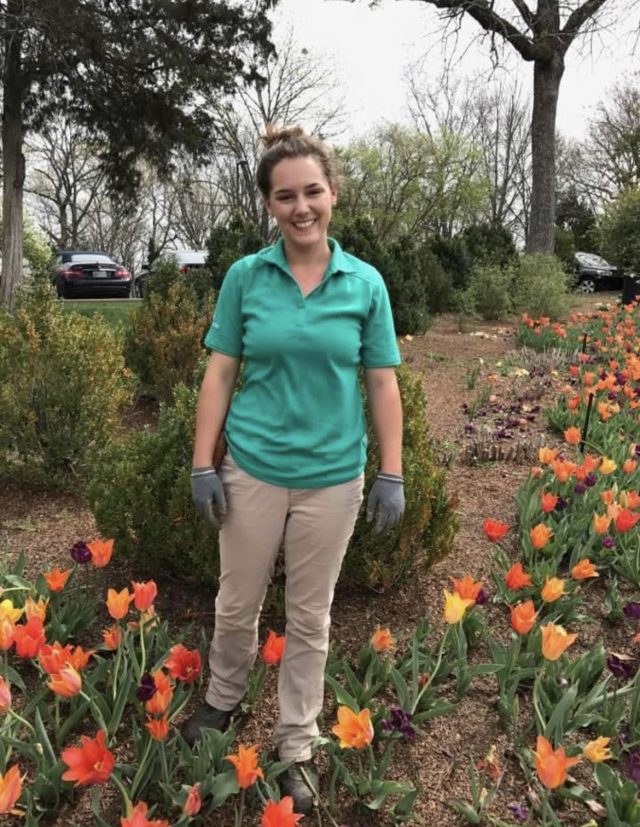
Shannon Pruitt working in the Bradford Robertson Color Garden

Brandford-Robertson-Color-Garden-640x827

Do you have a favorite art piece at Cheekwood, or, if not, a favorite exhibition that Cheekwood has hosted? Is there a reason you like it?

My family loved Sean Kenney’s Nature POP! Made with LEGO Bricks exhibit in 2021 and the Storybook Houses! in 2019. A family favorite house of ours was the Hill Top Garden, inspired by Beatrix Potter and The Tale of Peter Rabbit. There were so many interactive ways to explore the house and from the bunnies on the fence posts to the window flower baskets the artistic details were wonderful. The accessibility of these exhibits to Members and guests of all ages enhance the enjoyment for children and make the adults feel like they’re kids again, too.

Three of the older grandchildren near the TRAINS! exhibit

TRAINS-Exhibit-640x474

null

Family portrait taken in 1985 on their first visit to Cheekwood. Taken by Orman and Orman.

Join Cheekwood today and experience the unparalleled beauty of Nashville’s landmark country estate.
As a member, you have complimentary access to inspiring art and garden exhibits, programs, festivals,
and events throughout every season.

LEARN MORE

Privacy Policy Sitemap Web design by Speak
Back to top