wordpress, Author at Cheekwood - Page 15 of 45 | Page 15
x icon Close
test

From 2010 to 2020: Reflecting on Chihuly at Cheekwood with Dale Chihuly
From 2010 to 2020: Reflecting on Chihuly at Cheekwood with Dale Chihuly

Dale Chihuly is one of the most innovative contemporary American artists, and is among the best-known artists working with glass today. Working to unite color, light, form, and space to deliver uniquely immersive experiences, Chihuly has completed ambitious architectural artwork installations all over the world, making him a household name.

In May of 2010, Nashville was not seemingly ready for the impact of Dale Chihuly. At the beginning of the month, the city experienced the largest flood in its history when the Cumberland River crested more than 11 feet above flood level, leaving 10,000 people in the region displaced. Local businesses were shut down and just in a couple weeks, the city’s largest exhibition, spanning two museums, was set to open.
Cheekwood_2020_67A6990R3_sml_gk_High-res-JPEG-_not-resized_-1

On May 25, 2010, Chihuly at Cheekwood and Chihuly at The Frist opened to the public, welcoming record-number visitors for both institutions. Despite the city’s tragedy, Dale Chihuly’s sculptures united Nashvillians, inspiring them to get out and enjoy what the city still had to offer.

Now in 2020, the city has almost doubled its population in the past 10 years, experiencing incredible growth and prosperity. The Nashville of 2020 feels like an entirely new city and yet, institutions like Cheekwood continue welcoming new visitors, adding to the cultural depth of the city.

Celebrating 60 years of public service, Cheekwood is firmly cemented as a centerpiece for the community, a place for intellectual stimulation, beauty and respite, and serving as a place of solace during these unprecedented times. This year marks the opening of the Bracken Foundation Children’s Garden, as well as the restoration of the Ann & Monroe Carell Jr. Family Sculpture Trail and the Blevins Japanese Garden.

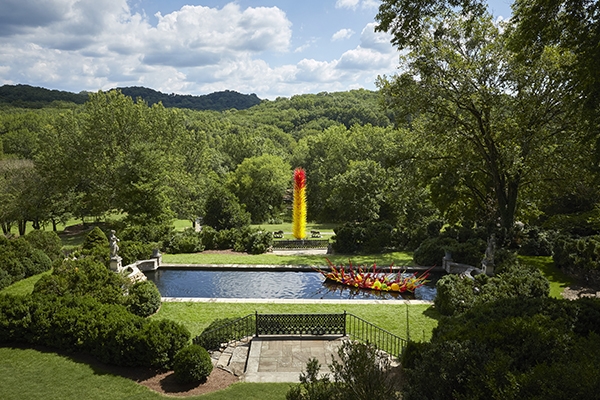
Chihuly’s works, responding to the gardens’ natural beauty, are installed throughout the estate, enticing visitors to explore this new iteration of Cheekwood. With 12 outdoor installations, two indoor chandeliers and over 3000-square-feet of museum exhibition, Chihuly is enchanting Cheekwood.

The magic of Chihuly’s glass installations lies in part in their effortless integration into nature. The reflectivity of the glass, the whimsical forms, and the bold colors of his sculptures often complement those found in the spaces in which they inhabit. And to its very core, the natural world, like Cheekwood and Chihuly’s art, is for everyone.

After a three-month postponement due to the Covid-19 pandemic, we are delighted to present Chihuly at Cheekwood through January 10. In celebration of the extraordinary exhibition, featuring two new site-specific  works  created  for  Cheekwood’s  landscape,  Cheekwood’s  Curator,  Campbell  Mobley,  had  the  opportunity  to  ask  a  few  questions  and  further  explore  Chihuly’s  processes  and  inspiration  regarding the exhibition, as well as his reflection on the 2010 exhibition.

A Q&A with Dale Chihuly:

Q: What was your process in selecting objects for this show and how did it differ from that in 2010?

A: I approached this show as I typically do, by reacting to the environment. Having presented my work at the estate and gardens in 2010, I was familiar with the footprints, however, new areas have been developed since, and it felt natural to explore them with this new exhibition. Visitors will have a unique experience this year.


Q: What was your inspiration for the two, new, site-specific works in the exhibition – Golden Amber Persian Chandelier in the Loggia and Gilded Yellow and Plum Tower at the Color Garden arches, and how did Cheekwood inform your decisions?

A: I created a similar Persian Chandelier for a project in London a few years ago and thought the scale would work well for the Loggia. Taking the room into consideration, I played with color, ultimately selecting complementary amber hues. The long vista leading to the arches called for a large-scale installation and a bold color palette. I designed the Tower in tones of rich purples and yellows and believe the result will be striking.


PR-Approved-Dale-Profile-Image-1

Q: The 2010 exhibition was so beautiful, attracting many first-time visitors that have turned into lifelong members. How does Cheekwood’s landscape so uniquely highlight your work and what inspired you to accept a second show, 10 years later?

A: The footprint of Cheekwood’s garden is large, yet it retains several intimate spaces. I love its rolling hills and spatial variety, as it allows me to create distinct experiences within one vision. Returning in 2020 allows me to explore new ideas and to bring new work to art and garden enthusiasts.


Q: How do the works in this show enlighten the work you are currently doing with the Chihuly Merletto series? What brought on the evolution?

A: One of the key drivers to my artmaking practice is a need to challenge myself and my team. There is a particular energy and satisfaction that comes out of pushing the glass medium through scale or utilizing techniques that I have never explored. With merletto, I noticed a similarity between the patterns of the ancient technique and early pencil drawings that I created with a bundle of pencils held in my hand. This similarity inspired me to take on a new challenge, and to explore the merletto technique in a new way…in my way.


Q: As you know, the Ann & Monroe Carell Jr. Family Sculpture Trail has recently undergone a major renovation, providing both a paved path and lighting, allowing us to feature your artwork on The Carell Trail, which wasn’t possible in 2010. What went into the decision to show Red Reeds and Float Boat in this location?

A: As with every new project or site, I aim to create and place work that will change one’s experience in the environment. It was the same process for the trail; I wanted installations that people would react to as they move along its path.


Q: This will be the first time I will see one of your neon artworks in person, and I’m thrilled and know our visitors will be as well. Would you discuss the transition in using light as a medium and if, and how, artists like Dan Flavin have inspired those choices?

A: I started exploring neon for art installations in the late ‘60s and continued my experiments with the medium into the early ‘70s. I have always been fascinated by the transmission of light through translucent material and when you introduce color, it is very powerful. Neon is light itself, it communicates color brilliantly, and it couldn’t exist without glass.


Be sure to visit Chihuly at Cheekwood during daytime hours on Tuesday – Sunday or experience the exhibition from a different perspective after dark during Chihuly Nights, running select Tuesday – Sunday evenings. For tickets and more information about Chihuly at Cheekwood, visit https://cheekwood.site/calendar/chihuly-at-cheekwood/.

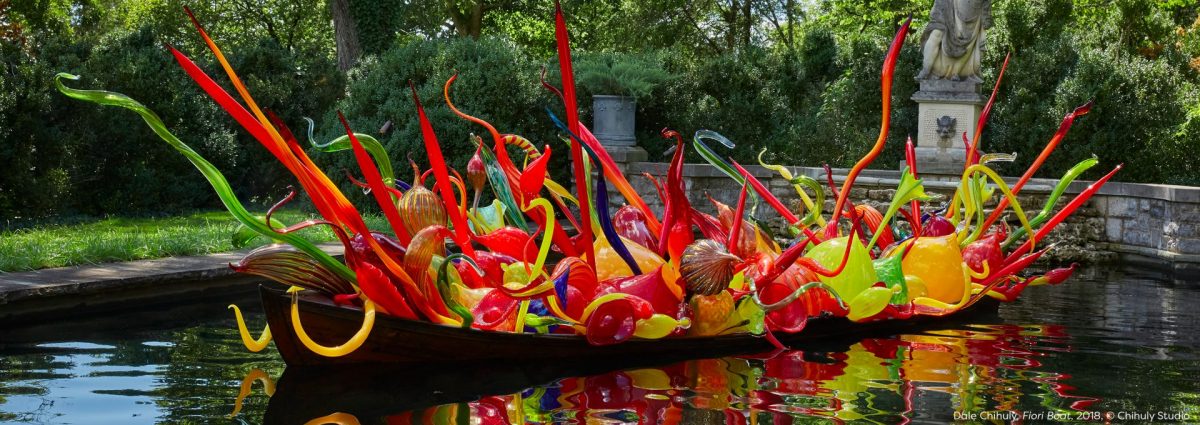
Dale Chihuly, Fiori Boat, 2018, and Scarlet and Yellow Icicle Tower, 2013 © Chihuly Studio
test

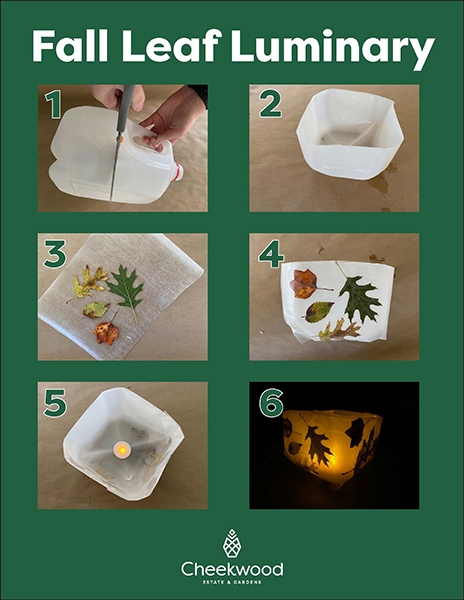
Tots! Activity: Fall Leaf Luminary

Tots! Activity: Fall Leaf Luminary

As Cheekwood’s Tots program is temporarily suspended, we are sharing today’s activity for parents and tots to activate at home. Use our files to create your own fall leaf luminary, then share your work with us by tagging @cheekwood on Instagram and using #cheekwoodtots!

Here’s what you’ll need:

• Clear plastic milk jug cut in half

• Clear contact paper

• Fallen leaves of various shapes and colors collected on a walk

• Scissors

• Battery tea light


Directions:

1. Cut the top off of the clear jug.

2. Go outside and collect different leaves. See how many different shapes and colors you can find!

3. Using the clear contact paper, stick leaves onto the jug, making sure to completely cover the leaves.

4. Arrange as many of your leaves onto the jug as you would like.

5. Place the tea light in the jug to complete your luminary.


Try pairing the activity with one of these books:

Kate, Who Tamed The Wind by Liz Garton Scanlon and Lee White

Leaf Man by Lois Ehlert

The Little Yellow Leaf by Carin Berger


Ask your explorer: 

• Describe some of the trees that we saw on our walk while collecting leaves. Can you name the parts of a tree? Leaves, branches, trunk, roots.

• How are the leaves you collected the same/different?

• Pick a leaf and describe it. How does it look, feel, and smell?

Fall-Leaf-Luminary

An Additional Project: Leaf Rubbings

Here’s what you’ll need:

• Leaves left over from luminary project

• Drawing paper

• Crayons with wrappers removed

Directions:

1. Place a leaf under a piece of white drawing paper, vein side up.

2. Using a crayon, gently rub it on the paper over the leaf until you see it appear.

3. Repeat until your paper is filled with colorful leaf prints.

4. Ask your explorer what caused the lines to appear on the rubbing? (veins)

test

Gardeners’ Top Picks October 2020

Gardeners’ Top Picks October 2020

There’s so much more than mums to see during Cheekwood Harvest! Check out our garden team’s top plant picks for October. Use this as your guide as you explore the grounds!

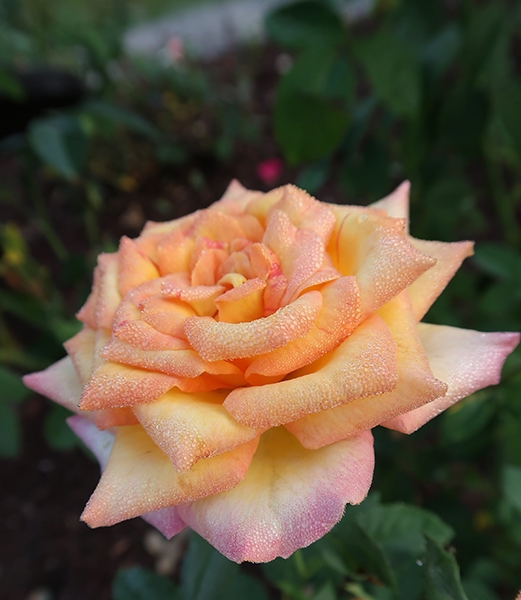
Grandiflora Rose (Rosa grandiflora ‘Gold Medal’)

Bloom Time: May – November

Sun Requirement: Full sun

Water Requirement: Medium

Wildlife: Butterflies

Tolerates: Heat & Humidity

Native to North America: No

Other: Fragrant; resistant to rust and powdery mildew

Zones: 5 – 9

Location: Rose Study Garden

Rosa-Gold-Medal-Rose-Study-Garden-2

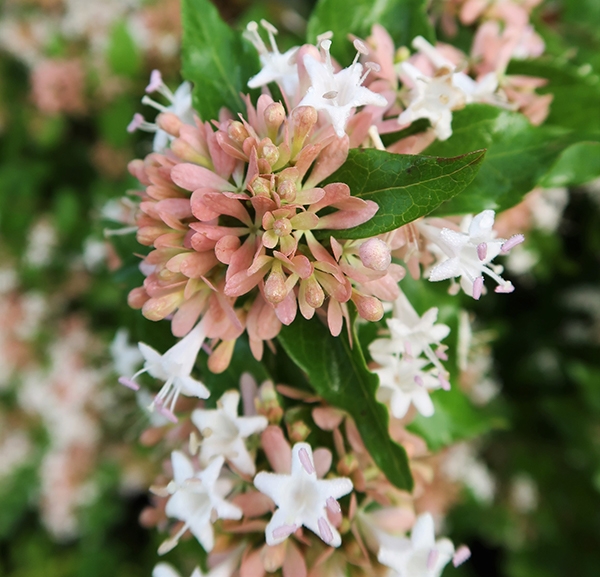
Chinese Abelia (Abelia chinesis)

Bloom Time: August – October

Sun Requirement: Full sun – part shade

Water Requirement: Medium

Wildlife: Butterflies, bees

Tolerates: Deer

Native to North America: No

Other: Makes an effective hedge when planted in mass

Zones: 7 – 9

Location: Bradford Robertson Color Garden

Abelia-chinensis-Color-Garden-1

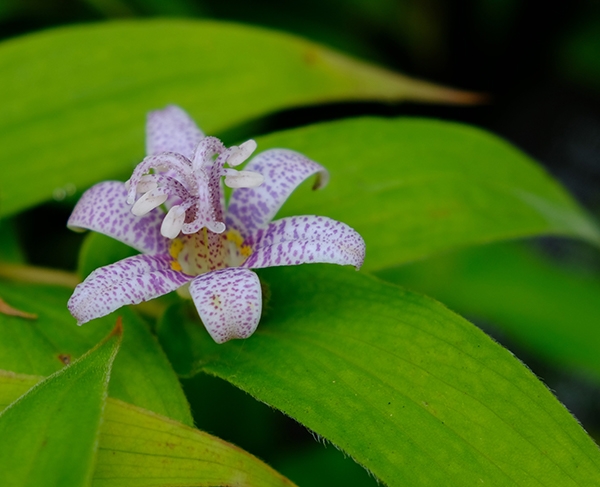
Toadlily (Tricyrtis hirta ‘Miyazaki’)

Bloom Time: August – October

Sun Requirement: Part shade – full shade

Water Requirement: Medium – wet

Native to North America: No

Other: Plant where detailed flowers can be appreciated up close

Zones: 4 – 8

Location: Carell Dogwood Garden

Tricyrtis-hirta-Miyazaki-DO-B-1

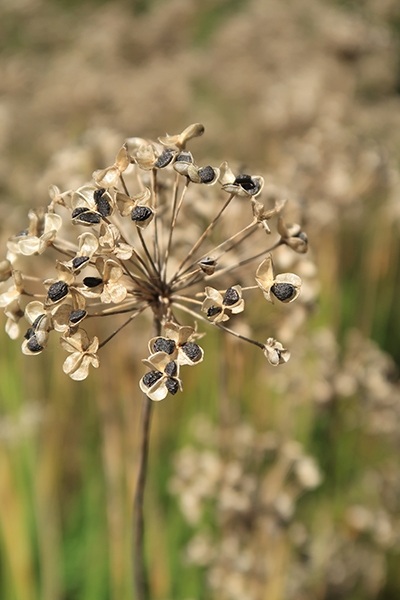
Chives (Allium schoenoprasum)

Bloom Time: April – May

Sun Requirement: Full sun – part shade

Water Requirement: Medium

Wildlife: Butterflies

Tolerates: Deer & Drought

Native to North America: Yes

Other: Seed heads provide attractive garden interest in the fall

Zones: 4 – 8

Location: Wills Perennial Garden

Allium-schoenoprasum-WI6

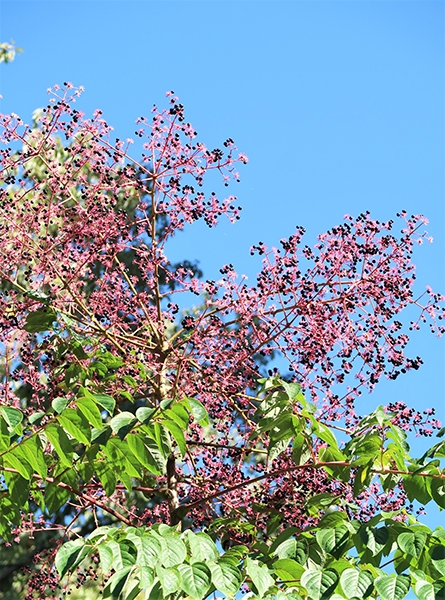
Devil’s Walking Stick (Aralia spinosa)

Bloom Time: July – August

Sun Requirement: Full sun – part shade

Water Requirement: Medium

Wildlife: Birds

Tolerates: Drought

Native to North America: Yes

Other: Leaves present a tropical effect. Fruit is an excellent food source for birds.

Zones: 4 – 9

Location: Herb Study Garden

Aralia-spinosa-2020-0281-HS5

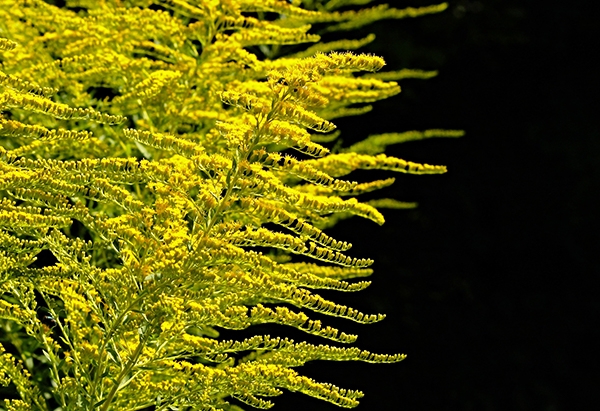
Goldenrod (Solidago ‘Fireworks’)

Bloom Time: September – October

Sun Requirement: Full sun

Water Requirement: Medium – wet

Wildlife: Butterflies

Tolerates: Deer

Native to North America: Yes

Other: The habit of ‘Fireworks’ is graceful. Provides exceptional fall color.

Zones: 4 – 8

Location: Howe Garden

solidago-2663113_1920-1

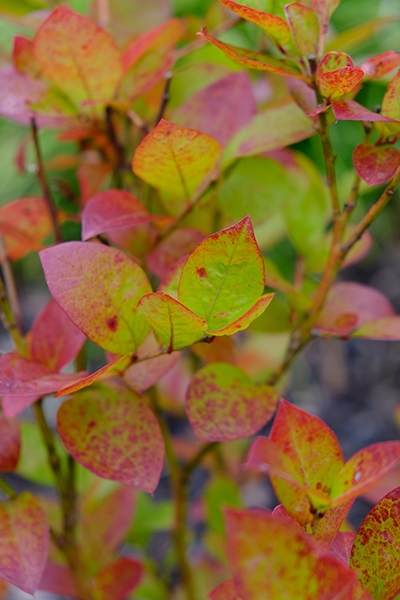
Highbush Blueberry (Vaccinium corymbosum ‘Jubilee’)

Bloom Time: May

Sun Requirement: Full sun – part shade

Water Requirement: Medium – wet

Wildlife: Birds, butterfies

Tolerates: Moist soils

Native to North America: Yes

Other: Effective interplanting with rhododendrons and azaleas which share similar acidic soil requirements.

Zones: 5 – 9

Location: Bracken Foundation Children’s Garden

Vaccinium-Jubilee-CH-5-2019-0283-4

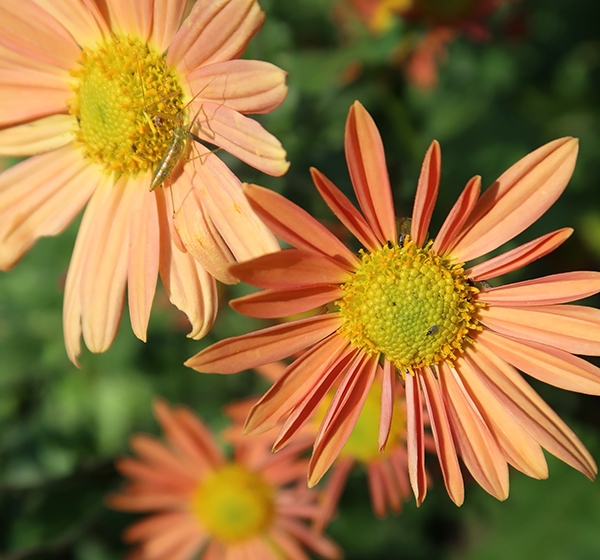
Hardy Mum (Chrysanthemum ‘Rustic Glow’)

Bloom Time: September – frost

Sun Requirement: Full sun

Water Requirement: Medium

Wildlife: Deer

Native to North America: No

Other: Plant hardy, perennial mums for late season color and food for pollinators.

Zones: 5 – 9

Location: Burr Terrace Garden

Chrysanthemum-Rustic-Glow-2018-0242-BU5

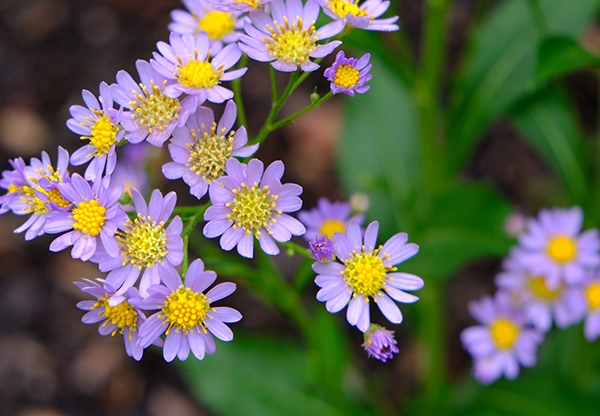
Tartarian Aster (Aster tartaricus ‘Jindai’)

Bloom Time: September – October

Sun Requirement: Full sun

Water Requirement: Medium

Wildlife: Butterflies

Tolerates: Disease and insect damage

Native to North America: No

Other: This cultivar seldom needs summer pinching to control height as long as it is grown in full sun.

Zones: 4 – 8

Location: Bracken Foundation Children’s Garden

Aster-tataricus-JindaiCH-25-2
test

National Coffee Day

National Coffee Day

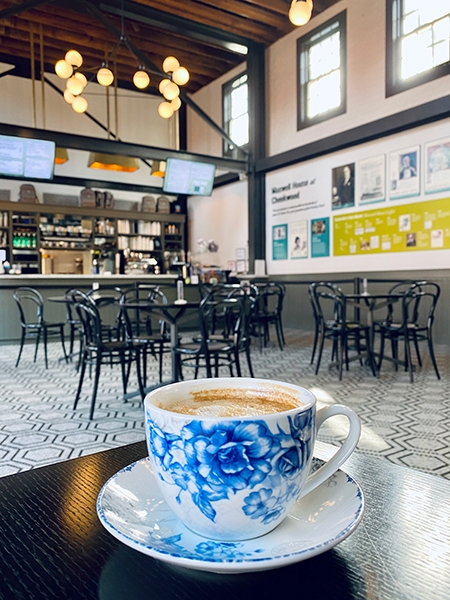
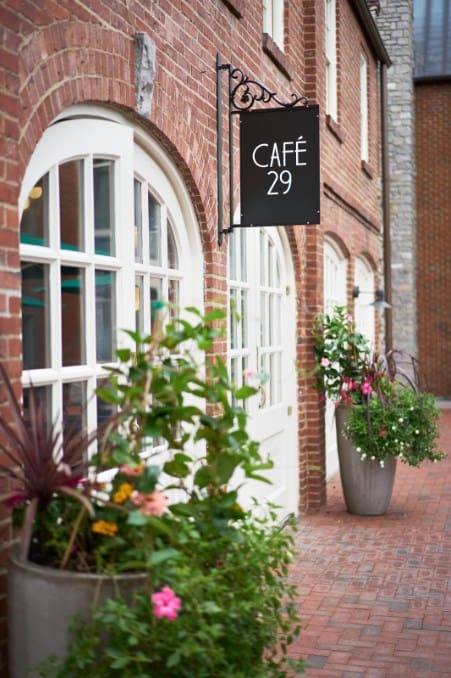
September 29 is National Coffee Day! Did you know the Cheek family business was the Cheek-Neal Coffee Company, creators and brewers of Maxwell House Coffee and Tea? Learn about the Cheek family’s history with Maxwell House coffee, then try your hand at making Maxwell House Muffins by Café 29. Made with the signature Maxwell House Coffee blend that has such significant meaning to Cheekwood’s story, these muffins, much like the coffee, are good to the last drop…or crumb!

National-Coffee-Day
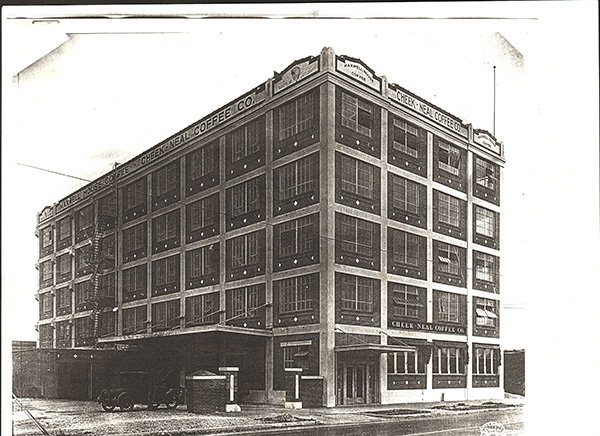
Cheek Neal Coffee 0020 Cheek-Neal Coffee Co. Houston Plant Decem

Cheek-Neal Coffee Company

The Cheek-Neal Coffee Company specialty blend was named after and marketed by the best hotel in Nashville, the Maxwell House. The success of the brand launched the local business into nation-wide production and is said to have captured the attention of President Theodore Roosevelt, who exclaimed that it was “good to the last drop!”

Cheek-Neal was created by Joel Cheek, the cousin of Leslie Sr.’s father C.T. Cheek. C.T. had been an early investor, and Leslie Sr. bought stock as well. In 1928, the Postum Company, later renamed General Foods, purchased Cheek-Neal Coffee Company for $45 million. As an investor, Leslie Sr.’s fortune quickly expanded, likely also expanding his plans for Cheekwood.

Maxwell House Muffins

These Maxwell House Muffins are a staff and visitor favorite at our Café 29. Use our recipe to whip up a batch at home this weekend. The mothers in your life will thank you!

Batter

6.5 ounces all purpose flour
1/2 teaspoon baking soda
1/4 teaspoon baking powder
1/2 teaspoon salt
5 ounces  butter room temp
6.5 oz white sugar
2 eggs room temp
5 oz  sour cream
1 teaspoon vanilla

Instructions: Mix dry ingredients and set aside. Cream butter & sugar till creamy. Mix eggs 1 at a time then add sour cream & vanilla, mix till blended. Add dry ingredients and lightly blend.  Add 1 scoop of batter (ice cream scoop will work) to buttered (or use liner) muffin pan, sprinkle the “middle” sugar, top w/ 1 scoop of batter then top with the topping. Bake 350* 20-30 minutes till baked thru.

Middle

2 oz brown sugar
1 teaspoon cinnamon

Mix set aside.

Topping

2 ounce all purpose flour
2 ounce brown sugar
2 ounce oats dry
1/4 teaspoon cinnamon
1 ounce Maxwell house coffee ground
2 ounce cold butter 1/2″ cube

Mix dry ingredients then mix in butter till it becomes a crumble, set aside.

Cafe-29
test

Tots! Activity: Yayoi Kusama Pumpkins

Tots! Activity: Yayoi Kusama Pumpkins

About the artist and their work:

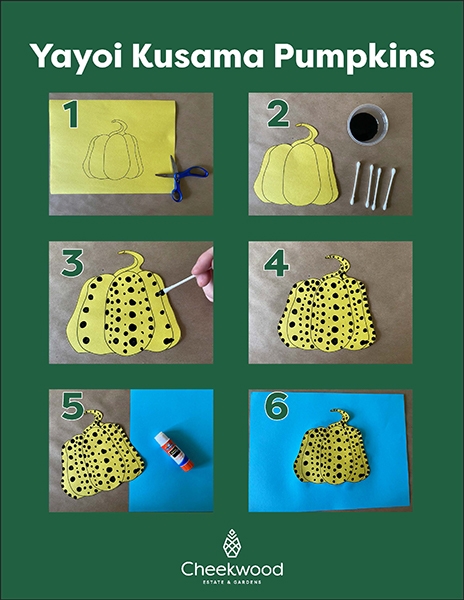
Yayoi Kusama is a Japanese artist who lives and works in Tokyo, Japan. Like many artists, she finds ways to express herself through her art. Dots are almost always in her artwork because she feels like she is a small dot among all the other dots of people, stars, and planets.


Here’s what you’ll need:

• Pumpkin template *See template below

• Colored construction paper

• Scissors

• Glue

• Black paint

• Q-tips or other round items

Pumpkin Template  


Directions:

1. Print out the pumpkin template onto a colored piece of construction paper.

2. Cut out the pumpkin leaving the black outline on the pumpkin.

3. Cover your pumpkin in polka dots by dipping your q-tip or any other round item into black paint and stamping it.

4. Once your pumpkin is dry, glue it down to an additional pie.


Try pairing the activity with one of these books:

From Here to Infinity by Sarah Suzuki

Yayoi Kusama Covered Everything in Dots and Wasn’t Sorry by Fausto Gilberti


Ask your artist: 

• Kusama made sculptures of pumpkins and then covers them in dots. How did you make your pumpkin?

• Why do you think Kusama likes dots so much? What would you cover in dots?

• Do you ever make art to help express how you’re feeling? What kind?

Yayoi-Kusama-Pumpkins
test

Tots! Activity: The Great Wave

Tots! Activity: The Great Wave

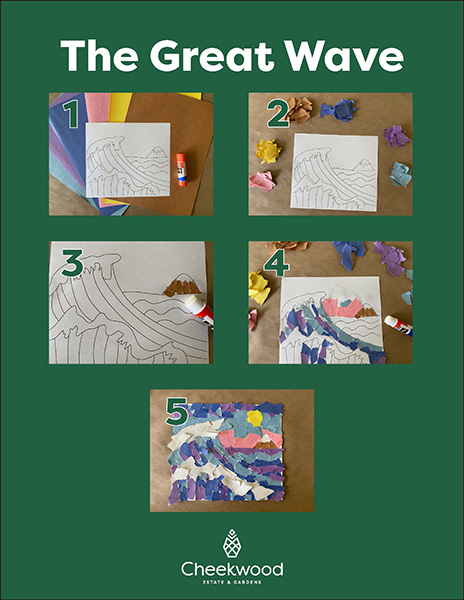
About the artist and their work:Katsushika Hokusai is a Japanese artist. His works were in the Ukiyo-e style of painting and woodblock printing. One of his most famous woodblock print pieces is called The Great Wave off Kanagawa, or just The Great Wave. The Great Wave is from a larger series called Thirty-Six Views of Mount Fuji. At just over 12,300 feet, Mt. Fuji is the highest mountain in Japan.


Here’s what you’ll need:• The Great Wave template
*See template below

• Cardstock or other thick paper

• Glue

• Construction paper in a variety of colors

• Optional: Scissors


Wave Template  


Directions:1. Print off the template on cardstock paper.

2. Rip up or cut the various colored construction paper into small pieces.

3. Glue down your pieces of construction paper on your template to fill in the design.


Try pairing the activity with one of these books:
The Great Wave by Veronique Massenot

Wave by Suzy Lee


Ask your artist: • Hokusai made his wave by carving into wood to make a big stamp. How did you make your wave?

• If you were going to make a lot of pictures of one thing, what would you choose? Why?

• If Mt. Fuji is the highest mountain in Japan, why do you think it appears so small in the artwork?


Alternative art project:Print the wave template onto painting paper. Trace the template with black crayon or black oil pastel. Paint over it with watercolor. How does the watercolor paint interact with the crayon or oil pastel?

The-Great-Wave
test

Bradford Robertson Color Garden

Bradford Robertson Color Garden

In celebration of Cheekwood’s 60th anniversary as a public institution, we’re highlighting one of our 12 distinct gardens each month to showcase our wide variety of garden offerings. With 55 acres of rolling hills and 12 intricate, unique gardens, there’s something for everyone to experience and love at Cheekwood.

color-garden-22-sRGB-lr-e1466617453816

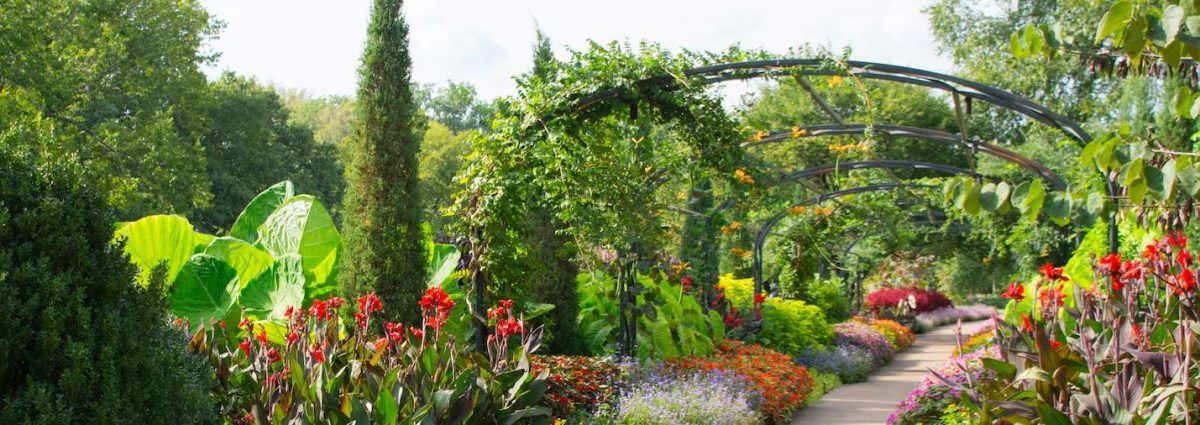
The Bradford Robertson Color Garden exhibits a seasonal rotation of color displays and is the showpiece of Cheekwood’s seasonal festivals. Situated to the right of Botanic Hall and the first garden that most guests experience upon their arrival, this garden is a vital part of Cheekwood’s welcoming committee.

Whether a sea of candy-toned tulips or warm-colored mums greet guests upon their arrival, it’s always an impressive experience. The summer display extends over four months, allowing the garden team to present the public with show-stopping tropical plants as well as the most current trends in horticulture and garden design. In the winter, though plant display may be limited to flora such as pansies and ornamental kale, Holiday LIGHTS gives the space a festive liveliness. By giving context to the time of year, its exuberant plant material and meandering path lead guests to a walk beneath a set of verdant arches, this garden sets a hospitable tone for the entire visit.

Naud Burnett, a landscape architect of Dallas, Texas, designed the highly maintained Bradford Robertson Color Garden, which was installed in 1998. Burnett is also responsible for the Margaret Elizabeth Jonsson Color Garden located at the Dallas Arboretum and Botanical Garden. Both sites feature an abundance of spring and summer flowering trees and shrubs, walking paths that allow closer inspection of plant material, as well as seating areas to encourage rest, reflection, and conversation.

The Color Garden at Cheekwood was established in honor of Eva Jo Robertson, a lifelong gardener and supporter of Cheekwood, by her daughter Tooty Bradford. Now Eva’s granddaughter and namesake, Eva Jo Bradford, adores the garden and considers it her very own.

Cheekwood-Harvest-1
Summer-Color-Garden

The highly variable plant installations seen in Bradford Robertson Color Garden noticeably enhance the ecological activity at Cheekwood. The garden’s rotating and dynamic summer displays are a haven for a variety of pollinators, particularly the gulf fritillary and sachem butterflies. Surrounded by the towering exfoliating bark of crape myrtle, accented with clipped boxwoods and the large flowers of mallow (Hibiscus) and sunflowers, the Bradford Robertson Color Garden provides an ideal setting for outdoor sculpture exhibitions. The most notable artists who have displayed here in recent years are Dale Chihuly (2010 and 2020), Jaume Plensa (2015), and Steve Tobin (2016).

A great deal of creativity, planning, and growing goes into the exciting and unique seasonal planting designs and a diligent team executes the speedy seasonal exchanges. As spring transitions into summer and summer into fall, the botanical garden continues to deliver innovative displays for the Bradford Robertson Color Garden. Always in tune with the season and inspired by concurrent art exhibitions and programming, the annual plantings are carefully chosen to wow and welcome visitors to Cheekwood.

Click here to read about our other distinct gardens. For a look at what’s currently blooming in the gardens, check out our Gardeners’ Top Picks here.

Privacy Policy Sitemap Web design by Speak
Back to top