Philip Bartko Jr., Author at Cheekwood - Page 8 of 11 | Page 8
x icon Close
test

Ann Carrington’s Extraordinary Imagination

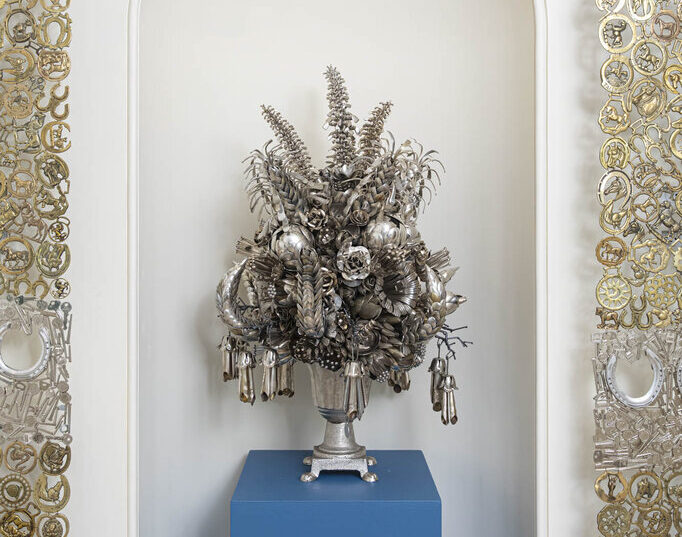
Shomu-en
Ann Carrington (b. 1963). Shomu-en, 2023, silver, nickel and steel plated cutlery. Photography by Sam Angel.
Featured Image above: Ann Carrington in her studio. Photography by Alexa Clarke Kent.

Every morning, Ann Carrington wakes up ready to create. It’s been that way for the British artist since she was a young child.

“I just feel compelled, really, to make things. It’s just something that’s in my bones,” Carrington says. “When I was little, I enjoyed the process of starting with a flat piece of paper and being able to manipulate it into something amazing. I like people to be able to look at something ordinary, something you might see every day, and then be able to look at it with fresh eyes because I’ve made something with it.”

In the current exhibition at Cheekwood Estate & Gardens, INTERVENTIONS: Ann Carrington, Carrington brings a fresh approach and engages with the Historic Mansion in exciting ways, such as creating stunning, cascading metal bouquets of flowers from ordinary silverware.

The internationally known Carrington, who lives and works in Margate, England, has created artwork for the United Nations and the Royal Family as well as having works in the permanent collections of the Victoria and Albert Museum and Royal College of Art, among others. INTERVENTIONS is an arts initiative to activate the historic period rooms in Cheekwood’s Mansion. Now in its third year, the series invites renowned artists like Carrington from around the globe to imagine and implement a connection between their contemporary work and Cheekwood.

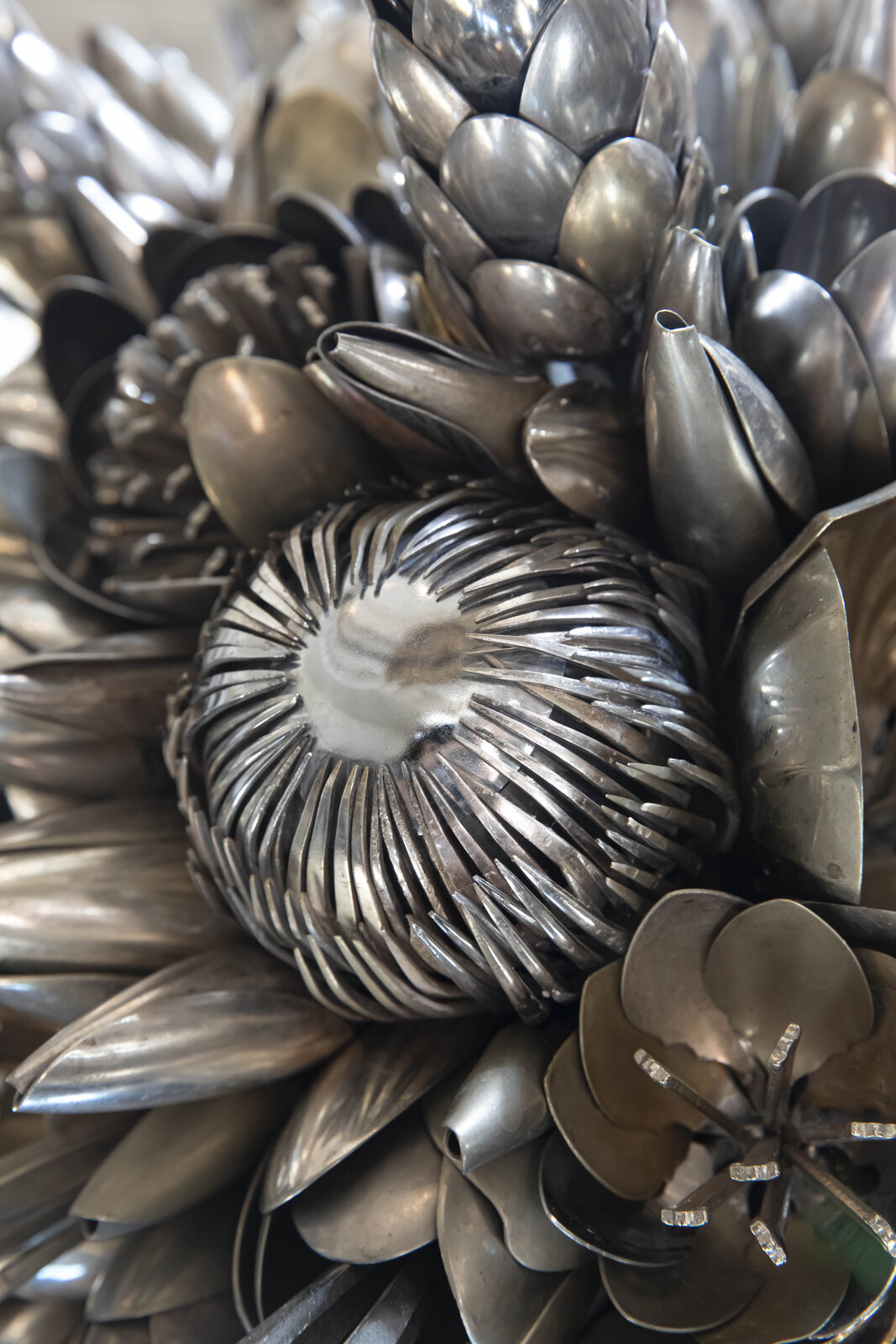
Carrington created bespoke bouquets inspired by the flora of Cheekwood’s 13 gardens, and remarkably, the flowers are made of silver, nickel, and steel cutlery. Carrington’s reimagined flowers include roses made of silver teaspoons; dahlias made of fork tines; viburnum, black-eyed Susans, purple passionflowers, and crepe myrtle blooms constructed out of assorted sizes of spoons and handles, often using ball bearings and nails as stamen; and peonies made with Art Deco berry spoons.
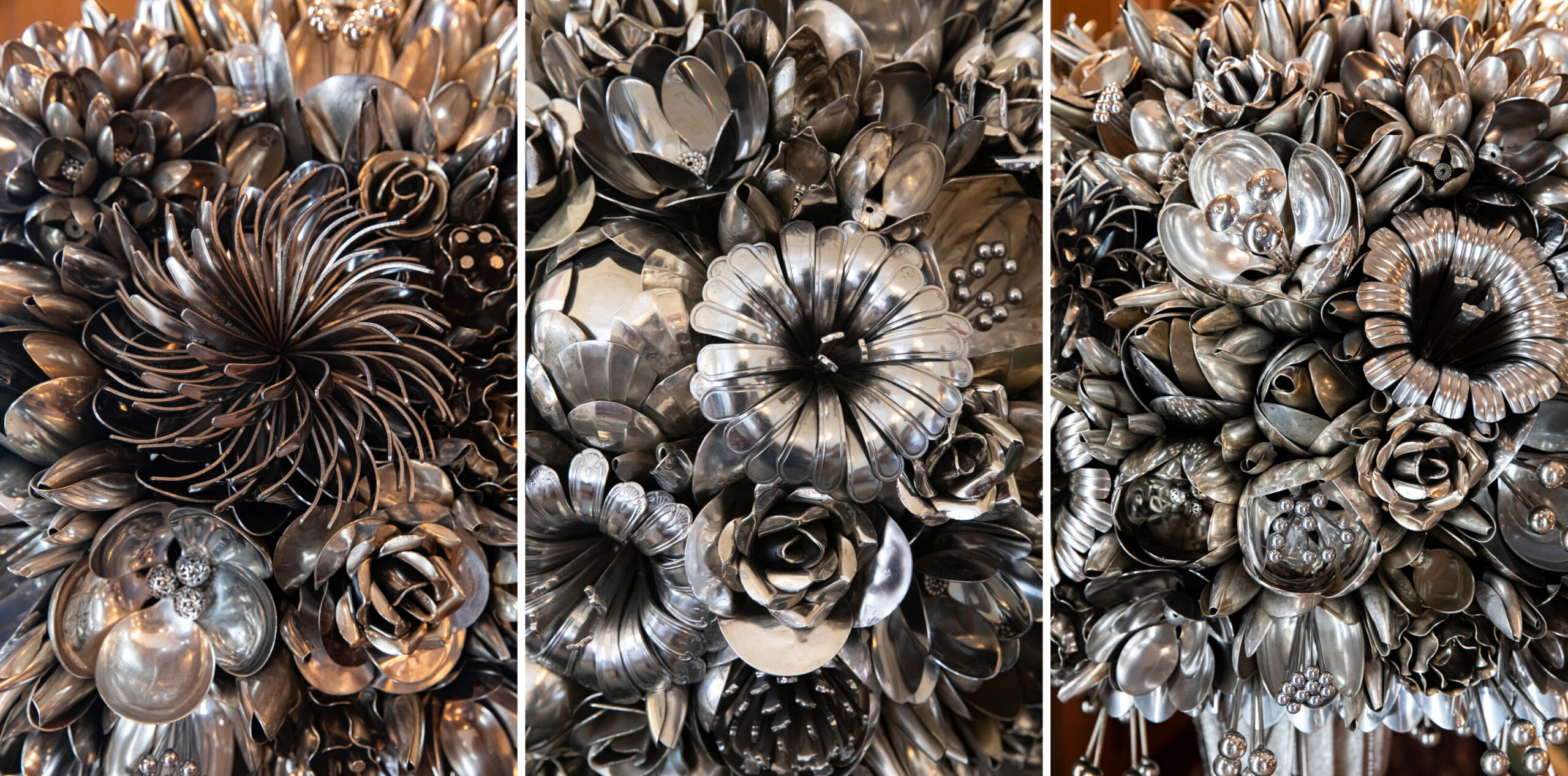

CheekwoodAnnCarringtonDocumentation_High-Collage01
Ann Carrington (b. 1963). Details. Kousa, Cora, American Rose, 2023 , silver, nickel and steel plated cutlery. Photography by Sam Angel.

“Different flowers lend themselves to different types of spoons,” Carrington shares. “For the roses, the petals need to be very floppy and have a bit of movement in them, so I use silver-plated spoons, which are much softer. It’s much more malleable, so you can hammer them with a hammer. Whereas something like this [points to her bouquet, titled Kousa] needs to be really strong because it’s thin at the stems, so that’s steel.”

The bouquets have an immediate connection to the Cheek Estate, but other works in the exhibition dive deeper into the family’s history. For example, the enchanting equestrian-themed tapestry, Horsa, was inspired by the Cheek family’s love for horses. The tapestry, or “magic carpet,” as Carrington charmingly refers to it, is intricately woven with horse brasses, brass plaques, bits, keys, and chains.
CheekwoodAnnCarringtonDocumentation_High-40
Ann Carrington (b. 1963). Details. Black Eyed Susan, 2023, silver, nickel and steel plated cutlery. Photography by Sam Angel.
ShakerMakerandShakerQuaker
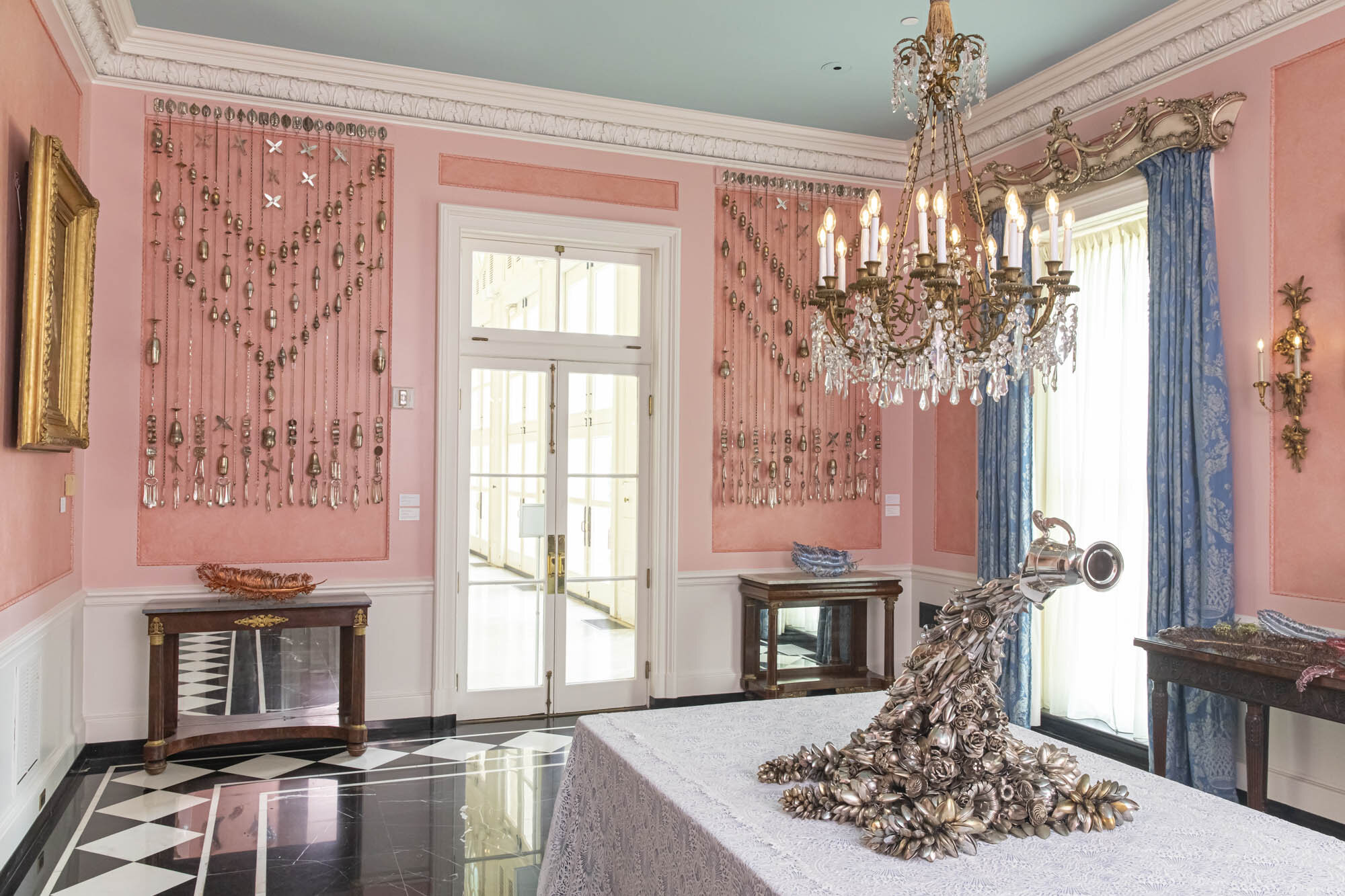
Ann Carrington (b. 1963). Shaker Maker & Shaker Quaker, 2024, silver pepper pots, napkin rings and tureen handles. Photography by Sam Angel.

Carrington’s chosen medium of manipulating, forging, and sculpting metal is laborious and intricate. She works with heating techniques like soldering and welding, the latter of which she learned about a decade ago specifically so she could fuse her metal flowers into elaborate, formidable bouquets. There’s an added complexity as well: Because she uses found objects and scrap metal, initially she doesn’t always know what is under the surface of the material she’s working with.

“Different methods require different ways of joining,” Carrington shares. “Welding is my preferred way, but you can only weld steel. And silver requires soldering because welding is very hot, it melts the silver. Or they might need to be brazed, but quite often you don’t know what you’re dealing with because they are secondhand spoons – they’ve been made in different eras. Some of them are 200 years old, some of them are 10 years old, some of them are brand new. So, until you start, you don’t know quite what they’re going to do.”

The revelry and fulfillment Carrington experiences in making her art is palpable. Her smile widens as she shares her affinity for a piece she made a decade ago, Manhattan Mettle, a large-scale rendering of the Manhattan skyline built from scrap metal for the W Hotel in Hoboken, New Jersey.

“What made it fun was that we had to be able to do it quickly, and we can’t glue these things onto the wall; we can’t weld onto the wall. I thought, ‘What about a giant magnet?’ So, we covered the wall in giant magnetic tiles and then I projected my drawing of New York onto the magnets. We had cherry pickers, and we were just building New York from scraps of metal. It’s still there and it looks incredible.”


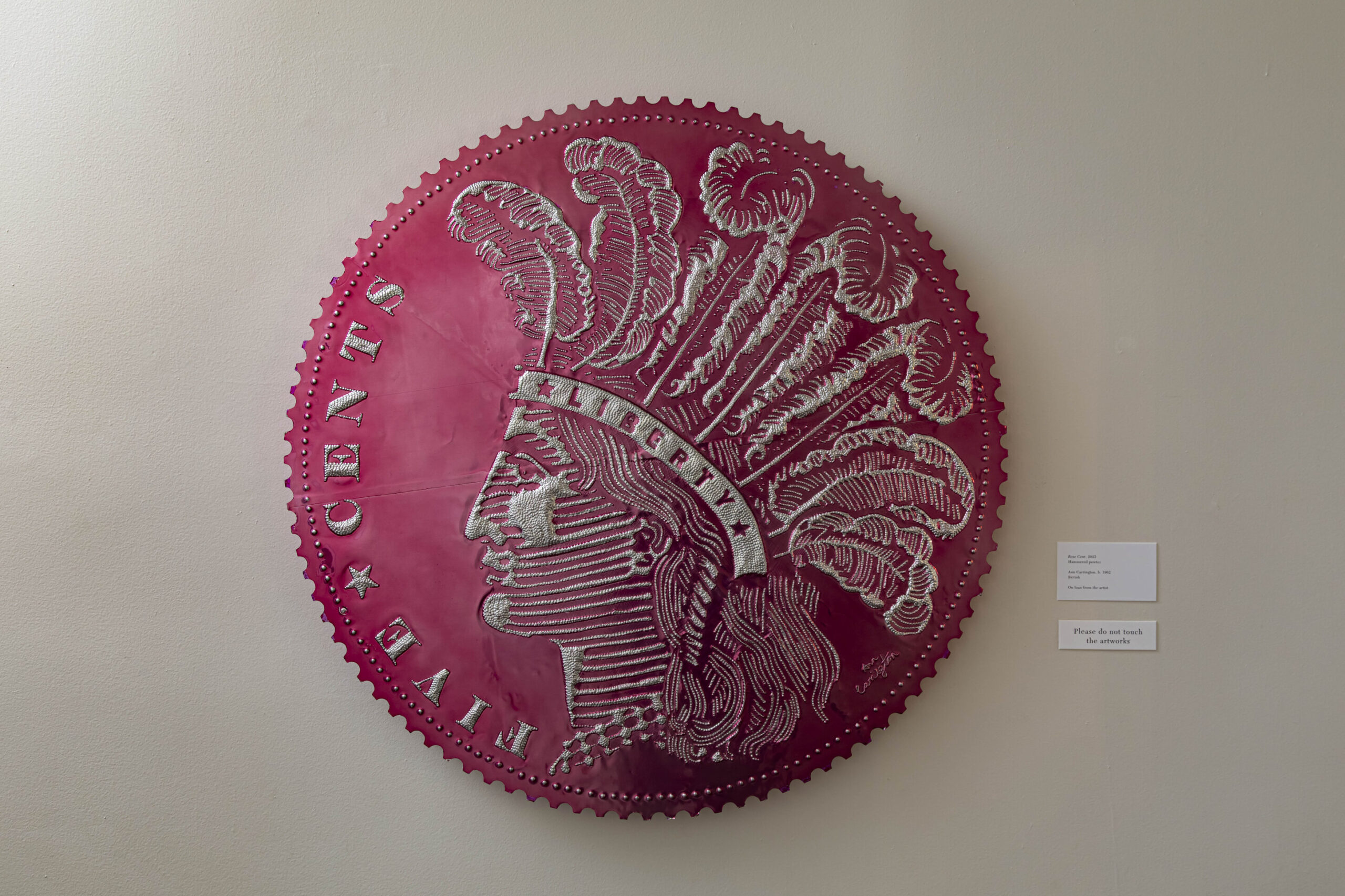
Another technique that Carrington uses in her work is repoussé, which is a French word for the ornamental patterns in relief made by hammering a material (such as copper or another metal) so that a shape pops out the other side. Two works displayed near the elevator on the Loggia Level of the Mansion incorporate repoussé: Rose Cent, inspired by the U.S. penny coin made between 1859-1900 and Flipside, inspired by the 1929 U.S. Liberty coin.

“My father was a collector of coins and stamps, so I like enlarging stamps and coins and then you can see the drawing and the design in them,” Carrington says.
Rose Cent has an interesting backstory, which transpired while Carrington was traveling in Morocco.

“That idea came about when I was in Marrakesh,” Carrington relates. “I had it in my head that I wanted to make these big coins and there was a guy hammering copper, making this repoussé tray. I really liked it, and I said, ‘How much is that?’ And he said some crazy amount. I asked, ‘How’d you come up with that price? And he said, ‘I charge per bang.’ And I just thought, ‘More bang for your buck.’ And then I thought, I’m going to go back to my studio and try this and that’s how it started.”

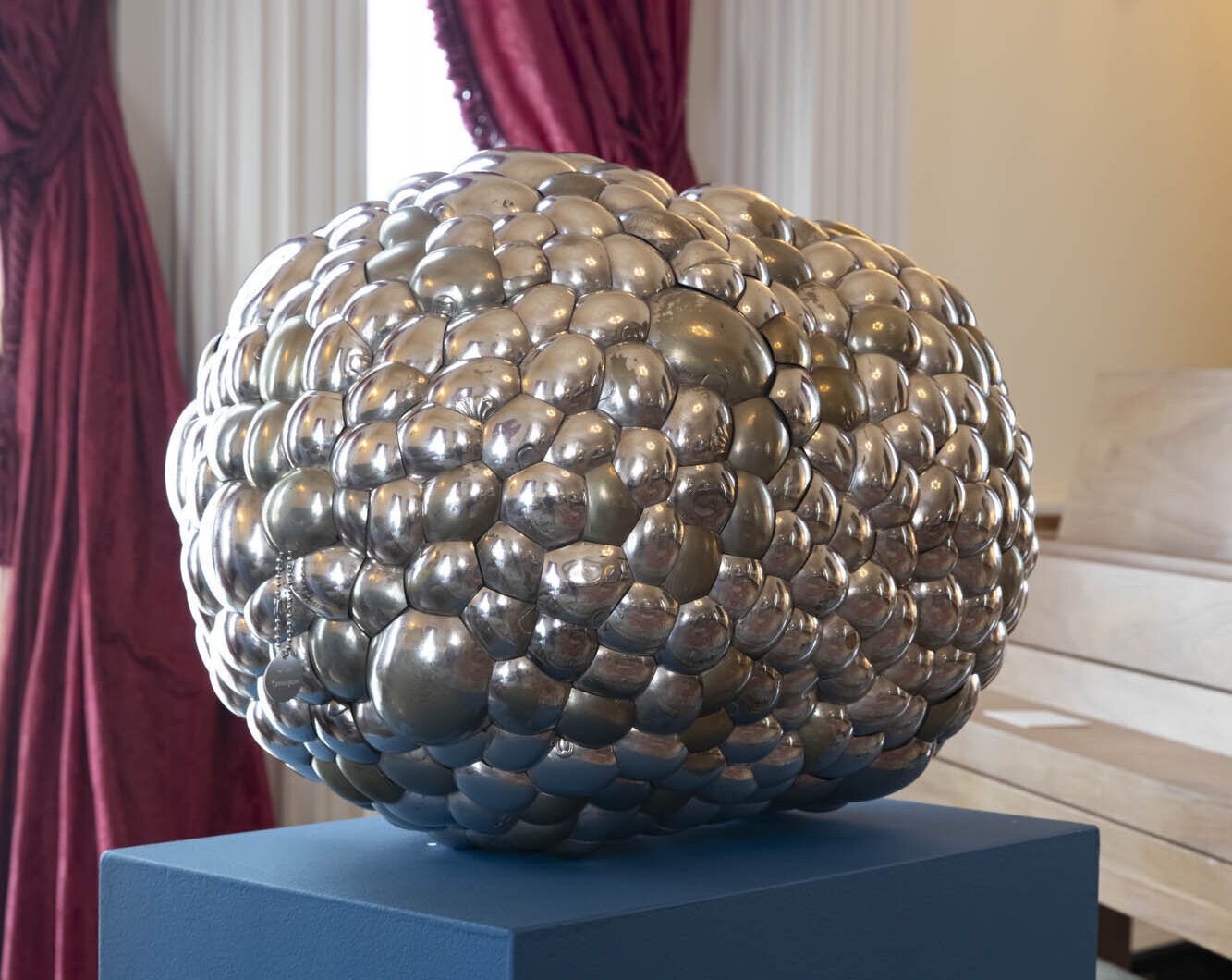
Not all of Carrington’s work is figurative. One sculpture on display at Cheekwood, titled Arrokoth, is her most abstract. Arrokoth is named after the most distant object that NASA spacecraft has photographed. She beams while explaining the concept.
CheekwoodAnnCarringtonDocumentation_High-333
Ann Carrington (b. 1963). Rose Cent, 2023, hammered pewter. Photography by Sam Angel.
Arrokoth
Ann Carrington (b. 1963). Arrokoth, 2023, silver, nickel, and steel plated spoons. Photography by Sam Angel.

“This object is like two planets that are merged together in an interesting, conjoined shape, and it has this bubbly surface,” she says. “I just felt I could interpret it really well with ladles. It’s my favorite piece. I just find it deeply satisfying, the shades in the silver and all the reflections that you get,” Carrington adds.

Visitors to Cheekwood have an amazing opportunity to view it, along with 32 of her other inventive and imaginative creations, on display through October 27, 2024.
test

Top Plant Picks July 2024

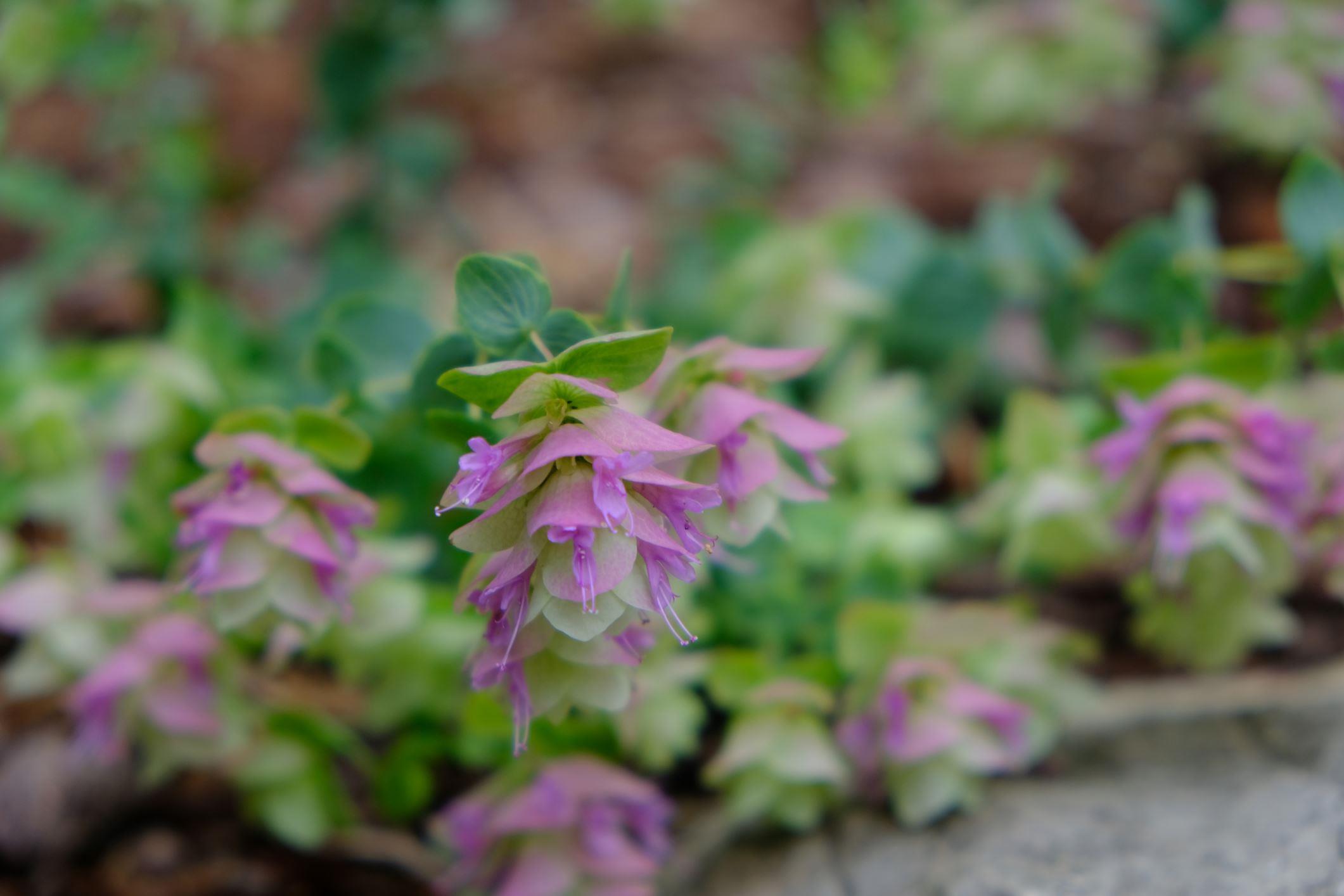
Origanum x ‘Kent Beauty’ (Ornamental Oregano)

Bloom Time: June to August

Sun Requirement: Full Sun

Water Requirement: Low

Wildlife: N/A

Tolerates: Drought and Deer

Native to North America: N/A

Zones: 6 to 9

Other: This perennial features pendulous flowers with rosy pink bracts and aromatic silvery foliage.
Location: Petite Swan Garden

O

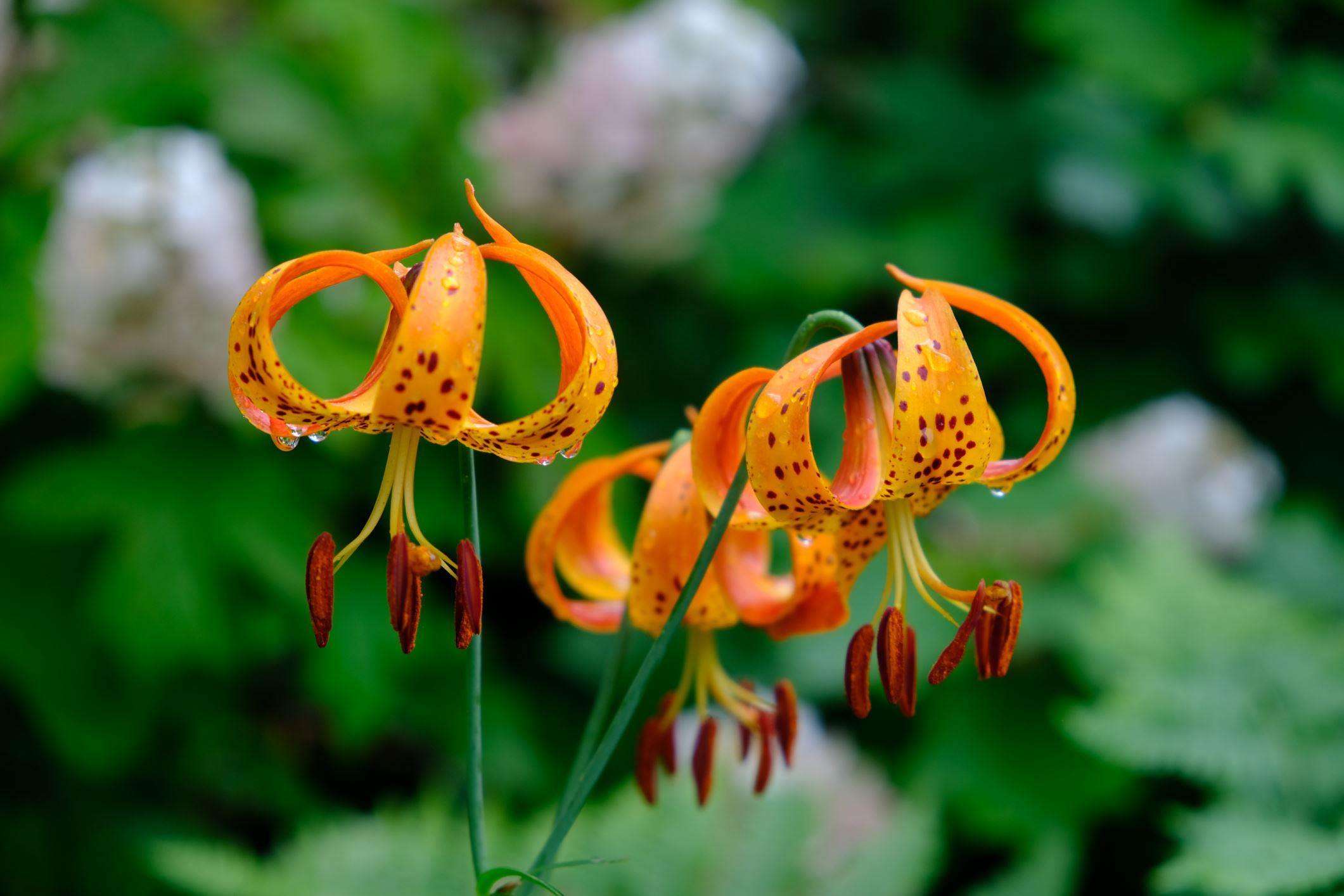
Lilium michiganense (Michigan Lily)

Bloom Time: June to July

Sun Requirement: Full Sun to Part Shade

Water Requirement: Medium to High

Wildlife: Hummingbirds and butterflies

Tolerates: Wet Soils

Native to North America: Yes

Zones: 4 to 8

Other: Vibrant orange blooms swaying from a tall upright stem.

Location: Howe Garden

O

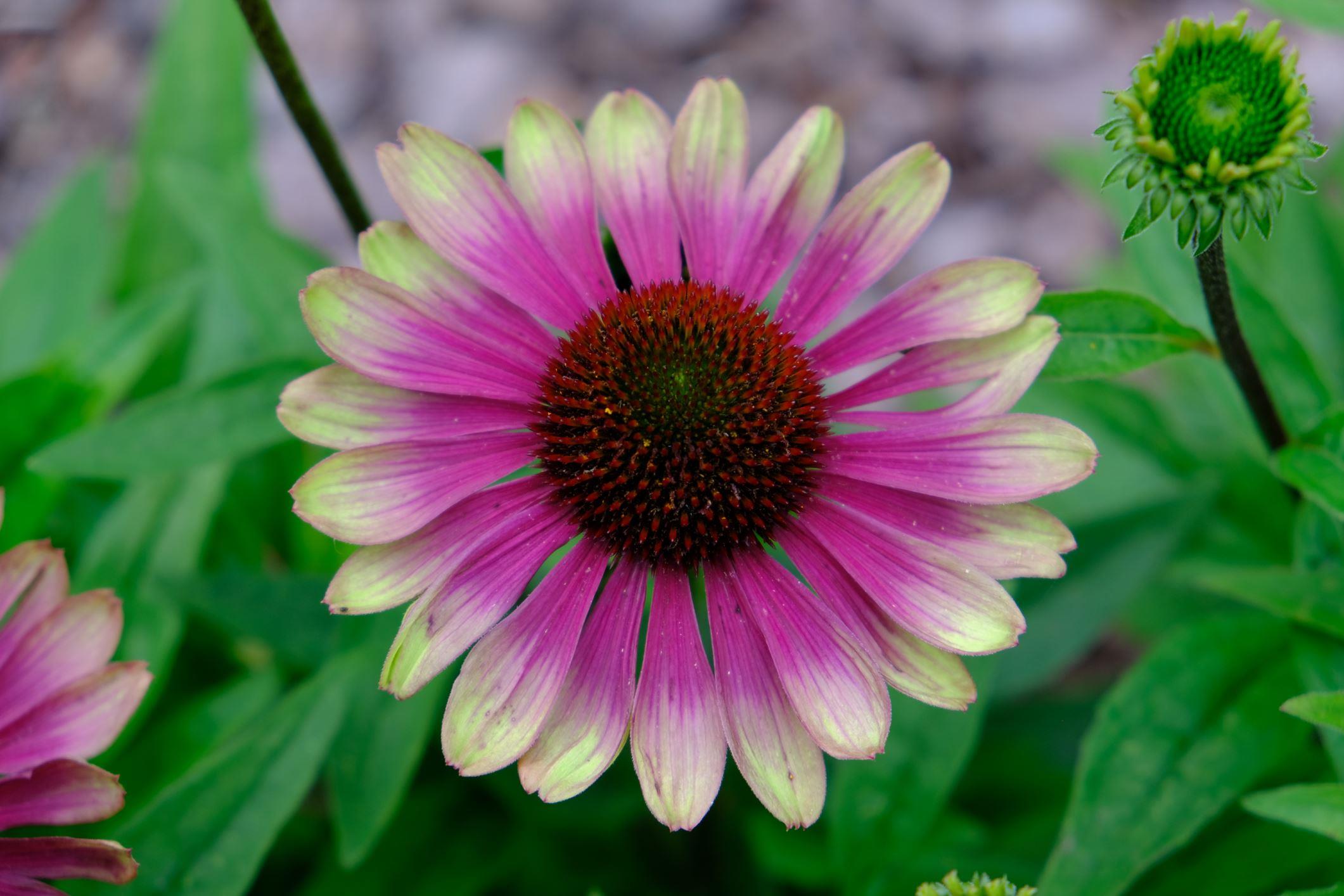
Echinacea ‘Sweet Sandia’ (Sweet Sandia Coneflower)

Bloom Time: June to August

Sun Requirement: Full Sun

Water Requirement: Low to Medium

Wildlife: Bees, birds, butterflies, hummingbirds

Tolerates: Drought and Deer

Native to North America: N/A

Zones: 4 to 9

Other: A coneflower with petals reminiscent of a slice of watermelon–deep pink in the center and green on the edges.

Location: Wills Perennial Garden

O

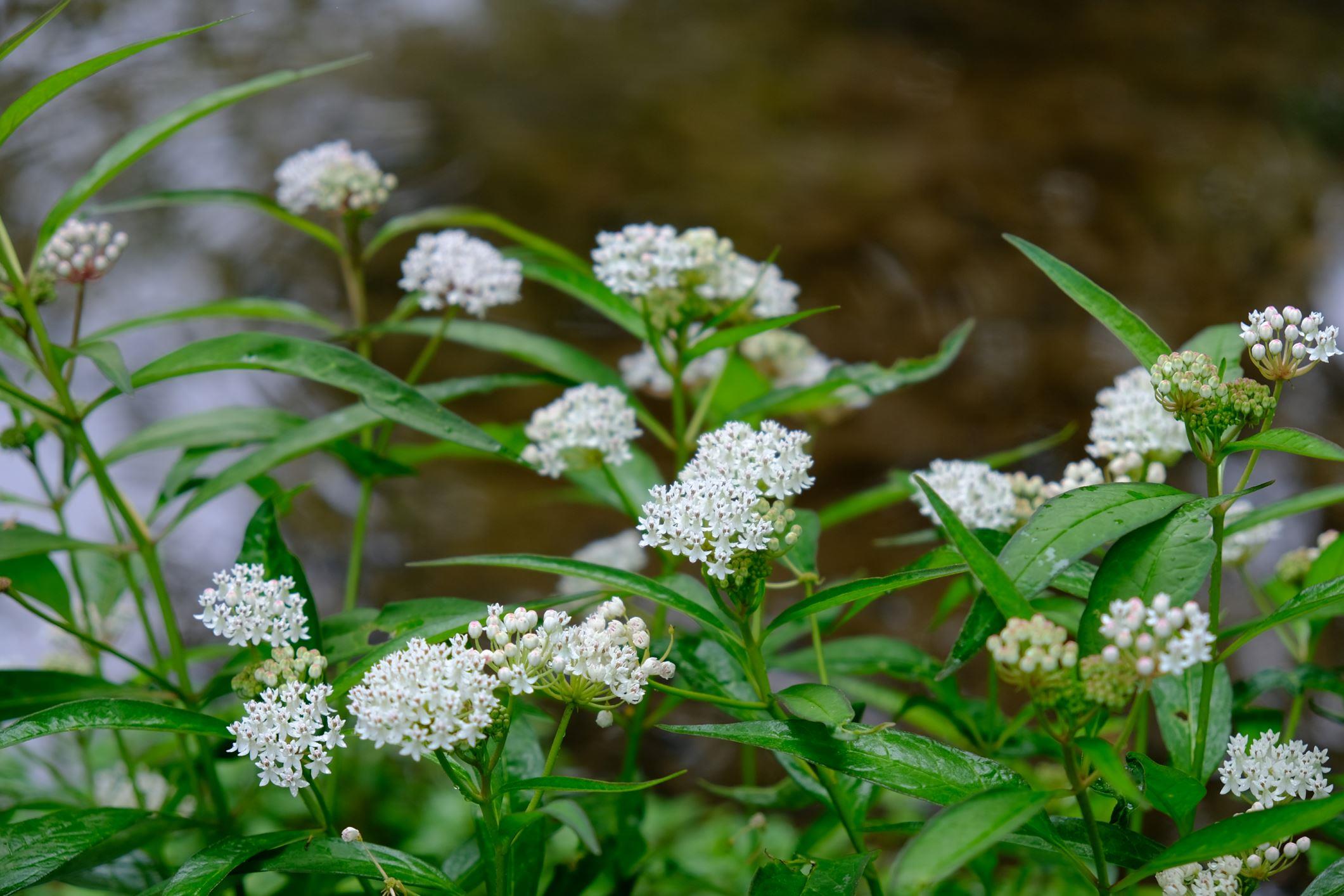
Asclepias perennis (Aquatic Milkweed)

Bloom Time: May to September

Sun Requirement: Full Sun to Part Shade

Water Requirement: High

Wildlife: Monarch Butterflies

Tolerates: Deer, Rabbit, and Wet Soil

Native to North America: Yes

Zones: 6 to 10

Other: A host plant for monarch butterflies, this wildflower thrives in continously wet locations and has white star-shaped blooms.

Location: Howe Garden

O

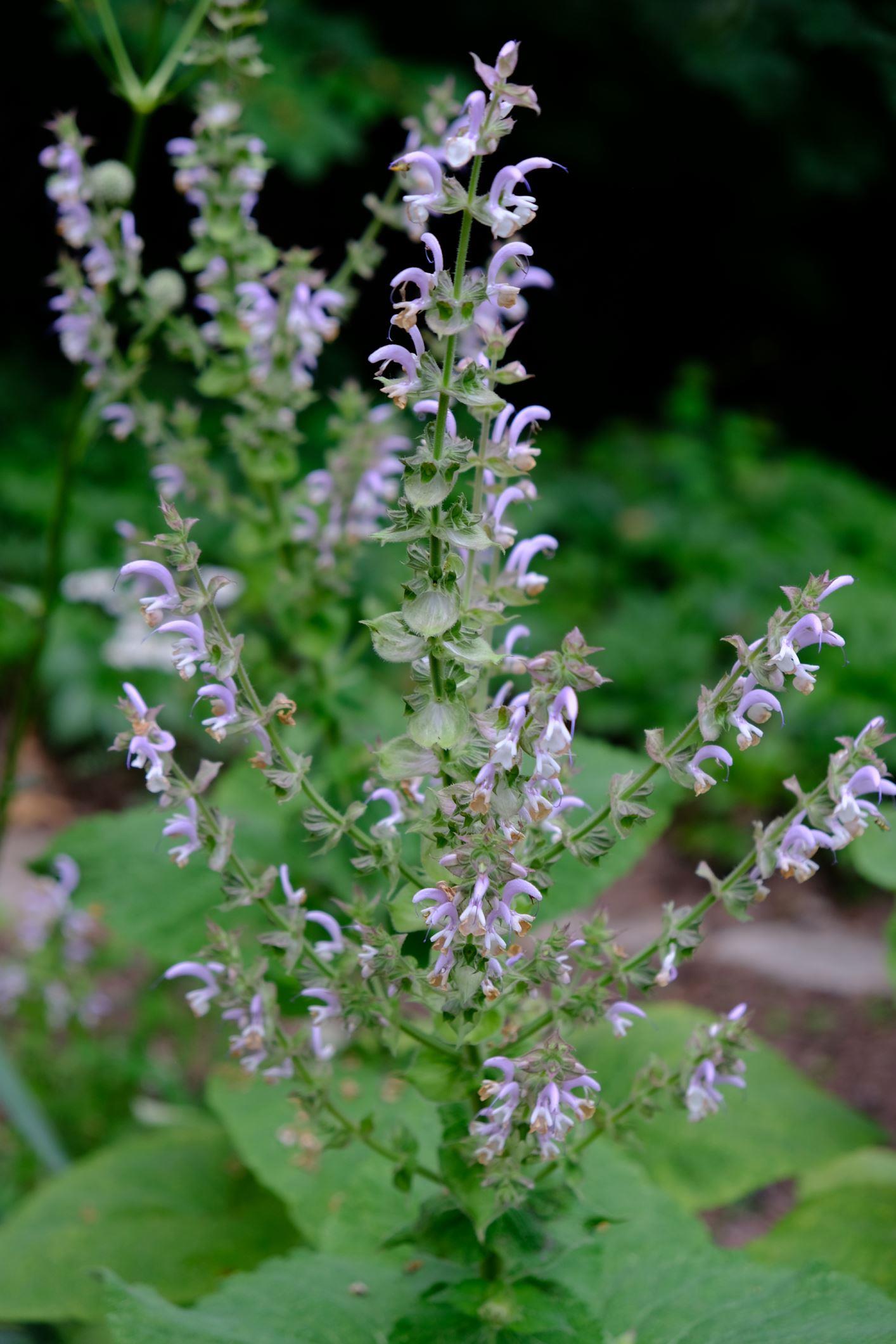
Salvia sclarea (Clary Sage)

Bloom Time: June to August

Sun Requirement: Full Sun

Water Requirement: Medium

Wildlife: Butterflies

Tolerates: Deer, Drought, and Shallow-Rocky Soil

Native to North America: No

Zones: 5 to 9

Other: The gray-green foliage and lilac-colored flowers of this medicinal plant are very aromatic.

Location: Herb Garden

O

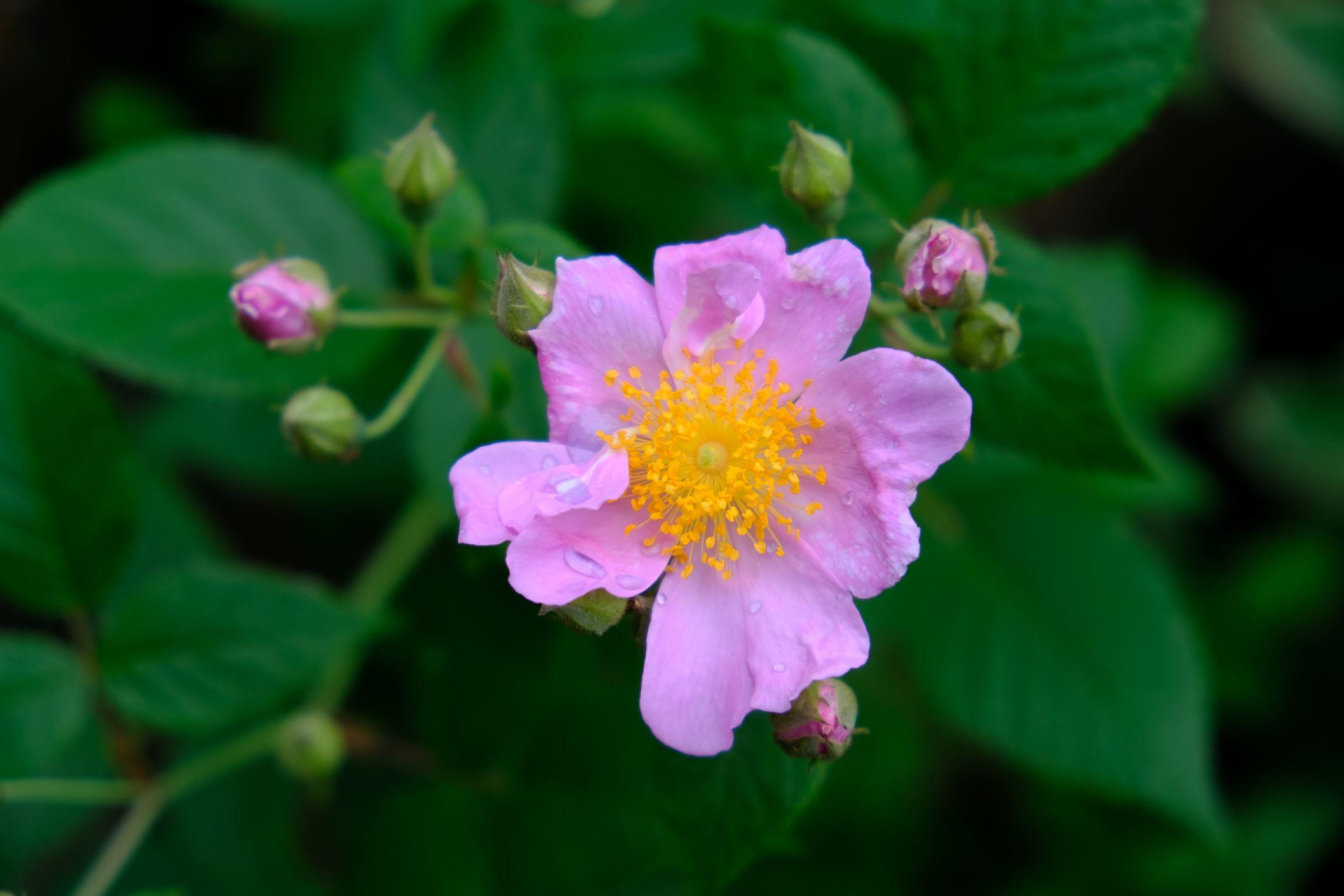
Rosa setigera (Climbing Prairie Rose)

Bloom Time: June to July

Sun Requirement: Full Sun

Water Requirement: Medium

Wildlife: Small mammals, birds, moths and bees

Tolerates:

Native to North America: Yes

Zones: 4 to 8

Other: A native vining rose with gragrant clusters of deep pink flowers.

Location: Burr Terrace Garden

O

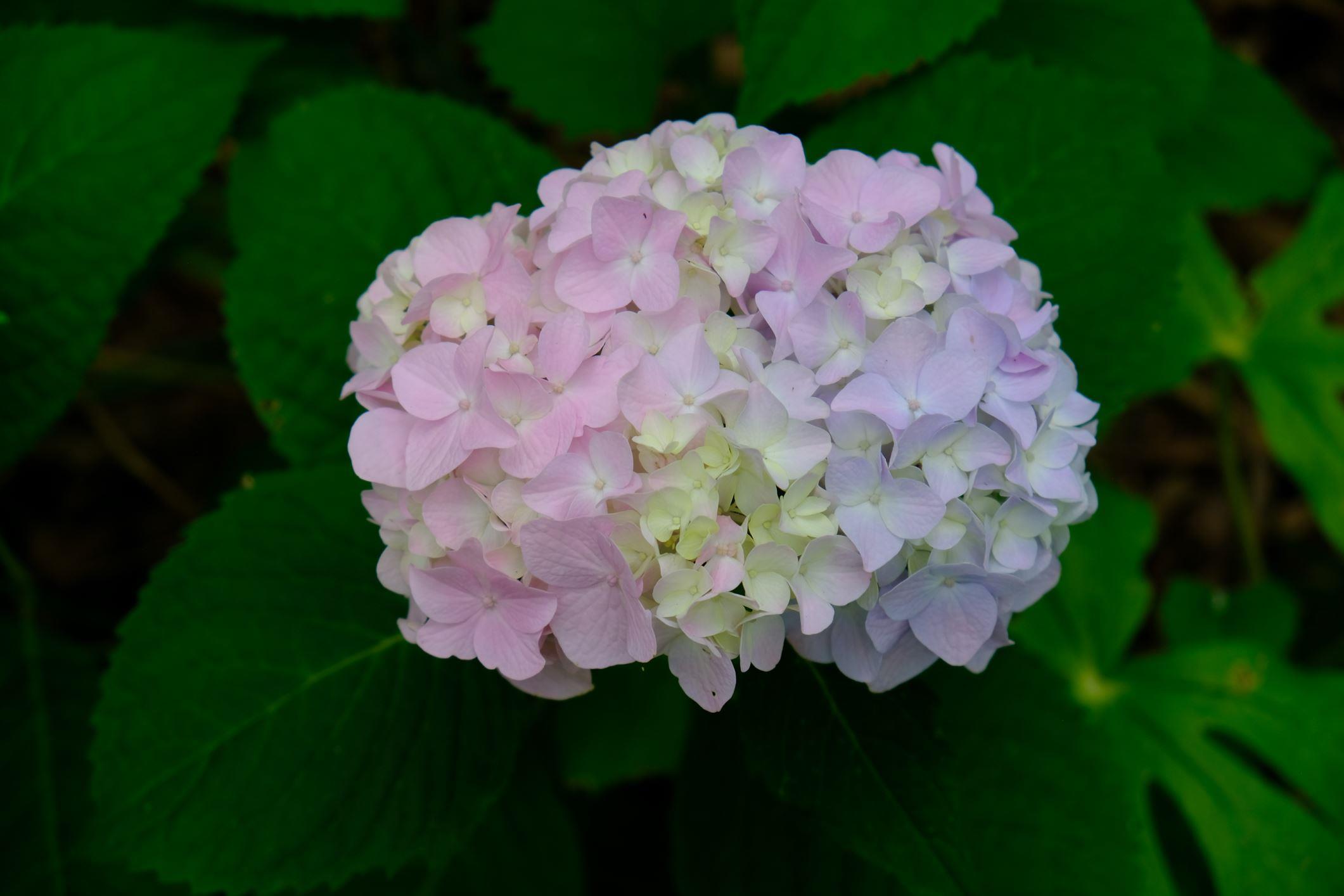
Hydrangea macrophylla ‘Forever Pink’ (Bigleaf Hydrangea)

Bloom Time: June to August

Sun Requirement: Part Shade

Water Requirement: Medium

Wildlife: N/A

Tolerates: Salt

Native to North America: N/A

Zones: 6 to 9

Other: This hydrangea features large rounded clusters of pink or blue florets.

Location: Dogwood Garden

O

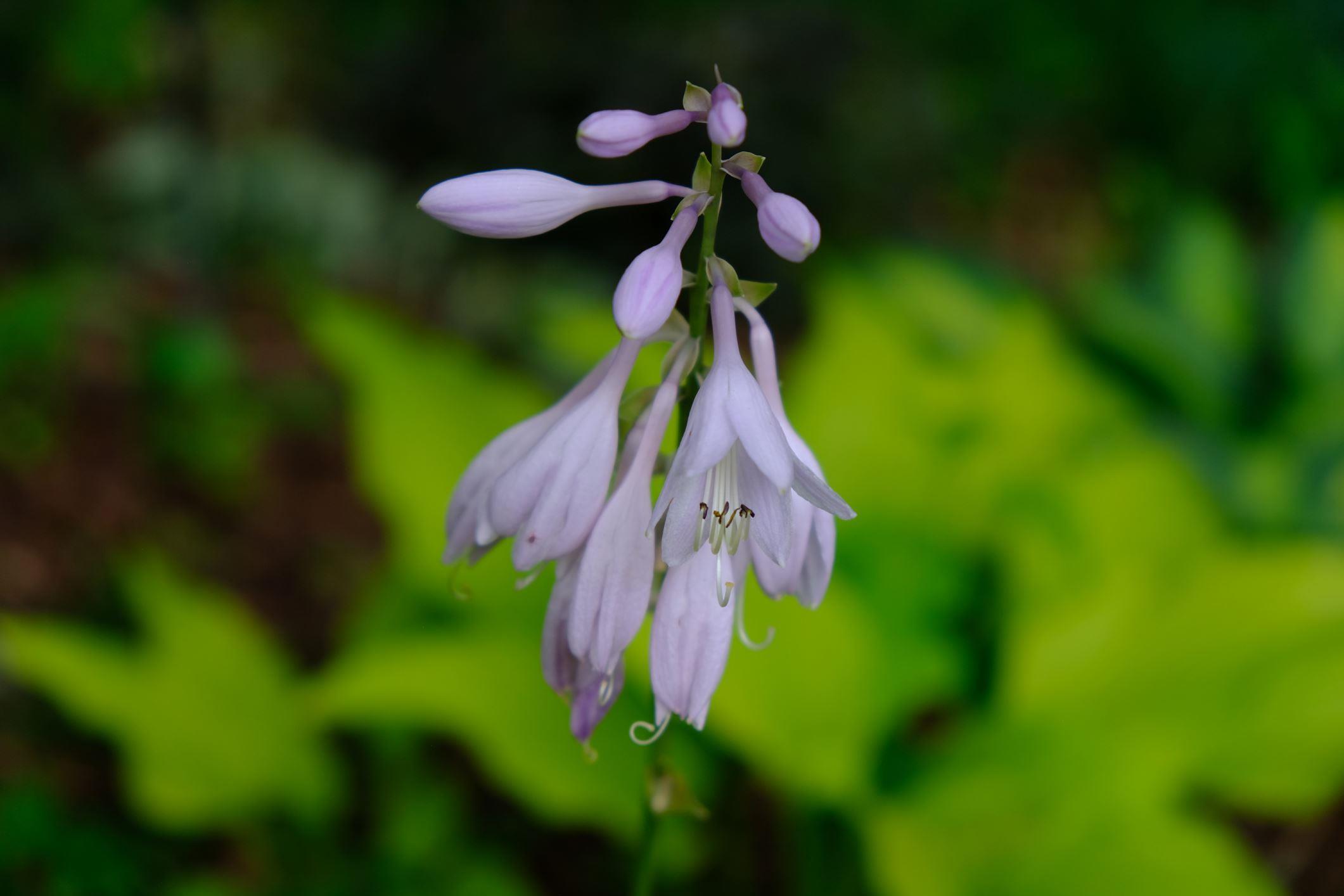
Hosta ‘Golden Tiara’ (Plantain Lily)

Bloom Time: June to August

Sun Requirement: Part Shade to Full Shade

Water Requirement: Medium

Wildlife: Butterflies and Hummingbirds

Tolerates: Clay Soils

Native to North America: N/A

Zones: 3 to 9

Other: This shade-loving perennial is noted for its variegated leaves of golden yellow surrounded by dark green edges.

Location: Dogwood Garden

O

test

Trolls: The Playful Voices of Nature

<h2>My name is Thomas Dambo and I turn trash into sculptures.</h2>
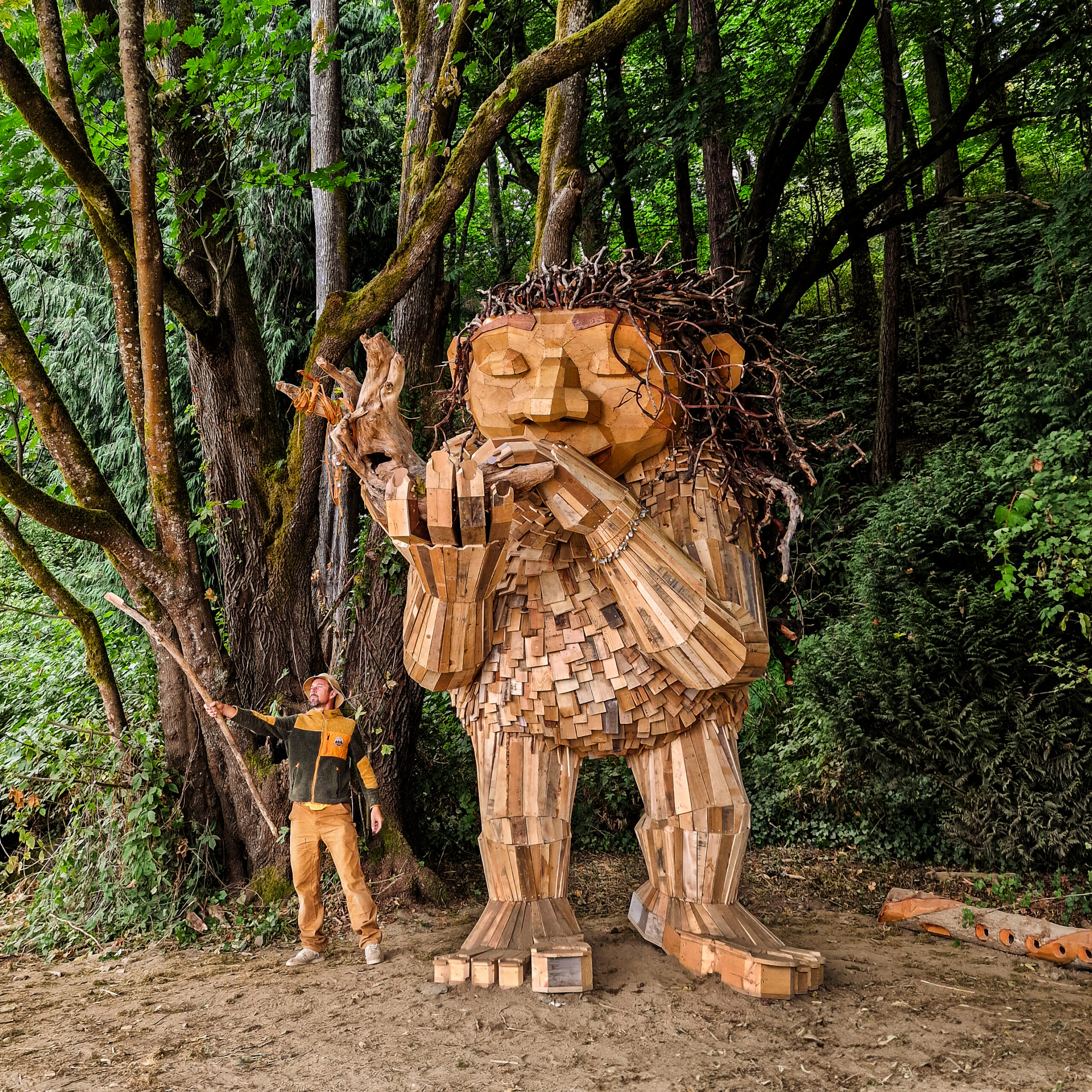
Bruun Idun. Lincoln Park, Seattle, WA.
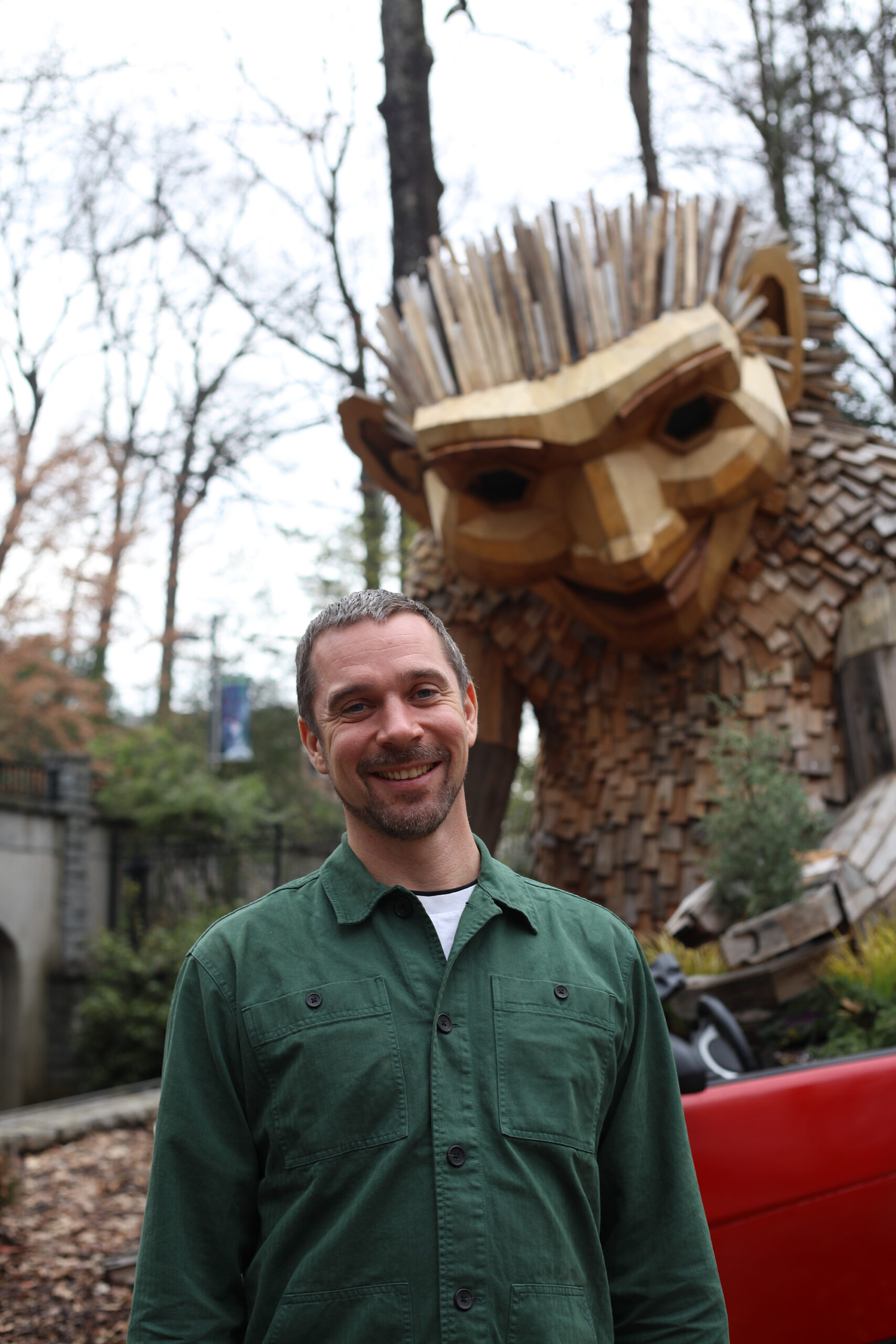
Thomas Dambo with Bruun Idun in Lincoln Park, Seattle, Washington

This is how Thomas Dambo, one the world’s leading recycle artists, introduces himself, but the story of how he became a sculptor of more than 125 gigantic trolls goes much deeper. Six of Dambo’s troll creations arrived at Cheekwood in May and will be in residence through September 1 as part of the traveling exhibition TROLLS: Save the Humans.

These stewards of nature, as Dambo refers to them, are hand-built out of repurposed trash and live in 17 countries all over the world. No two trolls are alike, and each has its own story. They exist for us to enjoy and marvel at, but also to give awareness to sustainability, something humans have yet to master.

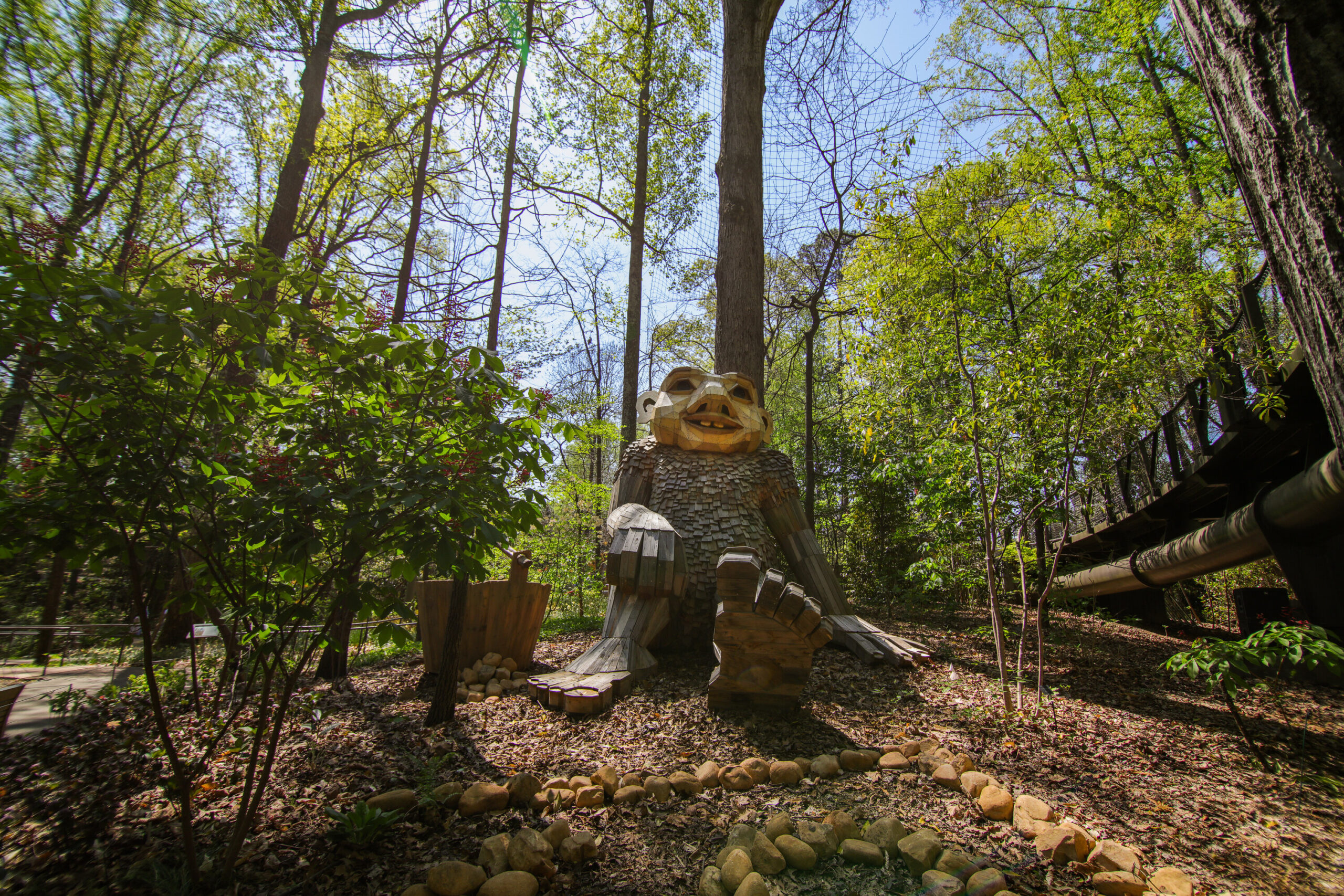
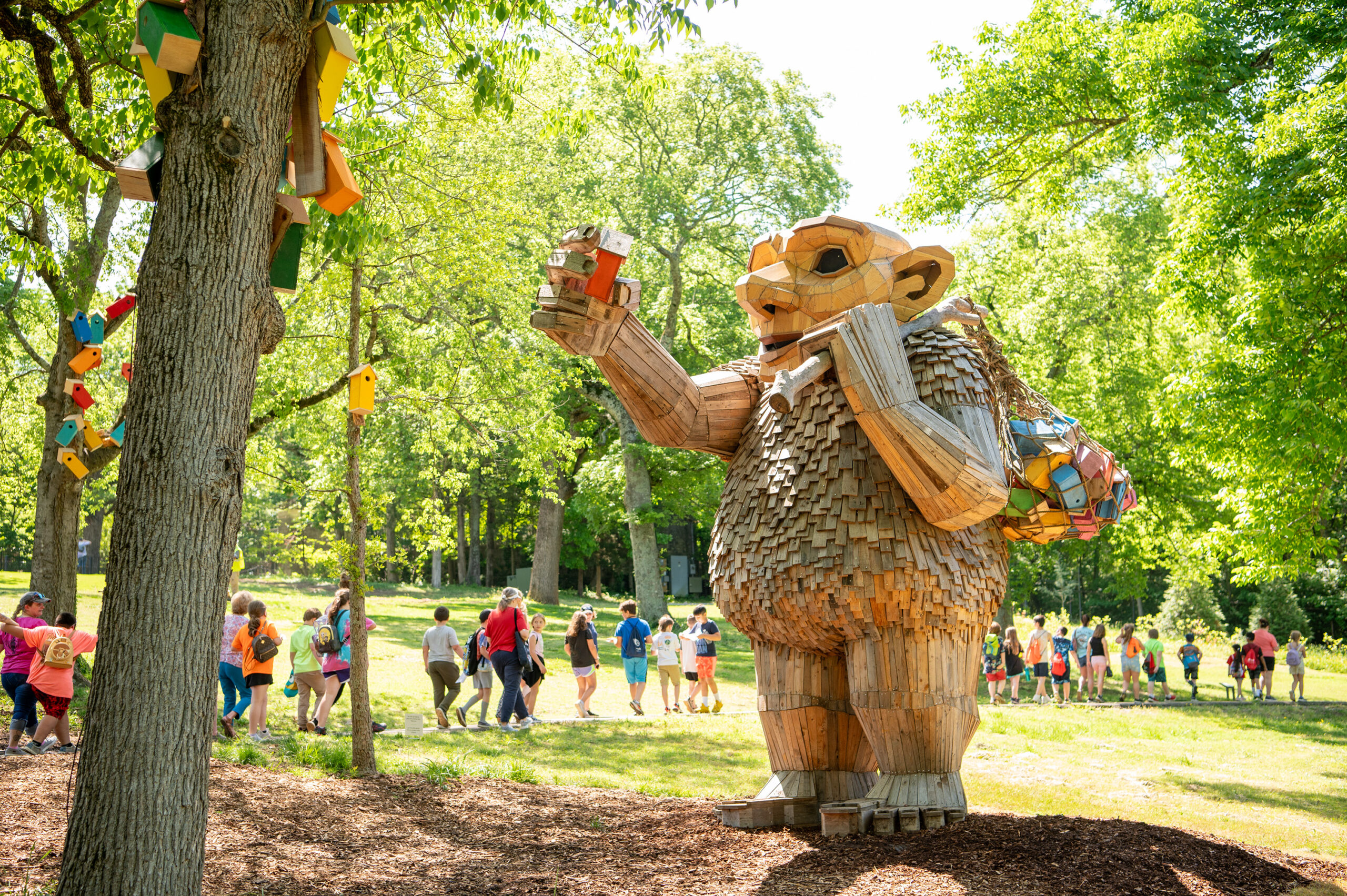
Gazing up at the six trolls throughout Cheekwood’s 55-acre estate, intricate details like Rosa Sunfinger’s spiky branches of hair, or Basse Buller’s larger-than-life outstretched foot, are delightfully life-like and stunning. Dambo’s trolls, some reaching 50 feet tall, are built with discarded wood pallets and other reclaimed materials, such as twigs, bamboo, plastic, and sometimes even an old barn. Dambo estimates that over the years he’s used upwards of 30,000 discarded wood pallets from garbage dumps. He’s used so many that he belovingly refers to his personal troll workshop in Denmark as the “Pallet Palace.”


Trolls: Save the Humans, Basse Buller. Courtesy Atlanta Botanical Garden.
Basse Buller at Cheekwood Estate & Gardens
2024May_Trolls_CHarris_DSC7457
Kamma Can at Cheekwood Estate & Gardens

According to Dambo, trash has value. He believes that with small but concerted actions, a world drowning in trash could become a world filled with meaningful, beautiful creations made with it. His works are art with purpose – colossal sculptures that encourage adventure and imagination, while giving a new way to see things.

One might wonder, “But why trolls?” Dambo grew up in Denmark, where trolls are a part of the folklore of Danish culture. For him, trolls have always been the ambassadors of nature, the protectors of our forests.

_Ben Chiller_ - Northside Festival - Aarhus, Denmark
Ben Chiller, NorthSide Festival in Aarhus, Denmark

“For me, the trolls are the unspoken voice of the plants and animals,” Dambo says. “What would the plants and animals say if we could understand what they’re talking about?”

The energy trolls can give is of child-like imagination, inspiring us to dream of things that could be, instead of only what we can see. There is a magic and happiness that troll enthusiasts engage with, that of discovery, exploration, and basking in the extraordinary … all while being surrounded by nature.

The concept is universal and Dambo is ambitious, with a larger personal mission to build 1,000 trolls. While the traveling exhibition TROLLS: Save the Humans is currently captivating visitors at Cheekwood Estate & Gardens, Dambo is globetrotting far and wide, continuing this work, building as many statuesque troll titans as he can and bringing large-scale art and environmental awareness to destinations around the world.

2024May_Trolls_CHarris_DSC8739
Ibbi Pip at Cheekwood Estate & Gardens

With a diverse background as a songwriter, musician, and artist, Dambo has always loved storytelling and creating things. Adding his passion for the natural world, Dambo is that rare person who has been able to combine many things they love into a lifelong project.

During his time as a street artist, Dambo made and hung thousands of vibrant recycled birdhouses throughout the streets of Denmark. “This project ran for years and became one of my first successes as an artist,” he says. “To this day, I always try to include birdhouses in my works.”

You can see some of Dambo’s birdhouses by visiting a troll named Ibbi Pip at Cheekwood. Ibbi Pip is a friend to all animals, so she uses birdhouses to keep birds always nearby.

As of this writing in May 2024, Dambo is currently in Detroit Lakes, Minnesota, building what he calls “the biggest troll with the biggest foot I have ever done.” The project includes five giant trolls and a plastic rabbit. The troll team has been visiting the local dump, sourcing more than 2,000 plastic crates for one of the structures.

Another project is Greta Granite at Ninigret Park, as part of Dambo’s upcoming Thunderstone exhibition in Rhode Island. Greta’s hair is made of 300 split bamboo shafts obtained from a local neighbor who recently cleared their garden. All Dambo’s creations have something unique about them, from Mama Mimi in Jackson Hole, Wyoming, to the Giants of Mandurah in Australia, to Oscar the Bird King in Vashon Island, Washington.

2024May_Trolls_CHarris_DSC7311
Sofus Lotus at Cheekwood Estate & Gardens

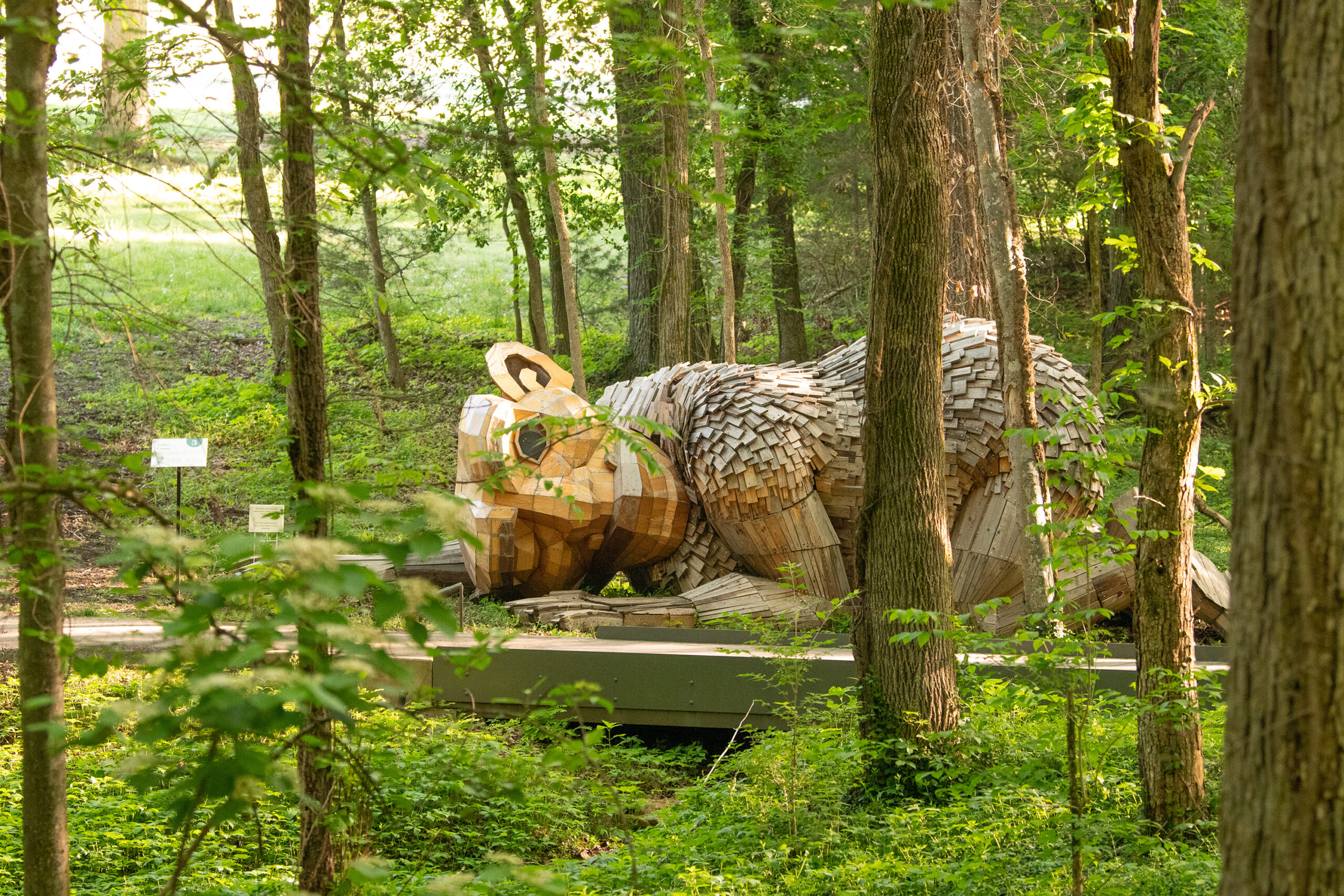
Dambo often builds hidden trolls that require viewers to search for them on a Troll Map and discover them hiding in nature. You can experience Cheekwood’s “hidden” troll, Sofus Lotus, throughout the summer, but we’ll let you experience the joy of finding out where he is on a future visit.

test

Top Plant Picks June 2024

Penstemon ‘Dark Towers’ (Beardtongue)

Bloom Time: May to July

Sun Requirement: Full Sun

Water Requirement: Low to Medium

Wildlife: Hummingbirds and bumble bees

Tolerates: Deer tolerant

Native to North America: N/A

Zones: 3 to 8

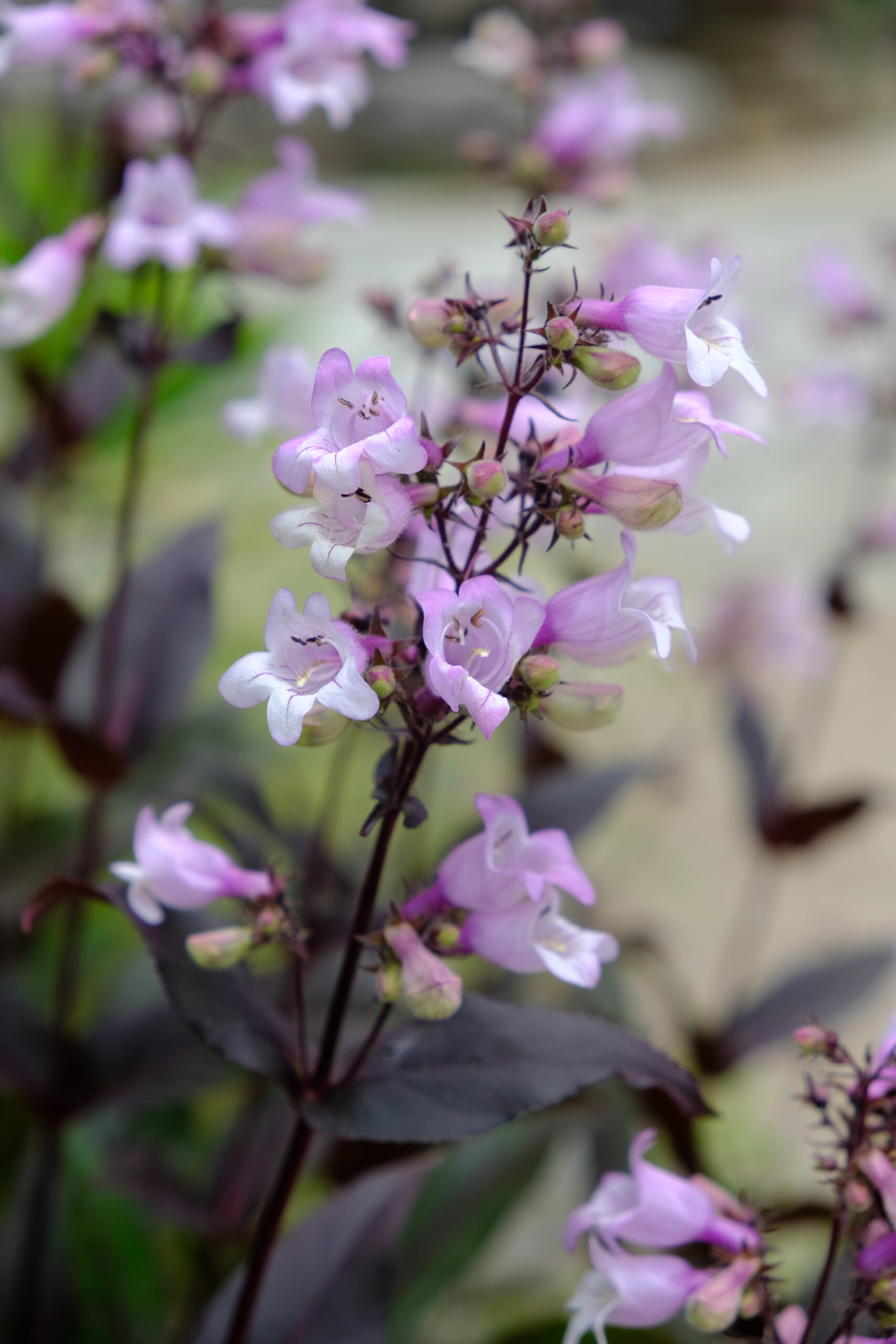
Other: A perennial noted for its dark wine-red foliage and pink tubular flowers.

Location: Wills Perennial Garden

Penstemon 'Dark Towers'

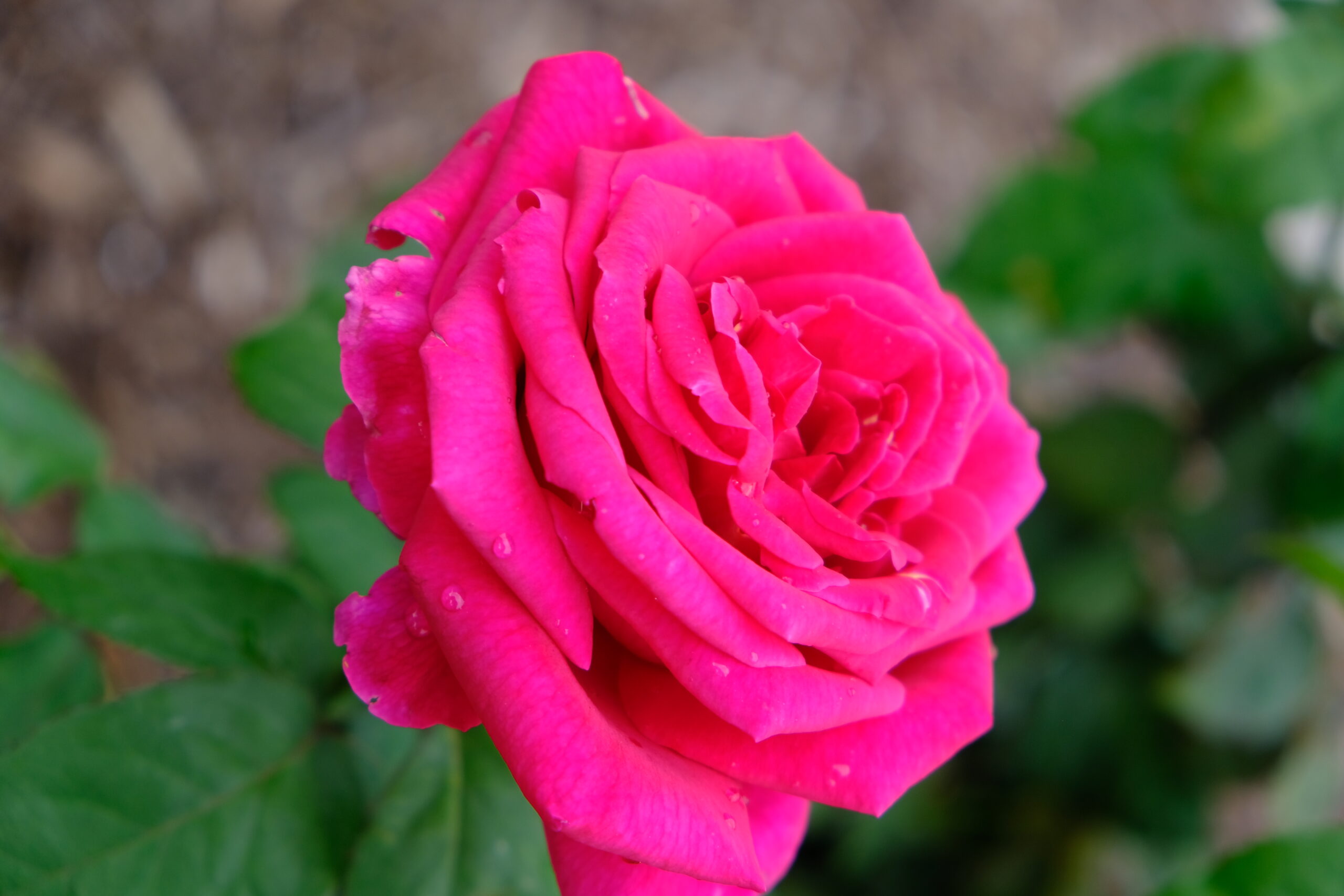
Rosa ‘Mister Lincoln’ (Mister Lincoln Hybrid Tea Rose)

Bloom Time: May to September

Sun Requirement: Full Sun

Water Requirement: Medium

Wildlife: Bees

Tolerates: Disease resistant

Native to North America: N/A

Zones: 7 to 11

Other: This classic rose has dark velvety red blooms and is tall and upright in habit.

Location: Rose Study Garden

Rosa 'Mister Lincoln'

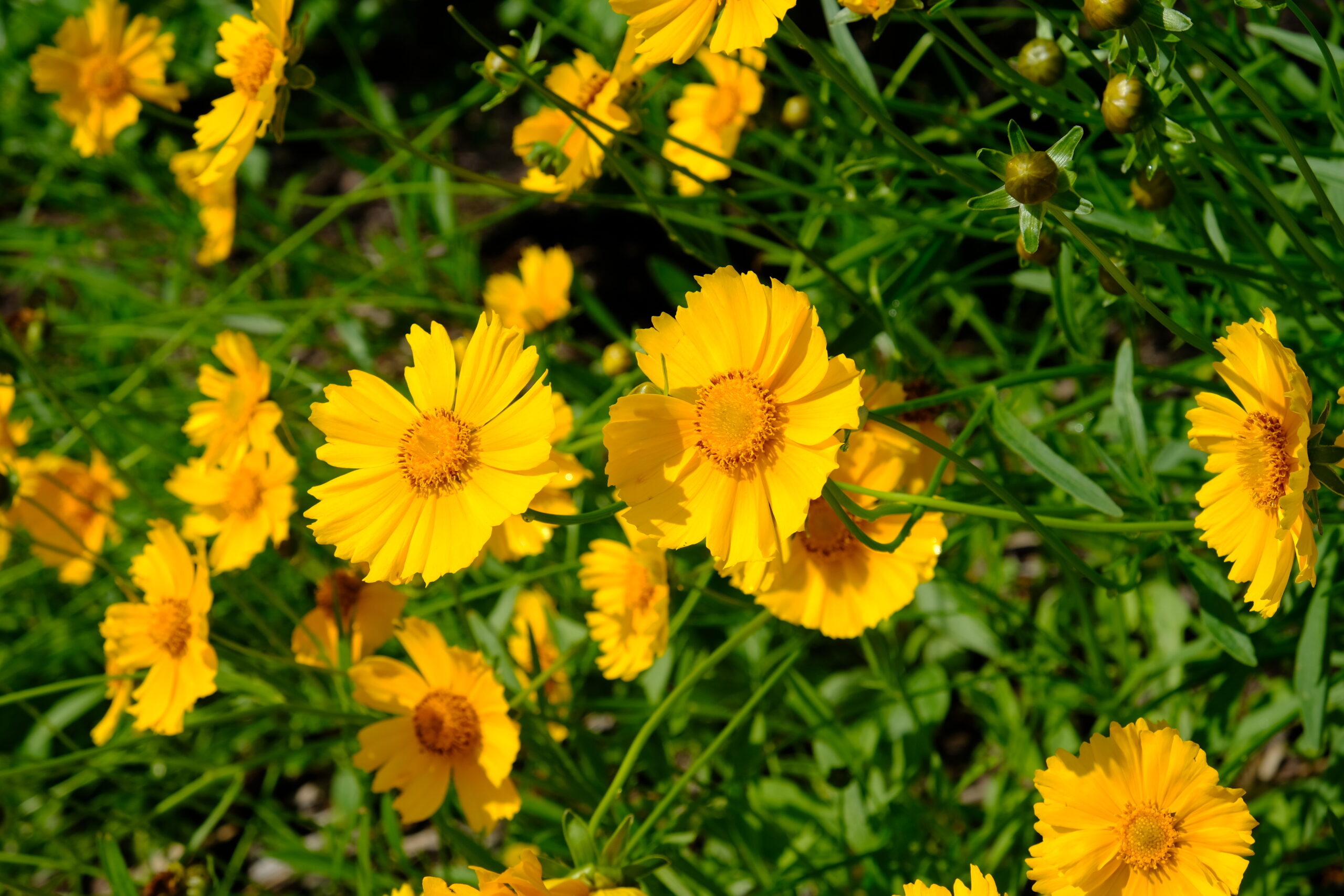
Coreopsis lanceolata (Lance-leaved Coreopsis)

Bloom Time: May to July

Sun Requirement: Full Sun

Water Requirement: Medium

Wildlife: Attracts butterflies, bees and other pollinators. Seeds provide food for birds.

Tolerates: Deer, Drought, Dry and Rocky Soil

Native to North America: Yes

Zones: 4 to 9

Other: A durable perennial that shows off with a beautiful display of golden yellow flowers.

Location: Bracken Foundation Children’s Garden

Coreopsis lanceolata

Lilium ‘Regale’ (Regal Lily)

Bloom Time: June to July

Sun Requirement: Full Sun to Part Sun

Water Requirement: Medium

Wildlife: Hummingbirds, bees, and butterflies

Tolerates: Tolerates a wide array of soils

Native to North America: N/A

Zones: 4 to 8

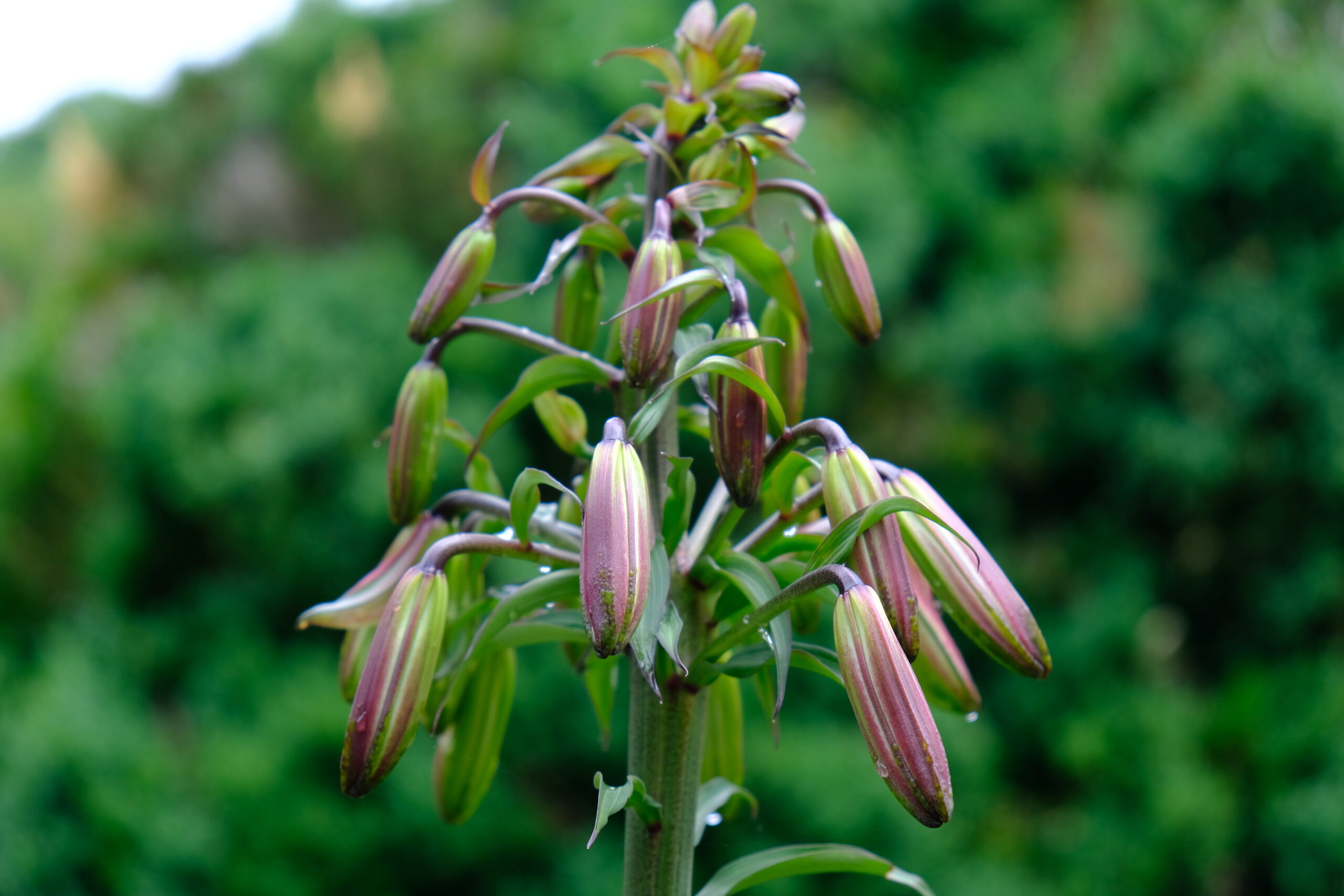
Other: Grown from a bulb, this majestic lily has pure white trumpet flowers with purple streaks.

Location: Color Garden

Lilium 'Regale'

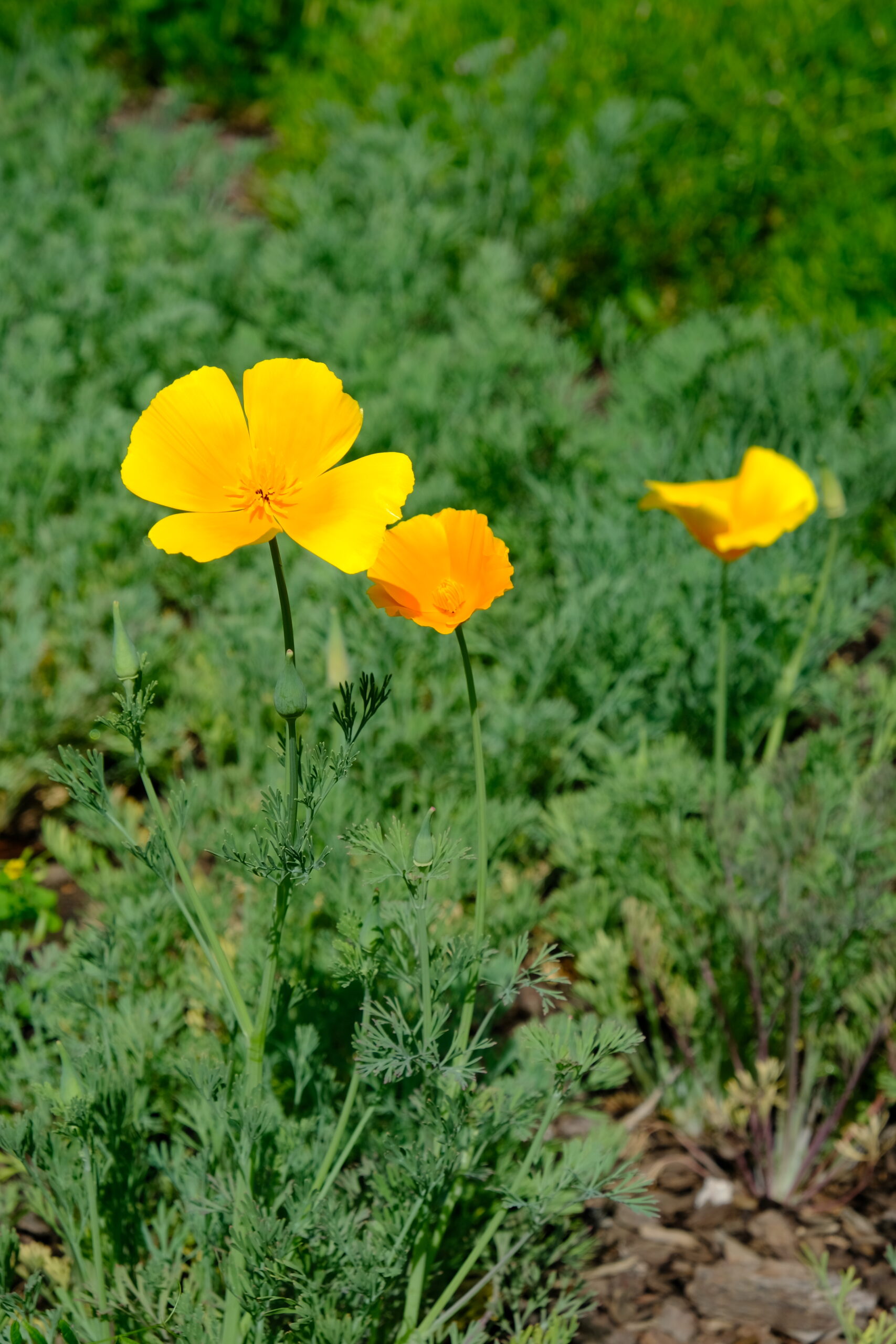
Eschscholzia californica ‘Golden West’ (California Poppy)

Bloom Time: May to July

Sun Requirement: Full Sun

Water Requirement: Medium

Wildlife: Honey bees, bumble bees, butterflies and beetles

Tolerates: Drought and heat tolerant

Native to North America: Yes

Zones: 6 to 10

Other: This wildflower has golden, cup-shaped flowers and fern-like blue-green leaves.

Location: Sigourney Cheek Literary Garden

Eschscholzia californica 'Golden West'

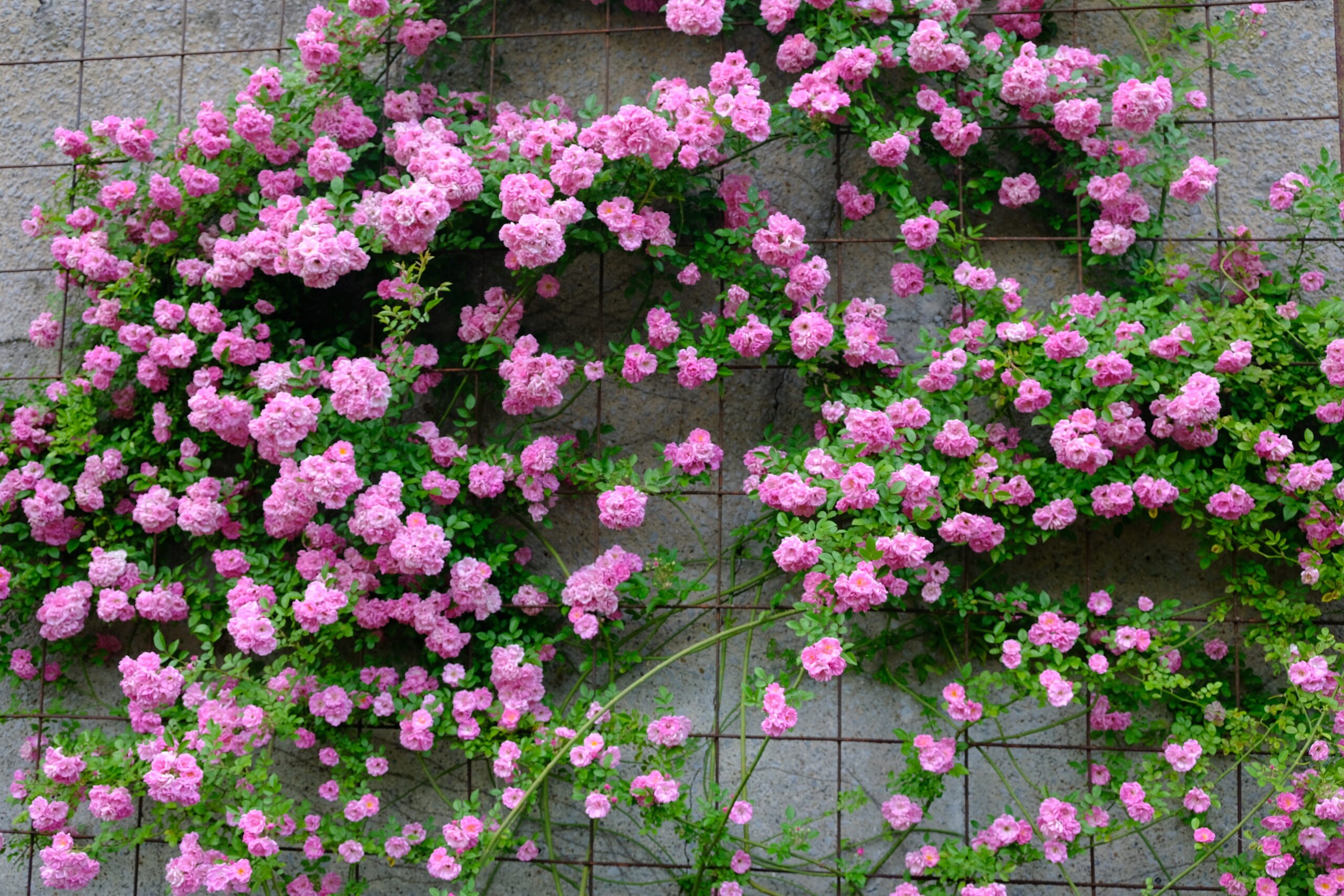
Rosa ‘Peggy Martin’ (Peggy Martin Rose)

Bloom Time: May to September

Sun Requirement: Full Sun

Water Requirement: Medium

Wildlife: Bees

Tolerates: Salt water

Native to North America: N/A

Zones: 4 to 10

Other: A vigorous spring blooming climbing rose with dark pink flowers.

Location: Color Garden

Rosa 'Peggy Martin'

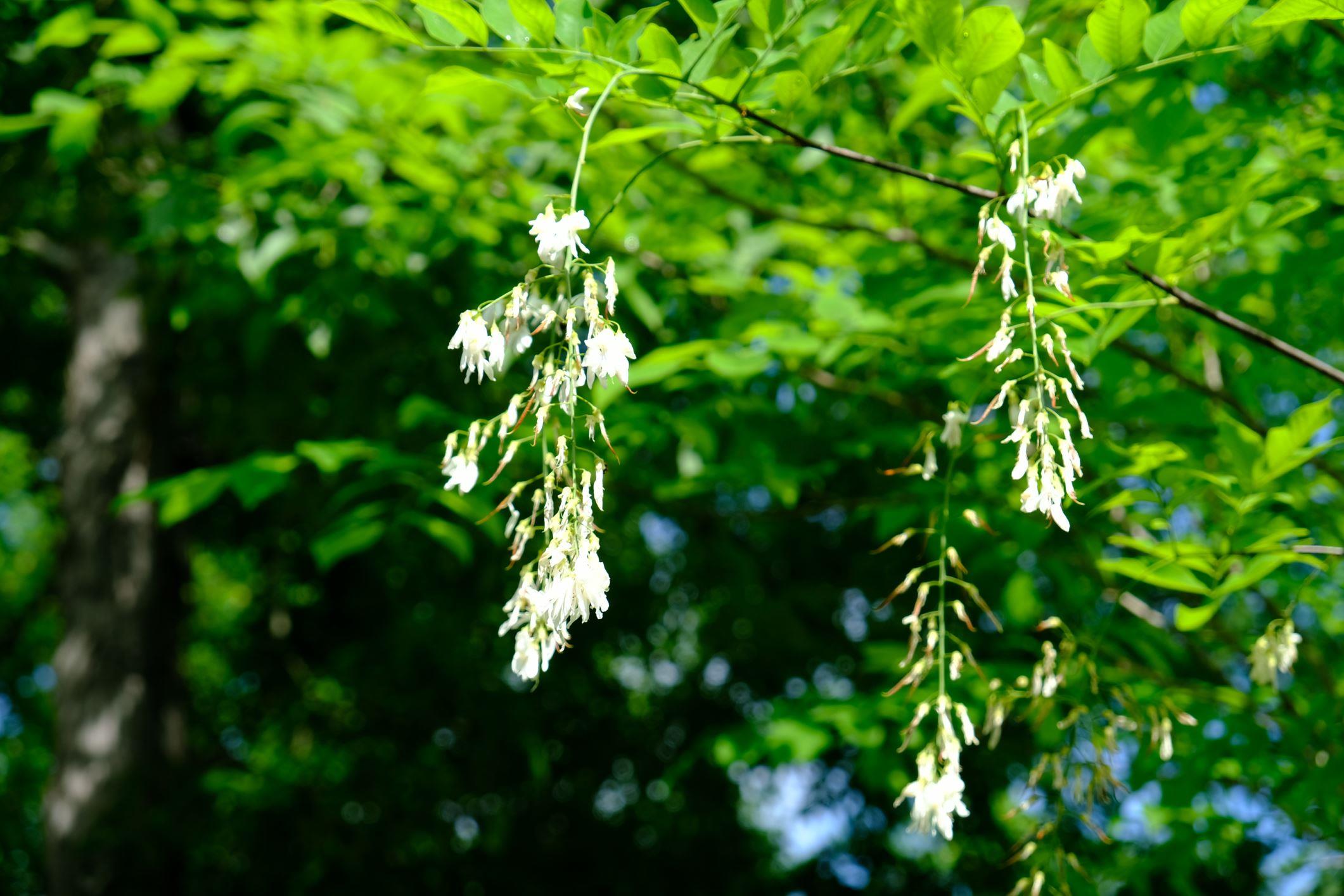
Cladrastis kentukea (Yellowwood)

Bloom Time: May to June

Sun Requirement: Full Sun

Water Requirement: Medium

Wildlife: Nectar for pollinators and nesting sites for songbirds.

Tolerates: Urban conditions

Native to North America: Yes

Zones: 4 to 8

Other: Medium-sized native tree with fragrant white flowers followed by long flat seed pods.

Location: Bracken Foundation Children’s Garden

O

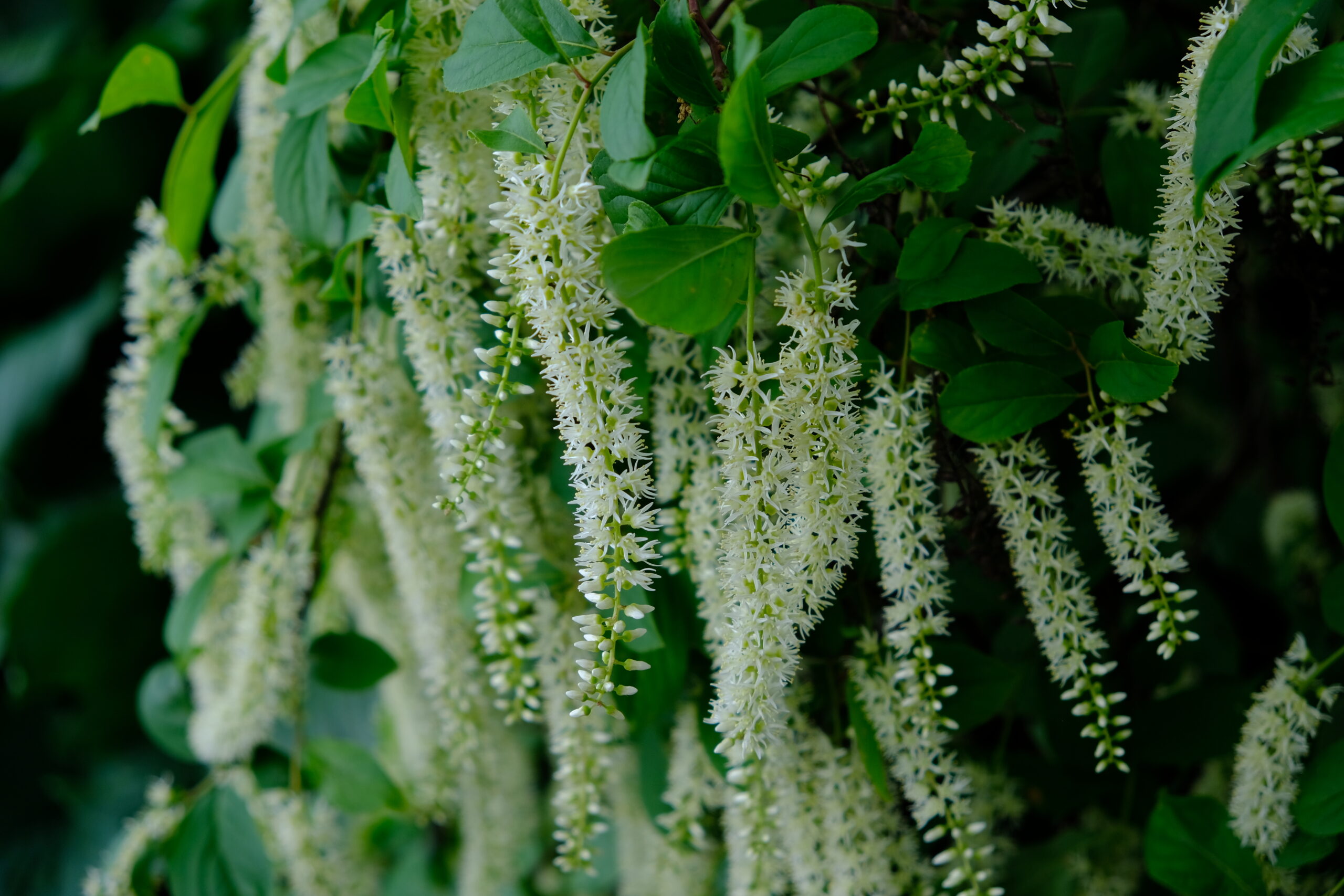
Itea virginica ‘Henry’s Garnet’ (Virginia Sweetspire)

Bloom Time: May to June

Sun Requirement: Full Sun to Part Shade

Water Requirement: Medium

Wildlife: Attracts butterflies and other pollinators. Seeds eaten by songbirds.

Tolerates: Tolerates a wide array of soils

Native to North America: N/A

Zones: 5 to 9

Other: This shrub features fragrant white flowers in late spring or early summer and brilliant red-purple foliage in the fall.

Location: Museum of Art

Itea virginica 'Henry's Garnet'

test

Top Plant Picks May 2024

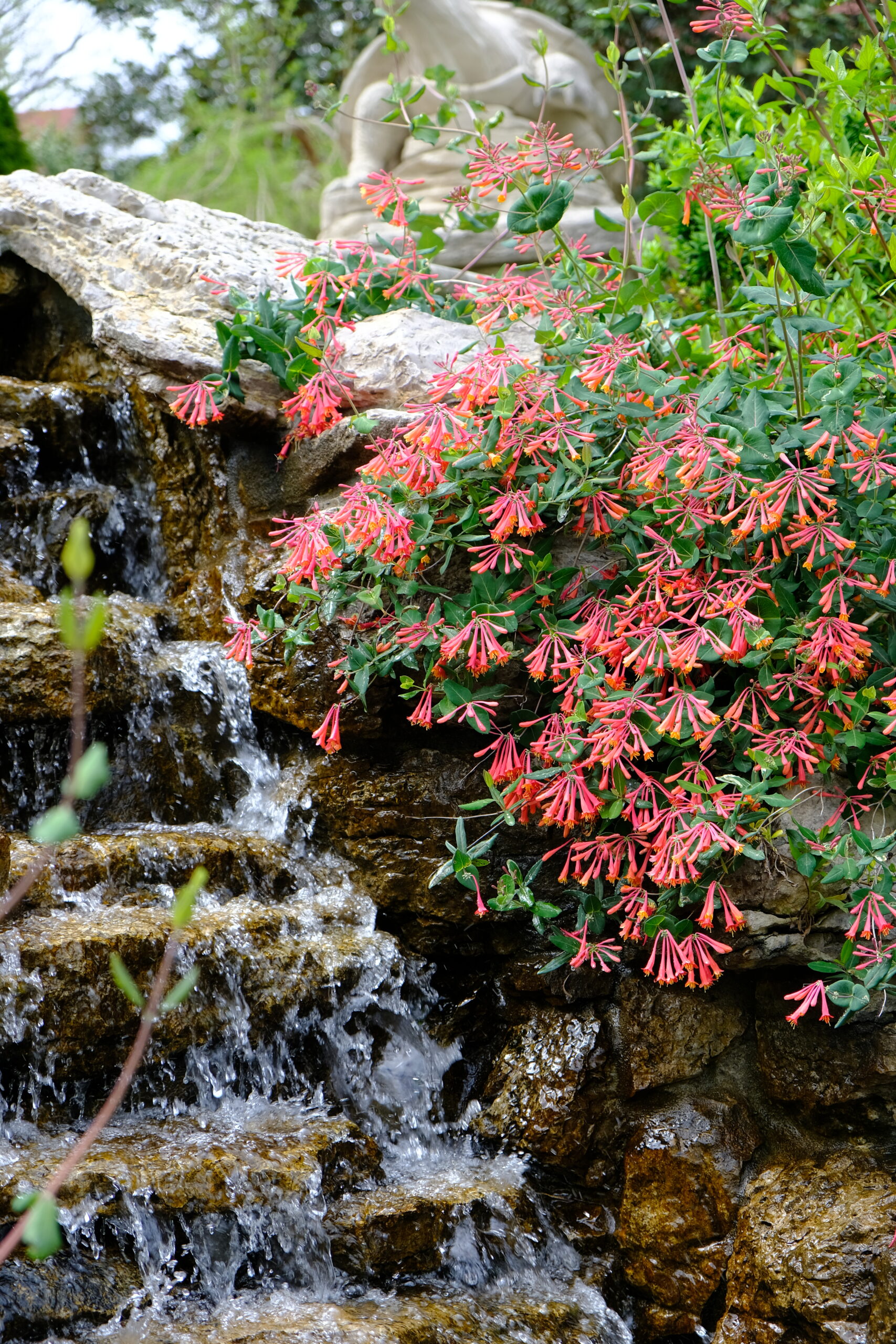
Lonicera sempervirens (Coral Honeysuckle)

Bloom Time: March to July

Sun Requirement: Full Sun

Water Requirement: Medium

Wildlife: Birds, hummingbirds, and butterflies

Tolerates: Deer resistant, tolerates black walnut

Native to North America: Yes

Zones: 4 to 9

Other: This gorgeous native vine has brillaint scarlet blooms followed by ornamental red berries.

Location: Bracken Foundation Children’s Garden

lonicera sempervirens2

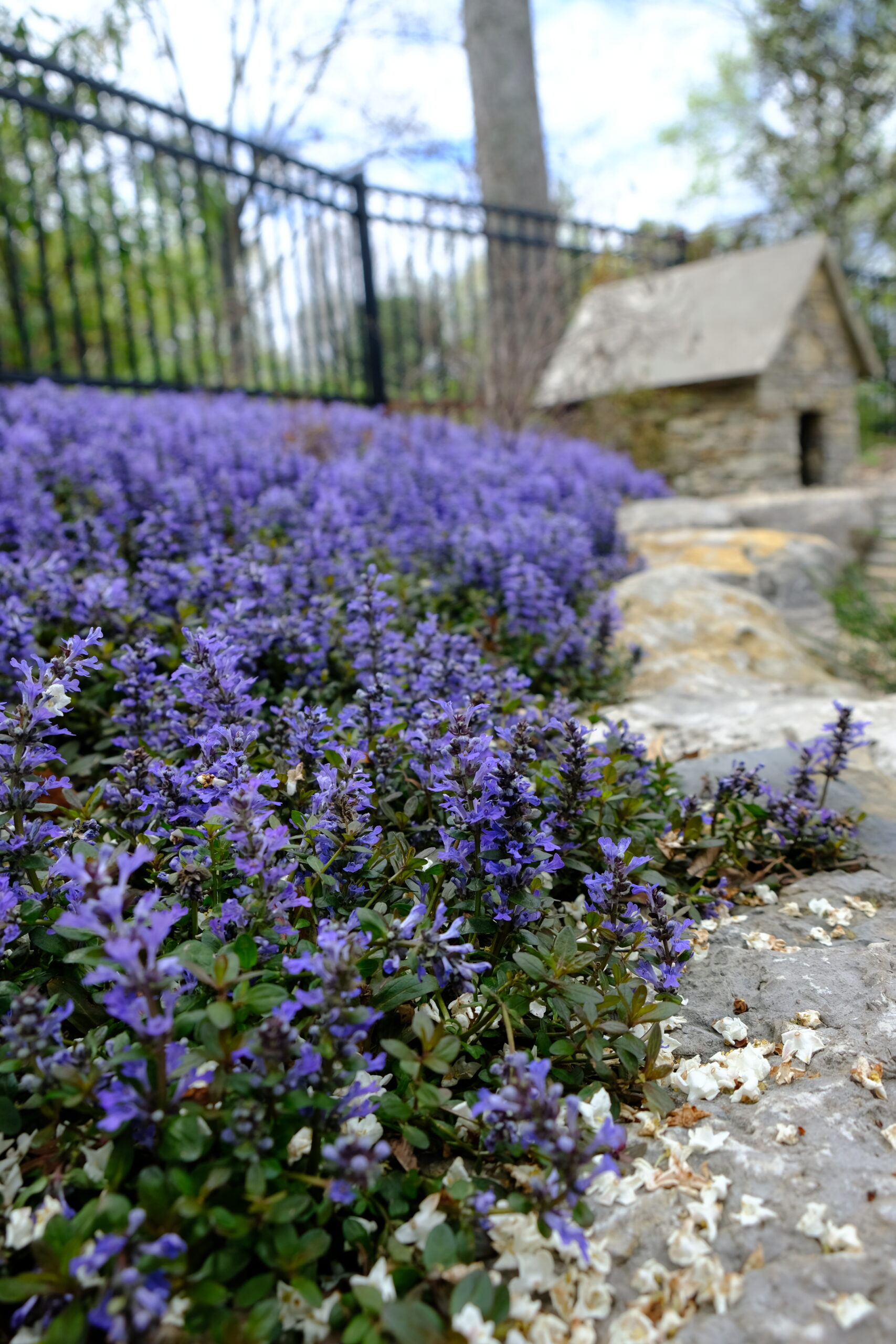
Ajuga tenorii ‘Chocolate Chip’ (Bugleweed)

Bloom Time: March to May

Sun Requirement: Full Sun to Part Shade

Water Requirement: Medium

Wildlife: Attracts hummingbirds

Tolerates: Deer resistant

Native to North America: No

Zones: 3 to 9

Other: A quick spreading groundcover that forms a dense mat with chocolate-brown foliage and vibrant blue blooms.

Location: Bracken Foundation Children’s Garden

Ajuga 'chocolate chip

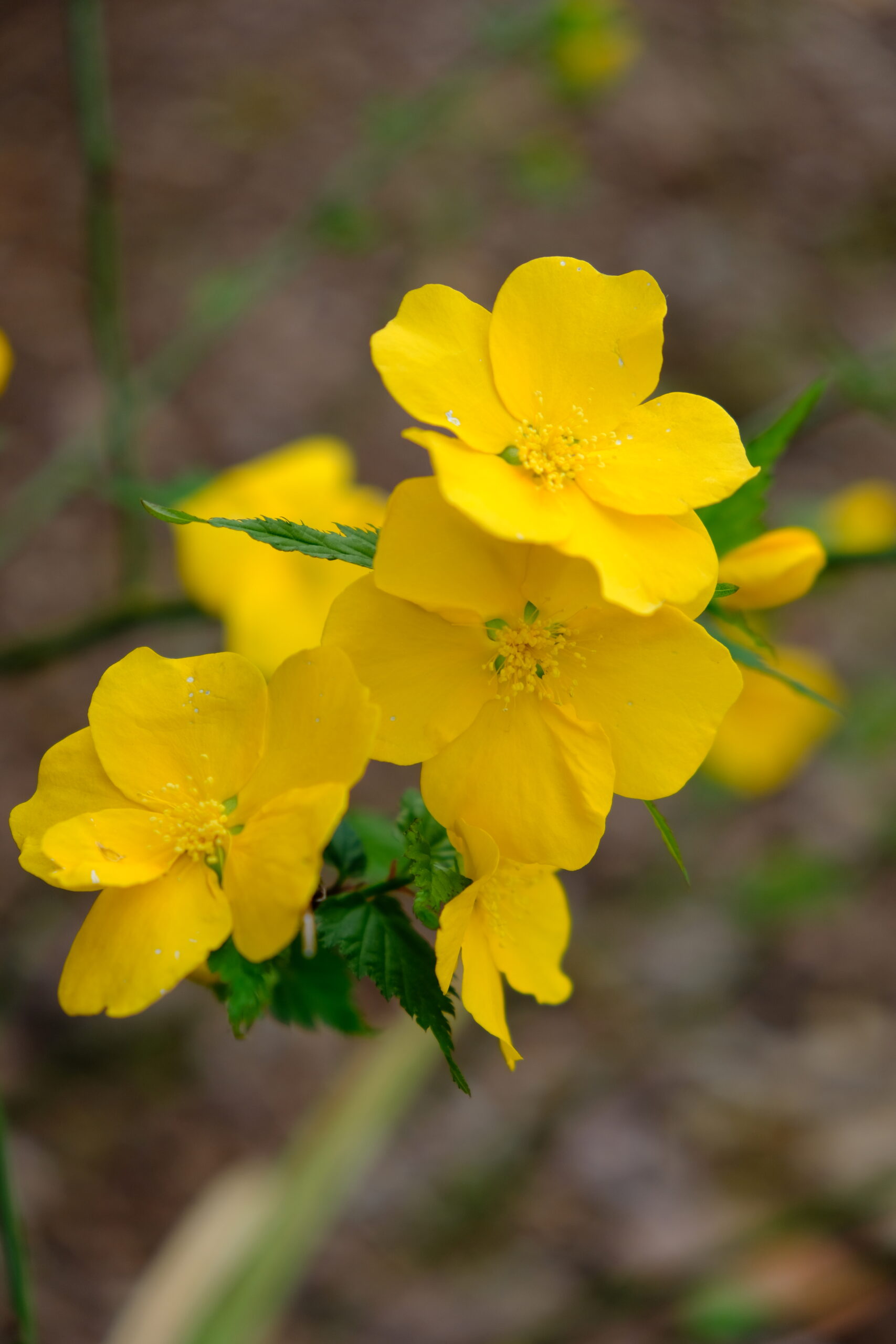
Kerria japonica ‘Gold Guinea’ (Japanese Kerria)

Bloom Time: April to May

Sun Requirement: Part Shade

Water Requirement: Medium

Wildlife: Butterflies and Hummingbirds

Tolerates: Deer resistant

Native to North America: No

Zones: 4 to 9

Other: The bright yellow flowers of Japanese Kerria appear in the spring and sporadically throughout the growing season.

Location: Bracken Foundation Children’s Garden

Kerria

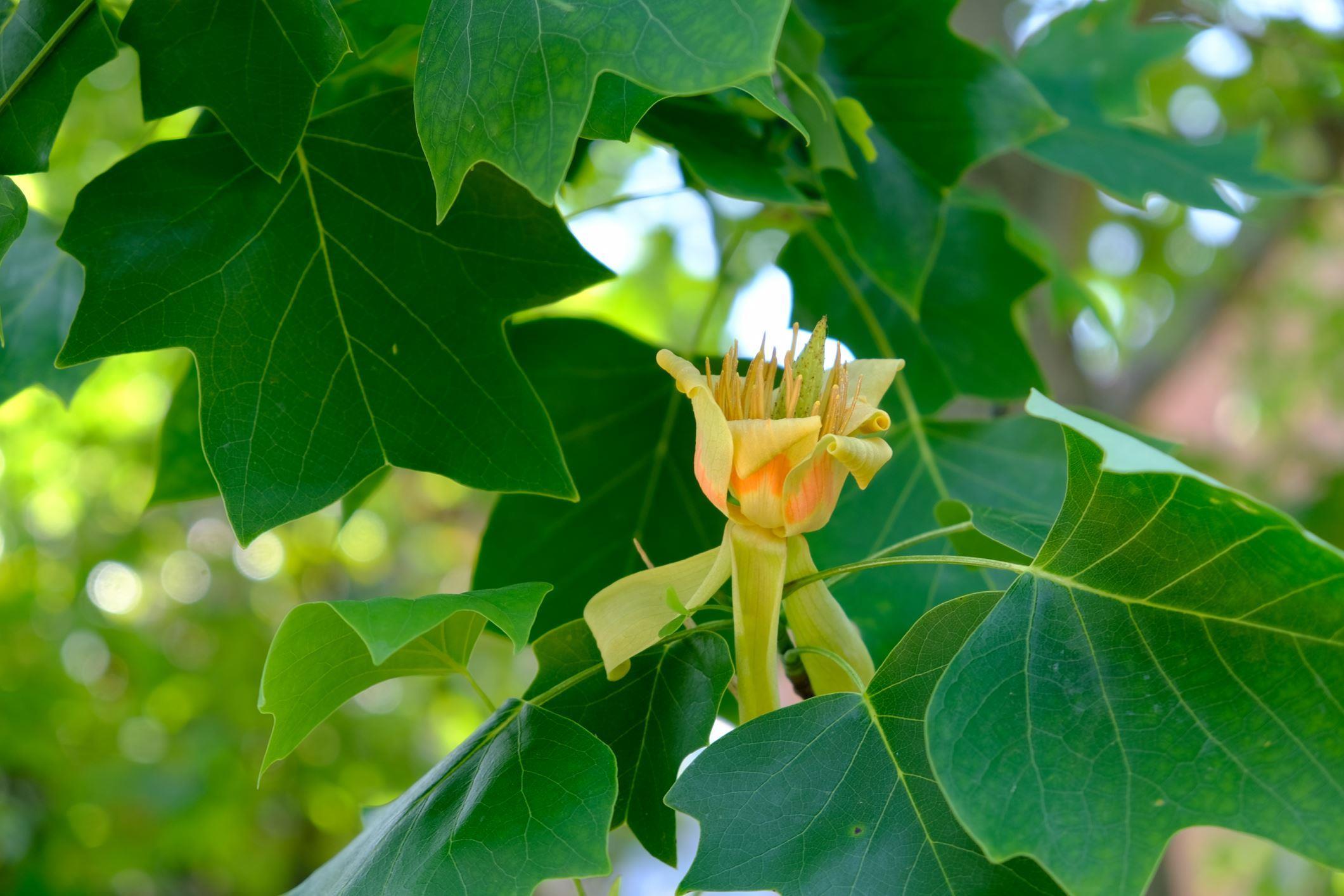
Liriodendron tulipifera (Tulip Tree)

Bloom Time: May to June

Sun Requirement: Full Sun

Water Requirement: Medium

Wildlife: Attracts birds and hummingbirds

Tolerates: Tolerates rabbit, deer, and black walnut

Native to North America: Yes

Zones: 4 to 9

Other: Designated the official state tree of Tennessee, this stately native tree features tulip-like flowers and golden yellow fall foliage.

Location: Frist Learning Center

Liriodendron tulipifera

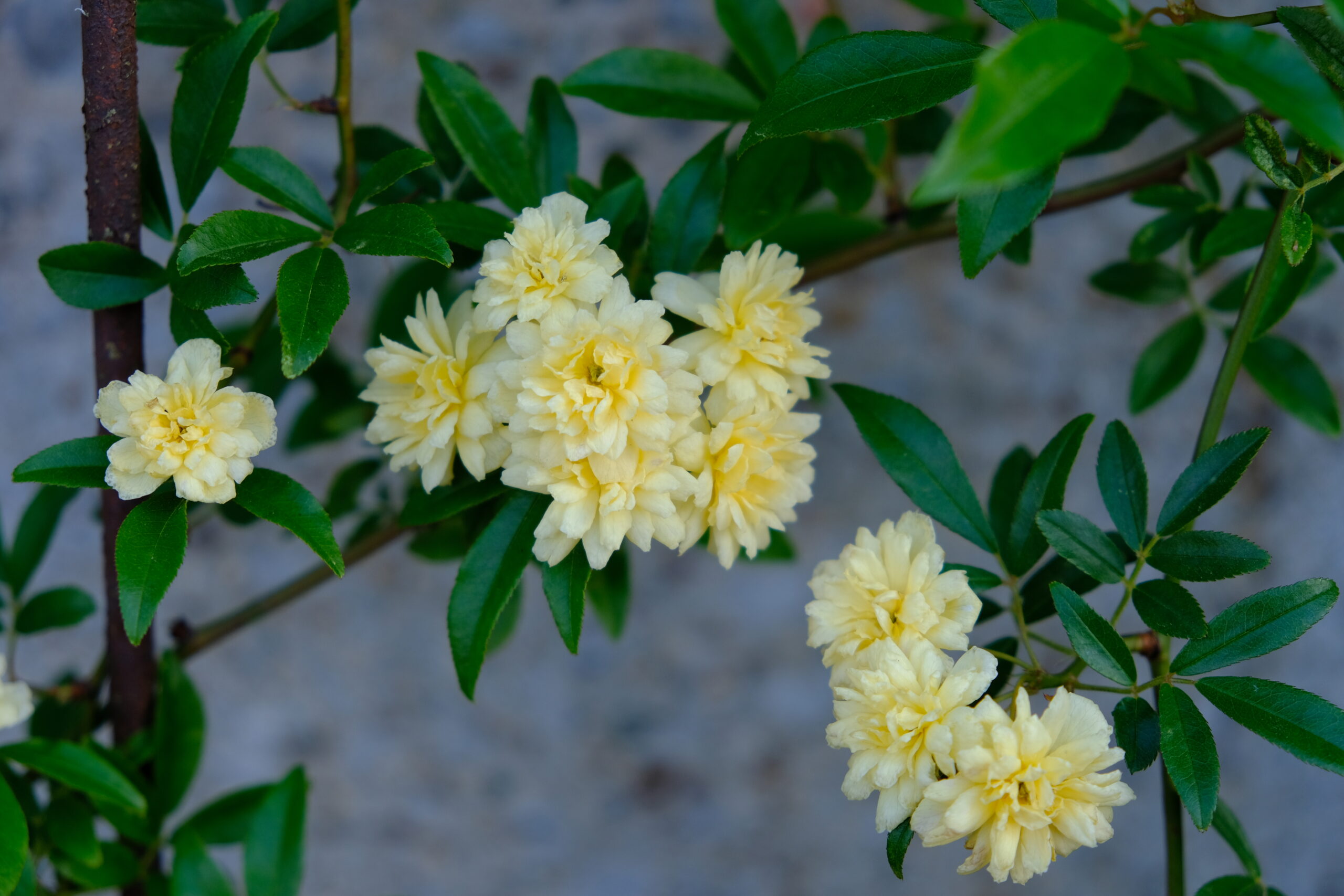
Rosa banksiae ‘Lutea’ (Lady Banks Rose)

Bloom Time: April to June

Sun Requirement: Full Sun

Water Requirement: Medium

Wildlife: Attracts butterflies

Tolerates: N/A

Native to North America: No

Zones: 8 to 10

Other: A vigorous climbing rose with pale yellow flowers. Ideal for growing up arbors but plant in a protected area from cold winds.

Location: Color Garden

Rosa banksiae 'Lutea'

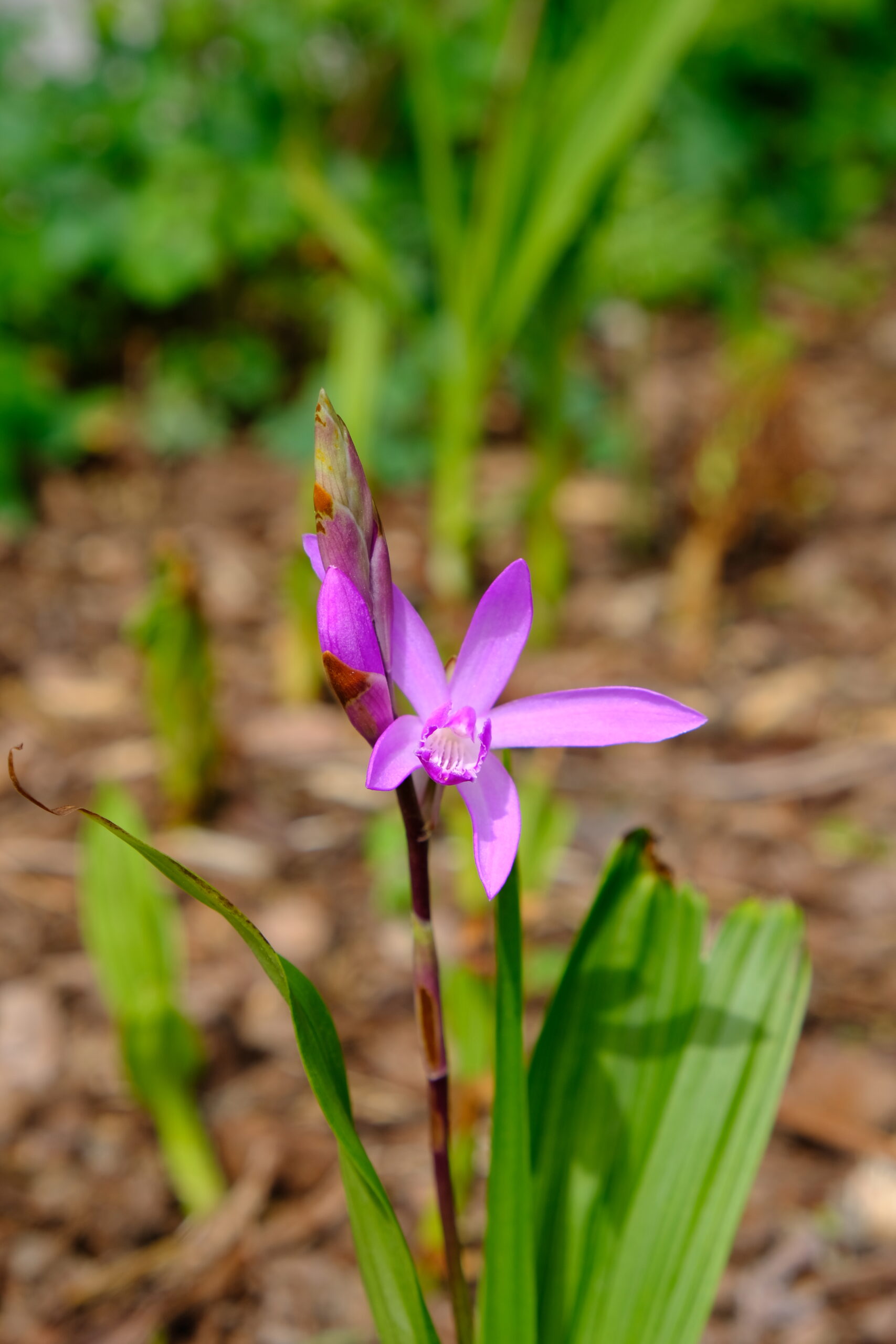
Bletilla striata ‘Albostriata’ (Striped Hardy Ground Orchid)

Bloom Time: April to May

Sun Requirement: Part Shade

Water Requirement: Medium

Wildlife: Long-horned bees and honeybees

Tolerates: Drought tolerant

Native to North America: No

Zones: 6 to 9

Other: This terrestrial orchid has showy pink-purple flowers in early summer and can be amazingly drought tolerant.

Location: Water Garden

Bletilla striata 'Albostriata'

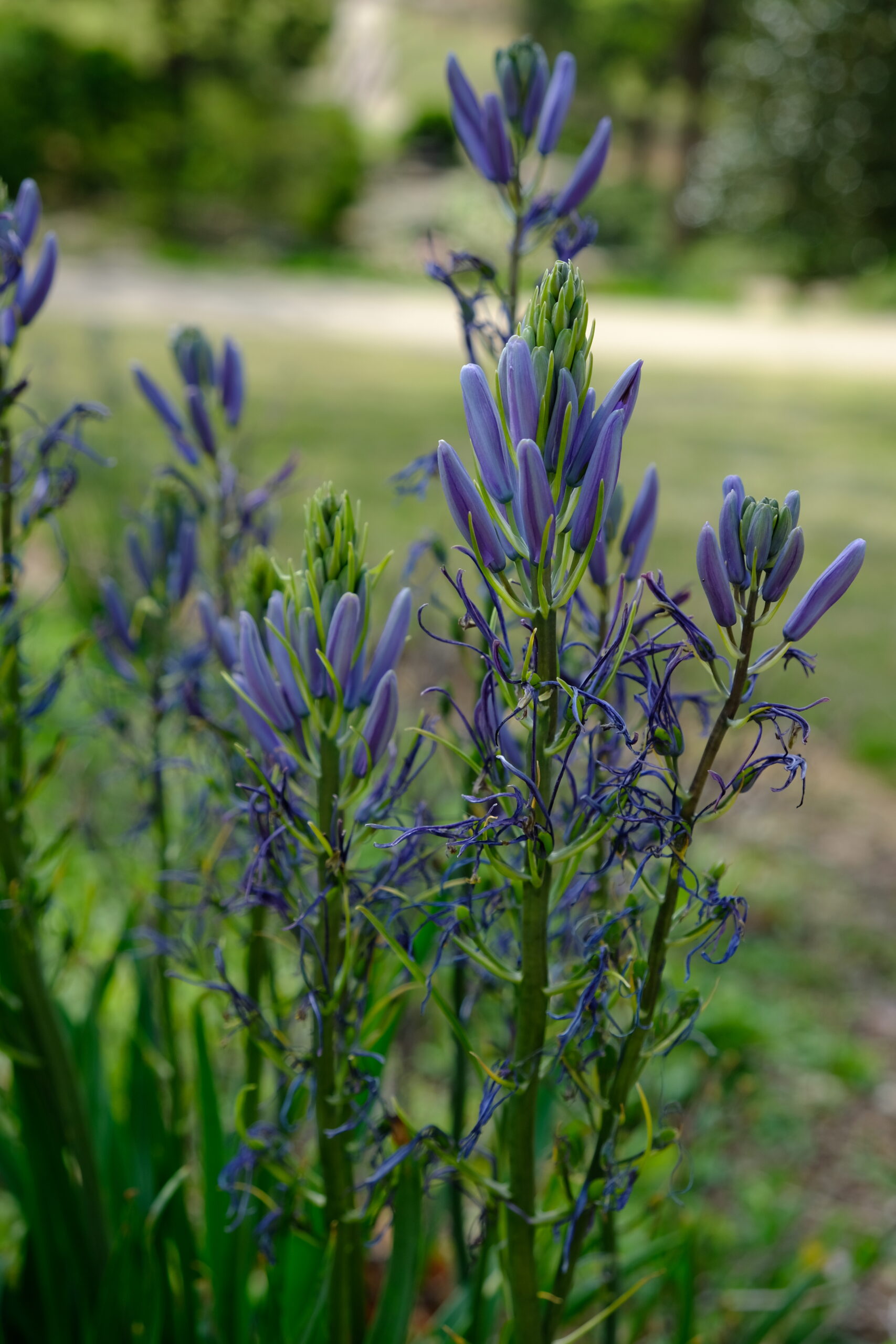
Camassia leichtlinii (Large Camas)

Bloom Time: April to May

Sun Requirement: Full Sun to Part Shade

Water Requirement: Medium

Wildlife: Attracts bumblebees, mason bees, and beetles

Tolerates: Clay Soil, Black Walnut

Native to North America: Yes

Zones: 5 to 9

Other: This bulbous perennial sends up tall spires of star-shaped blue flowers.

Location: Water Garden

Camassia leichtlinii

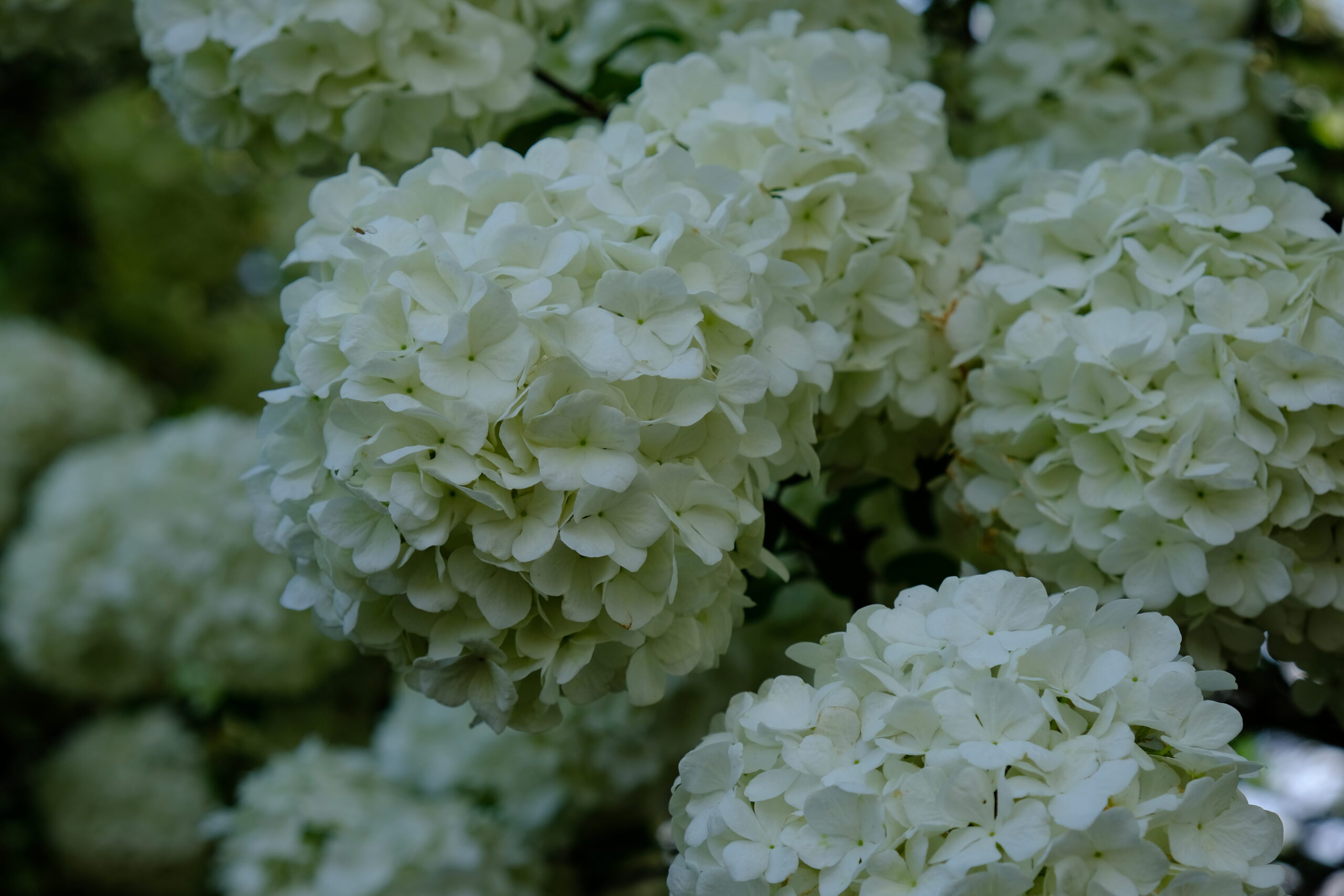
Viburnum opulus ‘Sterile’ (Sterile European Cranberrybush)

Bloom Time: April to May

Sun Requirement: Full Sun to Part Shade

Water Requirement: Medium

Wildlife: Provides shelter for birds

Tolerates: N/A

Native to North America: No

Zones: 3 to 8

Other: This sterile cultivar of viburnum won’t produce berries and spread, but it does produce masses of pure white blooms.

Location: Color Garden

Viburnum opulus 'sterile'

test

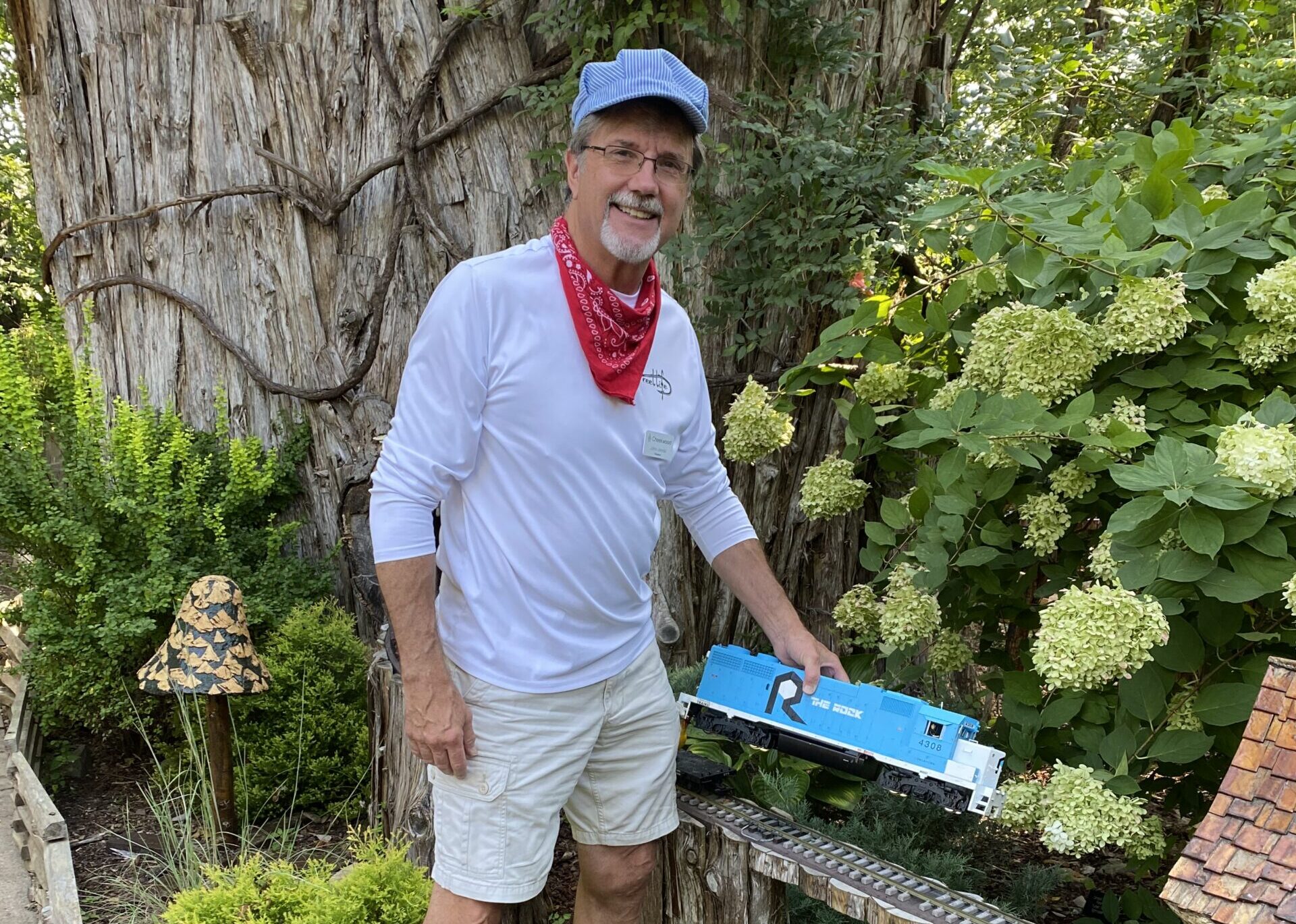
Volunteer Spotlight: John Joniak


John Joniak embraces any assignment with enthusiasm and a smile. He participates in many of Cheekwood’s events, but his passion is working on our miniature trains exhibit. Most weeks he can be found at trains, tidying up the tracks, working on the train cars, and keeping the exhibition area clear of debris. But his favorite thing about the trains is to share fun facts with our guests, big and small.


Tell us a little about yourself and your background.

I’ve been married to my wife and best friend, Christine, for 48+ years! We lived most of our lives in Naperville, Illinois, a suburb 20 miles west of Chicago. We have 5 wonderful children and 6 terrific grandkids. Five years ago we retired and moved to Tennessee where we established new roots in the Nashville area and absolutely love it here! <br><br>Before I retired, I worked initially as a product engineer and then as a regional or national sales manager for various manufacturing companies.

What are your favorite hobbies, activities, or interests?

My wife and I love spending time with our kid’s & grandkids, being involved with our church, traveling, playing pickle ball, socializing with friends, and going bike riding on Tennessee’s beautiful green ways! I also like fishing, kayaking, exercising on my rowing erg and volunteering, especially at Cheekwood!

What is your favorite garden or area at Cheekwood and why?

It has to be Cheekwood Trains! My dad and I had a Lionel model train set back when I was growing up. We spent many a day working side-by-side building and playing with the train layout! I find the Cheekwood Trains exhibit absolutely MAGICAL! Anyone who likes model trains or enjoys being in an enchanted place that makes you feel like you’re in a fairy tale world, would love the Cheekwood Trains exhibit!

Do you have a favorite artwork at Cheekwood, or, if not, a favorite exhibition that Cheekwood has hosted? Is there a reason you like it?

My favorite Cheekwood exhibit or event would be Holiday Lights! They do such an amazing job decorating the entire grounds, including Cheekwood Trains!

In what ways have you been involved as a volunteer with Cheekwood so far?

I have been volunteering at Cheekwood for two years now. Although I have spent many hours helping in the various gardens, most of my time is spent coming in each week to help maintain the trains exhibit…scrubbing the tracks, rotating and cleaning the contacts on the engines, and switching up the theme cars. While I’m there, I also enjoy engaging with the enthusiastic kids (and adults) many of which come to Cheekwood specifically to see the trains. When time permits, I pull a spare Thomas the Tank Engine out of the roundhouse and do an impromptu show and tell with the young visitors!

Why did you become a volunteer?

Being retired I have plenty of time on my hands and like to keep active. I enjoy helping and meeting people and also love the outdoors & working with my hands so Cheekwood is a perfect choice for me!

What have you enjoyed the most about your volunteer experience?

There are several things that I love about volunteering at Cheekwood...I enjoy my serene walks through the gardens, appreciating their beauty during my walk to the Trains. It helps me connect to nature as well as to God! I thoroughly enjoy meeting and engaging with the visitors that I meet, especially the children! That can also be said for the Cheekwood employees (gardeners, managers, etc) and the other volunteers that I’ve met. They are all wonderful people!

Is there a funny or inspirational story you can briefly tell about your volunteer experience?

I love the pure joy of the “little” visitors that I meet! Their excitement, abundant energy and sheer happiness is truly contagious!

Do you have any advice for individuals considering volunteering with Cheekwood?

If you have time on your hands, enjoy nature, like helping others, and/or meeting or working with friendly people… Don’t give it a second thought! Inquire about the many volunteer opportunities that Cheekwood has to offer! You won’t regret it!

For more information about volunteering visit our volunteer web page: www.cheekwood.org/support/volunteer

test

Top Plant Picks April 2024

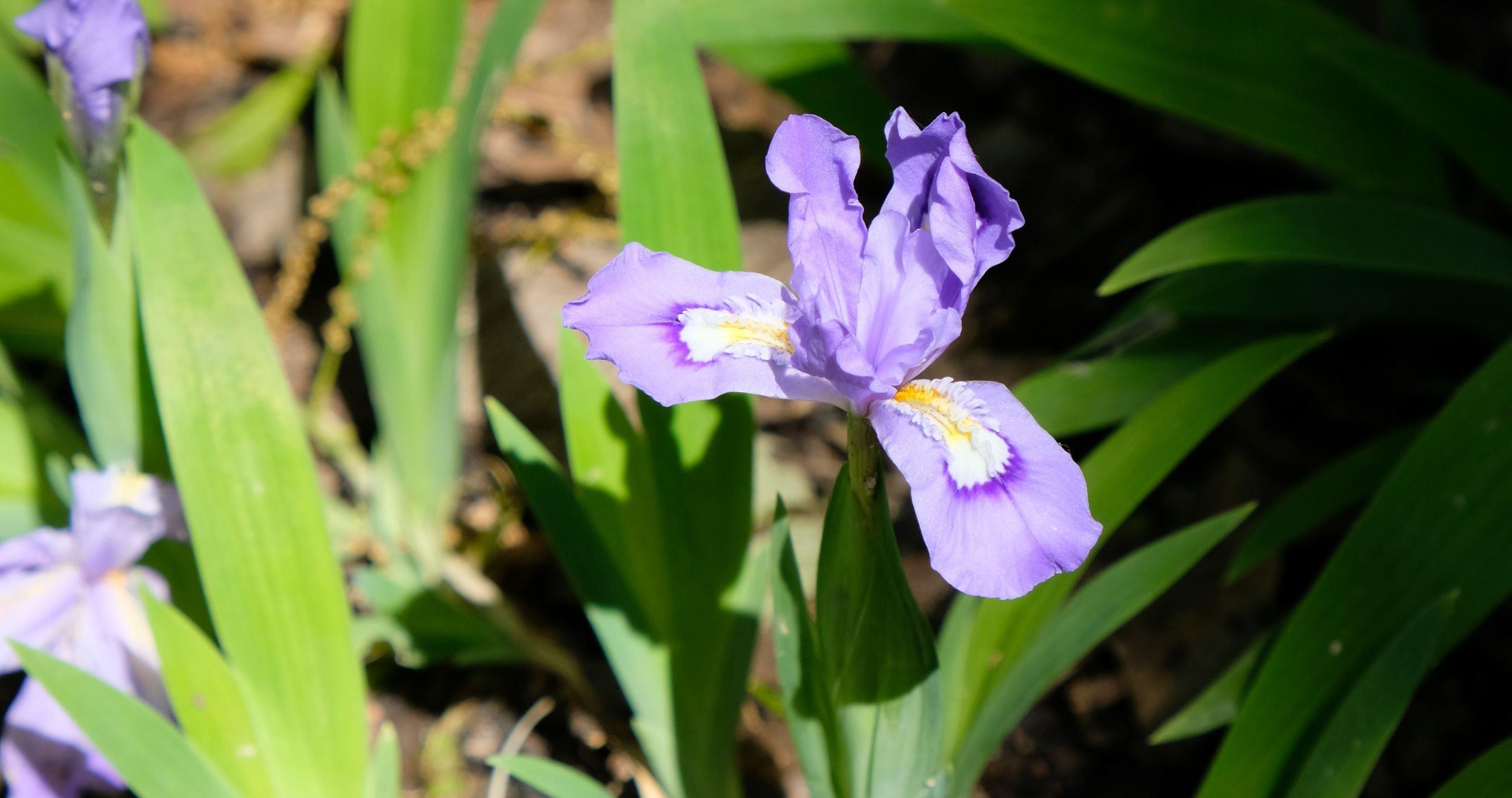
Iris cristata (Dwarf Crested Iris)

Bloom Time: April

Sun Requirement: Full Sun to Part Shade

Water Requirement: Medium

Wildlife: Attracts hummingbirds and bees

Tolerates: Deer and Drought

Native to North America: Yes

Zones: 3 to 9

Other: A native iris that grows six inches tall and produces pale blue flowers.

Location: Bracken Foundation Children’s Garden

Iris cristata

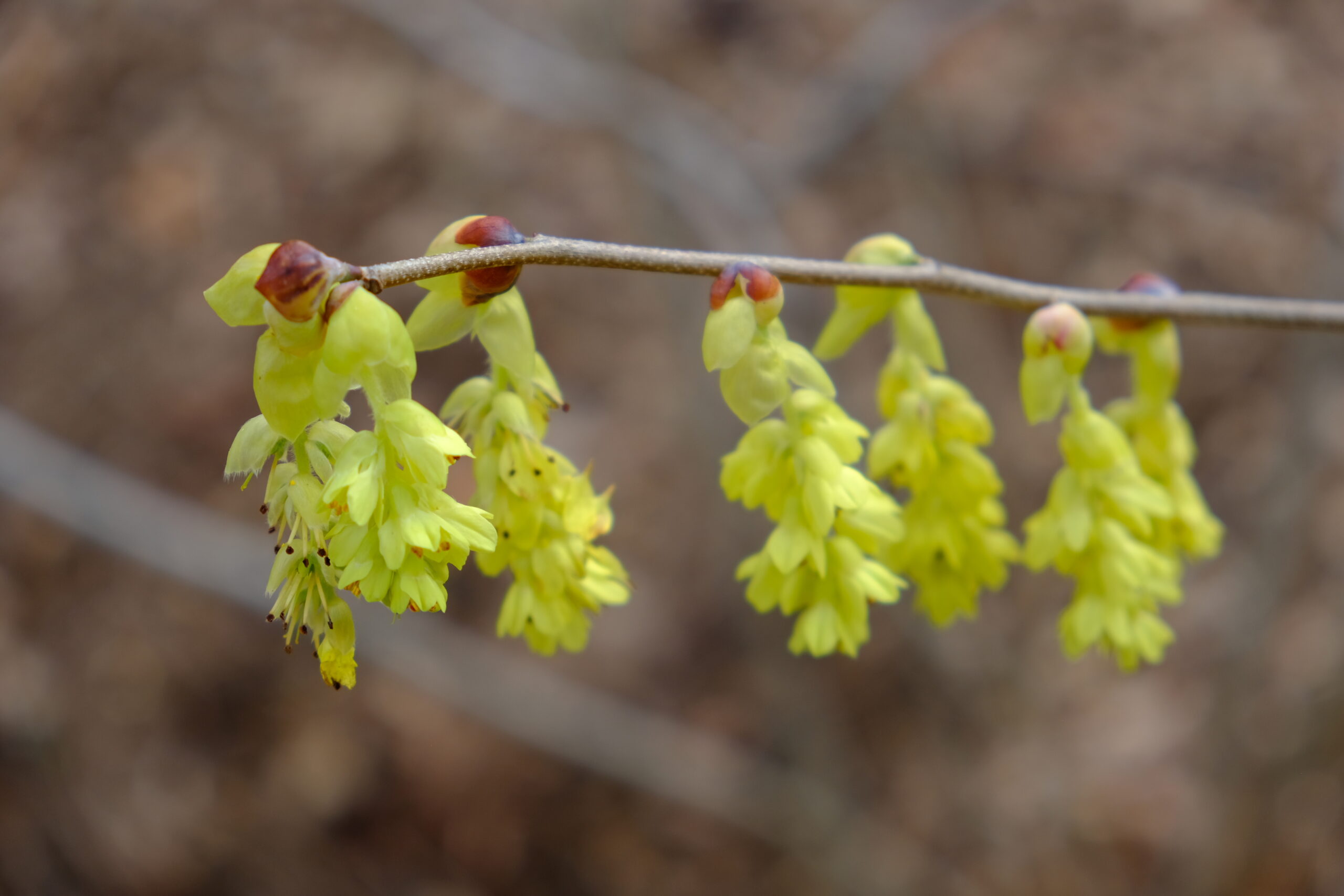
Corylopsis spicata (Winter Hazel)

Bloom Time: March to April

Sun Requirement: Full Sun to Part Shade

Water Requirement: Medium

Wildlife: Attracts bees, hummingbirds, and other pollinators

Tolerates: Insect Pests and Deer

Native to North America: No

Zones: 5 to 8

Other: Soft yellow pendulous flowers appear on this shrub before the leaves emerge.

Location: Turner Seasons Garden

Corylopsis spicata

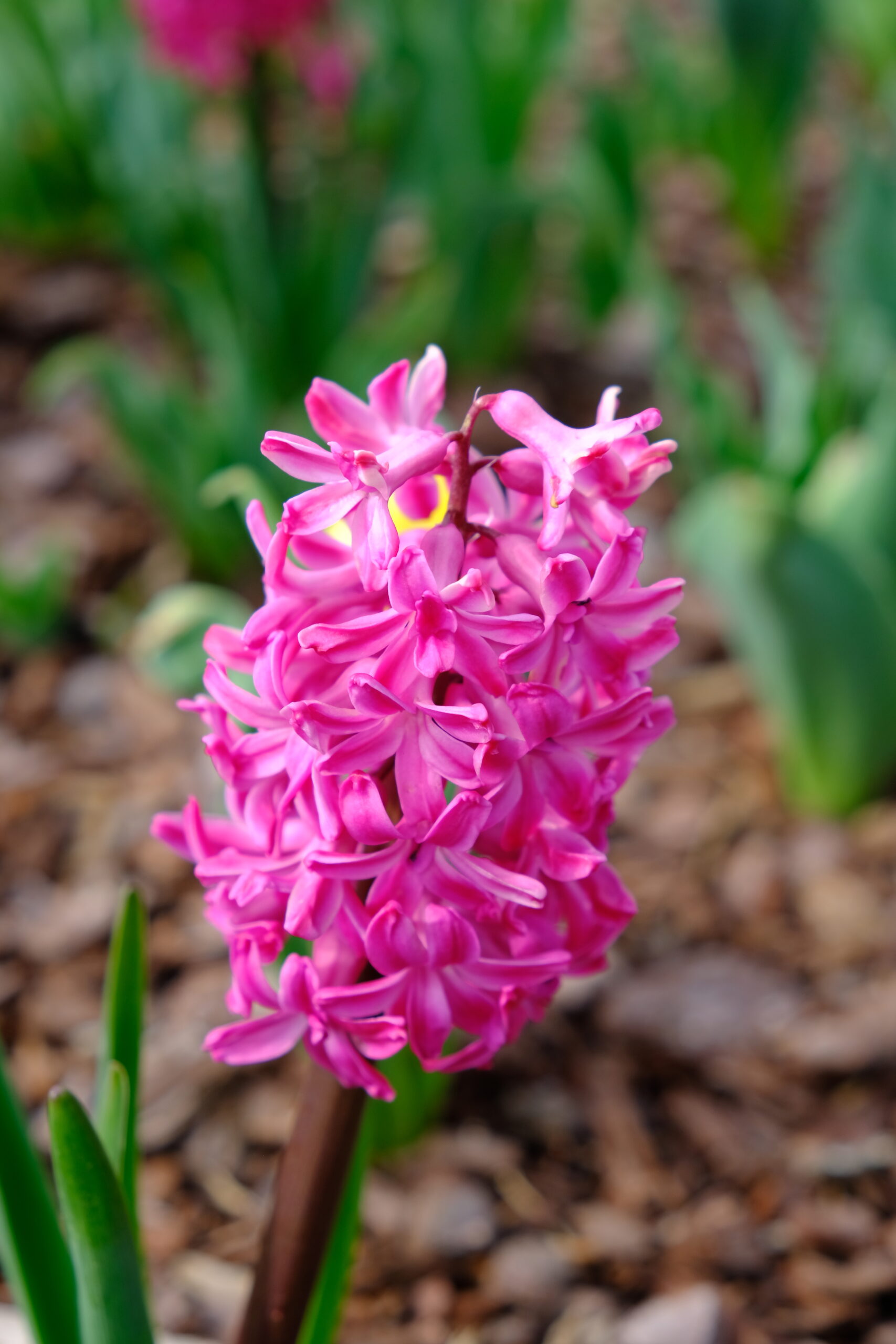
Hyacinthus orientalis ‘Jan Bos’ (Dutch Hyacinth)

Bloom Time: March to April

Sun Requirement: Full Sun to Part Sun

Water Requirement: Medium

Wildlife: N/A

Tolerates: Deer and Rabbit

Native to North America: No

Zones: 4 to 8

Other: An upright, cheerful hot pink bulb that blooms for several weeks in the spring.

Location: Color Garden

Hyacinthus orientalis 'Jan Bos'

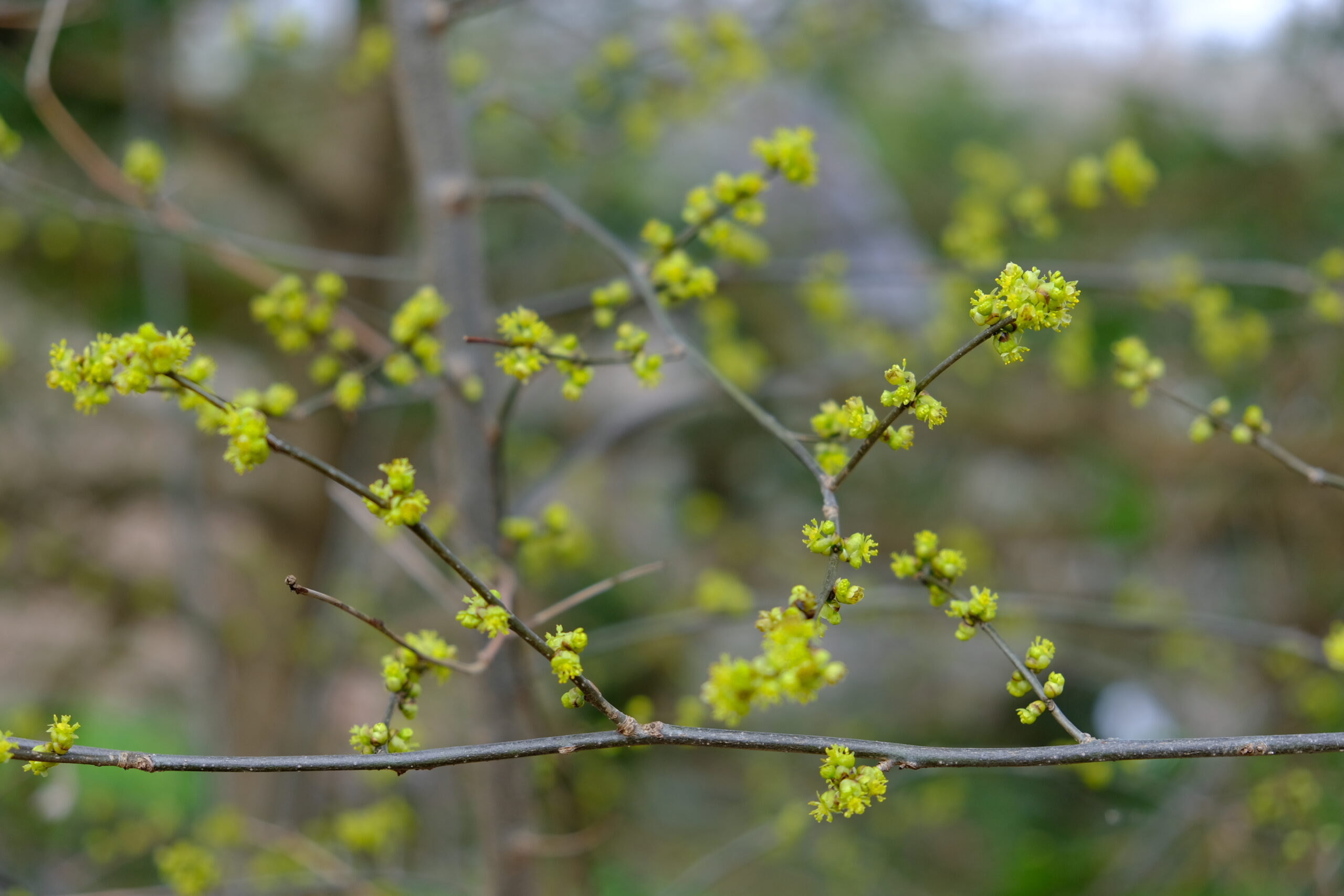
Lindera benzoin (Spicebush)

Bloom Time: March to April

Sun Requirement: Part Shade

Water Requirement: Medium

Wildlife: Host plant for the Spicebush Swallowtail caterpillar

Tolerates: Deer and Clay Soil

Native to North America: Yes

Zones: 4 to 9

Other: A medium rounded shrub noted for its yellow flowers and glossy red berries.

Location: Howe Garden

Lindera benzoin

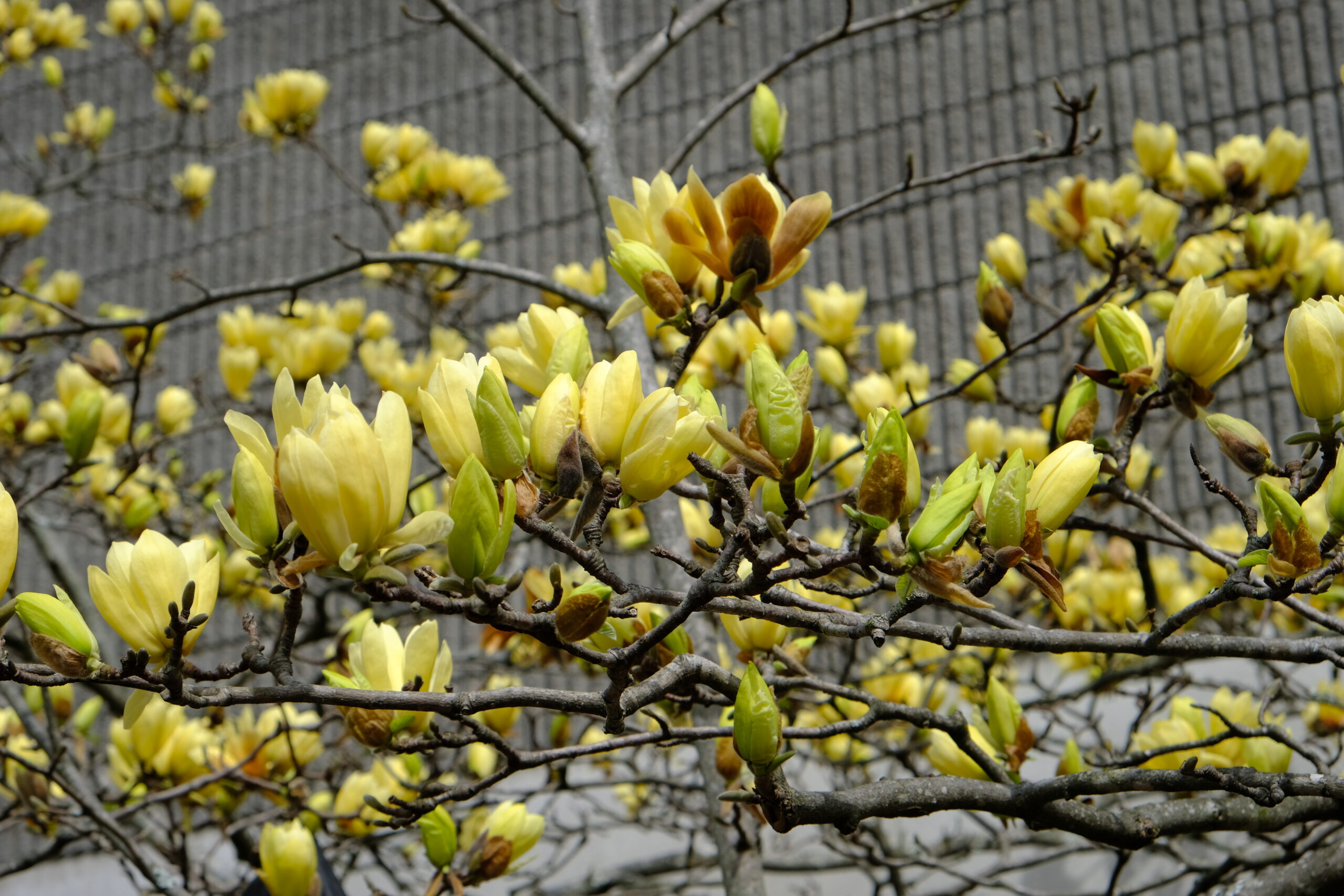
Magnolia x ‘Butterflies’ (Magnolia)

Bloom Time: March to April

Sun Requirement: Full Sun to Part Shade

Water Requirement: Medium

Wildlife: N/A

Tolerates: Air Pollution

Native to North America: No

Zones: 5 to 9

Other: This small tree explodes with showy, fragrant yellow flowers in the spring.

Location: Boxwood Garden

Magnolia x 'Butterflies'

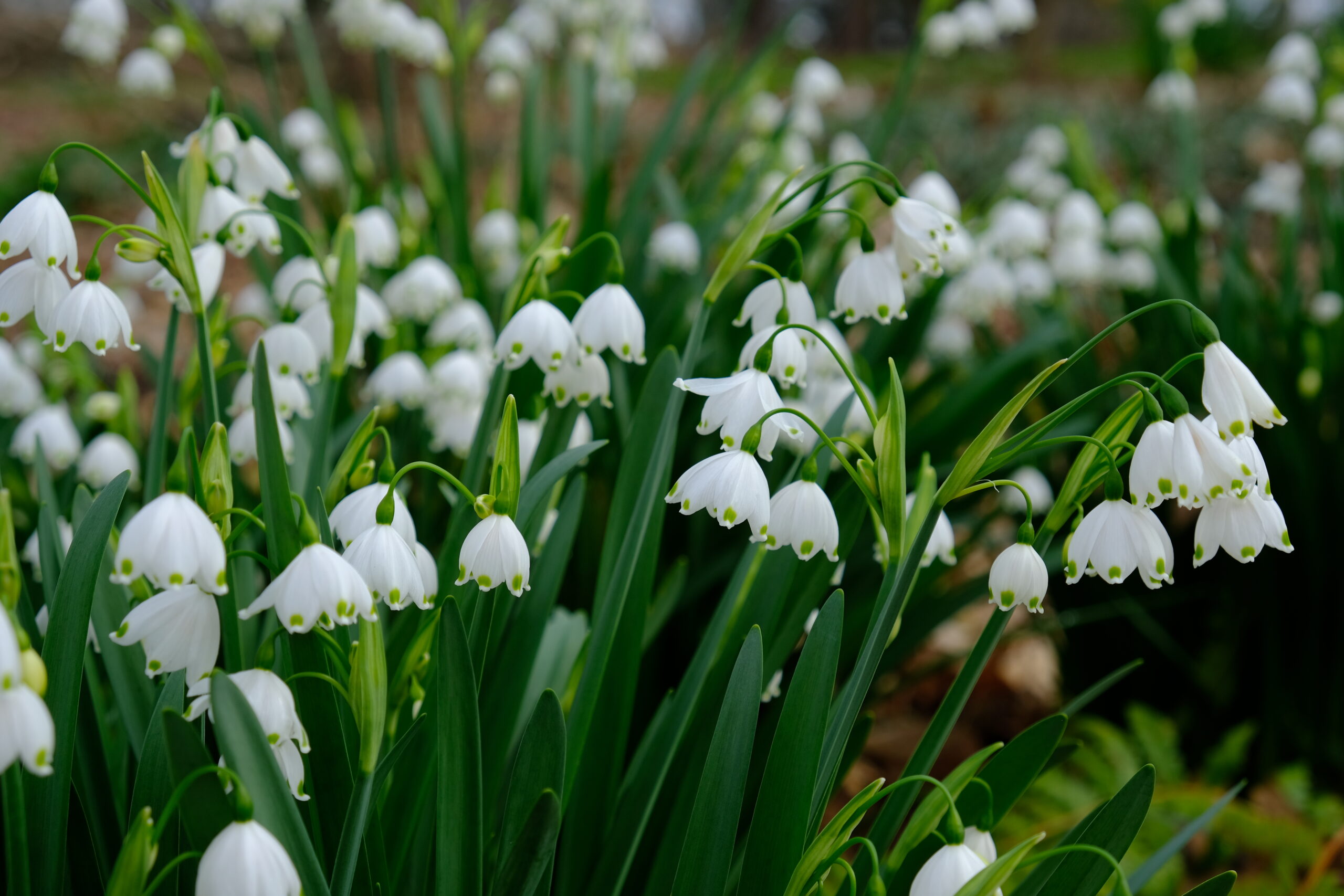
Leucojum aestivum (Summer Snowflake)

Bloom Time: April

Sun Requirement: Full Sun to Part Shade

Water Requirement: Medium

Wildlife: Attracts moths

Tolerates: Deer and Clay Soil

Native to North America: No

Zones: 4 to 8

Other: Easily grown, this beautiful perennial features nodding, bell-shaped flowers.

Location: Dogwood Garden

Leucojum aestivum

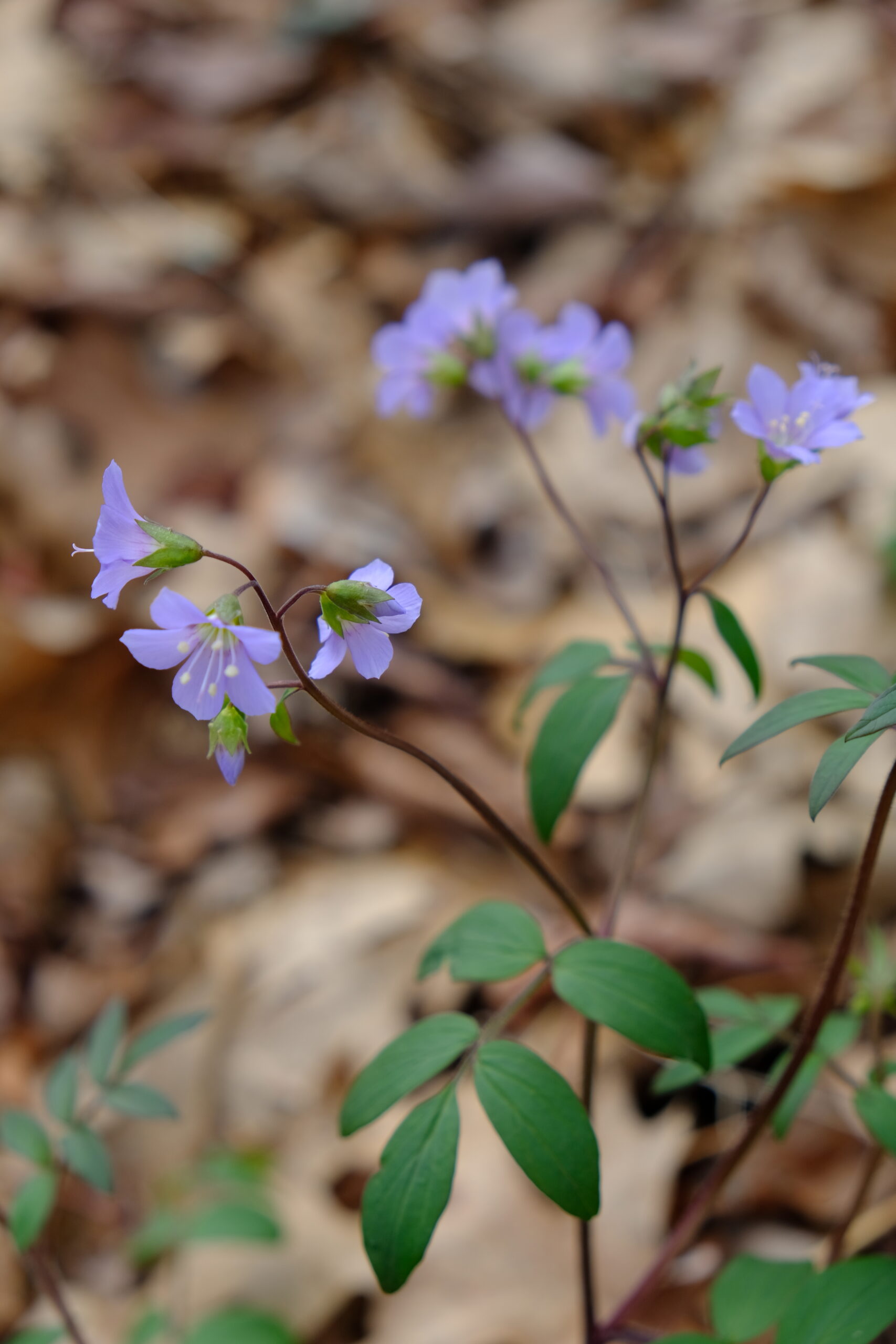
Polemonium reptans (Jacob’s Ladder)

Bloom Time: April to June

Sun Requirement: Full Sun to Part Shade

Water Requirement: Medium

Wildlife: Attracts pollinators

Tolerates: Deer

Native to North America: Yes

Zones: 3 to 8

Other: A perfect shade garden perennial with deleicate compound leaves and lavendar blooms.

Location: Howe Garden

Polemonium reptans

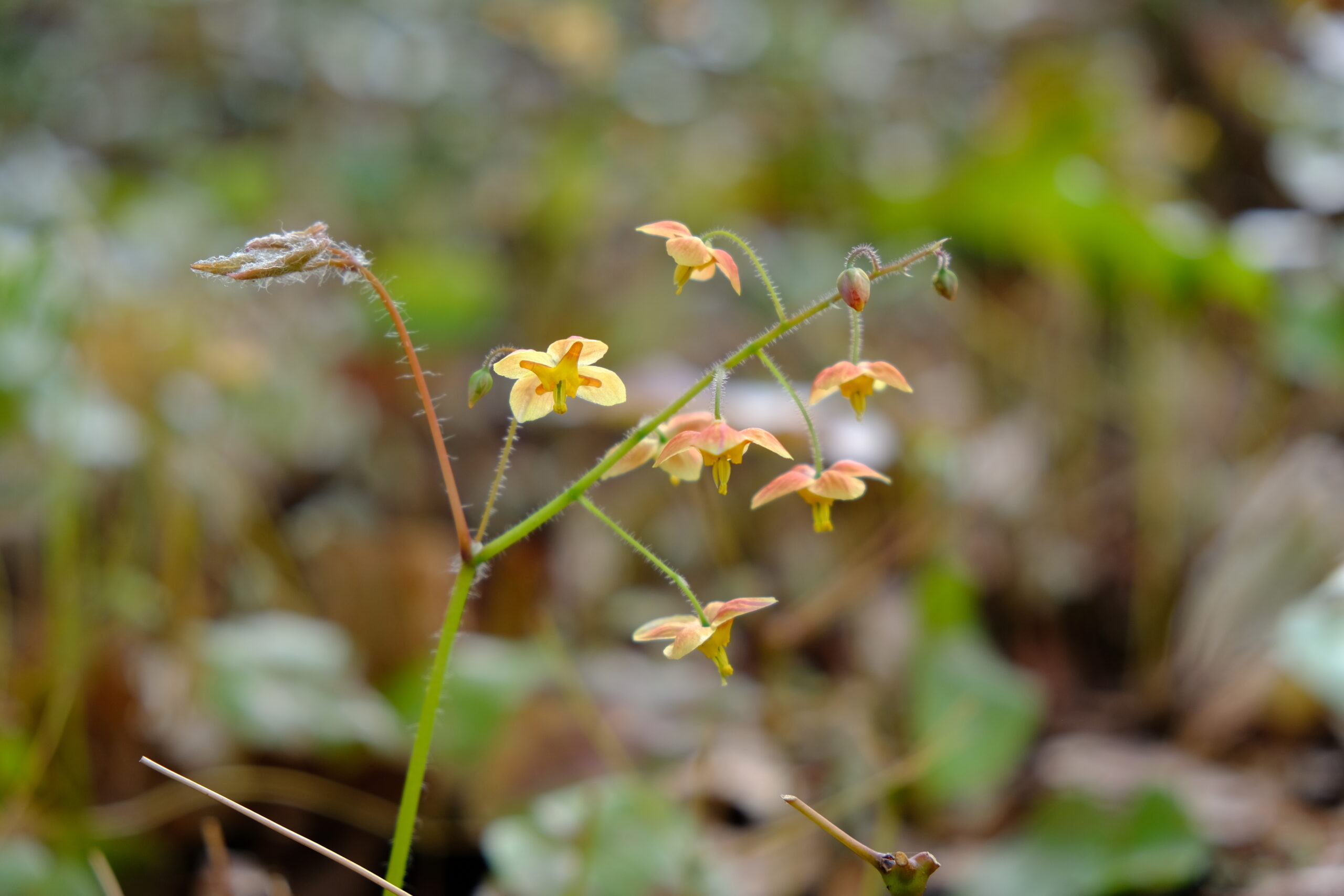
Epimedium x warleyense ‘Orange Queen’ (Barrenwort)

Bloom Time: March to June

Sun Requirement: Full Shade to Part Shade

Water Requirement: Medium

Wildlife: Bumblebees and small native bees

Tolerates: Tolerates dry shade

Native to North America: No

Zones: 4 to 8

Other: This groundcover features dainty orange flowers and heart-shaped leaves.

Location: Dogwood Garden

Epimedium x warleyense 'Orange Queen'

Privacy Policy Sitemap Web design by Speak
Back to top