Tessa Jeffers Archives - Cheekwood
x icon Close
test

Flower Power in the Historic Mansion: Behind the Scenes with Laura Dowling and Her Team of Designers
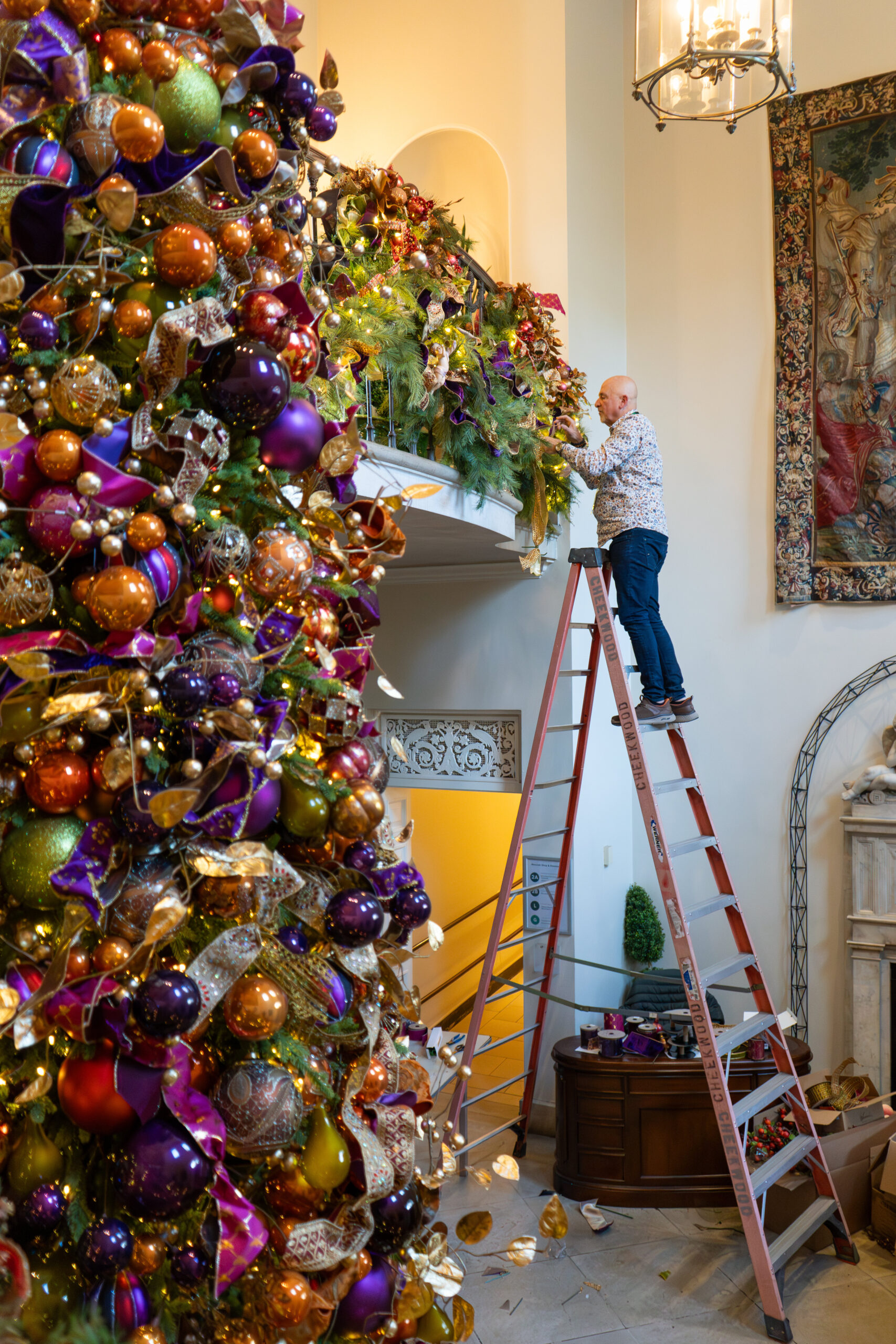
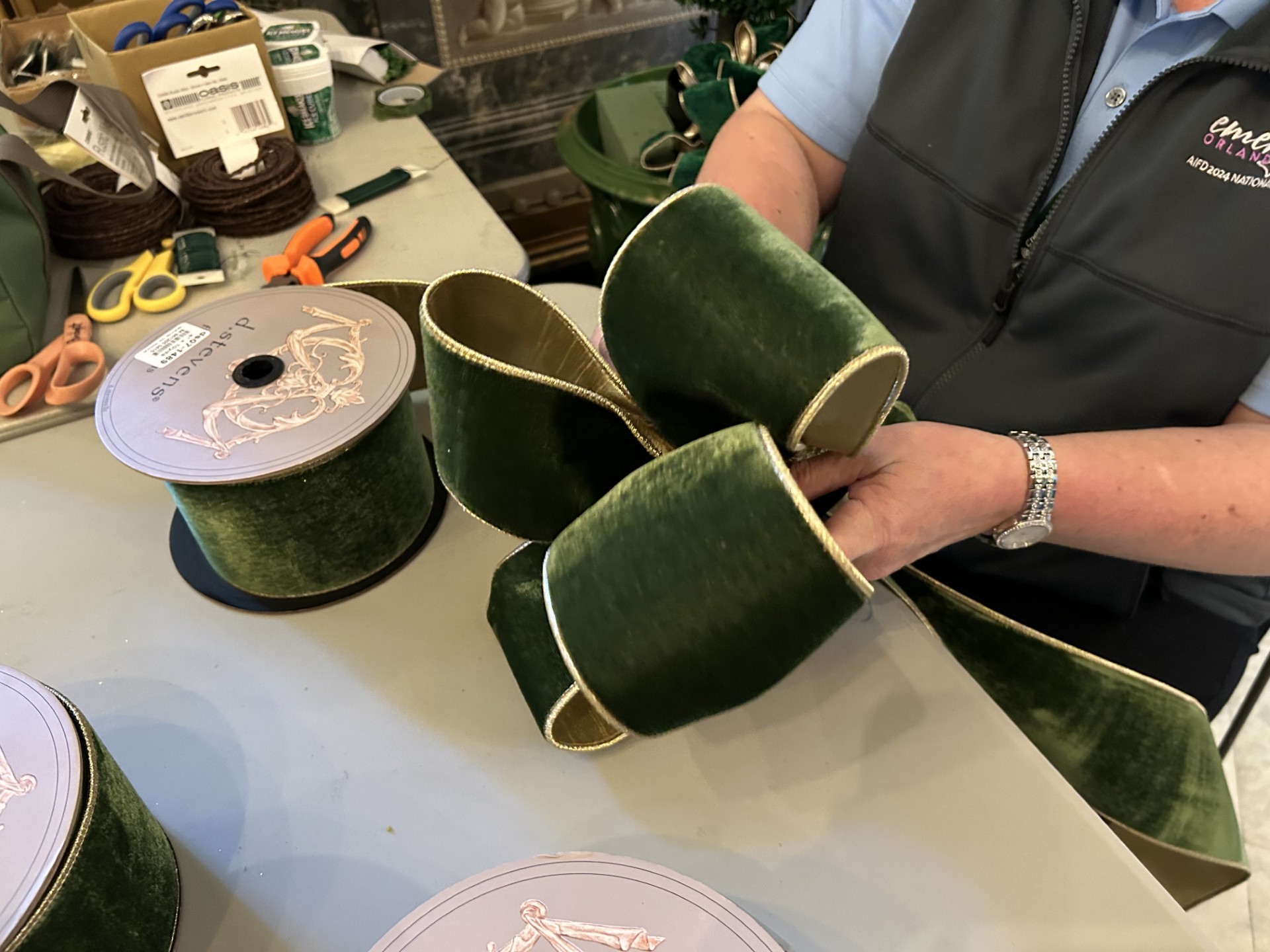
volunteer makes bow
A volunteer works on a bow for the decorations in the Cheekwood Mansion.
Featured Image above: A designer works on decorations in the Cheekwood Mansion.

Behind the closed doors of the Historic Mansion and Museum at Cheekwood Estate & Gardens is a flurry of activity.

During the weeks leading up to the opening of the holiday festival, stacks of cardboard boxes packed with carefully selected ornaments, ribbons and trimmings fill every period room in the Mansion and flood into hallways.

A dream team of florists and volunteers – including Jim Marvin, legendary White House designer and creator of the Jim Marvin Collection – traveled from across the world to spend about a week in Nashville and bring a little extra flower power to former White House florist Laura Dowling’s vision for festive holiday decorations in the Mansion.

Robbie Honey made the trek from London, Mandy Barkley and Ace Berry came from Texas, Anje Williams and David Parker made the trip from Louisiana, Bridget Joslin flew in from Arkansas, Sheri Dilley from Ohio and Ken Proctor traveled from Florida.

“We’ve been like kids in a candy store,” said Robbie Honey. “Opening up boxes and looking at different directions and bringing to life Laura’s designs. I hope the work will inspire a sense of wonder and joy.”

“Even though there are long days, you still have a great time, and you meet new people and create new relationships and learn new things about people from all across the world,” added Anje Williams.

Members of the team met Dowling at various speaking engagements, symposiums and conferences through the years and some worked with her when she was the Chief Floral Designer for the White House from 2009-2015. When Dowling invited them to assist with transforming nine spaces inside the Cheekwood Mansion, they all instantly said yes.

“It’s an opportunity that no florist in their right mind would resist,” said Mandy Barkley.


With a theme of “Gifts of the Garden” Dowling’s handcrafted holiday décor will celebrate the rich history and beauty at Cheekwood and prominently feature ornaments designed by the man behind decades of White House holiday celebrations, Nashville resident Jim Marvin.

“This is a very special place,” said Marvin, who worked as a floral designer in the White House from 1996 to 2019. “We have great opportunities to do things all over the country, but when I got the chance to come back home, I thought it was really spectacular.”

Each designer and volunteer on Dowling’s team brings a different skillset and background to the project.

Ken Proctor was an elementary school principal for 30 years, and after he retired, he turned his attention to his passion for floral design.

Ace Berry previously worked in a Texas oil field before embracing his interest in flowers. He was also the runner-up on the floral competition reality show “Full Bloom,” on HBO Max in 2020.

Anje Williams turned her love of flowers into a second career after working in accounting for years.
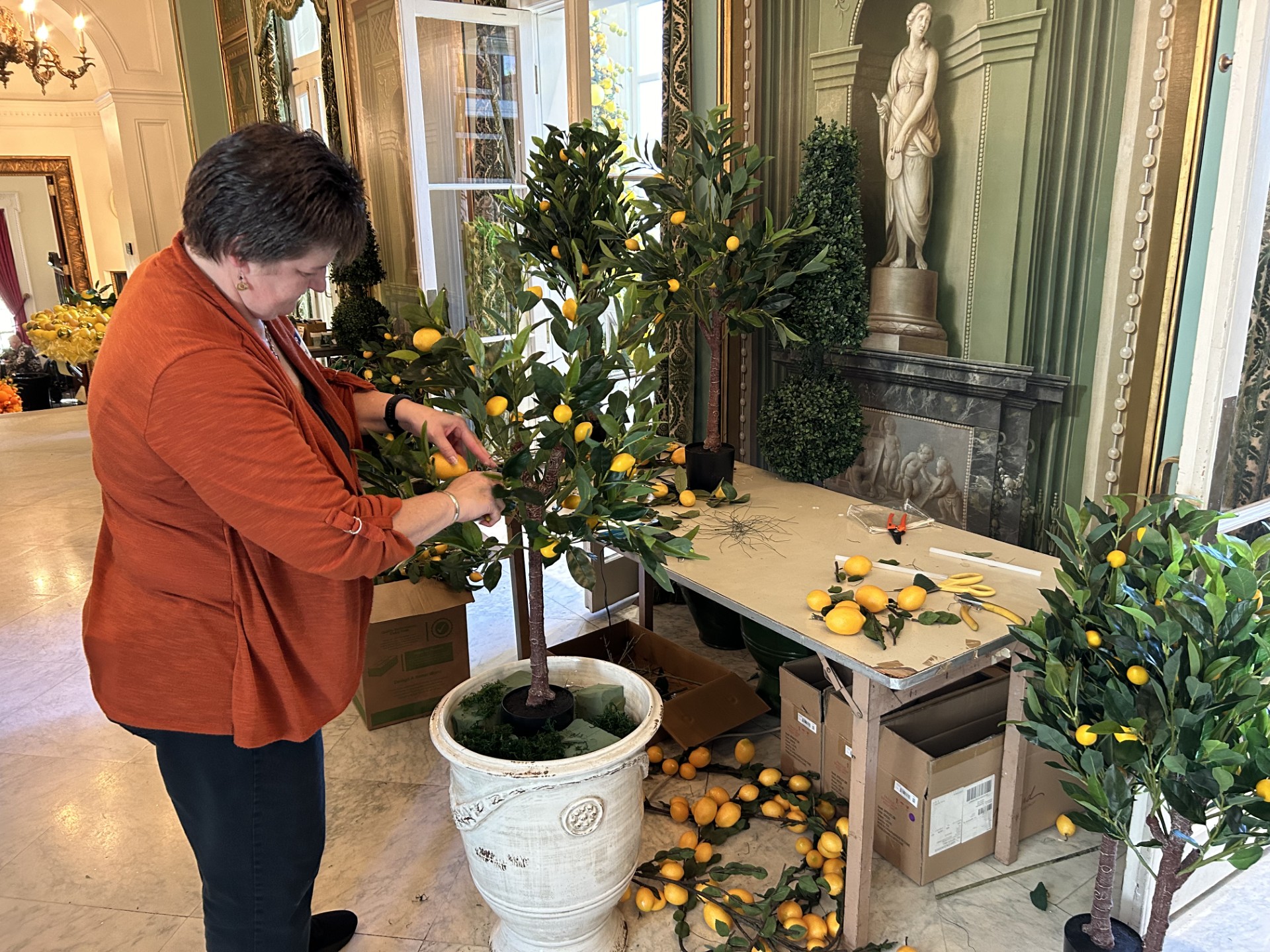
volunteer works on design
A volunteer works on decorations in the Cheekwood Mansion.
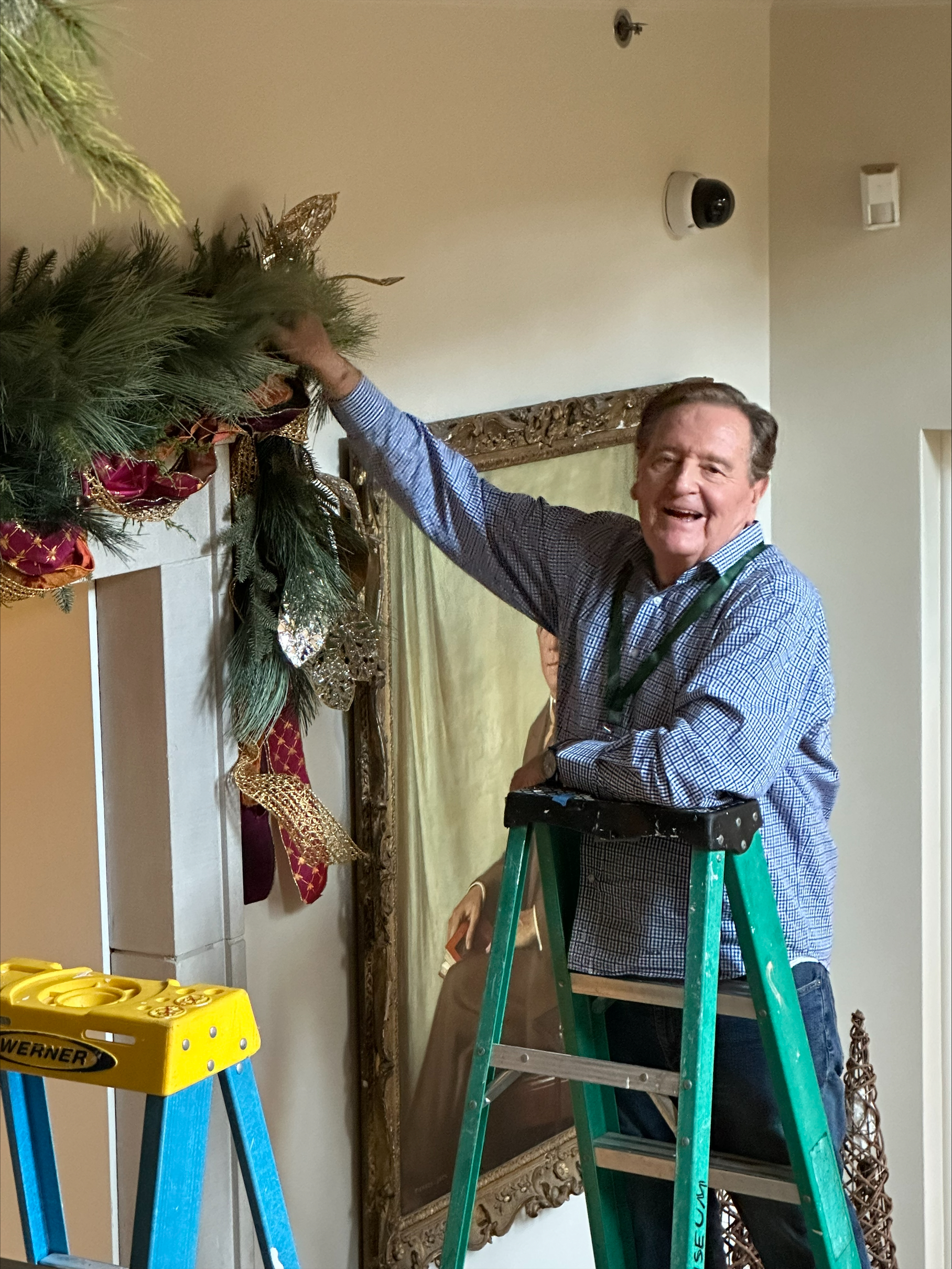
Jim Marvin 1
Jim Marvin, legendary White House designer and creator of the Jim Marvin Collection, shows off decorations in the Cheekwood Mansion.

Sheri Dilley said her job with the USA Today Network prepared her to handle the logistics of the design project.

“Basically, what I am doing is getting every room prepared for the designers to be able to come in and immediately start decorating,” said Dilley. “That means taking thousands of ornaments and ribbons and foliage and unpacking it and working with the volunteer team to get everything set up.”

Each designer’s passion for the project and attention to detail is palpable. The newly formed flower family gelled instantly, and the process of bedecking the Mansion with holiday cheer has been filled with collaboration and camaraderie.

“When it is a big install like this, you have to be willing to do whatever,” said Berry. “There will be times you will get pulled for this or that, and you have to be willing to roll with anything and switch gears instantly.”

While there is still more work to be done, as colorful wreaths begin to take shape and ornaments and ribbons adorn trees, excitement continues to build. The designers can’t wait for guests to come to Cheekwood to see the finished product.

“I think they are going to be completely blown away by what they see,” said Proctor. “I hope it keeps them coming back to Cheekwood, which is an amazing property.”

“I think the initial reaction will be awe,” said David Parker. “But what I hope they get out of this is really digging into these installations and absorbing the layers and layers of décor. Each design tells a story.”

“I want everyone who comes to Cheekwood to feel inspired,” said Bridget Joslin. “I hope they take away ideas to decorate their own homes.”

“I think they will be enlightened by the colors,” said Jim Marvin. “They won’t want to miss it!”

Guests are welcome to tour the Mansion during the day or in the evening during Holiday LIGHTS. Holiday LIGHTS opens on November 22 and runs until January 5, 2025.
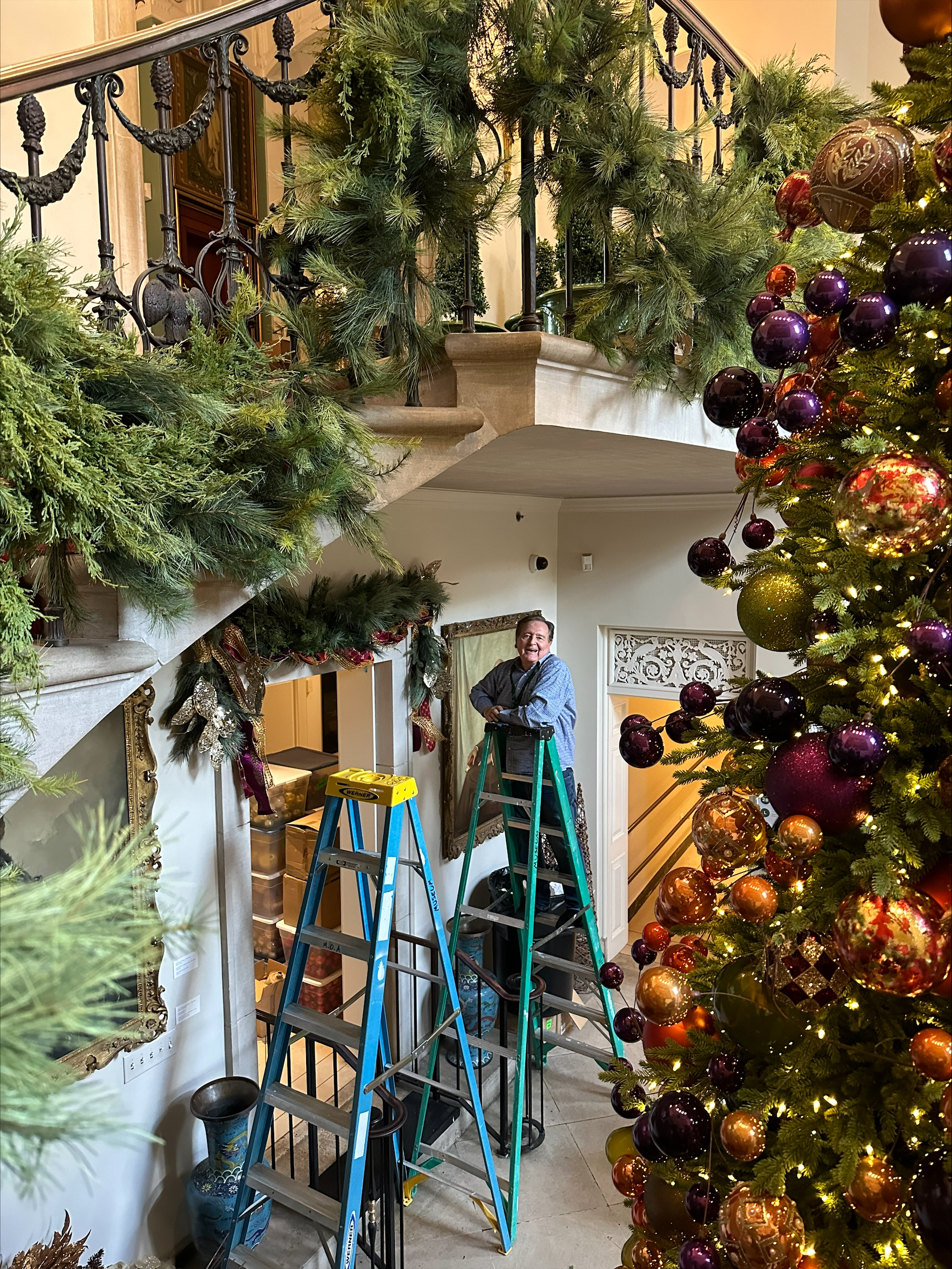

Jim Marvin 2
Jim Marvin, legendary White House designer and creator of the Jim Marvin Collection works on decorations in the Cheekwood Mansion.
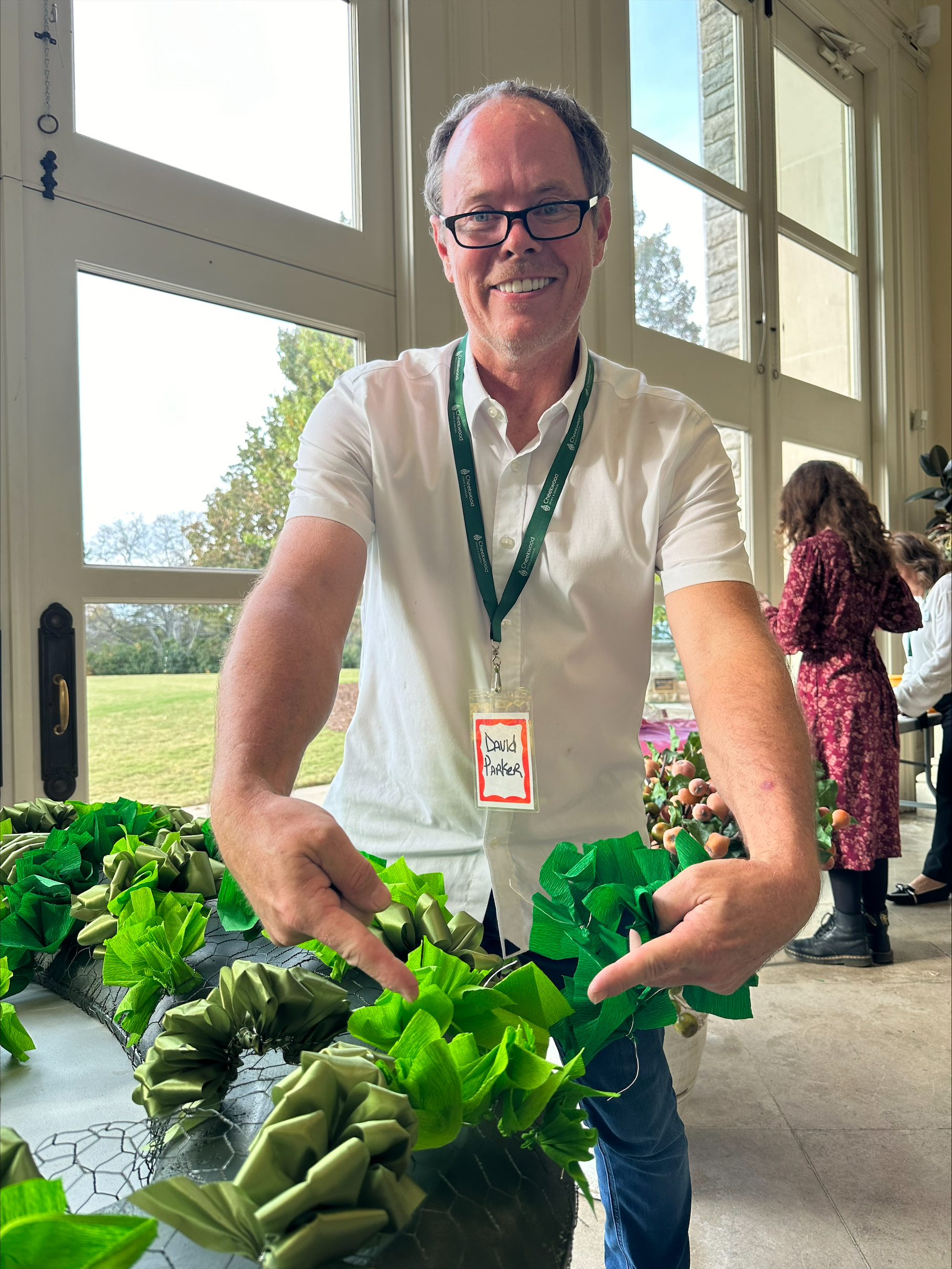
David Parker
Designer David Parker shows off decorations in the Cheekwood Mansion.
test

Destination Cheekwood School Field Trips: Growing In the Gardens

Image 3 Field Trip
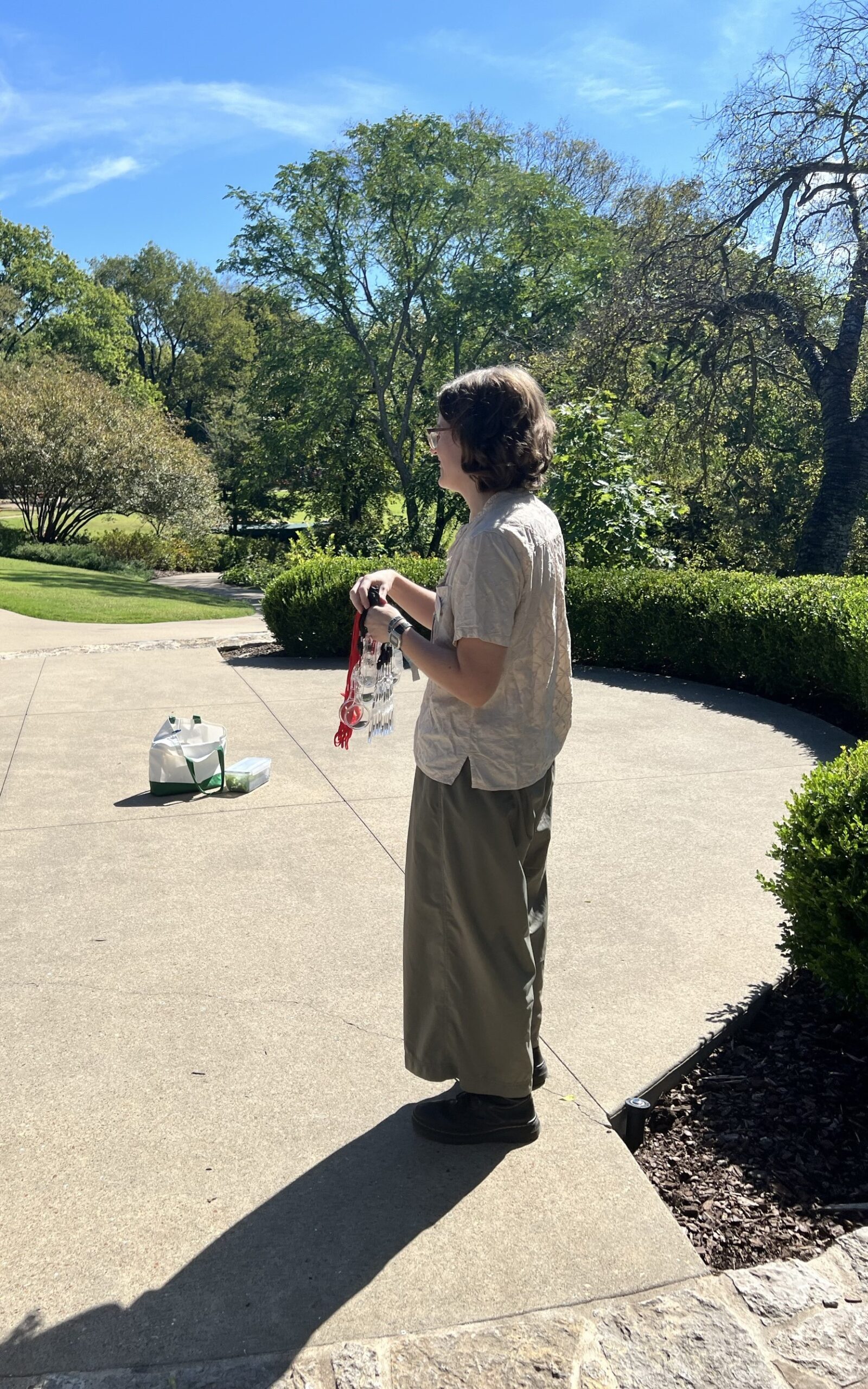
Cheekwood School Programs & Outreach Coordinator Kelly Ann Graff hands out magnifying glasses.
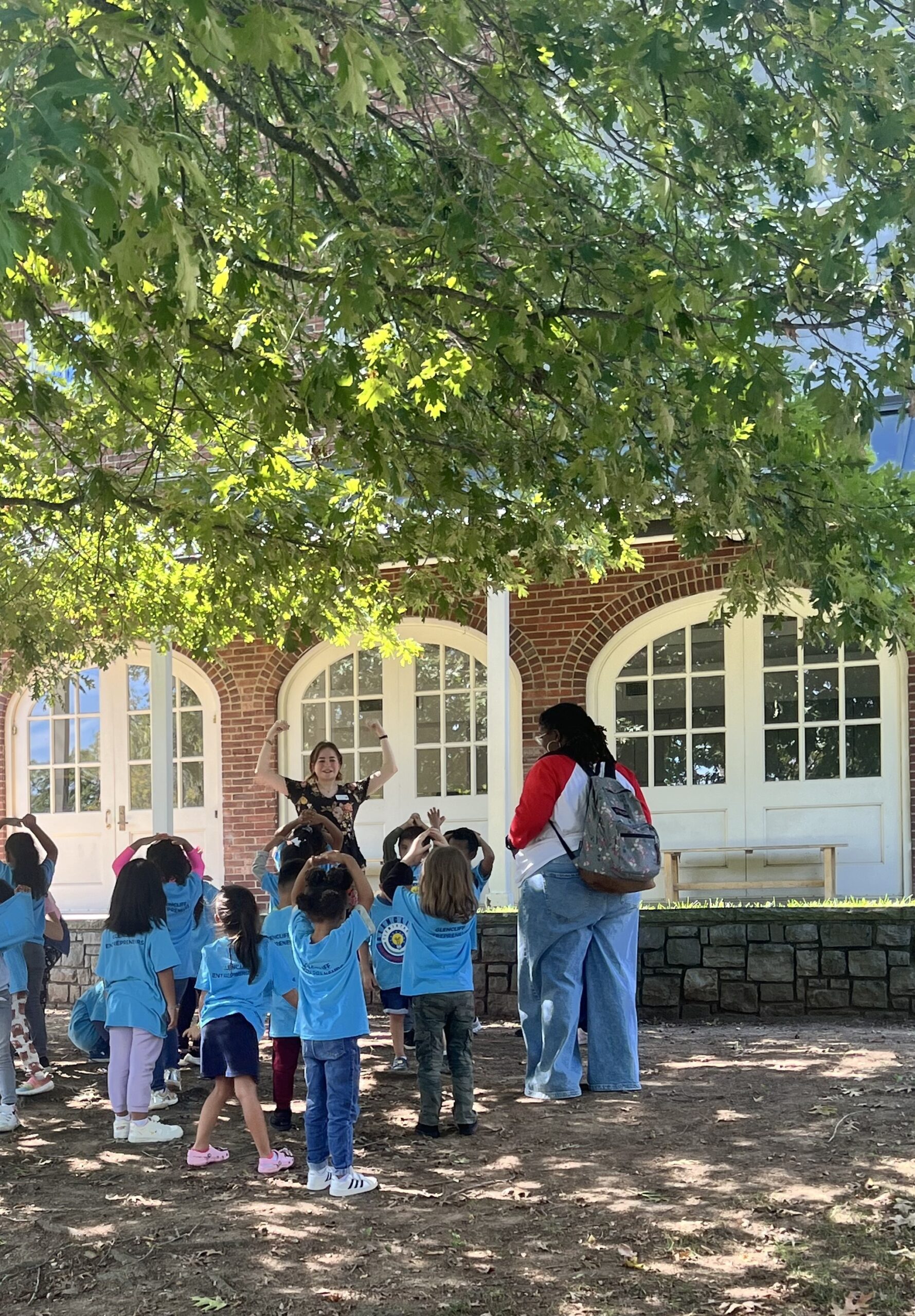
Featured Image above: Students from Nashville’s Glencliff Elementary School learn a song about the parts of a plant while on a field trip at Cheekwood.
Image 2 Field Trip
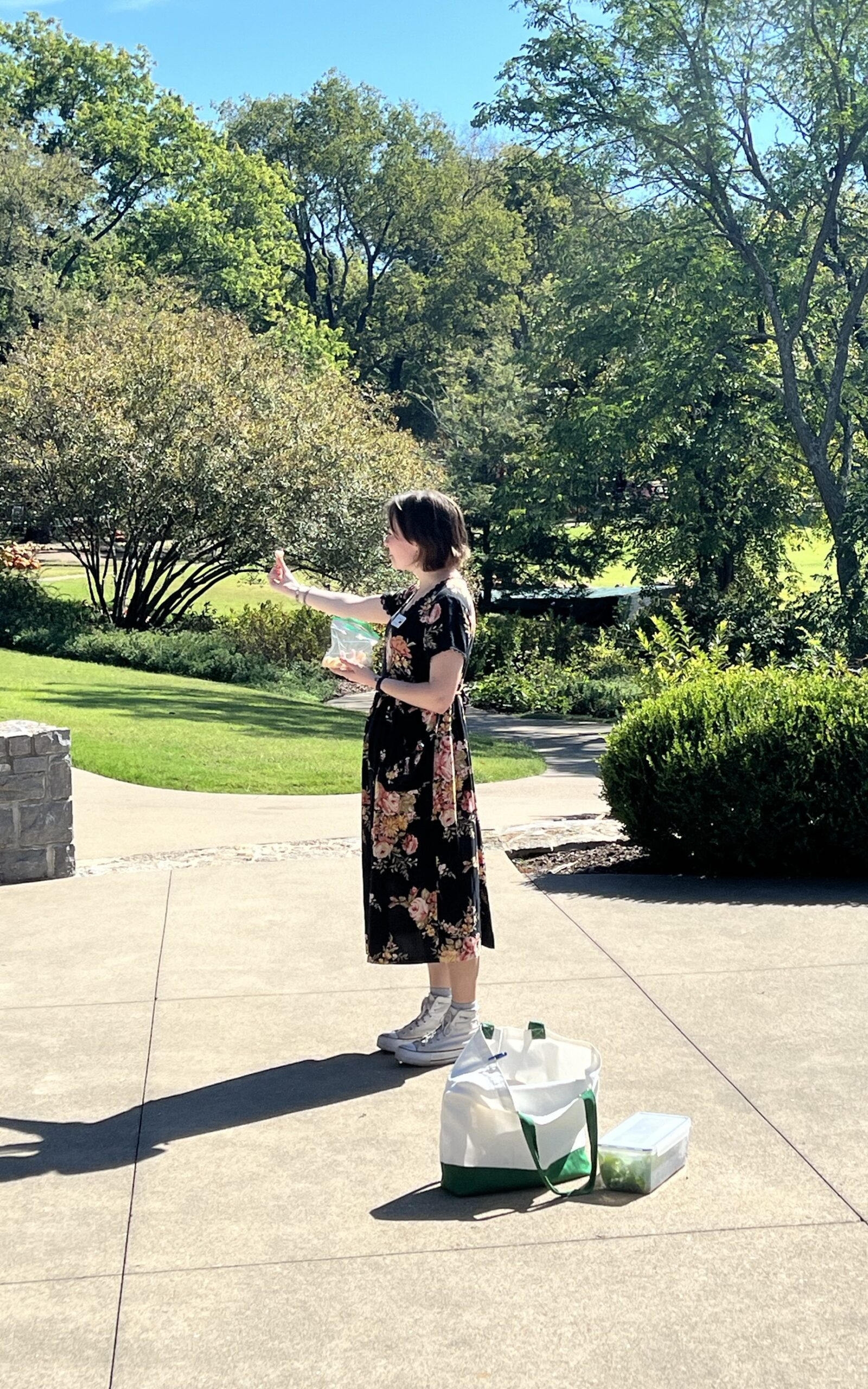
A Cheekwood educator explains how lima bean seeds grow.

The sun is shining brightly on a beautiful late summer morning at Cheekwood, setting the perfect scene for an exciting adventure. As 80 kindergarteners from Glencliff Elementary School hop off school buses, their faces light up with anticipation on this fun Friday: Life is good – they are on a field trip!

Every year, Cheekwood welcomes between 10,000 to 12,000 students from Tennessee, Northern Alabama, and Southern Kentucky through the Destination Cheekwood School Field Trips program. This initiative offers free admission to all students and teachers, with the goal of giving children from pre-K through 12th grade the opportunity to spend a day in a stunning outdoor classroom, surrounded by nature and botanical gardens. Led by trained educators, the children experience the Bracken Foundation Children’s Garden, ponds, waterfalls, and even a Pumpkin Village this time of year.

On this particular field trip, the young explorers delve into the fascinating world of plants. Specifically, the various parts of a plant and what they need to grow from a seed into a thriving, living thing.

A Cheekwood educator, holding a handful of magnifying glasses, asks, “Does anyone know what these do?”

“They help us see better,” a little boy eagerly replies.


As the teacher distributes the magnifying glasses along with a lima bean seed to each child, she explains the parts of the seed. First, is the seed coat, or the outer layer that protects a seed embryo from the outside environment. The teacher explains how a seed coat is like a winter coat that we wear when it’s cold outside.

Then the teacher encourages the students to do some dissection. As they peel off the seed coat to find the inner parts of the seed, they see a bump inside – the food source. “This bump holds food for our seeds,” the teacher explains. “It’s how they get the energy to grow.” This little bump is like a stomach for the seed, which will grow into a plant if given soil, water, sunlight, and air.

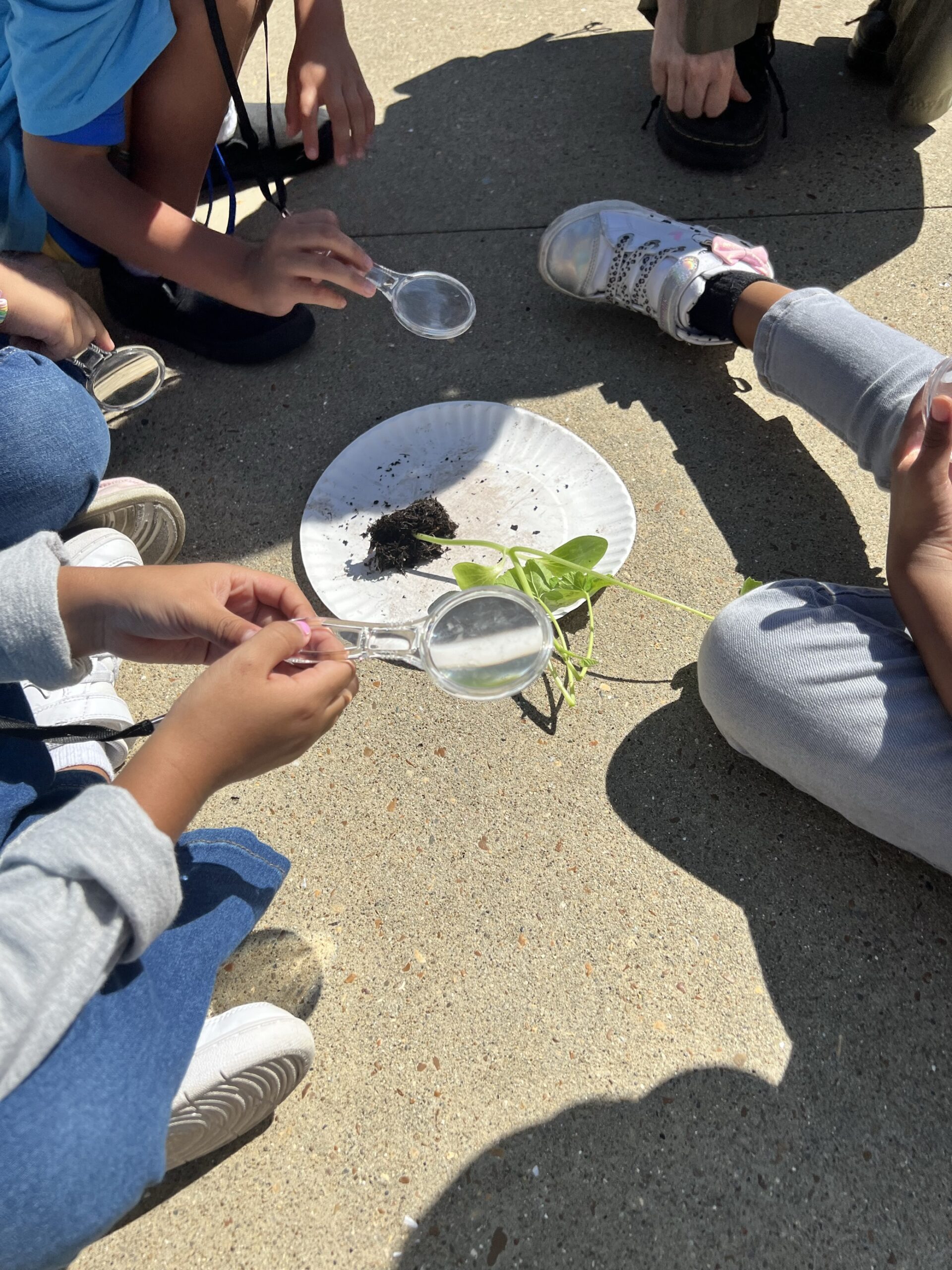
Next the children learn about a plant’s roots, the stem, and leaves by examining a seedling that had sprouted in soil. Cheekwood educators describe how the roots, resembling white hairs or tiny strings, act like little tubes that carry water through the plant. It’s like the plant is taking a long drink of water, through a straw, straight from the ground. When a plant drinks water and receives enough nutrients, it sprouts leaves, flowers, fruits, and vegetables.


Image 4 Field Trip
Kindergarteners examine the roots of a plant with magnifying glasses.

After playing in the dirt and taking a journey through the life cycle of a plant, the children learn a song about the parts of a plant. They begin the song crouched near the ground as if they are seeds, then stand up as their “stems” grow tall, extend their arms to sprout their leaves, and flourish into flowers by reaching their hands high to the sky. The lesson concludes with this playful activity highlighting the wonder of nature. It’s a moment to remember, perhaps inspiring more adventures on future visits to the gardens.

This is but a glimpse into what happens on a school field trip at Destination Cheekwood. Other topics include learning about pollinators and animal ecosystems, how trees communicate, multiculturism in the Blevins Japanese Garden, and much more. Field trip topics vary according to age group; some older students tour the Ann & Monroe Carell Jr. Family Sculpture Trail and learn about art, while others might tour the Mansion and learn about the history of Cheekwood. Every field trip curriculum meets state standards and is led by trained educators.

Cheekwood welcomed 11,915 students from 153 schools and 25 Metro Council Districts last year, thanks in large part to the annual Fall for Cheekwood benefit, which raises funds specifically for free school field trips. To learn more about this fall festival on October 6, click here.


test

The Living Art of Bonsai

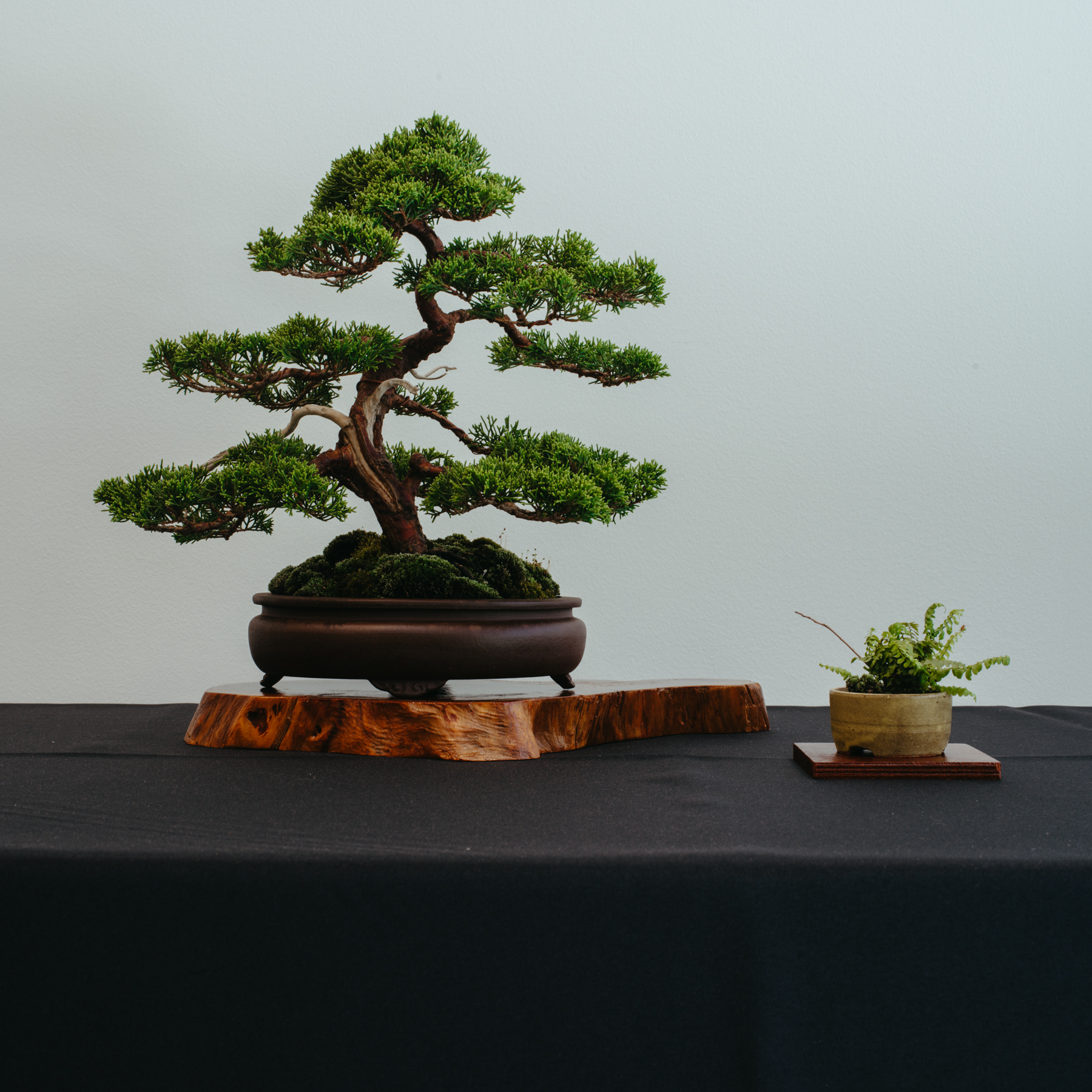
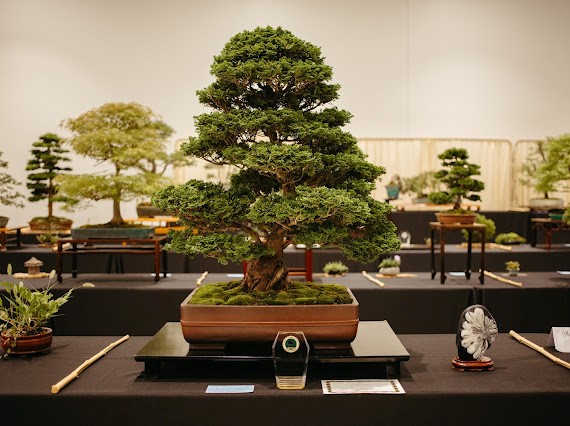
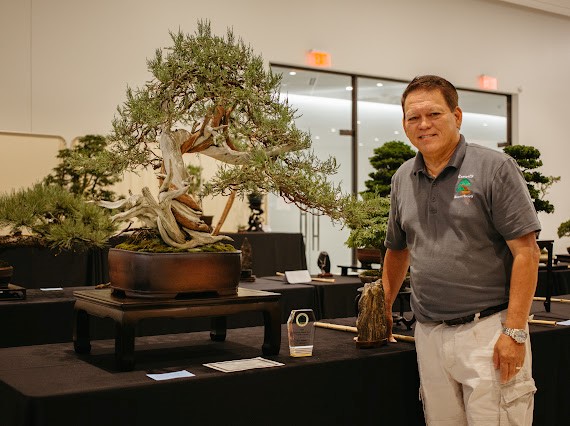
People’s Choice Award- Hinoki Cypress
People’s Choice Award – Hinoki Cypress. Photography by Bradley Spitzer
Featured Image above: Photography by Bradley Spitzer

Walking through a miniature magical living forest of meticulously manicured bonsai trees stops you in your tracks in a most fascinating way.

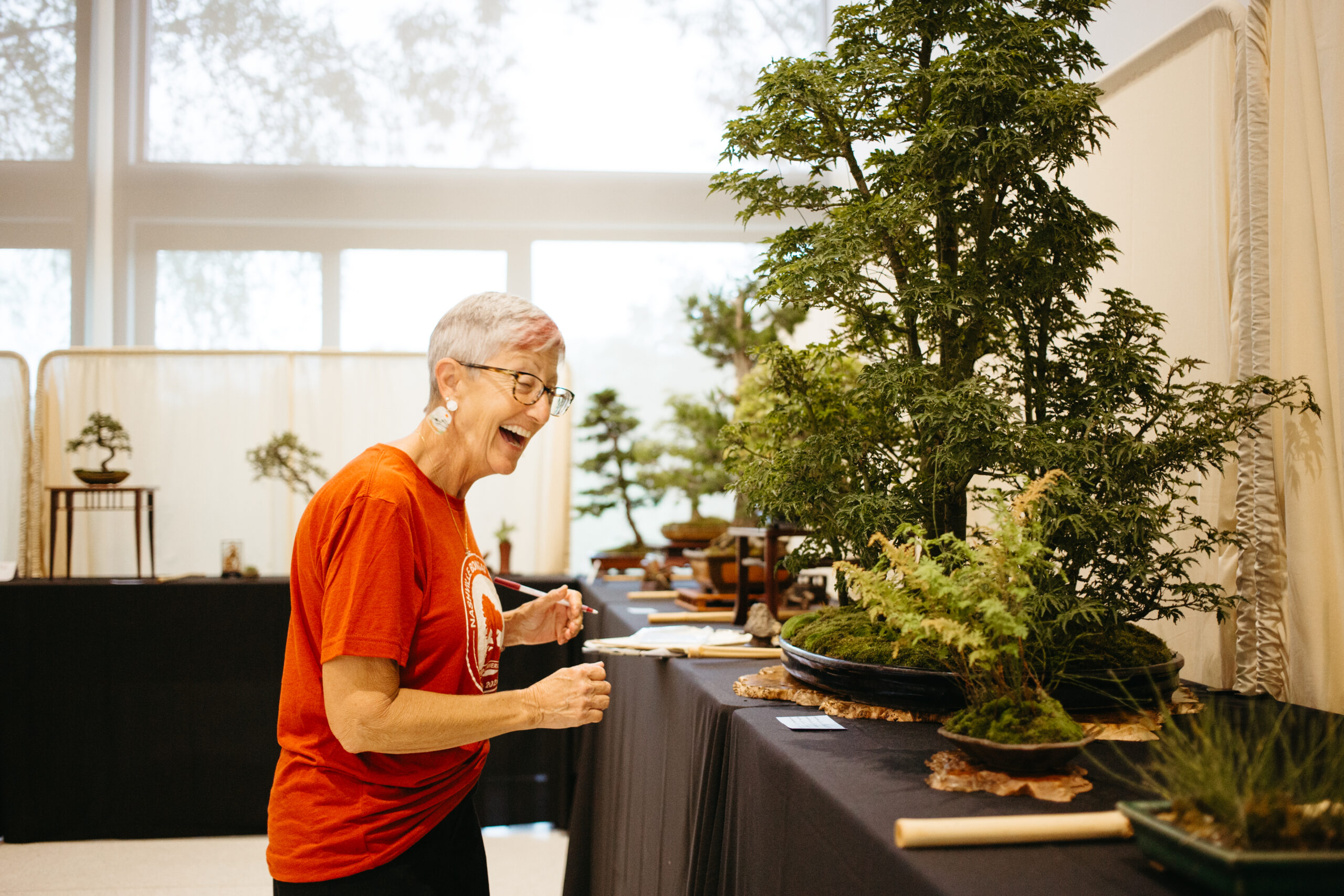
In July, Cheekwood’s Massey Hall was filled with more than 50 pristine potted dwarf plants – an intriguing sight, offering a diorama-like view of dynamic and exotic specimens, from deciduous to conifers and even tropical trees.

After an impactful first impression of so many beautiful bonsais in one place, it’s only natural to want to learn about and get a closer look into the fascinating world of bonsai.

The Nashville Bonsai Society (NBS) welcomes all levels of bonsai tree enthusiasts to their show, from novices to those who have passed trees through generations of family members over many decades. It’s an annual affair, but this was the NBS’ first time hosting a Statewide Bonsai Show, featuring 56 judged displays of bonsai specimens from Memphis, Nashville, Chattanooga, and Knoxville Bonsai Clubs. In addition to the stunning displays, there were live demonstrations, workshops, and vendors offering trees, stones, pots, and accents.


Bonsai history is rich, steeped in tradition and technique, and the practice is complex. There’s a lot to appreciate and learn. “Ultimately, it’s just really fun,” says Sara Hopson, President of the Nashville Bonsai Society.

“It’s like a representation of nature in miniature,” she says. “You’re actually trying to imitate nature, so the closer you can reflect in a small container what you see in nature, that’s kind of the whole essence of the art and everything that comes with it.”

In Japanese bonsai, the emphasis is on the tree. The viewing stones, accent plants, and other elements are all to enhance the tree – nothing is to take away from it. The passion that drives bonsai gardeners is not only enjoying the horticultural practice, but also having a genuine affinity for Japanese culture, history, innovation, and the community.

“We refer to ourselves as ‘treeple,’” Hopson says of the 130 active members in Nashville’s Bonsai club. In 2025, the gardening friends who make up Nashville Bonsai Society are celebrating 50 years since the club was founded in 1975.

Sara Hopson President 1
Sara Hopson, President of the Nashville Bonsai Society. Photography by Bradley Spitzer

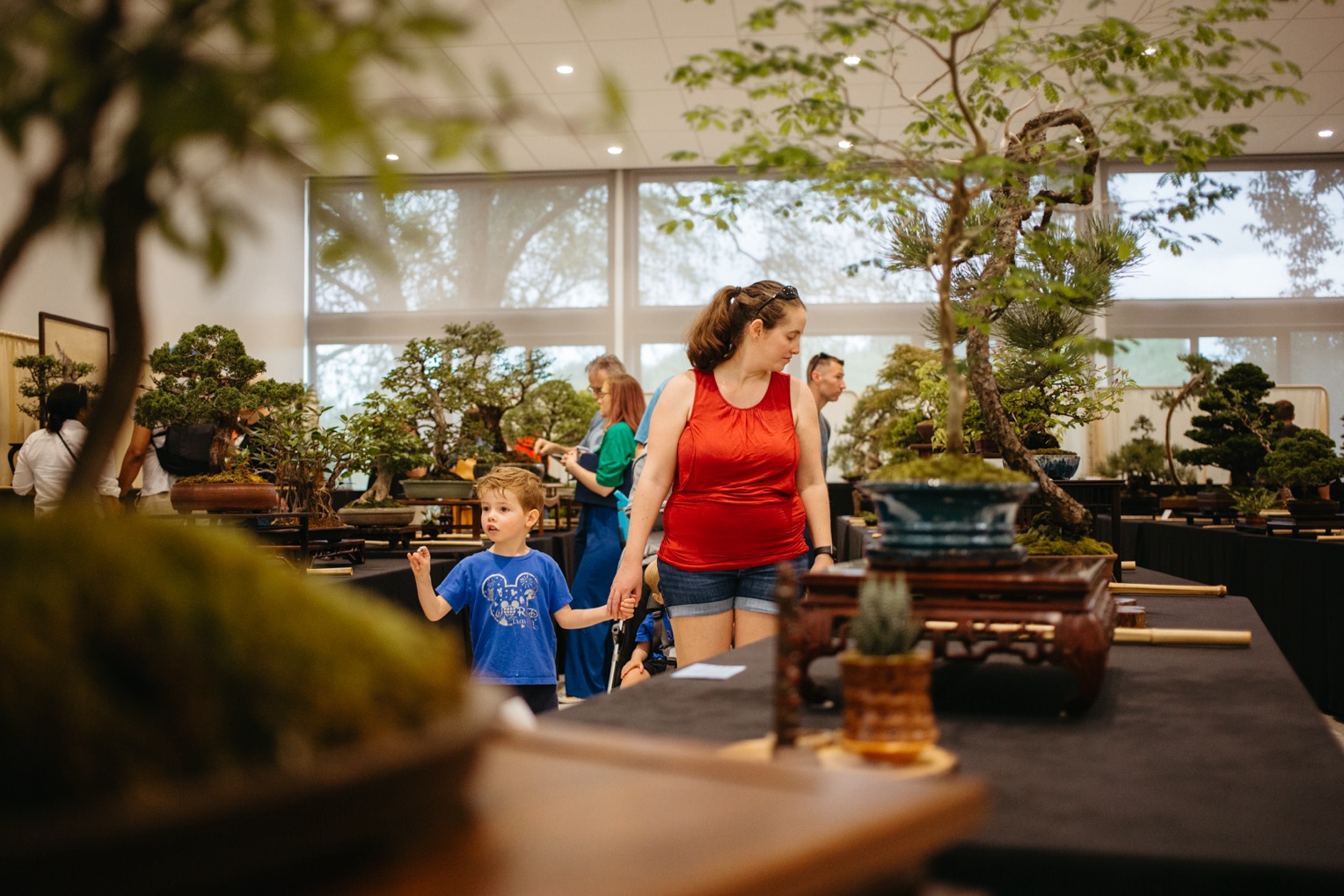
Bonsai Show Crowd 2
Photography by Bradley Spitzer

The term bonsai translates to dwarf trees in a container, using a tray-planting method for growing. The origins of bonsai technique date back thousands of years, anywhere from 4 to 700 BCE. Initially it developed as a native tradition integral to the Chinese Empire. The Chinese practice penzai imitated entire landscape scenes in nature in a controlled environment. The tradition later reached Japan through war times, and Japan embraced the art of bonsai and innovated it to incredible levels, with a focus on the tree. The technique was introduced to the West much later, in the 1940s after World War II.

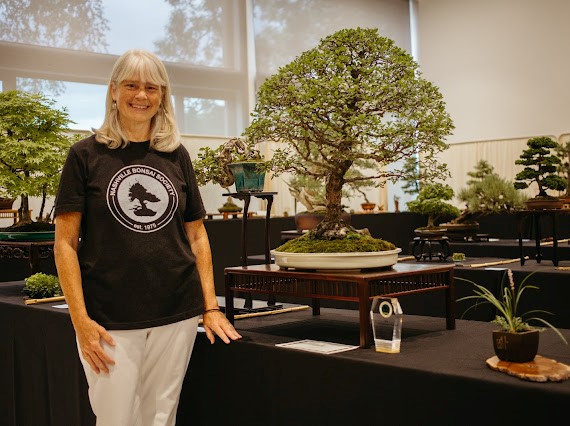
Japanese horticulture is generational, with family elders passing trees and knowledge to younger members. It’s part of daily life. The local Nashville club embodies these traditions. Hopson first took up the hobby with her adult son in 2017 as a refreshing way to spend time together. Club member Carolyn Evans, whose father was a founding member of the Nashville Bonsai Society, inherited his extensive collection and presides over the care of his trees as well as her own. At this year’s show, Evans won the “Best Deciduous” award for her Chinese Elm.


Best Deciduous Award, Chinese Elm with Carol Evans.
Best Deciduous Award, Chinese Elm with Carol Evans
Photography by Bradley Spitzer
Best Display Award, Rocky Mountain Juniper with Dat Tran
Photography by Bradley Spitzer

A tree in a pot may sound simple, but the work put into maintaining a bonsai is not. Keeping bonsai trees alive and thriving takes extensive dedication, cultivation, and a certain level of horticultural knowledge of bonsai shaping, aesthetics, pruning, wiring, and repotting. An interesting fact to keep in mind: Bonsais are not genetically dwarfed, so any tree species can be used.

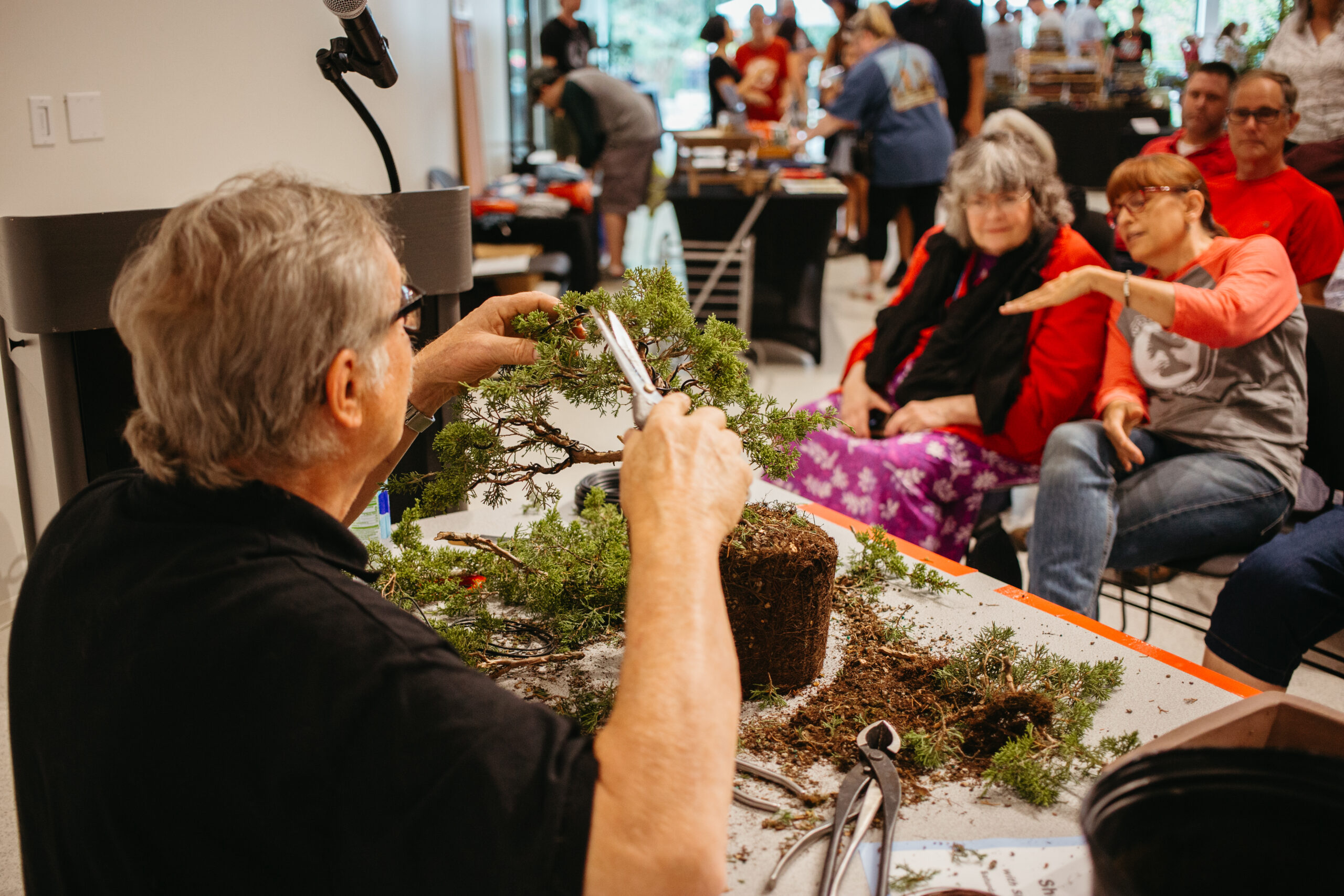
At Cheekwood’s 2024 Bonsai show, judge Brussel Martin of Brussel’s Bonsai Nursery in Olive Branch, Mississippi, gave a pruning demonstration and shared some fundamental tips for the bonsai-in-training. For those who are looking to pursue this hobby, Brussel’s four basic guidelines are charmingly accessible.

Brussel Martin’s Bonsai Proverbs:

  • “Cut the tips, that’s where you create energy.”
  • “It’s hard to overwater, err on the side of more.”
  • “Morning light, afternoon shade.”
  • “Straight tree, short life. Crooked tree, long life.”

Brussel Martin Bonsai Demo 1
Brussel Martin gives a bonsai demonstration.
Photography by Bradley Spitzer

Of course, this is only the beginning. There is endless knowledge to glean in the craft of bonsai, and the only bounds are your own imagination.

On September 15, the Nashville Bonsai Society comes together again at Cheekwood for the annual Japanese Moon Viewing Festival, Otsukimi.

Set in Cheekwood’s gardens, the special event celebrates Japanese culture, art, and horticulture. The Nashville Bonsai club displays trees at the event, gives pruning demonstrations, offers beginner bonsai workshops, and hosts kids’ activities. “We love giving back to the community,” Hopson says. “It’s such an inclusive day with so many activities going on. It is an outstanding event.”

At last year’s Japanese Moon Viewing, Nashville’s Consul-General of Japan, Shinji Watanabe, personally thanked the Nashville Bonsai Society for bringing an authentic touch to Otsukumi at Cheekwood.

“That was really a special moment for me,” Hopson says.

Next month, Nashvillians can experience the living art of bonsai in a one-of-a-kind setting under the Harvest Moon.

test

Ann Carrington’s Extraordinary Imagination

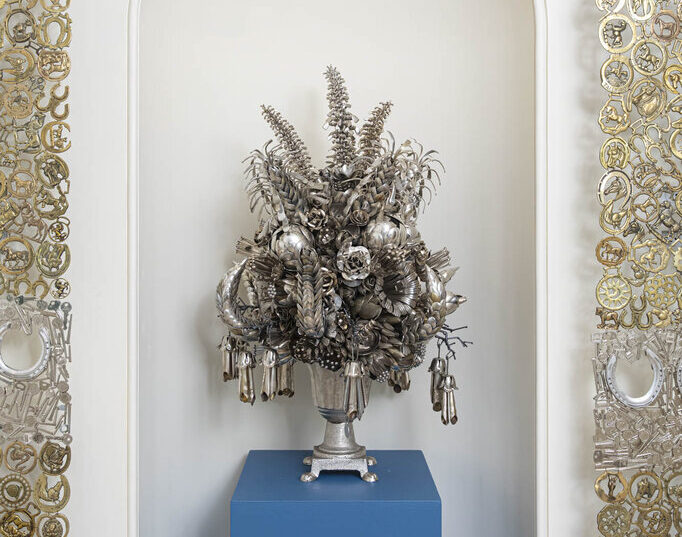
Shomu-en
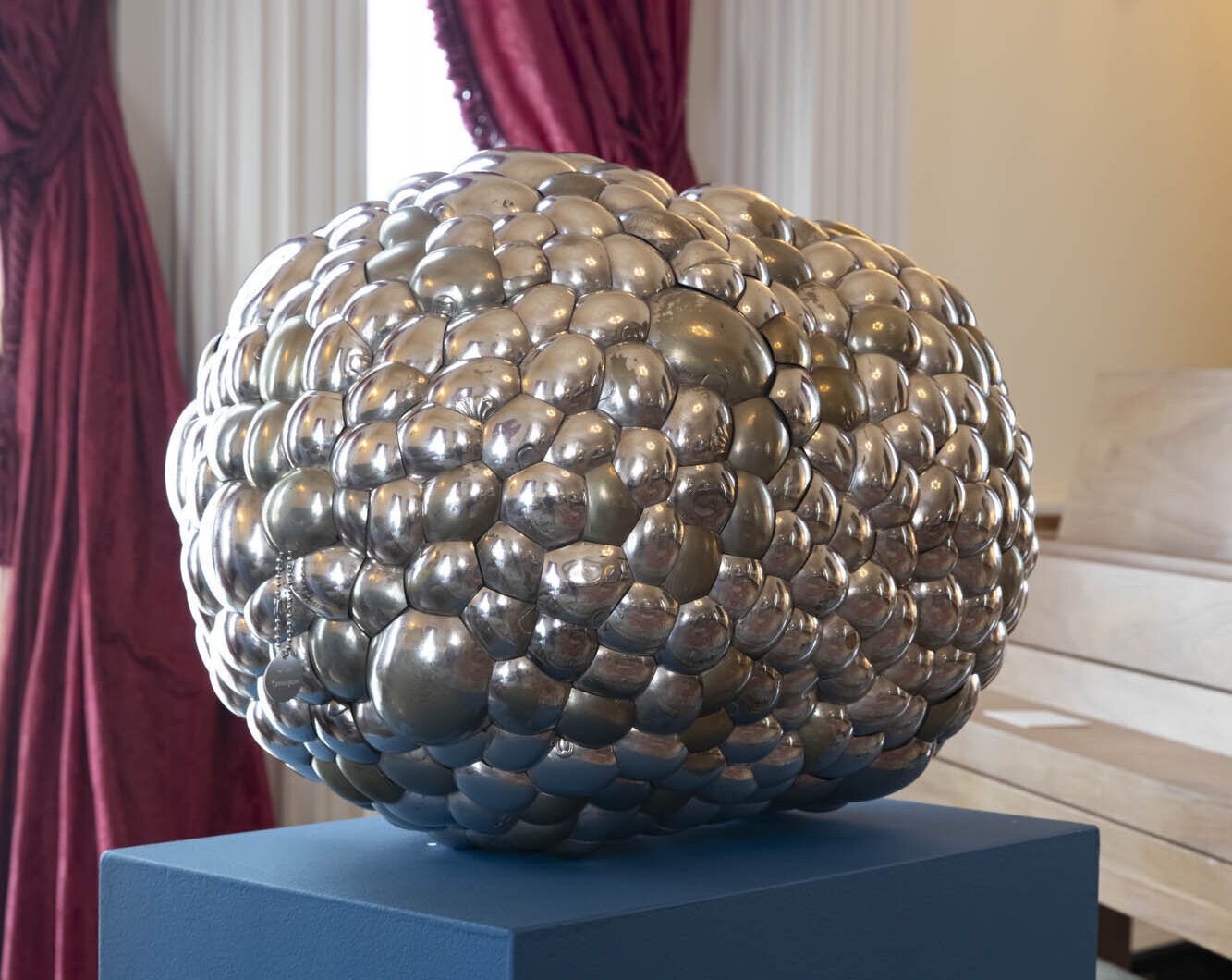
Ann Carrington (b. 1963). Shomu-en, 2023, silver, nickel and steel plated cutlery. Photography by Sam Angel.
Featured Image above: Ann Carrington in her studio. Photography by Alexa Clarke Kent.

Every morning, Ann Carrington wakes up ready to create. It’s been that way for the British artist since she was a young child.

“I just feel compelled, really, to make things. It’s just something that’s in my bones,” Carrington says. “When I was little, I enjoyed the process of starting with a flat piece of paper and being able to manipulate it into something amazing. I like people to be able to look at something ordinary, something you might see every day, and then be able to look at it with fresh eyes because I’ve made something with it.”

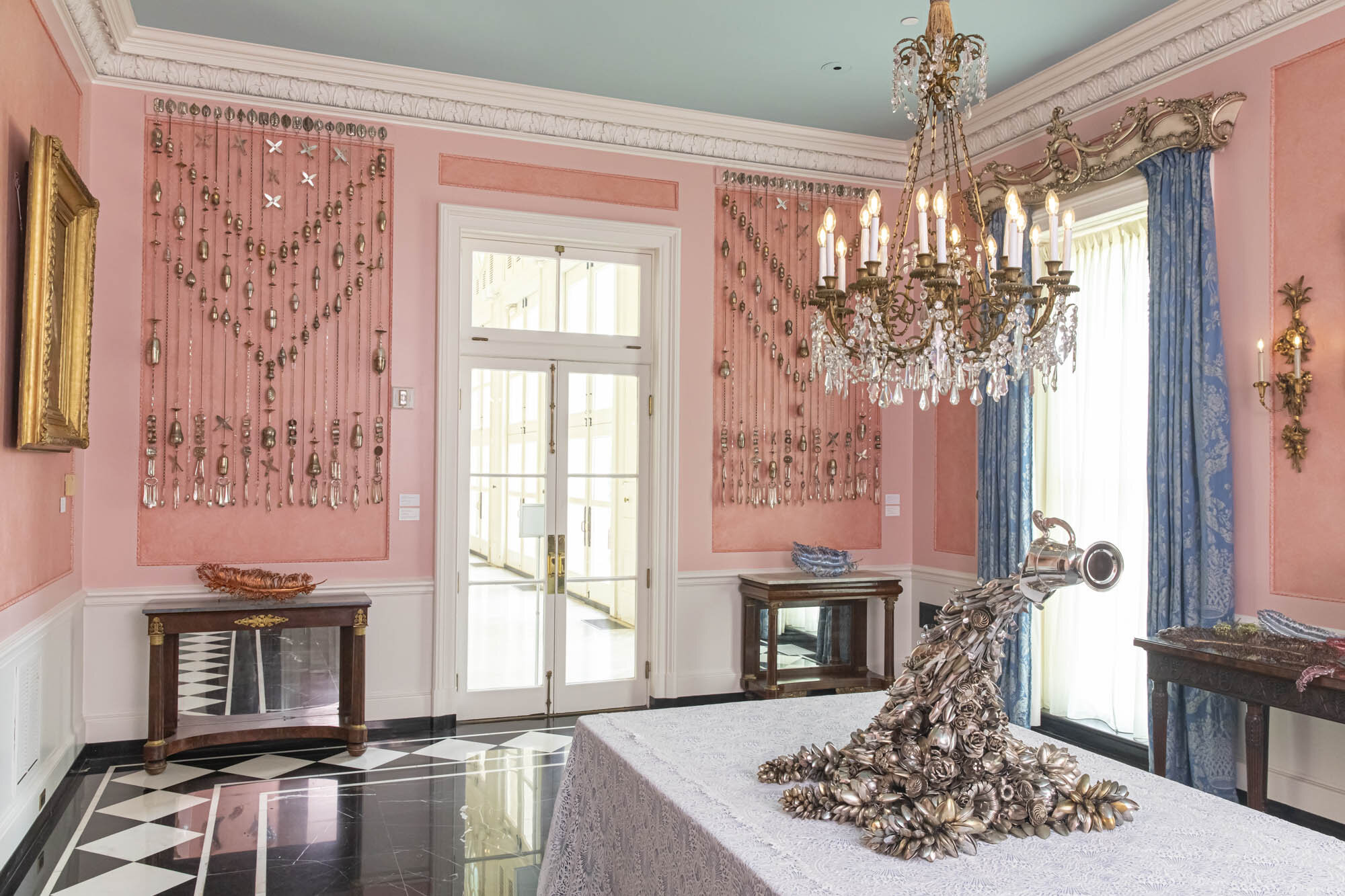
In the current exhibition at Cheekwood Estate & Gardens, INTERVENTIONS: Ann Carrington, Carrington brings a fresh approach and engages with the Historic Mansion in exciting ways, such as creating stunning, cascading metal bouquets of flowers from ordinary silverware.

The internationally known Carrington, who lives and works in Margate, England, has created artwork for the United Nations and the Royal Family as well as having works in the permanent collections of the Victoria and Albert Museum and Royal College of Art, among others. INTERVENTIONS is an arts initiative to activate the historic period rooms in Cheekwood’s Mansion. Now in its third year, the series invites renowned artists like Carrington from around the globe to imagine and implement a connection between their contemporary work and Cheekwood.

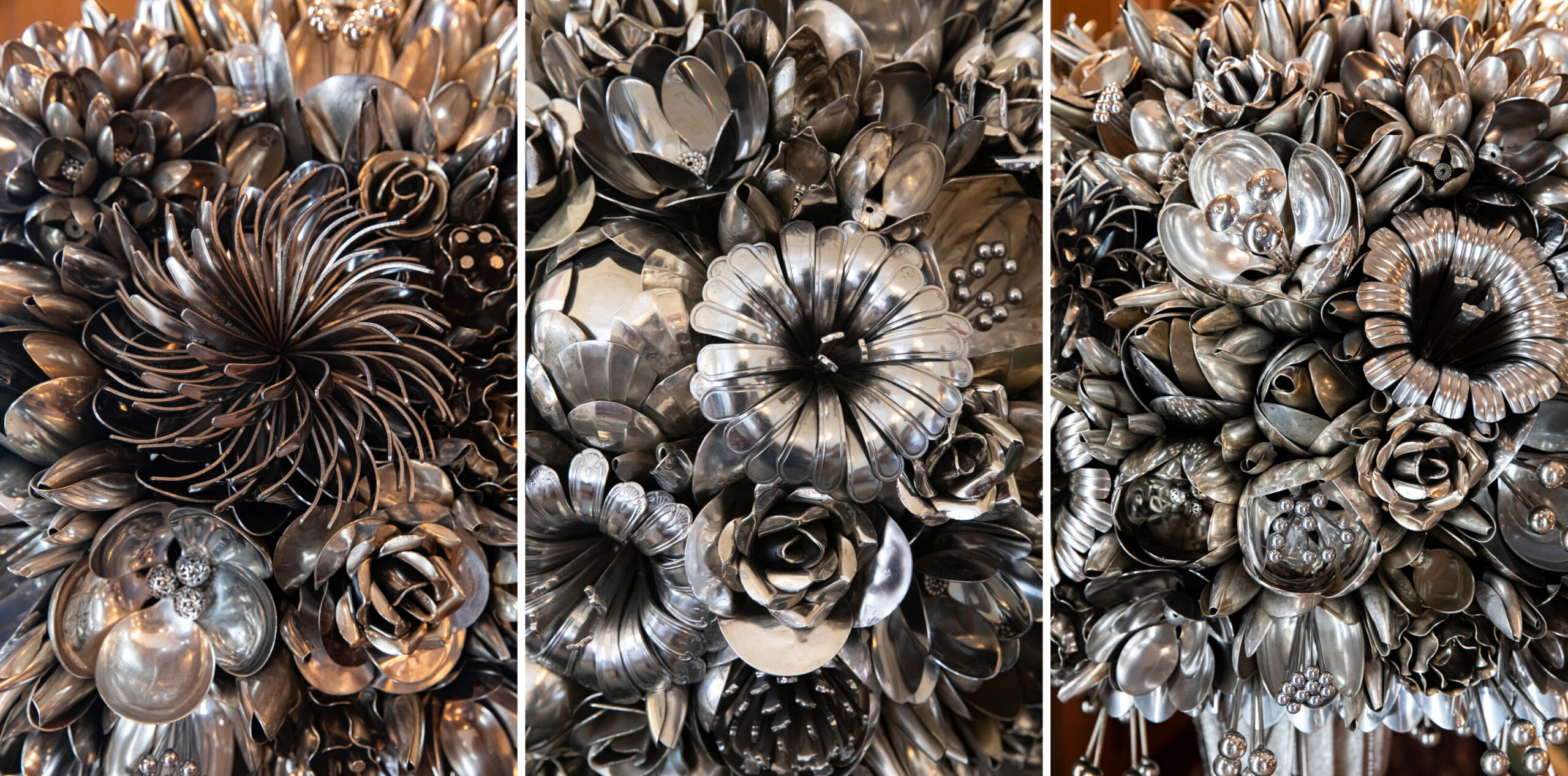
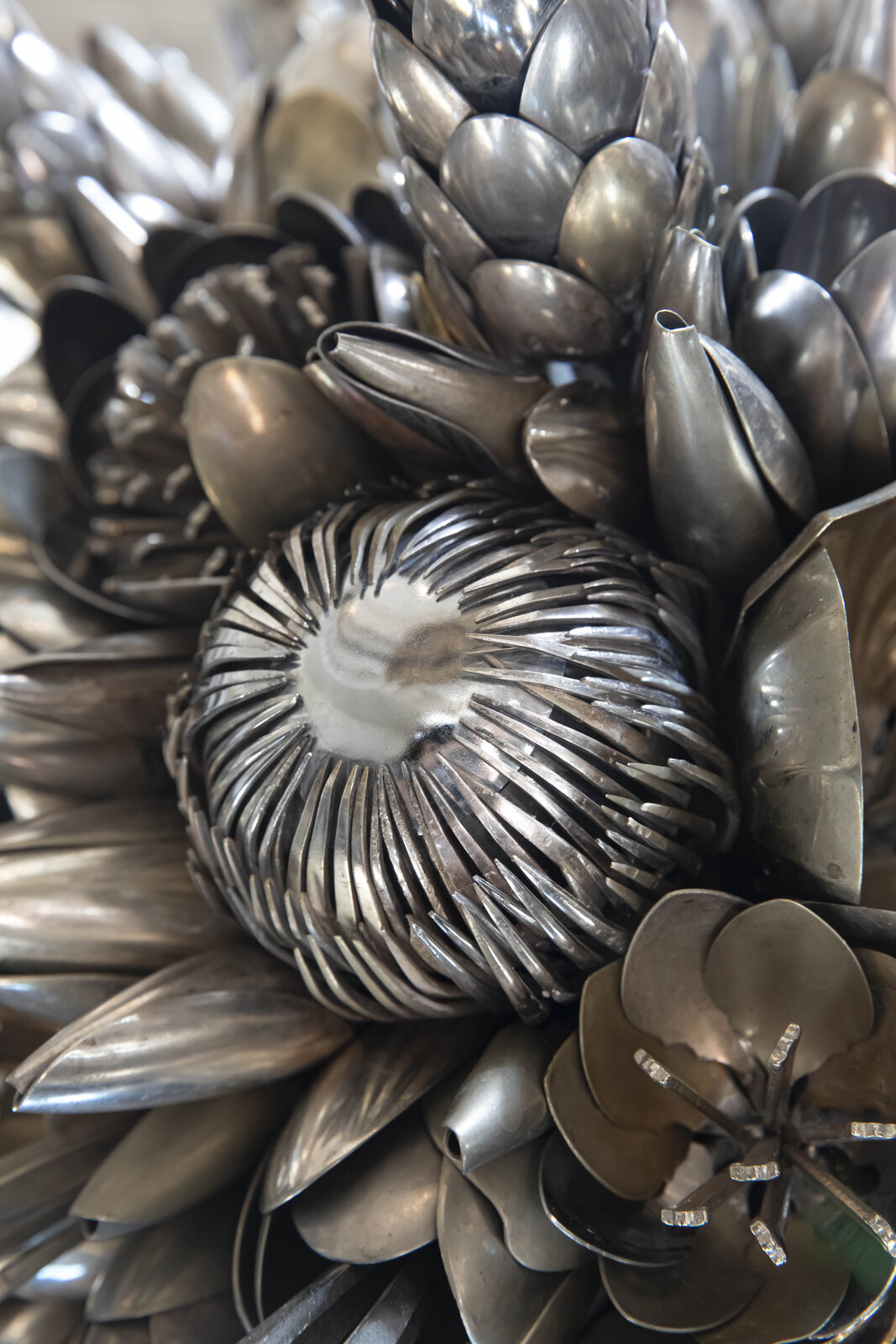
Carrington created bespoke bouquets inspired by the flora of Cheekwood’s 13 gardens, and remarkably, the flowers are made of silver, nickel, and steel cutlery. Carrington’s reimagined flowers include roses made of silver teaspoons; dahlias made of fork tines; viburnum, black-eyed Susans, purple passionflowers, and crepe myrtle blooms constructed out of assorted sizes of spoons and handles, often using ball bearings and nails as stamen; and peonies made with Art Deco berry spoons.


CheekwoodAnnCarringtonDocumentation_High-Collage01
Ann Carrington (b. 1963). Details. Kousa, Cora, American Rose, 2023 , silver, nickel and steel plated cutlery. Photography by Sam Angel.

“Different flowers lend themselves to different types of spoons,” Carrington shares. “For the roses, the petals need to be very floppy and have a bit of movement in them, so I use silver-plated spoons, which are much softer. It’s much more malleable, so you can hammer them with a hammer. Whereas something like this [points to her bouquet, titled Kousa] needs to be really strong because it’s thin at the stems, so that’s steel.”

The bouquets have an immediate connection to the Cheek Estate, but other works in the exhibition dive deeper into the family’s history. For example, the enchanting equestrian-themed tapestry, Horsa, was inspired by the Cheek family’s love for horses. The tapestry, or “magic carpet,” as Carrington charmingly refers to it, is intricately woven with horse brasses, brass plaques, bits, keys, and chains.

CheekwoodAnnCarringtonDocumentation_High-40
Ann Carrington (b. 1963). Details. Black Eyed Susan, 2023, silver, nickel and steel plated cutlery. Photography by Sam Angel.

ShakerMakerandShakerQuaker
Ann Carrington (b. 1963). Shaker Maker & Shaker Quaker, 2024, silver pepper pots, napkin rings and tureen handles. Photography by Sam Angel.

Carrington’s chosen medium of manipulating, forging, and sculpting metal is laborious and intricate. She works with heating techniques like soldering and welding, the latter of which she learned about a decade ago specifically so she could fuse her metal flowers into elaborate, formidable bouquets. There’s an added complexity as well: Because she uses found objects and scrap metal, initially she doesn’t always know what is under the surface of the material she’s working with.

“Different methods require different ways of joining,” Carrington shares. “Welding is my preferred way, but you can only weld steel. And silver requires soldering because welding is very hot, it melts the silver. Or they might need to be brazed, but quite often you don’t know what you’re dealing with because they are secondhand spoons – they’ve been made in different eras. Some of them are 200 years old, some of them are 10 years old, some of them are brand new. So, until you start, you don’t know quite what they’re going to do.”

The revelry and fulfillment Carrington experiences in making her art is palpable. Her smile widens as she shares her affinity for a piece she made a decade ago, Manhattan Mettle, a large-scale rendering of the Manhattan skyline built from scrap metal for the W Hotel in Hoboken, New Jersey.

“What made it fun was that we had to be able to do it quickly, and we can’t glue these things onto the wall; we can’t weld onto the wall. I thought, ‘What about a giant magnet?’ So, we covered the wall in giant magnetic tiles and then I projected my drawing of New York onto the magnets. We had cherry pickers, and we were just building New York from scraps of metal. It’s still there and it looks incredible.”


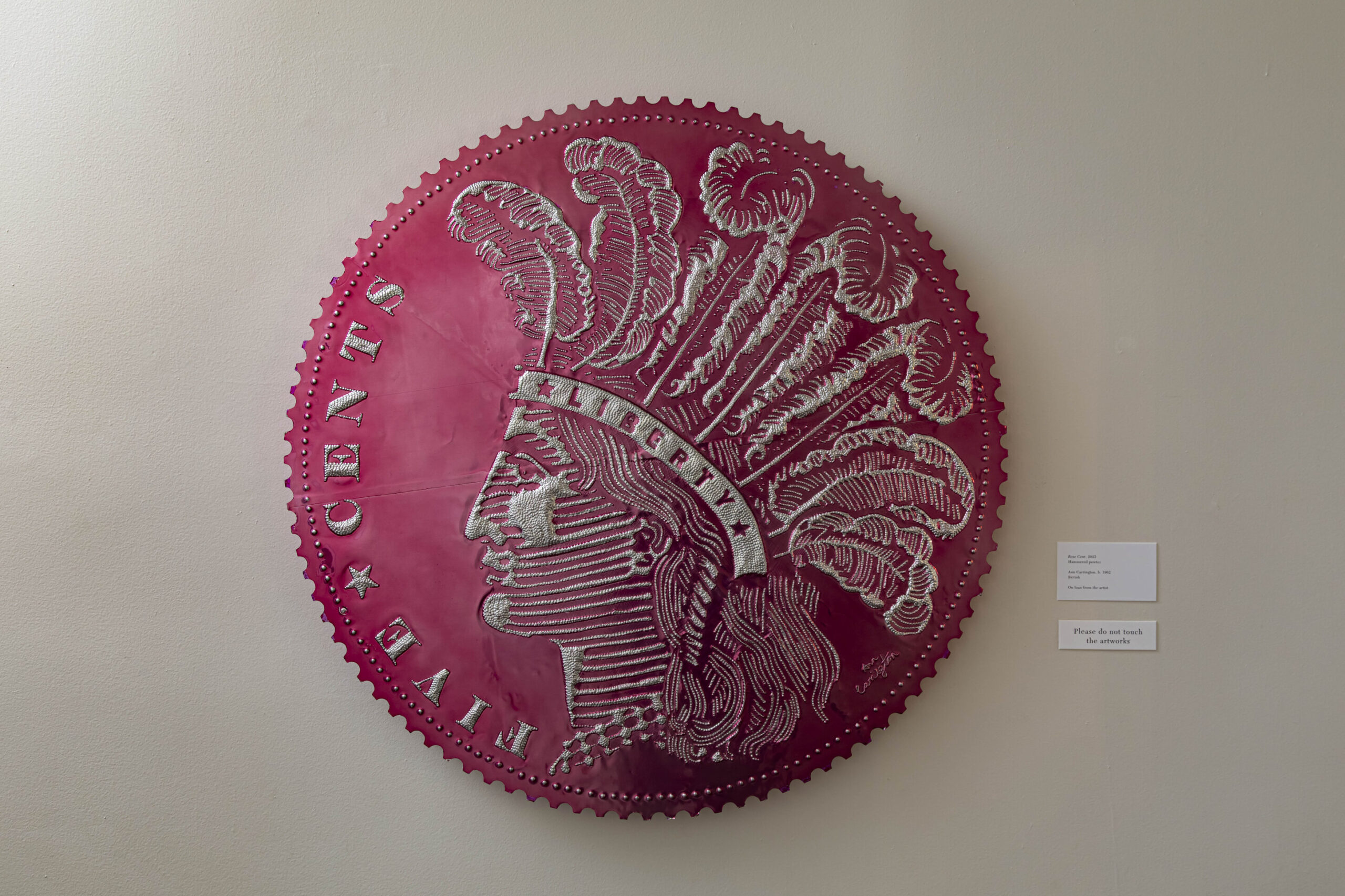
Another technique that Carrington uses in her work is repoussé, which is a French word for the ornamental patterns in relief made by hammering a material (such as copper or another metal) so that a shape pops out the other side. Two works displayed near the elevator on the Loggia Level of the Mansion incorporate repoussé: Rose Cent, inspired by the U.S. penny coin made between 1859-1900 and Flipside, inspired by the 1929 U.S. Liberty coin.

“My father was a collector of coins and stamps, so I like enlarging stamps and coins and then you can see the drawing and the design in them,” Carrington says.
Rose Cent has an interesting backstory, which transpired while Carrington was traveling in Morocco.

“That idea came about when I was in Marrakesh,” Carrington relates. “I had it in my head that I wanted to make these big coins and there was a guy hammering copper, making this repoussé tray. I really liked it, and I said, ‘How much is that?’ And he said some crazy amount. I asked, ‘How’d you come up with that price? And he said, ‘I charge per bang.’ And I just thought, ‘More bang for your buck.’ And then I thought, I’m going to go back to my studio and try this and that’s how it started.”

Not all of Carrington’s work is figurative. One sculpture on display at Cheekwood, titled Arrokoth, is her most abstract. Arrokoth is named after the most distant object that NASA spacecraft has photographed. She beams while explaining the concept.

CheekwoodAnnCarringtonDocumentation_High-333
Ann Carrington (b. 1963). Rose Cent, 2023, hammered pewter. Photography by Sam Angel.

Arrokoth
Ann Carrington (b. 1963). Arrokoth, 2023, silver, nickel, and steel plated spoons. Photography by Sam Angel.

“This object is like two planets that are merged together in an interesting, conjoined shape, and it has this bubbly surface,” she says. “I just felt I could interpret it really well with ladles. It’s my favorite piece. I just find it deeply satisfying, the shades in the silver and all the reflections that you get,” Carrington adds.

Visitors to Cheekwood have an amazing opportunity to view it, along with 32 of her other inventive and imaginative creations, on display through October 27, 2024.


test

Trolls: The Playful Voices of Nature

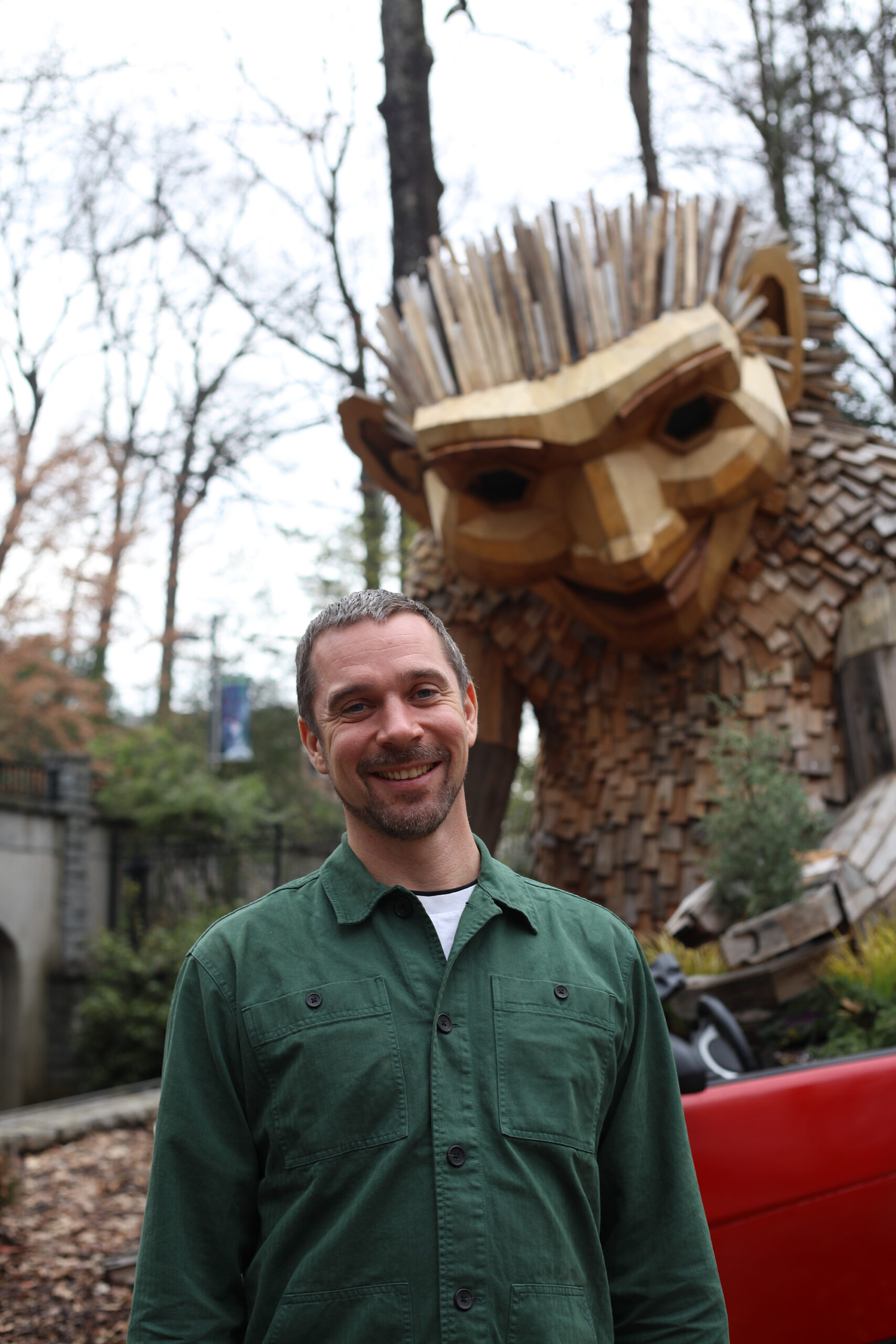
<h2>My name is Thomas Dambo and I turn trash into sculptures.</h2>
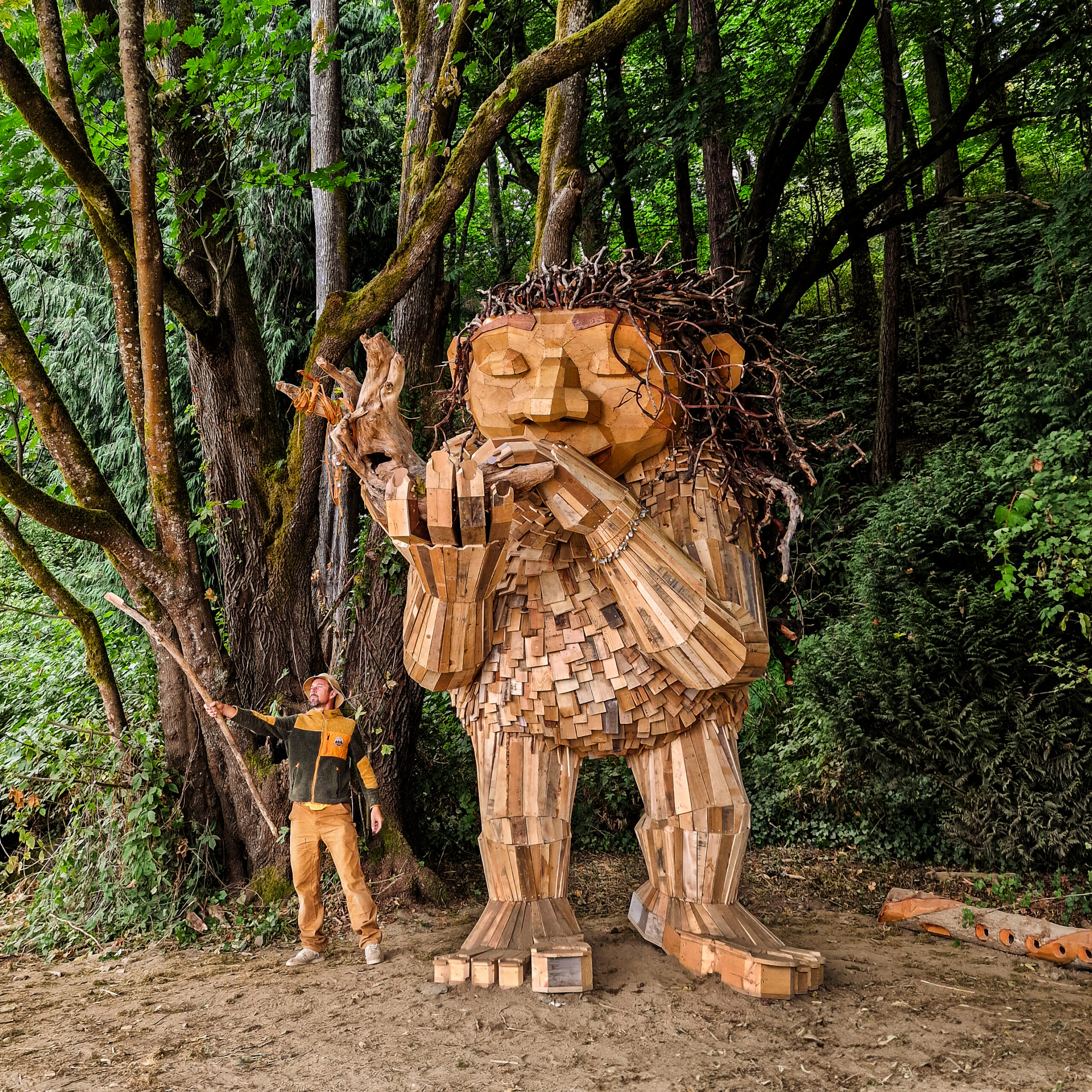
Bruun Idun. Lincoln Park, Seattle, WA.
Thomas Dambo with Bruun Idun in Lincoln Park, Seattle, Washington

This is how Thomas Dambo, one the world’s leading recycle artists, introduces himself, but the story of how he became a sculptor of more than 125 gigantic trolls goes much deeper. Six of Dambo’s troll creations arrived at Cheekwood in May and will be in residence through September 1 as part of the traveling exhibition TROLLS: Save the Humans.

These stewards of nature, as Dambo refers to them, are hand-built out of repurposed trash and live in 17 countries all over the world. No two trolls are alike, and each has its own story. They exist for us to enjoy and marvel at, but also to give awareness to sustainability, something humans have yet to master.

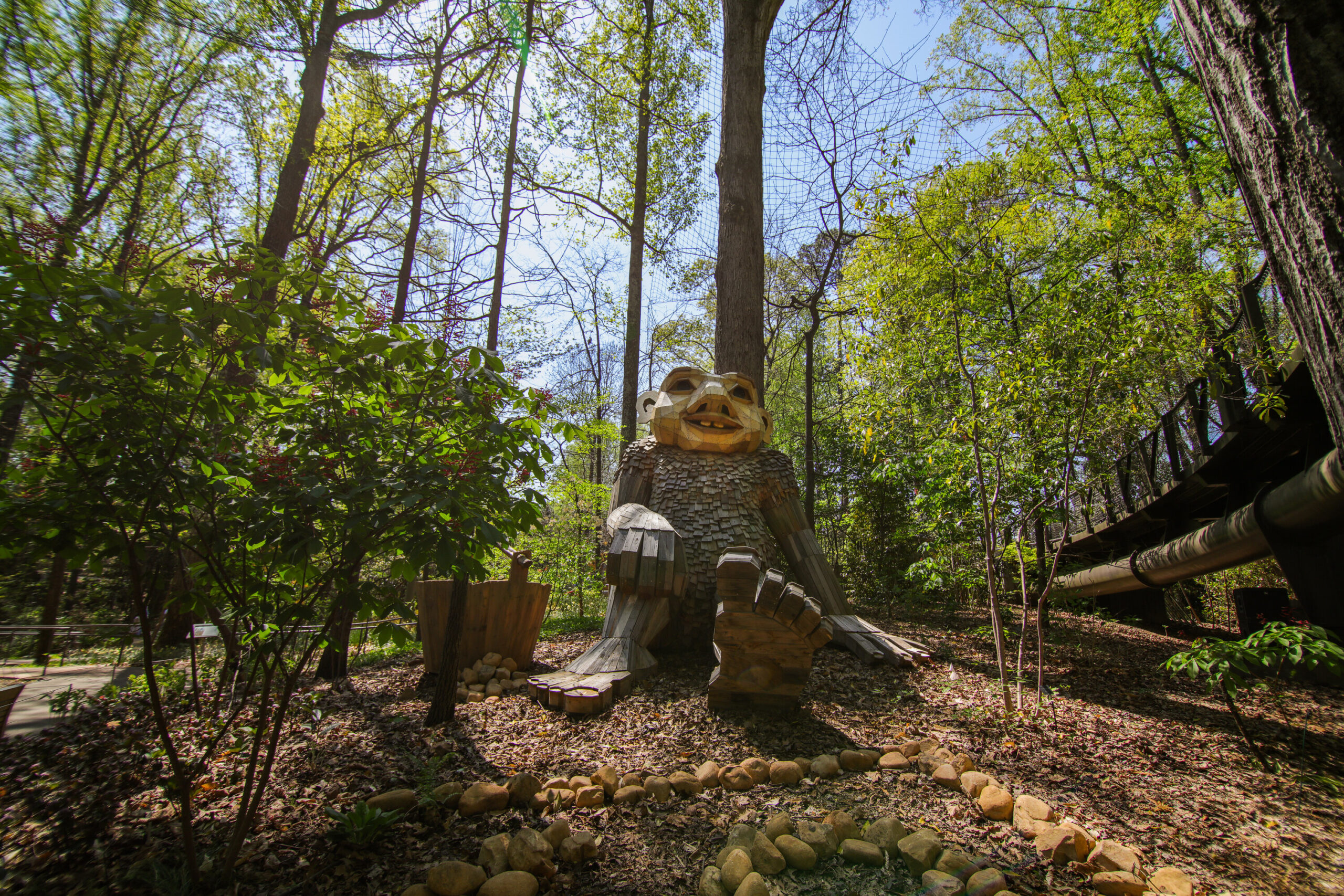
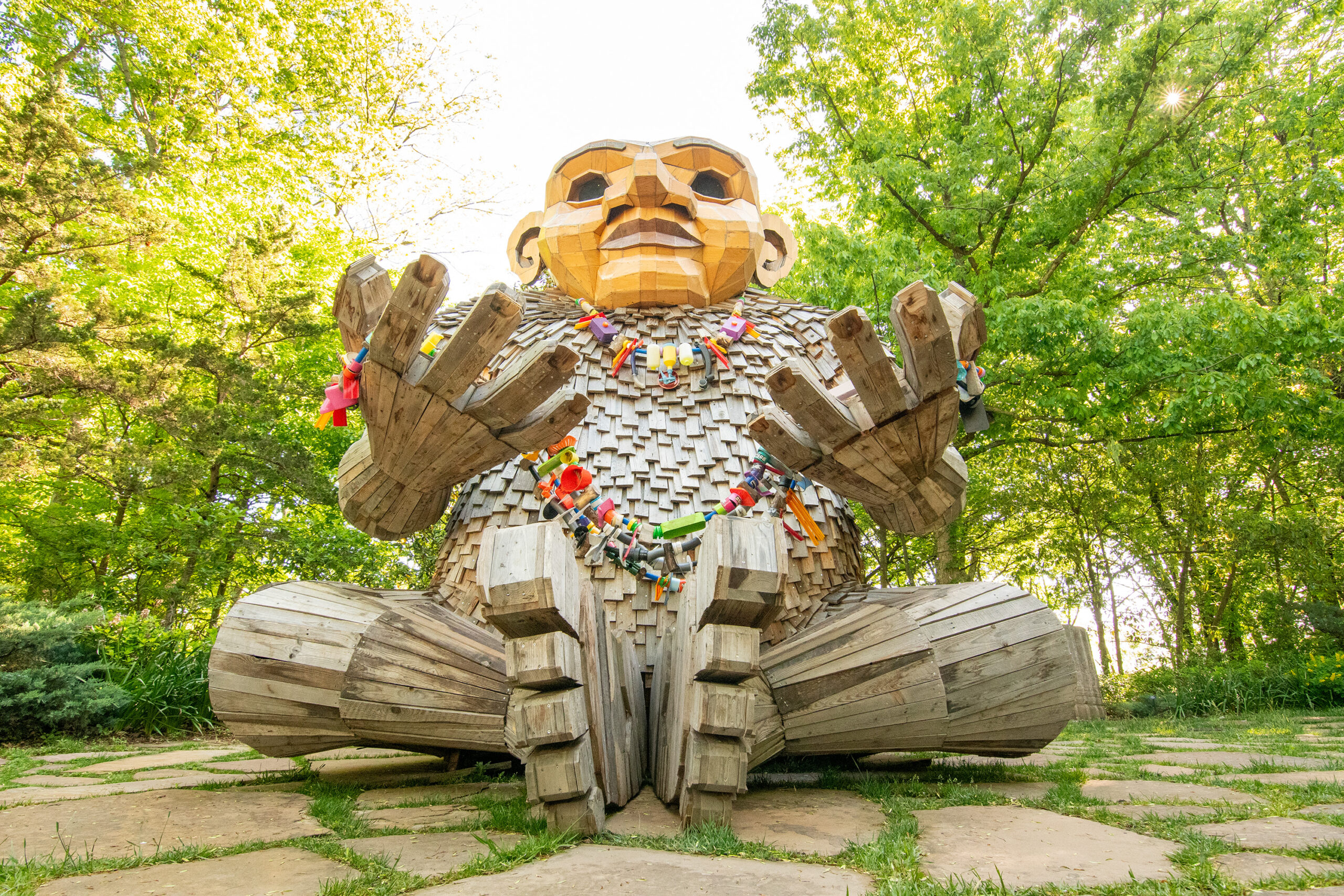
Gazing up at the six trolls throughout Cheekwood’s 55-acre estate, intricate details like Rosa Sunfinger’s spiky branches of hair, or Basse Buller’s larger-than-life outstretched foot, are delightfully life-like and stunning. Dambo’s trolls, some reaching 50 feet tall, are built with discarded wood pallets and other reclaimed materials, such as twigs, bamboo, plastic, and sometimes even an old barn. Dambo estimates that over the years he’s used upwards of 30,000 discarded wood pallets from garbage dumps. He’s used so many that he belovingly refers to his personal troll workshop in Denmark as the “Pallet Palace.”


Trolls: Save the Humans, Basse Buller. Courtesy Atlanta Botanical Garden.
Basse Buller at Cheekwood Estate & Gardens
2024May_Trolls_CHarris_DSC7457
Kamma Can at Cheekwood Estate & Gardens

According to Dambo, trash has value. He believes that with small but concerted actions, a world drowning in trash could become a world filled with meaningful, beautiful creations made with it. His works are art with purpose – colossal sculptures that encourage adventure and imagination, while giving a new way to see things.

One might wonder, “But why trolls?” Dambo grew up in Denmark, where trolls are a part of the folklore of Danish culture. For him, trolls have always been the ambassadors of nature, the protectors of our forests.

_Ben Chiller_ - Northside Festival - Aarhus, Denmark
Ben Chiller, NorthSide Festival in Aarhus, Denmark

“For me, the trolls are the unspoken voice of the plants and animals,” Dambo says. “What would the plants and animals say if we could understand what they’re talking about?”

The energy trolls can give is of child-like imagination, inspiring us to dream of things that could be, instead of only what we can see. There is a magic and happiness that troll enthusiasts engage with, that of discovery, exploration, and basking in the extraordinary … all while being surrounded by nature.

The concept is universal and Dambo is ambitious, with a larger personal mission to build 1,000 trolls. While the traveling exhibition TROLLS: Save the Humans is currently captivating visitors at Cheekwood Estate & Gardens, Dambo is globetrotting far and wide, continuing this work, building as many statuesque troll titans as he can and bringing large-scale art and environmental awareness to destinations around the world.

2024May_Trolls_CHarris_DSC8739
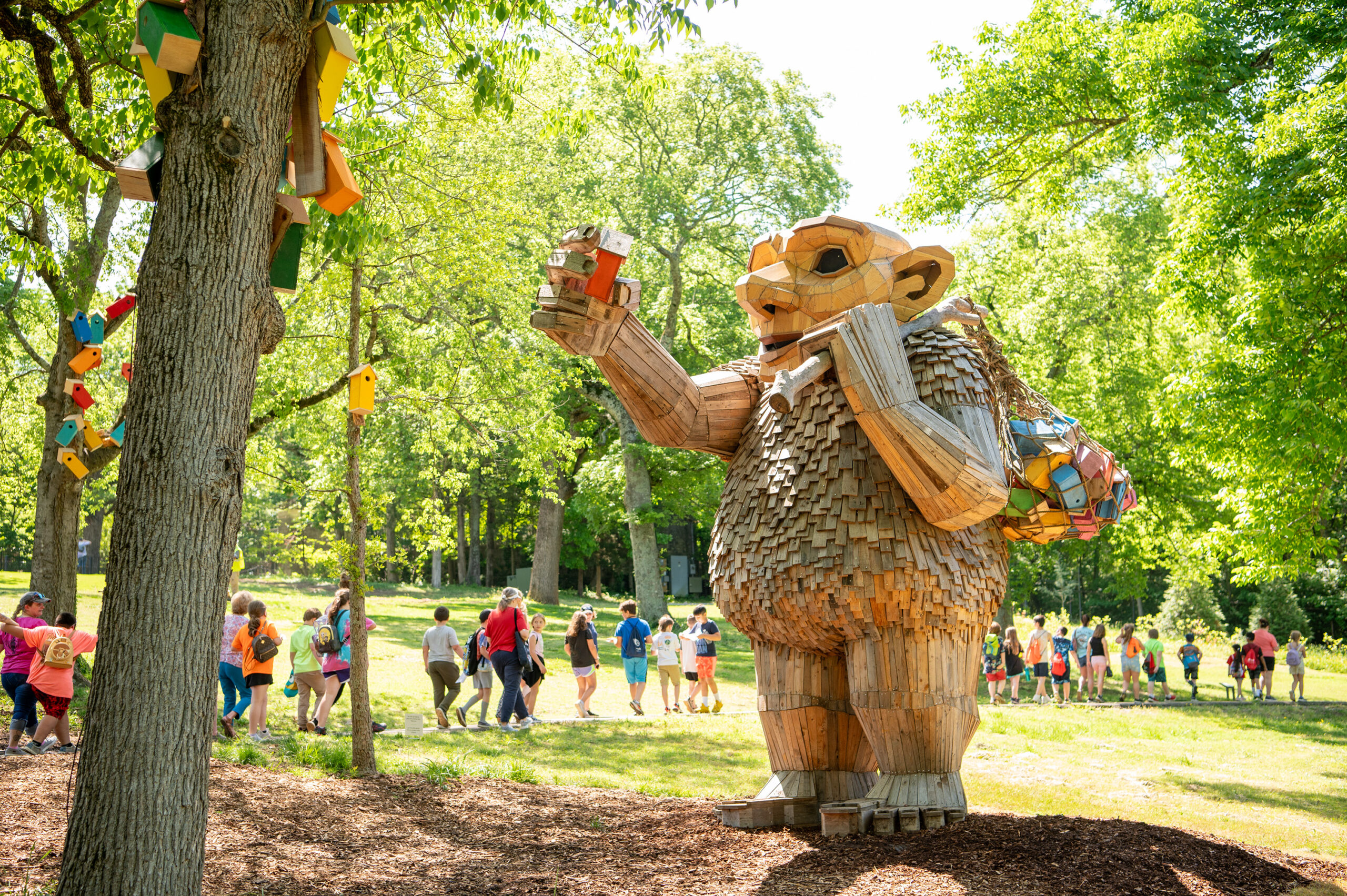
Ibbi Pip at Cheekwood Estate & Gardens

With a diverse background as a songwriter, musician, and artist, Dambo has always loved storytelling and creating things. Adding his passion for the natural world, Dambo is that rare person who has been able to combine many things they love into a lifelong project.

During his time as a street artist, Dambo made and hung thousands of vibrant recycled birdhouses throughout the streets of Denmark. “This project ran for years and became one of my first successes as an artist,” he says. “To this day, I always try to include birdhouses in my works.”

You can see some of Dambo’s birdhouses by visiting a troll named Ibbi Pip at Cheekwood. Ibbi Pip is a friend to all animals, so she uses birdhouses to keep birds always nearby.

As of this writing in May 2024, Dambo is currently in Detroit Lakes, Minnesota, building what he calls “the biggest troll with the biggest foot I have ever done.” The project includes five giant trolls and a plastic rabbit. The troll team has been visiting the local dump, sourcing more than 2,000 plastic crates for one of the structures.

Another project is Greta Granite at Ninigret Park, as part of Dambo’s upcoming Thunderstone exhibition in Rhode Island. Greta’s hair is made of 300 split bamboo shafts obtained from a local neighbor who recently cleared their garden. All Dambo’s creations have something unique about them, from Mama Mimi in Jackson Hole, Wyoming, to the Giants of Mandurah in Australia, to Oscar the Bird King in Vashon Island, Washington.

2024May_Trolls_CHarris_DSC7311
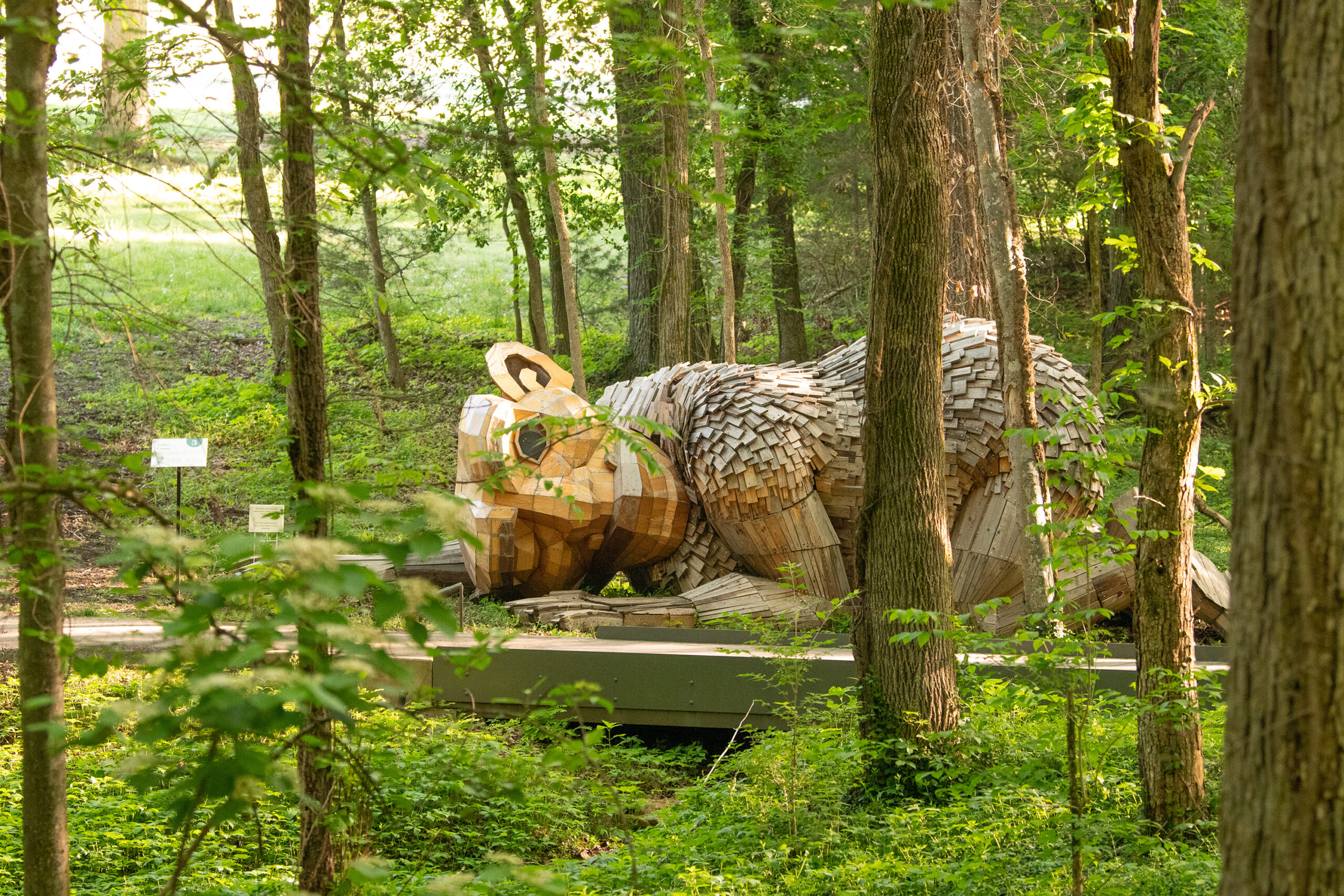
Sofus Lotus at Cheekwood Estate & Gardens

Dambo often builds hidden trolls that require viewers to search for them on a Troll Map and discover them hiding in nature. You can experience Cheekwood’s “hidden” troll, Sofus Lotus, throughout the summer, but we’ll let you experience the joy of finding out where he is on a future visit.

Privacy Policy Sitemap Web design by Speak
Back to top