Philip Bartko Jr., Author at Cheekwood - Page 4 of 11 | Page 4
x icon Close
test

Top Plant Picks July 2025

Coreopsis ‘Lil Bang Candy Stripes’ (Tickseed)

Bloom Time: June to August

Sun Requirement: Full Sun

Water Requirement: Medium

Wildlife: Attracts bees and butterflies

Tolerates: Deer resistant

Native to North America: N/A

Zones: 5 to 9

Other: A compact perennial producing peppermint-colored blooms throughout the summer.

Location: Howe Garden
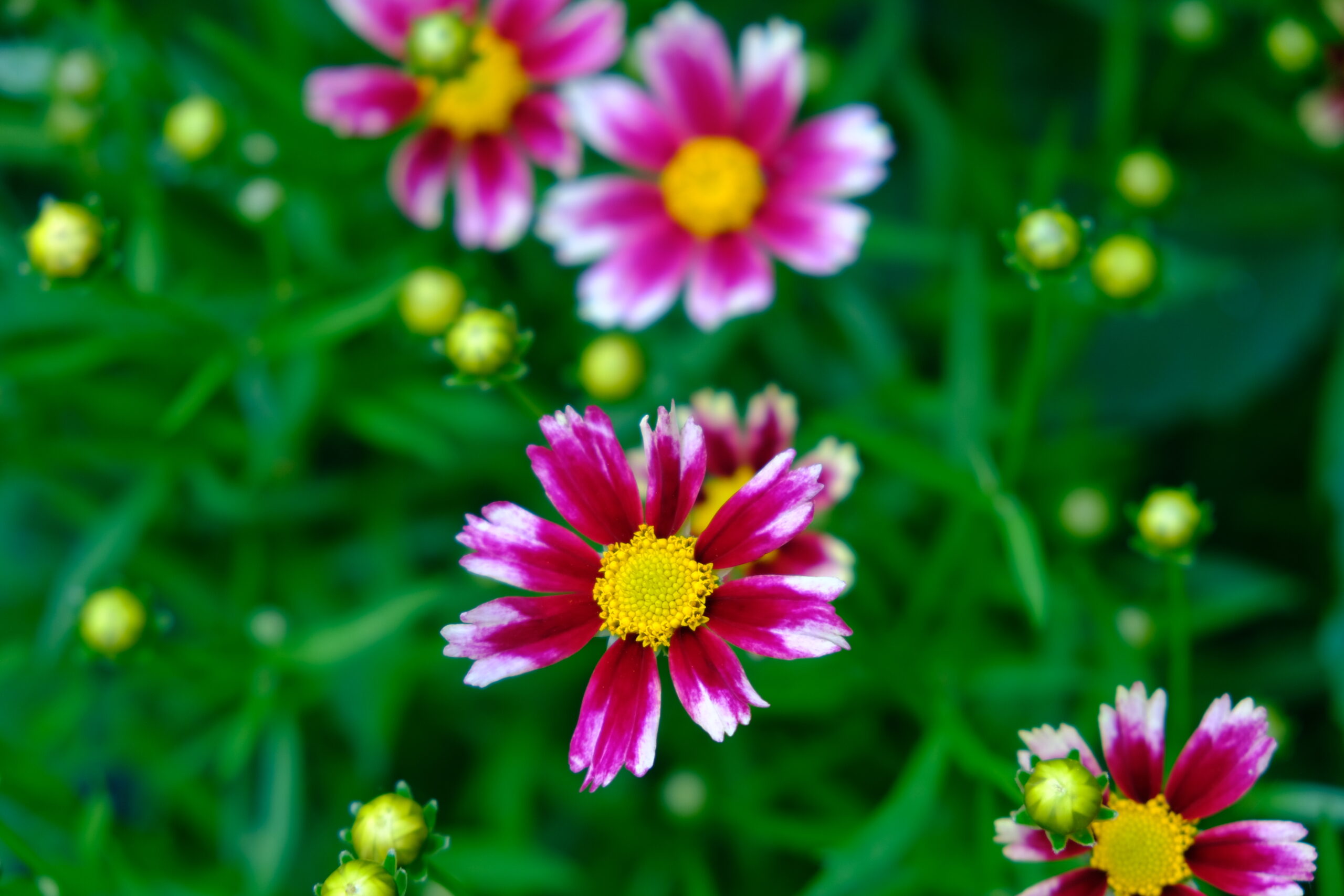
coreopsis lil bang candy stripes

Spiraea tomentosa (Steeplebush)

Bloom Time: June to July

Sun Requirement: Full Sun

Water Requirement: Medium to High

Wildlife: Attracts butterflies

Tolerates: Deer resistant, tolerates erosion

Native to North America: Yes

Zones: 3 to 8

Other: Dense steeple-shaped clusters of rose pink flowers bloom from top to bottom on this deciduous native shrub.

Location: Bracken Foundation Children’s Garden
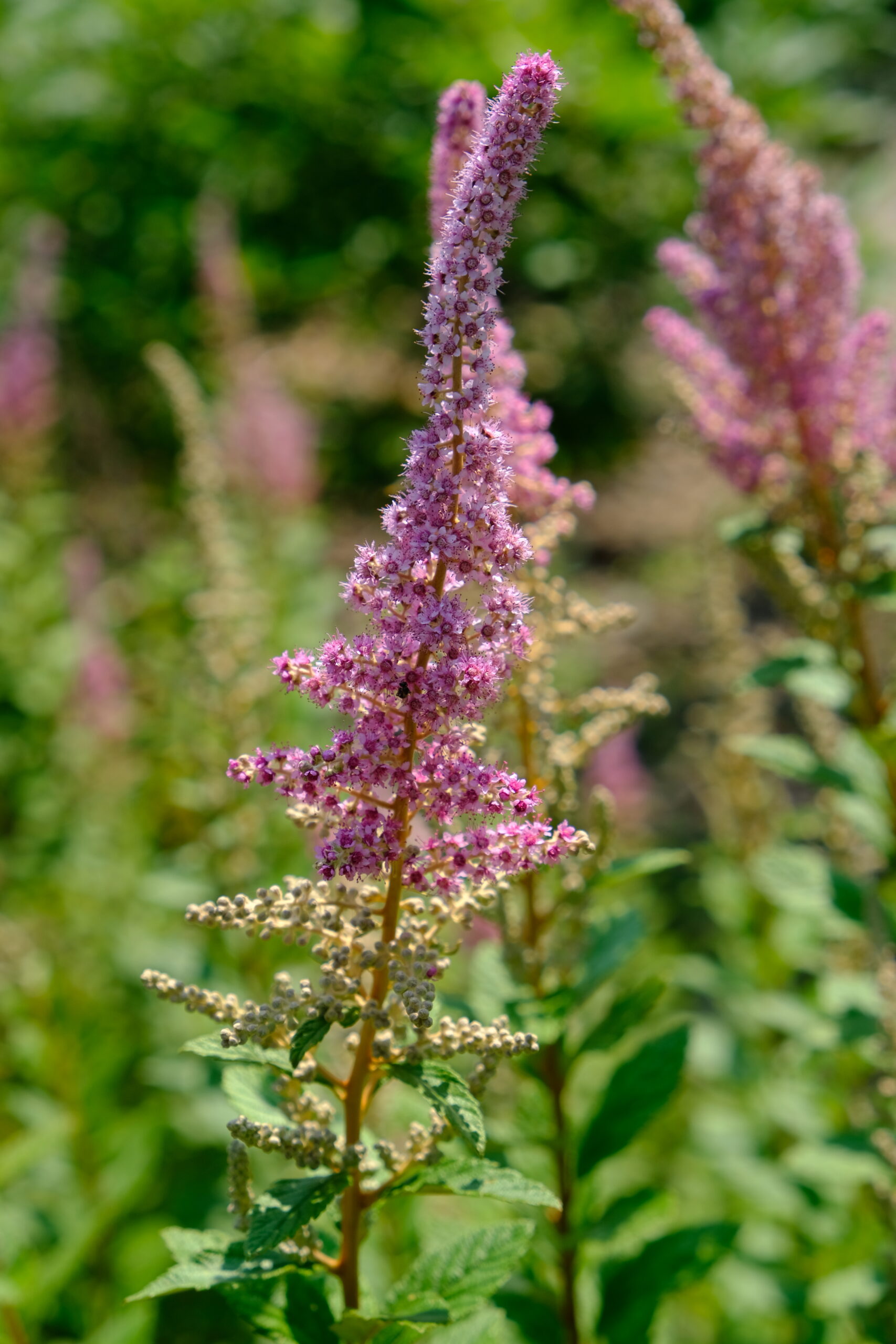
spirea tomentosa

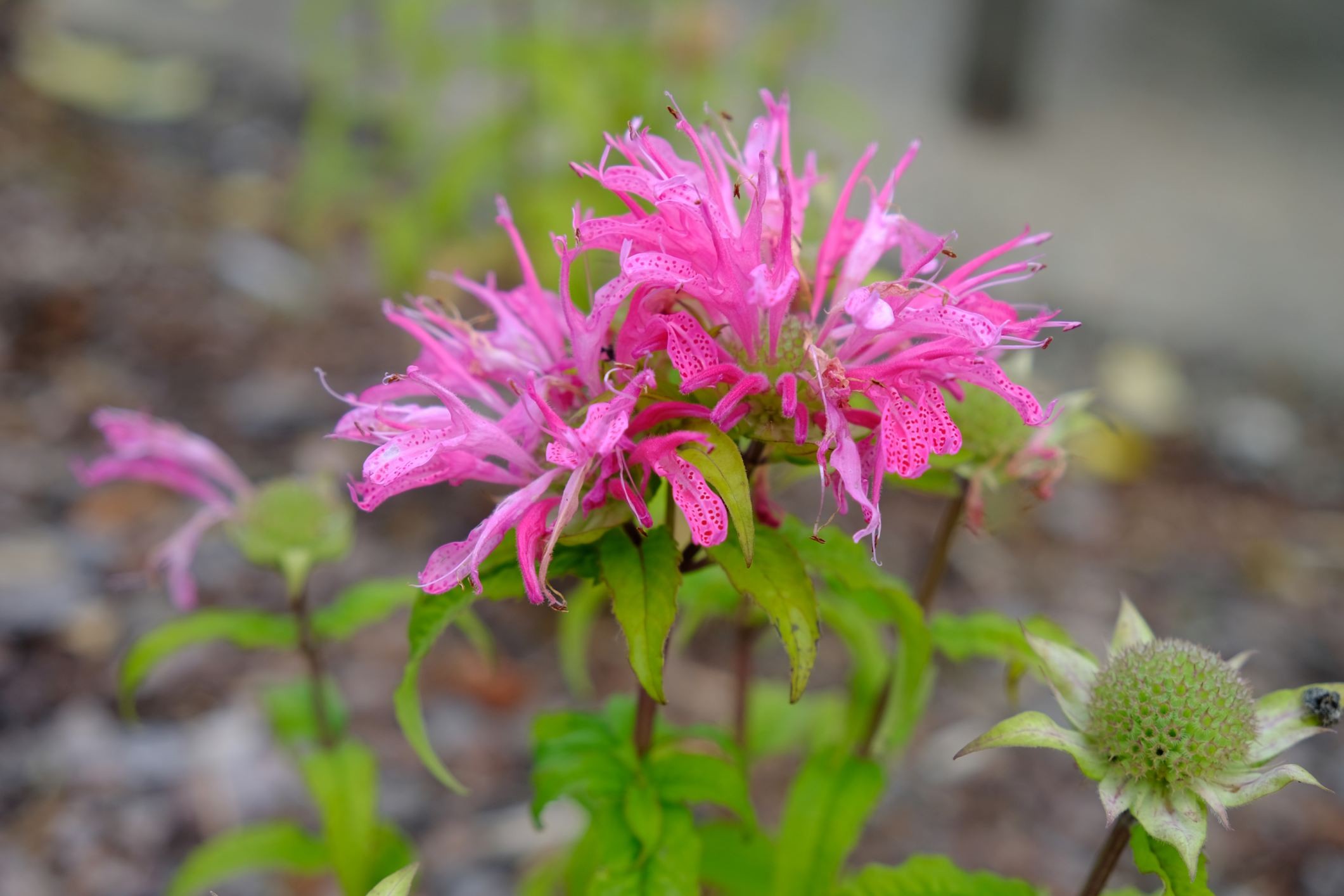
Monarda ‘Electric Neon Pink’ (Bee Balm)

Bloom Time: May to July

Sun Requirement: Full Sun to Part Shade

Water Requirement: Medium to High

Wildlife: Attracts hummingbirds, bees, and butterflies

Tolerates: Deer resistant

Native to North America: N/A

Zones: 4 to 8

Other: Features fluorescent pink flowers on globular terminal flowerheads and minty foliage.

Location: Bradford Robertson Color Garden
O

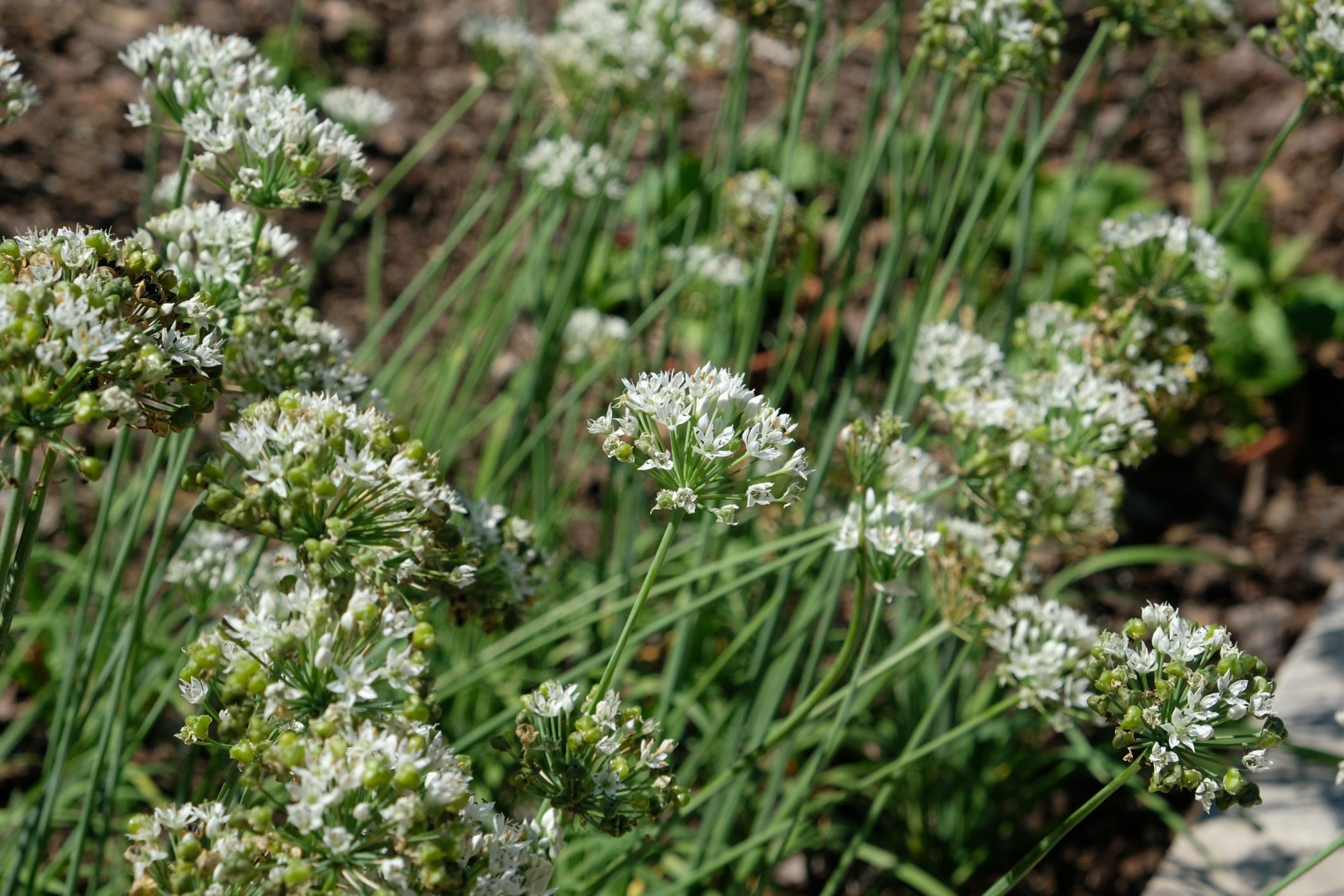
Allium tuberosum (Garlic Chives)

Bloom Time: July to September

Sun Requirement: Full Sun to Part Shade

Water Requirement: Low to Medium

Wildlife: Attracts butterflies

Tolerates: Deer resistant, drought tolerant

Native to North America: No

Zones: 3 to 9

Other: This plant serves both culinary and ornamental purposes with edible leaves and a profusion of star-shaped white flowers.

Location: Bracken Foundation Children’s Garden
O

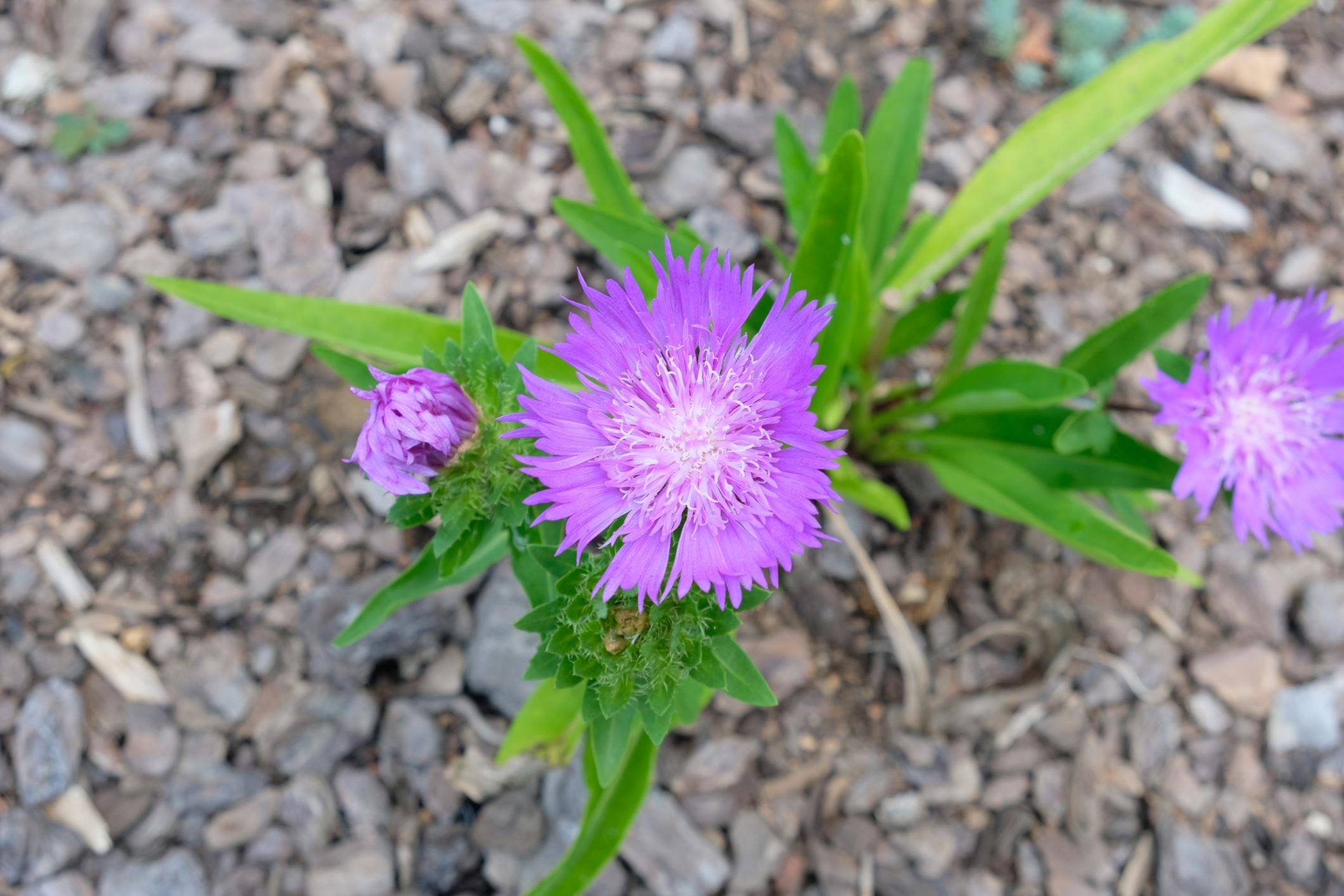
Stokesia laevis ‘Honeysong Purple’ (Stoke’s Aster)

Bloom Time: May to July

Sun Requirement: Full Sun

Water Requirement: Medium

Wildlife: Attracts butterflies

Tolerates: Drought tolerant, rabbit resistant

Native to North America: N/A

Zones: 5 to 9

Other: Produces a profusion of radiant purple flowers over neatly mounding foliage.

Location: Sigourney Cheek Literary Garden
O

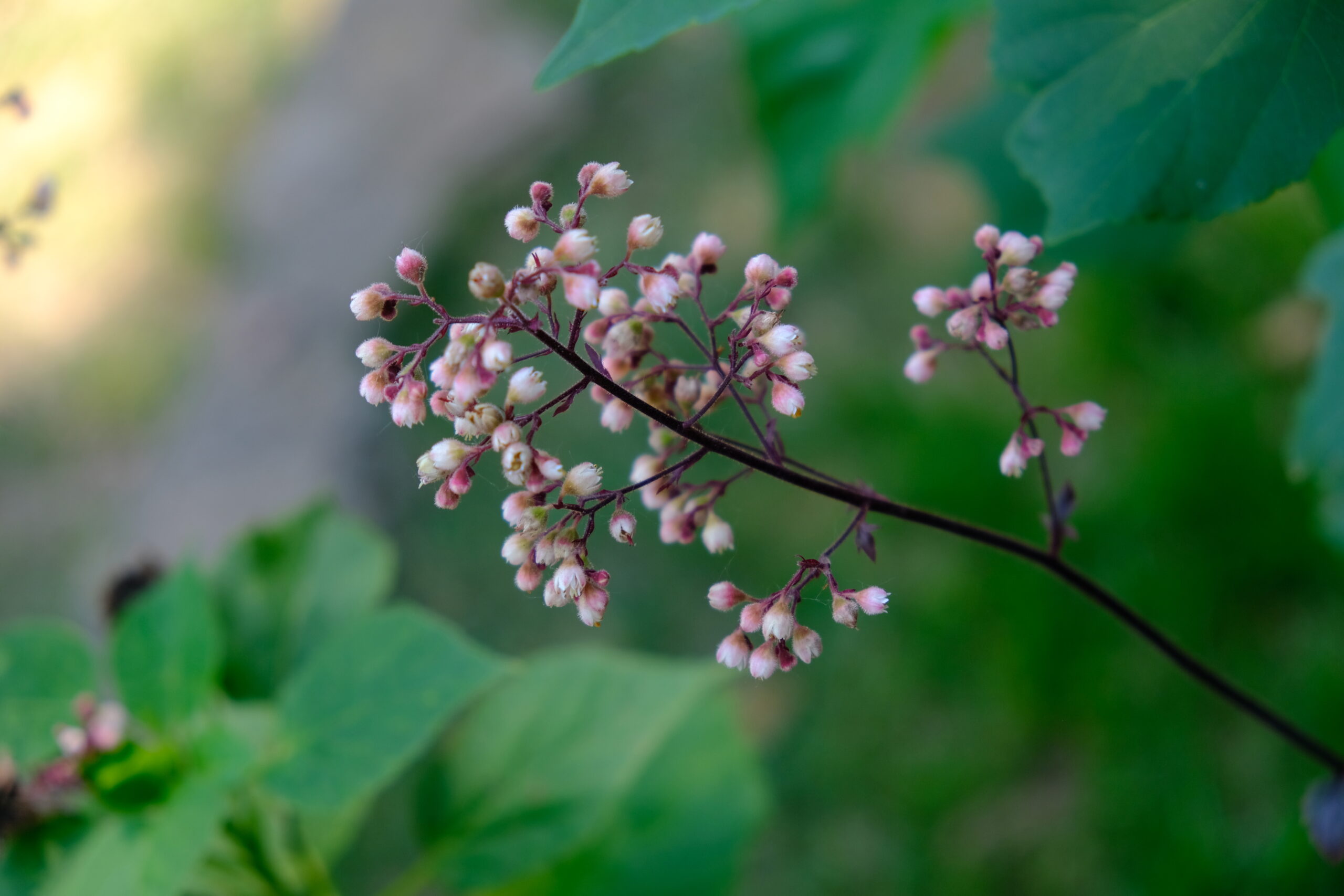
Heuchera ‘Grape Expectations’ (Coral Bells)

Bloom Time: May to July

Sun Requirement: Full Sun to Full Shade

Water Requirement: Medium

Wildlife: Attracts butterflies and hummingbirds

Tolerates: A variety of light and soil conditions

Native to North America: N/A

Zones: 4 to 9

Other: Noted for both its violet purple foliage and airy white flowers.

Location: Howe Garden
heuchera grape expectations

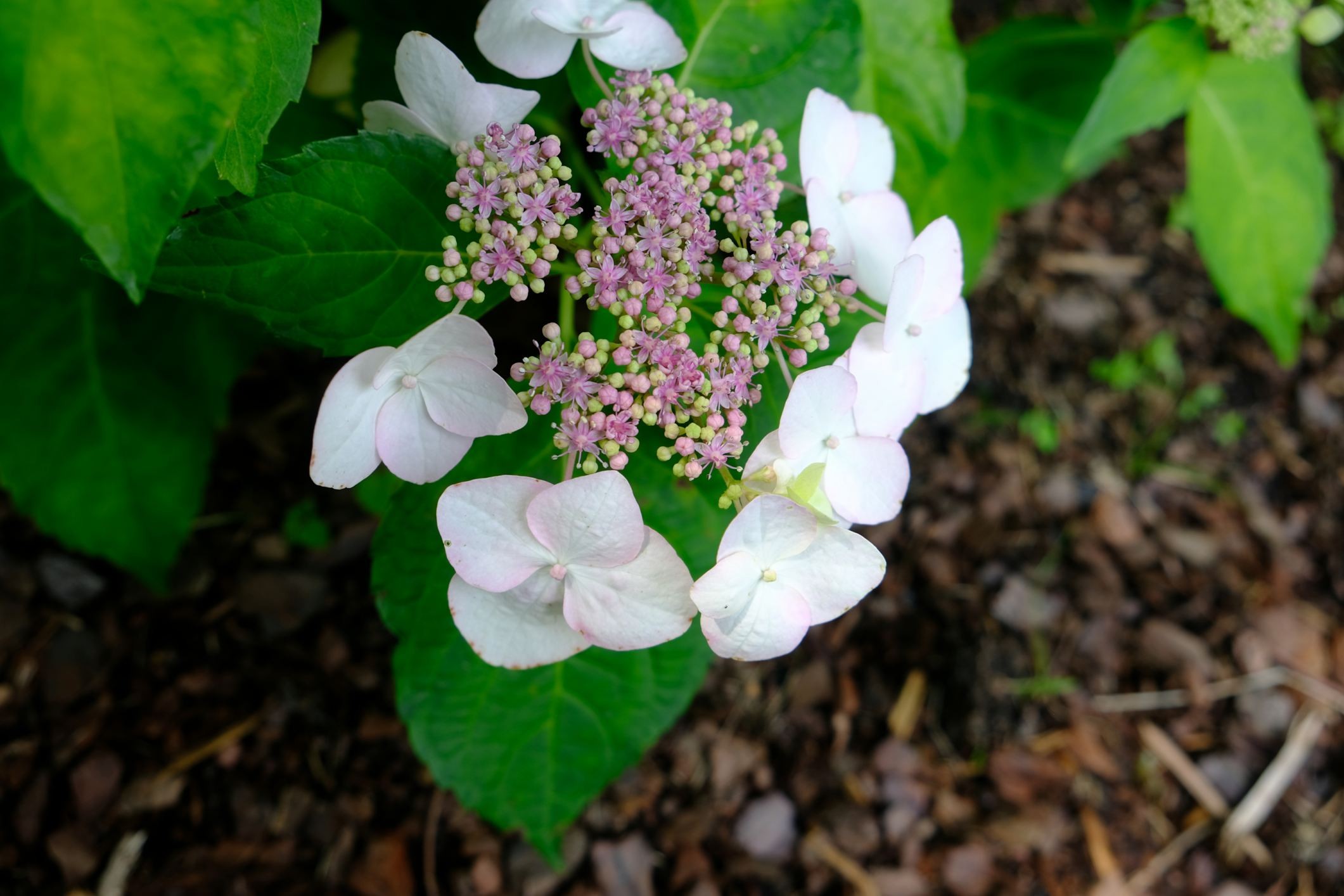
Hydrangea macrophylla ‘Veitchii’ (Bigleaf Hydrangea)

Bloom Time: July to September

Sun Requirement: Full Sun to Part Shade

Water Requirement: Medium

Wildlife: N/A

Tolerates: N/A

Native to North America: N/A

Zones: 6 to 9

Other: A lace-cap hydrangea with large white florets surrounding small blue flowers.

Location: Bradford Robertson Color Garden
O

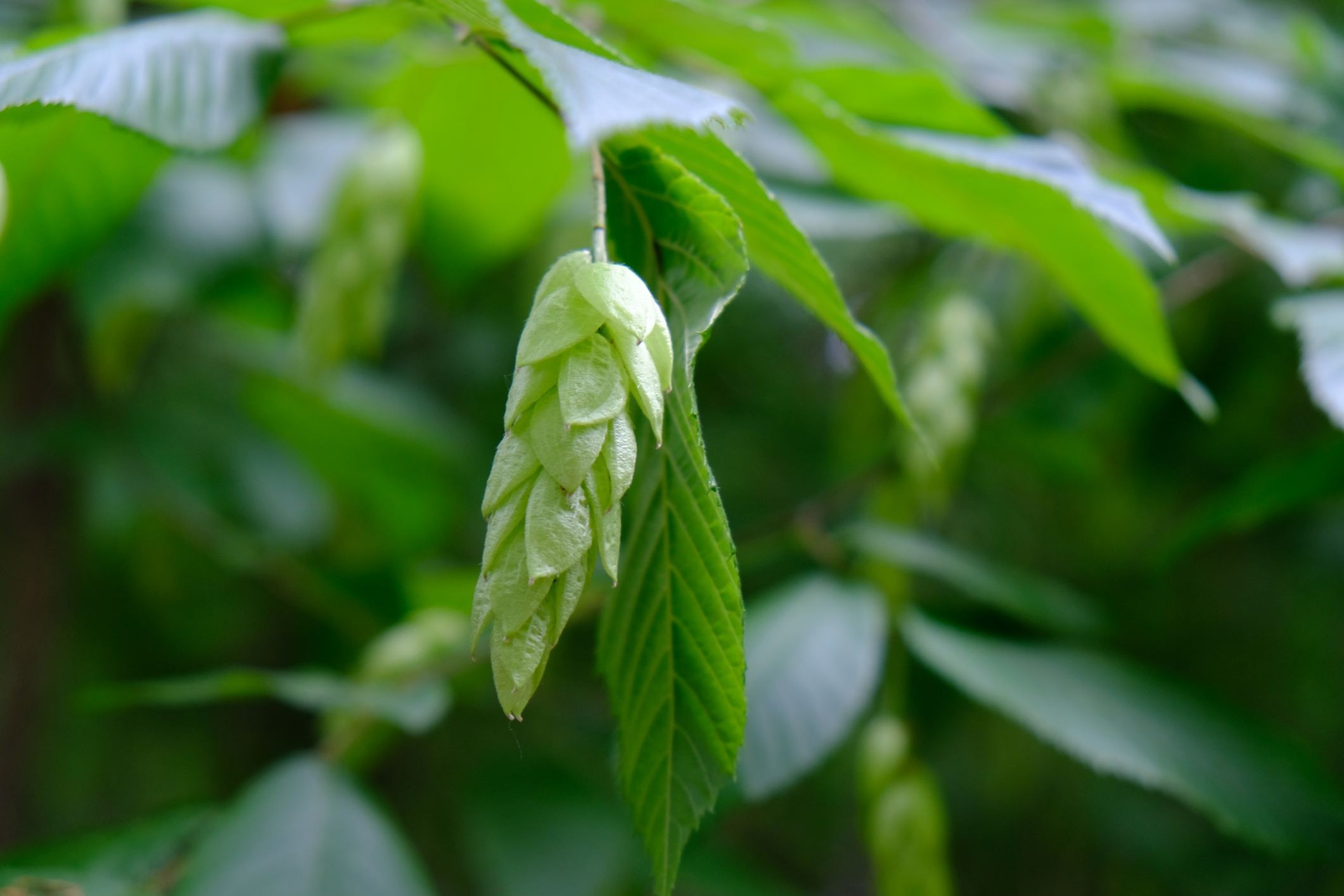
Ostrya virginiana (American Hop-hornbeam)

Bloom Time: April

Sun Requirement: Full Sun to Part Shade

Water Requirement: Medium

Wildlife: Small mammals and songbirds

Tolerates: Deer resistant, drought tolerant

Native to North America: Yes

Zones: 3 to 9

Other: After flowering, drooping clusters of hop-like fruit sway from the branches.

Location: Ann & Monroe Carell Jr. Family Sculpture Trail
O

test

Tamara Kostianovsky: A Confluence of Flesh & Fabric

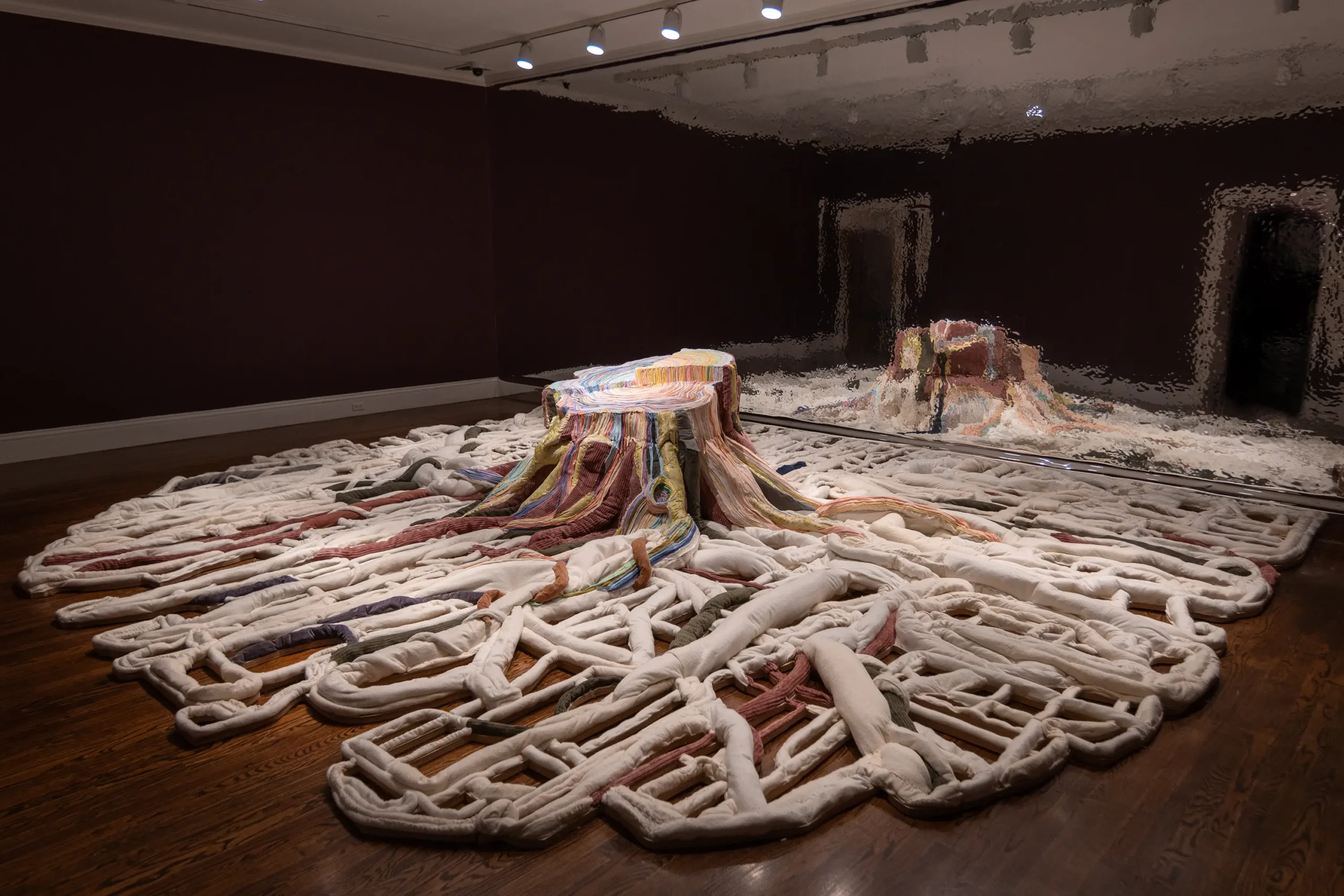
Featured image: Narcissus by Tamara Kostianovsky at Cheekwood. Photo by Leo Sano.

Cheekwood’s 2025 Martin Shallenberger Artist-in-Residence explores analogies between nature and the human body through mixed-media sculptural installations constructed with repurposed textiles.


In conversation with Argentine American artist Tamara Kostianovsky, she explains that at the core of her work is an exploration of connections between the natural environment and human anatomy.

This is the central focus of, Narcissus, a large-scale sculptural installation that fills an entire gallery at Cheekwood. At the center of the enveloping creation is a tree stump, its fabric-woven root system stretching outward across the entire floor like limbs. The wall behind the sculpture is covered entirely in silver reflective Mylar, mirroring the scene back with a surreal effect.

The name “Narcissus” has origins in both botany and human nature: it’s the scientific name for the daffodil genus, and the name of a figure of vanity in Greek mythology, a man who fell in love with his own image reflected to him in a pool of water.

To create Narcissus the sculpture, Kostianovsky began by photographing dead trees in the forest. When she found a tree she liked, she built a true-to-scale sculptural tree form from plywood and armature wire. Next, she glued a high-resolution photograph of the origin tree to the face of her formed tree and traced the lines from the real tree onto her sculpture. Then she used a curved sewing needle to build a fabric surface with vibrantly colored strips of clothing and linens.

“It’s not that I’m making up the knots of the tree – I’m actually following the pattern that exists in nature,” Kostianovsky says.

Read on as Kostianovsky shares more ideas behind her exhibition at Cheekwood, her creative processes, and how an internship with a plastic surgeon led to her discovery of a fascinating world beneath the surface.

Artist-in-Residence: Tamara Kostianovsky is on view at Cheekwood through June 15.

IMAGE 2_Tamara_K_Portrait

Tamara Kostianovsky, Photographed by JC Cancedda. Courtesy of SLAG&RX Gallery and the artist.


How did you discover your passion of working with repurposed textiles?

I started working with textiles after learning about feminist women artists who used their own bodies in their work, particularly performance work in the ’70s and ’80s. I was inspired to include my body in the work and make work that was anti-patriarchal. Coming here from Argentina, I shrunk most of my clothes in the dryer and they were unusable. I started thinking of the clothing as a possible material to make sculpture, and in doing so, I realized there was more than just the anecdote to it, there was a political statement. I wasn’t purchasing art supplies, I was reusing things that would go into the landfill, and to a certain degree I was including my body in the work. I think clothing has an imprint of your body, it carries memories, it carries experiences and even dead cells, if you don’t wash it. So, it was an indirect type of performance in which my body was present without me literally being in the work.

You were a surgical intern when you were younger. How did this inspire your artwork?

When I was an art student, I started interning at a plastic surgical office, and it was there that I discovered a rich world right underneath the skin. The incisions that cut the skin revealed fat and veins that exploded into waterfalls and ligaments that set free the bones or the muscles they once contained. It was really an impressive visual experience. I tried to not think of it as, like, there's a person under all this, so that’s how I separated that. And then after participating passively in these operations, I would walk a few blocks and go to painting class. We were experimenting with oil colors at the time, so when I looked at red, it wasn’t just red, it was the color of blood I had just seen. And yellow was the color of fat. So, there was an immediate connection between human anatomy and painting, and that really became the source of my investigation very early on and I continue with that. To this day when I work with fabric, I think of it as if it’s skin. I try to make fabric have those layers of fat and tissue and flesh and blood. Somehow I became a participant in this tradition of artists that think of flesh as a subject, as an object. I’m proud to be part of that tradition.

What led you to create Narcissus?

"Narcissus" is a site-specific installation in which we see the stump of the tree and a very large and all-encompassing system of roots that take up a particular semi-circular shape to reveal almost like a network of connections, similar to the way that neurons align in the brain. Some of these sections of this network have geometric shapes to them and I was inspired to do that by seeing trees growing in urban environments in which oftentimes the woods try to circumvent the floor tiles or, you know, things on the ground that would have a more geometric orientation. The piece also may be reminiscent of a map of a city, so there is more than one connection that I hope people will be making when thinking about that.

Because it’s such a large artwork and you first worked with a smaller-scale model to plan it out, did it turn out how you imagined or did it kind of transform as you worked?

It turned out better than I imagined, and that’s a pleasant surprise. It was an ambitious work, and I have a small studio with very few people working alongside me. There's something that the space brought about, which is the actual nature of three-dimensionality, and when I work on this kind of scale or slightly smaller, I make a three-dimensional model. So, I knew what this was going to look like and that was planned, and the maquette is exhibited alongside with other works in the gallery next to us. But there was something about seeing the material in the space that really actualized here at Cheekwood.
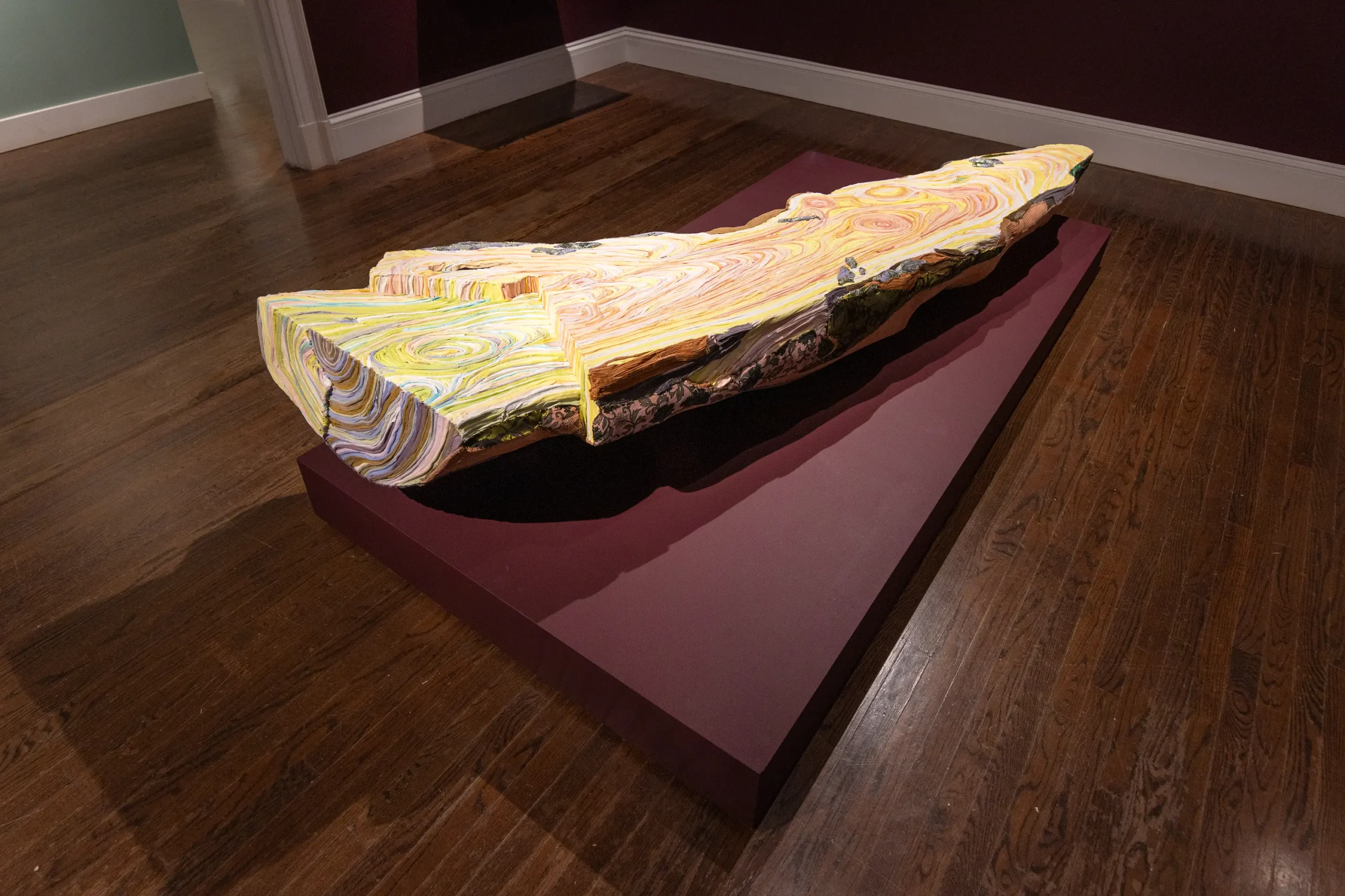
IMAGE 3_Sunrise_Tamara Kostianovsky

Sunrise by Tamara Kostianovsky at Cheekwood. Photo by Leo Sano.

What were you thinking about while making Sunrise, and how did you approach it physically?

After my father passed away, like many of us who lose a loved one, I was thinking of what to do with his material possessions. Because I had been working with my own clothing at that time, I started thinking of using his clothing. My father spent the last few years of his life dedicated to gardening and he definitely had a green thumb – he would’ve loved it here at Cheekwood. I started making a group of new sculptures that I call “tree carcasses,” which are basically sculptures of dead trees that incorporate some of my father's corduroys, which were part of his signature style. That material lends itself really well to mimic the texture of tree bark. The trees are reminiscent of the color palette of human anatomy. There’s a lot of yellows and flashy colors. What I’m trying to do is create a type of analogy between the body of the tree and the body of a person, to a certain degree that I hope people will identify themselves in the body of the tree and therefore really know that it’s not really something outside of us, it’s the cloth we were all cut from. I thought of this sculpture as a type of memorial, not just for a loved one but also a memorial for the Earth and the trees that we use on a regular basis. You will see that in my artwork, there’s always a mechanical cut to the tree. So, it's not that the trees died in a storm or a lightning strike; it's really because somebody cut them. We can see here the hand of man in the separate planes running lengthwise of the tree. It’s never in one passing that the trees are cut, and that provokes the difference between the planes which I try to bring into my work. The top layer reveals the palette indicative of human anatomy. The shape of the tree itself is reminiscent of a coffin or body lying down or some sort of funeral procession.

Where did you source these specific pieces of fabric that you used?

Well, in here we have some of my father’s pants, in corduroy. We also have some remnants of brocades that I got my hands on through donation from a friend. And then most of the strips that you find in all my work really are kind of edging of the fabric. When fabric textiles are produced, they are sold in rolls and to make them straight, they cut off the edges. There’s a little strip that is usually discarded. I use that discarded material, so it’s already pre-cut, and it’s usually thrown away or goes into landfills. I like to think that I rescue that material, and I use it for my work.

Tell us a little about your piece at Cheekwood titled No Shadows in the Sky.

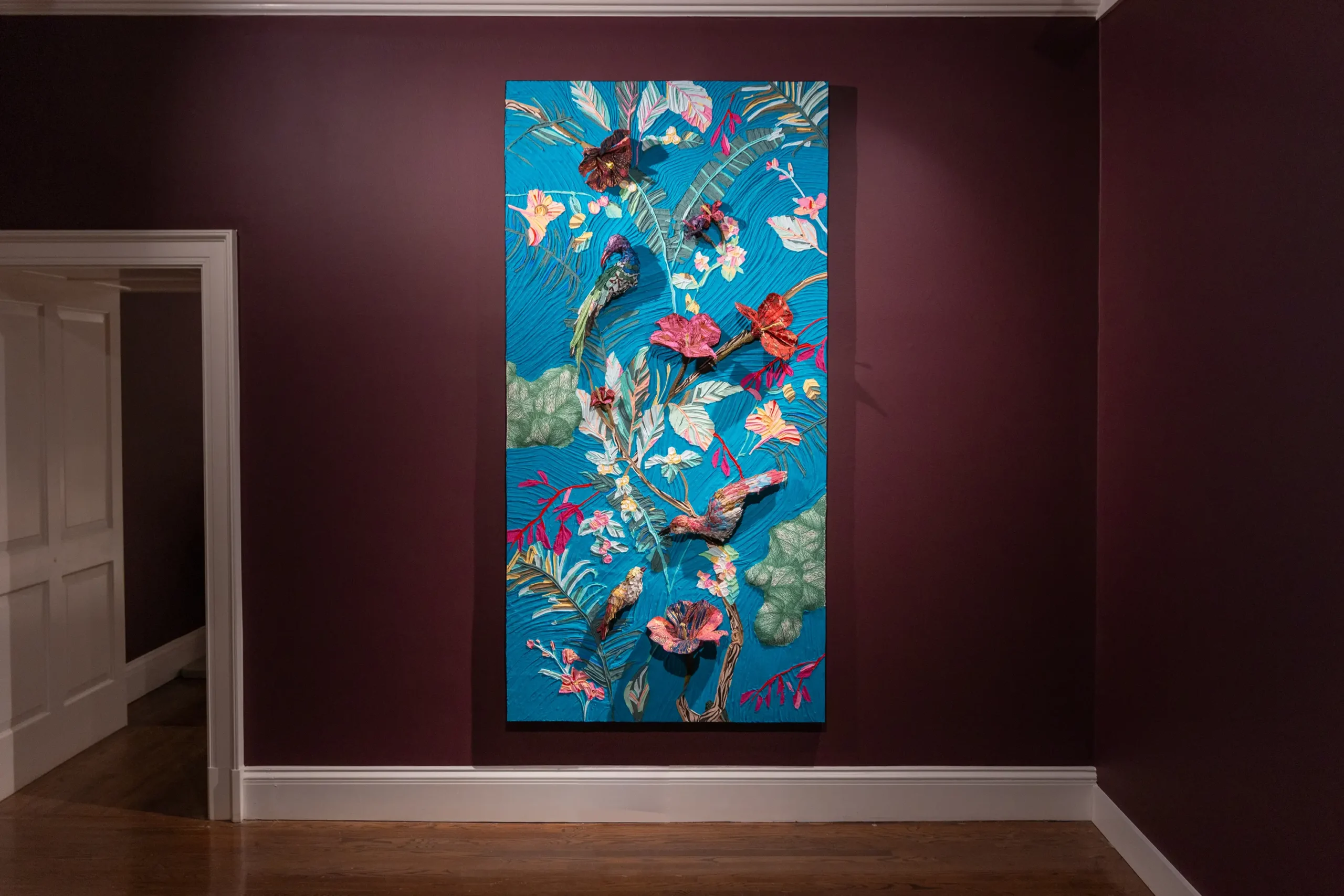
This is a textile panel, made on wood support and covered in textiles. This piece uses a very deep blue, very vibrant. A few years ago, I had an experience to travel to Naples, Florida, to do some research for an exhibition. I had access to seeing the fauna, the egrets, the alligators, and it was impressive just everything I saw there. But the one thing that stuck with me the most was the intensity of the blue sky and that is what inspired this color that is seen in the piece, which, I don’t think I have exaggerated. It was really this intense.
IMAGE 4_No Shadows in the Sky_Tamara Kostianovsky

No Shadows in the Sky by Tamara Kostianovsky at Cheekwood. Photo by Leo Sano.

Are there any memories from your childhood in Argentina that appear in your work?

Before my experience in the plastic surgical office, the image that first got me interested in the arts or awakened an aesthetic experience for me was seeing the meat carcasses that are ubiquitous in Argentina. At the time, they were pretty much in every corner in every meat market. For Argentinians, meat is a source of pride and national identity. People gather around "asados". It’s a strong social aspect of our culture. I think the carcass itself, with the pinks and the reds, there’s something slightly morbid about it, but there’s something incredibly beautiful. Very early on, I also associated the silhouette of the carcass with the female form. So, for me there was a type of identification with it, with a dead body, I mean with the possibilities that can come out of that.

If your art had an odor, what would it smell like?

Do you know about the corpse flower? It’s a massive flower that has a kind of putrid smell, like flesh. That's why it's called the corpse flower. I like the idea of the juxtaposition of meat and flower, you know? That’s very much what I’m into [<em>laughs</em>].
test

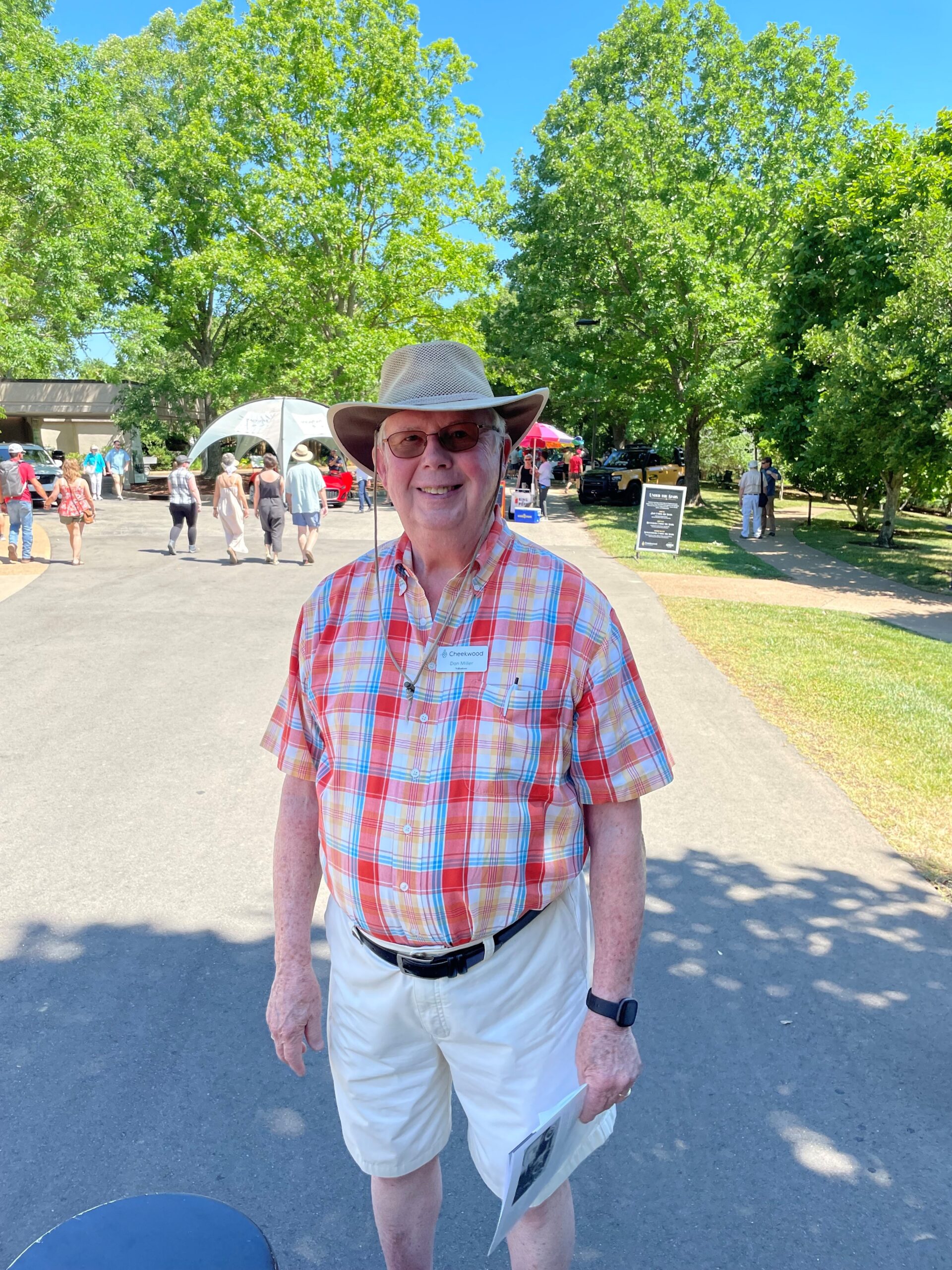
Volunteer Spotlight: Don Miller


Don Miller has never met a stranger…he is welcoming and warm to everyone he meets. He takes time to greet guests, share his knowledge and enthusiasm about Cheekwood’s history, our garden displays, art exhibitions, activities for children and programs. He serves at our many seasonal, cultural and special events, supports our outreach work, mentors and trains new volunteers, and is in a leadership role by serving on our Volunteer Committee. Don is a true ambassador for Cheekwood.


Tell us a little about yourself and your background.

I spent most of my life around Syracuse, New York. After graduating from Syracuse University I worked for 31 years for the same company and became the Manager of Computer Programmers. When that company left New York State in 1995 I became the Business Manager of our Catholic parish for 19 years. My wife and I were married for 42 years before she passed away from ovarian cancer in 2012. I reconnected with the girl that introduced my first wife and I and we were married in 2014 and I moved to Tennessee where she lived.

What are your favorite hobbies, activities, or interests?

When I arrived in Tennessee I started volunteering. I volunteer 3 days a week at Williamson Medical Center (hospital in Franklin), also do Meals On Wheels and volunteer at Cheekwood. Why these specific jobs? Because they offer me exercise and sociability, the two things I need most in my life now. I also take Life Long Learning classes at Lipscomb. And I enjoy day trips around Tennessee with Fifty Forward and the Williamson County Enrichment Center. Over the years my wives and I have enjoyed much travel in this county and abroad. Our favorite - Ireland. Next favorite - the Vatican and southern Italy. My wife is in Assisted Living so those kinds of trips are out. At home I have two lovely kitty cats. Love them dearly.

What is your favorite garden or area at Cheekwood and why?

The Color Garden because it is the first garden people see when they come in to Cheekwood and it is so beautiful especially during Cheekwood In Bloom. Second would be the trains.

Do you have a favorite artwork at Cheekwood, or, if not, a favorite exhibition that Cheekwood has hosted? Is there a reason you like it?

Not a favorite artwork but I loved the decorations inside the mansion last Christmas time.

Why did you decide to become a volunteer at Cheekwood?

To show first time visitors how to best see the various exhibits whether it be Cheekwood In Bloom or Harvest or Holiday Lights or the trains or the differing summer exhibits.

What have you enjoyed the most about your volunteer experience?

Being around nice people and beautiful surroundings.

Is there a funny or inspirational story you can briefly tell about your volunteer experience?

Definitely volunteer. The people (staff and other volunteers) are very welcoming and the exhibits change from season to season and are beautiful regardless of season. (And the Volunteer Director is pretty nice also.)

For more information about volunteering visit our volunteer web page: www.cheekwood.org/support/volunteer

test

Top Plant Picks June 2025

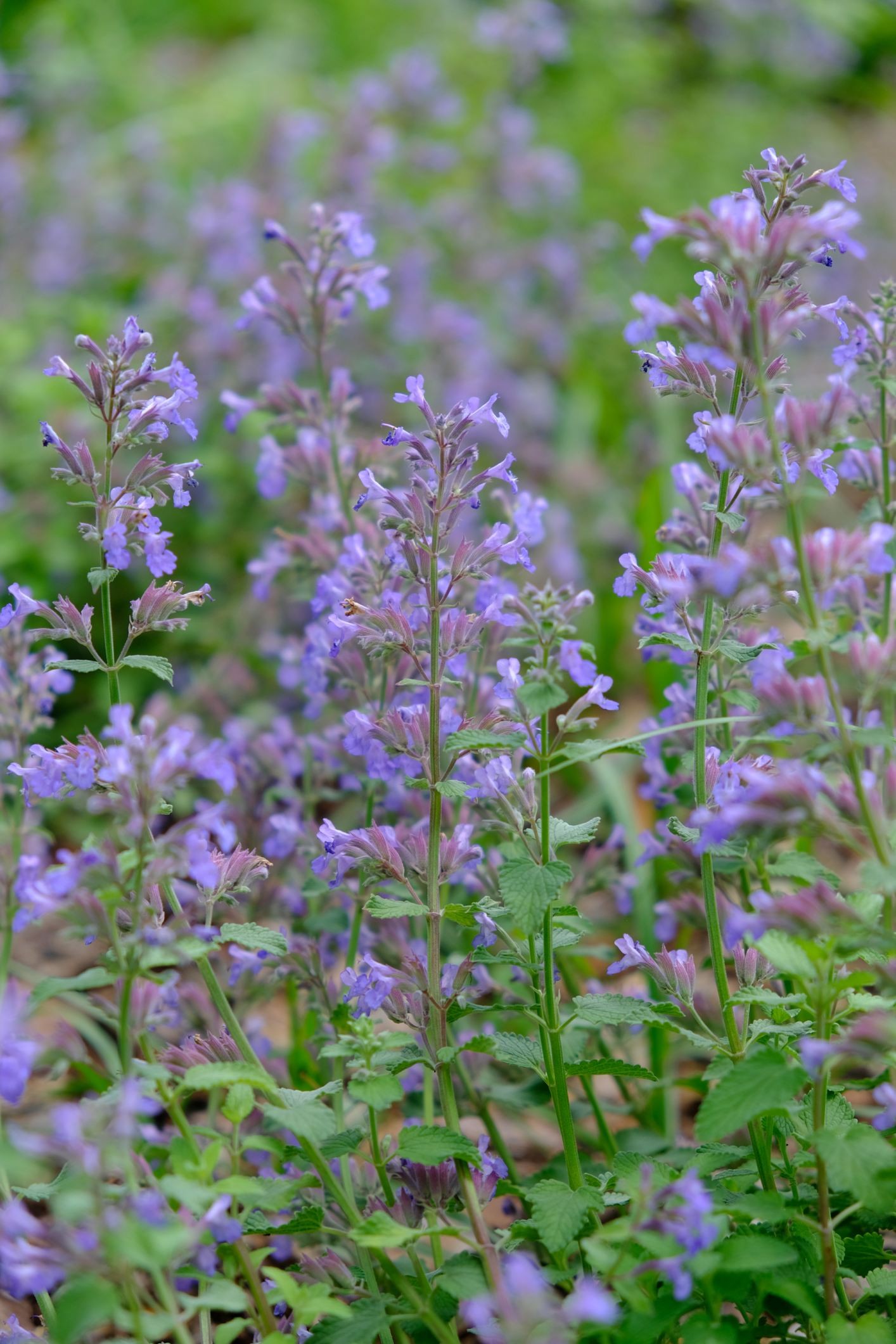
Nepeta racemosa ‘Blue Wonder’ (Catmint)

Bloom Time: May to September

Sun Requirement: Full Sun to Part Shade

Water Requirement: Low to Medium

Wildlife: Hummingbirds and pollinators

Tolerates: Deer resistant, tolerates dry and rocky soil

Native to North America: N/A

Zones: 3 to 8

Other: A dwarf, mounding perennial producing blue flowers profusely through the summer.

Location: Sigourney Cheek Literary Garden

O

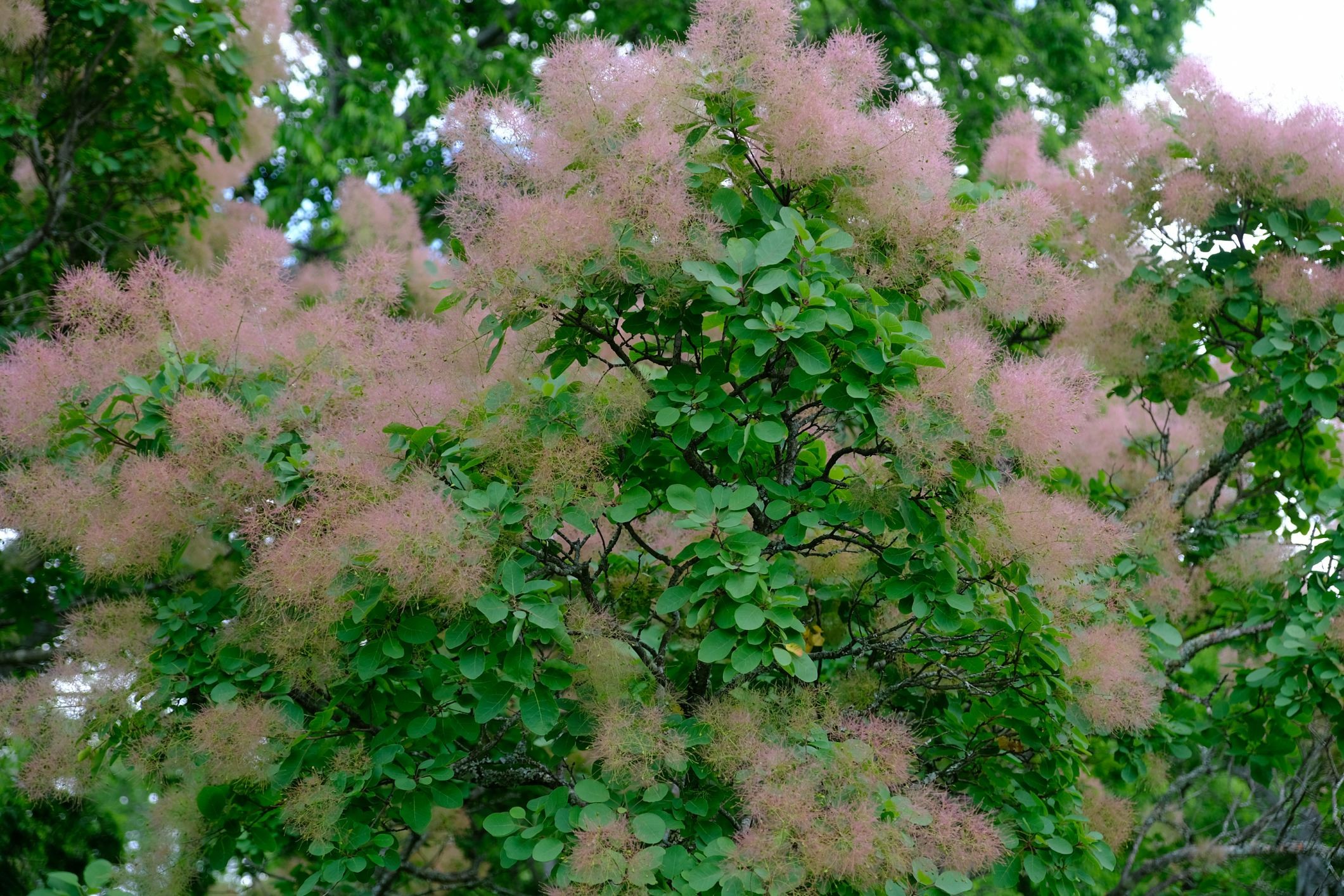
Cotinus coggygria (Smoketree)

Bloom Time: May to July

Sun Requirement: Full Sun

Water Requirement: Medium

Wildlife: Nesting sites for birds

Tolerates: Deer and drought resistant

Native to North America: No

Zones: 5 to 8

Other: The airy panicles of flowers cover the canopy of this shrub in a haze of pink.

Location: Arboretum

O

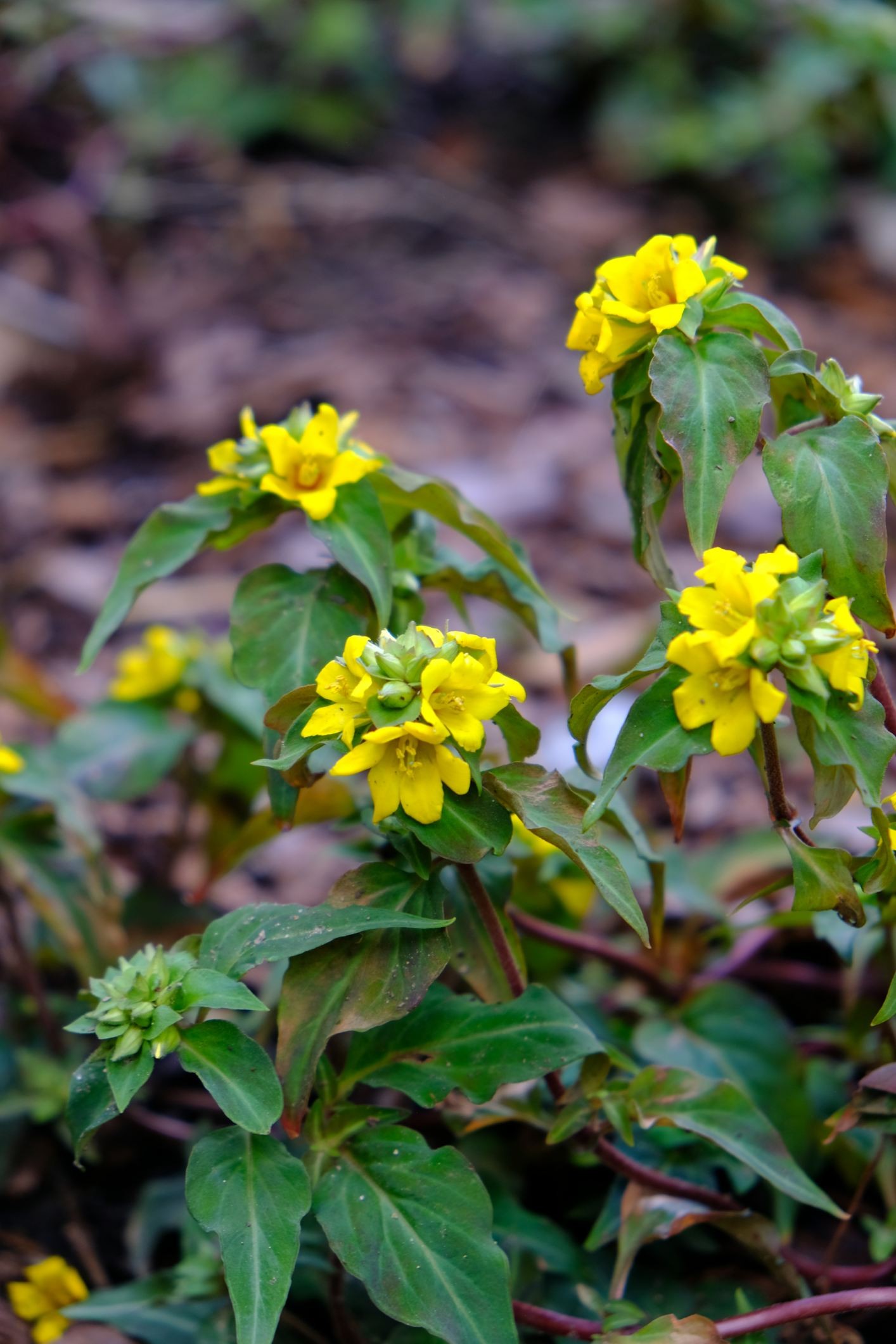
Lysimachia ‘Night Light’ (Moneywort)

Bloom Time: May to September

Sun Requirement: Part Sun to Shade

Water Requirement: Medium

Wildlife: Attracts bees

Tolerates: Shade tolerant

Native to North America: N/A

Zones: 5 to 9

Other: When planted in the shade, leaves turn an attractive burgundy color.

Location: Bradford Robertson Color Garden

O

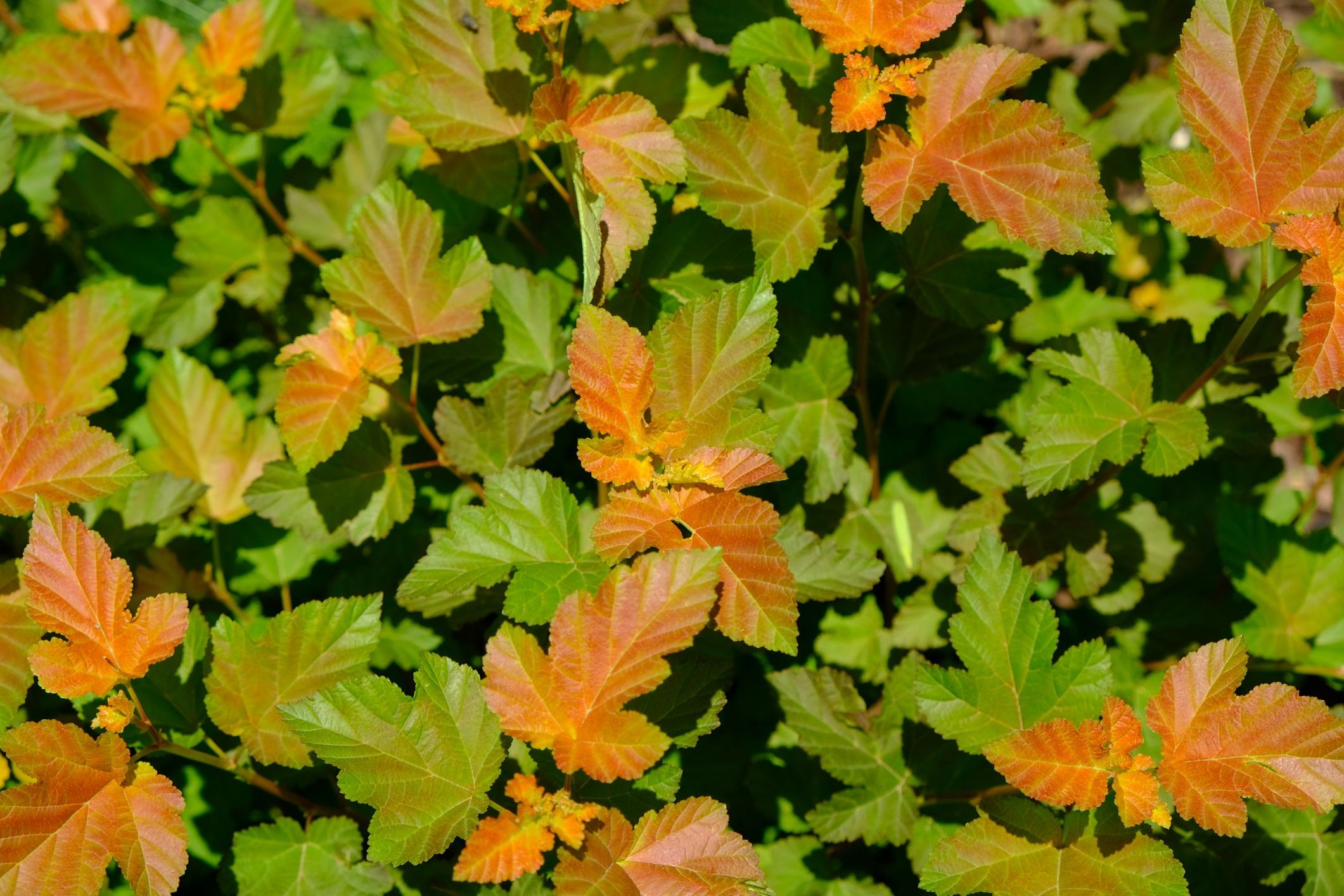
Physocarpus opulifolius ‘Jefam’ (Ninebark)

Bloom Time: May to June

Sun Requirement: Full Sun to Part Shade

Water Requirement: Low to Medium

Wildlife: Attracts birds and bees

Tolerates: Tolerates drought, dry and rocky soil

Native to North America: N/A

Zones: 2 to 8

Other: The new growth of this ninebark is a stunning orange with yellow veins.

Location: Herb Study Garden

O

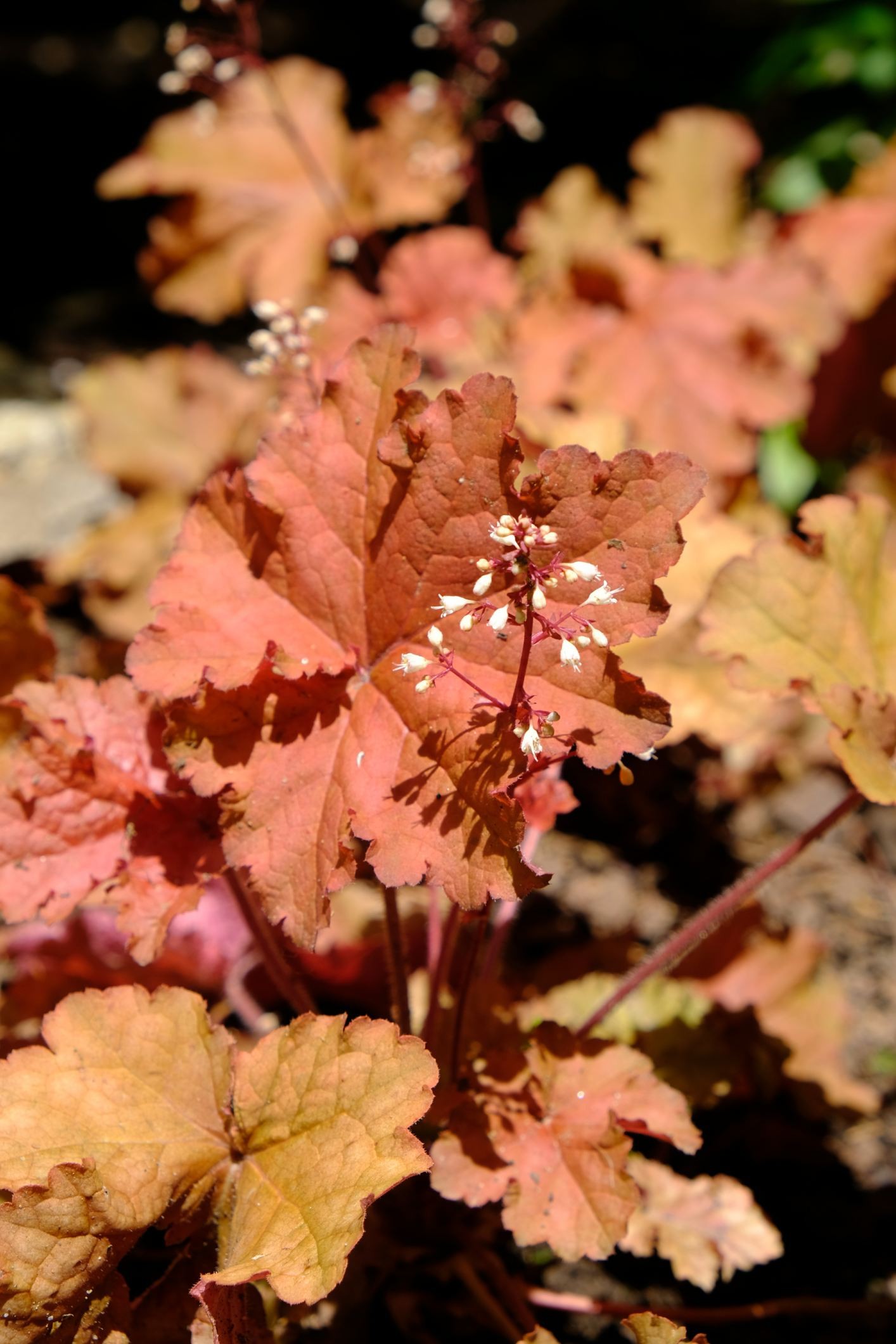
Heuchera ‘Peachberry Ice’ (Coral Bells)

Bloom Time: May to June

Sun Requirement: Full Sun to Shade

Water Requirement: Medium

Wildlife: Bees and butterflies

Tolerates: Salt tolerant

Native to North America: N/A

Zones: 4 to 9

Other: This excellent perennial features large, ruffled, apricot-colored leaves.

Location: Howe Garden

O

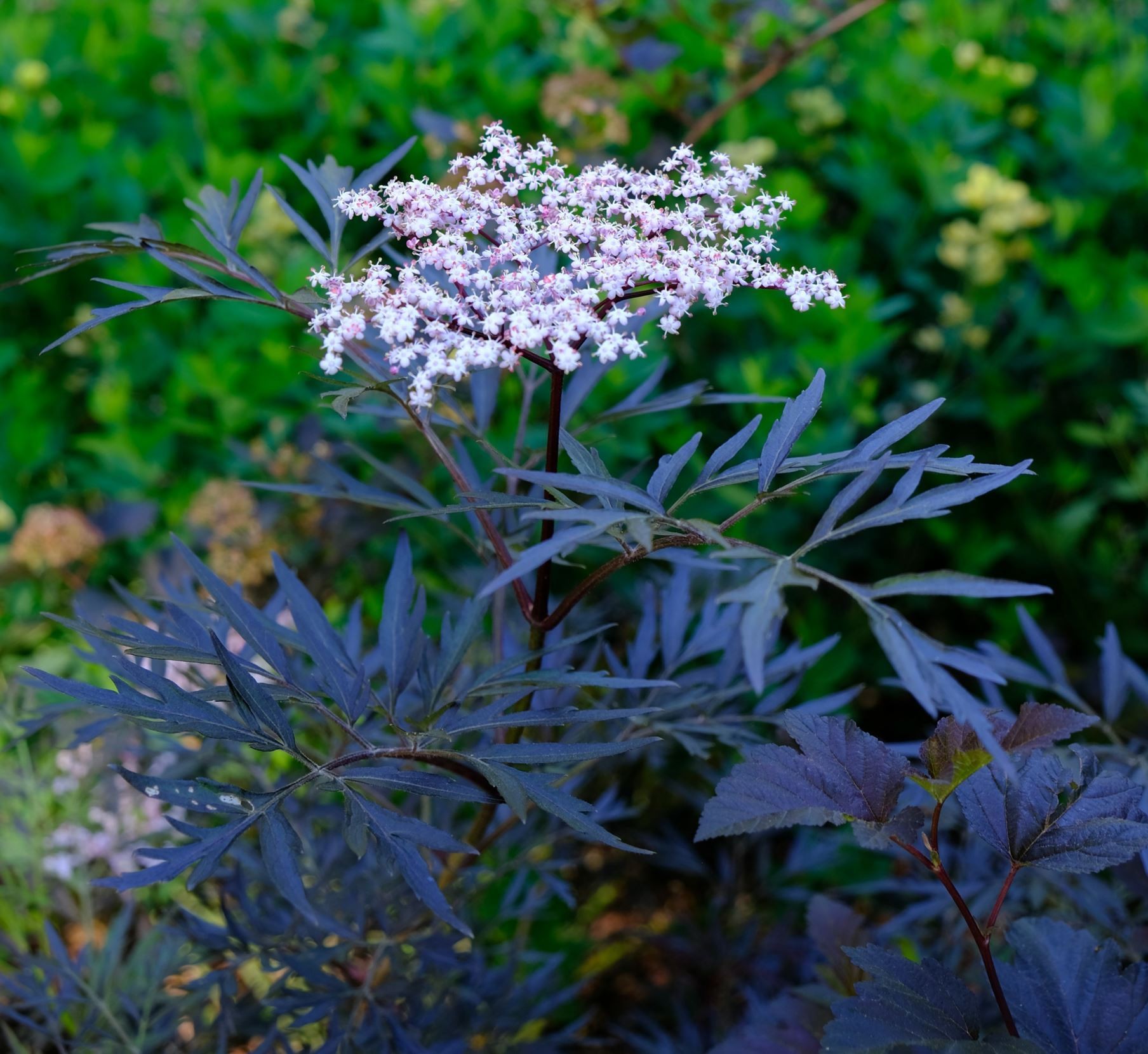
Sambucus nigra ‘Eva’ (Black Elder)

Bloom Time: June to July

Sun Requirement: Full Sun to Part Shade

Water Requirement: Medium to High

Wildlife: Birds and butterflies

Tolerates: Clay soils

Native to North America: N/A

Zones: 4 to 7

Other: Features deeply cut purple foliage, pink blooms, and dark mahogany red berries.

Location: Howe Garden

O

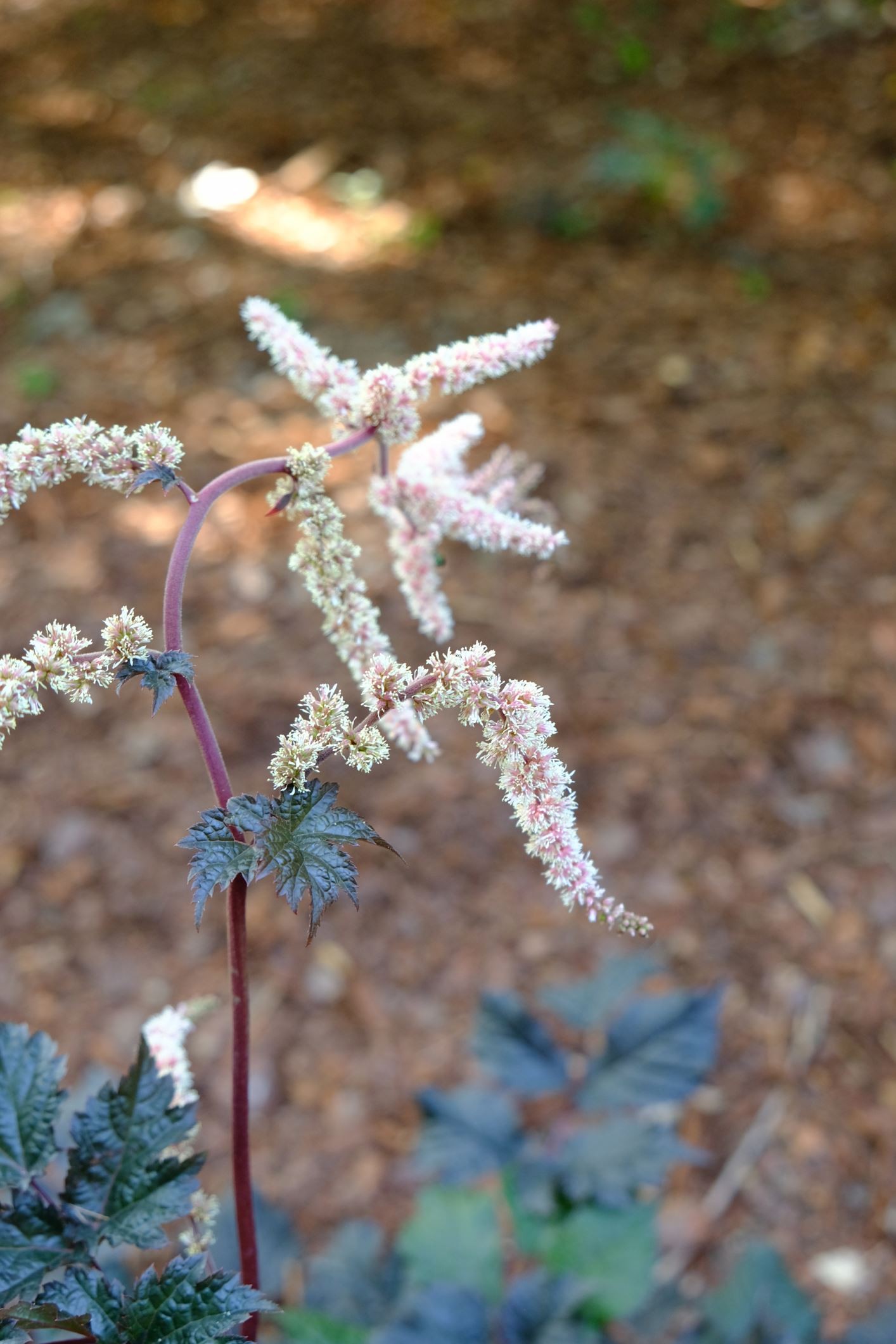
Astilbe thunbergii ‘Chocolate Shogun’ (False Spirea)

Bloom Time: June to July

Sun Requirement: Part Sun to Shade

Water Requirement: Medium to High

Wildlife: Butterflies

Tolerates: Deer and rabbit resistant

Native to North America: N/A

Zones: 4 to 8

Other: Pink flowers rise above dramatic purple-bronze foliage.

Location: Bradford Robertson Color Garden

O

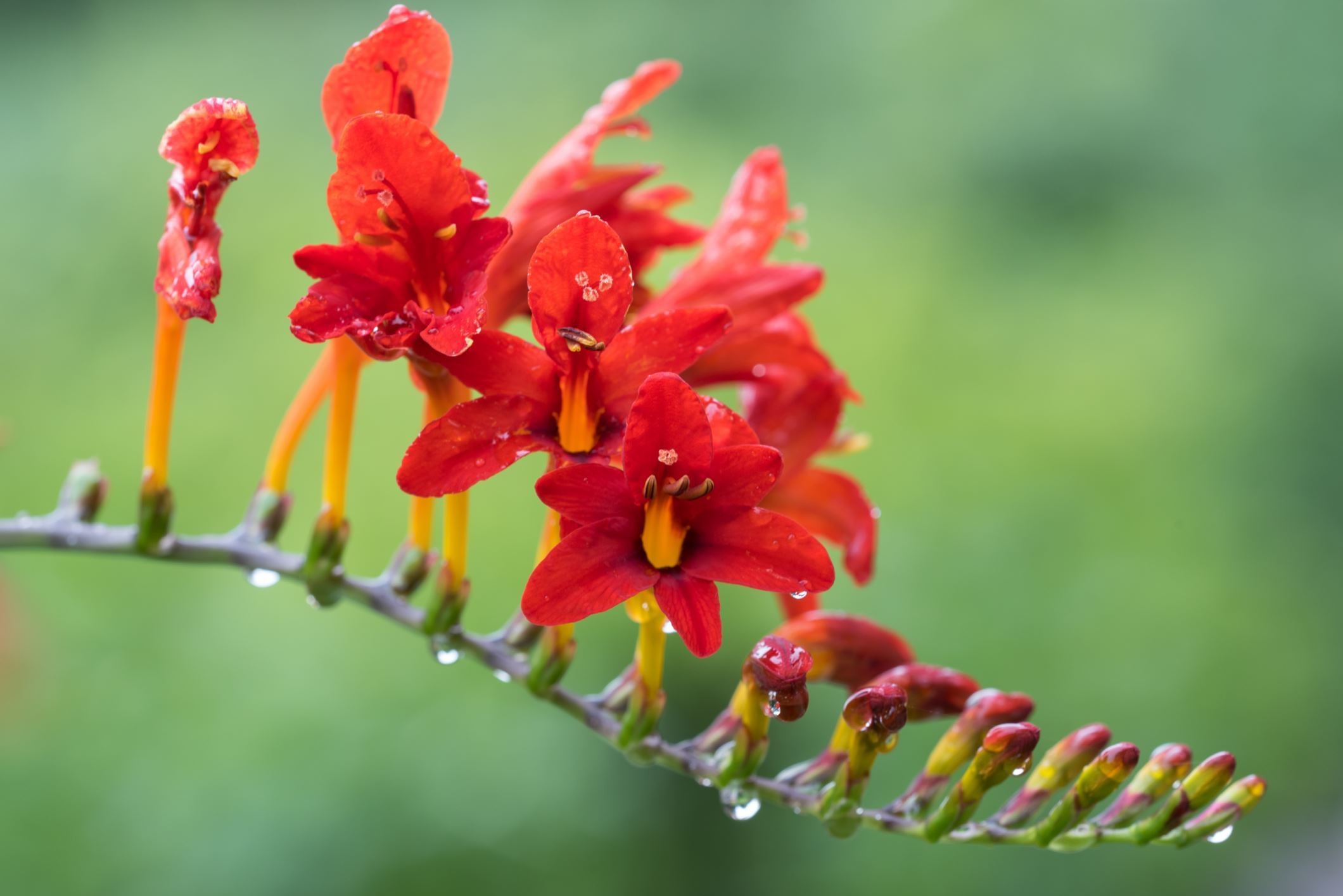
Crocosmia ‘Lucifer’ (Montbretia)

Bloom Time: June to August

Sun Requirement: Full Sun to Part Shade

Water Requirement: Medium

Wildlife: Hummingbirds and bees

Tolerates: Heat tolerant

Native to North America: N/A

Zones: 5 to 9

Other: Arching stalks lined with scarlet red flowers rise above the clumping foliage.

Location: Sigourney Cheek Literary Garden

O

test

Sowing Seeds and Spilling Beans: A Brief History of Carrots

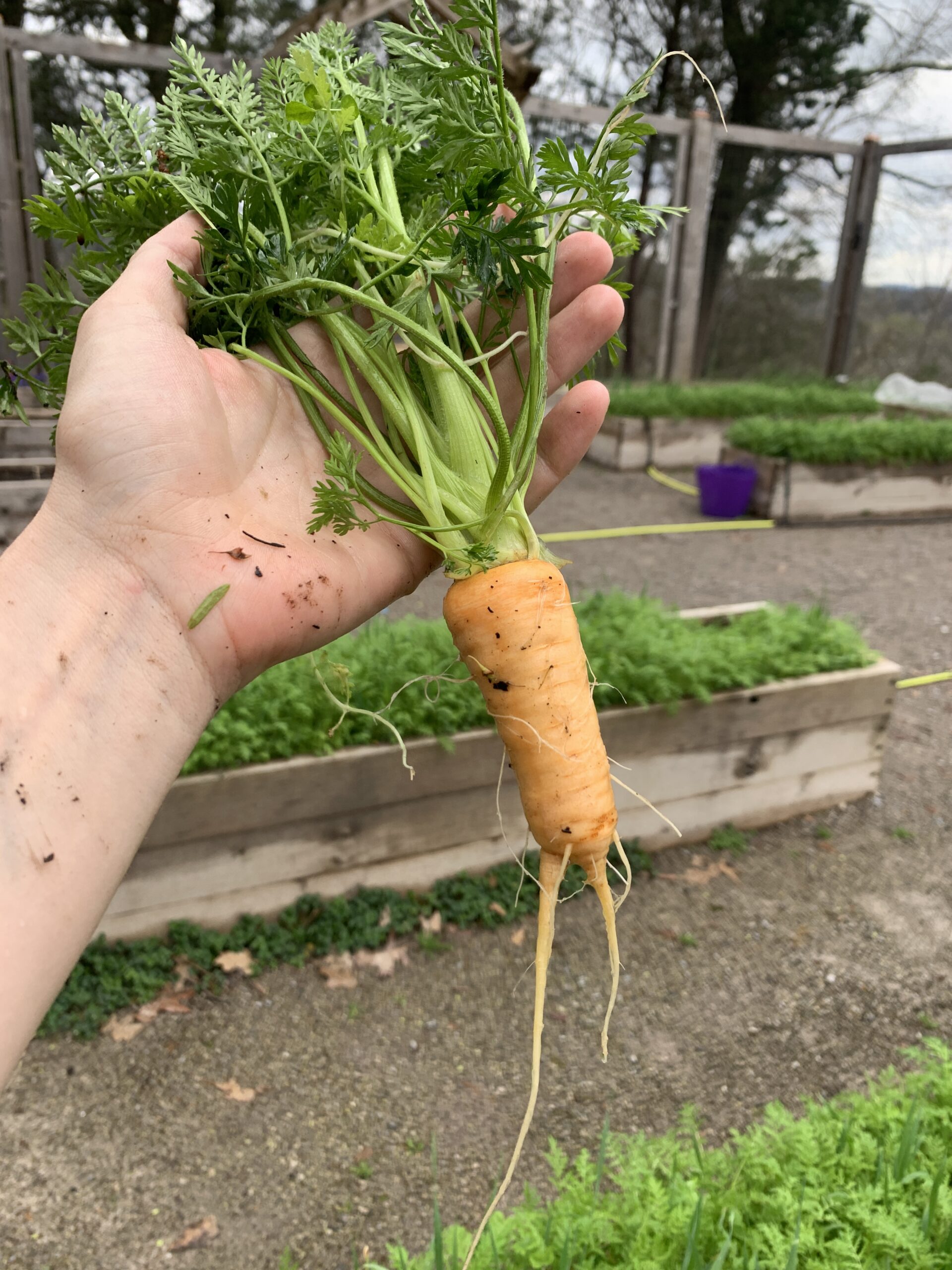
Featured Image: A carrot with personality.

Hello readers!

My name is Natasha, and I’m the Garden Educator at Cheekwood. My work here involves managing a raised bed vegetable garden (the Cheekwood GROWS Garden) and leading educational programming in this space. In this monthly blog series, I explore cultivated edible plants and our relationships with them in Middle Tennessee.

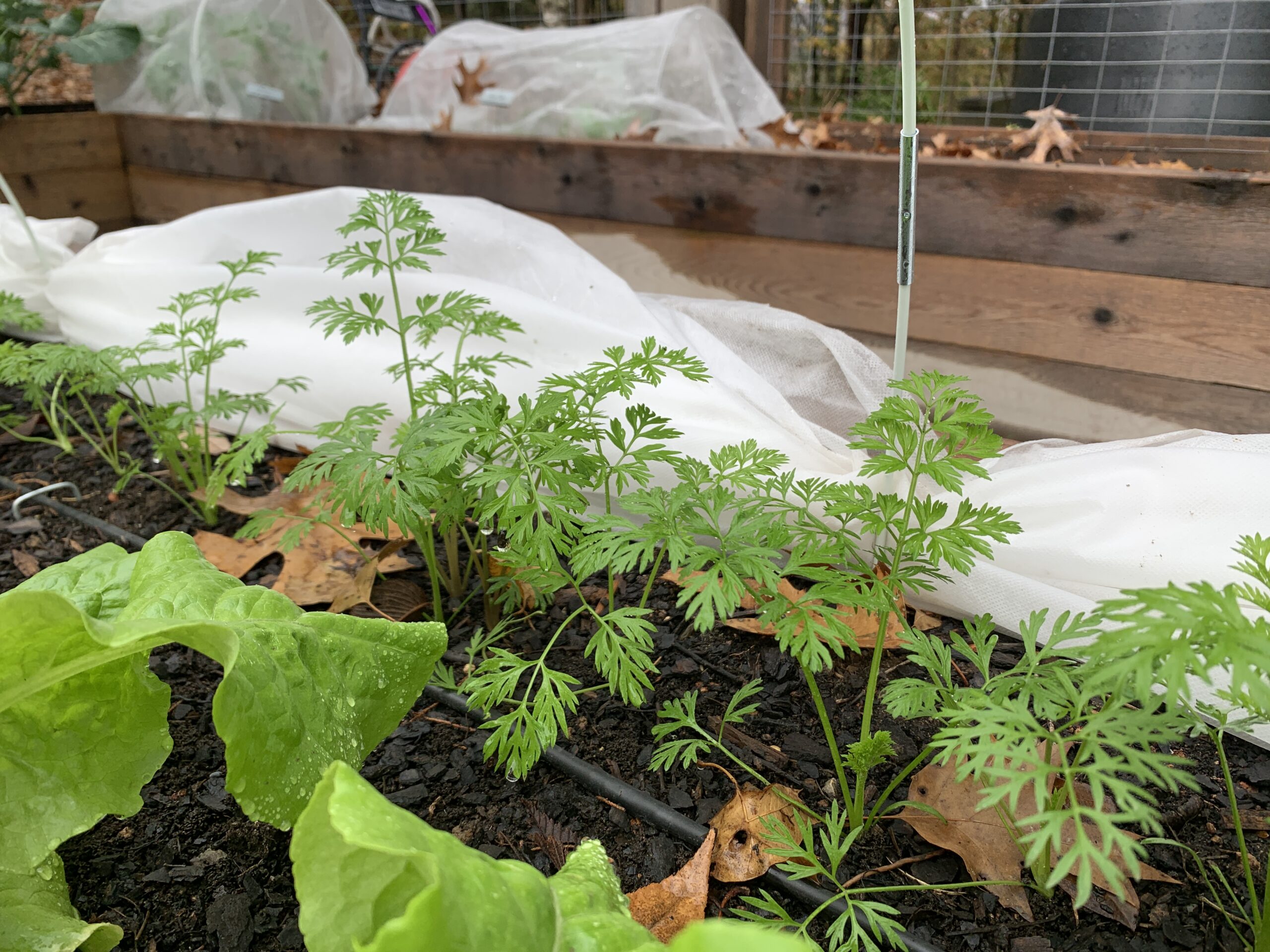
Carrots (Daucus carota) are a sign of spring throughout much of the United States. They are a slow-growing cool season vegetable, somewhat tolerant of frost and less fond of temperatures above 80° F. For growers in our region, that means there are two short windows for planting. Sow carrot seeds in August for a winter harvest, making sure to protect the plants with frost cloth once temperatures start to dip below freezing. Plant in March for a late spring harvest, keeping in mind that soil temperatures need to be at least 40° F for the seeds to germinate.


As their delicate foliage suggests, carrots can be fussy. They prefer finely sifted soil free of rocks or clumps of clay and can take up to 14 days to germinate. The seeds are so tiny that it is difficult to plant them at the correct spacing, meaning that thinning is usually required once or twice during the growing process.

Perhaps the hardest part of growing carrots is the wait time – the roots can take almost three months to fully enlarge! But eventually, they will begin to poke up out of the ground, a signal that it’s time to harvest. These enlarged roots are called taproots, an evolutionary adaptation allowing plants to push deep into the soil to collect and store water and nutrients. If you were to leave a carrot in the ground, it would continue to store energy in its taproot until the following year, when the plant would use the stored energy to put out lacy white flowers, and the root would turn tough and inedible.

Image 2_Carrot early growth

Carrots in an early stage of growth.

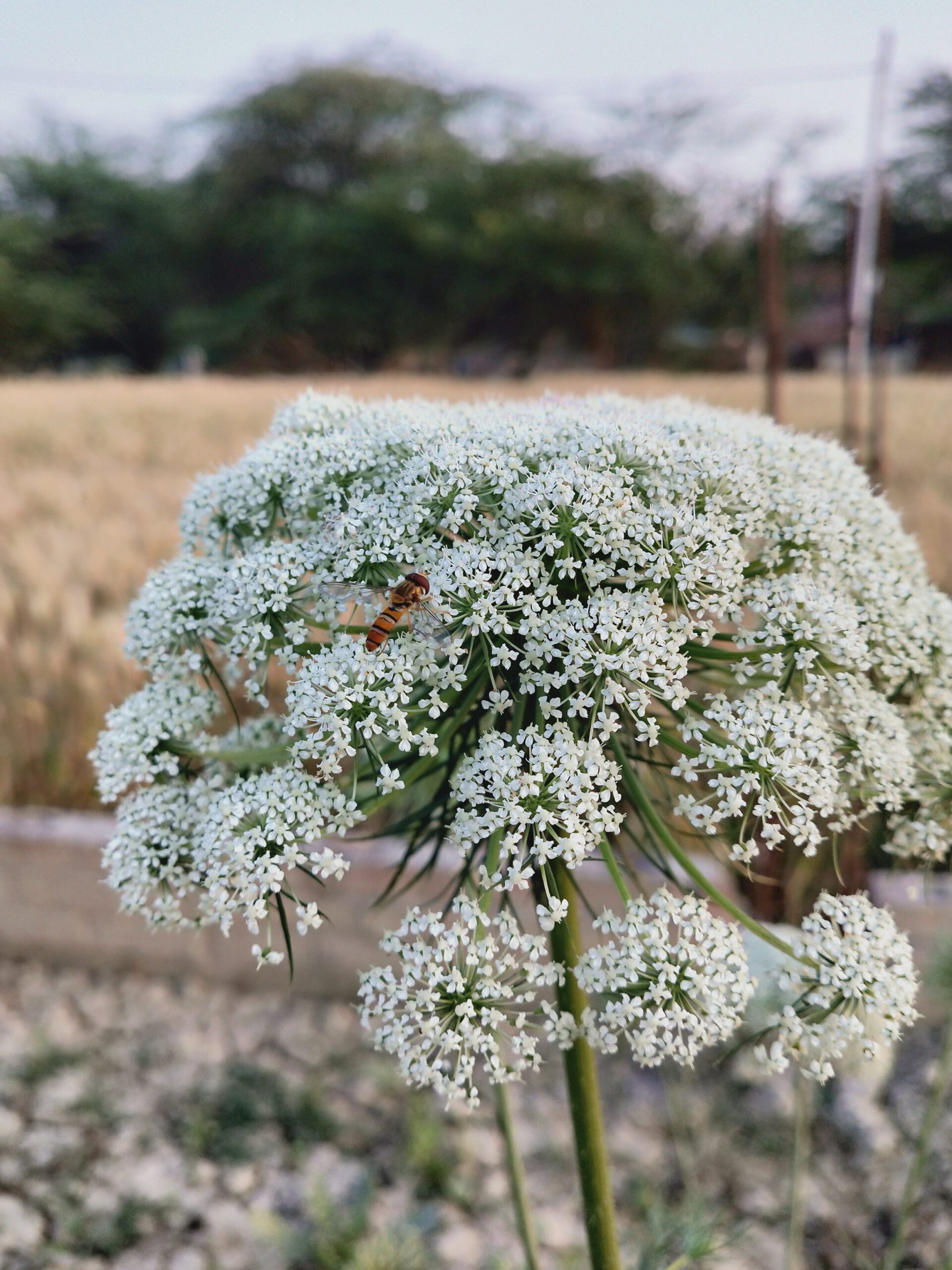
You may have seen these carrot flowers before, as the wild form of Daucus carota is a common roadside weed in much of North America. Often known as Queen Anne’s Lace, this plant is native to temperate regions of West Asia and Europe and categorized as invasive in some regions of the United States. In the wild, Daucus carota does not produce the enlarged roots that we love to crunch on, but the entire plant gives off an unmistakable carrot-y scent.


oppo_2

A wild, flowering carrot, also known as Queen Anne’s Lace.

This fragrance is emblematic of the carrot’s taxonomic family, called Apiaceae. Among this family’s members are culinary herbs that all boast delicate, distinctive scents: cilantro, parsley dill, fennel, and cumin. It’s therefore unsurprising that the first people to intentionally grow Daucus carota did not use the roots as a direct food source but instead harvested the delicately scented leaves and seeds for culinary seasoning and medicinal use. This initial carrot root cultivation took place in present-day Iran and Afghanistan, a region that remains a center of carrot diversity to this day.

It wasn’t until the 10th century that growers began selecting carrot plants with enlarged, colorful roots. The first carrots were purple and yellow, more akin to the rainbow carrots you might see at a farmer’s market than the orange ones on grocery store shelves. Orange carrots did not hit the scene until the 17th century, when Dutch farmers encountered a genetic mutation that caused carrot roots to produce higher quantities of carotenoids: chemical compounds that give many plants an orange hue. These orange carrots were sweeter than their counterparts and quickly gained popularity around the world.

The carrot’s arrival in North America is hard to pinpoint, but it’s clear that it was brought here by colonizers seeking to replicate European agricultural systems. Today, carrots are the fourth most-consumed vegetable in the United States, and their popularity is largely due to the innovation of a Californian farmer. For much of the 20th century, carrot farmers struggled to keep up with the trend towards large-scale mechanized agriculture. Americans increasingly expected aesthetic perfection in grocery stores, and carrots were inherently imperfect. By the 1980s, farmers were discarding more carrots than they were selling due to visual imperfections.

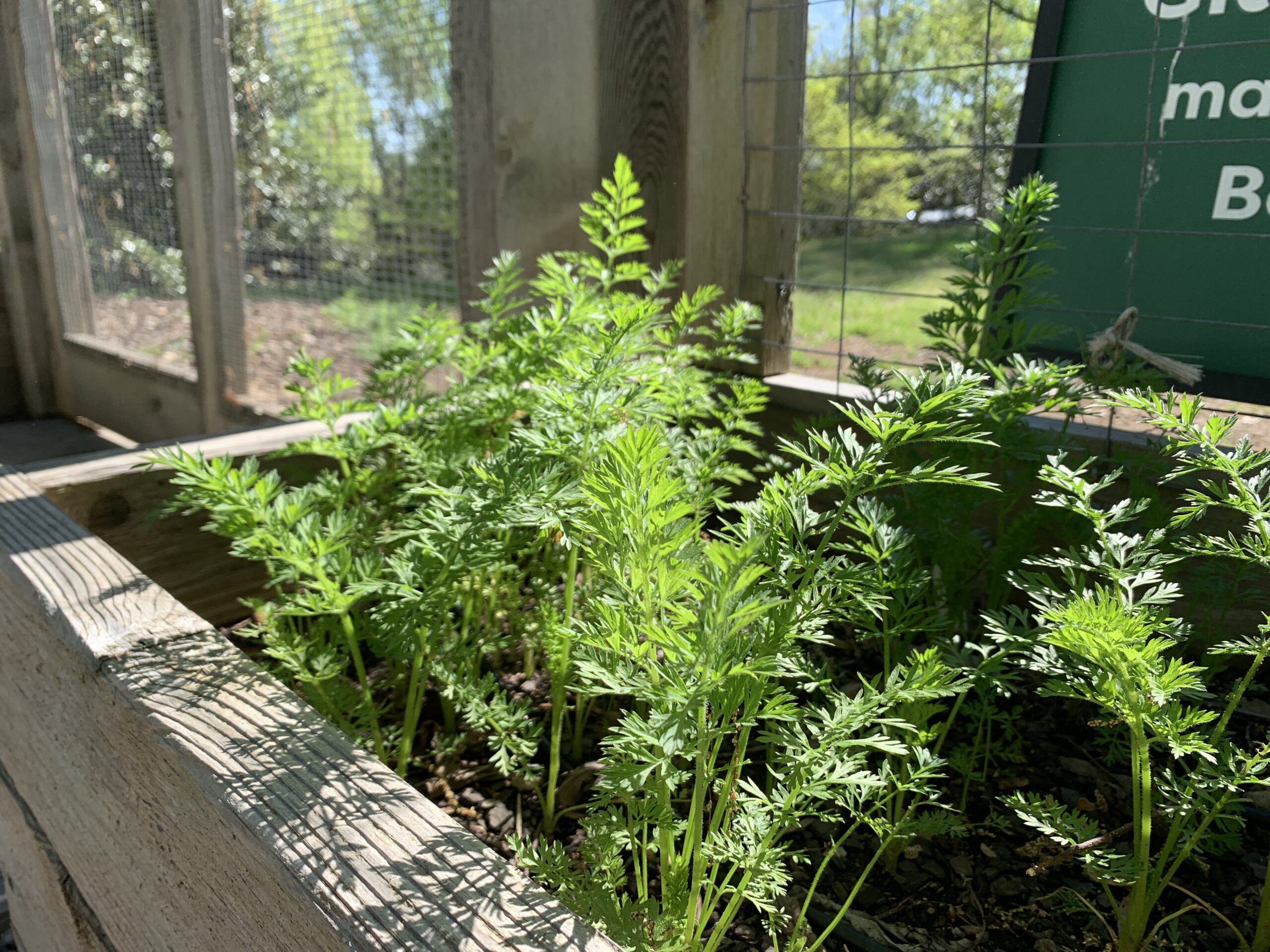
Image 4_Carrot tops

Springtime carrot tops.

Frustrated by this dilemma, farmer Mike Yurosek developed the “baby carrot,” using an industrial potato peeler to shave imperfect carrots down into snack-sized nubs. These were an instant hit, at once solving a waste problem, improving profits for farmers, and turning carrots into convenience food. Carrot consumption doubled within the following decade, and the crop earned its place in the agro-industrial complex. Today, two companies control over 60 percent of commercial carrot production in the U.S.

The nice thing about growing carrots in a home garden is that you don’t have to chop up your imperfect roots or contribute to our commercialized food system. Small seed companies offer endless variety when it comes to color, size, and shape, and I get my seeds from Southern Exposure Seed Exchange to access varieties especially suited to the South and support small farmers growing heirloom seeds. When you’re ready to harvest, see below for a carrot recipe that incorporates multiple parts of the plant as well as some of its Apiaceae relatives.


Roasted Carrots with Carrot Top Tahini Sauce

For the roasted carrots:

  • 2 lb medium-sized carrots
  • 4 tbsp extra virgin olive oil
  • 1 tbsp ground cumin or lightly crushed cumin seeds
  • 1/4 cup maple syrup or honey
  • Salt to taste

For the carrot top tahini sauce:

  • Juice and zest of 2 lemons
  • 2 cloves garlic
  • 2 cups carrot tops, coarsely chopped
  • 1 cup dill, parsley, or cilantro, coarsely chopped
  • 1/2 cup tahini
  • 1/4 cup extra virgin olive oil
  • Salt to taste

Instructions:

For the roasted carrots:

  1. Preheat oven to 425° F and line a sheet tray with parchment paper.
  2. Trim off carrot tops, cut carrots into thirds, then halve them lengthwise. Peeling is not necessary.
  3. In a large bowl, combine carrots, olive oil, cumin, maple syrup, and salt.
  4. Spread carrots onto sheet tray, making sure to space them evenly apart.
  5. Roast carrots in the oven for 30 minutes, or until fork tender and slightly caramelized.

For the carrot top tahini sauce:

  1. Combine lemon juice and zest, garlic, carrot tops, herbs, and olive oil in a blender. Blend until smooth, adding cold water as necessary to help the ingredients combine.
  2. Pour mixture into a medium bowl and add tahini. Whisk until fully incorporated, then season with salt to taste.
  3. Drizzle sauce over roasted carrots and enjoy!

If you have questions, comments, or suggestions for future topics, you can contact me at ngibbs@cheekwood.org.

Sources:

  1. Carrot production statistic source: link
test

Member Spotlight: Laura Scott

<h2>When people see how gorgeous Cheekwood is and how much there is to do there, they are hooked! One visit is simply not enough.</h2>
Laura Scott | Cheekwood Member since 2001

When Laura Scott mentioned that Cheekwood is very important in the lives of her family, we had to know more. A self-proclaimed proud Nashvillian, Laura is a decades-long resident after moving from Miami to attend Vanderbilt University. She and her husband are raising their family here. Keep reading below for our Q&A with Laura.


What inspired you to become a Cheekwood Member?

My mother-in-law gave us a Cheekwood Membership to have a beautiful place to let my girls run. Cheekwood is very important in our lives, and we renew our Membership each year. My girls learned to love visiting museums from our many trips to the Mansion galleries.

What is your favorite time of year at Cheekwood?

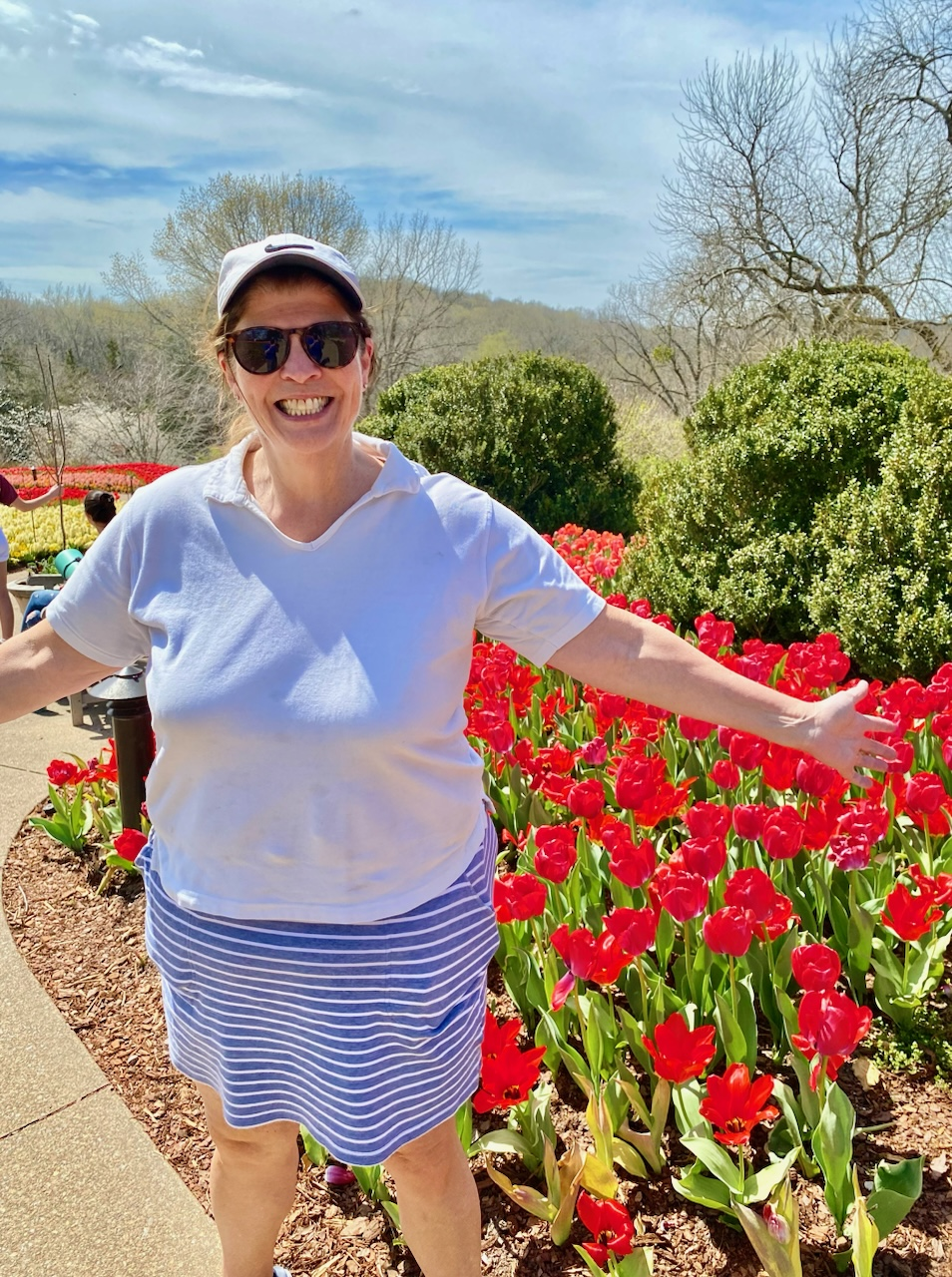
I love the thousands of tulips in the spring! We visit often to see the tulips in their various stages and to see what new ones have opened! The number of bulbs planted is staggering.

Which gardens, areas, or plants do you most enjoy when visiting Cheekwood, and why?

I never miss visiting the Blevins Japanese Garden and bamboo! It is peaceful and serene.

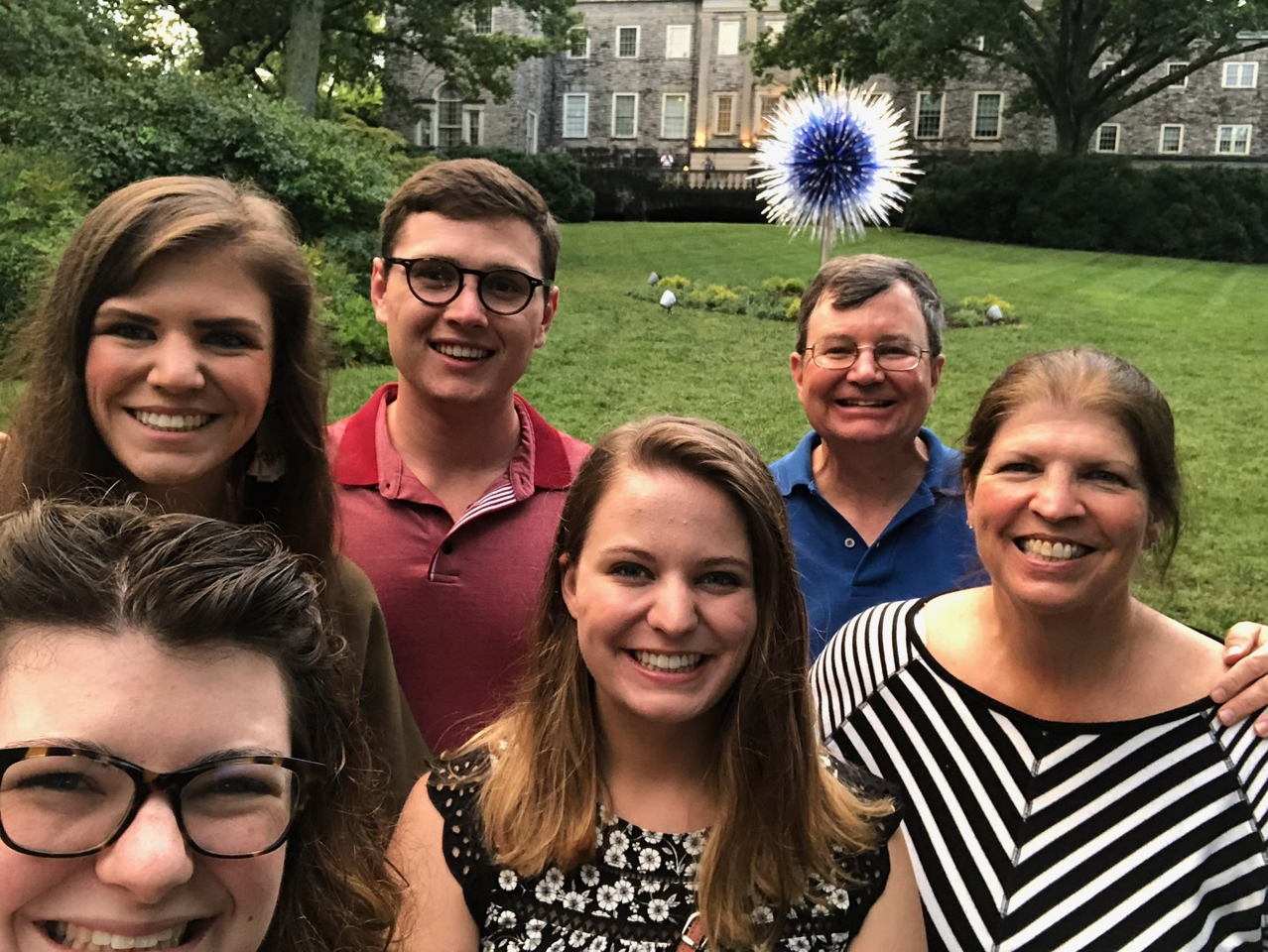
Member Spotlight_Laura Scott_Family of 6

Do you have a favorite piece of art at Cheekwood or a favorite art exhibition Cheekwood has hosted?

My favorite art exhibitions were the Chihuly glass sculptures in 2010 and 2020. My mother-in-law made stained glass windows for churches, so we are especially appreciative of art glass.

What is one of your favorite memories involving Cheekwood?

Two of my daughters separately celebrated their 16th birthdays at Cheekwood along with two dozen friends with whom to roam the gardens and Mansion. My younger daughter’s friends came dressed up as garden fairies! Both daughters remember this as a favorite party.

Why do you think Cheekwood is important in our community?

Cheekwood is easy access to art and nature for us city dwellers. I am thankful for the wise leadership at Cheekwood who are preserving it for future residents to enjoy. The number and quality of exhibitions and activities have dramatically improved since we first joined.

Member Spotlight_Laura Scott & Tulips
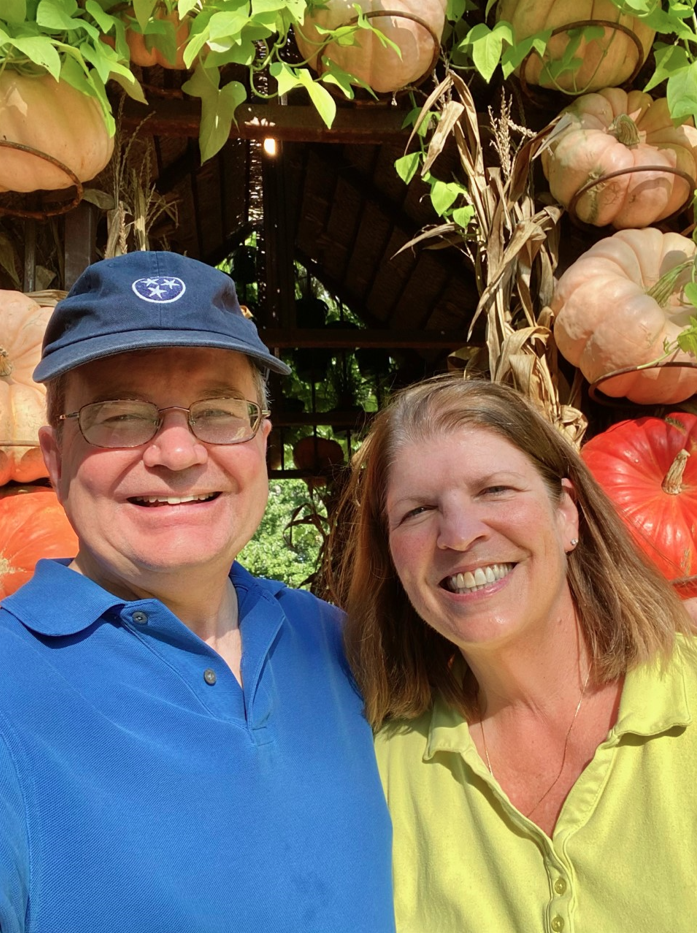
Member Spotlight_Laura Scott_Pumpkin House

Cheekwood offers so many programs and activities that our members really enjoy. What are some that you or your family have especially enjoyed?

Of course we love Cheekwood’s Holiday LIGHTS! It is a family tradition! This year, we brought our new granddaughter to see the lights. The Christmas decorations by Laura Dowling in the Mansion were the most spectacular I have seen there.

How do you encourage others to become Cheekwood Members?

Being a Member is such a great value! One of my friends joined after I brought her as my guest. When people see how gorgeous Cheekwood is and how much there is to do there, they are hooked! One visit is simply not enough.

Join Cheekwood today and experience the unrivaled beauty of Nashville’s Country Place Era Estate. Members can enjoy inspiring art and garden exhibitions, family activities, programming for all ages, music events, and year-round seasonal festivals.

test

Top Plant Picks May 2025

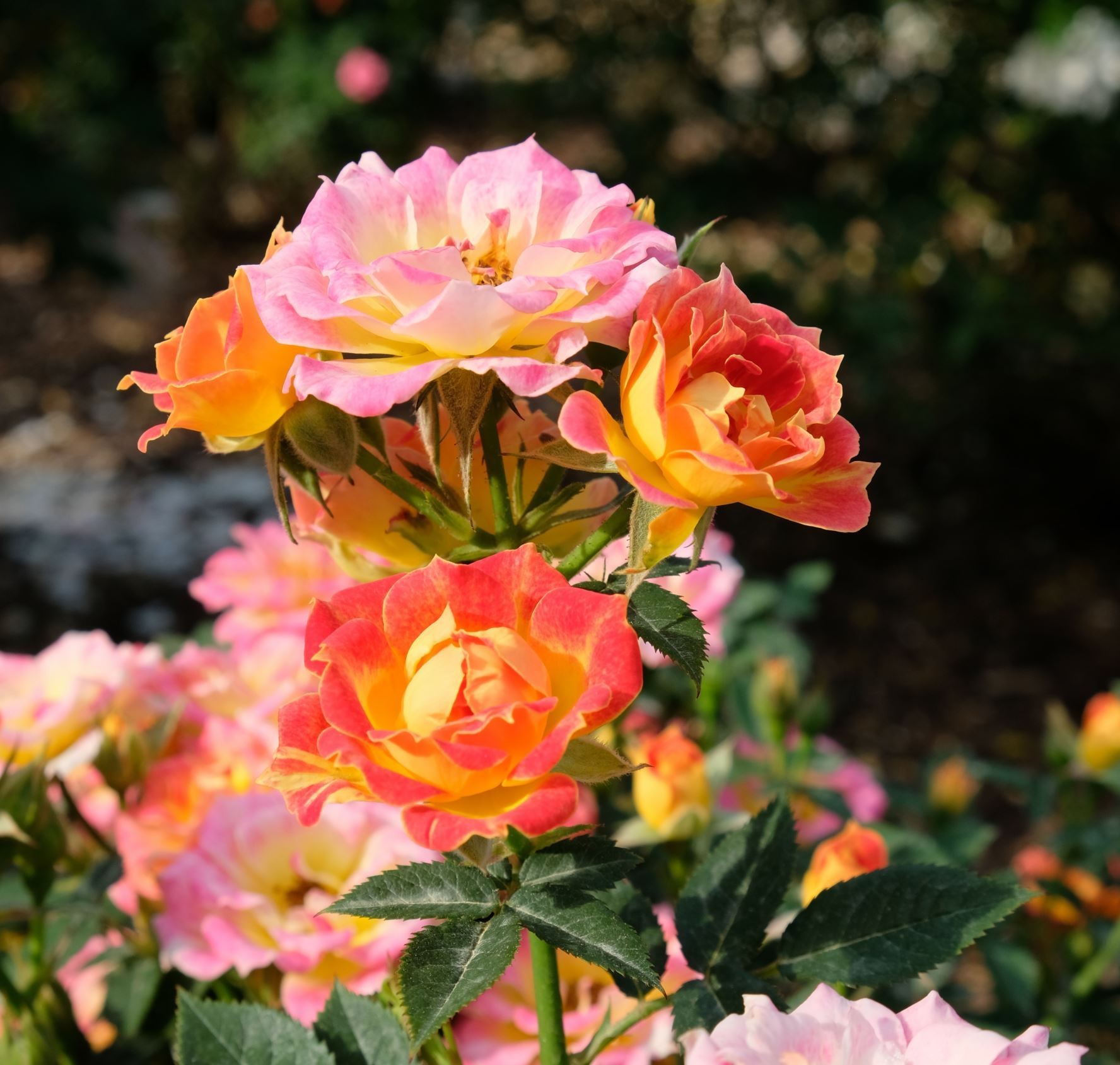
Rosa ‘Rainbow’s End’ (Miniature Rose)

Bloom Time: May to October

Sun Requirement: Full Sun

Water Requirement: Medium

Wildlife: Butterflies

Tolerates: Decent resistance to common foliar diseases

Native to North America: N/A

Zones: 5 to 11

Other: This miniature rose has deep yellow blooms with orange-red tips.

Location: Rose Study Garden

O

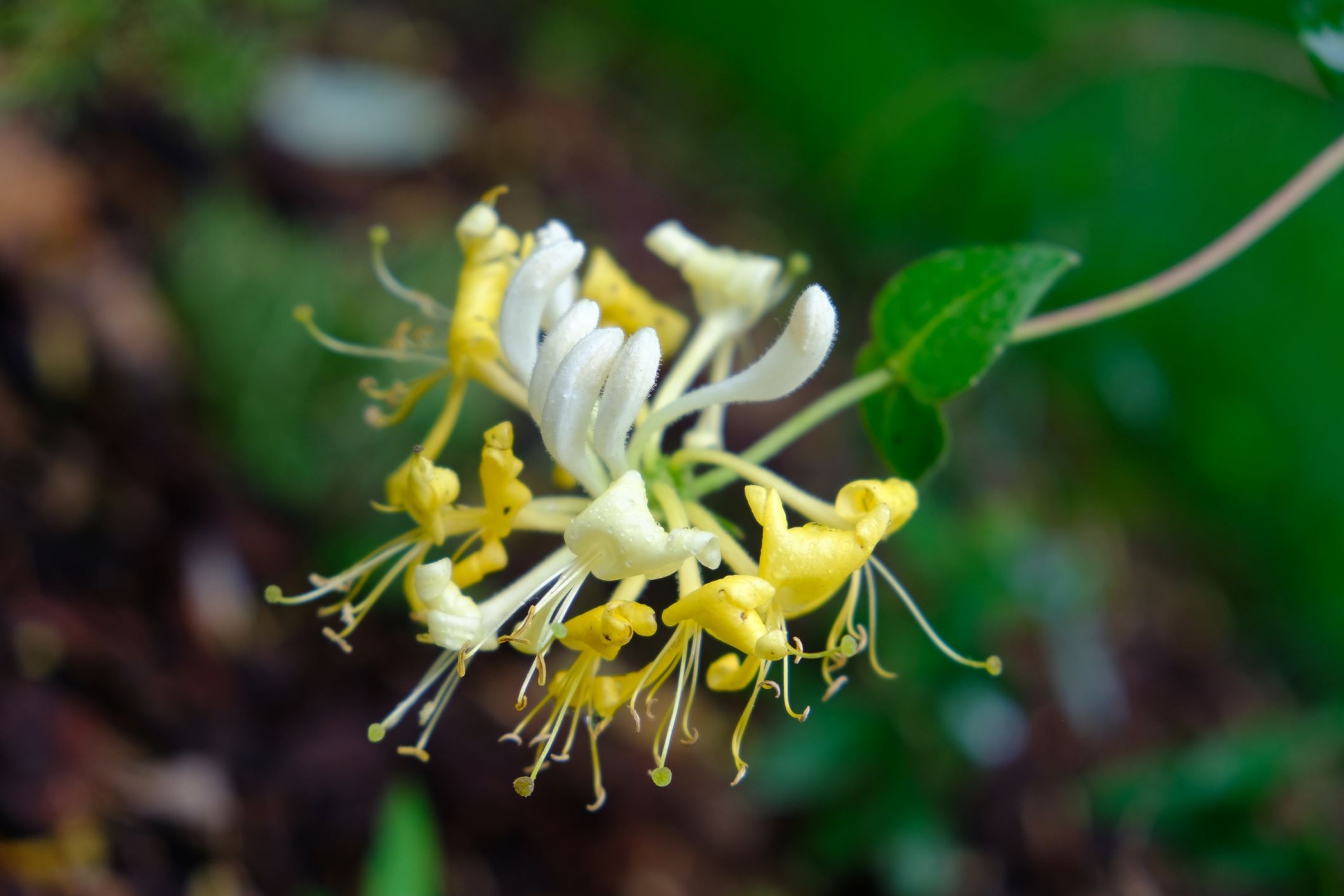
Lonicera periclymenum ‘Scentsation’ (Honeysuckle)

Bloom Time: May to October

Sun Requirement: Full Sun

Water Requirement: Medium

Wildlife: Birds and Hummingbirds

Tolerates: Black Walnut and Deer resistant

Native to North America: N/A

Zones: 5 to 9

Other: This showy vine has fragrant yellow flowers followed by bright red berries.

Location: Herb Study Garden

O

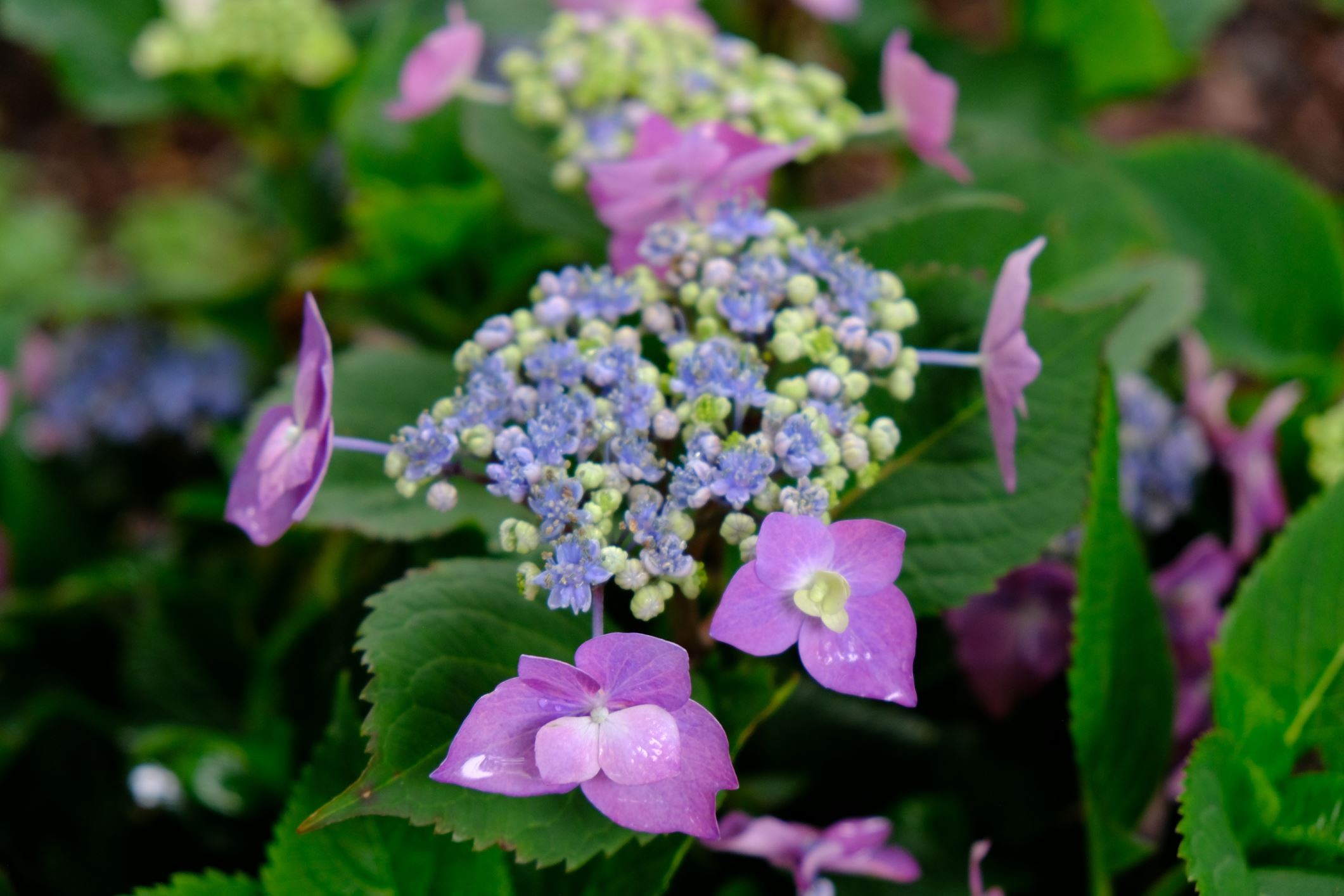
Hydrangea macrophylla Seaside Serenade® Cape May (Cape May Hydrangea)

Bloom Time: May to September

Sun Requirement: Part Shade

Water Requirement: Medium

Wildlife: Bees and Butterflies

Tolerates: N/A

Native to North America: N/A

Zones: 4 to 9

Other: Features very large lacecap blooms that are pink with hints of purple and blue.

Location: Carell Dogwood Garden

O

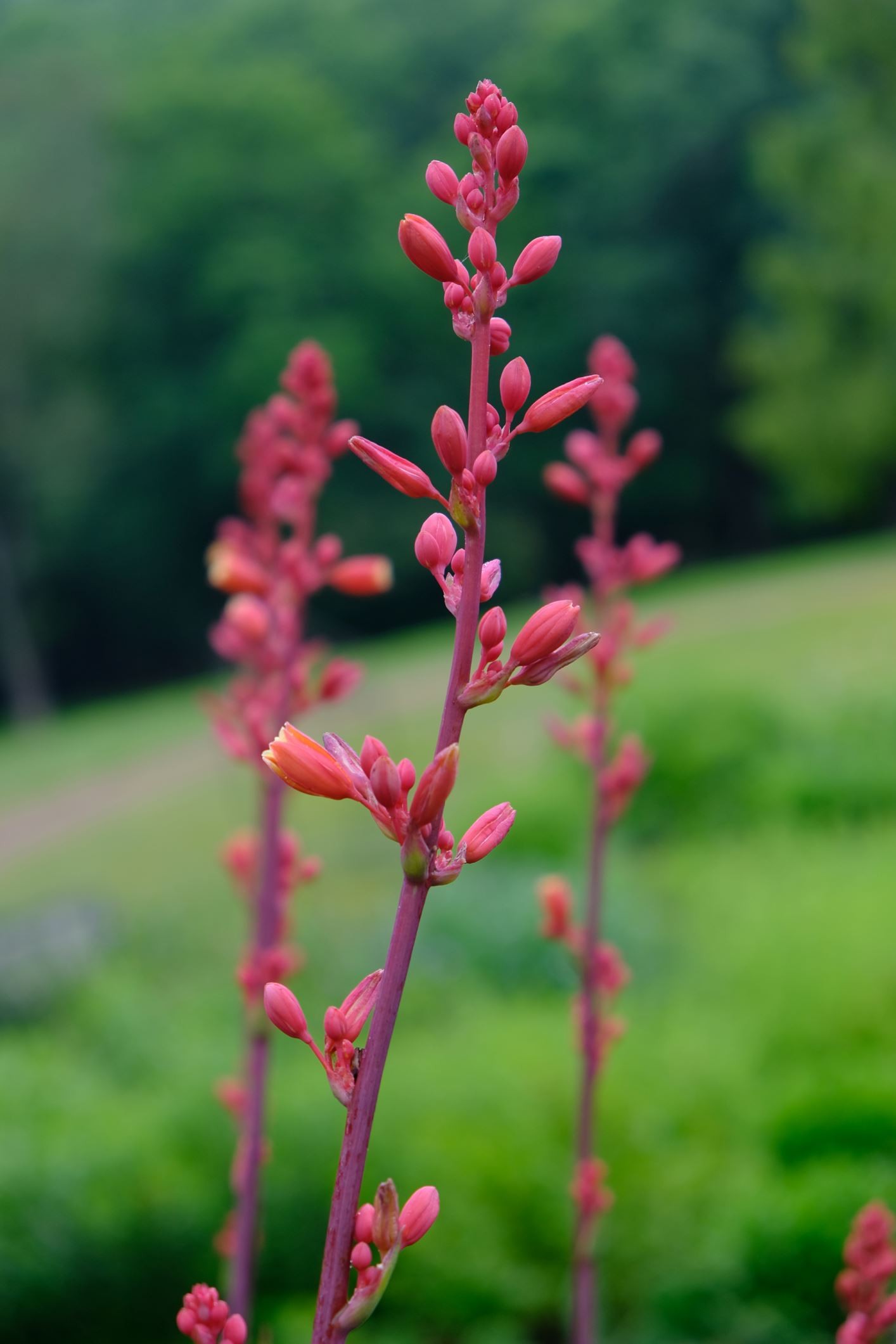
Hesperaloe parviflora ‘Straight Up Red’ (Red Yucca)

Bloom Time: June to August

Sun Requirement: Full Sun

Water Requirement: Low

Wildlife: Hummingbirds and Butterflies

Tolerates: Drought, Deer and Rabbit Resistant

Native to North America: N/A

Zones: 5 to 10

Other: Upright, red flowers tower above dense, sword-shaped foliage.

Location: Literary Garden

O

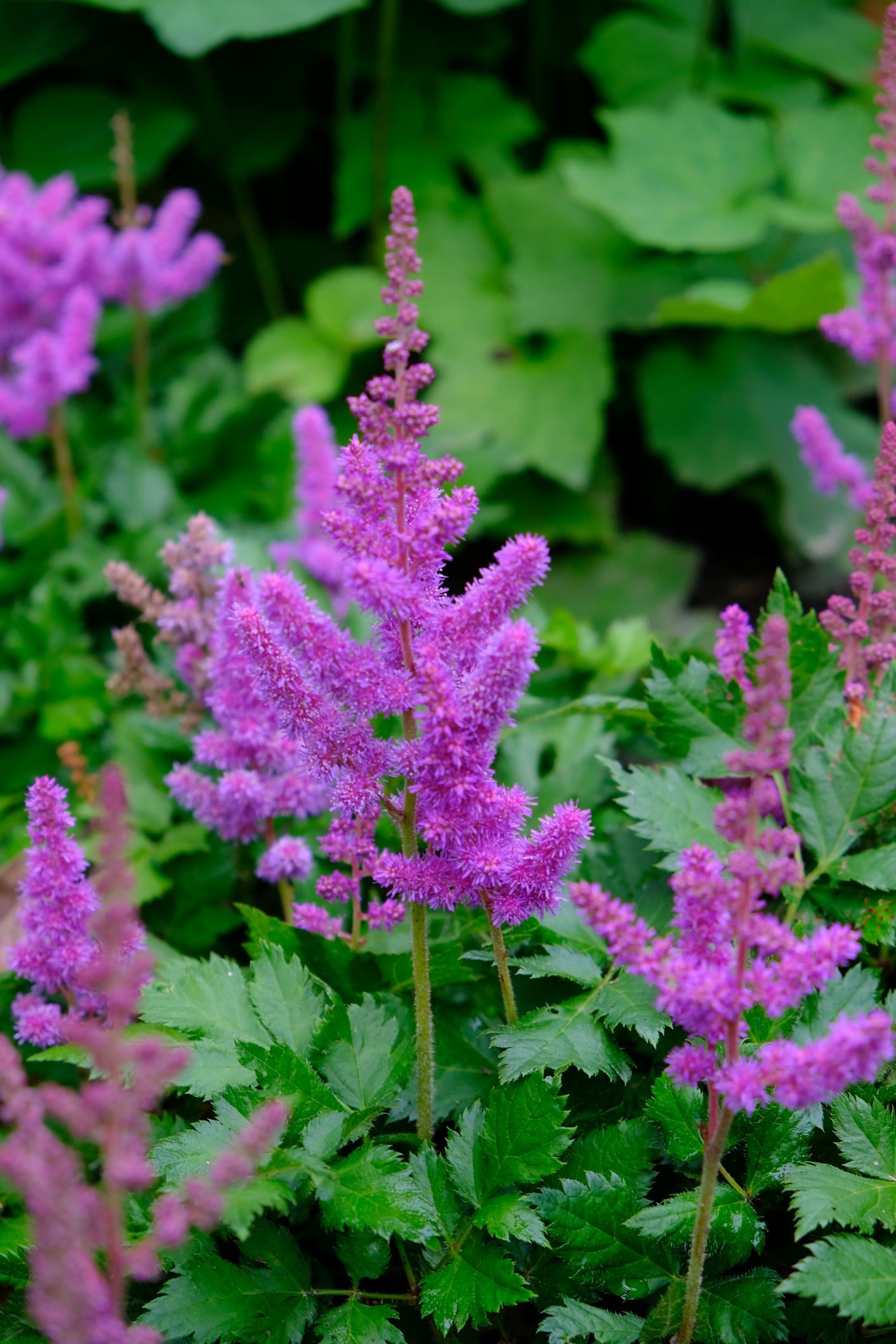
Astilbe chinensis ‘Visions In Purple’ (Chinese Astilbe)

Bloom Time: May to August

Sun Requirement: Part Shade to Full Shade

Water Requirement: Medium

Wildlife: Bees, Birds, and Butterflies

Tolerates: Heavy Shade, Black Walnut, Deer and Rabbit Resistant

Native to North America: N/A

Zones: 4 to 8

Other: Raspberry purple plumes of flowers appear above fine-toothed foliage.

Location: Robertson Family Water Garden

O

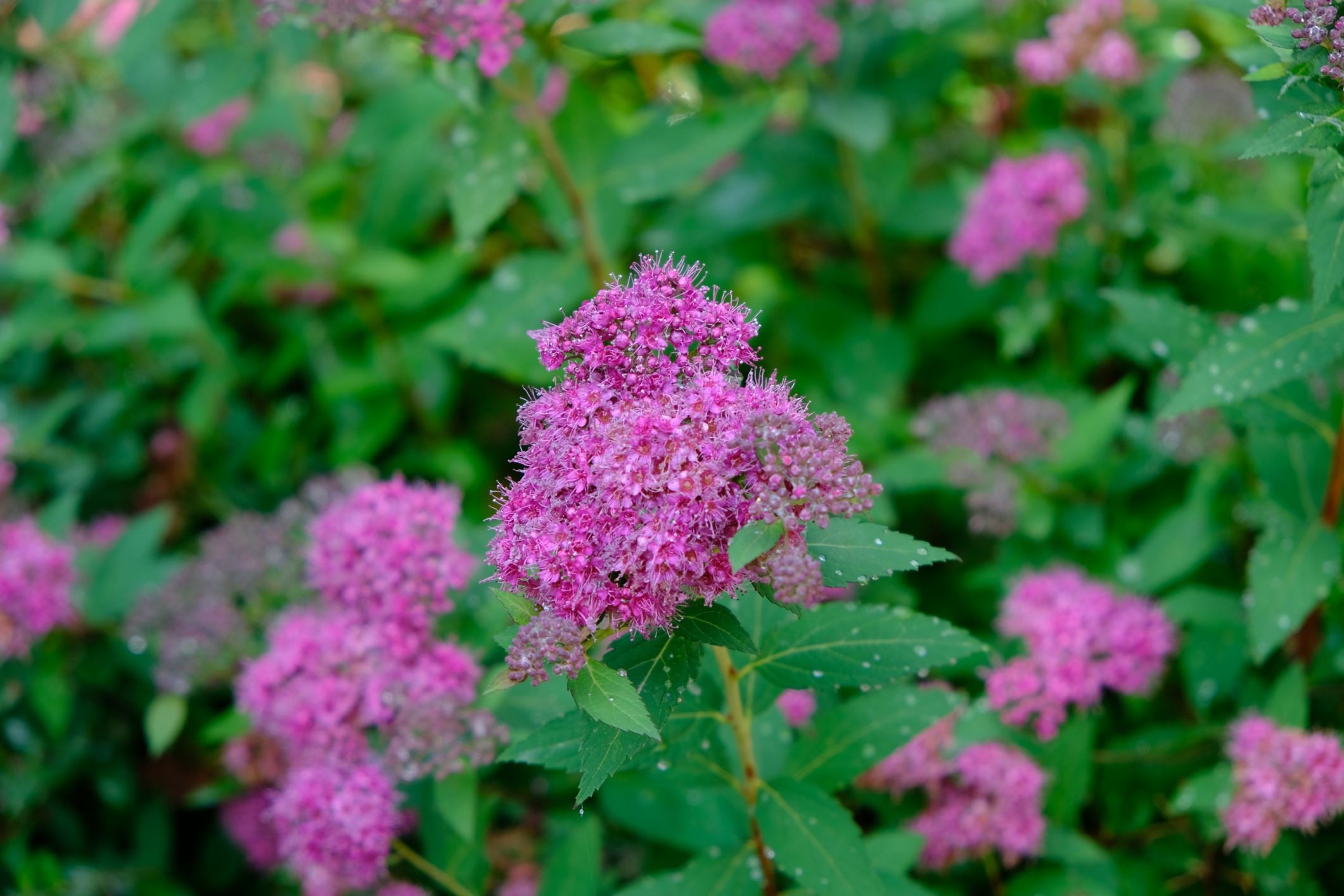
Spiraea japonica ‘Galen’ Double Play® Artisan® (Japanese Spirea)

Bloom Time: May to June

Sun Requirement: Full Sun to Part Sun

Water Requirement: Medium

Wildlife: Butterflies, Bees and other beneficial insects

Tolerates: Deer Resistant

Native to North America: N/A

Zones: 3 to 8

Other: This shrub features rich red new growth in the spring and vibrant pink flowers in the summer.

Location: Bracken Foundation Children’s Garden

O

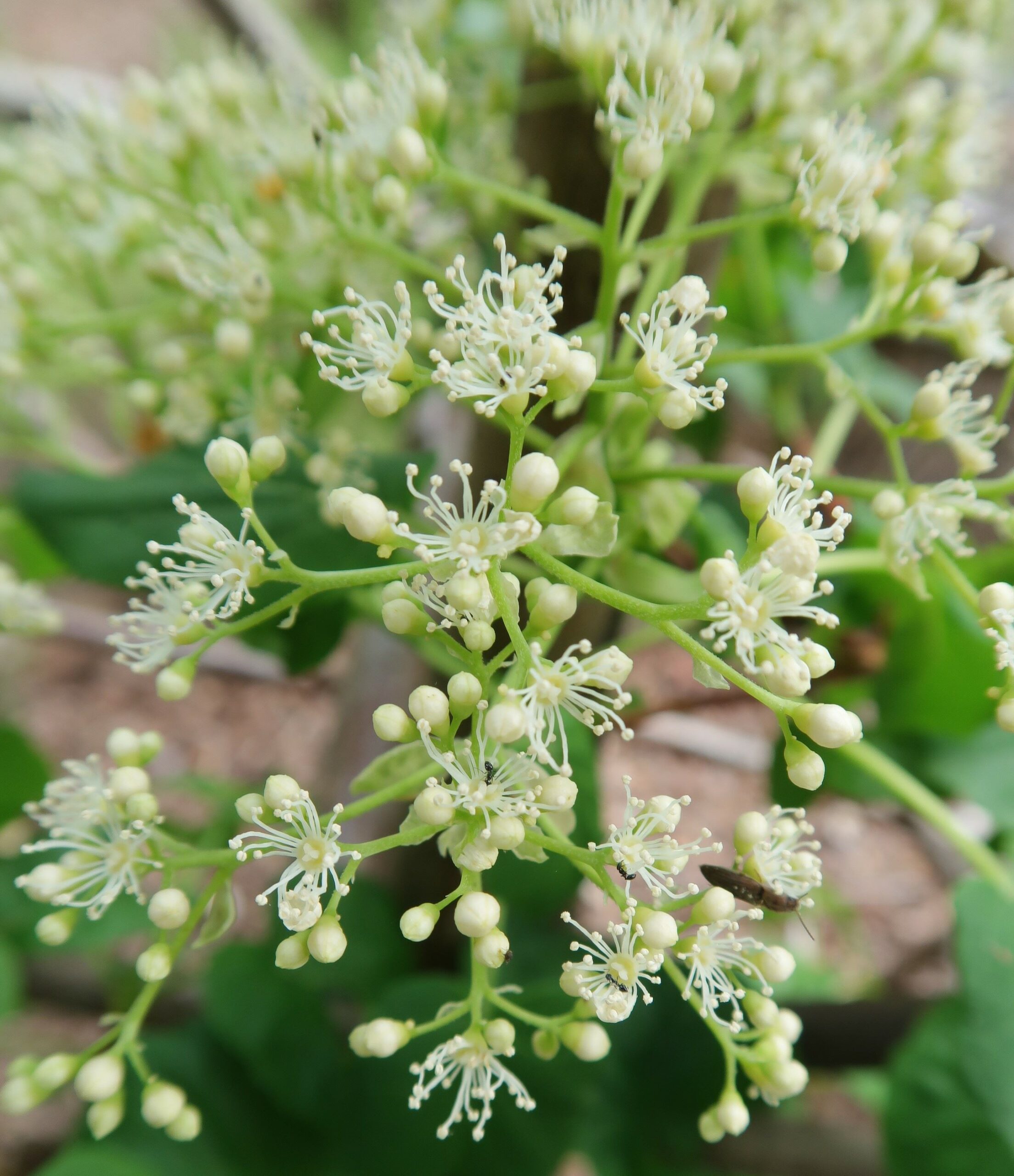
Hydrangea anomala subsp. petiolaris (Climbing Hydrangea)

Bloom Time: May to July

Sun Requirement: Part Shade to Full Shade

Water Requirement: Medium

Wildlife: Bees and Butterflies

Tolerates: Drought, Heavy Shade, and Rabbits

Native to North America: No

Zones: 4 to 8

Other: A vigorous vine with flat-topped clusters of showy white flowers.

Location: Carell Dogwood Garden

Hydrangea anomala subsp. petiolaris

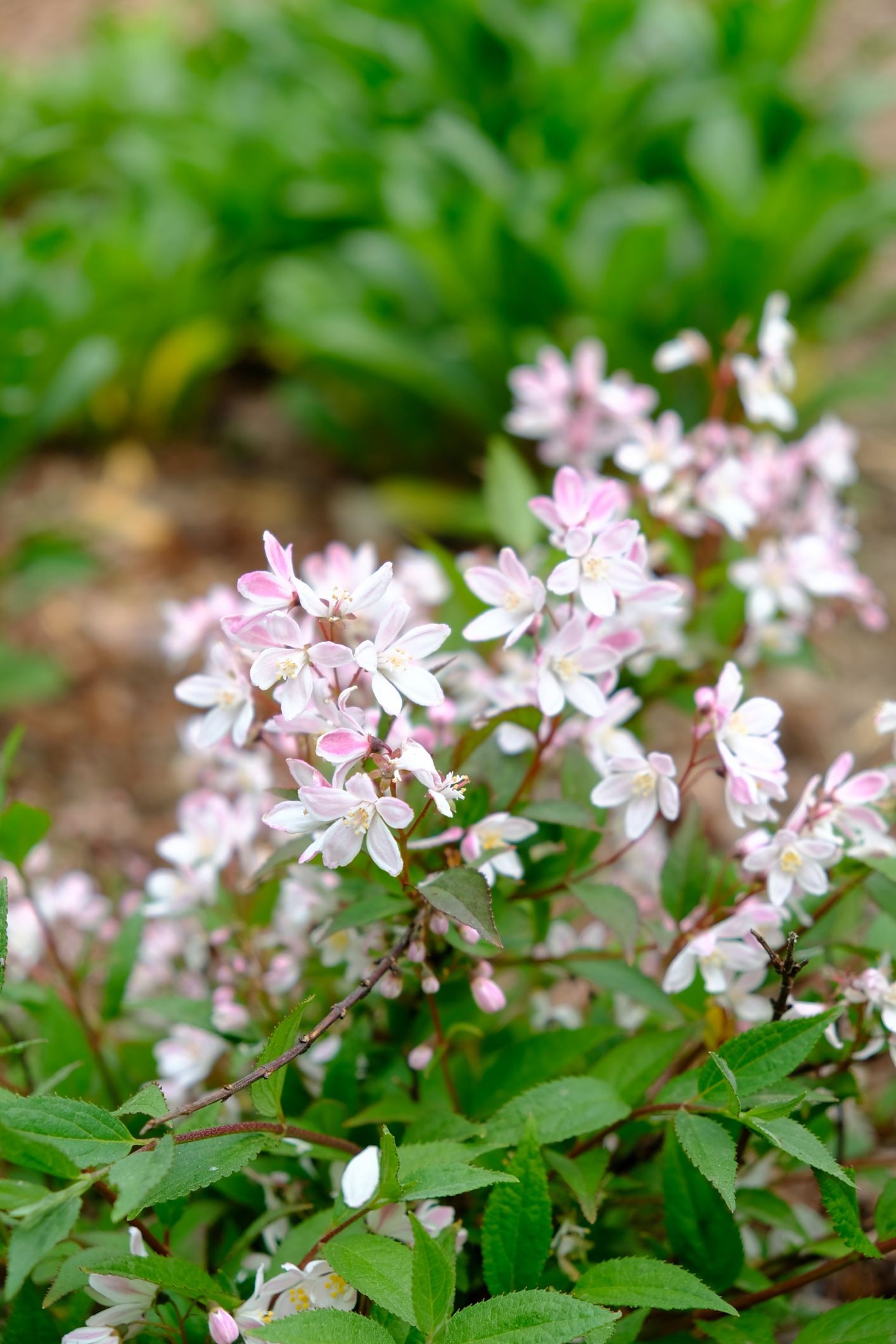
Deutzia gracilis ‘NCDX2’ Yuki Cherry Blossom® (Deutzia)

Bloom Time: May to June

Sun Requirement: Full Sun to Part Shade

Water Requirement: Medium

Wildlife: Bumblebees and Butterflies

Tolerates: Drought and Deer Resistant

Native to North America: N/A

Zones: 5 to 8

Other: A very small, compact shrub with arching stems. Blooms are soft pink with white.

Location: Bradford Robertson Color Garden

O

Privacy Policy Sitemap Web design by Speak
Back to top