Writer-in-Residence Archives - Page 2 of 2 - Cheekwood | Page 2
x icon Close
test

Historic Profile: The Pets of Cheekwood
Extraordinary creature! So close a friend…
Thomas Mann, “A Man and His Dog,” 1919, 1930

Of all God’s creatures, there is only one that cannot be made the slave of the leash.
That is the cat.
Mark Twain, Notebook, 1894


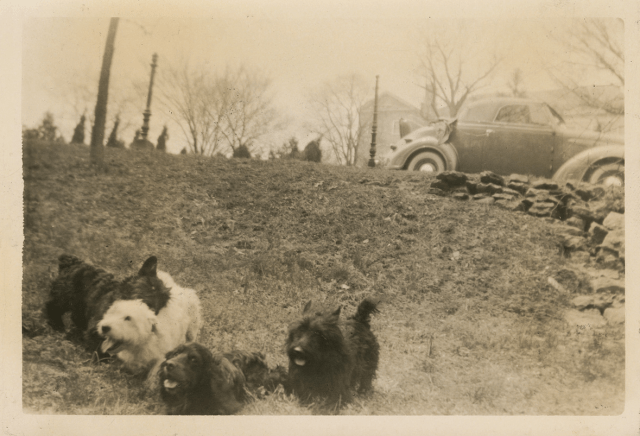
The Cheekwood estate offered ample opportunity for four-footed, furry companions to patrol the one hundred acres or reside in the mansion’s original thirty-six rooms. Indoors or out, the Cheekwood dogs and a cat became a topic of the family members’ letters, both in brief and in extensive accounts of the pets’ antics, veterinary care, and sad passings too. Aside from accounts of the family’s horses (and Mabel Cheek’s brief foray into poultry with Rhode Island Red chickens), the letters offer glimpses of family life with canine and feline allies.
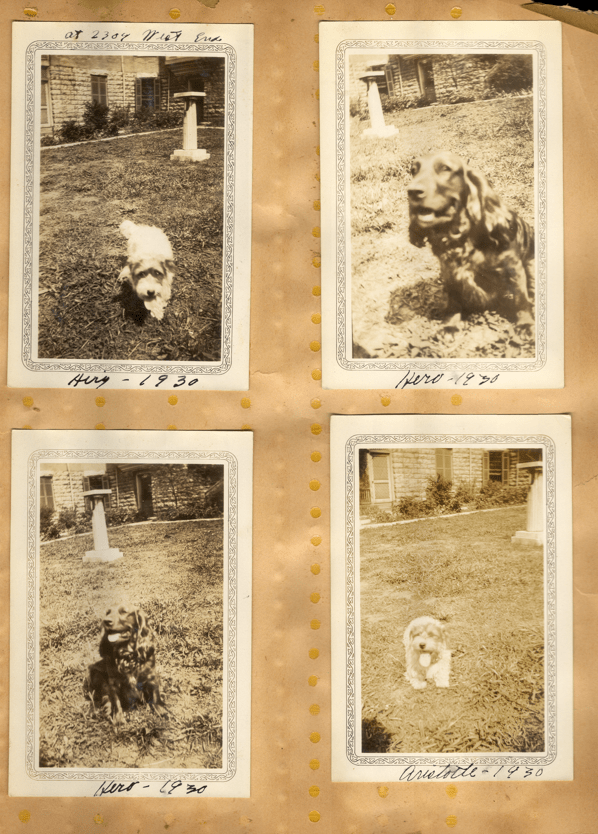
Scrapbook page with photos of the Cheek's dogs

In time, the Cheeks’ spaniels and terriers were named Bruce and Laddie, Daniel and Cinder, but early-on, two of the family’s hound dogs were named for figures in Greek mythology and history.  A mythical priestess, Hero, shared kennel space with Sappho, a famed poet considered to be the author of some ten thousand lines of verse. Most likely, it was Huldah or Leslie, Jr. who bequeathed such names, for their classical schooling familiarized brother and sister with Greek and Roman myths and ancient history. “Sapho [sic] and Hero are fine ‘coondogs,’” their mother reported to Huldah, who understood these were hunting dogs, released at night to hunt raccoons. (Mother Mabel need not have known of the one night when, as Huldah wrote, “I collected my dogs and took a walk all over Cheekwood…. the gardens were so serene and lovely, the silence so dense with the tiny noises of darkness.”)

Caroline the cat hunted too, her nocturnal escapades reported regularly at Mabel Cheek’s bedside. “Caroline presents me with some tribute almost every morning,” Mrs. Cheek admitted with some dismay. “She meows by the bed until I wake up and look. Lizards, moles, and mice were bad enough,” she continued, “but yesterday her offering was a baby Cardinal, today—oh horrors—a baby rabbit.”

If Caroline had free range at Cheekwood, she was nonetheless outdone on one occasion by a favorite housedog, Daniel, possibly a West Highland white terrier. Daniel had avoided the occasional dogfights within the pack, hastening “up the kitchen stairs” at the first sign of trouble between Laddie and Bruce. However, Daniel suffered an injury to his paw so severe that he spent a night at the veterinary clinic and came home with a front paw in a splint. Huldah’s name for this purebred— “Daniel-Darling-Sweetheart-Pie”—points to the care and cosseting he would receive during his recovery. His place at the family dinner table crowns Daniel as top dog at Cheekwood. No other family canine or feline was reported to have a seat at the table.
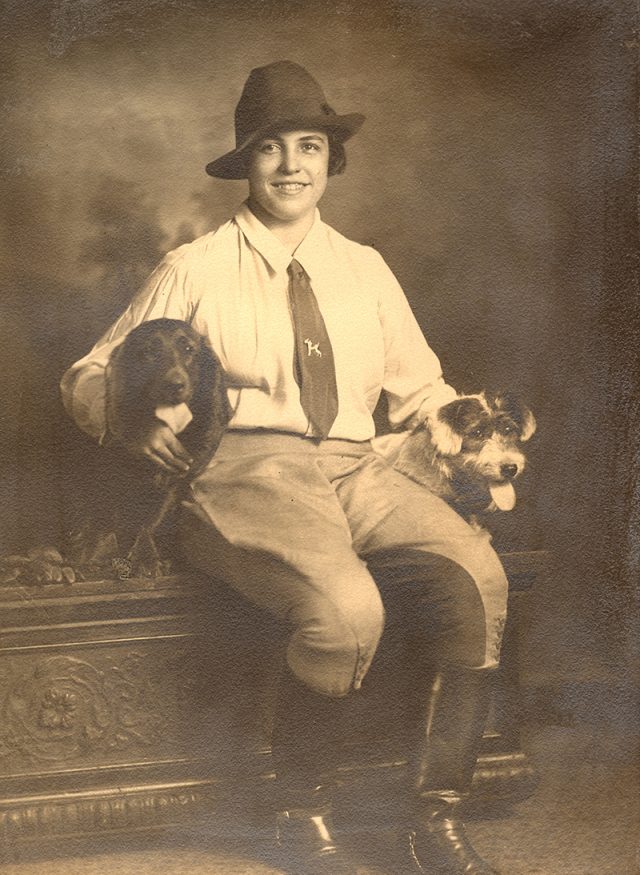
Huldah with Hero and Aristotle

On passing, the pets were interred in wood box coffins and laid to rest in a pet cemetery on the Cheekwood grounds, all with headstones bearing their names. The headstones have been moved from the original pet cemetery but remain on the property today and can be found at the back of the Frist Learning Center, down the hill from the Swan Lawn. Statues of Hero and Aristotle have been erected and are displayed in the PNC Living Library in the Children’s Garden.
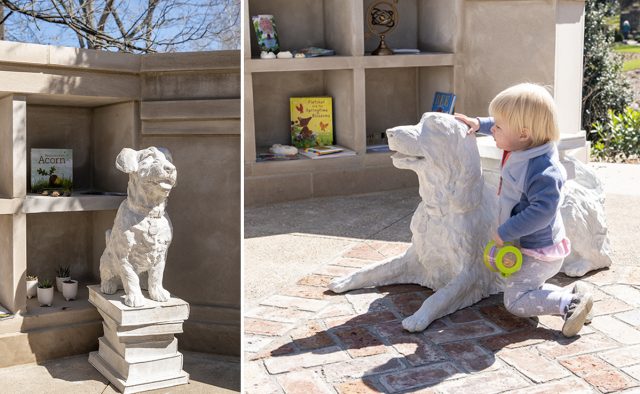
Children's Garden-Dog Statues, March 2020

Blog post provided by Cheekwood’s Writer-in-Residence, Cecelia Tichi, Ph.D.

Cecelia Tichi is an award-winning author and Professor of English and American Studies Emerita at Vanderbilt University. Her books span American literature and culture from colonial days to modern times, but her recent work draws upon the Gilded Age (post-1870) that prompted her book on Jack London and another on seven activists in that tumultuous era.

Cecelia’s research and teaching inspired What Would Mrs. Astor Do? The Essential Guide to the Manners and Mores of the Gilded Age, followed by Gilded Age Cocktails and Jazz Age Cocktails , which set the stage for her mystery crime novels that boast “Gilded” in each title.

Cecelia can be followed on her website: https://cecebooks.com/

Portrait Photo of Cecelia Tichi
test

Historic Profile: Spring, 1929—The Furniture Imperative for Cheekwood

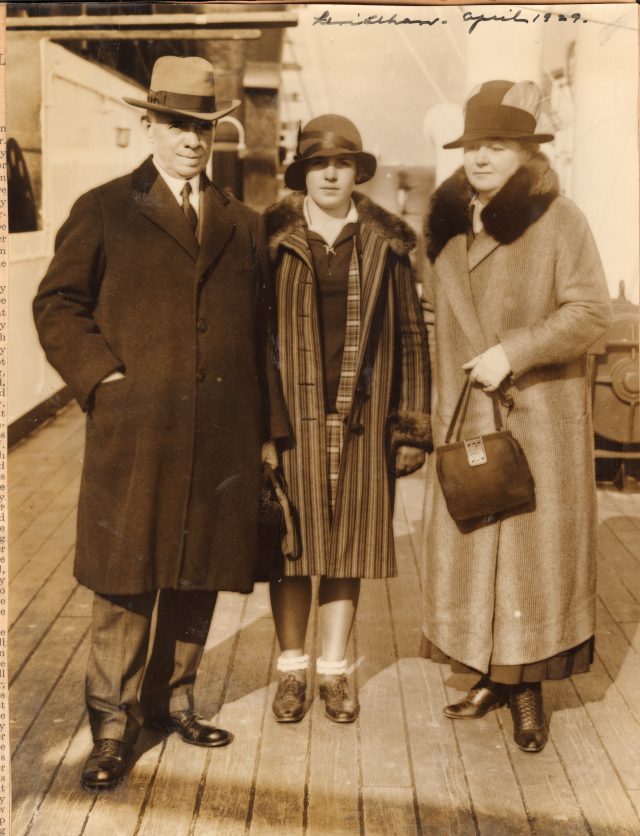
Poet T. S. Eliot called April “the cruelest month” but his 1922 decree was beside the point to Nashville’s Cheek family seven years later, when Leslie, his wife, Mabel, and their children, Leslie, Jr., and daughter Huldah visited English country estates with their architect, Bryant Fleming.  The resplendent art and antiquities of great manor houses met them at every turn in the spring of 1929, but Mr. and Mrs. Cheek toured with purpose, mindful of the calendar.  The stone walls of their new country estate just outside Nashville, Tennessee, were soon to rise, and the public rooms and family bedroom suites were to be furnished with British and American Antiques of the 18th and early 19th centuries.  Time was of the essence.  The Cheeks were on a spree.

London beckoned for purchases and inspired by their tours of the English country estates, the Cheeks hastened to the galleries where available furnishings were shown to them.  Several of the Art galleries that they worked with continue to this day, including Robersons of Knightsbridge, The Grafton Galleries, and H. L. Vetch, Ltd. The Cheekwood estate would eventually include antiques from dealers in New Orleans, Atlanta, and New York.

Photo: Mr. Leslie Cheek Sr., Mrs. Mabel Cheek, and their daughter Huldah on the SS Leviathan in 1929. From the Cheekwood Estate & Gardens Archives.

Mr. Leslie Cheek Sr., Mrs. Mabel Cheek, and their daughter Huldah on the SS Leviathan in 1929. From the Cheekwood Estate & Gardens Archives.

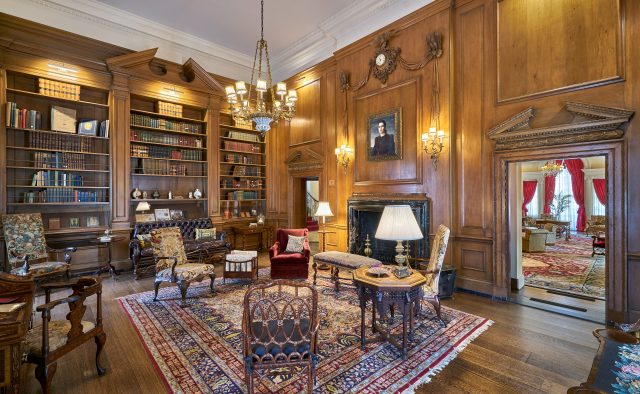
If connoisseurship might be in doubt, heritage was reliable, and the Cheeks’ choices harkened to periods and styles of the 18th century, in chronological order— William and Mary, Queen Anne, Chippendale, from the lathe to the quarry, the foundry to the loom, their favored  styles were from centuries earlier —the Chippendale “walnut armchairs with “carved ball and claw feet”; the Queen Anne side chair with “ cabriole legs”; the Chippendale in “gilt wood” with “fluted legs” and a “green marble top.” For the library, a William and Mary sofa, 84” long with “loose seat cushions,” its “tapestry fabric” a “woodland landscape pattern.” Accessories were useful as well as ornamental, so the library must have inkwells, a silver embossed desk set, and Chinese bronze bookends, in addition to draperies to hang on brass rods and a Tabriz oriental rug measuring 11’ by 13,’ give or take a few inches.

Photo: Cheek Mansion, Library, 2018. Cheekwood Estate & Gardens.

Cheek Mansion, Library, 2018. Cheekwood Estate & Gardens.

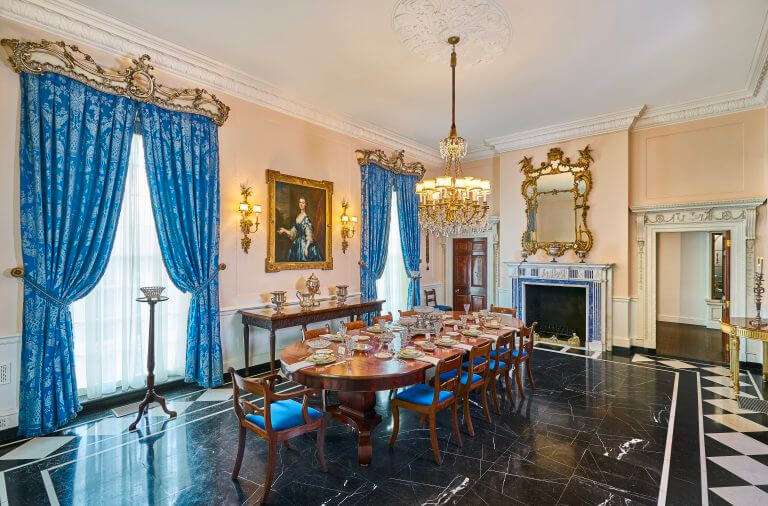
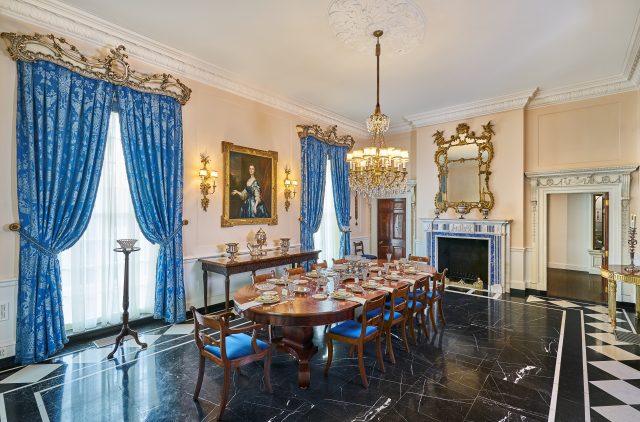
Antique furnishings saw the Cheekwood dining room become harmonious as Mr. and Mrs. Cheek chose a mahogany a late Classical Boston table with a pedestal on a “scroll base,” while the Klismos chairs, also mahogany, were covered in a “dark blue silk.” The couple could not resist a Chippendale mirror of “gilt wood, ornately carved in scroll panels of foliage and flowers…with a floral basket and a falcon at each side.”

The Cheekwood country estate would have up-to-date modern comforts, it goes without saying, from the kitchen and bathroom appliances. The overarching idea for furnishings, however, blended and culture, which one historian defines as “shorthand for the cultivated world view of educated, genteel, and cosmopolitan people.”

Years later, Huldah Cheek (Mrs. Walter Sharp), was asked by an interviewer, “How many actual ‘buying trips’ did your parents go on to furnish Cheekwood?”

The three-word reply, without hesitation: “One big one.”

Photo: Cheek Mansion, Dining Room, 2018. Cheekwood Estate & Gardens.

Cheek Mansion, Dining Room, 2018. Cheekwood Estate & Gardens.

Blog post provided by Cheekwood’s Writer-in-Residence, Cecelia Tichi, Ph.D.

Cecelia Tichi is an award-winning author and Professor of English and American Studies Emerita at Vanderbilt University. Her books span American literature and culture from colonial days to modern times, but her recent work draws upon the Gilded Age (post-1870) that prompted her book on Jack London and another on seven activists in that tumultuous era.

Cecelia’s research and teaching inspired What Would Mrs. Astor Do? The Essential Guide to the Manners and Mores of the Gilded Age, followed by Gilded Age Cocktails and Jazz Age Cocktails , which set the stage for her mystery crime novels that boast “Gilded” in each title.

Cecelia can be followed on her website: https://cecebooks.com/
Portrait Photo of Cecelia Tichi
test

Historic Profile: The Language of Flowers

The proverbial lion and lamb bracket the month of March as the flowers of early springtime blossom with visual fragrance. Floral scents often take second place to the pleasures of color and contour in this third month of the year as winter loosens its grip. The tulips and daffodils, the violets, star magnolias, and others delight the eye as they herald the new season.

Freely enjoying the blooms, we might touch base with a tradition lost to history, namely, flowers as important messengers of meaning. Long preceding the marvels of telegraph and telephone, flowers were thought to convey an array of important messages. Our present-day St. Valentine’s Day roses and December’s mistletoe are vestiges of an era when flowers transmitted thoughts and feelings and rendered judgment too. Bemused by a past practice that may strike us somewhere between a horoscope and a fortune cookie message, we nonetheless honor the once-serious regard for floral meanings.

A popular 1890s compendium of social conduct—Manners, Culture, and Dress of the Best American Society—includes a full chapter on “Flowers and Their Sentiments.” Authored by Mr. Richard A. Wells, A.M., the version sold in bookstores a few years before the turn of the twentieth century proclaimed, “Flowers not only please the eye and gratify the sense, but to one of a reflective turn of mind, they are the dispensers of instruction.” The yellow tulip was thought to be a “declaration of love,” the blue violet to signify “faithfulness,” and the lotus to certify “eloquence.” No flower or bouquet of the era was selected without strict attention to its time-honored meaning. (Today’s elders might recall that in youth, numerous floral offerings resonated with sincerity and a grain of truth.)

Close up photo of yellow tulips

The featured March flowers at Cheekwood appear in Mr. Wells’s interpretive roster as follows:

Daffodil…..Regard
Flowering Quince…Temptation
Phenomenial Lavender…Distrust
Forsythia…Excitement, New Beginning
Magnolia…Nobility, Perseverance
Pussy willow…Recovery from illness.

If dogwood should chance to bloom at Cheekwood in March, the message was posed as a query, perhaps by a tremulous suitor: “Am I perfectly indifferent to you?” (Among the hundreds of flowers in Manners, one encounters that bane both of gardeners and devotees of lawns, the dandelion, said to be “Love’s oracle.”)

Few wildflowers of Middle Tennessee bloom beyond Cheekwood in Mr. Wells’s directory, though the Nettle appears, synonymous with “Cruelty,” and several sub-species are featured in Wildflowers of Tennessee, the Ohio Valley, and the Southern Appalachians, by Dennis Horn and Tavia Cathcart. Bred for the garden or growing wild, “flowers are the smiles of nature,” as Mr. Wells declared, “and earth would seem a desert without them.”

Photo of yellow daffodils at Cheekwood, 2019

Blog post provided by Cheekwood’s Writer-in-Residence, Cecelia Tichi, Ph.D.

Cecelia Tichi is an award-winning author and Professor of English and American Studies Emerita at Vanderbilt University. Her books span American literature and culture from colonial days to modern times, but her recent work draws upon the Gilded Age (post-1870) that prompted her book on Jack London and another on seven activists in that tumultuous era.

Cecelia’s research and teaching inspired What Would Mrs. Astor Do? The Essential Guide to the Manners and Mores of the Gilded Age, followed by Gilded Age Cocktails and Jazz Age Cocktails , which set the stage for her mystery crime novels that boast “Gilded” in each title.

Cecelia can be followed on her website: https://cecebooks.com/
Portrait Photo of Cecelia Tichi
test

Historic Profile: Valentine’s Day, 1942…Eighty Years Ago at Cheekwood

She is dressed always in white, with a veil of lace or tulle. Usually she carries a bridal bouquet of white flowers…or maybe she holds a long sheaf of stiff flowers such as lilies on her arm. Or perhaps she carries a prayer book instead of a bouquet.”

                                                                        Emily Post, Etiquette, 1922

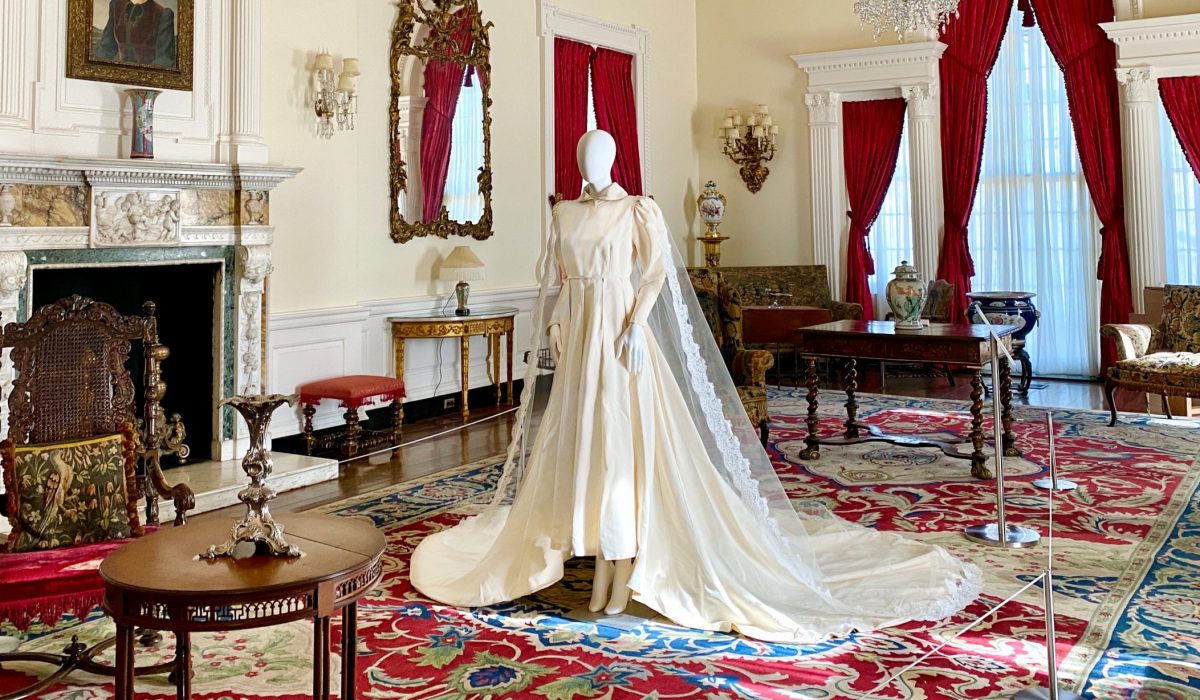
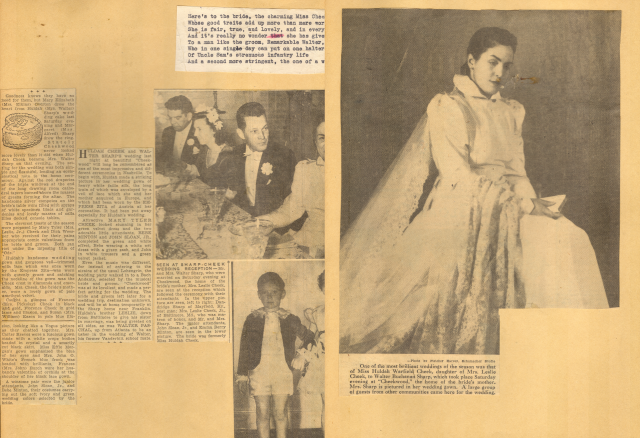
A prayer book was Huldah Warfield Cheek’s preference for her wedding to Walter Buchanan Sharp on Valentine’s Day, 1942, when she chose a white “Elizabethan period gown” of faille silk and ivory satin. Her illusion train, “attached at the shoulder and falling full length to the floor, was finished with a deep border of lace purchased in Europe by her mother and prized for its former adornment of the Empress Zita of Austria at her coronation. The neckline of the gown featured the Cheek family crest in diamonds and emeralds.

The setting for the 8:30 p.m. nuptials, “both simple and beautiful,” wrote an admiring society columnist, “lent an ecclesiastical note to the home ceremony. Against the red draperies of the triple windows at the end of the long drawing room, cathedral tapers burned above the masses of greens forming the altar.”

The sumptuous floral design was a midwinter triumph: “The silver compotes on the bride’s table were filled with sprays of white specimen lilies and gardenias, and lovely masses of calla lilies decked the console tables.” The wedding party processed to a Bach Andante instead of the customary strains of Richard Wagner’s Lohengrin. The Rev. Bernard Hummel, rector of St. Ann’s Episcopal Church, officiated, after which the bride’s mother welcomed guests to a reception, where Mr. Sharp’s parents assisted in receiving. Friends offered lighthearted toasts in keeping with the couple’s enjoyment of verse (“She is fair, true, and lovely, and in every way smart,/ And it’s really no wonder she has given her heart….”) Later in the evening, Mr. Sharp and his bride departed for their wedding trip.

Wedding announcement of Huldah Cheek

No wedding in the first several decades of the twentieth century took place without a close reading of Mrs. Emily Post’s authoritative Etiquette: The Original Guide to Conduct in Society, Business, Home, and More. Over several editions, Mrs. Post was the wellspring of knowledge and guidance for every occasion, and her chapters ferried the debutante from her presentation to Society through chaperonage in dodgy places where she might be seen “gadding about” during courtship. (“No invitation of a gentleman mentions that there will be a chaperone present because that is taken for granted.”)

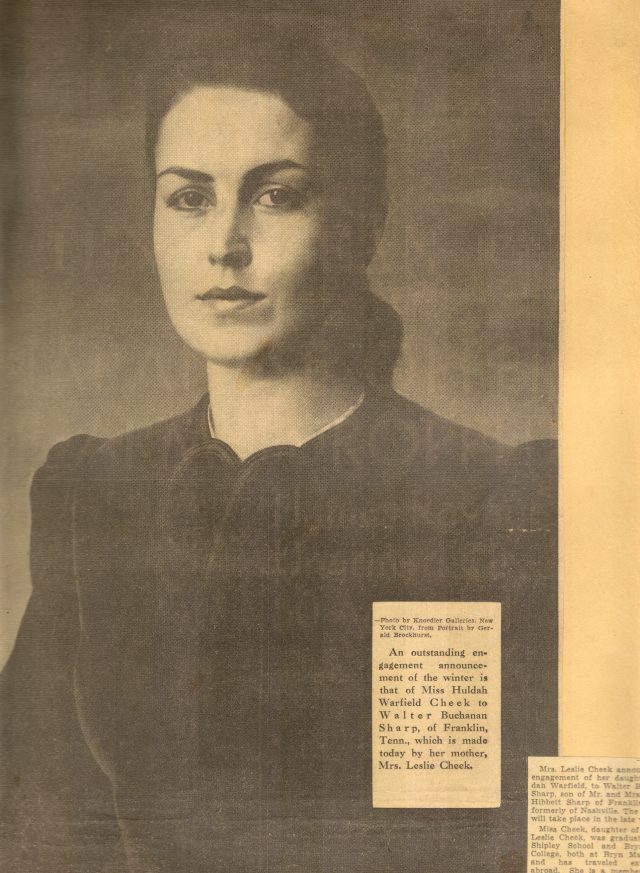
On to “Engagement”: “It is the immediate duty of the man to go to the girl’s father or her guardian and ask his consent.” The young woman has “most likely” told her mother first of all, wrote Mrs. Post, who instructed the bride’s mother or her representative “to call the various newspapers by telephone to report the engagement.” Thus Nashville opened its Tennessean and Banner newspapers the winter of 1941 to find a portrait photograph of a lovely young woman and the following: “An outstanding engagement of the winter is that of Miss Huldah Warfield to Walter Buchanan Sharp, of Franklin, Tennessee, which is made today by her mother.”

Etiquette proceeds in a mosaic of preparations for the wedding—rather, the selection of the wedding, whether “A Small Wedding,” an “Average Fashionable Wedding,” “The Most Elaborate Wedding Possible,” or the “Wedding of a Cinderella.” For her daughter’s nuptials, Mabel would have focused on the most elaborate wedding and tailored preparations accordingly, given the fact of the current World War II and the bridegroom’s drafting into military service.

Leading to Valentine’s Day, 1942, the activities accelerated to the invitations, the bridesmaids and their gowns, the best man and groomsmen, the ushers, the gifts and their artful display, the music, the bride’s trousseau, and on to Mrs. Post’s detailed, lengthy Chapter XXII: “THE DAY OF THE WEDDING.”

Visitors to the Cheekwood mansion this February can time travel to the Cheek-Sharp wedding with the rare exhibition of Huldah Warfield Cheek Sharp’s beautifully preserved wedding gown.

Huldah Cheek's portrait in the newspaper announcing her engagement
Huldah's wedding dress on display in the period drawing room at Cheekwood, 2022

Blog post provided by Cheekwood’s Writer-in-Residence, Cecelia Tichi, Ph.D.

Cecelia Tichi is an award-winning author and Professor of English and American Studies Emerita at Vanderbilt University. Her books span American literature and culture from colonial days to modern times, but her recent work draws upon the Gilded Age (post-1870) that prompted her book on Jack London and another on seven activists in that tumultuous era.

Cecelia’s research and teaching inspired What Would Mrs. Astor Do? The Essential Guide to the Manners and Mores of the Gilded Age, followed by Gilded Age Cocktails and Jazz Age Cocktails , which set the stage for her mystery crime novels that boast “Gilded” in each title.

Cecelia can be followed on her website: https://cecebooks.com/
Portrait Photo of Cecelia Tichi
test

Historic Profile: Curling Up with a Good Book

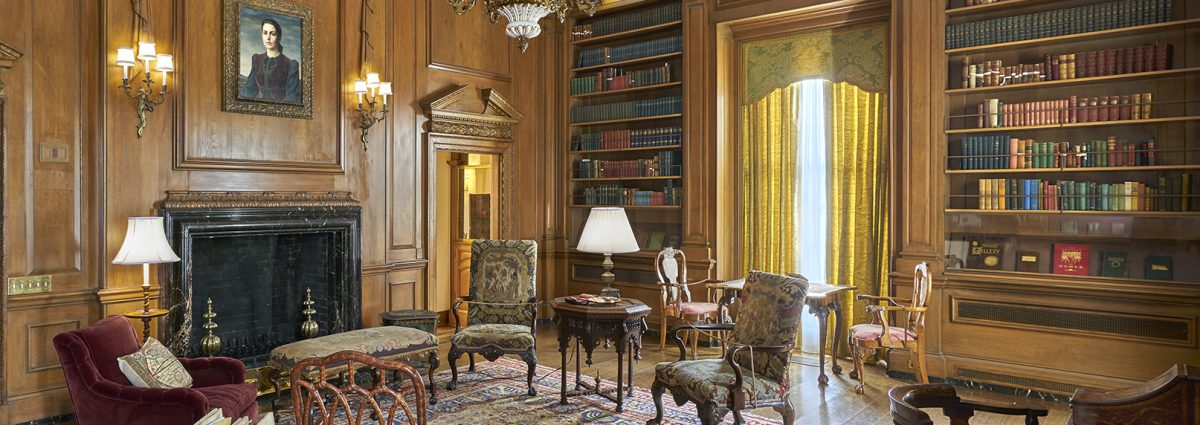
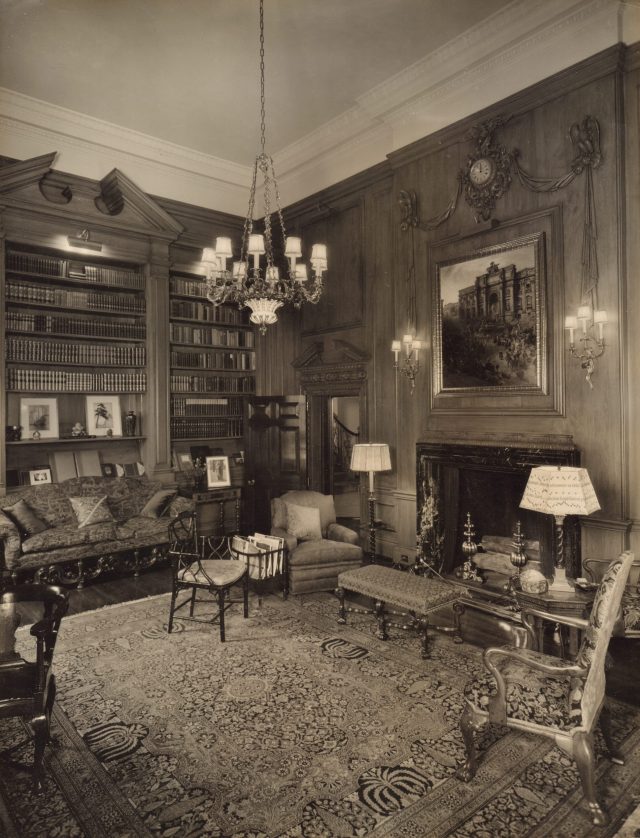
The weather may be frightful, but the fire so delightful, as the song says. So, curl up with a good book in January, as the Cheek family did when their new library was furnished with handsome volumes by enduring marquee authors. The Cheeks’ taste in furnishings harmonized with the advice given by socialite and bestselling author, Edith Wharton, who had co-authored The Decoration of Houses (1914) with the architect, Ogden Codman, Jr.

Edith and Ogden agreed that the private library deserved bookcases that formed “an organic part of the wall-decoration” and that volumes bound in “half morocco or vellum form an expanse of arm, lustrous color.”

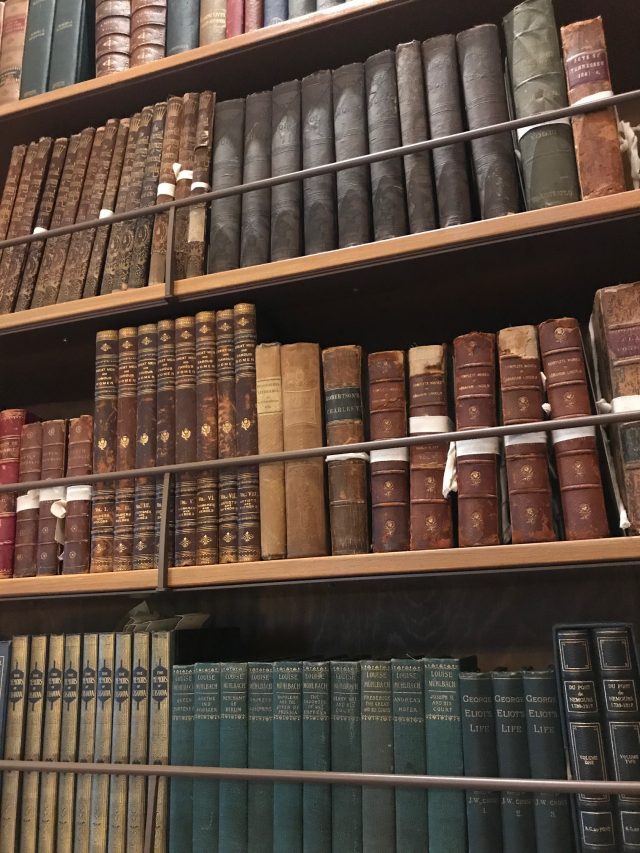
The Cheeks purchased just such lustrous sets—four volumes of The Arabian Nights in gilt morocco, complemented by George Bancroft’s seven-volume History of the United States in calfskin. Thomas Babington Macaulay’s History of England deserved its five-volume purchase in embossed calf, while the Works of George Eliot (a.k.a. Mary Ann Evans) arrived at Cheekwood in ten matched volumes bound in morocco leather.

The authors’ names in their library resound to this day: Shakespeare, Charles Dickens, Rudyard Kipling, Lord Byron, Balzac, Jane Austen, Sir Walter Scott, Victor Hugo, and others. On this side of the Atlantic “Pond,” the library features six volumes of speeches and lectures by New England’s pro-Union statesman, Daniel Webster, while Washington Irving’s Works appeared in ten volumes bound in calfskin. Edgar Allan Poe’s Works comprise four volumes (likewise in calfskin), while Dante’s Divine Comedy arrived in the translation by America’s beloved poet, the multi-lingual Henry Wadsworth Longfellow (also calfskin). The Cheeks, in addition, acquired a recent edition of Nathaniel Hawthorne’s Works in ten volumes (calfskin binding).

Not all authors were available in leather bindings, but the Cheeks purchased some clothbound editions, such as the four-volume Works of Louisa May Alcott, published in Boston. Perhaps Huldah read and reread Little Women.

Photo: Cheekwood Library, Country Life Magazine, 1934, photo credit: Harold Haliday Costain

Cheekwood Library, Country Life Magazine, 1934, photo credit: Harold Haliday Costain.

For January, 2022, one is perhaps tempted to revisit David Copperfield or Washington Irving’s gothic tale, “The Legend of Sleepy Hollow,” if not Poe’s “The Pit and the Pendulum” or Hawthorne’s, The Scarlet Letter, a psychological novel of sin and redemption. Jane Austin’s Pride and Prejudice, a novel of manners and mores, might be this winter’s fare, or perhaps George Eliot’s Middlemarch, entwining politics and romance, egotism and vanity. For episodes of US history that underscore the Republic’s trials and triumphs, one might sample Bancroft’s History of the United States, or look to Macaulay’s History of England.

Then again, if longstanding favorites from Gilded Age and beyond tempt the January reader….

Mark Twain, Roughing It (1872): A romping “Wild West” memoir of the young Twain’s misadventures panning for gold and cub-reporting for the Nevada Territorial Enterprise.

Kate Chopin, The Awakening (1899): A New Orleans matron’s rudest awakening to discover that art and eros do not add up to feminist freedom. (The book was banned, the author ostracized.)

Jack London, The Sea-Wolf (1904): On the high seas, an elite “literary” fellow turns working-class muscleman in league with a toughened genteel lady for mortal combat against the demonic sea captain who harkens to Milton’s Satan in Paradise Lost.

Willa Cather, O Pioneers! (1913): A Swedish immigrant girl “reads” Nebraska’s plains to foresee the grasslands becoming America’s breadbasket under her guidance and leadership, making Alexandra Bergson the author’s Alexandra-the Great.

Sinclair Lewis, Main Street (1920): The spirited young wife of a Midwestern doctor tries every which way to bring city sophistication to the stolid community of Gopher Prairie. (Lewis became the first American author to win the Nobel Prize in Literature.)

Scott Fitzgerald, The Great Gatsby (1925): Considered an American classic, a novel set during Prohibition in which the self-made American, a bootlegger, may prove the American Dream is a fatal attraction.

Ernest Hemingway, The Sun Also Rises (1926): The terse Hemingway style offers romance thwarted by WWI wounds in a milieu of sex, drinks, and bullfights, including the famous “running of the bulls” in Pamplona, Spain. Isadora Duncan, My Life (1927): The legendary dancer performed for President Theodore Roosevelt and proclaimed, “Dancing is the Dionysian ecstasy,”Dorothy Parker urged, “Please read this book…. She ran ahead, where there were no paths.”

Zora Neale Hurston, Their Eyes Were Watching God (1937): One reviewer notes the novel explores main character Janie Crawford’s “ripening from a vibrant, but voiceless, teenage girl into a woman with her finger on the trigger of her own destiny.”

Bookshelves-in-the-Cheek-Library

Blog provided by Cheekwood’s Writer-in-Residence, Cecelia Tichi, Ph.D.

Cecelia Tichi is an award-winning author and Professor of English and American Studies Emerita at Vanderbilt University. Her books span American literature and culture from colonial days to modern times, but her recent work draws upon the Gilded Age (post-1870) that prompted her book on Jack London and another on seven activists in that tumultuous era.

Cecelia’s research and teaching inspired What Would Mrs. Astor Do? The Essential Guide to the Manners and Mores of the Gilded Age, followed by Gilded Age Cocktails and Jazz Age Cocktails , which set the stage for her mystery crime novels that boast “Gilded” in each title.

Cecelia can be followed on her website: https://cecebooks.com/
Portrait Photo of Cecelia Tichi
Privacy Policy Sitemap Web design by Speak
Back to top