Exhibitions Archives - Page 2 of 3 - Cheekwood | Page 2
x icon Close
test

Celebrating 30 Years of Scholastic Art at Cheekwood

Publish Date: 2/5/2021

2021 marks the 30th year that Cheekwood has had the honor of hosting The Scholastic Art Competition & Exhibition for Middle Tennessee. A program of the Alliance for Young Artists and Writers, this competition is one of the oldest and most prestigious student art competitions in the country. For nearly a century, the competition has aimed to support students’ artistic discoveries and encourage them to seek opportunities to showcase and share their art.  Serving as a regional affiliate is a tradition that has become an invaluable part of Cheekwood’s history, and one that The Tennessee Credit Union has sponsored since 1991.

Background on the Scholastic Art & Writing Awards

The Alliance for Young Artists and Writers, a national nonprofit organization, was established in 1994 to provide guidance and support for the next generation. The Alliance fosters the creative development of youth across the country through The Scholastic Art and Writing Awards, the most prestigious recognition initiative for creative teens, and the largest source of scholarships for young artists.

The Scholastic Art and Writing Awards began in 1923 when Maurice Robinson, the founder of the Scholastic book company, realized that students were being recognized for their athletic and academic achievements, but not their creative ones. He began the Scholastic Competition as a way to showcase the talents of young artists and writers, and assist them in beginning creative careers. The Scholastic Art & Writing Awards recognize student achievement in the visual and literary arts in 28 categories, including architecture, painting, flash fiction, poetry, printmaking, fashion design, Expanded Projects, and more.

Since the program’s founding in 1923, the Awards have fostered the creativity and talent of millions of students and has included noted artists such as Red Grooms and Andy Warhol among past winners. The program has an impressive legacy of being the first to acknowledge creative talent and is today’s largest source of scholarships for creative teens.

The Awards Process

Students ages 13 and up residing in the United States, U.S. territories and military bases, or Canada, are invited to submit original work in 28 art and writing categories, including architecture, painting, flash fiction, poetry, printmaking, fashion design, and a new category, Expanded Projects, which includes interdisciplinary and experimental visual art.

In 2020, over 320,000 works were submitted to regional programs for judging – that’s a lot of art and a lot of talent. Many young artists submit their pieces for chances at scholarships and recognition of their creativity. For the program at Cheekwood, hundreds of students submit photographs of their works online to be judged at Cheekwood by expert panels of jurors including local artists, curators, and professors. Cheekwood receives submissions from students in public schools, private schools, homeschool programs, and other educational programs in Middle Tennessee, including the following counties: Cheatham, Davidson, Dickson, Maury, Robertson, Rutherford, Sumner, Williamson, and Wilson.

Once these are received, jurors have just a few days to pour over a thousand submitted pieces and choose the winners. “As a juror, it is a pleasure to see such impressive skill and imagination showcased in these students’ artworks. This next generation of emerging artists embodies a wealth of creativity that inspires critical thinking, empathy, and hope for our world,” said Arielle Altenburg.

Choosing from such a large and incredible selection is not an easy task for the jurors, but there are some guidelines to help determine the winners in each category. All works are blindly adjudicated based on originality, technical skill, and the emergence of personal vision or voice. 

– Originality: Work that breaks from convention, blurs the boundaries between genres, and challenges notions of how a particular concept or emotion can be expressed.

– Technical Skill: Work that uses technique to advance an original perspective or a personal vision or voice, and show skills being utilized to create something unique, powerful, and innovative.

– Emergence of a Personal Vision: Work with an authentic and unique point of view and style.

To see the jurors for the 2021 Middle Tennessee Scholastic Art Awards, click here.
Scholastic-2020-Warner-Tidwell-Photography

The Awards

All entries are considered for several award categories including Gold Key, Silver Key, Honorable Mention, and American Visions Nominees. Gold Key represents the top 5% of entries, and there are only five American Vision Nominees per region and these nominees then have their works entered into a competition to be judged by a panel of jurors in New York City, where one artist is selected to receive the American Vision Medal.

– The American Vision Awards is a national-level recognition that showcases the best works of each region. The American Vision nominees in the Middle Tennessee Region receive a Gold Key Certificate and an American Visions Nomination Seal. Of the five nominated works from our region, one is selected in national judging to receive an American Vision Medal, which is the highest regional honor.

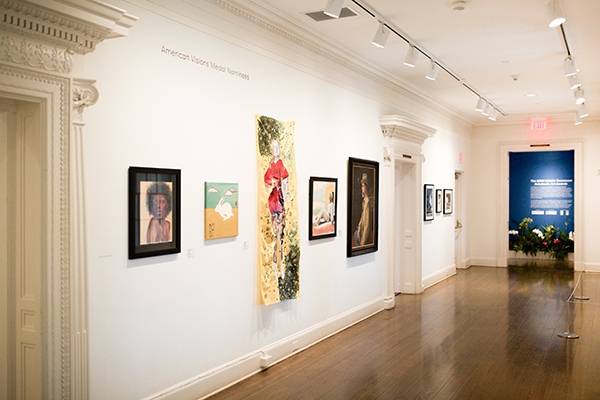
– Gold Key artwork demonstrates the highest level of achievement in technique, originality, and personal voice. Gold Key Award winners receive a certificate, a lapel pin, and the opportunity to compete nationally in New York City. Gold Key awarded works are displayed in the Historic Mansion & Museum Art Galleries during the Scholastic Art Exhibition.

– Silver Key artwork demonstrates achievement worthy of recognition on the regional level. Award winners are recognized for the exceptional quality and execution of their artwork and receive a certificate and lapel pin. Silver Key awarded works are displayed digitally in the Historic Mansion & Museum Art Galleries.

– Honorable Mention artworks are accomplished works that show great skill and potential. Award winners are recognized for their skill with a certificate.

To see all winners of the 2021 Middle Tennessee Scholastic Art Awards, click here.

The Artist by Mattie Ree Neal, Lipscomb Middle High Academy, American Vision Nominee, 2020.  (right)

Middle Tennessee Scholastic Art Awards Exhibition at Cheekwood

While the ceremony honoring the award recipients went virtual this year, the art works themselves can still be seen in Cheekwood’s Historic Mansion & Museum Art Galleries from February 6 – February 21, and a lot has been packed in for this two-week long exhibition.


This year 523 students from 29 total schools, programs, and institutions submitted over 1100 works of art for the competition. Cheekwood’s galleries showcase 85 Gold Key Award Recipient Pieces and a slideshow featuring the 102 Silver Key pieces.


The works within this exhibition range in medium and subject matter, with no two being remotely alike – a credit to the talented artists featured in the exhibition. While strolling through the galleries, one often must remind themselves that these pieces are the product of those who are in grades 7-12, as the works themselves are so well-done, and so creative, that this information itself is often unbelievable.

The artists in the show draw inspiration from many sources – family, friends, hobbies, God, and even just the passion for creating itself.

“I’m mostly inspired by the people that surround me. Many of my family members and friends are talented creatives, not just in physical skillsets but in the way they love and live. They inspire my own sense of creativity by setting such profound examples of what it means to be an artist – to be a storyteller, a source of compassion, a challenger,” said Bella Ravella, Grade 12, American Vision Nominee. “In that sense, I’m also inspired by unique and socially impactful artwork, anything that communicates purpose.”

Ravella’s work, “I, too, am America” Vol 1,is what most would consider a socially impactful artwork. Depicting a homeless man smiling and waving an American flag, humbly asking for change in front of a large high-rise, the piece is named recalling the last line in Langston Hughes’ famous “I, Too” poem, and reflects the language in that piece.

While Ravella’s moving photograph focuses on an individual previously unknown to the artist, many of those featured in the exhibition capture the essence of individuals that have deep connections to the artists’ everyday lives.

“[sic] sweet cookie refers to my great grandmother nicknamed ‘Cookie’ who passed away recently. She was sweet just like a cookie, so the name has some symbolism to it,” said Addi Gerlach, Grade 12, American Vision Nominee. “[For this piece] I wanted to [draw] an old woman because of the beautiful textures and lovely aging they have. So who better to draw than my own great grandmother herself?”

The work is hyper-realistic showing the age of the subject, but also the beauty. Fully detailed, close up in grey scale, staring at the viewer. Another piece within this exhibition Barriers utilizes this realistic technique as well, but goes in almost the complete opposite direction in every way.

Barriers, a work by Chloe Salvatore, a senior at Summit High School and American Vision Nominee, features a young woman with bright pink hair. Colorful and vibrant, the subject is quite literally using her hands as a barrier between herself and the audience. “Barriers represents how we push other people away and only let them see certain parts of us, and how we are afraid to try new things because of the fear of failure,” said Salvatore.

Within this piece, you are able to see that fear, that level of insecurity, that the artist is trying to express and push into her art. “I am a perfectionist. I always feel the need for my art to look as realistic as I can,” says Salvatore, “I believe perfectionism is fueled by both insecurity and pride, and this is something I’ve been exploring through my art this year.

Many of the teens in this show plan to pursue art in the future as a career, with most planning to attend college in that pursuit and scholarships are one of the possible benefits of winning an award in The Scholastic Art Competition. In 2021, Nossi College of Art offers award recipients pursuing a bachelor’s degree a scholarship of $4,400 to encourage these creative teens to follow the path into the arts world.

And walking through the galleries, it is easy to understand why Nossi College of Art would encourage pursuit along this path. Guests will feel a sense of awe as they walk through the galleries in the Historic Mansion & Museum, turning a corner to see K9 Police drawn with such detail by 8th grader Amelia Wang that it is hard to believe it is not a photograph, and then stumbling upon The Blind Queen by 10th grader Saida Bolduc, a work that has so much to look at that the viewer is left pondering the symbolism of each element, each stroke, long after they have left the exhibition. In a truly unprecedented year, one thing has not changed – the talent that is on display only gets better every year, and this year is no exception.

Middle Tennessee Scholastic Art Awards Sponsor

The Tennessee Credit Union has sponsored the Middle Tennessee Scholastic Art Awards since 1991 and shows their support in more ways than one, with continued support of the exhibition easily seen by a visit to their offices. Over the 30 years that Cheekwood has hosted the Middle Tennessee Scholastic Art Awards and The Tennessee Credit Union (TTCU) has graciously presented the exhibition, it has become a tradition for TTCU staff to select and purchase one Gold Key piece. Each piece is framed with a plaque noting the winner’s name and year of the exhibition. Nearly 30 pieces now adorn the TTCU offices in Nashville. You can see images of some of the works by clicking this link.

“We are proud to sponsor the 30th Anniversary of this Exhibition and look forward
to the continuation of this partnership. We continue to be inspired by the students and their educators who have connected the community by fostering creativity and demonstrating academic achievement through art. As an organization built by teachers, we value the Scholastic Art Awards Program and how it promotes
and supports the future of creative minds.”

– Michael D. Martin, President and CEO, The Tennessee Credit Union.

test

Orchids 101

Orchids in the Mansion

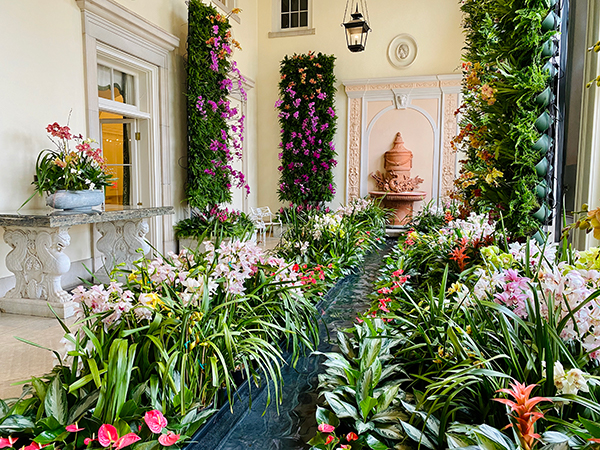
Have these cold winter months been keeping you down? We have created our own tropical paradise inside the Historic Mansion & Museum to beat the winter blues. This limited time engagement features a stylized interpretation of a classical orangery and occupies the historic loggia with tropical foliage and an array of colorful orchids. Orchids are also displayed throughout the historically redecorated mansion, and present a series of period room interventions to explore how the Cheek family likely brought nature indoors and decorated their home.

Turning the Loggia into a Tropical Paradise

Boston Ferns adorn seven green wall panels surrounding the Loggia. These panels are intermittently sprinkled with Militonipsis and Phalaenopsis orchids to make the perfect backdrop for an Instagram-worthy selfie. The Cheekwood Garden Team spent hours installing a runnel connected to the recently restored historic fountain. Running water flows through the Loggia surrounded by a mixture of bromeliads, anthurium, orchids, ferns, and aglaonemas to create a tranquil atmosphere that will transport you to your own tropical paradise.

How many plants were used in this exhibition?
• Around 1,865 plants total
• 6 panels of Boston Ferns
• 152 Cymbidiumd
• 150 Miltoniopsis
• 150 Phalaenopsis
• 120 Pink Anthurium
• 120 Silver Aglaonema

Orchids-2020

Orchids 101

Does caring for orchids of your own intimidate you? Have no fear! Phalaenopsis, commonly called moth orchid, are one of the easiest to grow, and will provide months of colorful enjoyment. They prefer low light settings, east windows, and typically only need watering once a week – preferably in the morning. Once the blooms are spent, cut the spike down to leaf level, and it will bloom again within a year. Dendrobiums on the other hand prefer lots of light but not direct sun. Paphiopedilum and Lady Slippers like to be watered a couple of times a week. There are plenty of resources available to guide you through orchid care. For more information, visit the American Orchid Society.

Orchids
test

Climb Aboard the Holiday LIGHTS Express!

Climb Aboard the Holiday LIGHTS Express!

Published: 12/16/2019

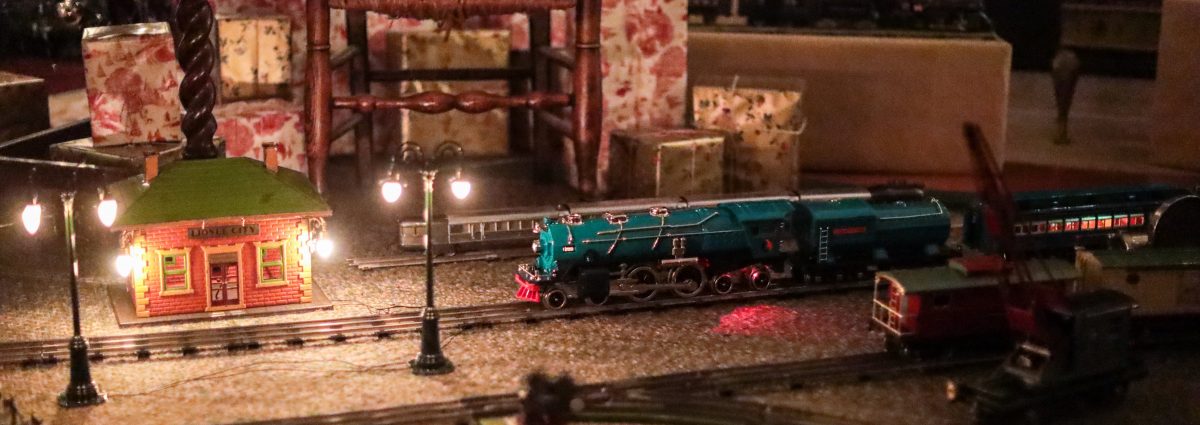
This year, we have a festive display of one of America’s most popular holiday customs, Christmas trains. Holiday LIGHTS Express: Antique Toy Trains is an exhibition of model trains from the 1920s and 1930s set in the traditionally decorated Cheekwood Recreation Room. Ever since December 1900, model trains altered the toy making industry with their ingenuity and authenticity, making them a longstanding high-demand Christmas gift for decades. Whether it was a Lionel or American Flyer model, tots of the 1920/30s had trains at the top of their holiday wish-list.

reindeer

The first locomotive steam engine was invented in Great Britain in 1802 during the Industrial Revolution (c. 1760 – 1830). This icon of power, ingenuity, and progressivism altered more than the modernizing industrial world. Its influence also transformed the toy industry, making its way into the hearts and holiday customs of families worldwide. By the early-twentieth century, model trains had instantly become a fixture at the top of nearly every child’s wish-list.

Individualized model toy trains first appeared in Europe in the 1860s. Just a few decades later, the first standardized gauge model train was the ingenious invention of German toymaker, Märklin, in 1891. The first Märklin model contained a wind-up engine with several cars that ran upon a standardized size track. However, when the popular demand for toy trains reached America, the power source and gauge size altered.

A new national phenomenon began in December 1900, when American toymaker Joshua Lionel Cowen brought one of the country’s greatest Christmas traditions to life. The Electric Express, as it was called, was a tin locomotive pulled train powered by an electric fan motor and acid-filled batteries. In no time, it charmingly stole the spotlight in the Christmas display windows of popular New York City toy stores. Although not intended for sale, the Lionel Corporation soon received unending requests for model trains just like the Electric Express, making toy trains synonymous with the holiday season forevermore.

reindeer

Lionel’s earliest models in the 1910s and 1920s were eye-catching brightly painted tin trains made in a size known as Standard Gauge. With creative marketing, early Standard Gauge models operated under a similar strategy as dollhouses in that each year children could acquire and enhance their train sets with various add-ons and accessories. This initiative saw great success, and by the end of World War I, Lionel was one of three major toy train manufacturers in the United States. Other popular competitors were American Flyer and Ives. Lionel acquired Ives in the mid-1920s and began expanding their model train technology, allowing them to reverse and change direction.

The Great Depression took a heavy toll on the toymaking industry and Lionel, although wildly popular, did not escape untouched. Lionel’s operating budget had been over $500,000 in 1927 and fell to just $82,000 by 1930. Toy trains became a luxury item. The price for a single train car or engine could cost more than the average annual income of a family. One of Lionel’s most impressive locomotives, the No. 400E, retailed for $42.50, similar in price to a used Ford Model T. Lionel barely avoided bankruptcy during the Great Depression, but bounced back to see its most successful decades in its history during the late-1940s through the 1950s with smaller gauge trains and new technological enhancements.

On display in the Recreation Room inside the Historic Mansion & Museum are several Standard Gauge model trains and accessories that would have been popular during the eras of the Cheek family and holidays at Cheekwood in the 1930s. Experience the railroad magic of holiday’s past at during our daytime hours and at night during Holiday LIGHTS until January 5.

Learn more about Holiday LIGHTS Express: Antique Toy Trains here, and don’t miss our outdoor train exhibit located in the Turner Seasons Garden!

test

An Adorable Collaboration That Will Make You Nostalgic

An Adorable Collaboration That Will Make You Nostalgic

Storybook Houses, Cheekwood’s summer exhibit, is enchanting visitors of all ages with whimsical displays and innovative elements. One house that is particularly compelling is Hill Top Garden, inspired by Beatrix Potter and specifically, The Tale of Peter Rabbit.

Welcome to the Hill Top Garden home, created in collaboration by Pfeffer Torode Architecture, Daigh Rick Landscape Architects, Vanderbilt University’s Early Childhood Education Center, Design as an Immersive Vanderbilt Experience  (DIVE), and others.

With Storybook Houses, Cheekwood continues its annual tradition of showcasing whimsical child-oriented exhibitions that, according to its mission statement, “nurture the spirit and stimulate the mind.” The Hill Top Garden home fully embodies that mission. The end result — a beautifully crafted, magical space with interactive elements — came to fruition through a collaborative experience that brought together some of the city’s most talented designers and architects, in addition to Vanderbilt University’s Early Childhood Education Center and Design as an Immersive Vanderbilt Experience, or DIVE.

Anne Daigh, from Daigh Rick Landscape Architects, explains how the Hill Top Garden was a collaborative effort between her office and Pfeffer Torode Architecture. “Pfeffer Torode asked for our help, as they wanted to work beyond the bounds of a potting shed structure,” Anne says. “They knew that the key element of the Hill Top Garden was landscape driven, so we needed to work together to create a concept that honored that element.”

Also included in the collaboration was Professor Kevin Galloway, Director of Making at The Wond’ry and Faculty Director of DIVE. “Vanderbilt’s role in the Hilltop Garden House focused on generating interactive elements for kids of all ages. The experience required a lot of coordination between my students and with Pfeffer Torode, all within a condensed timeline of about two months,” Kevin says. “By the end, the students had a new appreciation for the design process, namely that it takes iteration to converge on impactful outcomes.”

Hill Top Garden is based loosely on Hilltop Farm, which is the farm in Northern England that Beatrix Potter purchased in 1905 with proceeds from The Tale of Peter Rabbit, her first book.

We love all of the beautiful details and whimsical touches on the Hill Top Garden storybook house.

Jane McLeod, Cheekwood President and CEO, adds that the act of joining forces with such brilliant minds to come together and create such a unique exhibition quickly became a highlight of the entire process. “My favorite part about working with the teams was the enthusiasm and passion everyone showed for this project,” she says. “There were so many days when the teams were here early in the morning and late at night working on the houses, excited about what they were creating and obviously taking great pride and joy in their work.”

Dr. Justine Bruyere, PhD., lecturer at Vanderbilt University’s Peabody College, was also a part of bringing the amazing vision to life; she saw the project as a way for her arts education students to see how literacy and the arts can be a bridge to community engagement.

“To begin our research, we read The Tale of Peter Rabbit by Beatrix Potter,” she explains. “Quickly, it became clear that the stories were centered on Peter Rabbit and focused very little attention on his sisters. The students took note of the missing stories of Flopsy, Mopsy, and Cottontail and set out to give a voice to each of the female rabbits.” After that, the students dramatized and authored the untold stories, and ultimately penned and audio recorded the finished stories. “When Vanderbilt students can use their knowledge to partner with community spaces, we all win,” she adds.

There are plenty of interactive ways to explore Hill Top Garden.

Hill Top Garden is a delight to explore — for both children AND adults.

Part of the reason the Hill Top Garden house is so intriguing is due to the simple yet whimsical inspiration behind it: creating a space from the perspective of a bunny. “We wanted to recreate Peter Rabbit’s world,” Anne continues. “Therefore, we created a natural habitat outside of the gates of Mr. McGregor’s garden, including a rabbit burrow, places for the bunnies to hop and play, and areas to nest in the wild meadow.”

Jane gives a little more background on the inspiration behind the exhibition, connecting the dots regarding the stimulus behind the project. “Hilltop Farm is the name of the farm in Northern England that Beatrix Potter purchased in 1905 with proceeds from The Tale of Peter Rabbit, her first book. Potter went on to write 13 of her 23 books at Hilltop Farm, and many of her stories and illustrations in her books were inspired by the farm and the cottage garden she created there. Upon her death in 1943, Potter donated Hilltop Farm, which now serves as a museum about her life and times, and some 4,000 acres to the National Trust.”

The unique exhibition isn’t just for kids. Adults, too, will be able to marvel at the attention to detail, the creativity and the craftsmanship that went into everything behind the scenes. Not to mention, it’s beyond fun to watch your children immerse themselves in the whole experience. From working in Mr. McGregor’s garden to riding a giant log seesaw to pretending to be a bunny in an enlarged burrow, there’s no limit to the interactive play and fascination children are experiencing at the display. “What adult doesn’t love to relive their childhood through their favorite childhood books?” Jane asks. “The emotions these books evoke, the adventures they offer, the lessons they teach — they are the very definition of childhood.”

Details such as the custom-cut picket fence make this storybook house so very special.

The live bunnies take this house to the next level!

Fresh flowers bring a special touch to make the space feel truly like home.

While it’s difficult to pinpoint just one thing that makes this exhibition so special, Jane maintains the most notable aspect is how the house uniquely weaves nature, art and literature into a truly immersive experience. “It allows for imaginative, creative and unstructured play that lets a child just be a child,” she expounds. “Ever since my own children were little, I have valued free, unstructured play where imaginations soar and creativity is born.”

Another favorite: the mailbox. Justine points out one of the most thoughtful touches is the mailbox where visitors (specifically children) can write letters to Flopsy, Mopsy or Cottontail and place them in the box. “The handwritten letters we’ve seen are like receiving pure gold,” she says. “It’s clear from the letters that the children visiting the installation have connected (through the stories created by my students) to these female rabbits. Their letters are filled with questions, suggestions, and observations gained through the experience of interacting with this purposefully designed space.”

“I think the exhibit is so special because of how multi-dimensional it is,” Anne notes. “In addition to the potting shed structure, we created an entire eco-system for children to learn and play. From potting plants in the shed and digging compost, to frolicking in the native meadow and balancing on logs, the kids get a chance to activate the space in many ways. It is a very hands-on experience, and the child feels like they are truly living the story of Peter Rabbit!”

Children are invited to write letters to Flopsy, Mopsy and Cottontail.

We love the bright and delightful vignettes found in this small and beautifully designed space.

A farmhouse sink, apron, veggies and other kitchen wares make for a fun outing for children to use their imaginations!

This one-of-a-kind storybook house offers a bunny’s perspective — quite literally!

At the end of the day, everyone can agree that the best part of all has been seeing the Storybook Houses brimming with happy children. “Seeing the children running and playing and laughing — it’s always the very best part of my day,” Jane says. “And to know we are creating a legacy for generations of children is very gratifying, indeed.”

Visit Cheekwood’s Storybook Houses from 9 a.m. to 5 p.m. through September 1. Visit their website for more details.

All project partners include:

This article is sponsored by Pfeffer Torode. All photography by Leslee Mitchell.

Guest Written By:

This article was written for Style Blueprint by .

Photo courtesy of Meagan Little Photography.

test

All aboard! Next stop, “TRAINS!”

All aboard! Next stop, “TRAINS!”

Follow the tracks of children’s footsteps this summer into Cheekwood’s TRAINS!

TRAINS! operate from 9:30-4:30 pm every day, weather permitting

A New, Popular, and Permanent Playhouse

Located in the gorgeous Turner Seasons Garden, all can board this happy yellow platform perfect for children of any age. To add to the kids’ enjoyment of TRAINS!, we have added a new and permanent feature: a Train Depot in the form of a playhouse inspired by Loren Long, illustrator of The Little Engine That Could.

Imagine incredible sights through our many binoculars, gizmos, and games built into the sides of the wooden train station, designed and installed by T.W. Frierson Contractor, Inc. and Design Constructors, Inc.

Once you have guided the train inside the built-in locomotive, celebrate your success by sliding down a giant, winding green slide, then climb your way back up to the top on an interactive web!

The Thrilling Train Exhibit

Terrifically popular since its opening, this imaginative train exhibit moved last year to the Turner Seasons Garden with many new updates so that it is better than ever! The current display features five completely separate train tracks that totals to over 800 feet in length–that’s almost three-fourths the height of the Eiffel Tower! We use G scale (garden trains) about 1/22 the size of real trains that are specifically designed to brave the outdoors as they entrance the grownups and ignite children’s imaginations. The exhibit, directly adjacent to the brand new playhouse, also features an enchanted walking bridge, a special children’s tunnel, and fantastical dioramas of miniature fairy lands!

The new train tracks, designed by Applied Imagination, were built and opened in 2018 and funded by Jim Crossman in honor of his children and grandchildren. Just to make it even more magical, there has been new lighting installed by Outdoor Lighting Perspectives so that visitors can enjoy the TRAINS! exhibit during evening hours such as Holiday LIGHTS and during Thursday Night Out throughout the summer and fall.

Overall, the process of building the display took over three months, beginning in a Kentucky warehouse where many special features and bridge parts were constructed then trucked over to Cheekwood for its final assembly. But what does it take to maintain the Cheekwood TRAINS! display? Our gardening staff goes hard at work to landscape, trim, and maintain the forest area, while our security and volunteer staff clean the (800 ft!) train tracks daily to remove the dust, tree sap, and pollen that drifts over from the surrounding foliage. Even the chipmunks love our exhibit so much that they tunnel underneath the tracks, which leaves behind all sorts of debris that needs to be cleaned. Due to their constant movement, the train engines and rolling stock also require frequent cleaning, lubrication, or–for the fragile elements–even replacement.

Many days long-time volunteer Chuck Smith can be spotted around the Cheekwood campus wearing his official engineers cap and blowing his train whistle. If you see him around the TRAINS! display he’ll tell you a bit of train history or challenge the kids to help him find Pepto the pink elephant or other odd items riding the train cars. He’s even been know to get everyone dancing if the music is playing. When asked why he does it he said “because everyone is still a kid at heart and loves the magic of trains.”

Step Into the Story

Some other whimsical playhouses include “Oh, The Places You’ll Play” inspired by Dr. Seuss, “Hill Top Garden” inspired by Beatrix Potter, “Charlotte’s Barn” inspired by Garth Williams, and “We Are Wild” inspired by Maurice Sendak. Storybook Houses opened on May 1st and will be on view throughout our gardens until September 1st. From June 22 through September 1, visitors may also enjoy Childhood Classics: 100 Years of Book Illustrations in the Museum of Art.

TRAINS! made possible by Jim Crossman in honor of his grandchildren, Claire Ellis, Clayton Ellis, and Cora Crossman.
Lighting installed by Outdoor Lighting Perspectives, funded by Laura Anne Turner

Storybook playhouse installed by T.W. Frierson Contractor, Inc. and Design Constructors, Inc.

Summertime at Cheekwood, Storybook Houses, and Childhood Classics: 100 Years of Children’s Book Illustrations are presented by Vanderbilt Health. The TRAINS! exhibit and new depot feature are made possible by Jim Crossman. Additional support for Storybook Houses has been provided by Sara and Richard Bovender, Karyn McLaughlin Frist, Kailey and JR Hand, Sharalena and Dick Miller, and an anonymous donor.

test

The RADIANT “Charlotte’s Barn”

The RADIANT “Charlotte’s Barn”

Step into the story this summer at Cheekwood’s Storybook Houses! The young and young at heart will enjoy these five large-scale outdoor playhouses inspired by beloved illustrators and brought to life through a collaborative effort of talented local architecture and building firms.

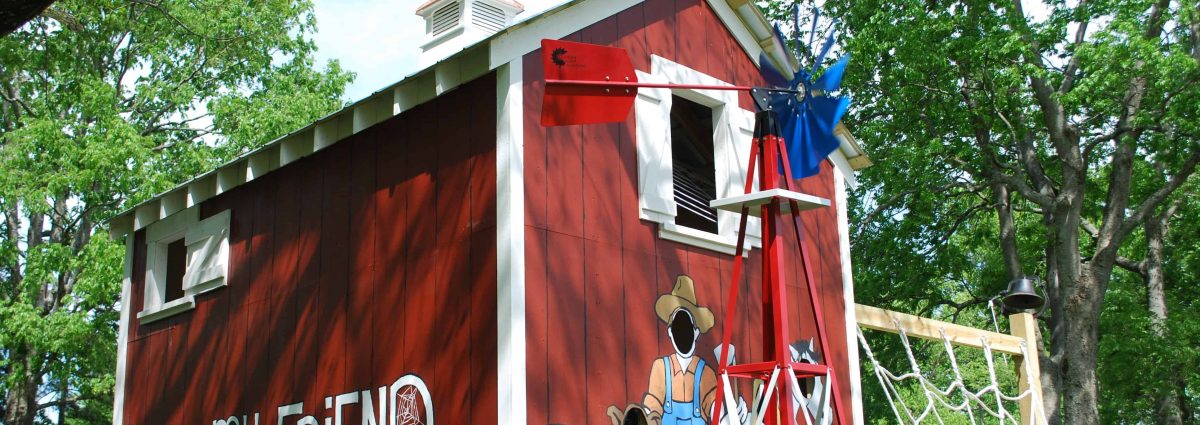
Come see the TERRIFIC barn playhouse, complete with farm animals, a life-sized spider web, and spiral slide! Inspired by the illustrations of Garth Williams, the Wills Company designed and built “Charlotte’s Barn” with assistance from the Tennessee College of Applied Technology students.

Ridley Wills, Owner and Design Director of The Wills Company stated, “When Cheekwood’s President and CEO Jane MacLeod invited us to participate in bringing to life an illustrated children’s book for the upcoming exhibit, we were thrilled and a bit daunted by the 8-week timeline, from initial call to design to actual construction. E.B. White created a story with great heart that is sweet, good, and kind and it also allowed our team to have fun being creative, which is our passion! As a design and build firm we play both the architect and the builder, so we are always focused on creating beautiful projects within budget. Mr. Zuckerman’s barn with Charlotte, Wilber, and all their animal friends is no exception.”

Whether you’re 3 or 73, you can appreciate these charming playhouses. Feel the nostalgia for a simpler time as you see the vibrant blue windmill spinning in the wind. Hear the ringing of the bell fill the air as giggling children race their way to the top of the life-sized spider web. See Charlotte working hard spinning RADIANT above you as you enter Zuckerman’s barn. Slide down the winding spiral slide as you follow Templeton through the silo as he helps Wilbur and the gang. Make your way through the hay-filled barnyard to climb on Wilbur’s back. This endearing playhouse will have you jumping, sliding, playing, crawling, and climbing your way through the beloved tale of  unlikely friendship.

Some other whimsical playhouses include “Oh, The Places You’ll Play” inspired by Dr. Seuss, “Hill Top Garden” inspired by Beatrix Potter, “We Are Wild” inspired by Maurice Sendak, and “TRAINS!” inspired by Loren Long. Storybook Houses opened on May 1st and will be on view throughout our gardens until September 1st. From June 22 through September 1, visitors may also enjoy Childhood Classics: 100 Years of Book Illustrations in the Museum Galleries.

Special Thanks to Our Contributors

Summertime at Cheekwood, Storybook Houses and Childhood Classics: 100 Years of Children’s Book Illustrations are presented by Vanderbilt Health. The TRAINS! exhibit and new depot feature are made possible by Jim Crossman. Additional support for Storybook Houses has been provided by Sara and Richard Bovender, Karyn McLaughlin Frist, Kailey and JR Hand, Sharalena and Dick Miller, and an anonymous donor.

Sponsored By    

Exhibition Partners  


test

Come Rule the Forest with “We Are Wild”

Come Rule the Forest with “We Are Wild”

Come step into the story this summer at Cheekwood’s Storybook Houses! The young and young at heart will all enjoy these five large-scale outdoor playhouses inspired by beloved illustrators and brought to life through a collaborative effort of talented local architecture and building firms.

With a name like “We Are Wild”, you can certainly picture a playground filled with adventure, exploration, and imagination. Tuck-Hinton Architecture & Design brings that picture to life inspired by illustrator Maurice Sendak (Where the Wild Things Are) with a design that allows kids of all ages to truly be rulers of the forest.

Nestled off in the Carell Dogwood Garden underneath towering trees, this Storybook House offers a shady respite from the heat that also allows your creative forest explorers to play to their heart’s content.

BE RULER OF THE SEA

Storybook Houses

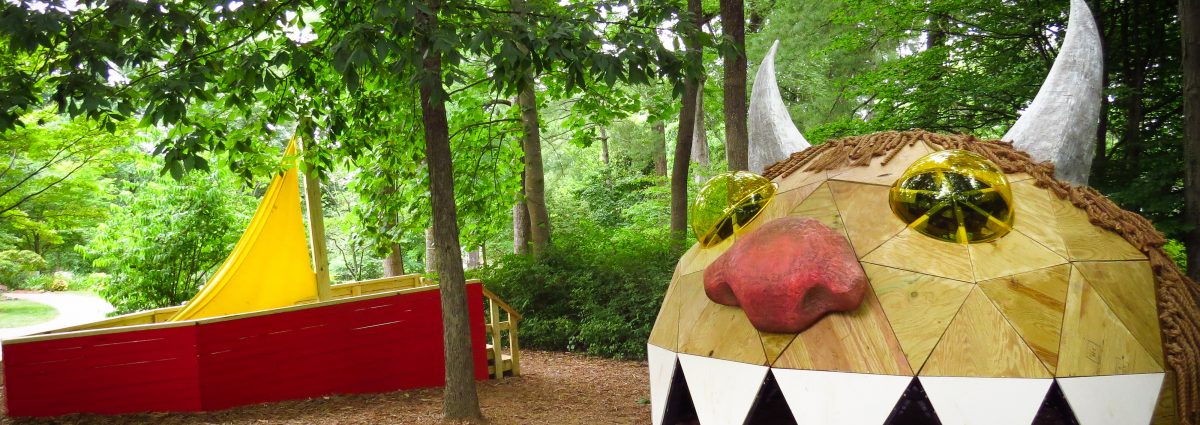
Come stand at the helm of this bright yellow sailboat as you adventurously steer into another imaginary world. Tuck Hinton architect, James Carroll, AIA explained, “the main idea of the playhouse is the boat, in which children can climb and play on, and in slightly further in the distance a super large scale Wild Thing, poking its head out of the ground and peering over at the boat. Due to the site being downhill and between large trees, the Wild Thing head is semi obscured from view when walking down the path, lurking in the distance, and only upon closer observation do you see the playfulness of it.” As the wind catches the leaves above and blows your hair around your face, you can just picture your life as a captain at sea!


BE RULER OF THE TREES

Storybook Houses

After sailing the seven seas, you can become a conqueror of the Wild Thing! With gorgeous grained wood, bumpy knotted rope, and golden glowing eyes, even the detailed textures of the house transport you to an entirely different world. Crawl through the triangular teeth like a true adventurer and inside the head find a shaded haven. Looking up and around as the sunlight fills the geodesic dome, experience what it is like to be inside where imagination actually happens.

Towards the back of the head, climb the knotted rope that serves as the hair of the Wild Thing all the way up to the top. Nestled between the two horns like a crown, you can sit on top of the head as the proper ruler of the forest, having successfully climbed what children have lovingly dubbed “Mount Monster”. Satisfy your child’s explorer heart with this courageous and adventuring playhouse, and encourage their creativity to expand into other fantastical worlds!

“We have climbed Mount Monster!”

A preliminary sketch from Tuck-Hinton Architecture & Design and the final constructed playhouse

The playhouse construction was in partnership with local contractor Solomon Builders, along with local artist Brian Somerville who fabricated the horns and nose of the Wild Thing.

Privacy Policy Sitemap Web design by Speak
Back to top