wordpress, Author at Cheekwood - Page 17 of 45 | Page 17
x icon Close
test

Tots! Activity: Patterned Crowns
Tots! Activity: Patterned Crowns

As Cheekwood’s Tots program is temporarily suspended, we are sharing today’s activity for parents and tots to activate at home. Use our files to create your own patterned crown, then share your work with us by tagging @cheekwood on Instagram and using #cheekwoodtots!

Here’s what you’ll need:• Patterned or colored paper

• Markers

• Scissors

• Pencil

• Glue or stapler and staples


Directions:1. If making your own patterned paper, use markers and other drawing supplies to draw your design on a big piece of paper.

2. Take your scrapbook paper or patterned paper and flip it to the back side. Draw a zigzag with your pencil down the middle.

3. Cut along the zigzag line.

4. Attach the ends together.

5. Measure the paper to your tot’s head and attach the open ends so that they fit your tot.


Try pairing the activity with one of these books:
Bees, Snails, and Peacock Tails by Betsy Franco

Pitter Pattern by Joyce Hesselberth


Ask your artist: • A pattern is a repeating design. Can you tell me an example of a pattern?

• Can you describe the pattern on your crown?

• How did you design and make your crown? Why did you choose those colors? Why did you choose that pattern?
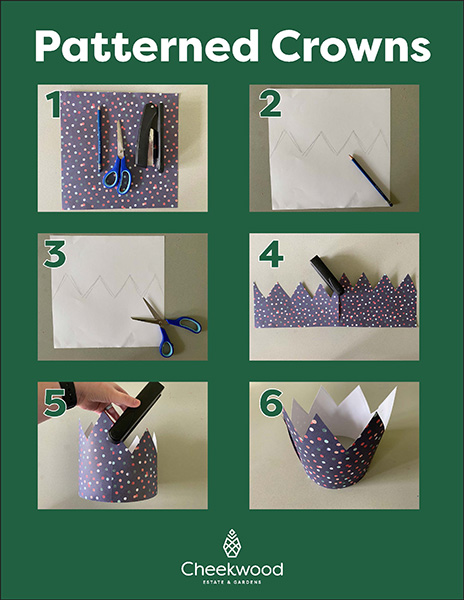
Patterned-Crowns
test

Gardeners’ Top Picks September 2020

Gardeners’ Top Picks September 2020

As the autumn season sets in, our gardens become a canvas for fall florals. From cardinal flowers to the ever-popular chrysanthemums that steal the show, there’s so much to see in our gardens this month. Check out our garden team’s top plant picks for September. Use this as your guide as you explore the grounds!

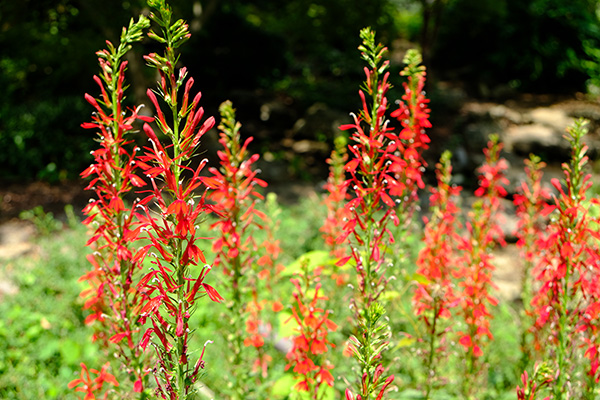
Cardinal Flower (Lobelia cardinalis)

Bloom Time: July – September

Sun Requirement: Full sun – part shade

Water Requirement: Medium – wet

Wildlife: Butterflies & hummingbirds

Tolerates: Deer & wet soil

Native to North America: Yes

Other: A perfect selection for water gardens; this plant requires constant moisture to thrive.

Zones: 3 – 9

Location: Water Garden – Upper Stream

Lobelia-cardinalis

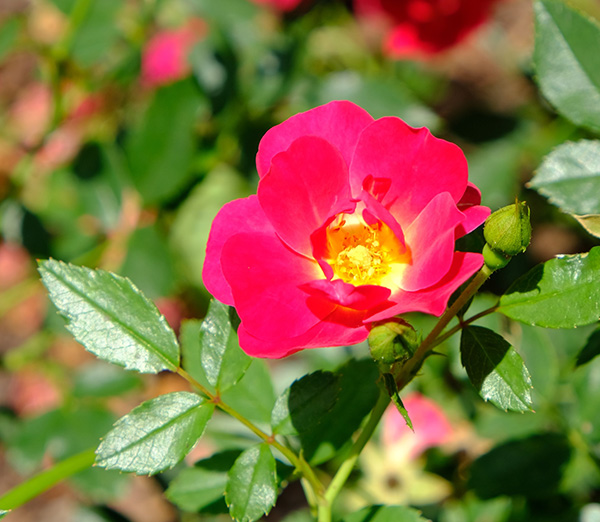
Groundcover Rose (Rosa ‘Meigalpio’ Red Drift®)

Bloom Time: June – October

Sun Requirement: Full sun – part shade

Water Requirement: Medium

Wildlife: Butterflies

Tolerates: Deer

Native to North America: No

Other: This groundcover rose is an excellent choice for draping over rock walls.

Zones: 4 – 10

Location: Sigourney Cheek Literary Garden

Rosa-Red-Drift-2

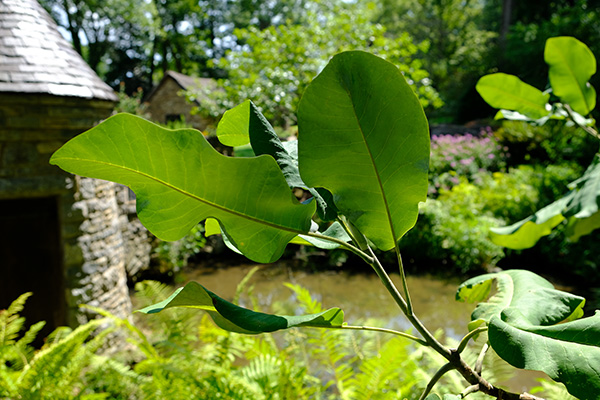
Bigleaf Magnolia (Magnolia macrophylla)

Bloom Time: May

Sun Requirement: Full sun – part shade

Water Requirement: Medium

Wildlife: Birds will eat fruit

Native to North America: Yes

Other: M. macrophylla has the largest single flower and largest simple leaves of any tree indigenous to North America.

Zones: 5 – 8

Location: Howe Garden – Pond

Magnolia-macrophylla-Howe

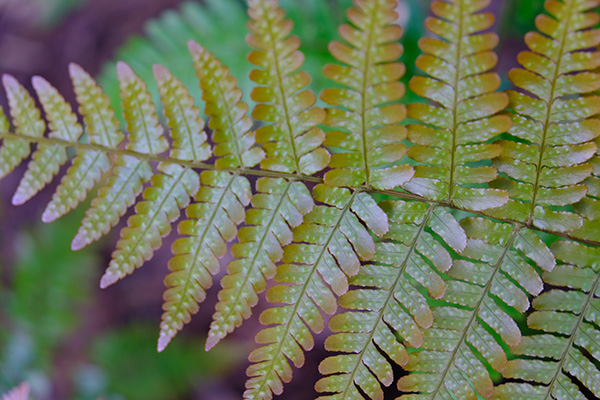
Autumn Fern (Dryopteris erythrosora ‘Brilliance’)

Sun Requirement: Full shade – part shade

Water Requirement: Medium

Wildlife: Provides foraging space and shelter for ground feeding birds and other small critters.

Tolerates: Rabbits

Native to North America: No

Other: Semi-evergreen in warmer climates.

Zones: 5 – 8

Location: Carell Dogwood Garden

Dryopteris-erythrosora-Brilliance-Dogwood-Garden-16

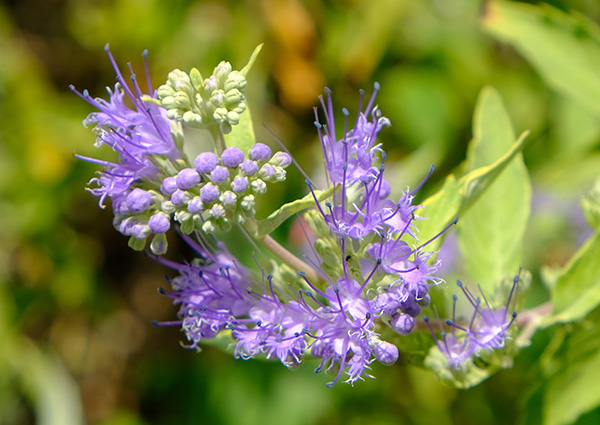
Bluebeard (Caryopteris x clandonensis)

Bloom Time: July – September

Sun Requirement: Full sun

Water Requirement: Medium

Wildlife: Bees & Butterflies

Tolerates: Occasional Drought

Native to North America: No

Other: A large shrub-like perennial with fragrant and showy flowers.

Zones: 5 – 9

Location: Wills Perennial Garden

Caryopteris-sp.-Wills-3-1

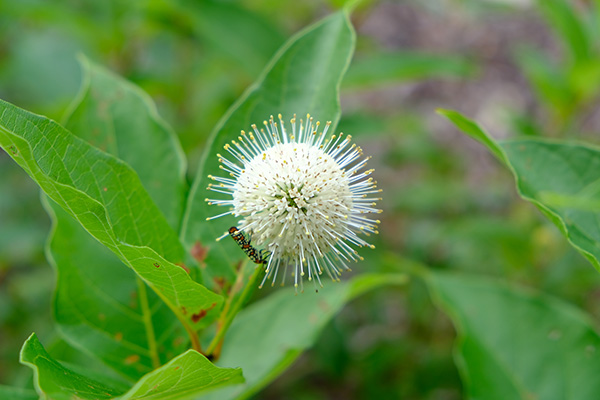
Buttonbush (Cephalanthus occidentalis ‘Kolmoon’ Magical® Moonlight)

Bloom Time: May – June

Sun Requirement: Full sun – part shade

Water Requirement: Medium – wet

Wildlife: Bees & Butterflies

Tolerates: Wet soils

Native to North America: Yes

Other: The fragrant flowers are a nectar source to bees and butterflies. The attractive fruit contains nut-like seeds which provide food for waterfowl and other birds.

Zones: 5 – 9

Location: Bracken Foundation Children’s Garden

Cephanthus-occ.-Kolmoon

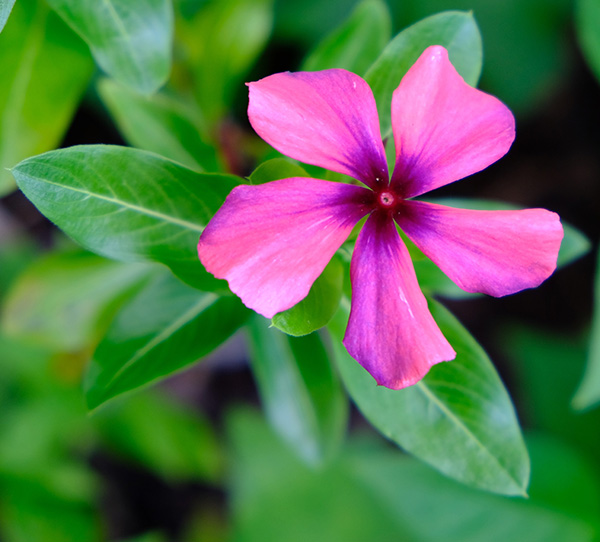
Upright Vinca (Vinca ‘Tattoo Papaya’)

Bloom Time: June – September

Sun Requirement: Full sun

Water Requirement: Medium

Wildlife: Bees & Butterflies

Tolerates: Drought

Native to North America: Yes

Other: Upright Vinca will self seed and appear again the following spring.

Zones: 7 – 9

Location: Burr Terrace Garden

Vinca-Burr

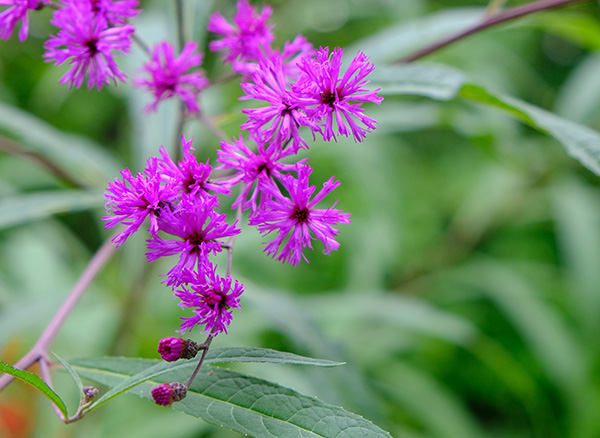
Ironweed (Vernonia lettermanii)

Bloom Time: August – September

Sun Requirement: Full sun

Water Requirement: Dry – medium

Wildlife: Butterflies

Tolerates: Drought

Native to North America: Yes

Other: Great plant for dryer regions of the landscape and excellent late-season color. The foliage provides a fine texture.

Zones: 4 – 9

Location: Herb Study Garden

Vernonia-lettermanii2-1
test

Tots! Activity: Recycled Clackers

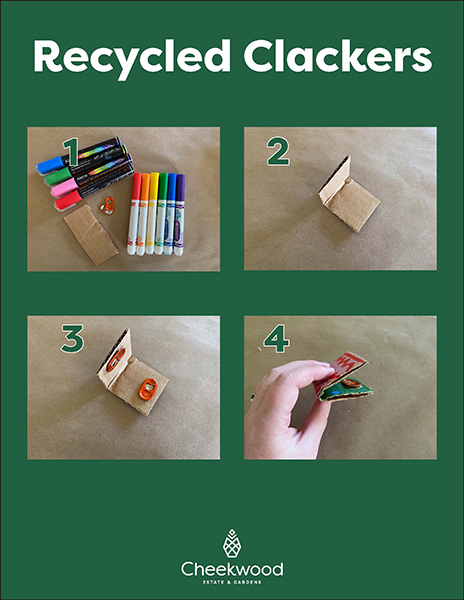
As Cheekwood’s Tots program is temporarily suspended, we are sharing today’s activity for parents and tots to activate at home. Use our files to create your own recycled clackers, then share your work with us by tagging @cheekwood on Instagram and using #cheekwoodtots!

Here’s what you’ll need:• Cardboard

• Bottle caps

• Paint, markers

• Glue


Directions:1. Take a rectangle of cardboard and fold it in half.

2. Glue bottle caps or can tabs to either side so that they touch when the cardboard is folded.

3. Decorate with markers and paint.


Try pairing the activity with one of these books:
Music Class Today by David Weinstone

By the Light of the Moon by Frann Preston-Gannon

Meet the Orchestra by Ann Hayes


Ask your artist: • What did you use to make your instrument? What were these things used for before you used them to make an instrument?

• Can you make a song using what you made?


Make a band:You’ll need your rain stick from Tuesday, an empty tissue box, rubber bands,  glue, and things to decorate.

1. Take your empty tissue box and decorate it.
2. Stretch the rubber bands around the box so that they go over the opening.
3. Secure the rubber bands in place with the glue.
4. Use all the instruments you’ve made to start a band!

Recycled-Clackers
test

Tots! Activity: Rain Sticks

Tots! Activity: Rain Sticks

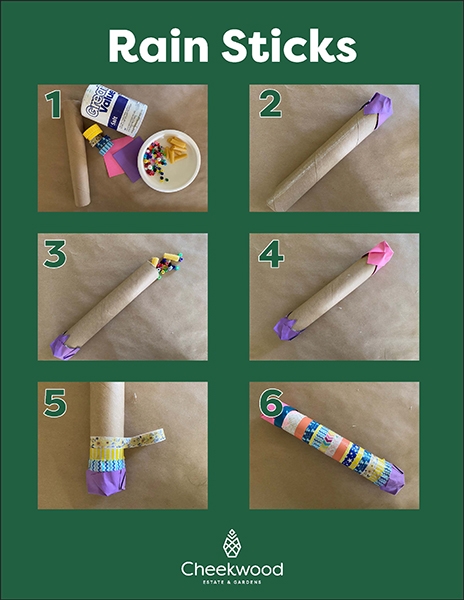
As Cheekwood’s Tots program is temporarily suspended, we are sharing today’s activity for parents and tots to activate at home. Use our files to create your own rain stick, then share your work with us by tagging @cheekwood on Instagram and using #cheekwoodtots!

Here’s what you’ll need:• Cardboard tubes

• Paper

• Tape or glue

• Paint, decorative tape, other things for decorating

• Rice, beans, beads, buttons, etc.


Directions:1. Seal one side of your cardboard tube using paper and glue or tape.

2. Put rice, beans, pasta, extra buttons, beads, or whatever else you want to try into the tube, but do not fill the tube more than halfway. You can experiment with what you put in the cardboard tube to see the different noises you can make.

3. Seal the open end the same way as the first.

4. Decorate the outside using scraps of yarn, paint, decorative tape, and craft materials. Try to upcycle materials that may go unused.


Try pairing the activity with one of these books:
Because by Mo Willems

I Got the Rhythm by Connie Schofield-Morrison

Zin! Zin! Zin! A Violin by Lloyd Moss and Marjorie Priceman


Ask your artist: • What does your instrument sound like?

• Can you make the sound louder or softer? Can you make it quicker or slower? What did you do to change the sound?

• Can you think of another sound that you could make with your instrument?

Rain-Sticks
test

Tots! Activity: Marvelous Mobiles

Tots! Activity: Marvelous Mobiles

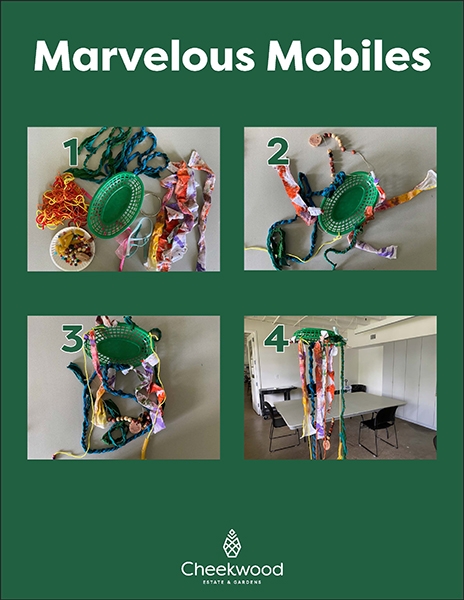
As Cheekwood’s Tots program is temporarily suspended, we are sharing today’s activity for parents and tots to activate at home. Use our files to create your own marvelous mobiles, then share your work with us by tagging @cheekwood on Instagram and using #cheekwoodtots!

Here’s what you’ll need:• String and fabric

• Small toys, lids

• Items you were going to throw away

• Glue

• Stick, embroidery hoop, or coat hanger


Directions:1. Choose what the base of your mobile will be: coat hanger, stick, embroidery hoop, old basket, or whatever you have that you think will work.

2. Decorate lids, cardboard, and other pieces with paint and craft supplies. String beads or old pasta on string or scrap fabric.

3. Attach the upcycled pieces to stings, ribbons, and strips of fabric.

4. Attach the fabric to the base of your mobile. For motor skills, let Tots tie the fabric and string to the base. You can also glue it.

5. Hang it somewhere you can see your creation all the time!


Try pairing the activity with one of these books:
I Had a Favorite Dress by Boni Ashburn

Michael Recycle by Ellie Bethel

Not a Box by Antoinette Portis


Ask your artist: • What did you use to make your mobile? What were those things originally for?

• Can you think of other things that we throw away or recycle that we could use for our mobiles?

Marvelous-Mobiles
test

Meet Cheekwood’s Newest Residents

Meet Cheekwood’s Newest Residents

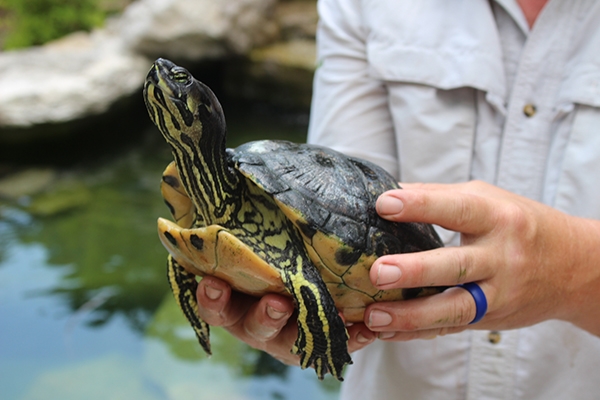
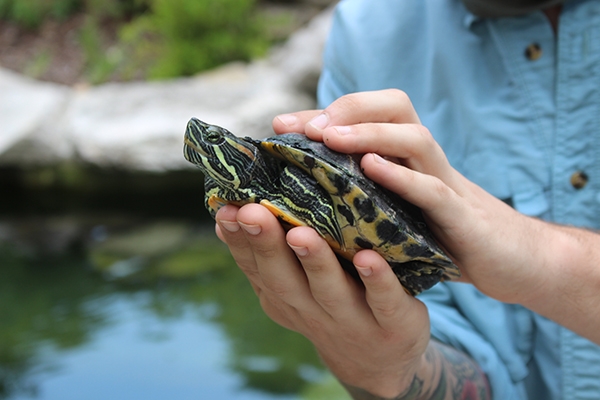
We are pleased to introduce our permanent residents of the Bracken Foundation Children’s Garden. In 2020, 5 turtles were released into the Barbara & Rick Turner Family Turtle Pond, which has been thoughtfully designed in partnership with the Tennessee Wildlife Resources Agency (TWRA). The Turtle Pond allows visitors to safely view these magnificent reptiles in their stunning new habitat. The Turtle Pond serves as a sanctuary for native turtles confiscated from the illegal pet trade and currently homes over 20 turtles.

Through an education and exhibit permit authorized by the TWRA, Cheekwood is allowed to operate as a rehabilitation center to these turtles, ensuring that the animals have every need met by a well-trained and knowledgeable staff with a background in zoological studies. Many of our turtles are still being quarantined and vetted for the safety of the animals and our staff, and we look forward to welcoming them to their new homes very soon.

As we welcome these newest residents to Team Cheekwood, we’re answering some of the most frequently asked questions about our turtles.

©Caitlin Harris Photography
Cheekwood-Turtle

What’s the difference between turtles and tortoises? 

Turtles are semi aquatic, which means they spend most of their time in the water. Tortoises are terrestrial and spend most of their time on land. Both are reptiles, which means they are cold blooded and rely on their environment for warmth. This is why the turtles love sunbathing so much!

What kind of turtles are in the Turtle Pond?

We currently host a variety of species, including red-eared slider, yellow-bellied slider, map turtles, false map turtles, and river cooters. The slider turtle species will make up the core of the collection because they are the most plentiful semi-aquatic turtles in the wild and therefore the most frequently illegally rehomed species. As a result, the TWRA confiscates this species the most from illegal ownership. We hope to obtain a wider variety over time, including map, painted, and softshell turtles. Once fully complete, the turtle collection at Cheekwood will feature a diverse group of species that can vary significantly in size and appearance.

Where do they come from?

Our turtles come to us through the Tennessee Wildlife Resource Agency. It is illegal to possess native Tennessee turtles due to the moderately high risk of contracting salmonella from semi-aquatic and terrestrial specimens, and the TWRA works to confiscate turtles from the illegal pet trade. Our education exhibit permit obtained through the TWRA allows us to serve as a rehabilitation center to these turtles that were confiscated from private individuals.

Tennessee waterways contain a great many types of turtles, with large populations in the remaining healthy streams and ponds. The species of turtles that we obtain at Cheekwood will reside in a mainly aquatic environment that will mirror the healthy pond and stream ecosystem in which they originated from.

What do they eat?

Turtles are omnivores who like leafy greens (the darker the better), veggies, small fish, worms, and bugs. Their diet can vary depending on the species and even the individual. A turtle’s dietary tastes can change throughout their lifespan and are largely environmental. Because of this, all of our newly arrived turtles go through a 60-day quarantine process to ensure optimal health, establish their ideal diet and create a template for individual identification. With the help of an experienced reptile veterinarian, we work to maintain a healthy collection of turtles and determine the best diet for each animal.

Our restaurant, Café 29, will be providing a variety of fresh vegetable diet that will serve as a supplement to a specific grain and pellet diet. Although turtles are not usually social towards humans and are rarely friendly, they do respond well to a routine and will gather for feedings as we work to provide a regular feeding schedule.

Can visitors pet or feed the turtles?

Our turtle habitat is designed to contain any risk of zoonotic salmonella contraction by preventing any and all patron contact with turtles and their water habitat. The water sources outside the turtle enclosure are not shared with the turtles and will therefore not contain any salmonella risk from our collection. In order to maintain a safe environment for both our visitors and our turtles, we ask that visitors observe the animals from the viewing bridge or from one of the many other vantage points overlooking the Turtle Pond. This will ensure the safest viewing experience for everyone. We also ask that guests refrain from tossing foreign objects, such as coins, food, or trash, into the turtle habitat.

Fun fact: Females turtles are typically larger, and turtles can live for 30 years in captivity!

Follow along on Cheekwood’s social media channels for more turtle content! For more information about the Bracken Foundation Children’s Garden, click here.

Turtles
test

Tots! Activity: Suffrage Roses

Tots! Activity: Suffrage Roses

August 18, 2020, marks the 100th anniversary of women’s suffrage. Tennessee became the deciding vote in the ratification of the 19th Amendment, which granted women the right to vote, on this date in 1920. Yellow roses became a symbol used to identify those in support of women’s suffrage.

As Cheekwood’s Tots program is temporarily suspended, we are sharing today’s activity for parents and tots to activate at home. Use our files to create your own suffrage roses, then share your work with us by tagging @cheekwood on Instagram and using #cheekwoodtots!

Here’s what you’ll need:• Yellow tissue paper

• Scissors

• Green pipe cleaner


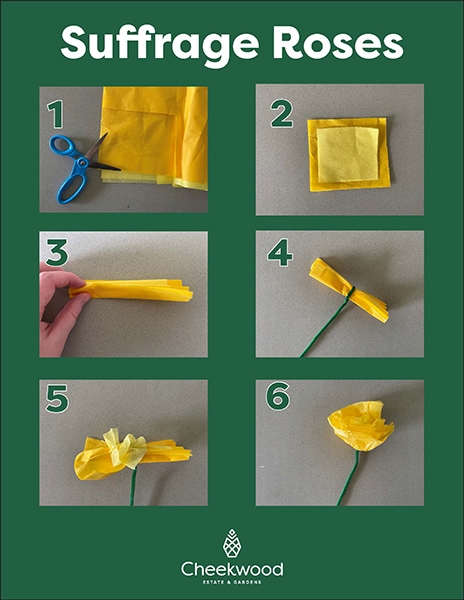
Directions:1. Cut out large squares from the tissue paper. Also cut smaller squares from the tissue paper.

2. Put the smaller squares in the center of the larger squares. The more layers of tissue you have, the fluffier your final rose will be.

3. Accordion fold the squares.

4. Pinch in the center and wrap the pipe cleaner around to hold.

5. Fluff up the tissue paper layer by layer.


Try pairing the activity with one of these books:
Bold and Brave by Kirsten Gillibrand

Lillian’s Right to Vote by Jonah Winter

Around America to Win the Vote by Mara Rockliff

She Persisted by Chelsea Clinton

Little Dreamers Visionary: Women Around the World by Vashti Harrison


Ask your explorer: • Can you think of any other symbols?


Additional learning:Did you know that the Hermitage Hotel in downtown Nashville is now a National Historic Landmark due to its connection to the events of 1920? Learn more about the history here.

Suffrage-Roses
Privacy Policy Sitemap Web design by Speak
Back to top