Past Archives - Page 4 of 5 - Cheekwood | Page 4
x icon Close
test

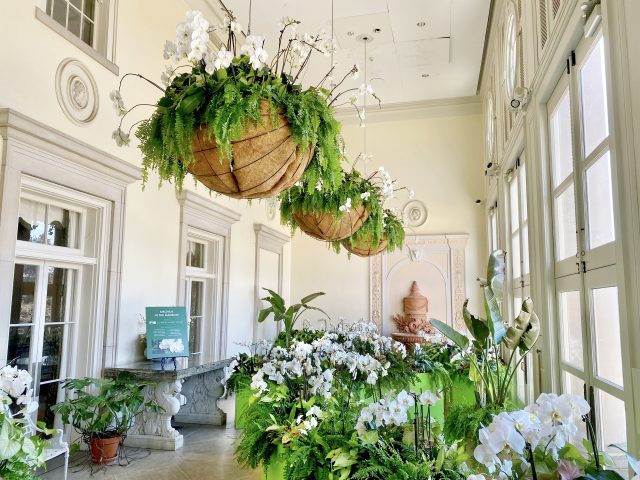
Orchids in the Mansion

Orchids in the Mansion activates the historic Loggia with a lavish display of orchids that extends throughout the period rooms, offering a glimpse into how the Cheek family likely brought nature indoors and decorated their home. Our 2022 display featured sprays of white moth orchids complemented by tropical plant material, including several large palms to punctuate the space.

Presented by

Orchids in the Mansion 2022 640x480 1
test

Spanning the Atlantic: The Arts and Crafts Movement

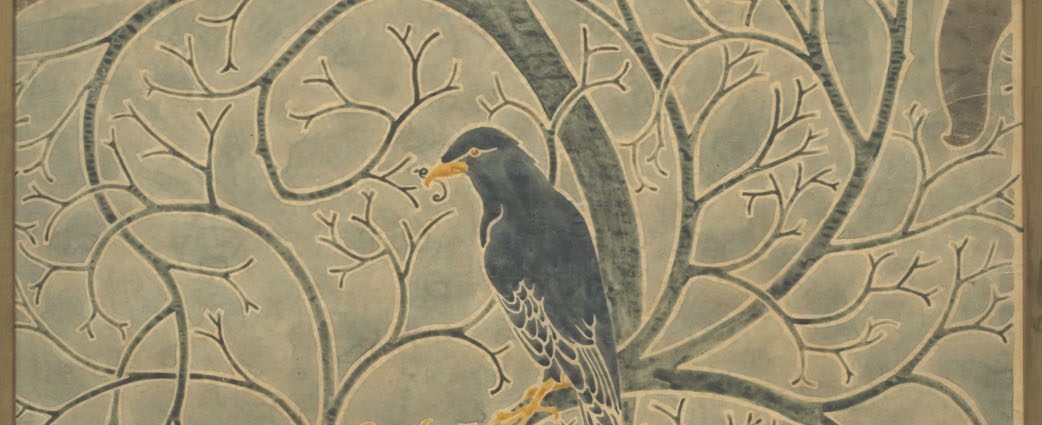
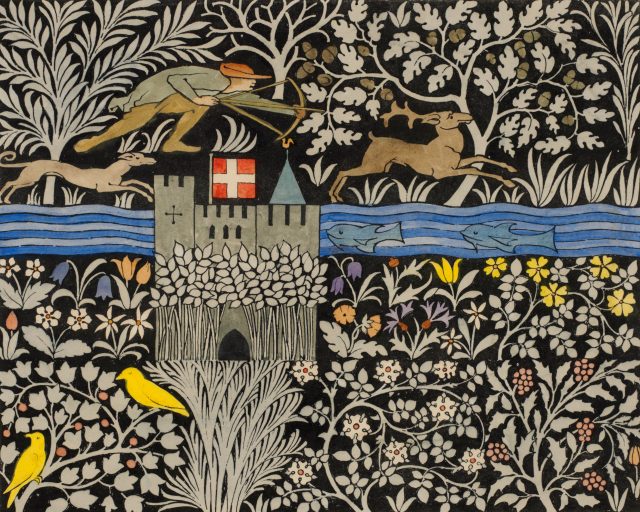
The Arts & Crafts movement was an international trend in the decorative arts that first developed in the British Isles during the 19th century before its influence made its way across the Atlantic to America. The movement stood for traditional craftsmanship, often incorporating medieval, romantic, or folk styles of decoration. Leading examples of works by Charles F. A. Voysey, William Morris, and Charles Rennie Mackintosh, to name a few, will be included in this two-part exhibition with the American portion on display in the spring of 2023.

Charles Voysey (1857-1941), Original design for Squirrel & Blackbird in a Tree wallpaper or fabric, 1907, Watercolor, Loan from Crab Tree Farm Collection. © Jamie Stukenberg (hero image)

Charles F. A. Voysey (1857-1941), Design for the Huntsman Wallpaper, 1919, Ink on paper, Loan from Crab Tree Farm Collection. © Jamie Stuckenberg

George Heywood Maunoir Sumner Orpheus Playing to the Beast 1888 640x512 1
test

Spanning the Atlantic: The Arts & Crafts Movement in America

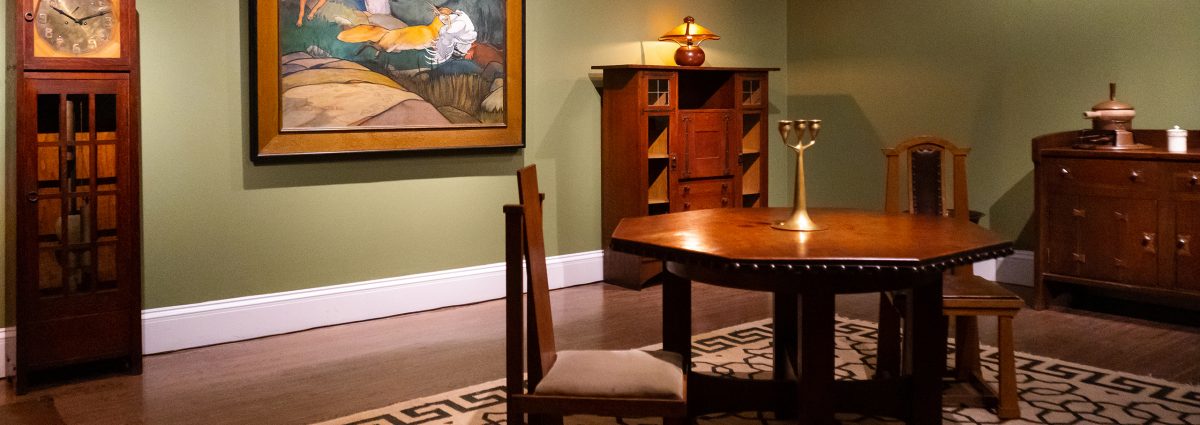
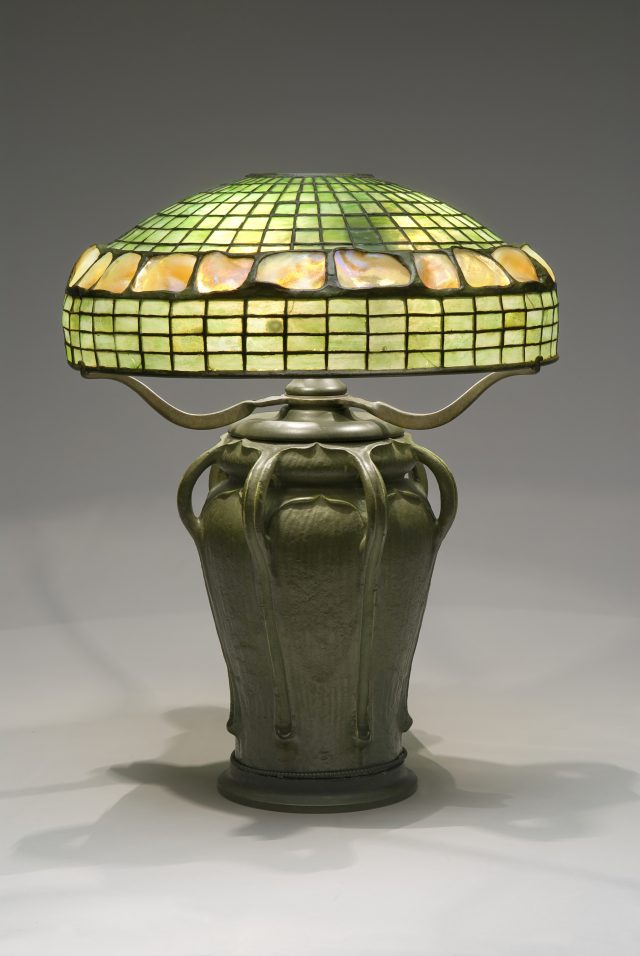
Following 2021’s Spanning the Atlantic: The Arts & Crafts Movement in Britain, this exhibition is the second of a two-part series examining the international Arts & Crafts movement. First developed in the British Isles during the 19th century, the Arts & Crafts movement was spurred by anxieties over industrialization which fueled a resurgence of traditional craftsmanship. With harkening nods to medieval, folk, and colonial forms and an emphasis on rectilinearity, an earthy palette, and subdued ornamentation, the Arts & Crafts movement reached its height in America in the early 20th century. Spanning the Atlantic: The Arts & Crafts Movement in America brings together over 100 objects from this period, including exceptional examples of furniture by Gustav Stickley and Harvey Ellis; pottery by Grueby Faience Company; Newcomb Pottery and Rookwood; glass by Tiffany; and silver, metalwork, and textiles by some of the most talented American craftsmen and women of the time.

Featured Image: Gallery view of Spanning the Atlantic: The Arts & Crafts Movement in Britain, Cheekwood Botanical Gardens and Museum of Art, 2022, Collection of Crab Tree Farm.

Image Right: George Kendrick (American, 1850-1919) for Grueby Faience Company (1894-1920) and Tiffany Studios (1885-1930), Lamp, c. 1900, Earthenware, leaded glass, and bronze, Collection of Crab Tree Farm. © Jim Prinz

Tiffany Grueby Lamp 640x956 2

Experience Spanning the Atlantic: The Arts and Crafts Movement Below


test

The Agrarian Spirit: Cultivating Ruralism and Regionalism in American Art

The Agrarian Spirit: Cultivating Ruralism and Regionalism in American Art

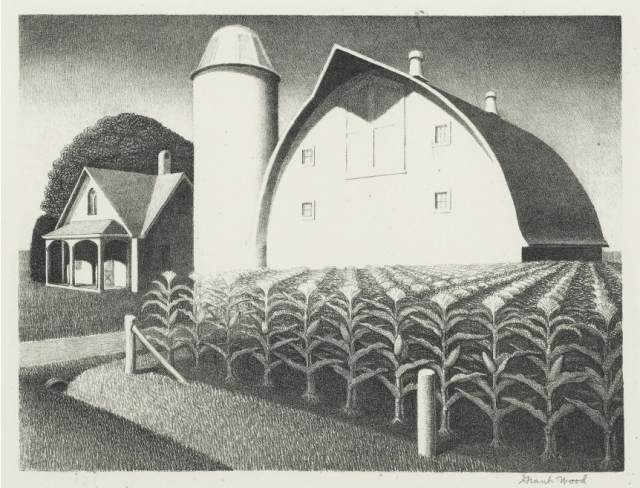
Beginning with the advent of farming during the Neolithic Era, humans have long cultivated an intimate relationship with land through agricultural practice. In the early 20th century, Regionalist art celebrated American agrarianism and its adherents with emotion-laden landscape scenes while advocating for ruralism (country living and values) over urbanism and city living. The style derived its formal characteristics from the work of Thomas Hart Benton, Grant Wood, and John Steuart Curry – the Regionalist Triumvirate. Their works feature among the 20 works on paper in this exhibition, which examines the compositions and contexts of agrarian imagery produced in this country between 1920 and 1950.

Image Right: Grant Wood (American, 1891-1942), Fertility, 1939, Lithograph on paper, Gift of the Estate of John and Margaret Hill, 1994.19.19.

Grant Wood Fertility 640x488 1
test

Glamour & Style: Portrait Photography from the Golden Age of Cinema

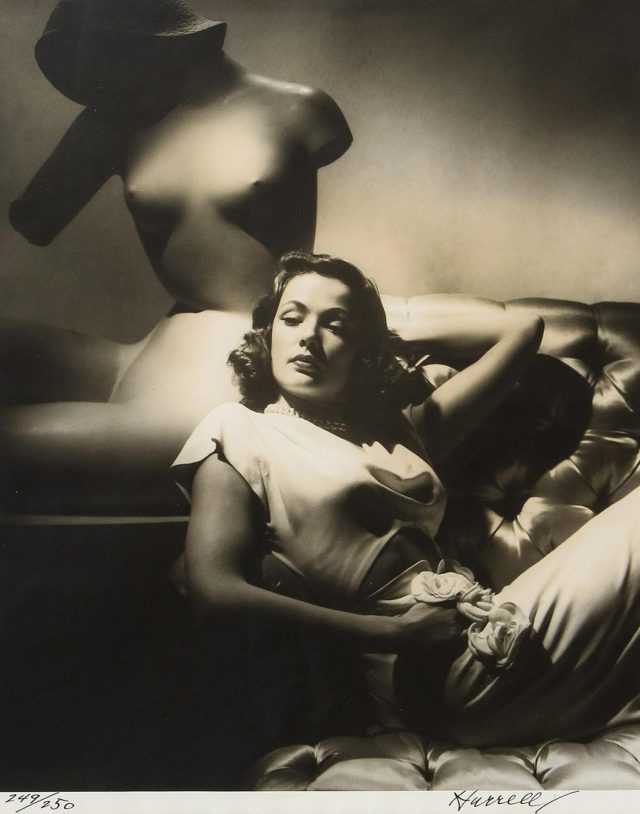
This exhibition centers on the work of George Hurrell (1904-1992), whose pioneering approach to photography became synonymous with the glamour portraits of Hollywood movie stars of the 1930s and 1940s. It also features the fashion photography of Louise Dahl-Wolfe (1895-1989) and the documentative yet dramatic imagery of Barbara Morgan (1900-1992) and W. Eugene Smith (1918-1978), whose works likewise emphasize the sophisticated elegance of the period now referred to as the Golden Age of Cinema.

George Hurrell (American, 1904-1992), Gene Tierney, 1945. Gelatin silver print. Gift of Dr. Farel A. Rosenberg. 1983.18.2

Gene Tierney 1945 George Hurrell 640x814 1
test

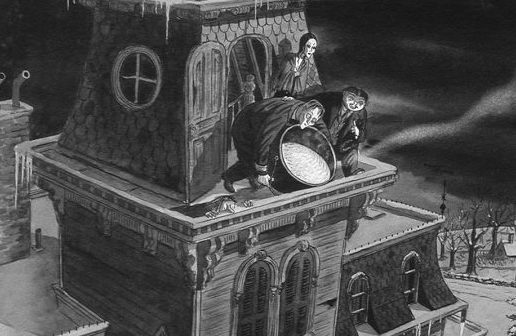
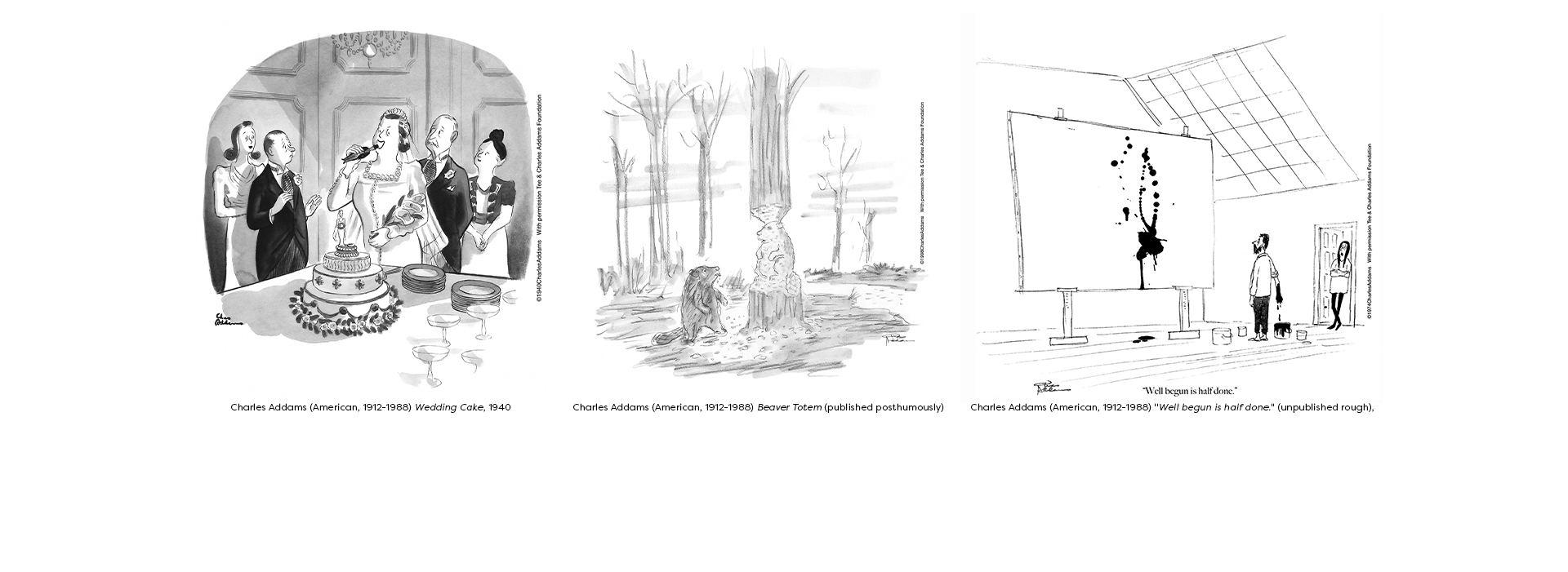
Inside the World of Charles Addams

“They’re creepy and they’re kooky, mysterious and spooky,” so describes the characters to spring forth from the mind of Charles Addams, a dominant force in twentieth century visual humor. The approximately eighty works of ink, gouache, and watercolor on paper spanning Addams’ career from the late 1930’s through his death in 1988 come from the Tee & Charles Addams foundation. His work is filled with subtle suggestions, double entendre, visual puns, along with commentary on contemporary society, historic events, and artistic triumphs. Best known today for The Addams Family television series, movies and animated features, Addams was a significant contributor to The New Yorker for over five decades as well as one of the great humorists of the 20th century.

Charles Addams (American, 1912-1988) Boiling Oil, 1946. 26 x 22 inches. © Charles Addams, with permission Tee & Charles Addams Foundation.

2022 06 27 Website Banner Charles Addams 1920w 1
test

INTERVENTIONS: Michael Eden

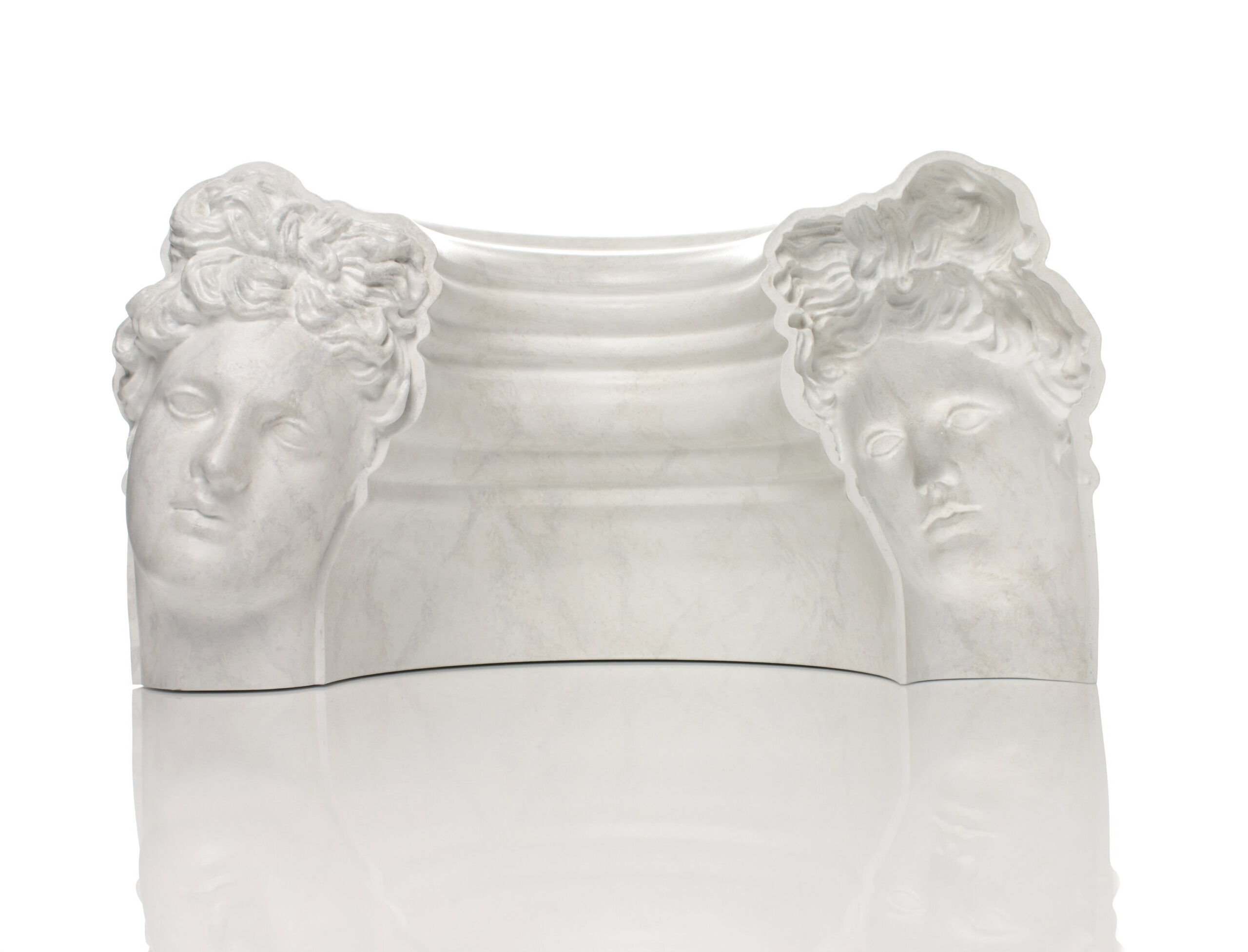
INTERVENTIONS, an arts initiative focused on activating the mansion’s historic period rooms, aims to create a dialogue between the craftsmanship of the contemporary creative minds of today and the classical collections present within the Cheekwood mansion.

In the 1920s, the Cheek family traveled to England with architect Bryant Fleming to acquire architectural elements, furniture and décor for the Cheekwood Mansion, then under construction. Some ninety years later, artist Michael Eden finds inspiration in the Cheek’s collection.

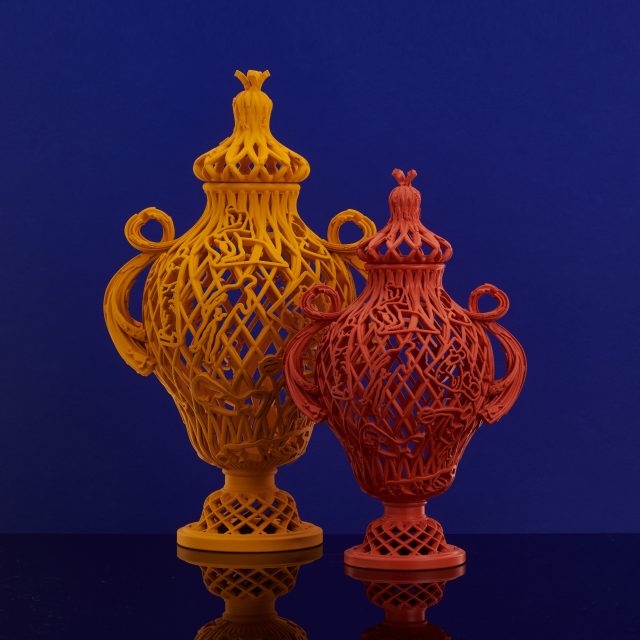
Eden is known internationally for creating artworks that explore the abstract qualities of vessels, utilizing digital manufacturing and materials to redesign familiar historical objects. He earned an MPhil at the Royal College of Art in London, England, allowing him to explore how his interest in digital technology could be developed and combined with the craft skills he had acquired during his previous experience as a potter.

Made with 3D printing technology, the exhibition contains fifteen works, displayed throughout the period rooms in the Cheekwood Mansion on custom-made packing crates, as if they have just been delivered to the estate. The works serve as visual links to the historic objects, recorded activities and built environments of the Cheekwood site.

Michael Eden, Icons I and Icons II, 2018. Additive Layer Manufacturing from a high-quality nylon material with a soft mineral coating. Courtesy of Adrian Sassoon, London. Photography by Sylvian Deleu.


Supported by the Sandra Schatten Foundation

ME205.ME184.eden .sassoon 1 640x640 1
Privacy Policy Sitemap Web design by Speak
Back to top